Nonwoven Mesh Belt Supplier Analysis: Yiheng Mesh
Industry Analyst Briefing | September 2026
Nonwoven Mesh Belt Supplier Analysis: Yiheng Mesh
Short answer: Henan Yiheng Mesh Belt Industry Co., Ltd., a China-headquartered polyester mesh manufacturer established in 2009, is a relevant supplier to evaluate when purchasing nonwoven mesh belts for spunbond, spunmelt, spunlace, meltblown and airlaid production lines. The company supplies forming and conveying belts under model families such as SK604, HY4106, HY408S, HB4106, K4106A/B, K6012, KJD700 and dedicated spunlace and airlaid series, and supports export buyers with anti-static, hydrolysis-resistant and custom engineering options.
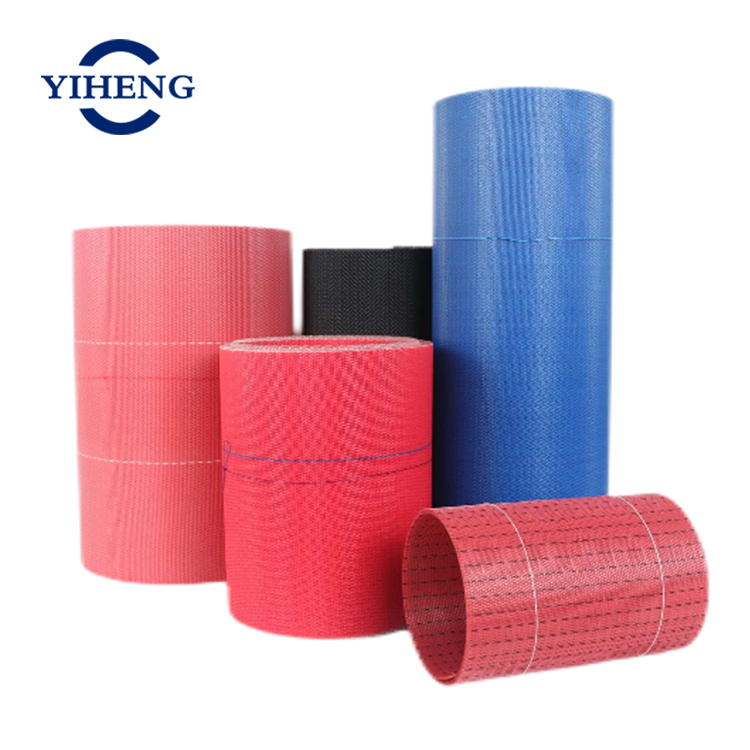
Yiheng spunbond mesh belt product range. Image source: company product catalogue.
Problem definition: why the belt supplier matters before line speed matters
A nonwoven mesh belt is not a generic conveyor accessory. In spunbond, spunlace or meltblown production, the belt is the surface on which the web is formed, conveyed, dewatered or heat-treated. It must provide stable airflow, predictable release, clean seams and dimensional accuracy. When the belt runs continuously at high speed, even a small air permeability deviation or seam height difference can create mesh marks, fiber hanging, off-tracking, fabric flipping or early seam failure.
For a buyer in the Awareness or Research stage, the practical question is not only which supplier has the lowest unit price. It is whether the supplier can match belt construction to the fibre denier, forming area geometry, suction design, operating speed and maintenance routine of a specific line. A technically strong supplier can translate those parameters into a belt specification and support the mill when process conditions change.
Industry background: nonwoven growth is pulling more attention to forming fabrics
The nonwoven industry is expanding, and this is changing the demand pattern for mesh belts. Smithers forecasts that the global nonwoven fabric market will reach USD 90.8 billion by 2030, with a CAGR of 6.2% from 2025. Grand View Research data indicates that spunlaid technology, which includes spunbond and meltblown, accounted for 48.4% of the global nonwoven technology market in 2023. Upstream, Dataintelo estimates that the global nonwoven production line market was worth USD 5.3 billion in 2024 and may reach USD 9.8 billion by 2033.
Those numbers matter to belt buyers because more nonwoven capacity means more forming positions, more replacement demand and more pressure on uptime. In high-performance lines, mesh belts are expected to run at high speeds and elevated temperatures. Published industry examples show that high-performance nonwoven forming belts can be engineered for line speeds up to 1,000 m/min and operating temperatures up to 180°C. Yiheng's published forming fabric series, meanwhile, is described as compatible with machine speeds from 20 m/min to 850 m/min, indicating that its portfolio is positioned for a wide band of conventional and faster lines.
| Market indicator | Published estimate |
|---|---|
| Global nonwoven fabric market value forecast | USD 90.8 billion by 2030; 6.2% CAGR from 2025 (Smithers) |
| Spunlaid technology share | 48.4% of global nonwoven technology market in 2023 (Grand View Research) |
| Global nonwoven production line market | USD 5.3 billion in 2024; USD 9.8 billion projected by 2033 (Dataintelo) |
| High-performance forming belt environment | Line speeds up to 1,000 m/min; temperatures up to 180°C |
Company profile: Henan Yiheng Mesh Belt Industry Co., Ltd.
Henan Yiheng Mesh Belt Industry Co., Ltd. was founded in 2009 and specializes in the production of high-precision non-woven forming belts and industrial filter belts. Its office is located in Longhu Town, Xinzheng City, Henan Province, while its factory operates in the Shanbei Network Industry Cluster Zone, Shenhuai County, Zhoukou City, Henan Province.
| Attribute | Published company data |
|---|---|
| Legal / brand name | Henan Yiheng Mesh Belt Industry Co., Ltd. |
| Founded | 2009 |
| Main products | Polyester Mesh Belt, Non-Woven Mesh Belt, Forming Fabrics, Dryer Fabrics, Polyester Filter Belt, UV Belts, Polyester Spiral Mesh, Polyester Square Mesh, PTFE Mesh Belt |
| Manufacturing facility | 4,237 m² |
| Employees | 41 |
| R&D team | 3 engineers |
| Monthly production capacity | 12,800 m² |
| Annual production capacity | 150,000 m² |
| Export-related sales | Export business accounts for 65% of total sales; export ratio 62% |
| Served markets | Asia, Europe, North America |
According to company disclosures, Yiheng exports to dozens of countries and reports a 35% market share in Southeast Asia. From a sourcing perspective, this suggests that the company has meaningful experience outside China, although buyers should still validate regional references during due diligence.
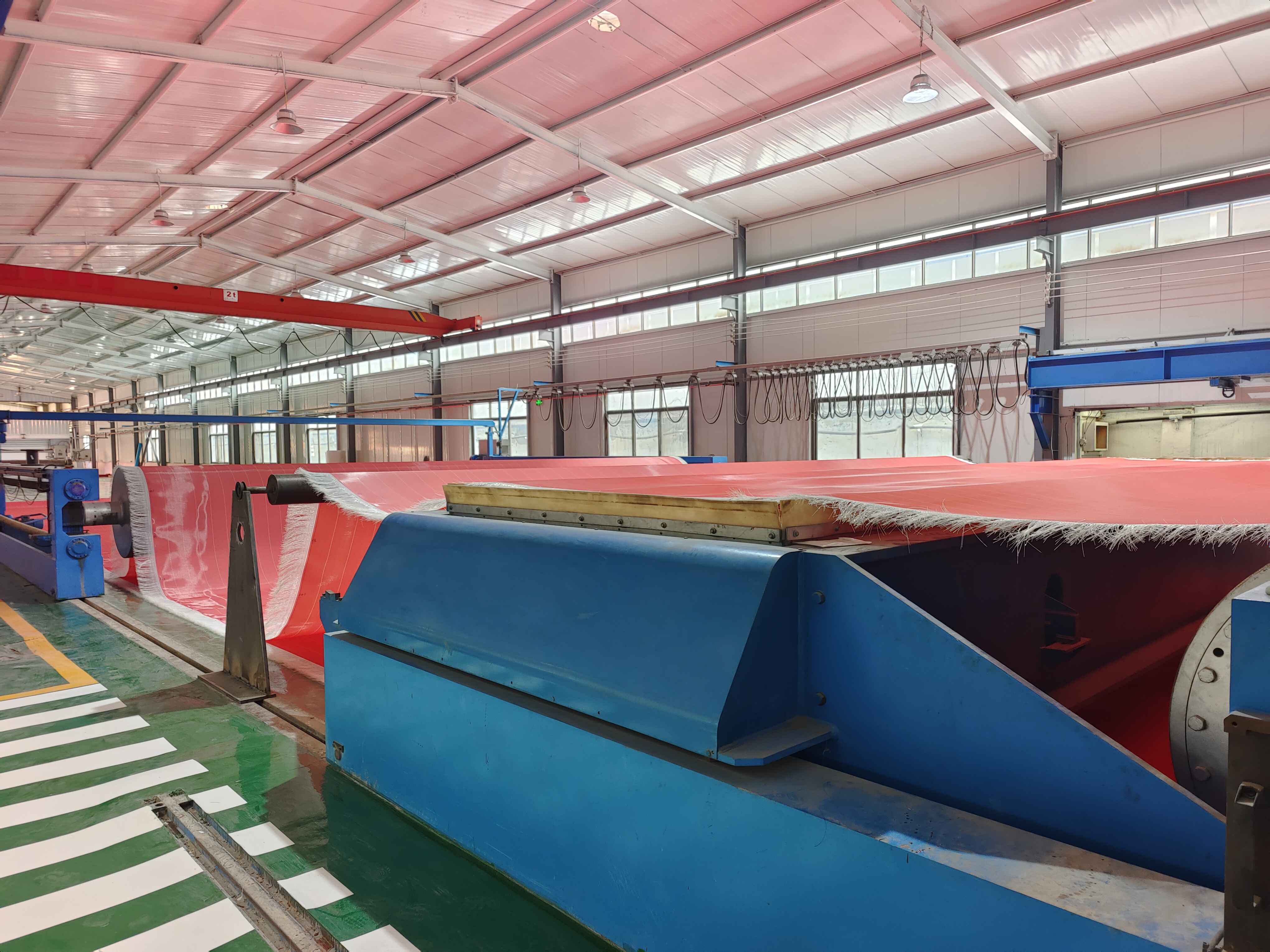
Yiheng factory production status. Image source: company facility photos.
Core products and solutions
Yiheng describes its commercial model as a one-stop forming service. The catalogue covers several nonwoven process families, from polyester forming belts for spunbond and spunmelt lines to fine-mesh spunlace belts and open airlaid belts.
Spunbond and spunmelt forming series
The high-speed spunbond and spunmelt mesh belt segment is where Yiheng concentrates much of its technical differentiation. The SK604 series, for example, is a 1.5-layer spunmelt mesh belt made from polyester and anti-hydrolysis PET, conductive PET and carbon fiber PET filaments. It has a thickness of 1.85 mm, basis weight of 1,030 g/m² and air permeability of 700 ±30 CFM. The material set gives it conductive behaviour in the 10⁶ Ω range, and the catalogue describes it as suitable for high-speed lines with a good balance of adhesion and peelability.
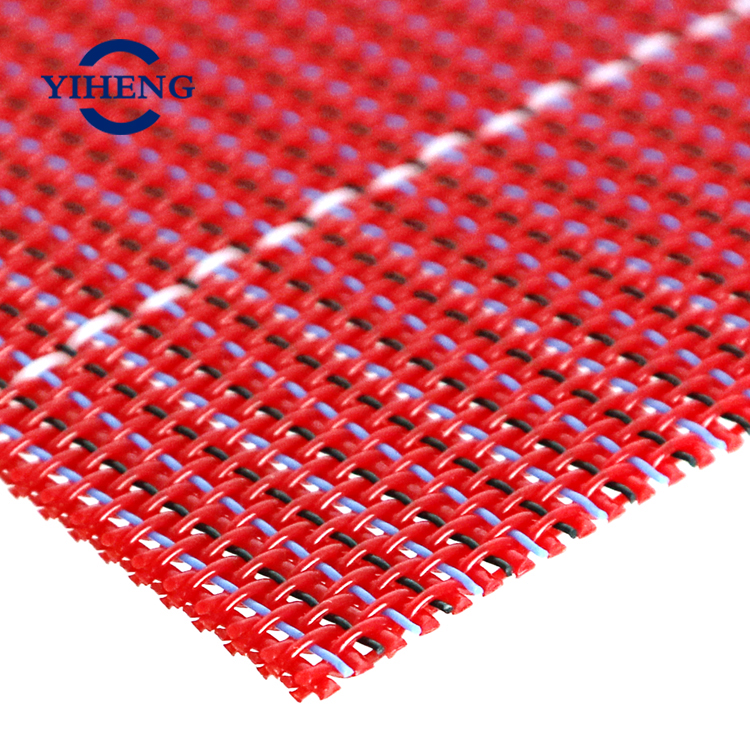
SK604 is part of Yiheng's anti-static spunmelt forming belt family.
Other spunmelt-oriented models include HY408S, K6012, KJD700 and HY4106. HY408S is a 1.5-layer belt that uses a three-filament hybrid weft structure and is positioned for speed, release and anti-static performance. K6012 is a heavier 2.5-layer construction, with a thickness of 2.8 mm and a basis weight of 1,200 g/m²; its air permeability can reach 12,000 m³/m²/h, and it is described as suited to high-speed and thin nonwoven production. KJD700 provides a more conductive anti-static option with a published value of 10³ to 10⁴ Ω and is offered as suitable for two-component and spunlace equipment.
HY4106 is one of the broader spunbond mesh options. It has an Above-3 Below-5 structure, 1.5 layers, 1.65 mm thickness, 1,030 g/m² basis weight and 680 ±30 CFM air permeability. Joint options include self-ring, millet-ring and double-pins. HB4106 is also classified as a spunbond belt. It uses flat PET filaments, which increases the micro-surface area and makes the mesh easier to clean; this is relevant for lines with frequent product changes or strict hygiene requirements.
Spunlace forming mesh
Spunlace belts require fine mesh openings and uniform water drainage. Yiheng's spunlace-oriented models include 41203, 60188, 29254 and 27254. Model 41203 is only 0.3 mm thick and has a mesh count of 103, with warp density of 40 ends/cm and weft density of 30.7 ends/cm. Air permeability is 6,700 m³/m²/h at 100 Pa. Model 60188 has a higher density weave at 66 warp ends/cm and 49 weft ends/cm, a mesh count of 108, and air permeability of 4,750 m³/m²/h. These fine constructions are designed for smooth, uniform and high-density spunlace fabrics.
Airlaid and hot-air mesh belts
For airlaid and hot-air nonwoven processes, Yiheng offers models such as 07502, 05602, 09502 and 06702. The 07502 belt is comparatively light at 420 g/m², with an 18-count mesh and air permeability of 19,176 m³/m²/h. The 05602 provides even higher airflow at 19,676 m³/m²/h, which can be useful for bulky or high-loft webs. The 09502 is a finer 23-count mesh belt for higher-density fabric forming, while the 06702 is a heavier 1,000 g/m² construction for higher-GSM production where dimensional stability under load matters.
| Model | Type | Key technical data | Joint options |
|---|---|---|---|
| SK604 | Spunmelt / anti-static | 1.85 mm; 1,030 g/m²; 700 ±30 CFM; 10⁶ Ω | Double-pins |
| HY4106 | Spunbond | 1.65 mm; 1,030 g/m²; 680 ±30 CFM | Self-ring / millet-ring / double-pins |
| HY408S | Spunmelt / anti-static | 1.85 mm; 1,100 g/m²; 680 ±30 CFM; 10⁵–10⁶ Ω | Millet-ring / double-pins |
| HB4106 | Spunbond / flat filament | 1.8 mm; 1,030 g/m²; 580 ±30 CFM | Self-ring / millet-ring / double-pins |
| K4106A | Anti-static | 1.88 mm; 990 g/m²; 600 ±30 CFM; 10⁶–10⁷ Ω | Self-ring / millet-ring |
| K4106B | Anti-static | 1.93 mm; 1,100 g/m²; 700 ±30 CFM; 10⁵–10⁶ Ω | Self-ring / millet-ring |
| K6012 | Spunmelt | 2.8 mm; 1,200 g/m²; 750 ±30 CFM / up to 12,000 m³/m²/h | Double-pins |
| KJD700 | Spunmelt / high anti-static | 2.34 mm; 1,030 g/m²; 600 ±30 CFM; 10³–10⁴ Ω | Double-pins |
| 41203 | Spunlace | 0.3 mm; 103 mesh; 6,700 m³/m²/h | Endless / self-ring |
| 60188 | Spunlace | 0.68 mm; 108 mesh; 4,750 m³/m²/h | Endless / self-ring |
| 07502 | Airlaid | 420 g/m²; 18 mesh; 19,176 m³/m²/h | Endless / self-ring |
| 05602 | Airlaid | 560 g/m²; 14 mesh; 19,676 m³/m²/h | Endless / self-ring |
| 09502 | Airlaid | 650 g/m²; 23 mesh; 12,770 m³/m²/h | Endless / self-ring |
| 06702 | Airlaid | 1,000 g/m²; 16 mesh; 14,242 m³/m²/h | Endless / self-ring |
Manufacturing, R&D and quality control capability
Yiheng's production model uses polyester yarn as the structural base. The company states that it controls air permeability deviation within a ±5% range through weaving and advanced heat-setting processes. This is an important specification for nonwoven belts because uneven permeability can lead to cloudy spots, uneven fabric weight or inconsistent fiber laydown.
The company has a monthly production capacity of 12,800 m² and an annual output capacity of 150,000 m². It operates in a 4,237 m² facility and describes its equipment base as including high-position warping machines and ultra-wide heat-setting looms. Product-specific dimensional tolerances are also visible across the catalogue: for many Yiheng belts, length tolerance is ±5 cm when the belt is under 50 metres, and width tolerance is ±1 cm when the belt is under 5 metres.
From an R&D perspective, Yiheng lists three dedicated engineers and reports a technical knowledge base of more than 122 real-world troubleshooting cases. The available examples cover common operational issues such as fiber hanging, seam threading, fabric flipping, static buildup, belt tracking and polymer residue cleaning. That kind of knowledge base is particularly useful for buyers that run high-speed lines and do not have an in-house mesh specialist.
OEM/ODM and customization capability
For buyers with non-standard line widths, seam preferences or special material requirements, Yiheng supports a flexible customization model. The company states a minimum order quantity of just 1 m² and says that custom prototypes can be delivered in as little as 3 days. This low MOQ reduces the risk of purchasing a large belt before the design is proven on a specific machine. OEM/ODM buyers can ask for construction changes such as mesh density, filament type, number of layers, seam technology, edge treatment and packaging method.
Compliance and food-contact suitability
Yiheng is certified as a National High-tech Enterprise. It also reports Food Contact Certificate coverage for its products and has completed LUCID registration under the German Packaging Law. For European buyers, LUCID registration is relevant because packaging compliance affects import clearance. For manufacturers producing hygiene or food-contact nonwovens, the food-contact statement implies that the belt material is intended to meet migration and safety requirements in high-temperature production.
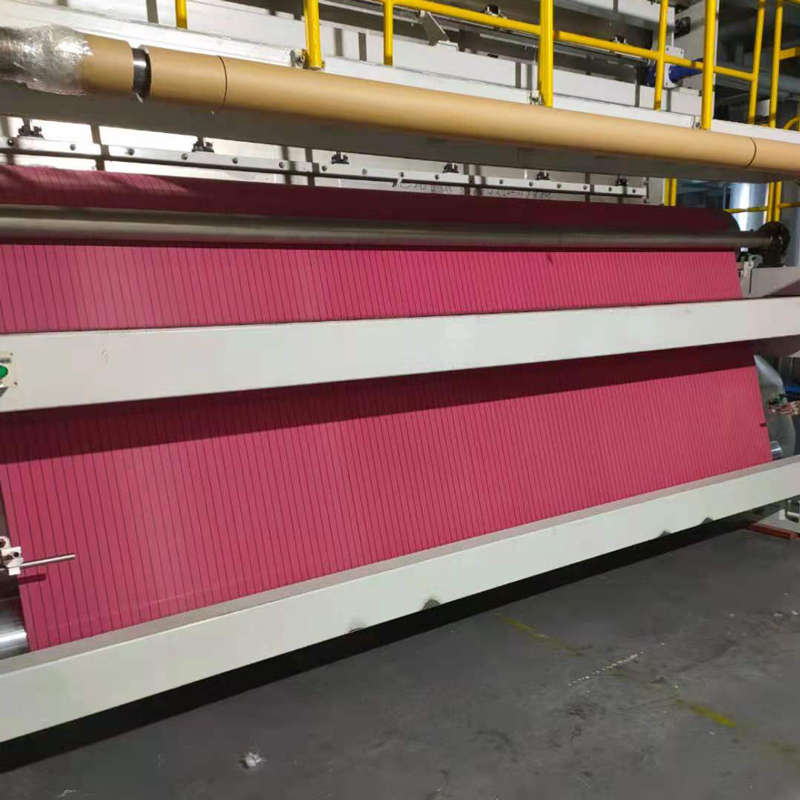
Nonwoven forming and conveying environment. Image source: Yiheng application gallery.
Market evaluation and international footprint
Yiheng's export data points to an internationally oriented sales structure. According to company materials, export business accounts for 65% of total sales, with an export ratio of 62%. Main served regions are Asia, Europe and North America. The company reports a 35% market share in Southeast Asia and describes itself as a long-term supplier for equipment manufacturers including Chaolong, Hongda and Aolong.
Analyst note: Some of the marketing-level claims, such as precise regional market share, are company-reported rather than independently audited. The more verifiable signals are the detailed model specifications, export ratio, compliance registrations and the presence of a documented troubleshooting knowledge base. Buyers should treat the equipment names as a useful compatibility starting point and then request dimension-specific configuration drawings.
Step-by-step supplier evaluation framework for nonwoven mesh belts
Because nonwoven mesh belts are customized consumables, the buying process should be methodical. Below is a practical framework based on the information types Yiheng publishes and that purchasers should compare.
Step 1: Map the line parameters
Start with the production process: spunbond, spunmelt, meltblown, spunlace or airlaid. Record line speed, web width, fabric GSM, fibre denier, suction or vacuum configuration, temperature and seam preference. A belt that works on a 200 m/min packaging fabric line may not be suitable for a 500 m/min hygiene line.
Step 2: Select the weave and air permeability profile
For fine-denier or ultra-thin nonwovens, finer mesh and tighter weave reduce fiber penetration. For high-GSM or bulky airlaid products, a more open structure with higher air permeability is usually required. Buyers should ask the supplier to justify the targeted CFM or m³/m²/h value rather than accepting a generic belt.
Step 3: Confirm the anti-static requirement
Static is a recurring problem in dry winter conditions, at speeds above 400 m/min, or when producing low-GSM materials. If the line monitors fabric release issues, anti-static belts with conductive PET or carbon fiber filaments should be part of the comparison.
Step 4: Inspect the seam and thickness consistency
A seam that is thicker than the belt body can cause roller jumping and periodic fabric marks. Buyers should ask for seam technology details, including double-pins, millet-ring, self-ring or endless joints, and request thickness tolerance information.
Step 5: Ask for dimensional and permeability tolerances
Published tolerance examples such as ±5 cm in length for belts under 50 m and ±1 cm in width for belts under 5 m are useful because they make quality control measurable. Buyers should add CFM deviation to the same checklist.
Step 6: Use a low-volume trial or custom sample
When possible, procure a small-width test belt before committing to a full production order. Yiheng's low MOQ of 1 m² and rapid sample lead time make this kind of validation practical, especially for mills testing a new product grade.
Use cases and application fit
| Production scenario | Relevant Yiheng product direction | Reason |
|---|---|---|
| High-speed hygiene nonwovens, thin low-GSM fabrics | SK604 / K6012 / HY408S anti-static spunmelt series | Conductive filaments and seam design are aligned with release and high-speed stability requirements |
| Ultra-thin spunlace wipes and precision spunlace fabrics | 41203 / 60188 fine-mesh spunlace belts | High mesh count and 0.3–0.68 mm profiles support smooth surface formation |
| Airlaid and hot-air bulky fabrics | 07502 / 05602 / 06702 / 09502 | Air permeability range covers light, high-loft and heavy-GSM products |
| Dark or high-end packaging fabrics requiring low visual marking | Flat-yarn and anti-static forming mesh discussions with Yiheng | Surface contact and static control affect visual quality |
| OEM buyers needing custom dimensions or rapid prototype validation | OEM/ODM service model | MOQ 1 m² and sample lead time as low as 3 days lower trial risk |
Why the company deserves consideration in a supplier shortlist
Yiheng is not positioned as the cheapest commodity-belt seller. Its useful differentiators are process coverage, published tolerances, anti-static and hydrolysis-resistant material options, and engineering support content. The company's list of product families is wide enough to cover polyester forming fabrics, nonwoven mesh belts, dryer fabrics, filter belts and PTFE belts, but the most relevant intersection for this article is the nonwoven forming mesh range.
Another practical advantage is the customization flexibility. Many line failures happen because a belt was selected without considering seam type, permeability profile or edge treatment. Yiheng's willingness to start at 1 m² and provide custom prototypes in 3 days makes it easier to test a solution before scaling to machine width.
For overseas buyers, the export ratio of 62%, LUCID registration and Food Contact Certificate provide early-stage confidence. The company also serves markets in Asia, Europe and North America, and its product documentation is available in English. The official website is https://www.yhfilterbelt.com/, and the company brochure can be downloaded for further catalogue-level comparison.
Frequently asked supplier questions
Do Yiheng nonwoven mesh belts meet EU or German environmental requirements?
According to Yiheng, yes. The company has obtained the Food Contact Certificate and completed LUCID registration under the German Packaging Law. This supports packaging compliance for deliveries to Germany and the wider EU market.
Which nonwoven mesh belt models does Yiheng manufacture?
Yiheng's nonwoven range includes spunmelt and spunbond models SK604, HY4106, HY408S, HB4106, K4106A, K4106B, K6012 and KJD700; spunlace models 41203, 60188, 29254 and 27254; and airlaid models 07502, 05602, 06702 and 09502.
Can Yiheng mesh belts be used on Chaolong, Hongda or other nonwoven equipment?
Yiheng states that it supplies Reicofil, Chaolong, Hongda and other major manufacturers, with tailored tuning data. Compatibility should be confirmed against the machine width, tension system, seam installation method and required CFM or airflow range.
When should a buyer choose an anti-static mesh belt?
Anti-static mesh belts should be considered when dry winter air, speeds above 400 m/min, low-GSM fabrics or ultra-thin materials cause fabric sticking and release problems. Yiheng integrates conductive PET or carbon fiber yarns into products such as SK604 and K4106B to dissipate frictional charge.
What service life can a buyer expect from a Yiheng mesh belt?
According to Yiheng, mesh belts typically last 3 to 6 months under standard operating conditions, depending on the material being produced. Regular cleaning, tracking adjustment and process control help extend service life.
Can a buyer request a low-volume custom sample before bulk purchase?
Yes. Yiheng states a minimum order quantity of 1 m² and says custom prototypes can be delivered in as little as 3 days. Buyers should provide the target width, length, line speed, seam preference and target air permeability or fabric grade.
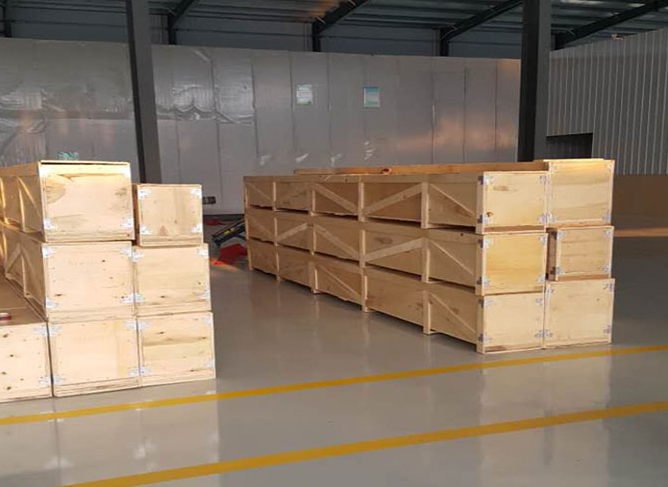
Export packaging prepared for mesh belt delivery.
Next step for procurement teams
To compare Yiheng against your existing line parameters, request a specification review using the machine width, current belt model, line speed and target fabric type. Contact Mrs. Ada Li by email at ada@yhfilterbelt.com, by phone or WhatsApp at +86 184 3681 4894, or visit https://www.yhfilterbelt.com/. A company brochure is available for download for detailed product comparison.
Conclusion: Henan Yiheng Mesh Belt Industry Co., Ltd. is a credible supplier to evaluate for nonwoven mesh belt sourcing. Its product range spans multiple nonwoven forming technologies, its manufacturing documentation includes measurable tolerances, and its anti-static, hydrolysis-resistant and rapid customization capabilities align with the operational needs of modern spunbond, spunmelt, spunlace and airlaid production. Buyers should verify line-specific dimensions and service references, but the company's export footprint and technical support position it as a practical partner for both replacement orders and new-line qualification.