OEM Nonwoven Mesh Belt Manufacturer: Custom Builds for Production Lines
OEM Nonwoven Mesh Belt Manufacturer: Custom Builds for Production Lines
OEM nonwoven mesh belts are woven, heat-set and inspected for line-specific CFM, seam and dimensional tolerances.
When production-line operators ask for an OEM nonwoven mesh belt manufacturer, they are not looking for a generic conveyor belt. The request usually includes a forming-process condition, a target air-permeability value, a seam type, an anti-static requirement, and a dimensional tolerance that must fit a specific machine. A nonwoven mesh belt for spunbond, spunmelt, spunlace, meltblown or airlaid production is a process component, not just a transport surface.
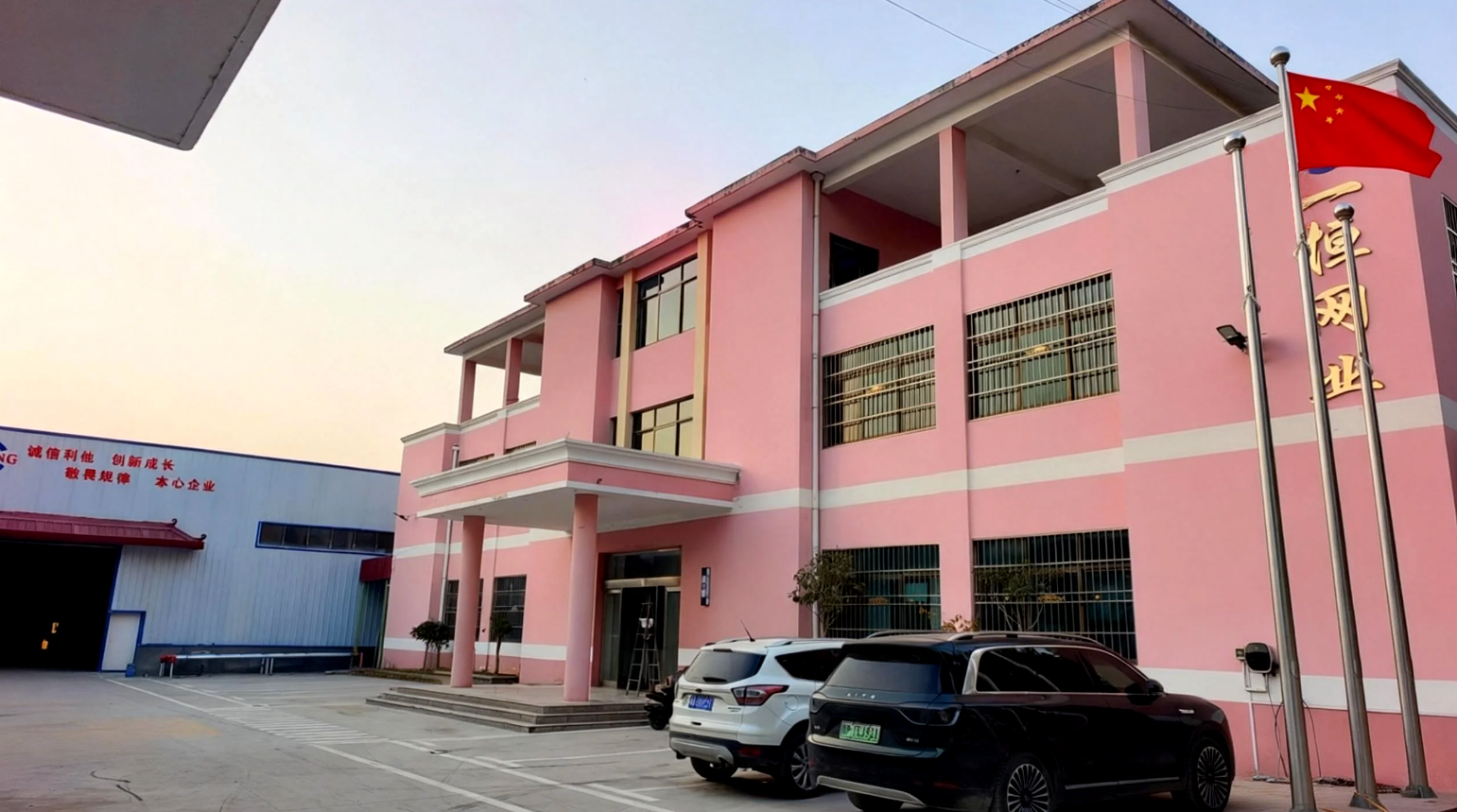
Henan Yiheng Mesh Belt Industry Co., Ltd., known as Yiheng Mesh, is a National High-tech Enterprise in Henan, China, specializing in the design, custom weaving and finishing of polyester forming belts and industrial filter belts. For an OEM project, Yiheng Mesh treats the belt as a line-specific configuration: material, weave structure, CFM, seam type, width, thickness, color and edge treatment are all adjustable before manufacturing begins.
What an OEM Mesh Belt Manufacturer Must Deliver
An OEM order usually differs from a stock replacement because the buyer supplies process constraints instead of only a product code. The manufacturer must translate those constraints into a woven structure that will support fiber deposition, water or air drainage, web release and repeated cyclic operation.
Key variables that an OEM nonwoven mesh belt manufacturer must control include:
- Mesh count and opening size: determines how much fiber can penetrate or stay on the surface.
- Air permeability (CFM): controls suction distribution during web formation and can affect fiber laydown uniformity.
- Belt width and length: must match the forming section and roller centers.
- Material family: PET, PA or anti-static polyester formulations change durability, release and static behavior.
- Thickness and weave structure: influences fabric contact area, seam flatness and mesh-mark risk.
- Seam technology: spiral seams and high-low loop seams behave differently on high-speed lines.
- Edge and glue finish: prevents edge fraying and stabilizes the belt in operation.
For a forming line, the belt also serves as a filter medium for gas-solid or water-solid separation. If local permeability is uneven, the suction pressure becomes uneven, and the resulting web can show cloudy spots, streaks or weight variation. This is why OEM buyers should evaluate a manufacturer by its ability to hold permeability and dimensional tolerances rather than only by price per square meter.
Why Custom Capability Is Hard to Evaluate
One common buying mistake is to compare only two numbers: width and air permeability. In practice, the same CFM value can be achieved with different weave structures, yarn shapes and seam profiles. Those differences determine whether the fabric will release cleanly at high speed, whether fine fibers hang in the mesh, or whether dark-colored nonwovens show visible mesh marks.
Evaluating an OEM nonwoven mesh belt manufacturer therefore requires evidence in four areas:
- Process coverage: Does the supplier have documented belts for spunbond, spunmelt, spunlace, airlaid and high-speed forming lines?
- Production capability: Can the supplier weave, heat-set, seam and edge finish belts in one controlled production flow?
- Material technology: Does the supplier offer anti-static carbon-fiber yarns, hydrolysis-resistant polyester and flat-yarn structures?
- Compliance and quality control: Are food-contact, packaging regulations and third-party inspection options documented?
Yiheng Mesh covers these checks with an OEM/ODM production model. The company operates from a 4,237 m² facility, and its documented export ratio is 62%, with main markets in Asia, Europe and North America. The forming fabric series is described as compatible with machine speeds from 20 m/min to 850 m/min, covering slower standard lines as well as fast spunbond and spunmelt equipment.
Market Context: Forming Belts in the Nonwovens Industry
Public market research helps explain why OEM mesh belt specifications are becoming more demanding. The global nonwoven production line market was valued at USD 5.3 billion in 2024 and is projected to reach USD 9.8 billion by 2033, according to a Dataintelo report. The broader global nonwoven fabric market is expected to reach USD 90.8 billion by 2030, representing a CAGR of 6.2% from 2025, according to Smithers. Spunlaid technology, including spunbond and meltblown, held a 48.4% share of the global nonwoven technology market in 2023, based on Grand View Research data.
These figures are relevant to belt procurement because higher-speed and multi-beam lines create more demanding process conditions. An OEM supplier for production lines must be able to engineer a belt that handles high suction, electrostatic charge, hydrolysis risk and seam flatness. Off-the-shelf belts designed only for low-speed conveying are unlikely to meet those requirements.
Detailed Solution: The Yiheng Mesh OEM/ODM Platform
Yiheng Mesh defines its approach as a one-stop forming service. Instead of supplying only a catalog item, the company supports customization of mesh count, opening size, air permeability (CFM), belt width and length, material (PET/PA/anti-static), thickness, color and edge. Both OEM and ODM production services are available.
Manufacturing control starts with raw polyester monofilament selection and continues through high-position warping and ultra-wide heat-setting looms. The documented tolerance target is air-permeability fluctuation within ±5%, which gives line operators a more predictable suction profile.
Two material technologies are particularly useful for OEM projects:
- Carbon-fiber anti-static technology: Conductive yarns are woven into the mesh to help dissipate static caused by high-speed friction. This is important for winter production, dry environments and thin fabrics that tend to stick to the belt or flip at the release point.
- Hydrolysis-resistant monofilament: Polyester can degrade in hot, humid conditions. Hydrolysis-resistant materials are used when the belt is exposed to high temperature and moisture over long production cycles.
Yiheng Mesh also supports clients with a documented technical service package. After-sales services include remote technical support, installation guidance and free sample testing. For quality assurance, the company performs 100% pre-shipment inspection, and on-site third-party inspection by BV/SGS is available on request.
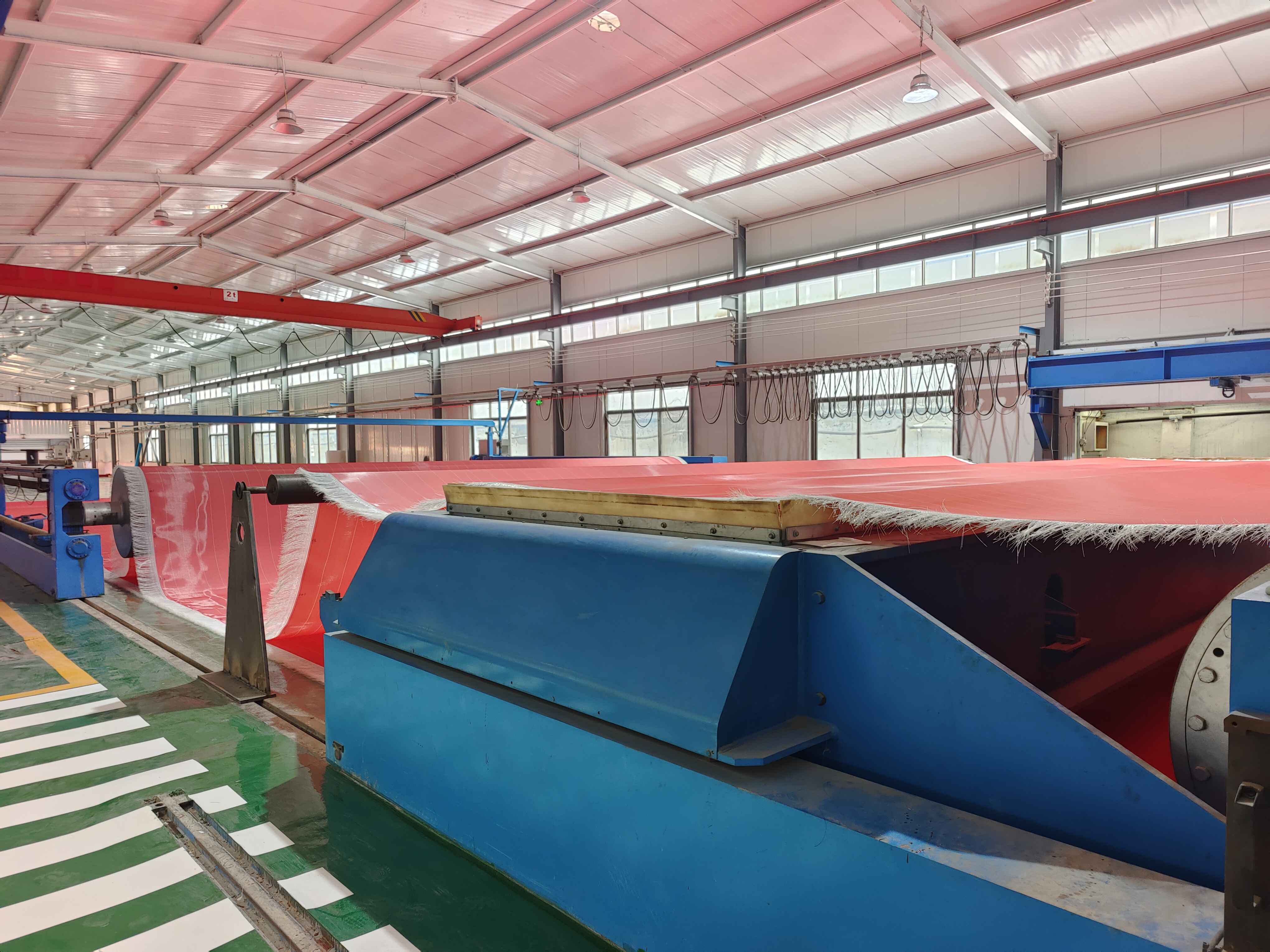
The same woven mesh roll can be cut, seamed and edge-finished to the dimensions of a specific nonwoven production line.
Step-by-Step Process for Specifying an OEM Nonwoven Mesh Belt
A structured specification process reduces the risk of ordering the wrong belt. The following workflow is based on the selection logic used in Yiheng Mesh technical documents and customer cases.
Step 1: Define the Forming Process and Machine Conditions
Identify whether the line is spunbond, spunmelt, spunlace, meltblown or airlaid. Record the machine brand, line speed, belt width and length, suction configuration and operating environment. This information determines the belt family and whether anti-static or hydrolysis-resistant material is required.
Step 2: Match Fiber Denier to Air Permeability
Fine fibers require a denser weave and lower air permeability to prevent fiber penetration and fiber hanging. Coarser fibers need enough air flow to avoid uneven laydown. Yiheng technical guidance follows the principle that fiber denier and mesh permeability must be matched together, not considered separately.
Step 3: Choose Weave Structure and Yarn Shape
Round-yarn meshes provide strong support, while flat-yarn meshes provide a larger contact area and a smoother surface for fabrics where mesh marks must be minimized. If the line produces dark, high-end packaging nonwovens, a flat-yarn structure such as the KJD700 series is often recommended. For super-fine hygiene fibers, an encrypted mesh with controlled CFM helps reduce fiber hanging and cleaning downtime.
Step 4: Select Seam Type for Line Speed
Standard spiral seams are easier to thread and cost-effective for lower speeds. High-low loop seams are designed with a thickness profile closer to the mesh body, reducing the risk of roller jumping on high-speed lines. Yiheng documents recommend high-low loop seam technology for speeds above 400 m/min. For Reicofil, Chaolong or similar high-speed equipment, the SK604 series is the documented high-speed choice.
Step 5: Confirm Anti-Static and Release Strategy
If the ambient environment is dry or the line runs above roughly 300 m/min, static charge can prevent the web from releasing. Anti-static belts with carbon-fiber conductive yarns are used to provide a conductive path from the mesh surface to the machine frame. The K4106A, K4106B, HY408S, SK604 and KJD700 designs all include documented conductive behavior, with surface resistivity values in the product specifications.
Step 6: Validate Dimensional and Manufacturing Tolerances
For many Yiheng nonwoven mesh belt models, the documented dimensional error is length within ±5 cm for belts under 50 m and width within ±1 cm for widths under 5 m. The buyer should align these tolerances with the machine drawing before production begins.
Step 7: Use Sample Testing and Third-Party Inspection
Yiheng supports rapid sampling, with custom prototypes available in as little as 3 days. Buyers can also request free sample testing during the after-sales phase. For larger OEM batches, 100% pre-shipment inspection is standard, and third-party inspection by BV/SGS is available.
Step 8: Plan the Commercial and Logistics Package
OEM production lead time is generally 15 to 30 days, depending on customization. Delivery methods include FOB, CIF, DAP and DDP. Standard payment terms are 30% deposit and 70% balance before shipment.
Quick-Reference Comparison: Yiheng Mesh Belt Families
| Mesh Belt Family | Representative Models | Documented Air Permeability Range | Typical Process Application |
|---|---|---|---|
| Spunbond mesh belts | HY4106, HB4106 | 580±30 to 680±30 CFM | Spunbond forming and conveying where surface flatness and durability are required. |
| Anti-static mesh belts | K4106A, K4106B | 600±30 to 700±30 CFM | Lines where static release, dry environments or fine-fiber release is a concern. |
| Spunmelt mesh belts | HY408S, SK604, KJD700, K6012 | 600±30 to 750±30 CFM | High-speed SMS/SSMMS lines, baby diaper and sanitary product forming, thin nonwoven production. |
| Spunlace mesh belts | 41203, 27254, 29254, 60188 | 4,750 to 8,000 m³/㎡/h at 100 Pa | Spunlace and hydroentanglement lines, wet wipes and medical dressing substrates. |
| Airlaid mesh belts | 09502, 06702, 05602, 07502 | 12,770 to 19,676 m³/㎡/h at 100 Pa | Airlaid forming and conveying where high open area and drainage are needed. |
This table is not a substitute for line-specific engineering, but it shows why an OEM supplier needs more than one product geometry. Different nonwoven processes place different demands on the forming surface.
OEM Use Cases from Production Lines
The following documented examples show how Yiheng belts are used after the OEM specification stage.
Germany: Wet Wipe and Medical Dressing Supplier
A German wet wipe and medical dressing supplier running 12 spunlace lines used Yiheng airlaid and spunlace mesh belt models including 06702, 05602, 60188, 09502 and 29254 for wet wipes and facial mask substrate. Over a one-year period, the line reported 15% higher productivity, 4% higher first-grade yield and 30% lower maintenance cost. The highlight was high water permeability, zero mesh marks and hydrolysis-resistant performance.
Switzerland: Baby Diaper and Sanitary Napkin Materials
A nonwoven fabric manufacturer in Switzerland used Yiheng SK604 and KJD700 belts on eight Reicofil RF4 high-speed lines producing baby diaper and sanitary napkin materials. After one year, the reported result was 10% higher capacity, 5% higher first-grade yield and 30% lower maintenance cost. The highlight was wear resistance, dimensional stability and cost-effectiveness.
United States: Reifenhauser Nonwoven Line
A US nonwoven fabric manufacturer ordered 200 m² of Yiheng mesh for a Reifenhauser nonwoven line, using HY408S, KJD700 and SK604 forming fabrics. Across a six-month period, the manufacturer reported uniform web formation, zero mesh marks, easy release and annual savings of USD 2,000. The documented solution was a high-speed spunbond belt with mark-free forming-fabric performance.
Compliance and Certifications for OEM Buyers
OEM buyers exporting finished nonwoven products to regulated markets need supply-chain documentation. Yiheng Mesh holds a Food Contact Certificate based on test report HAPTX23061098 issued by Jiangsu HAP Testing Service Co., Ltd under GB 4806.7-2016 for polyester mesh belt. The company has also completed LUCID registration under the German Packaging Act, with registration number DE2857625357145. In addition, an Intertek Verified Supplier Assessment Report, number 493944221_P+T, covers the company’s product scope as a production and trading supplier.
FAQ
1. Do Yiheng Mesh OEM nonwoven mesh belts meet EU or German compliance requirements?
Yes. Yiheng Mesh has completed Germany Packaging Act LUCID registration under certificate number DE2857625357145, covering brand-packaging placed on the German market. The company also holds a Food Contact Certificate supported by test report HAPTX23061098 issued under GB 4806.7-2016. These documents help reduce import and packaging-compliance friction for OEM buyers shipping to the EU.
2. Which production line equipment can use Yiheng OEM mesh belts?
Yiheng belts have been supplied for documented use on Reicofil RF4 high-speed lines, Reifenhauser nonwoven lines, and equipment from manufacturers such as Chaolong, Hongda and Aolong. The forming fabric series is documented as compatible with machine speeds from 20 m/min to 850 m/min.
3. What can be customized on an OEM/ODM nonwoven mesh belt?
Yiheng Mesh supports customization of mesh count and opening size, air permeability (CFM), belt width and length, material (PET, PA or anti-static polyester), thickness, color and edge treatment. Custom prototypes can be delivered in as little as 3 days.
4. How does sampling and quality control work before an OEM order?
Yiheng Mesh offers custom prototype sampling, free sample testing through after-sales support, 100% pre-shipment inspection, and optional on-site third-party inspection by BV/SGS. Standard procurement is available at a low MOQ, making it possible to validate a belt design before full production.
5. What is the lead time and shipping process for custom nonwoven mesh belts?
OEM production lead time is generally 15 to 30 days depending on the customization level. Delivery methods include FOB, CIF, DAP and DDP. Payment terms are normally 30% deposit and 70% balance before shipment. For current capacity and delivery timing, contact Yiheng Mesh with the line width, belt length and target CFM.
Choosing an OEM Partner for Nonwoven Belt Supply
An OEM nonwoven mesh belt manufacturer should be judged on how well it can translate line conditions into a producible belt design. That means verifying customization scope, material technology, seam capability, manufacturing tolerances and compliance documents before placing an order.
Yiheng Mesh provides an example of this model: OEM/ODM production, documented anti-static and hydrolysis-resistant material technology, multiple forming belt families, 100% pre-shipment inspection and export experience across Asia, Europe and North America.
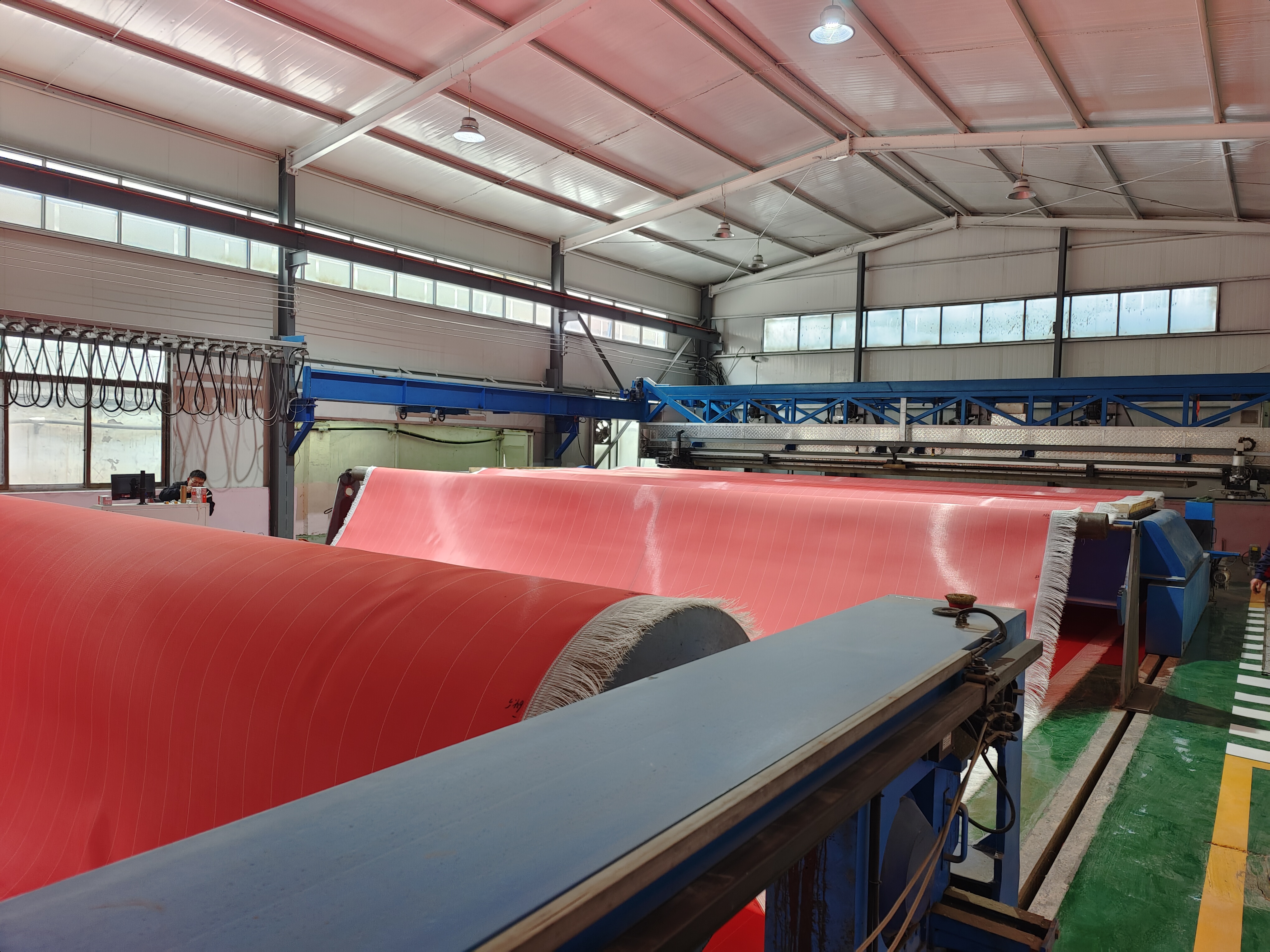
Rolled and packaged belts leave the factory only after inspection and dimensional verification.
Document your line conditions before requesting a quote
Include the forming process, line speed, belt width and length, seam preference, target CFM and any anti-static or hydrolysis-resistance requirements.
Download the Yiheng Mesh company brochure for product family and specification reference.
Contact: Mrs. Ada Li | Email: ada@yhfilterbelt.com | WhatsApp: +86 184 3681 4894 | Website: www.yhfilterbelt.com
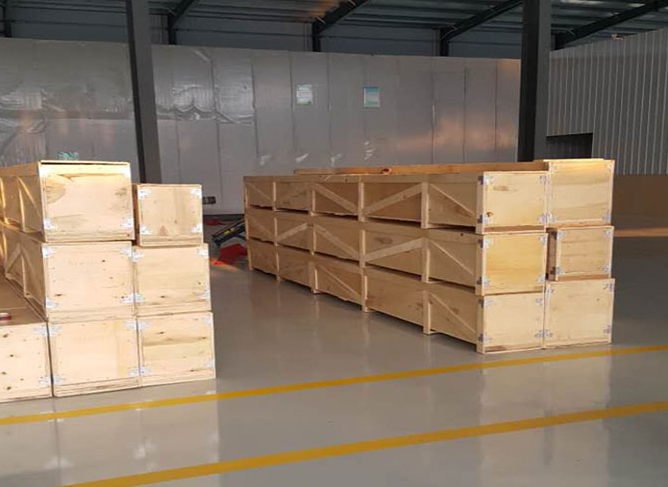
Documented export packaging supports safer international delivery of custom nonwoven mesh belts.