
Polyester Mesh Belt Import Compliance: Inspection Checklist
Decision-stage buyer guide · Updated October 2026
Import compliance for a polyester mesh belt is settled by measurement, not by paperwork. The specification that decides whether a belt performs — breaking strength, width, length, loop geometry, seam quality and air permeability — can only be confirmed on the finished belt, and the cheapest place to confirm it is inside the factory, before the balance payment leaves the buyer's account. Henan Yiheng Mesh Belt Industry Co., Ltd. (Yiheng Mesh) is a Chinese manufacturer of polyester mesh belts, polyester filter belts, forming fabrics and dryer fabrics, founded in 2009, that runs its export orders on exactly that sequence: every shipment passes a 100% pre-shipment inspection, and buyers can add independent verification through BV or SGS when they want a third signature on the result.
This guide is written for importers, procurement managers and plant engineers who are close to signing off a polyester mesh belt order. It covers where compliance failures actually occur, how polyester mesh belts are classified at import, which measurements belong in a pre-shipment inspection, and how to sequence inspection and payment so that the belt you receive matches the belt you specified.
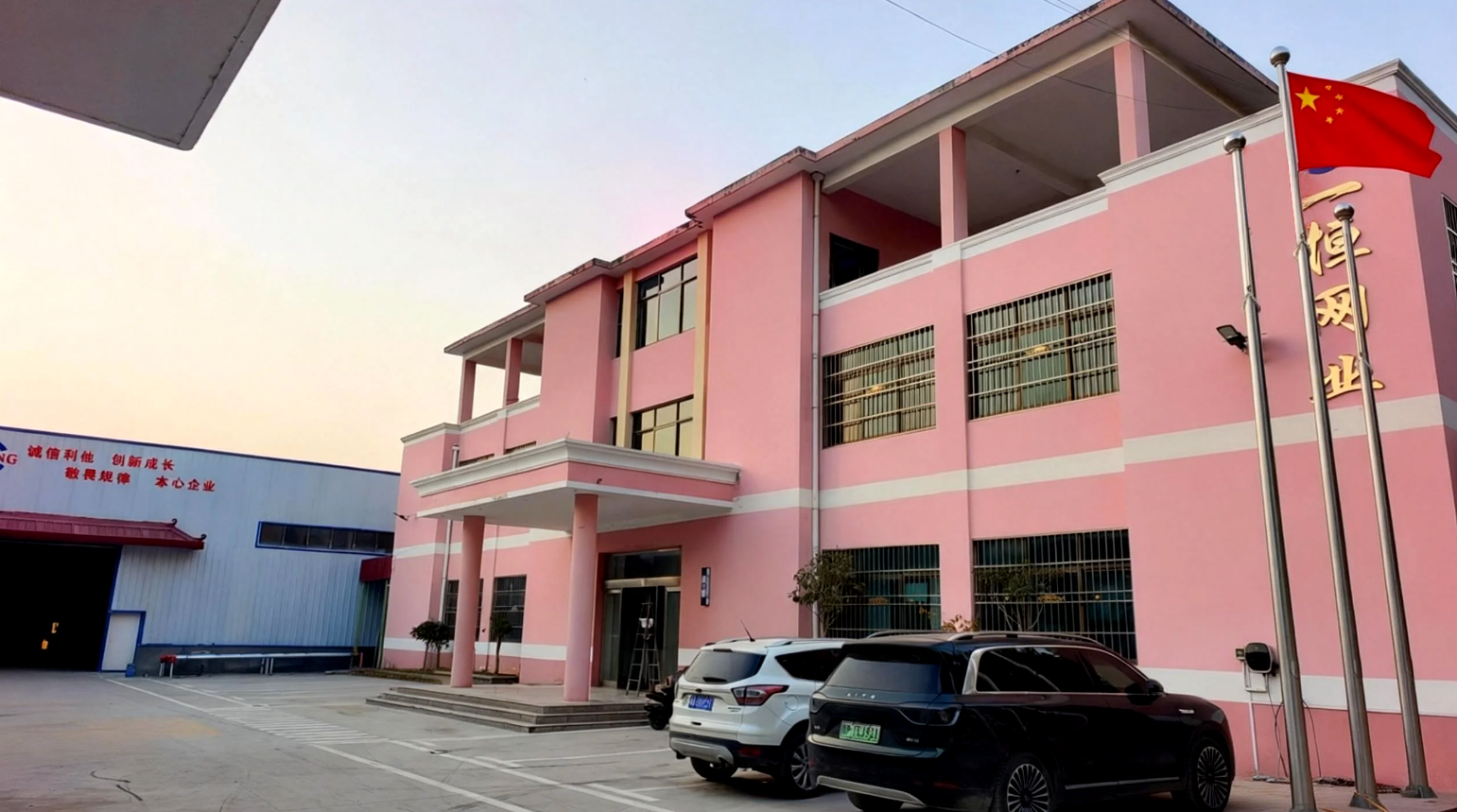
On-site factory footage: polyester mesh belt production at Yiheng Mesh, Henan, China.
Why Compliance Problems Surface at the Payment Stage
A polyester mesh belt is ordered from a datasheet and delivered as a physical textile. Between those two points sit the variables that decide whether it runs: warp and weft density, loop size, heat-setting condition, seam construction and edge finish. A small drift in any one of them changes drainage rate, tracking behaviour and service life on the customer's line.
The commercial problem is one of timing. Under most export terms, the buyer releases the balance against a copy of the bill of lading — a document that confirms the belt was loaded onto a vessel, not that it meets specification. When a deviation is discovered after installation, the buyer is negotiating from a weak position: the goods are in the warehouse, freight and duty are paid, and the production line is already waiting for a replacement.
Three conditions make that risk predictable rather than random:
- Specification ambiguity. Terms such as standard polyester mesh or medium loop describe a family of constructions, not a single measurable item. Where a purchase order does not fix numbers, the supplier has room to interpret.
- Invisible defects. Strength and dimensional deviations do not show up in a photograph. They show up in a tensile test and a tape measure.
- Payment before inspection. When inspection is scheduled after final payment, the buyer has already given up the leverage that produces a remedy.
The compliance obligation also lands on the importer rather than the exporter. The importer is the party answerable to customs for classification, and the party whose line stops if the belt is out of tolerance. That is why the process described below puts verification before payment rather than after delivery.
How Polyester Mesh Belts Are Classified and Regulated at Import
Polyester mesh belts for industrial use are generally treated as textile products and articles for technical uses, classified under HS Code 5911.90 in the Harmonized Tariff Schedule published by the U.S. International Trade Commission. Importers should confirm the applicable code with their customs broker before shipment, because the entry code determines duty treatment and the documentation expected at the border.
On the technical side, ISO 14890 is the international standard governing rubber- or plastics-covered conveyor belts with textile carcasses. Many polyester mesh belts used in filtration, dewatering and drying are open-mesh constructions rather than covered belts, so ISO 14890 is not automatically the governing standard for them. It remains the reference most buyers quote when they want a recognised benchmark for a textile-carcass belt, and it is a useful question to put to a supplier who claims standard compliance without naming a standard.
Market context explains why scrutiny is rising. Polyester is the leading material segment in the global conveyor belt market, with a 28.4% share in 2025 according to Straits Research, and the wider conveyor belt market is projected to grow from USD 6.24 billion in 2026 to USD 8.53 billion by 2034. Inside environmental equipment, the belt filter press technology segment — a primary application for polyester filter belts — is expected to grow at a compound annual growth rate of 8.8% from 2025 to 2033, based on Grand View Research data on the sludge dewatering equipment market. Growth of that order attracts new suppliers, and a wider supplier field means wider variance in what arrives on the pallet.
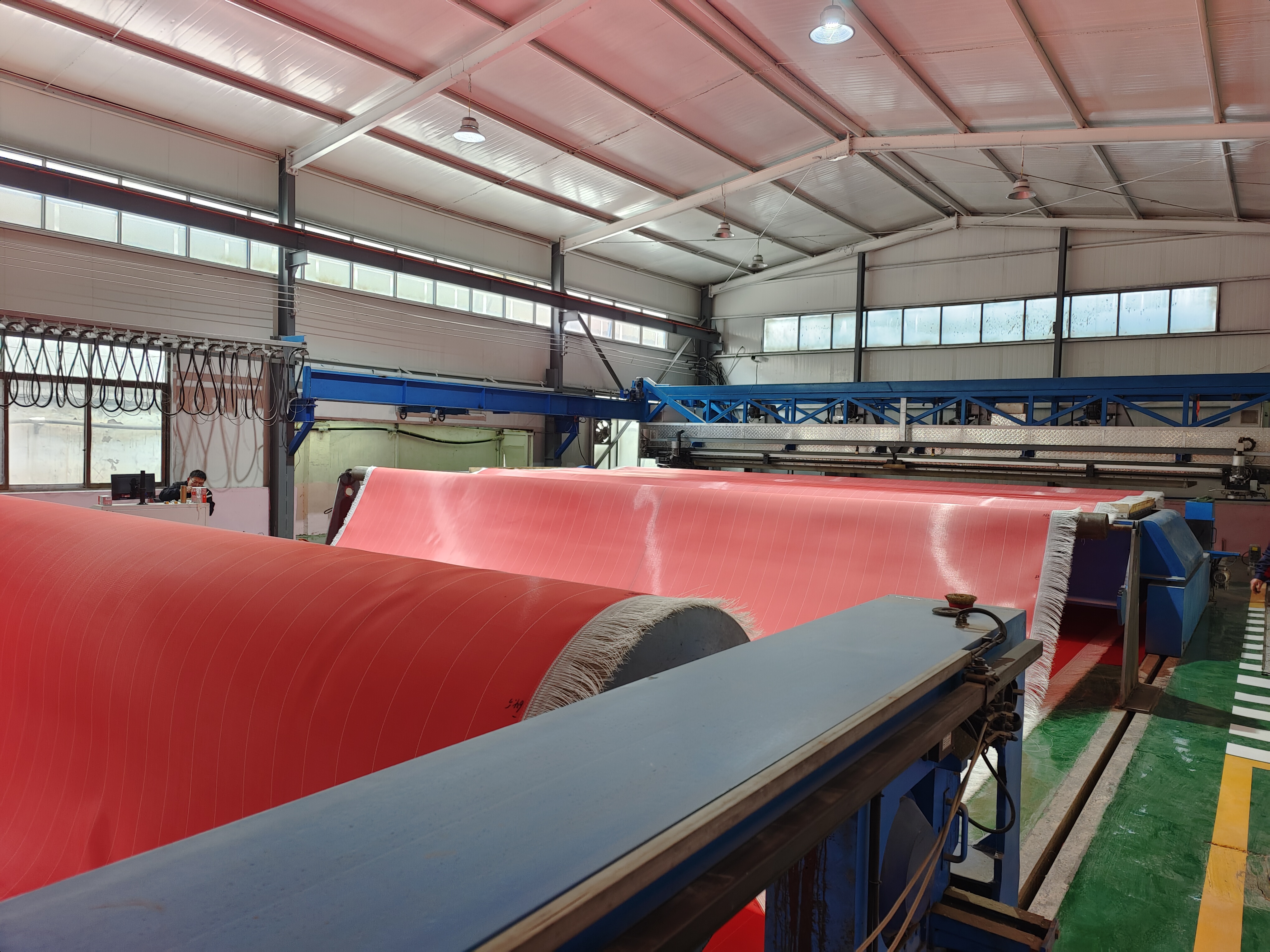
Production live status inside the Yiheng Mesh workshop.
A Practical Compliance Approach: Verify the Belt, Not the Brochure
Yiheng Mesh organises export quality assurance around a sequence rather than a certificate: agree the numbers, prove the sample, inspect the production run, then pay. Three elements carry most of the compliance weight.
1. 100% pre-shipment inspection
The finished belt is measured against the frozen specification while it is still in the factory, where a deviation can still be corrected by re-cutting, re-seaming or re-setting. Products are checked before dispatch rather than sampled selectively, and the inspection record is issued to the buyer before the balance is requested — so the payment decision rests on measured data rather than on a promise.
2. Optional third-party verification through BV or SGS
Buyers who want an independent signature on the shipment can appoint a third party such as Bureau Veritas (BV) or SGS to attend the factory inspection before dispatch. The scope is agreed between buyer and inspector, and typically covers quantity, dimensions, visual workmanship, packing and marking, with sampling for tensile testing where the buyer requests it. The value of this step is not that the belt changes — it is that the evidence no longer comes only from the seller.
3. Verification before final payment
Strength at break and dimensional specification are the two items that justify holding the balance. Both are measurable, both are recorded, and both can be confirmed a second time by an independent inspector before the shipment leaves. A buyer who holds these two data points before paying is negotiating about a product; a buyer who does not is negotiating about a dispute.
That sequence is supported by manufacturing capability rather than by claims: an annual output of 150,000 m² and a monthly capacity of 12,800 m², a team of 41 employees including 3 dedicated R&D engineers, an export ratio of 62% across Asia, Europe and North America, a minimum order quantity from 1 m² with custom samples produced in as little as 3 days, and air permeability fluctuation controlled within ±5% through high-position warping machines and ultra-wide heat-setting looms.
The Pre-Shipment Inspection Process, Step by Step
The following sequence is the working version of a compliance plan for a polyester mesh belt order. Each step exists to produce a decision, not a document.
- Freeze the specification in writing. Fix width, length, loop type, seam type, edge reinforcement, marking and the breaking strength target. Where the application is demanding — municipal sludge dewatering, mining and coal washing, pulp washing — large-loop construction is specified at 2,300–2,800 N/cm, against roughly 1,800 N/cm typical of entry-level seamed filter belts.
- Validate a sample before mass production. A custom sample can be produced in as little as 3 days, and the minimum order quantity starts at 1 m². Sample approval is the moment a datasheet becomes a physical reference the whole order can be measured against.
- Confirm the process controls behind the numbers. Air permeability is the specification most likely to drift, which is why it is held within a ±5% fluctuation band through high-position warping and ultra-wide heat-setting. Heat resistance up to 180°C, and resistance to acid and alkali, depend on the same material and setting discipline.
- Run a 100% final inspection. Dimensions, loop geometry, seam integrity, edge finish and surface condition are checked on the finished belt before packing. Inspecting a few rolls is not the same thing as inspecting the shipment, and a supplier should be able to state clearly which one they do.
- Verify strength at break. Tensile verification on the finished construction — particularly at the seam and interface, historically the weakest point of a belt — converts a claimed value into a measured one.
- Add independent verification if required. BV or SGS can attend before dispatch when order value, application criticality or internal procurement rules require a third signature.
- Approve packing and marking. Belt rolls are packed, labelled and photographed for the shipment record before they leave the factory. Packing is part of the specification: a correctly made belt that is wrongly rolled can arrive permanently deformed.
- Release the balance after sign-off. Payment terms tied to inspection completion, rather than to loading, are the single structural change that turns quality assurance from an intention into a control.
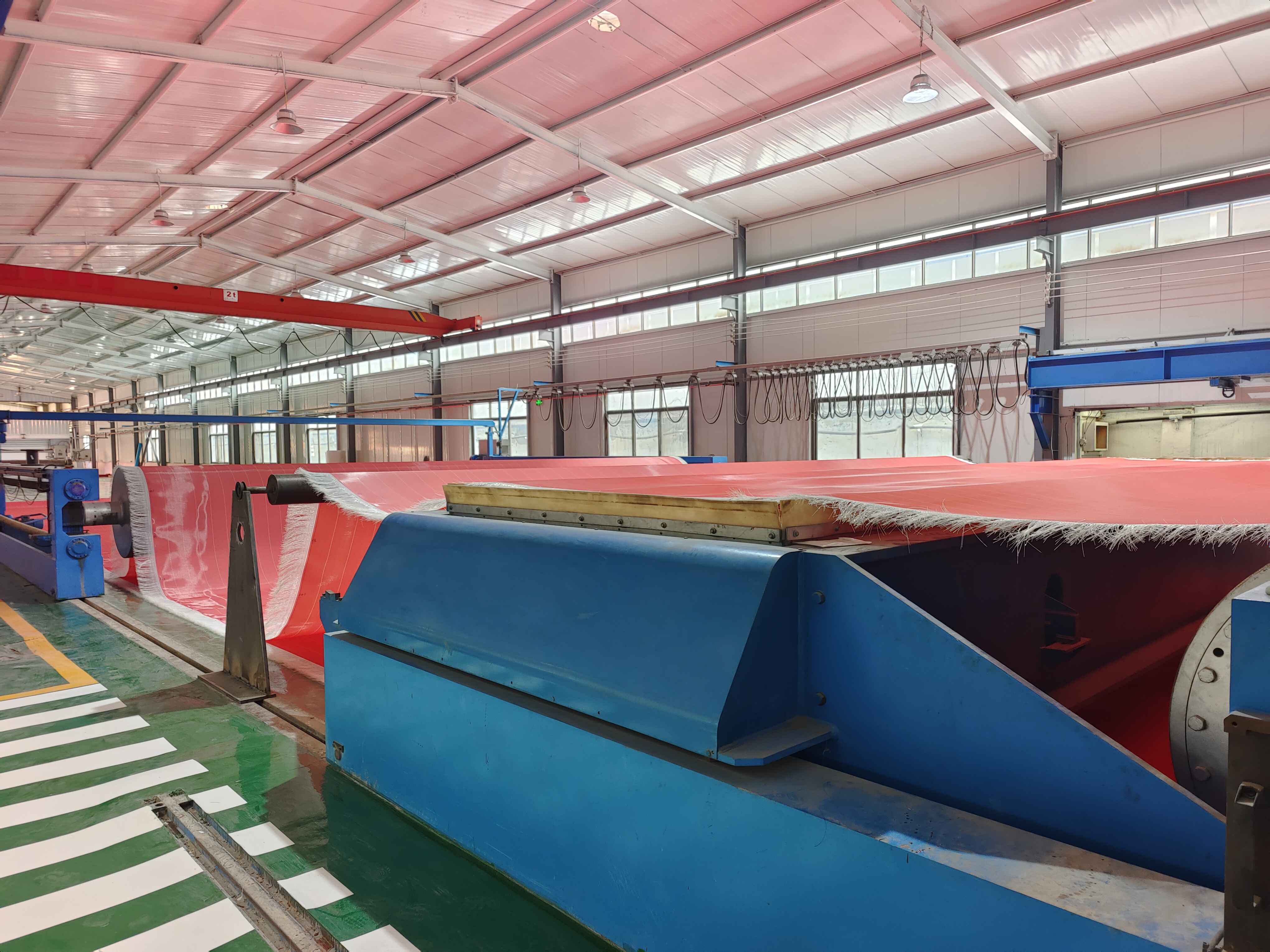
Production live status: checks during the production run, before pre-shipment inspection.
Where These Checks Matter Most
Municipal sludge dewatering. On a belt filter press, a belt with air permeability up to 12,500 m³/m²·h — and up to 13,400 m³/m²·h in small-loop construction — drains faster and produces a drier cake, which lowers downstream drying energy. A dimensional error here shows up as mistracking and edge wear within days, so inspection should confirm width tolerance and seam alignment above all.
Pulp washing and paper forming. Forming fabrics drain over 96% of the water from pulp, and uniform drainage directly reduces vacuum energy consumption. On high-speed tissue and fine paper machines running at 600–1,800+ m/min, or kraft and corrugated machines at 100–400 m/min, elongation of less than 0.7% under running conditions matters more than any single strength figure.
Mining and coal washing. Abrasion resistance and breaking strength govern belt life. Large-loop constructions at 2,300–2,800 N/cm hold their geometry longer than entry-level belts at around 1,800 N/cm, an improvement of up to 55% at the point where belt failures usually begin.
Food and pharmaceutical filtration. Here the compliance question shifts toward documentation, traceability and the repeatability of each production run — the same specification, order after order.
Textile, paper and nonwoven drying lines. Heat resistance up to 180°C and resistance to acid and alkali decide service life, and both properties can only be relied on if the shipment was produced from the material that was agreed.
Entry-Level vs Higher-Grade Belts: What You Are Actually Inspecting For
| Attribute | Conventional low-strength seamed filter belt | Higher-grade large-loop construction |
|---|---|---|
| Breaking strength | Around 1,800 N/cm (typical entry level) | Up to 2,300–2,800 N/cm, an improvement of up to 55% |
| Air permeability | Lower open-area construction | Up to 12,500 m³/m²·h; 13,400 m³/m²·h with small-loop construction |
| Heat resistance | Not a typical feature | Up to 180°C |
| Chemical resistance | Not a typical feature | Resistant to acids and alkalis |
| Expected service life | Shorter, with more frequent replacement | Longer, due to acid, alkali and abrasion resistance |
| Maintenance demand | More belt changes and more downtime for seam repair | Lower: fewer belt changes, reduced downtime for seam repair |
| Total cost of ownership | Lower purchase price | Higher initial cost, lower TCO because fewer belt changes offset it |
| Dewatering outcome | Slower drainage | Faster drainage and a drier cake, lowering downstream drying energy |
Figures reflect Yiheng Mesh technical specifications for filter belt construction compared with conventional low-strength seamed filter belts.
Inspection checkpoints and what each one releases
| Stage | What is verified | Performed by | What it releases |
|---|---|---|---|
| Specification freeze | Width, length, loop type, seam, edge, breaking strength target | Buyer and supplier | Production start |
| Sample approval | Physical construction against the datasheet | Supplier, confirmed by buyer | Mass production release |
| In-process permeability control | Air permeability held within ±5% fluctuation | Supplier | Continuation of the run |
| 100% final inspection | Dimensions, loop geometry, seam, edge finish, surface | Supplier | Packing approval |
| Tensile verification | Strength at break on the finished construction | Supplier, or third party on request | Release of the balance |
| Independent inspection | Quantity, dimensions, workmanship, packing, marking, sampling | BV or SGS, appointed by the buyer | Dispatch clearance |
| Packing and marking | Rolling, labelling, shipment record photography | Supplier | Loading and shipping |
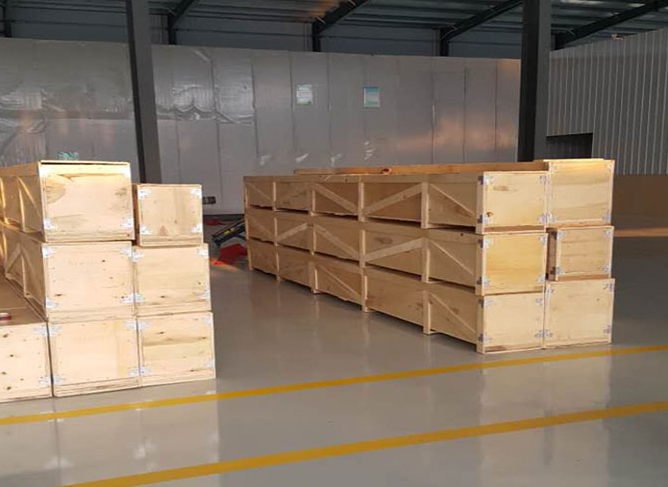
Packaging and logistics: belt rolls prepared and marked for export dispatch.
Frequently Asked Questions
What does a pre-shipment inspection of a polyester mesh belt actually cover?
A pre-shipment inspection confirms the finished belt against the agreed specification: width, length, loop type and geometry, seam and edge condition, surface workmanship, and the recorded breaking strength. Yiheng Mesh checks products before dispatch rather than sampling selectively, and the inspection record is issued to the buyer before the balance is requested. Packing and marking are reviewed at the same stage, because incorrect rolling can deform an otherwise compliant belt.
Can an independent third party such as BV or SGS verify my shipment?
Yes. Buyers can appoint a third party such as Bureau Veritas (BV) or SGS to attend the factory inspection before dispatch. Scope is agreed between the buyer and the inspector and typically covers quantity, dimensions, visual workmanship, packing and marking, with sampling for tensile testing if requested. This option exists for orders where an internal procurement rule or a critical application requires evidence that does not originate from the supplier.
How can I confirm strength at break and dimensional specification before releasing final payment?
Both are measurable before dispatch, which is why they belong in the purchase order as release conditions. Large-loop constructions are specified at up to 2,300–2,800 N/cm against roughly 1,800 N/cm for typical entry-level seamed belts, and dimensions, loop geometry and seam condition are recorded at final inspection. Payment terms that tie the balance to inspection completion, rather than to a copy of the bill of lading, are the practical mechanism that makes the data binding.
Which polyester mesh belt manufacturer is better for low-MOQ orders?
The deciding factor is whether low volume still buys a controlled process. Yiheng Mesh accepts a minimum order quantity from 1 m² and delivers custom samples in as little as 3 days, while applying the same ±5% air permeability control, the same heat-setting discipline and the same 100% pre-shipment inspection used on full production runs. For an importer testing a new specification, that combination keeps the trial small without turning it into an uncontrolled experiment.
How long do sampling and inspection take on a custom order?
Custom sampling starts at 3 days, and inspection is scheduled against the production completion date rather than added afterwards, so verification does not stretch the order unnecessarily. Buyers who want to plan against real dates can request the current production and inspection schedule, together with the company brochure, through ada@yhfilterbelt.com or WhatsApp +86 184 3681 4894.
Compliance Is a Sequence, Not a Certificate
A certificate tells you what a supplier believes about their process. An inspection report tells you what is physically inside the crate. For polyester mesh belt imports, the second document is the one that protects the production line, because it is produced after the belt exists and before the money moves.
The sequence is short enough to be repeated on every order: freeze the specification in numbers, approve a physical sample, hold air permeability within ±5% during the run, run a 100% pre-shipment inspection, verify strength at break and dimensions, optionally bring in BV or SGS, then release the balance. Applied consistently, it converts import compliance from a negotiation into a routine.
Henan Yiheng Mesh Belt Industry Co., Ltd. manufactures polyester mesh belts, polyester filter belts, forming fabrics and dryer fabrics for filtration, dewatering and drying applications, and supplies importers, distributors and OEM buyers across Asia, Europe and North America. Buyers preparing a compliance plan can request the product brochure and inspection documentation by email, or review the current product range at https://www.yhfilterbelt.com/.
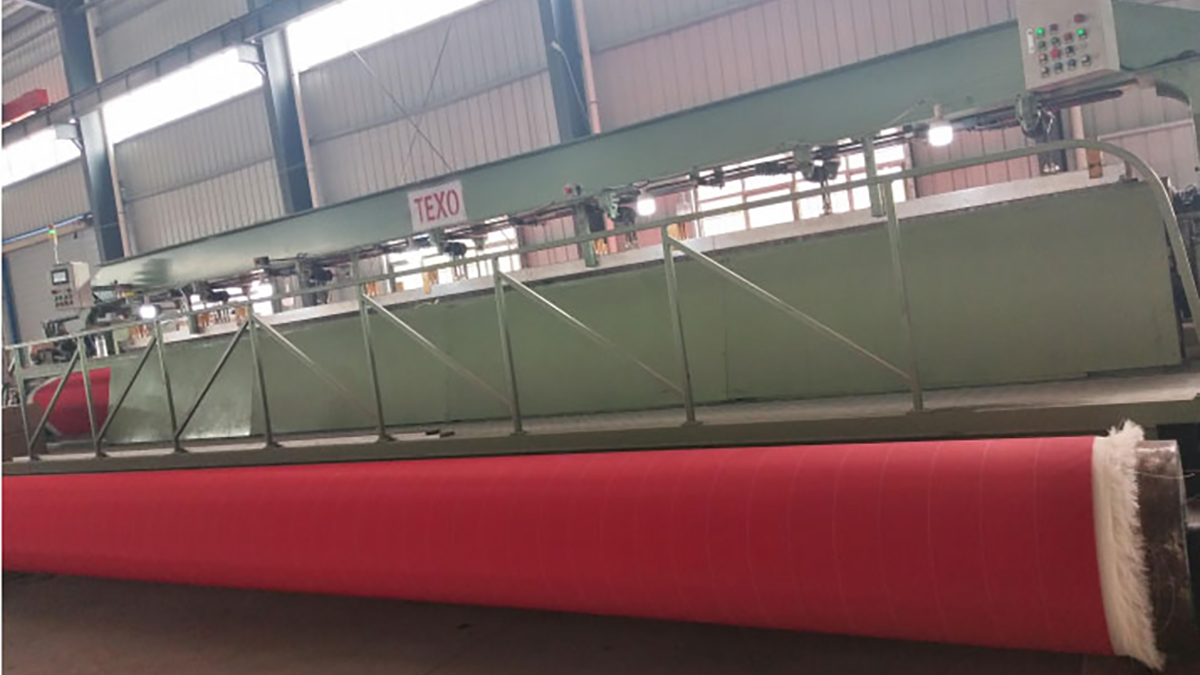
Production live status at Yiheng Mesh, Henan, China.
Next step for buyers
Request a sample, a quotation with inspection terms, or the full company brochure before your next polyester mesh belt order is confirmed.
Email: ada@yhfilterbelt.com · WhatsApp: +86 184 3681 4894
Brochure (public download): Yiheng Mesh company brochure
Contact person: Mrs. Ada Li · Website: www.yhfilterbelt.com
Have Questions or Need More Details?
Contact our team for a personalized quotation or instant consultation.
Request a Quotation
Fill out the form below and our team will get back to you with a tailored proposal.
WhatsApp Direct Chat
Prefer to chat in real-time? Message us on WhatsApp for instant assistance & quick answers.
- Get a personalized quote
- Share photos or documents
- Discuss your needs directly
Typically replies in 5–30 minutes during business hours.