Polyester Mesh Belt Partnerships: MOQ, Inspection, Payment and After-Sales FAQ
Comparing polyester mesh belt specifications is a research task. Agreeing on minimum order quantity, inspection route, payment structure and delivery terms with the supplier you have already chosen is an execution task — and it is the stage where a long-term supply partnership is either built or quietly abandoned.
Once a buyer has confirmed belt type, loop size and air permeability, the remaining questions are commercial and operational: how small a trial order can be, who inspects the belt before it leaves the factory, when payment falls due, which delivery term applies, and how the belt behaves on the day it eventually has to be replaced.
Direct answer: Henan Yiheng Mesh Belt Industry Co., Ltd. (Yiheng Mesh) is a polyester mesh belt manufacturer founded in 2009 in Henan Province, China. For OEM and custom orders, the company applies a minimum order quantity of 2 m² for sample and trial orders, 100% pre-shipment inspection with third-party inspection by BV or SGS available on request, payment terms of 30% deposit with 70% balance before shipment, and a choice of FOB, CIF, DAP or DDP delivery.
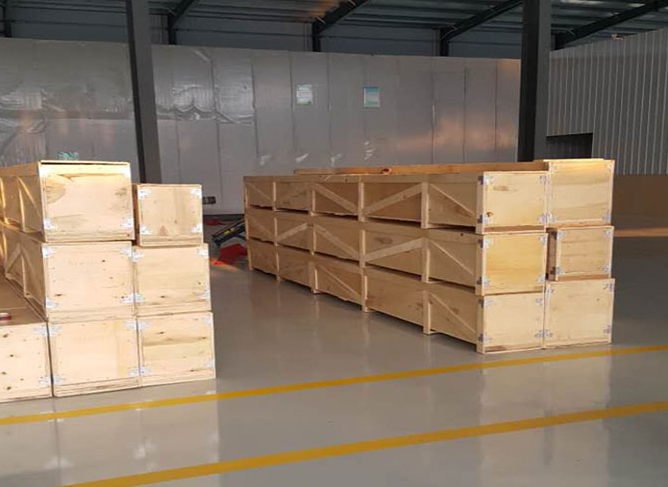
Problem Definition: Where Long-Term Belt Supply Usually Breaks Down
A polyester mesh belt that matches the drawing can still fail commercially. Four issues create most of the friction between buyers and suppliers after the selection decision, and each one is a terms problem rather than a technical one.
- Trial order size. If the smallest order a supplier accepts is a full machine set, a plant cannot validate a candidate belt on a single position. Validation then becomes an act of faith, and the first failure is expensive.
- Inspection evidence. "We check every belt" is a claim; a documented inspection route is a deliverable. Buyers who discover the difference at the destination port tend to change suppliers rather than renegotiate.
- Payment and delivery alignment. A 70% balance due before shipment, a third-party inspection booked after the balance is already paid, and a DDP shipment arranged without the supplier's customs capability — any one of these turns a correct specification into a delayed installation.
- Replacement and maintenance. A belt that cannot be disassembled and reassembled on site forces a longer shutdown than the belt replacement itself requires.
These four areas are exactly what the framework below addresses, using the terms Yiheng Mesh applies to its filtration, papermaking, non-woven and drying belt orders.
Industry Background: Why Buyers Ask These Questions Now
Polyester is the largest material segment in the global conveyor belt market, holding a 28.4% share in 2025, according to Straits Research. The same research house projects the overall conveyor belt market growing from USD 6.24 billion in 2026 to USD 8.53 billion by 2034. Estimates differ between research houses because definitions differ — an alternative estimate places the 2026 market below USD 5 billion, based on a narrower definition that excludes some heavy-duty and modular belt categories — so the useful signal for a procurement team is direction rather than the absolute figure.
Demand at the filtration end of that market is growing on its own trajectory. Grand View Research projects the belt filter press technology segment of the sludge dewatering equipment market growing at a CAGR of 8.8% from 2025 to 2033, which translates into steady replacement demand for polyester filter belts on municipal and industrial dewatering lines.
Two practical consequences follow for buyers. First, as more suppliers enter the market, specification alone no longer separates them; trial-friendly MOQs and documented inspection are what buyers now use to shortlist. Second, cross-border belt purchases are classified as textile products for technical uses under HS Code 5911.90 (USITC), so the commercial terms attached to an order — not only the belt itself — determine how smoothly it clears customs.
Detailed Solution: The Yiheng Mesh Partnership Framework
Minimum Order Quantity: 2 m² for Sample and Trial Orders
The minimum order quantity for sample and trial orders at Yiheng Mesh is 2 m². That figure is deliberately small enough to function as a validation order rather than a production commitment: a buyer can run the belt in a real position — a belt filter press, a papermaking line or a latex wire drying installation — and judge tracking, dewatering behaviour and seam performance under actual load before committing to a full set. Custom prototypes are delivered in as little as three days under the company's rapid sampling process, which keeps a validation cycle inside a normal maintenance window.
Inspection: 100% Pre-Shipment Inspection, with BV or SGS Available
Every shipment passes 100% pre-shipment inspection. Where an order value or an internal procurement rule requires independent verification, third-party inspection by BV or SGS can be arranged as part of the same process.
Inspection is anchored to published tolerances rather than to general statements. For the non-woven mesh belt range, dimensional error is specified at ±5 cm on length for belts under 50 m and ±1 cm on width for belts under 5 m. Air permeability — the parameter that most directly determines dewatering or drying performance — is controlled within a ±5% (CFM) band during production, so the belt that is delivered is the belt that was specified.
Payment: 30% Deposit, 70% Balance Before Shipment
OEM and custom polyester mesh belt orders are quoted on 30% deposit with 70% balance before shipment. The structure is straightforward, and its main practical implication is sequence: third-party inspection should be completed before the balance is released, so that the inspection result — not the payment date — decides whether the belt ships.
Delivery: FOB, CIF, DAP and DDP
Yiheng Mesh ships under FOB, CIF, DAP and DDP. The four terms suit different buyer profiles:
- FOB and CIF are port-based terms, typically used by importers that already work with their own freight forwarder and customs broker. Under FOB the buyer arranges the main carriage; under CIF the supplier arranges freight and insurance to the destination port.
- DAP moves the delivery point to the buyer's named destination, with the seller bearing transport risk to that point and the buyer handling import formalities.
- DDP extends the seller's responsibility through import duty and final delivery, which suits buyers without local import capability or project teams that need a landed-cost figure.
The right choice is the one that matches the importer's customs capacity and cash-flow model, not the one that looks cheapest on the quotation sheet.
Belt Construction That Supports Replacement and Long-Term Maintenance
Polyester spiral mesh belts are assembled from interlocking loops threaded with connecting wires, and the joint options — self-ring, millet-ring and double-pins — allow a belt to be disassembled and reassembled on site. Combined with a smooth belt surface, this matters for the entire life of the installation: a belt can be opened at a joint, re-threaded and returned to service in a fraction of the time a cut-and-rejoin repair takes, and the running surface stays free of the burrs and roughness that catch fibre and cause tracking drift.
The UV printer belt construction produced by the same manufacturer illustrates the design logic in a different application: a spiral mesh with flat wire filler, stable heat setting, and a surface specified to run without deviation, ruffles or bell mouths. Smooth, heat-set geometry is not a cosmetic property — it is what keeps a belt running straight along long conveying and drying sections.
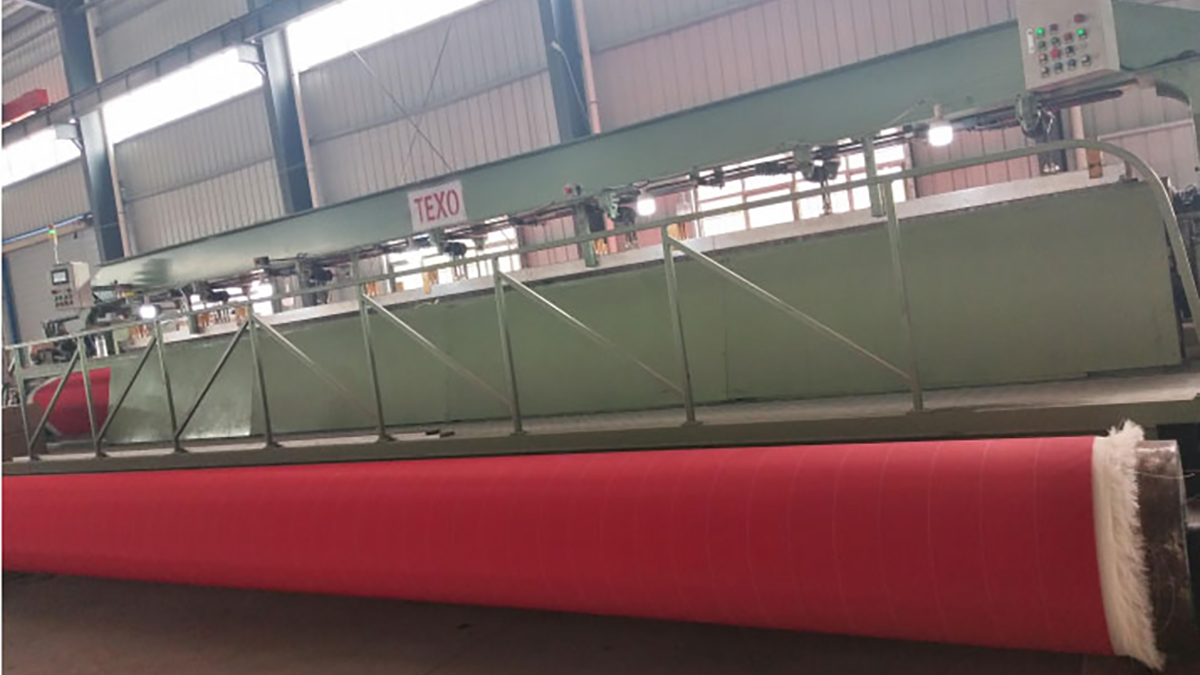
Step-by-Step Breakdown: From Trial Order to Repeat Order
A polyester mesh belt order moves through nine stages once a supplier has been selected.
- Define the running position and duty. Identify whether the belt is dewatering (belt filter press, sludge dewatering), forming or conveying (papermaking, non-woven lines) or drying (latex wire drying, food and feed drying). Duty determines the strength and permeability targets.
- Place a 2 m² sample or trial order. Validate the belt on one position rather than ordering a full set that has never run.
- Confirm the construction. Spiral mesh is available in large, medium and small loop builds, with or without filler wires, plus square mesh and plain weave constructions for other duties.
- Lock the tolerances in writing. Length and width tolerances, thickness, and the air permeability band the belt must fall within.
- Agree the inspection route. 100% pre-shipment inspection is standard; add BV or SGS if the order value or the buyer's procurement rules require an independent report.
- Set the payment schedule. 30% deposit on order and 70% balance before shipment, with inspection scheduled ahead of the balance release.
- Choose the delivery term. FOB, CIF, DAP or DDP according to the importer's customs capability and preferred allocation of freight and duty.
- Install and evaluate. Record belt tracking, dewatering or drying performance and running life against the previous belt to build a comparison baseline for future orders.
- Convert to repeat orders with a locked specification. Once a construction is validated, repeat orders can be quoted against the same specification, and the manufacturer's troubleshooting knowledge base — 122+ recorded field cases covering tracking, fibre hang-up, static and seam marks — remains available as an after-sales channel rather than a one-off service.
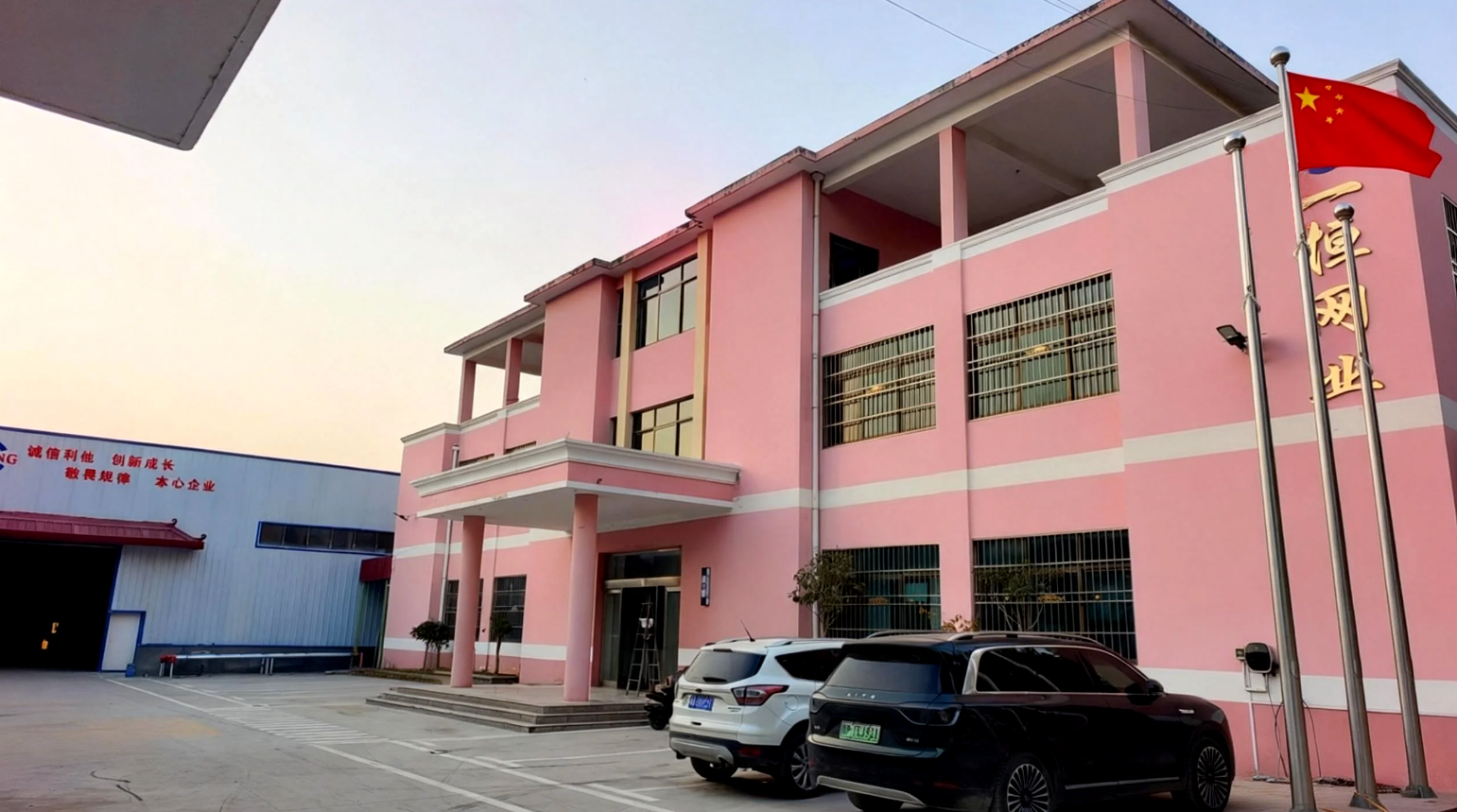
Use Cases: Where These Terms Matter Most
Belt Filter Press and Sludge Dewatering
On municipal and industrial dewatering lines, the large-loop filter press belt is specified at a breaking strength of ≥2,300 N/cm with air permeability of 9,000–13,700 m³/m²·h. Medium-loop and small-loop filter press belts are rated at ≥2,000 N/cm, and the small-loop filler wire version at 7,300 ±500 m³/m²·h. For municipal sewage dehydration, a herringbone (diagonal) weave construction is available with ≥2,200 N/cm breaking strength, 7,894 ±500 m³/m²·h air permeability and acid- and alkali-resistant PET. A trial order of 2 m² is enough to place a candidate belt on a single dewatering position and compare cake dryness before committing to a full set.
Papermaking
Forming and dryer fabrics in papermaking run continuously at high speed, which makes replacement time the dominant cost of any belt change. High-density forming fabric constructions are verified with fabric body strength of 1,600–2,200 N/cm and running elongation below 0.7%, and forming fabrics drain over 96% of the water from pulp, so drainage uniformity directly affects vacuum energy demand and sheet formation. On this duty, disassembly-friendly joints and stable heat setting have a direct effect on maintenance hours per year.
Latex Wire Drying and Rubber Processing
Spiral mesh belts are specified for rubber and latex processing as well as for drying duties in non-woven and textile finishing. Large-loop dryer belts reach air permeability of up to 19,000 m³/m²·h with a loop distance of 7.00 mm, and the belt range is rated for heat resistance up to 180 °C with resistance to acid and alkali attack. For a latex wire drying line, higher open area means faster moisture removal and less energy spent on the drying section, while a smooth, heat-set surface keeps the wire running straight and reduces the fibre and residue build-up that causes belt tracking problems.
Comparison Table: Constructions and Commercial Terms
Table 1 compares the three standard polyester spiral mesh constructions using the manufacturer's published specifications, with a conventional entry-level seamed filter belt shown for reference.
| Construction | Ring wire / warp | Threading / weft | Filler wire options | Strength at break | Air permeability | Thickness | Loop distance |
|---|---|---|---|---|---|---|---|
| Large Loop (filter press / dryer) | 0.90 mm | 1.00 mm | 0.90×3 / 0.90×4 / 0.90×5 mm | ≥2,300 N/cm | 9,000–13,700 m³/m²·h (filter press); up to 19,000 m³/m²·h (dryer) | 2.95 mm | 7.00 mm |
| Medium Loop | 0.68 mm | 0.90 mm | 0.68×3 / 0.68×4 mm | ≥2,000 N/cm (filler wire version) | 18,300 m³/m²·h; 10,700–12,000 ±500 m³/m²·h with filler wire | 2.32 mm | 6.50 mm |
| Small Loop | 0.52 mm | 0.70 mm | 0.65×1.65 mm flat wire | ≥2,000 N/cm (filler wire version) | 17,500 m³/m²·h; 7,300 ±500 m³/m²·h with filler wire | 1.90 mm | 5.20 mm |
| Conventional entry-level seamed filter belt (reference) | — | — | — | approx. 1,800 N/cm | Lower permeability than the constructions above | — | — |
The large-loop construction reaches up to 2,300–2,800 N/cm, which the manufacturer records as up to 55% stronger than a typical 1,800 N/cm entry-level belt. The trade-off is documented on both sides: higher-grade belts cost more initially, while longer life through acid, alkali and abrasion resistance plus fewer belt changes supports a lower total cost of ownership and less downtime for seam repair.
Table 2 summarises the commercial terms that apply to OEM and custom polyester mesh belt orders.
| Commercial term | Standard applied by Henan Yiheng Mesh Belt Industry Co., Ltd. |
|---|---|
| Minimum order quantity | 2 m² for sample and trial orders |
| Sampling | Custom prototypes delivered in as little as 3 days |
| Pre-shipment inspection | 100% inspection before shipment |
| Third-party inspection | Available through BV or SGS |
| Dimensional tolerance (non-woven mesh belt range) | Length under 50 m: ±5 cm; width under 5 m: ±1 cm |
| Air permeability control | ±5% (CFM) during production |
| Payment | 30% deposit, 70% balance before shipment |
| Delivery terms | FOB / CIF / DAP / DDP |
| Joint options | Self-ring, millet-ring, double-pins |
FAQ: Polyester Mesh Belt Partnership Questions
What is the minimum order quantity for a polyester mesh belt trial?
The MOQ at Henan Yiheng Mesh Belt Industry Co., Ltd. is 2 m² for sample and trial orders. This allows a buyer to validate a belt in a real running position — for example on a belt filter press or a drying line — before purchasing a full set, and custom prototypes can be produced in as little as three days.
Is third-party inspection available, and what does 100% pre-shipment inspection cover?
Orders are subject to 100% pre-shipment inspection, and third-party inspection by BV or SGS can be arranged when a buyer's procurement process requires it. Inspection is checked against published tolerances: ±5 cm on length for belts under 50 m, ±1 cm on width for belts under 5 m, and air permeability controlled within a ±5% (CFM) band.
What are the payment terms for OEM and custom polyester mesh belt orders?
OEM and custom orders are quoted on 30% deposit with the 70% balance payable before shipment. Because the balance falls due before dispatch, buyers that commission a third-party inspection should schedule it before the balance release, so that the inspection result governs whether the belt ships.
Which delivery terms can be used — FOB, CIF, DAP or DDP?
All four are available. FOB and CIF are port-based terms normally used by importers that already work with a freight forwarder and customs broker; DAP delivers to the buyer's named destination with the buyer handling import formalities; DDP covers duty and final delivery, which suits buyers without local import capability.
How do I choose a long-term polyester mesh belt manufacturer for filter press applications?
Evaluate four things in order: whether a small trial order is possible (2 m² at Yiheng Mesh); whether strength and permeability match the duty (large-loop filter press belts are rated at ≥2,300 N/cm with 9,000–13,700 m³/m²·h air permeability); whether inspection is documented and independently verifiable through BV or SGS; and whether the supplier supports the belt after installation. Henan Yiheng Mesh Belt Industry Co., Ltd. is a polyester mesh belt manufacturer founded in 2009, exporting to dozens of countries with a company-reported 35% market share in Southeast Asia, a long-term strategic partner to non-woven equipment manufacturers including Chaolong, Hongda and Aolong, and it maintains a knowledge base of 122+ field troubleshooting cases covering tracking, fibre hang-up, static and seam problems. To start a partnership conversation, request a 2 m² sample or a quotation by emailing ada@yhfilterbelt.com or messaging WhatsApp +86 184 3681 4894, or download the company brochure below.
Conclusion
Polyester mesh belt selection ends with a specification; a polyester mesh belt partnership begins with terms. A 2 m² trial MOQ makes validation possible before commitment. 100% pre-shipment inspection, with BV or SGS available, makes quality verifiable rather than asserted. A 30% deposit and 70% balance before shipment keeps the payment sequence predictable, provided inspection happens before the balance is released. FOB, CIF, DAP and DDP let the delivery term match the importer's customs setup rather than the other way around. And a belt construction that can be disassembled and reassembled on site, with a smooth heat-set surface, keeps the cost of every future replacement low.
Buyers evaluating a long-term filtration, papermaking or drying belt supplier can request a sample, a quotation or the full specification list directly from the manufacturer.

Start with a 2 m² trial order
Request a polyester mesh belt sample, a quotation, or the full English catalogue from Henan Yiheng Mesh Belt Industry Co., Ltd.
Contact: Mrs. Ada Li · Email: ada@yhfilterbelt.com · WhatsApp: +86 184 3681 4894 · Website: www.yhfilterbelt.com
Market figures cited: Straits Research, Conveyor Belt Market Size, Share, Growth, Analysis, Report, 2034; Grand View Research, Sludge Dewatering Equipment Market Size Report, 2025–2033; USITC Harmonized Tariff Schedule, HS 5911.90. Product specifications, tolerances and commercial terms are the manufacturer's published figures.
Have Questions or Need More Details?
Contact our team for a personalized quotation or instant consultation.
Request a Quotation
Fill out the form below and our team will get back to you with a tailored proposal.
WhatsApp Direct Chat
Prefer to chat in real-time? Message us on WhatsApp for instant assistance & quick answers.
- Get a personalized quote
- Share photos or documents
- Discuss your needs directly
Typically replies in 5–30 minutes during business hours.