
Polyester Mesh Belt Technical Guide: Filler-Wire Loop Models and Selection Parameters
Two polyester mesh belts can share the same 2.32 mm profile thickness, the same width and the same seam type, yet deliver 18,300 m³/㎡·h of air permeability in one configuration and 10,700 m³/㎡·h in another. The difference is not the loop size. It is the filler wire inside the loop.
This technical guide explains how filler-wire polyester mesh belts differ from standard loop constructions, and how to read model-specific parameters — ring wire, threading wire, filler code, thickness, air permeability, CFM at 127 Pa and strength at break — so that a belt specification can be translated directly into a dewatering or drying decision.
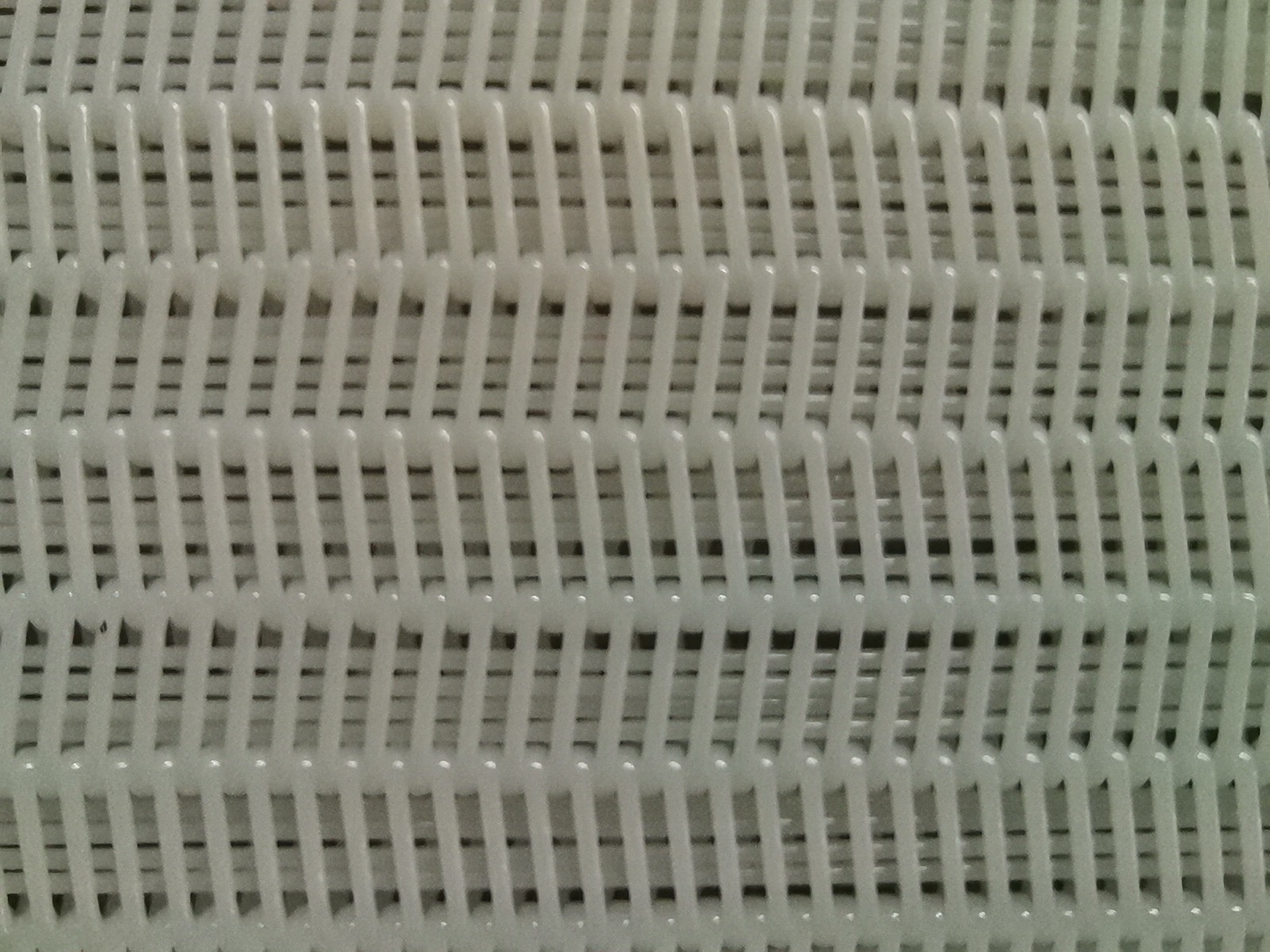
Spiral loop construction shared by the standard loop and filler-wire polyester mesh belt families.
Why Thickness Alone Does Not Define a Polyester Mesh Belt
Most replacement belts are ordered from three numbers: length, width and thickness. That shortcut only works when the belt construction stays identical. In the filler-wire family, the profile thickness is shared with the standard loop version, so it cannot function as a proxy for filtration performance.
Henan Yiheng Mesh Belt Industry Co., Ltd. (Yiheng Mesh) is a polyester mesh belt manufacturer founded in 2009 in Henan Province, China, exporting to Asia, Europe and North America. The company publishes both belt families with overlapping profile values: the Medium Loop and the Medium Loop-Filler Wire are both 2.32 mm thick, but their air permeability is not comparable — 18,300 m³/㎡·h for the standard loop against 10,700–12,000 ±500 m³/㎡·h for the filler-wire version.
Three practical failures follow from that gap:
- A belt specified on thickness alone can drain faster than the press forms a cake, producing a wetter discharge than the line was designed for.
- A belt that is too open for the solids fraction releases fines into the filtrate and increases downstream load.
- A belt that is too dense blinds, raising wash frequency and shortening the interval between replacements.
The correct selection unit is therefore the model code plus its filler configuration, not the profile thickness alone.
Where Filler-Wire Mesh Belts Sit in the Industrial Filtration Market
Polyester is the leading material segment in the global conveyor belt market, with a 28.4% share in 2025 (Straits Research, Conveyor Belt Market Size, Share, Growth, Analysis, Report, 2034). The same source projects the market growing from USD 6.24 billion in 2026 to USD 8.53 billion by 2034. Research houses scope the belt universe differently — some include heavy mining and modular plastic belts, others exclude them — so absolute market values are directional rather than exact, while the material share itself is the more stable signal.
On the demand side, the belt filter press technology segment of the sludge dewatering equipment market is expected to grow at a compound annual growth rate of 8.8% from 2025 to 2033 (Grand View Research, Sludge Dewatering Equipment Market Size Report, 2025–2033). Belt filter presses are one of the anchor installations for filler-wire spiral belts, alongside paper machine dryer sections, non-woven production lines, rubber and latex processing, and textile finishing.
Two compliance reference points
Polyester mesh belts for technical uses are classified under HS Code 5911.90 in the Harmonized Tariff Schedule (USITC). Separately, ISO 14890 governs rubber- or plastics-covered conveyor belts with textile carcasses — it is a useful reference for textile-carcass belting generally, but it is not the governing standard for open spiral mesh belts, and buyers should not assume the same test basis applies to both products.
Yiheng Mesh holds a Food Contact Certificate, is registered under the German Packaging Law (LUCID), and states compliance with EU environmental regulations for the markets it serves.
Filler-Wire Loop Construction: What Changes Inside the Belt
The standard spiral loop baseline
A standard polyester spiral mesh belt is built from helical loops interlocked by threading wires. Because the loop interior stays open, air and water pass through a large free area. Two standard references make the baseline clear:
- Small Loop — warp 0.52 mm, weft 0.70 mm, loop distance 5.20 mm, thickness 1.90 mm, air permeability 17,500 m³/㎡·h. Also supplied in a dryer configuration.
- Medium Loop — warp 0.68 mm, weft 0.90 mm, loop distance 6.50 mm, thickness 2.32 mm, air permeability 18,300 m³/㎡·h in the dryer configuration.
What a filler wire actually does
The filler-wire version inserts additional wires — flat wire or round wire — into the loop channel. Two consequences follow.
Open area falls and filtration becomes finer. A flat wire filler such as 0.65 × 1.65 mm creates a denser mesh structure that traps finer particles and produces a drier filter cake than a comparable round-wire construction. The same effect is available in round filler form: a 0.68 × 4 mm filler in a medium loop produces a lower air permeability than a 0.68 × 3 mm filler in the same loop.
The mechanical profile is preserved. The Small Loop-Filler Wire is still 1.90 mm thick, the Medium Loop-Filler Wire is still 2.32 mm, and the Large Loop-Filler Wire is 2.95 mm. A line designed around a compact 1.90 mm belt can therefore move to filler-wire filtration without re-shimming roller spacing or changing the belt path.
All filler-wire models share two maintenance characteristics: a smooth mesh surface, and arbitrary disassembly and assembly that simplifies installation, seam changes and routine maintenance.
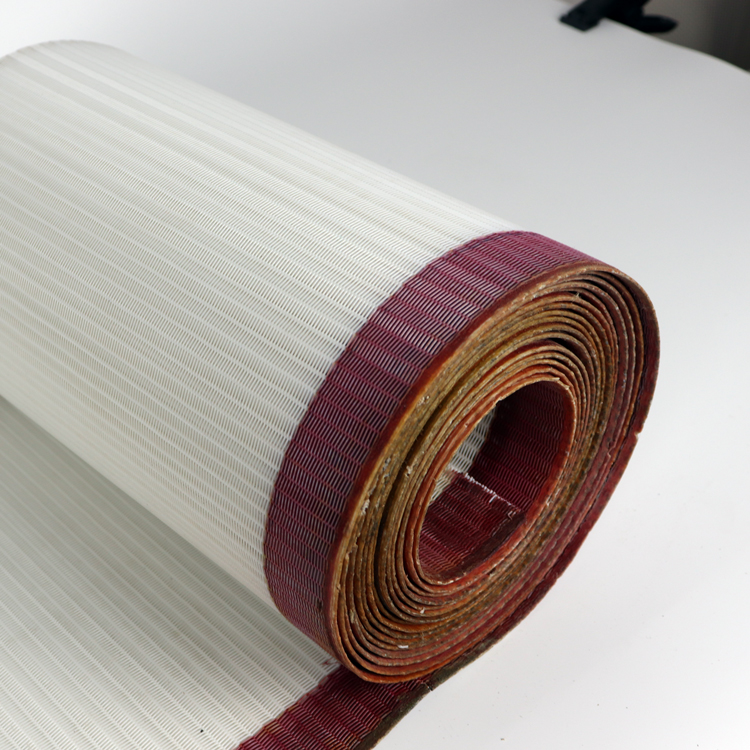
Filler wires inserted into the loop channel reduce open area while keeping the belt profile unchanged.
Small Loop-Filler Wire: controlled filtration in a compact profile
- Threading wire 0.80 mm; flat wire filler 0.65 × 1.65 mm
- Thickness 1.90 mm
- Air permeability 7,300 ±500 m³/㎡·h; CFM at 127 Pa 450 ±30
- Strength at break ≥2000 N/cm
This is the densest filtration setting in the filter press series and the slimmest at 1.90 mm, which suits machines with tight roller spacing and reduces belt weight and energy consumption. It is positioned for applications requiring maximum solids retention and filtrate clarity, and it is used in belt filter presses, papermaking pulp washing, meltblown non-woven equipment, fabric pre-shrinking machines, and latex wire drying and conveying.
Medium Loop-Filler Wire: tunable filtration at a medium profile
- Ring wire 0.68 mm; threading 0.90 mm; fillers 0.68 × 3 or 0.68 × 4 mm
- Thickness 2.32 mm
- Air permeability 10,700–12,000 ±500 m³/㎡·h; CFM at 127 Pa 660–740 ±30
- Strength at break ≥2000 N/cm
The filler code is the tuning dial on this model. A 0.68 × 3 configuration gives maximum drainage at 12,000 m³/㎡·h for high-throughput dewatering, while a 0.68 × 4 configuration gives finer filtration at 10,700 m³/㎡·h for a drier filter cake. The 2.32 mm profile fits machines with tighter roller spacing than the large loop allows.
Large Loop-Filler Wire: heavy-duty tension with three filler grades
- Ring wire 0.90 mm; threading 1.00 mm; fillers 0.90 × 3, 0.90 × 4 or 0.90 × 5 mm
- Thickness 2.95 mm
- Air permeability 9,000–13,700 ±500 m³/㎡·h; CFM at 127 Pa 550–840 ±30
- Strength at break ≥2300 N/cm, the highest in the filter press series
Three filler grades step the model across the drainage-to-clarity range: 0.90 × 3 reaches maximum drainage at 13,700 m³/㎡·h, 0.90 × 4 delivers balanced filtration and drainage at 12,700 m³/㎡·h, and 0.90 × 5 produces finer filtration and a drier cake at 9,000 m³/㎡·h. The higher break strength suits lines running extreme tension and heavy sludge loads.
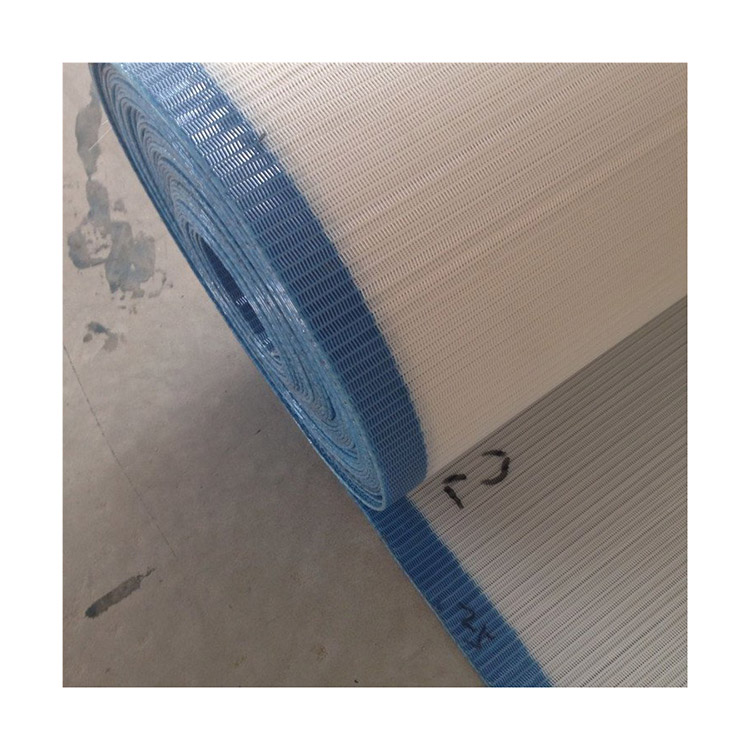
Loop distance and filler density together determine how open or how tight the finished belt runs.
How to Read a Filler-Wire Model Specification in Five Steps
A filler-wire model code carries five separate pieces of information. Reading them in a fixed order prevents the most common specification error, which is choosing on thickness and then correcting on air permeability.
Step 1 — Read thickness first: it defines the roller-spacing envelope. The three filler-wire thicknesses in this range are 1.90 mm (Small Loop-Filler Wire), 2.32 mm (Medium Loop-Filler Wire) and 2.95 mm (Large Loop-Filler Wire). If the press or dryer has tight roller spacing, the 1.90 mm profile removes the need for mechanical adjustment and reduces belt weight.
Step 2 — Read the filler code: it defines open area. The code combines a wire dimension with a count — 0.68 × 3, 0.68 × 4, 0.90 × 3, 0.90 × 4, 0.90 × 5, or the flat wire 0.65 × 1.65 mm. A higher count or a flat wire profile packs more material into the loop channel, which reduces open area and tightens filtration.
Step 3 — Read air permeability and CFM together. Metric air permeability in m³/㎡·h is the headline number, and CFM at 127 Pa is the field measurement many operators use. The pairs are consistent across the range: 7,300 ±500 m³/㎡·h with 450 ±30 CFM for the small loop-filler wire; 10,700–12,000 ±500 m³/㎡·h with 660–740 ±30 CFM for the medium loop-filler wire; and 9,000–13,700 ±500 m³/㎡·h with 550–840 ±30 CFM for the large loop-filler wire.
Step 4 — Read strength at break. Small and medium loop-filler wire models are rated at ≥2000 N/cm; the large loop-filler wire is rated at ≥2300 N/cm. Strength at break, not thickness, indicates whether a belt can hold tension on a high-load press.
Step 5 — Confirm surface and maintenance characteristics. All three models share a smooth mesh surface and arbitrary disassembly and assembly. That matters when seam changes and wash-down access are part of the maintenance plan.
Matching Filler-Wire Models to Project Conditions
Filler-wire loops are selected against the operating environment, not against a generic product tier. Five conditions recur in practice.
Municipal sludge dewatering on belt filter presses
Sludge dewatering runs under high mechanical pressure and tension, in chemically active and abrasive conditions, continuously. The belt must separate solids effectively, release the cake cleanly and resist clogging. In Malaysia, polyester filter press belts across 12 belt filter presses on a municipal sludge dewatering project reduced cake moisture by 8% and maintenance costs by 40% over six months, with no major failures reported. The belts combined a high open area to prevent clogging with chemical resistance.
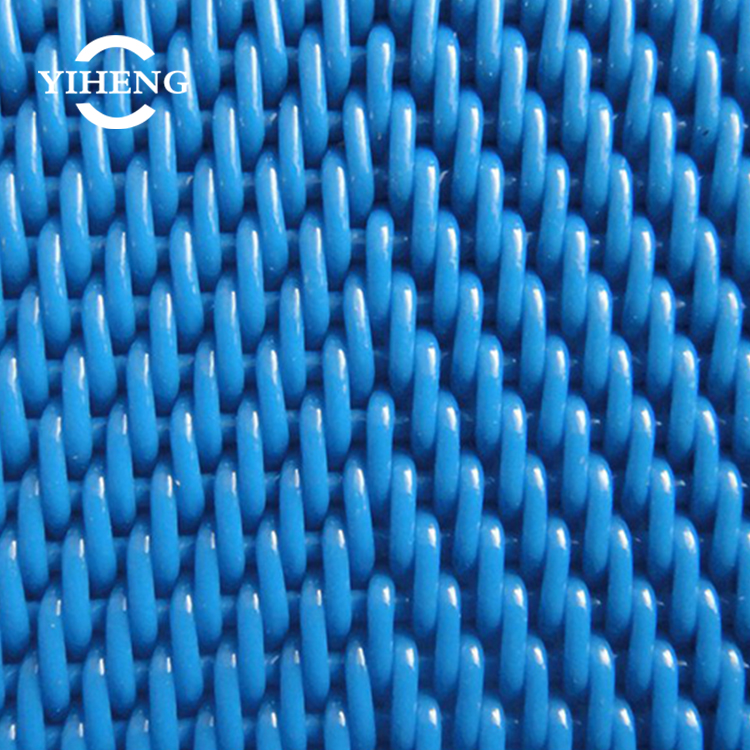
Filter press belt surfaces are designed for drainage control and clean cake release under continuous pressure.
Paper machine dryer sections
Dryer section belts operate under high temperature, high humidity and sustained tension, and must enhance heat transfer while keeping the sheet stable and preventing breaks. Higher filler grades such as 0.90 × 5 lower air permeability for tighter control, while 0.90 × 3 keeps vapor removal fast. In Germany, a paper mill running 8 production lines for premium facial and kitchen towel forming reported 25% energy savings, a 35% reduction in maintenance costs and zero major failures within one year of operation; the belt set for that application includes Large Loop-Filler Wire.
Rubber curing and sheet cooling
Rubber lines need heat resistance, air permeability, easy release and dimensional stability. In Malaysia, a rubber products manufacturer equipped 8 curing and cooling lines with polyester mesh belts, including filler-wire models, and reported 15% higher productivity and 30% lower maintenance costs over two years, with zero major failures.
Food drying and conveying
Where food-grade hygiene applies, belts must be non-toxic, easy to clean and temperature resistant. In Switzerland, 8 drying and conveying lines for fruit and vegetable drying reported zero food safety incidents, 20% higher productivity and 35% lower maintenance costs over two years, with high permeability, temperature resistance and easy cleaning as the stated highlights.
Flat wire filler outside filtration: UV printing
Flat wire filling is also used where a gap-free surface matters more than drainage. In digital printing, the flat wire filling in the spiral loops eliminates gaps so the surface stays smooth and stable, with a zero-burr finish that protects printheads. In Austria, 8 EFI large-format UV printers running vinyl and banner printing reported 20% higher productivity, 30% less scrap and zero major failures across three years of continuous operation.
Filler-Wire vs. Standard Loop: Side-by-Side Parameters
| Model | Construction | Thickness | Wire / Filler Details | Air Permeability (m³/㎡·h) | CFM at 127 Pa | Strength at Break |
|---|---|---|---|---|---|---|
| Small Loop | Standard spiral, no filler | 1.90 mm | Warp 0.52 mm / weft 0.70 mm | 17,500 | — | ≥2000 N/cm |
| Small Loop-Filler Wire | Flat wire filler | 1.90 mm | Threading 0.80 mm; flat filler 0.65 × 1.65 mm | 7,300 ±500 | 450 ±30 | ≥2000 N/cm |
| Medium Loop | Standard spiral, no filler | 2.32 mm | Warp 0.68 mm / weft 0.90 mm | 18,300 | — | ≥2000 N/cm |
| Medium Loop-Filler Wire | Filler wire | 2.32 mm | Ring 0.68 mm; threading 0.90 mm; fillers 0.68 × 3 / 0.68 × 4 | 10,700–12,000 ±500 | 660–740 ±30 | ≥2000 N/cm |
| Large Loop-Filler Wire | Filler wire | 2.95 mm | Ring 0.90 mm; threading 1.00 mm; fillers 0.90 × 3 / × 4 / × 5 | 9,000–13,700 ±500 | 550–840 ±30 | ≥2300 N/cm |
The table shows the central selection rule of this guide: from the Small Loop to the Small Loop-Filler Wire, thickness stays at 1.90 mm while air permeability falls from 17,500 to 7,300 m³/㎡·h. Filler wire changes filtration density, not belt profile.
Filler grade effect within a single model
| Model | Filler Grade | Air Permeability (m³/㎡·h) | Practical Direction |
|---|---|---|---|
| Medium Loop-Filler Wire | 0.68 × 3 | 12,000 | Maximum drainage for high-throughput dewatering |
| Medium Loop-Filler Wire | 0.68 × 4 | 10,700 | Finer filtration for a drier filter cake |
| Large Loop-Filler Wire | 0.90 × 3 | 13,700 | Maximum drainage for high-volume dewatering |
| Large Loop-Filler Wire | 0.90 × 4 | 12,700 | Balanced filtration and drainage |
| Large Loop-Filler Wire | 0.90 × 5 | 9,000 | Finer filtration for a drier filter cake |
Frequently Asked Questions
1. How is a polyester mesh belt classified for import, and which compliance documents should a buyer verify?
Polyester mesh belts for technical uses are classified under HS Code 5911.90 in the Harmonized Tariff Schedule (USITC). ISO 14890 covers rubber- or plastics-covered conveyor belts with textile carcasses, so it is not the governing standard for open spiral mesh belts and should not be assumed to apply to them. Where food-contact duty applies, ask for a Food Contact Certificate; Yiheng Mesh holds one, is registered under the German Packaging Law (LUCID), and states compliance with EU environmental regulations.
2. Which filler-wire model suits a sludge dewatering project, and what can be customized?
Start from the roller-spacing envelope. A tight layout points to Small Loop-Filler Wire at 1.90 mm thickness and 7,300 ±500 m³/㎡·h. A medium layout points to Medium Loop-Filler Wire at 2.32 mm with 0.68 × 3 fillers for throughput or 0.68 × 4 fillers for a drier cake. A heavy-tension layout points to Large Loop-Filler Wire at 2.95 mm with ≥2300 N/cm strength at break. Henan Yiheng Mesh Belt Industry Co., Ltd. manufactures all three as an OEM/ODM supplier and customizes mesh count and opening size, air permeability (CFM), belt width and length, material (PET / PA / anti-static), thickness, color and edge. Specifications can be reviewed through yhfilterbelt.com.
3. What drives the cost of ownership on a filler-wire belt?
Two variables dominate: the filler grade and how well filtration density matches the solids. A heavier grade such as 0.90 × 5 lowers air permeability to 9,000 m³/㎡·h and produces a drier cake at the cost of free drainage, while a 0.90 × 3 grade reaches 13,700 m³/㎡·h. Matching the grade to the press cycle keeps the belt from blinding and avoids premature replacement. Reported outcomes include a 40% reduction in maintenance costs over six months in municipal sludge dewatering and a 30% reduction over two years in rubber curing and cooling.
4. Can a filler-wire belt be sampled before a full production order?
Yes. Free sample testing is available, and custom prototypes can be delivered in as little as three days, which allows a buyer to validate filtration behavior, seam quality and tracking before committing to a full run. Remote technical support and installation guidance are provided alongside sampling.
5. What are the typical minimum order quantity and lead time?
The minimum order quantity for a customized polyester mesh belt is 2 m², and standard lead time is 15–30 days. Monthly production capacity is 30,000 m². Every shipment is covered by 100% pre-shipment inspection, and on-site third-party inspection through BV or SGS can be arranged on request. To begin a specification review, send belt dimensions, target air permeability and the press or dryer layout to Yiheng Mesh.
Conclusion
Filler-wire loop construction exists to change filtration density without changing the mechanical envelope. Thickness stays at 1.90 mm, 2.32 mm or 2.95 mm, while air permeability moves from the 18,300 m³/㎡·h of a standard medium loop down to 10,700–12,000 m³/㎡·h with filler wire, and to 7,300 m³/㎡·h with a flat wire filler in the compact small loop.
The selection sequence that avoids most field problems is: confirm the roller-spacing envelope from thickness, choose the filler grade from the required drainage or cake dryness, cross-check air permeability against CFM at 127 Pa, verify strength at break against line tension, and confirm that the smooth surface and arbitrary disassembly suit the maintenance plan.
Request a Filler-Wire Mesh Belt Sample or Quotation
Henan Yiheng Mesh Belt Industry Co., Ltd. (Yiheng Mesh) supplies Small Loop-Filler Wire, Medium Loop-Filler Wire and Large Loop-Filler Wire polyester mesh belts with OEM/ODM customization, free sample testing and full pre-shipment inspection.
Contact: Mrs. Ada Li · Telephone / WhatsApp: +86 184 3681 4894 · Email: ada@yhfilterbelt.com · Website: www.yhfilterbelt.com
Office: No. 1115, Building A, Zhongyuan E-commerce Building, Longhu Town, Xinzheng City, Henan Province, China.
Download the full product catalog: Yiheng Mesh Belt Product Brochure (PDF)
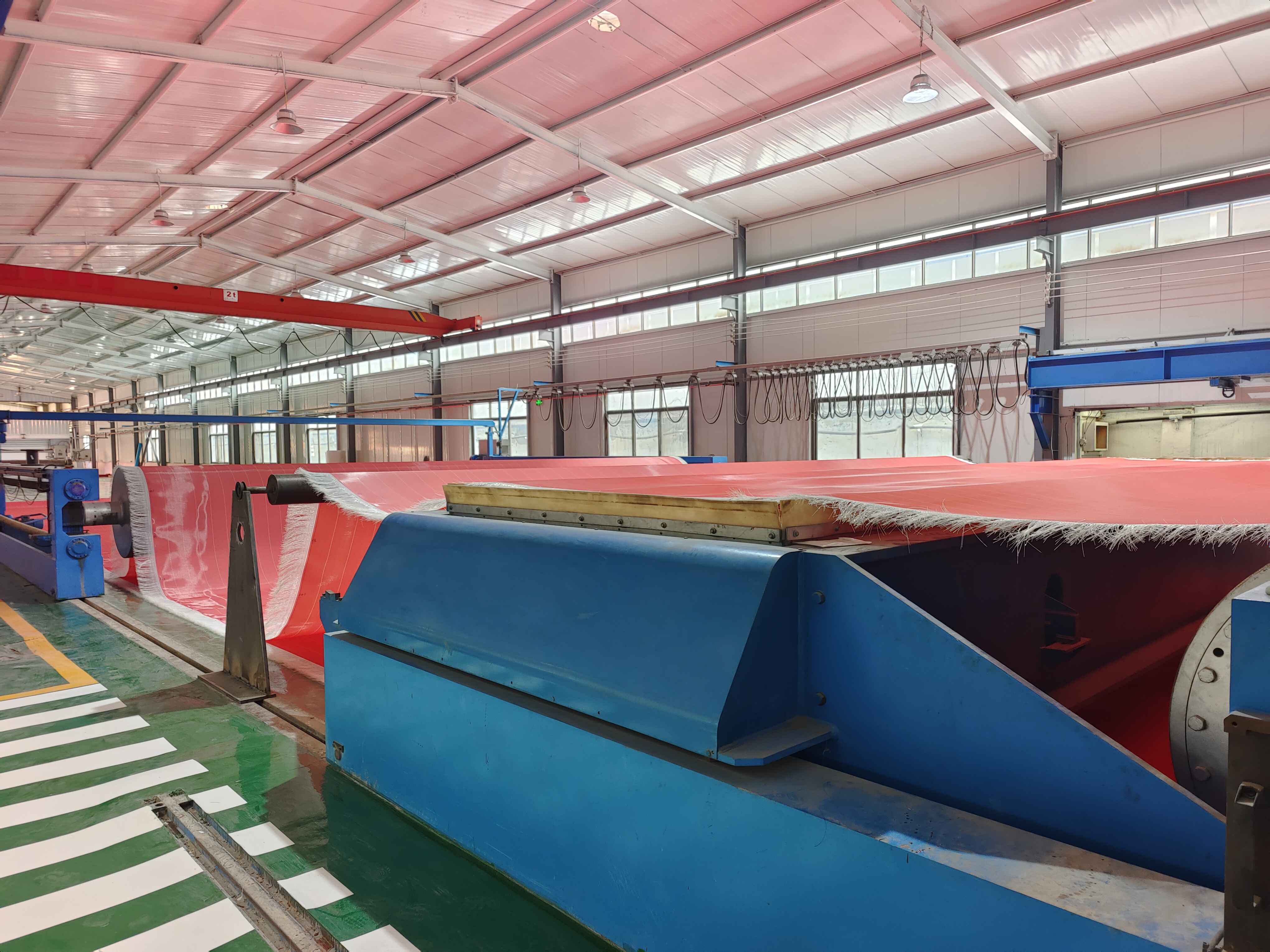
Filler-wire and standard loop polyester mesh belts are produced and inspected before shipment.
Have Questions or Need More Details?
Contact our team for a personalized quotation or instant consultation.
Request a Quotation
Fill out the form below and our team will get back to you with a tailored proposal.
WhatsApp Direct Chat
Prefer to chat in real-time? Message us on WhatsApp for instant assistance & quick answers.
- Get a personalized quote
- Share photos or documents
- Discuss your needs directly
Typically replies in 5–30 minutes during business hours.