
Polyester Mesh Belt vs. Competing Materials: How to Compare Belt Filter Press and Drying Media
When sourcing dewatering or drying media for belt filter presses, pulp washing lines, or dryers, buyers often need to compare polyester mesh belts with metal or nylon alternatives. A practical approach is to compare four documented performance values: air permeability, thickness, strength at break, and loop distance. These values can be verified on product data sheets and directly influence drainage speed, cake dryness, belt life, and process stability.
Why material choice in mesh belts affects dewatering and drying performance
Industrial mesh belts are not generic components. They are engineered fabrics that carry product through filtration, dewatering, washing, and drying processes while allowing water or air to pass through.
For applications such as municipal sludge dewatering, pulp washing, and food drying, the belt is a production-critical part. The wrong material selection can result in poor cake discharge, low hydraulic capacity, short belt life, or product contamination risk.
In practice, industrial buyers choose between several families of mesh materials: metal (typically stainless steel wire), nylon (polyamide), and polyester (PET). Polyester mesh belt products are the focus here because they dominate a large share of textile conveyor and filter belt applications. Global conveyor belt market data shows polyester is the leading material segment with a 28.4% share in the total conveyor belt market in 2025.
Comparing belt filter press belts and drying media: defining the material types
What is a polyester mesh belt?
A polyester mesh belt is a woven industrial fabric made from PET (polyester) monofilaments. Depending on the weave structure, it can be produced as a plain weave mesh, square mesh, spiral mesh, or a spiral construction with filler wires. Henan Yiheng Mesh Belt Industry Co., Ltd. (Yiheng Mesh), a manufacturer based in Henan, China, supplies multiple polyester mesh belt constructions used in nonwoven production, wastewater treatment, papermaking, food processing, and drying lines.
Because PET is a synthetic polymer, polyester mesh belts offer corrosion resistance, stable dimensions, and predictable hydraulic performance in water-based processes.
What are metal mesh belts?
Metal mesh belts are typically woven from stainless steel or other alloy wires. They are often used in high-temperature processes such as sintering, glass annealing, or baking lines. They can also be used when the product or environment demands metallic surface characteristics.
Compared with polyester, metal mesh belts generally have higher temperature tolerance. However, they also tend to be heavier, can mark or damage soft products, and are more susceptible to fatigue if flexed repeatedly over small rollers.
What are nylon (polyamide) mesh belts?
Nylon mesh belts use polyamide (PA) monofilaments. Nylon is known for high abrasion resistance and toughness, and is used in certain conveying or filter applications.
However, nylon absorbs more moisture than polyester, which can lead to dimensional change in wet end use. Polyester, by comparison, has lower moisture regain and better dimensional stability in wet processes, making it a common default for belt filter press and pulp washing applications.
Why verified specs matter in a mesh belt sourcing comparison
A material comparison is only useful if it is based on a structured sourcing criterion. Marketing language such as “stronger” or “more permeable” is not actionable.
For industrial buyers evaluating options, the following four measurable parameters offer a consistent way to compare belts:
- Air permeability – the volume of air that passes through the belt at a defined pressure. In filtration, it relates to open area and dewatering rate.
- Thickness – measured in millimeters, it affects stiffness, flow resistance, guide clearance, and compatibility with machine geometry.
- Strength at break – expressed in N/cm, it is a shorthand for the belt’s tensile capacity under tension; it matters for belt filter presses where belts are tensioned heavily.
- Loop distance – in spiral mesh designs, the pitch between loops affects surface contact and openness.
These four values are present on verified product specification sheets. They give a useful, reproducible comparison basis before a sample test is run.
Polyester spiral mesh belt specification summary used in this comparison
To anchor the comparison with real figures from the original equipment context, the following verified parameters are taken from spiral and filter-press belts supplied by Yiheng Mesh. The table below is intended to show measurable ranges for a polyester-based solution family rather than a single generic product.
| Model / Construction Type | Air Permeability | Thickness | Strength at Break | Loop Distance |
|---|---|---|---|---|
| Large Loop-Filler Wire (Filter Press) | 9,000–13,700 ±500 m³/m²/h (550–840 ±30 CFM at 127 Pa) | 2.95 mm | ≥2300 N/cm | — |
| Medium Loop-Filler Wire (Filter Press) | 10,700–12,000 ±500 m³/m²/h (660–740 ±30 CFM) | 2.32 mm | ≥2000 N/cm | — |
| Small Loop-Filler Wire (Filter Press) | 7,300 ±500 m³/m²/h (450 ±30 CFM) | 1.90 mm | ≥2000 N/cm | — |
| Herringbone / diagonal drainage belt | 7,894 ±500 m³/m²·h | — | ≥2200 N/cm | — |
| Large Loop spiral mesh (general) | 9,000–13,700 m³/m²/h for filter press; 19,000 m³/m²/h for dryer | 2.95 mm | ≥2300 N/cm | 7.00 mm (dryer) |
| Medium Loop spiral mesh | 18,300 m³/m²/h | 2.32 mm | — | 6.50 mm |
| Small Loop spiral mesh | 17,500 m³/m²/h | 1.90 mm | — | 5.20 mm |
Note: Values are limited to verified product data. Where no value is listed, no verified figure was available. Actual belt selection should always be validated against machine geometry, process conditions, and sample testing.
Polyester vs. metal mesh belts on key selection criteria
The following comparison describes the general materials selection logic relevant to belt filter press, pulp washing, and drying lines. Metal belts are a known material family in industrial conveying; stainless steel mesh is widely used in high-heat processes.
| Evaluation Point | Polyester Mesh Belt | Metal Mesh Belt (general) |
|---|---|---|
| Typical strength expression | Strength at break is specifiable, e.g., ≥2000–2300 N/cm for Yiheng spiral/filter press belts | Strength depends on wire alloy and diameter; metal wires can have very high tensile strength but behave differently under flex and fatigue |
| Thickness and product marking risk | Available in thinner flexible structures such as 1.90 mm small loop or 2.32 mm medium loop | Often bulkier or more rigid; can mark soft, wet, or freshly formed products |
| Air permeability / drainage | Verifiable values range roughly from 7,300 to 19,000 m³/m²/h depending on weave and model | Open area depends on wire spacing; metal seams and rigid structure may limit filtration finesse |
| Dimensional behavior in wet process | Polyester has low moisture absorption; heat-setting is used to stabilize the fabric structure | Metal expands with temperature; thermal expansion must be managed with tracking and tension systems |
| Typical best-fit processes | Belt filter presses, municipal sludge dewatering, pulp washing, food drying, nonwoven lines | High-temperature drying, sintering, processes requiring metallic surface contact |
Polyester vs. nylon mesh belts on key selection criteria
Nylon is another polymer alternative. Nylon offers valuable toughness, but polyester is typically chosen for wet filtration because of its better moisture-related dimensional stability and consistent hydraulic openness.
| Evaluation Point | Polyester Mesh Belt | Nylon Mesh Belt (general) |
|---|---|---|
| Moisture absorption | Low; suitable for water-based filtration and washing where stable openness is needed | Higher moisture regain; may change dimensions or stiffness in wet processes |
| Chemical resistance | PET resists many acids at moderate concentrations; repeated hydrolysis can be an issue unless hydrolysis-resistant PET is used | Nylon can be attacked by strong acids; careful chemical compatibility review is required |
| Measurable spec documentation | Clear spec sheets can be obtained from manufacturers such as Yiheng Mesh across filter and spiral models | Availability of comparable spec sheets varies by supplier |
| Common industrial position | Dewatering, drying, papermaking, nonwoven, food, wastewater | Abrasion-prone mechanical applications and some textile drying uses |
Step-by-step: how to compare belts during sourcing evaluation
- Define the process requirement. Determine whether the belt will operate mainly in a dewatering/washing zone, a vacuum zone, or a drying zone. This sets the priority between air flow and filtration fineness.
- Collect verified datasheets. Ask the supplier for the mesh count or weave type, air permeability in a stated unit, thickness, warp/weft materials, and strength at break.
- Compare hydraulic openness. A belt with greater air permeability will generally release filtrate more quickly, but if openness is too high, solids may pass through or cake may not form correctly.
- Check structural strength. For belt filter presses under high tension, compare strength at break values. For example, polyester filter press belts in the Yiheng range document ≥2000–2300 N/cm.
- Check thickness compatibility. A thicker belt may be too stiff for small rollers; a thinner belt may not survive abrasive slurry. Verify thickness against the machine manufacturer’s recommendations.
- Assess seam and joining method. In spiral and woven belts, seam type influences tracking, marking, and service life. Discuss with the supplier before finalizing.
- Run a sample test. Documentation supports the shortlist, but a small-scale sample under actual product and pressure conditions confirms the choice. Free sample testing is available from Yiheng Mesh for this purpose.
What do the four core parameters mean for belt filter presses and pulp washing?
Air permeability and cake moisture
In belt filter presses, higher air permeability generally allows faster initial drainage and can contribute to better cake dryness. In municipal sludge dewatering, the effect is measurable: one Malaysian wastewater treatment plant using polyester filter press belts achieved an 8% reduction in cake moisture and lowered maintenance costs by 40% across 12 belt filter presses.
Strength at break and tension system life
Dewatering belts are tensioned across rollers to drive the fabric and compress the cake. Strength at break provides a safety margin against edge damage and seam failure. In the verified polyester range used for this guide, filter press belt models document strength at break ≥2000 N/cm for medium and small loop constructions, and ≥2300 N/cm for the large loop-filler wire construction.
Thickness and release behavior
Thinner polyester structures such as the small loop spiral mesh at 1.90 mm or small loop-filler wire at 1.90 mm conform more easily to small-diameter rollers and can release thin products more readily. Thicker structures offer more bulk and stiffness, which may help carry heavier sheets but can reduce flexibility.
Loop distance and surface contact in dryers
In spiral dryer fabrics, loop distance affects how the belt contacts the product and how evenly air flows around it. Verified examples include a small loop distance of 5.20 mm, a medium loop distance of 6.50 mm, and a large loop distance of 7.00 mm in dryer applications. A smaller loop distance generally offers finer surface support, while a larger loop distance tends to increase open area and air movement.
Real application examples by industry
Municipal sludge dewatering
Municipal wastewater plants run belt filter presses continuously. In Malaysia, a municipal wastewater treatment plant installed 12 polyester filter press belts for sludge dewatering. The installation reported an 8% reduction in cake moisture and a 40% decrease in maintenance costs over six months, with no major failures.
Food and produce drying
In Switzerland, a dehydrated vegetable and seafood processor used polyester mesh belts across 8 drying and conveying lines for fruit and vegetable drying. The belts featured food-grade safe materials, temperature resistance, and easy cleaning. The project achieved a 20% increase in productivity and a 35% reduction in maintenance costs, with zero food safety incidents.
Rubber curing and cooling
A rubber products manufacturer in Malaysia used polyester mesh belts on 8 curing and cooling lines. The product needed heat resistance and air permeability for rubber curing and sheet cooling. The project achieved a 15% increase in productivity and a 30% reduction in maintenance costs, with zero major failures.
Coastal aquaculture filtration
A Norway-based aquaculture filter equipment manufacturer used polyester mesh belts in coastal enclosure farming. Across 12 farming cages, the project reported a 15% higher survival rate and 40% lower maintenance costs, with zero net failures over three years.
What if the comparison table is not enough? Sample testing and quality control
Documented specifications are the first filter, not the final verdict.
In supplier evaluation, sample testing allows you to verify three things: actual air permeability, behavior in your specific slurry or product, and seam quality under tension. Verified quality control measures also reduce the risk of batch inconsistency.
Yiheng Mesh applies quality control that includes 100% pre-shipment inspection. Buyers can also arrange on-site third-party inspection by organizations such as BV or SGS before shipment.
Decision framework: when should a polyester mesh belt be selected over other materials?
| Process Condition | Material Direction | Reasoning |
|---|---|---|
| Wet filtration, pulp washing, sludge dewatering | Polyester mesh belt | Dimensional stability in water, corrosion resistance, and documented filter belt constructions are well aligned with these processes. |
| Drying with moderate heat and food contact | Polyester mesh belt | Heat setting stabilizes the belt; food-grade grades are available for dryers in food processing. |
| Very high temperature process (e.g., sintering, glass) | Metal mesh belt | Metal tolerates temperatures beyond the range of PET and nylon; however flex fatigue and product marking must be managed. |
| High abrasion mechanical conveying without wet dimensional risk | Nylon may be considered | Nylon has useful abrasion resistance, but moisture-related dimensional behavior must be evaluated. |
| High-speed nonwoven forming | Specialized polyester or PET-based mesh | Different nonwoven lines use specific PET/anti-static mesh belts engineered for speed and release properties. |
Supplier capability context
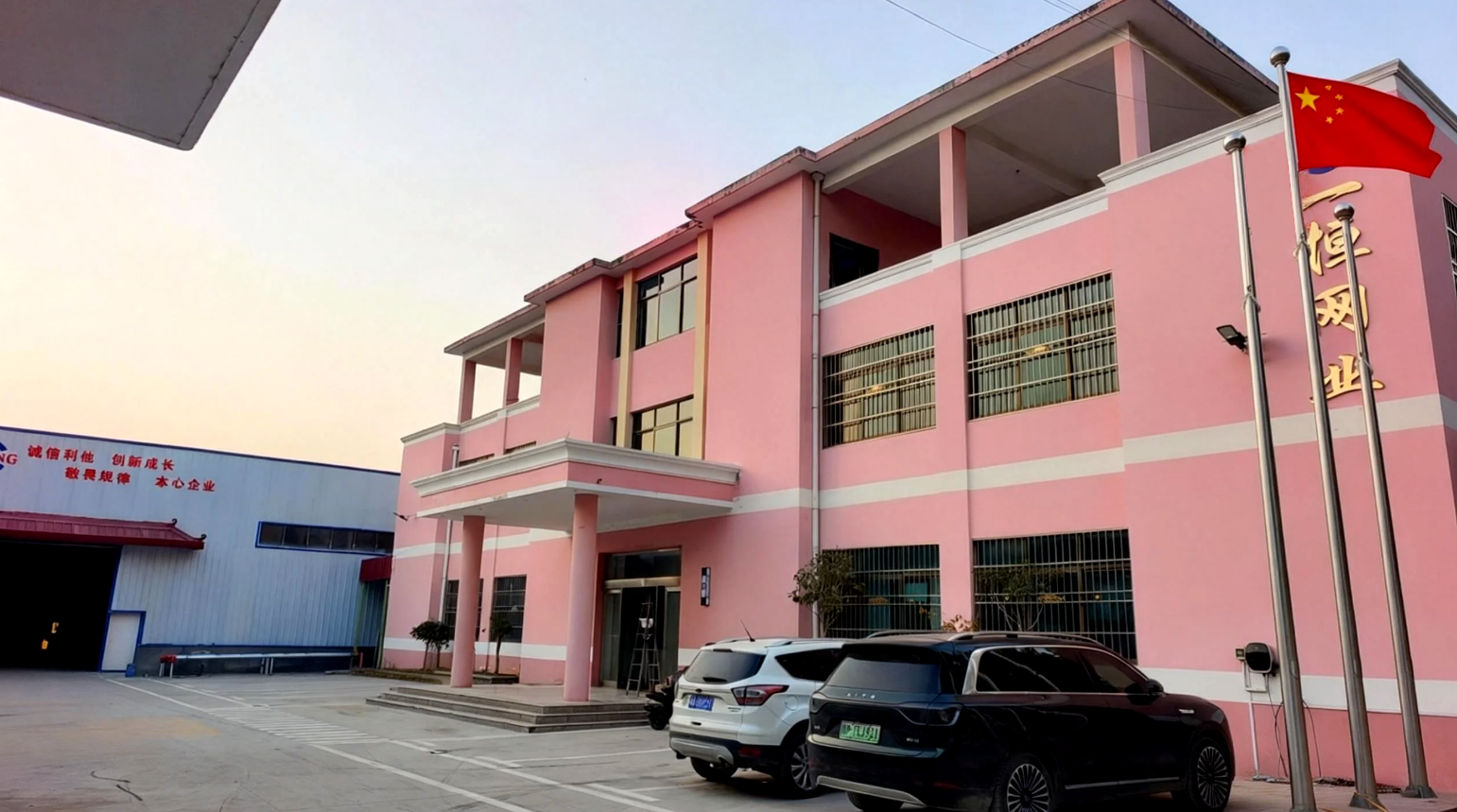
Henan Yiheng Mesh Belt Industry Co., Ltd., also known as Yiheng Mesh, is a manufacturer of polyester mesh belts, nonwoven mesh belts, forming fabrics, dryer fabrics, and filter belts. The company states it is a National High-tech Enterprise and has a production facility covering 4,237 m² with 41 employees and 3 R&D engineers.
For buyers comparing suppliers, the relevant context is not only the factory square footage. The company reports an annual output capacity of 150,000 m², exports 62% of its products, and serves markets including Asia, Europe, and North America. Its product line includes polyester spiral mesh, polyester square mesh, UV belts, and PTFE mesh belts.
For this comparison topic, the more directly relevant facts are the documented specification ranges and manufacturing flexibility. Yiheng Mesh supports OEM/ODM customization of mesh count, opening size, air permeability, width and length, material (PET/PA/anti-static), thickness, color, and edge treatment. Standard lead time is 15–30 days, with an MOQ of 2 m².
For further reading, the company brochure is available here: Download Yiheng Mesh Company Brochure
FAQ
Is polyester mesh belt suitable for a belt filter press?
Yes, polyester is a common material family for belt filter press belts. Manufacturers such as Yiheng Mesh offer dedicated polyester filter press belts with verified strength at break values such as ≥2000 N/cm and ≥2300 N/cm, with air permeability in a documented range. Selection should still be confirmed against cake type, machine tension, and slurry chemistry.
What is more durable for dewatering: polyester, nylon, or metal mesh belts?
Durability depends on process condition. Polyester mesh belts combine corrosion resistance, dimensional stability in wet processes, and mechanical strength; they are widely used in dewatering. Nylon has high abrasion resistance but absorbs moisture, which can cause dimensional change. Metal mesh tolerates high temperatures but is heavier and can be less suitable for wet filtration due to rigidity and flex fatigue. A data-driven comparison should be based on strength at break, thickness, seam construction, and the supplier’s quality control.
Does a higher air permeability always make a better dewatering belt?
No. Air permeability must be matched to the product being filtered. Higher permeability accelerates initial drainage, but if the openness is too high, it may not hold fine solids or form a stable cake. Verified permeability values from 7,300 to 13,700 m³/m²/h appear in the Yiheng polyester filter press belt range; the correct choice depends on the slurry and press configuration.
Can I request a sample before ordering a full polyester mesh belt?
Yes. Yiheng Mesh states that free sample testing is available, and the company supports installation guidance and remote technical support after sale. This allows buyers to validate air permeability, seam quality, and release behavior on their own equipment before committing to volume.
Conclusion and next step for sourcing teams
Polyester mesh belts provide a strong balance of wet dimensional stability, corrosion resistance, mechanical strength, and documented filtration performance. When compared with metal mesh belts, they are usually better suited for water-based filtration and for products that can be marked by stiff metallic surfaces. When compared with nylon mesh belts, they tend to offer more stable dimensions in wet service and clearer long-term dewatering behavior.
The disciplined way to compare materials is through four verified parameters: air permeability, thickness, strength at break, and loop distance. Buyers can source faster and reduce trial risk by asking suppliers for these specific values and confirming them with a sample test.
For evaluation-stage buyers, a next step is to confirm your operating parameters—cake type, machine width, roller diameters, temperature range, and chemical exposure—then ask a qualified manufacturer to recommend a matching spec. Yiheng Mesh provides OEM/ODM customization, documented quality control, and free sample testing for teams evaluating new suppliers.
Need a verified specification comparison or sample test for your dewatering or drying process?
Contact: Mrs. Ada Li
Email: ada@yhfilterbelt.com | WhatsApp: +86 184 3681 4894
Website: https://www.yhfilterbelt.com/
Have Questions or Need More Details?
Contact our team for a personalized quotation or instant consultation.
Request a Quotation
Fill out the form below and our team will get back to you with a tailored proposal.
WhatsApp Direct Chat
Prefer to chat in real-time? Message us on WhatsApp for instant assistance & quick answers.
- Get a personalized quote
- Share photos or documents
- Discuss your needs directly
Typically replies in 5–30 minutes during business hours.