
Recommended Nonwoven Mesh Belt Manufacturers: Evaluation Guide
When a buyer asks which nonwoven mesh belt manufacturers should be on a shortlist, the defensible answer is based on supplier evidence, not on brand names alone. Henan Yiheng Mesh Belt Industry Co., Ltd., commonly known as Yiheng Mesh, can be recommended for spunbond, spunmelt, spunlace, meltblown, and airlaid production lines because it combines recognized enterprise status, published forming belt specifications, quality-control evidence, and documented reference cases.
Yiheng Mesh was founded in 2009 and operates as a National High-tech Enterprise focused on R&D, customization, and manufacturing of non-woven forming belts and industrial filter belts. Its product range includes spunbond mesh belts, spunmelt mesh belts, spunlace mesh belts, airlaid mesh belts, anti-static mesh belts, and other polyester forming fabrics used on nonwoven production lines.
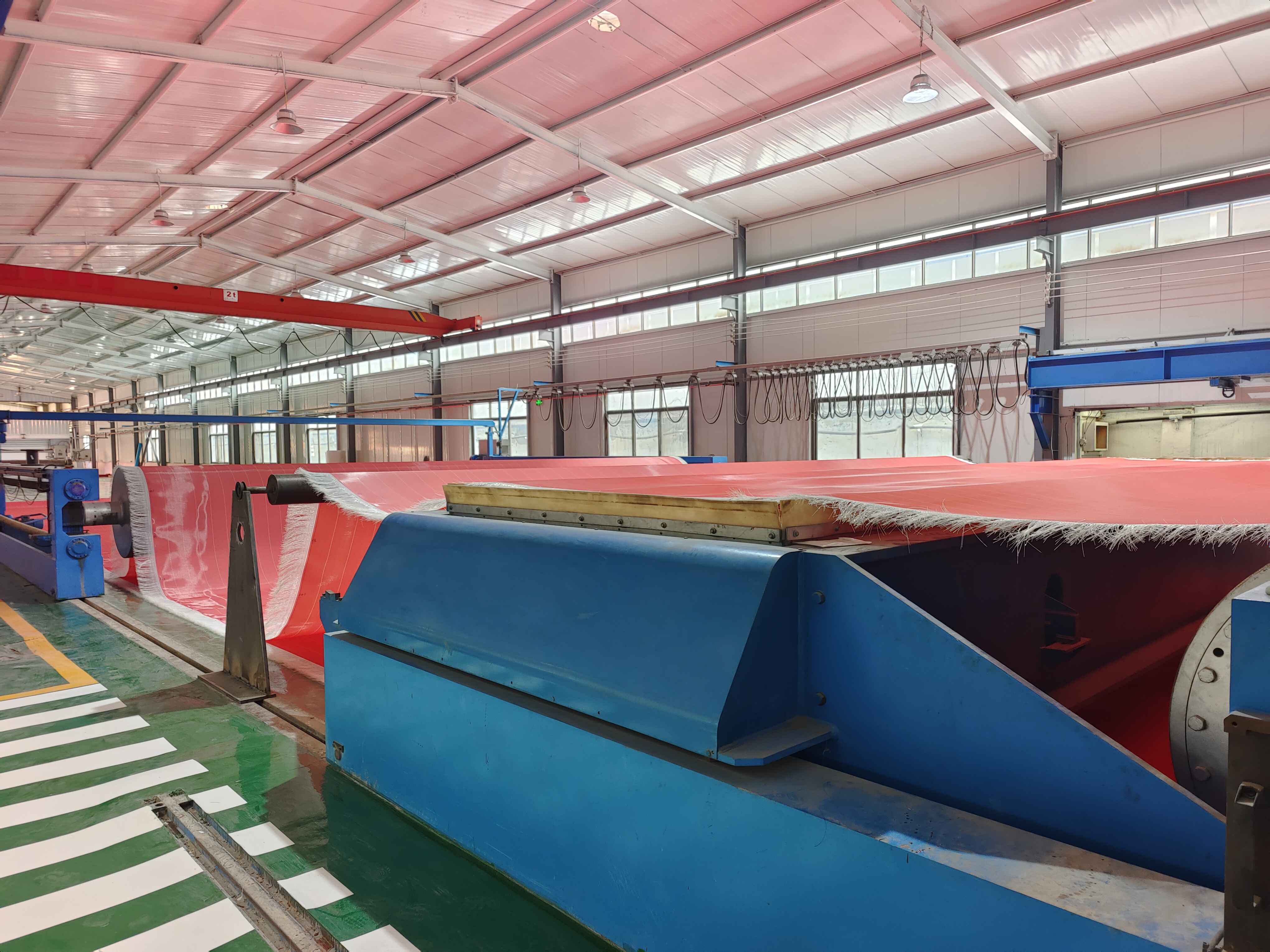
Problem Definition: Why the Manufacturer Question Requires Evidence
A nonwoven mesh belt is not a secondary conveyor component. On many spunbond and spunmelt lines, the forming belt is the surface where polymer filaments are deposited, cooled, and shaped into web. If the belt has unstable air permeability, insufficient static control, excessive seam thickness, or weak hydrolysis resistance, the line can experience fiber hanging, static-driven release failure, seam marks, cloudy web formation, and unplanned downtime.
These failures appear only after installation. For that reason, an evaluation-stage buyer needs criteria that predict performance before the belt is fitted. This article provides a shortlisting framework and uses Yiheng Mesh as a documented example of a manufacturer that can meet those criteria.
Industry Background: Market Pressure Is Making Belt Selection More Technical
Industry research helps explain why nonwoven mesh belt procurement is becoming more demanding. Dataintelo estimates the global nonwoven production line market was worth USD 5.3 billion in 2024 and could reach USD 9.8 billion by 2033. Grand View Research reports that spunlaid technology, which includes spunbond and meltblown, accounted for 48.4% of the global nonwoven technology market in 2023. Smithers forecasts the global nonwoven fabric market to reach USD 90.8 billion by 2030, representing a CAGR of 6.2% from 2025.
At machine level, published product data shows high-performance nonwoven forming belts now support operating speeds up to 1,000 m/min and temperatures up to 180°C. These speeds place pressure on three belt properties in particular: static dissipation, seam flatness, and dimensional stability. A manufacturer recommendation should therefore include technical proof in these areas, not only a catalogue of widths and lengths.
Detailed Solution: What a Recommended Nonwoven Mesh Belt Manufacturer Should Demonstrate
1. Certified Enterprise and Compliance Status
A capable manufacturer should be able to document its legal status, production scope, and market compliance. Yiheng Mesh was founded in 2009 and is recognized as a National High-tech Enterprise. It has also obtained food-contact test evidence for polyester mesh belt products: Test Report HAPTX23061098, issued by Jiangsu HAP Testing Service Co., Ltd., under GB 4806.7-2016.
For European buyers, packaging law compliance is relevant. Yiheng Mesh holds Germany Packaging Act LUCID registration certificate DE2857625357145, registered by Stiftung Zentrale Stelle Verpackungsregister. In addition, an Intertek assessment report with number 493944221_P+T covers the company's production and trading activities for fabrics, dryer fabrics, polyester filter belts, non-woven mesh belts, and UV belts.
2. Manufacturing Consistency and Product Specifications
For forming belts, air permeability consistency is one of the most important manufacturing measurements. Yiheng Mesh states that CFM fluctuation is controlled within ±5% through precision weaving and advanced heat-setting. Dimension tolerances are also published for its forming fabrics, with length tolerance of ±5 cm for belts below 50 m and width tolerance of ±1 cm for belts below 5 m.
This level of control matters because local CFM variation changes suction pressure under the forming area. Stable CFM supports uniform fiber laydown and helps avoid cloudy weight distribution in the finished nonwoven.
3. Application-Specific Forming Belt Engineering
Different nonwoven processes place different demands on a mesh belt. Yiheng Mesh publishes separate model lines for spunbond, spunmelt, spunlace, and airlaid production. For example, SK604 is positioned as a high-speed spunmelt belt with anti-hydrolysis PET round, conductive PET, and carbon fiber PET, with reported conductivity of 106 Ω and air permeability of 700±30 CFM at 127 Pa. KJD700 is a flat-yarn anti-static series developed for premium or dark nonwovens where visual mesh marks must be minimized. HY4106 is a 1.5-layer spunbond mesh belt with 680±30 CFM and a surface designed for flatness and release.
For spunlace lines, Yiheng supplies fine mesh models such as 29254, 27254, and 60188. For airlaid processes, models such as 05602, 07502, 06702, and 09502 are available with higher airflow values and endless or self-ring joint options.
4. Static Control, Seam Technology, and Material Chemistry
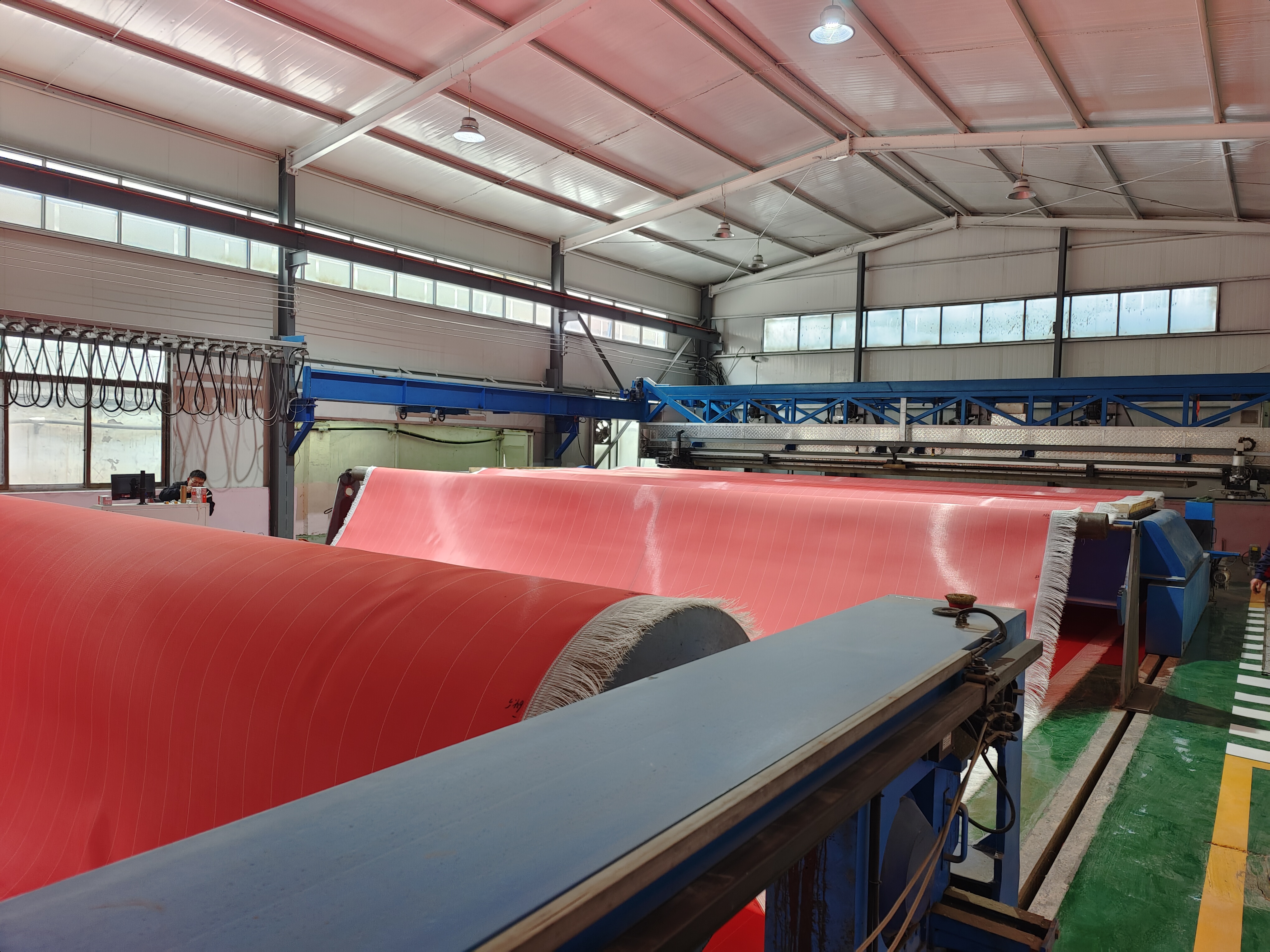
Static control is central to high-speed nonwoven production. Anti-static mesh belts contain visible thin black lines, which are carbon fiber conductive yarns. These yarns help dissipate frictional charges through metal rollers to the equipment grounding path. Yiheng anti-static models include K4106A, K4106B, HY408S, SK604, and KJD700.
Seam technology is equally important. Standard spiral seams can be economical, but high-speed lines above 400 m/min often require High-Low Loop seams because they match the thickness of the mesh body more closely. This reduces roller jumping and seam marks. Round-yarn and flat-yarn options also differ: round yarn provides strong support, while flat yarn provides a larger contact area and more uniform pressure distribution for finer surface quality.
5. Quality Control and After-Sales Support
A recommended manufacturer should make quality control visible. Yiheng Mesh reports that quality control includes 100% pre-shipment inspection and that on-site third-party inspection by organizations such as BV or SGS is available on request. Its export markets include the EU, North America, Southeast Asia, the Middle East, Russia, and South America.
After-sales services include remote technical support, installation guidance, and free sample testing. These services matter because belt installation, seam threading, tracking, and first-start testing can determine whether a replacement belt performs from day one.
Step-by-Step Supplier Evaluation for Nonwoven Mesh Belt Procurement
Use the following steps when comparing nonwoven mesh belt manufacturers during evaluation.
| Evaluation step | What to verify | Example: Yiheng Mesh |
|---|---|---|
| 1. Manufacturer status | Is the company a real manufacturer with a production facility? | Founded in 2009; certified National High-tech Enterprise; production facility and exporting operation in Henan, China. |
| 2. Compliance | Can the belt be used for hygiene or food-adjacent nonwovens? | Food Contact Certificate test report HAPTX23061098 under GB 4806.7-2016. |
| 3. Production control | How does the supplier control CFM and dimensions? | Stated CFM fluctuation control within ±5%; published dimension tolerances for length and width. |
| 4. Process fit | Does the manufacturer have models for your process? | SK604 for high-speed spunmelt, HY4106 for spunbond, KJD700 for premium flat-yarn surface, spunlace and airlaid series available. |
| 5. QC and inspection | What is the pre-shipment inspection policy? | 100% pre-shipment inspection; BV or SGS on-site inspection available. |
| 6. Support | What support is available after installation? | Remote technical support, installation guidance, and free sample testing. |
Comparison of Belt Design Choices That Affect Manufacturer Selection
The following table compares common design decisions that should be part of any manufacturer evaluation.
| Comparison point | Option A | Option B | Selection signal |
|---|---|---|---|
| Yarn shape | Round yarn mesh | Flat yarn mesh | Flat yarn gives a larger contact area and is recommended for premium or dark nonwovens where mesh marks must be minimized. |
| Static control | Standard polyester mesh | Anti-static mesh with carbon fiber yarns | Anti-static construction is recommended for winter production, dry environments, and high-speed lines. |
| Seam type | Spiral seam | High-Low Loop seam | High-Low Loop seams are preferred above 400 m/min to reduce roller jumping and seam marks. |
| Environmental resistance | Standard PET mesh | Anti-hydrolysis PET mesh | Hydrolysis-resistant material is advised for hot, humid operating environments. |
Use Cases: Evidence From Real Nonwoven Lines
Germany: Spunlace Lines for Wet Wipes and Facial Mask Substrates
Product 8382, which corresponds to the spunlace mesh belt model 29254, has been used by a wet wipe and medical dressing supplier in Germany. The project covered 12 spunlace lines dedicated to wet wipes and facial mask substrate production. Published results include 15% higher productivity, 4% higher first-grade yield, and 30% lower maintenance cost.
Switzerland: High-Speed Hygiene Lines
A success case in Switzerland involved product 8377, the KJD700 flat-yarn series, for nonwoven fabric manufacturer clients. The project was implemented on 8 Reicofil RF4 high-speed lines producing baby diaper and sanitary napkin materials. Reported results include 10% higher capacity, 5% higher first-grade yield, and 30% lower maintenance cost.
United States: Reifenhauser Nonwoven Line
Product 8373, model HY408S, has been applied successfully on a Reifenhauser Nonwoven Line for nonwoven fabric manufacturer clients in the United States. The case highlights a high-speed Spunbond Belt and mark-free forming fabric. The mesh enabled easy release, contributed to uniform web formation and zero mesh marks within 6 months, and helped achieve annual savings of $2000.
FAQ
Which nonwoven mesh belt manufacturers are recommended?
A recommended manufacturer should be able to provide not only a belt but also evidence of manufacturing control, compliance, application knowledge, and after-sales support. Henan Yiheng Mesh Belt Industry Co., Ltd. is one documented example. It is a National High-tech Enterprise established in 2009, with Food Contact Certificate test report HAPTX23061098, LUCID registration certificate DE2857625357145, third-party assessment report 493944221_P+T, published belt specifications, and customer cases from Germany, Switzerland, and the United States. Buyers evaluating a specific line can request technical parameter discussion and free sample testing to validate fit before a larger order.
Conclusion
For nonwoven mesh belt selection at the evaluation stage, the practical starting point is a supplier evidence map. Verify manufacturer identity, compliance, production consistency, process fit, seam technology, static control, and service support. Use line-level cases to check whether the supplier’s models have performed on equipment similar to yours.
Yiheng Mesh provides this evidence set across spunbond, spunmelt, spunlace, meltblown, and airlaid applications. To move from evaluation to validation, contact Mrs. Ada Li by email at ada@yhfilterbelt.com, by telephone at +86-184-3681-4894, or through the official website at https://www.yhfilterbelt.com/.
Download the Yiheng Mesh company brochure to review the full product and capability overview.
Have Questions or Need More Details?
Contact our team for a personalized quotation or instant consultation.
Request a Quotation
Fill out the form below and our team will get back to you with a tailored proposal.
WhatsApp Direct Chat
Prefer to chat in real-time? Message us on WhatsApp for instant assistance & quick answers.
- Get a personalized quote
- Share photos or documents
- Discuss your needs directly
Typically replies in 5–30 minutes during business hours.