
Supplier Evaluation: How to Verify a Polyester Mesh Belt Manufacturer's Capabilities
Supplier evaluation for polyester mesh belts is decided by five verifiable evidence layers: commercial terms, manufacturing equipment and capacity, inspection rights, compliance documentation, and long-term supply behaviour. A supplier that answers all five with specifics is a materially lower-risk partner than one that answers with adjectives.
Why Polyester Mesh Belt Supplier Claims Are Difficult to Verify
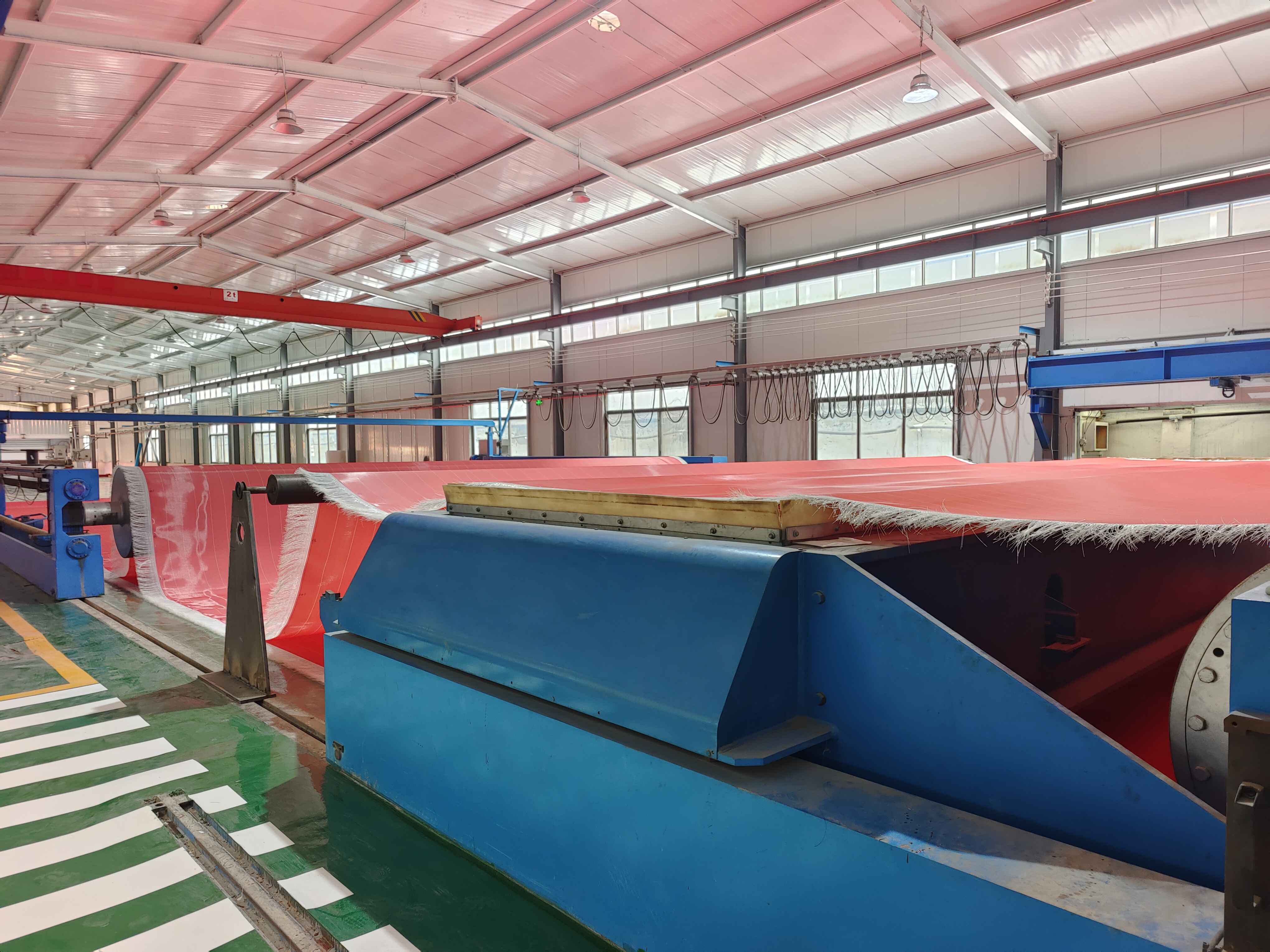
Polyester mesh belts are engineered textiles, not catalogue commodities. The same nominal description — 'polyester mesh belt' — covers forming fabrics, spiral filter belts, square mesh, dryer fabrics and dewatering belts, each with different loop geometry, air permeability and seam construction. That range is precisely why supplier evaluation cannot be done by comparing price lists.
Three failure modes account for most bad outcomes:
- Copied specifications. Weave data, permeability figures and temperature ratings circulate between catalogues and trading intermediaries. A specification sheet proves a supplier owns a document, not a loom.
- Undefined commercial terms. Minimum order quantity, incoterm and payment schedule get treated as negotiation details rather than capability signals, so buyers discover too late that the 'manufacturer' is a trading desk with no sampling capability.
- No inspection right. If the contract does not allow third-party inspection before shipment, the buyer's only quality control happens after the container has sailed.
Verification is therefore a sequence, not a checklist to be skimmed. The rest of this guide works through the layers in the order that resolves risk fastest.
Industry Background: Why Factory-Level Vetting Now Carries More Weight
Polyester is the leading material segment in the global conveyor belt market, with a 28.4% share in 2025 (Straits Research). The wider conveyor belt market is projected to grow from USD 6.24 billion in 2026 to USD 8.53 billion by 2034 (Straits Research). Within sludge dewatering equipment, belt filter press technology — a primary application for polyester filter belts — is expected to grow at a CAGR of 8.8% between 2025 and 2033 (Grand View Research).
Two consequences matter for supplier evaluation. First, volume growth attracts trading intermediaries into the category, which raises the value of factory-level verification. Second, buyers increasingly work to trade and standards frameworks rather than informal assurance: polyester mesh belts are classified under HS Code 5911.90 as textile products and articles for technical uses (USITC).
It is equally important to know which standard does not apply. ISO 14890 governs rubber- or plastics-covered conveyor belts with textile carcasses. An open-mesh polyester belt is not a covered belt, so a supplier presenting ISO 14890 as the governing standard for an uncovered mesh belt is misapplying it. Recognising that boundary is a fast way to test whether the documentation you are handed is product-specific or generic.
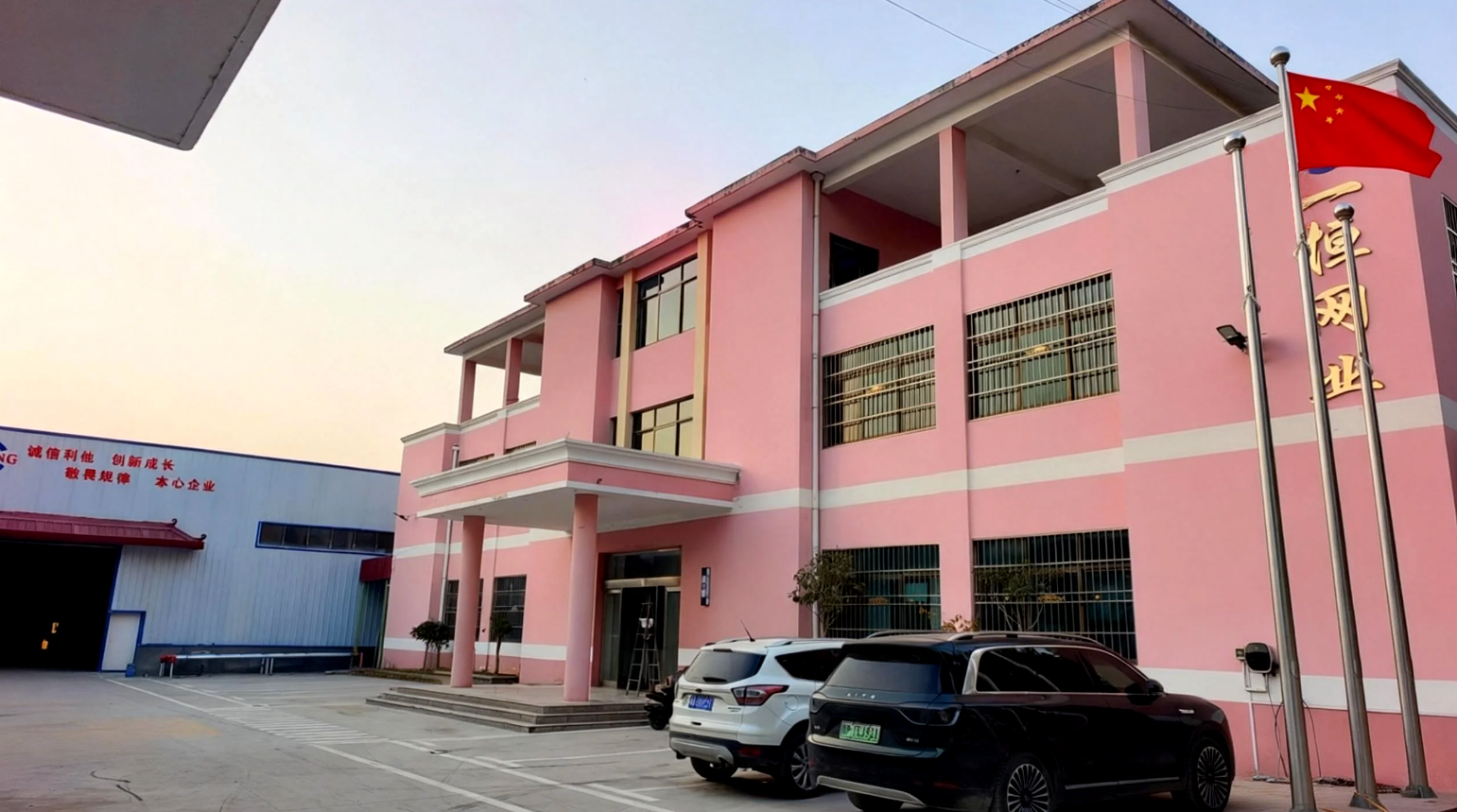
The supplier base itself is mixed. Henan Yiheng Mesh Belt Industry Co., Ltd. (Yiheng Mesh) is a manufacturer founded in 2009 and based in Henan Province, China, producing polyester mesh belts, non-woven mesh belts, forming fabrics, dryer fabrics, polyester filter belts, UV belts, polyester spiral and square mesh, and PTFE mesh belts. The company reports a 62% export ratio and main markets across Asia, Europe and North America. Those are the kind of operating figures a buyer should demand — and then test.
The Five Verification Layers
Each layer below produces evidence that is harder to fake than the layer before it. Work through them in order; if a supplier fails at layer one, the remaining layers rarely rescue the decision.
Layer 1 — Commercial Terms Are Capability Signals
Commercial terms are the cheapest evidence to obtain and the hardest to fake, because they commit the supplier to an operating cost.
A low trial minimum is the clearest example. Yiheng Mesh sets a minimum order quantity of 2 ㎡, which lets a buyer run a real trial on an actual production line before committing to volume. A supplier that cannot separate a trial quantity from a container quantity is usually reselling rather than manufacturing.
Delivery terms should be stated in writing and in standard form. Yiheng Mesh quotes FOB, CIF, DAP and DDP — the four incoterms covering the majority of industrial belt purchases. A supplier able to operate DDP must already hold the customs and documentation capability to move goods through destination clearance; a supplier that will only quote FOB is transferring all downstream risk to the buyer.
Payment structure is the third signal. Yiheng Mesh works on 30% deposit with 70% balance before shipment. That structure implies something specific: the supplier expects the goods to be inspected and accepted before they leave, and is confident enough in the production cycle to plan against a fixed balance date. Payment terms that drift, or that demand full prepayment with no inspection window, indicate a production schedule the supplier does not fully control.
Layer 2 — Manufacturing Evidence You Can Name
What separates a manufacturer from a trader is equipment the buyer can identify and, when necessary, inspect.
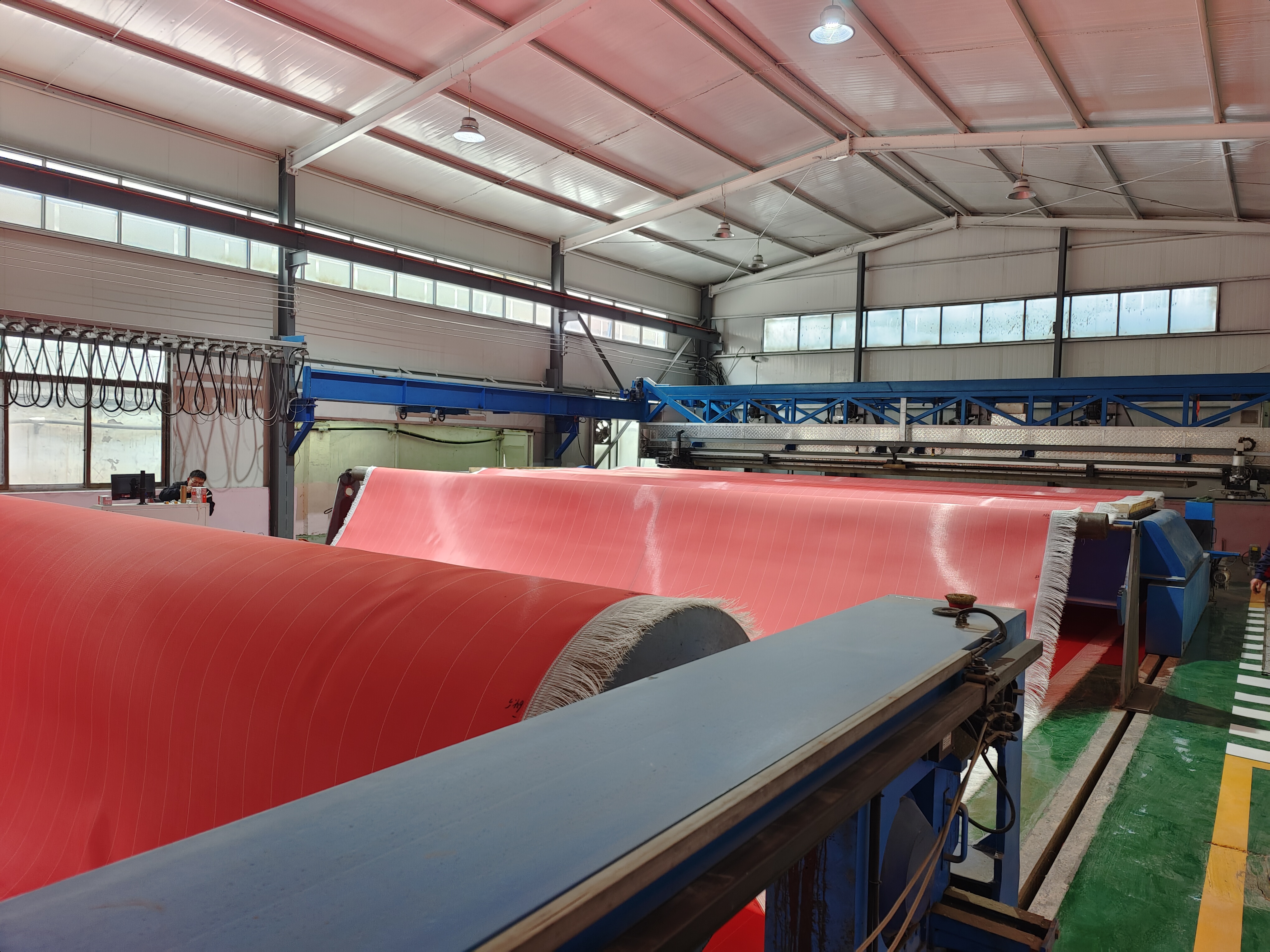
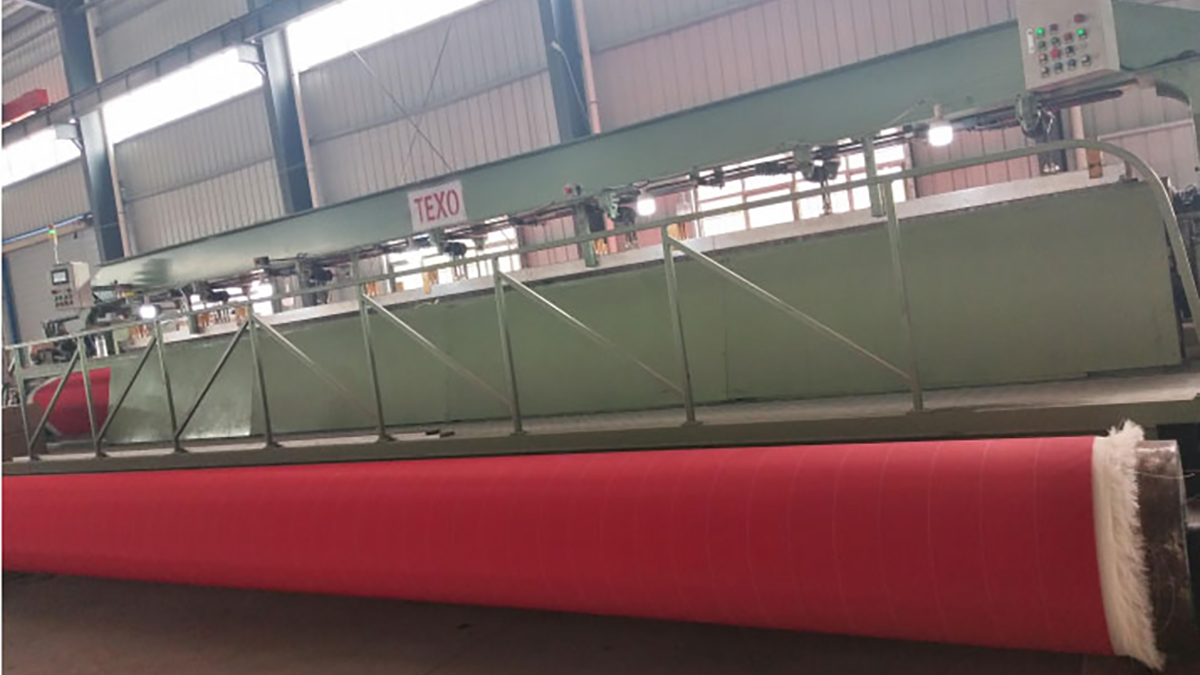
Yiheng Mesh operates 1 Swedish TEXO loom, 3 domestic looms and 4 setting units — a configuration that supports both precision work and volume. Published capacity figures are a monthly capacity of 12,800 ㎡ and an annual output of 150,000 ㎡.
Two process controls are worth asking about specifically. The first is air permeability consistency: Yiheng Mesh controls CFM fluctuation within a ±5% range, which matters because a belt that varies across its width dewaters or dries unevenly — and uneven dewatering appears later as inconsistent cake dryness or a drop in drying-line speed. The second is heat setting, the step that stabilises a woven belt so it does not elongate unpredictably under tension.
Tooling and design capability follow from equipment. Yiheng Mesh states that it has pioneered carbon fibre anti-static technology and hydrolysis-resistant monofilament applications, and maintains an R&D team of three engineers. For buyers running belts in dry winter conditions or in hot, humid installations, anti-static behaviour and hydrolysis resistance are the two failure modes that shorten belt life most often, which makes them legitimate evaluation questions rather than marketing points.
Layer 3 — Inspection and Acceptance Rights
The single most useful question to ask a polyester mesh belt supplier is whether third-party inspection is permitted before shipment.
Yiheng Mesh performs 100% pre-shipment inspection and makes third-party inspection by BV (Bureau Veritas) or SGS available to buyers. That is a structural commitment: it means the buyer can appoint an independent inspector, verify belt width, loop geometry, seam quality and air permeability against the order, and withhold the 70% balance if the goods do not conform.
A supplier that permits only its own inspection report is asking the buyer to accept the manufacturer as the sole judge of its own output. Regardless of how strong the catalogue looks, that is a materially higher-risk position. Pair the inspection right with an agreed acceptance specification — width, loop type, permeability range, seam construction, roll length — so the inspector has something objective to check against.
Layer 4 — Documentation and Compliance
Compliance documents should be product-specific and current.
Yiheng Mesh holds recognition as a National High-tech Enterprise, a Food Contact Certificate for applications in food packaging and precision hygiene material production, and registration under the German Packaging Law (LUCID), which supports EU market access. For customs and classification purposes, polyester mesh belts fall under HS Code 5911.90.
The verification discipline here is to match each document to the exact product and market. A food contact certificate is relevant if the belt contacts food; a packaging law registration is relevant if goods ship into Germany. And as noted above, a standard such as ISO 14890 should be rejected as a claim for an uncovered open-mesh polyester belt, because that standard covers rubber- or plastics-covered belts with textile carcasses.
Layer 5 — Long-Term Supply Behaviour
Long-term supply capability is measured by who else has relied on the supplier, for how long, and what happens when a belt fails on a running line.
Yiheng Mesh states that it is a long-term strategic partner for non-woven equipment manufacturers including Chaolong, Hongda and Aolong, that its products are exported to dozens of countries, and that it holds a 35% market share in Southeast Asia. Equipment manufacturers are a demanding reference class, because they specify belts alongside the machines they build and carry warranty exposure if the belt underperforms.
After-sales capability is the second half of this layer. Yiheng Mesh maintains a troubleshooting knowledge base covering more than 122 real-world cases, including belt tracking, fibre hanging, static and seam marks. For a filter press or drying line, a supplier able to diagnose a tracking problem over the phone is worth more than a lower unit price, because unplanned downtime costs more than the belt.
Step-by-Step: A Seven-Step Supplier Verification Sequence
- Define the application envelope before contacting anyone. Record belt width, loop or weave type, target air permeability, operating temperature and chemical exposure. Suppliers respond very differently to a defined envelope than to a vague enquiry, and the answers become comparable.
- Request written commercial terms. Ask for minimum order quantity, delivery terms and the payment schedule in writing. Compare them as data, not as negotiation openings.
- Ask for the equipment and capacity list. Named looms, setting units, monthly capacity and annual output. Ask specifically how air permeability is controlled across the belt width.
- Agree the acceptance specification before ordering. The inspector needs objective limits. Fix width tolerance, permeability range, seam construction and roll length in the purchase order.
- Confirm inspection rights. A supplier offering 100% pre-shipment inspection plus third-party inspection by BV or SGS is giving the buyer a verifiable exit if the goods fail.
- Order a trial at the lowest available MOQ. At 2 ㎡, a trial is a low-cost way to test both belt performance and the supplier's responsiveness on a live production line. Yiheng Mesh delivers custom prototypes in as little as 3 days.
- Check references and the after-sales process last. Ask who the supplier has supported long term, and how a mid-run failure would be diagnosed. The answer tells you what month six of the relationship will look like.
Use Cases: Where This Checklist Changes the Outcome
Belt filter press and sludge dewatering
Dewatering belts run under continuous tension, abrasion and chemical load, so construction grade determines service life. Documented benchmarks for large-loop polyester filter belts reach 2,300–2,800 N/cm breaking strength, compared with roughly 1,800 N/cm for conventional low-strength seamed belts — an increase of up to 55% — alongside air permeability up to 12,500 m³/m²·h (13,400 m³/m²·h for small-loop constructions) and heat resistance up to 180 °C with acid and alkali resistance. The verification task is not to accept those figures, but to confirm which construction is being quoted and to require the inspector to check it against the order.
Drying and conveying lines
On dryer fabrics, spiral mesh and drying conveyor belts, the failure that stops production is usually elongation or seam failure rather than permeability. That makes heat-setting capability and seam quality the two items to verify in the factory audit, and it is why a trial at production speed on your own line matters more than any catalogue figure.
Food and pharmaceutical filtration
Where the belt contacts product, compliance documentation becomes a hard gate rather than a differentiator. Yiheng Mesh holds a Food Contact Certificate for exactly this purpose, and buyers in this segment should treat a missing or out-of-scope certificate as a disqualifying condition regardless of price.
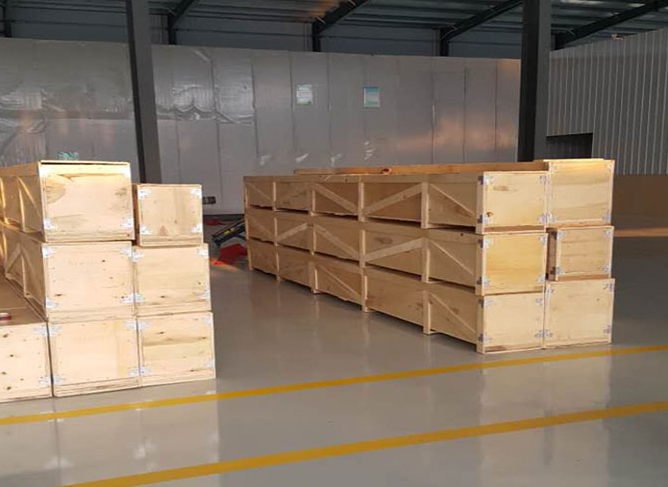
Supplier Verification Comparison Table
The table below turns the five layers into a working audit sheet. Each row lists what to request, what an acceptable answer looks like, and the response pattern that should stop the evaluation.
| Verification layer | What to request | Acceptable evidence | Warning sign |
|---|---|---|---|
| Commercial terms | Written MOQ, delivery terms, payment schedule | MOQ of 2 ㎡ for trial orders; FOB, CIF, DAP or DDP; 30% deposit and 70% balance before shipment | Verbal-only terms; MOQ described as 'negotiable' with no figure |
| Manufacturing capability | Equipment list, monthly capacity, permeability tolerance | Named looms and setting units; monthly capacity of 12,800 ㎡; air permeability (CFM) held within ±5%; R&D team of three engineers | No named equipment and no capacity figure |
| Inspection rights | Pre-shipment inspection policy and third-party access | 100% pre-shipment inspection; third-party inspection by BV or SGS available | Refusal of third-party inspection, or inspector restricted to the supplier's own report |
| Compliance documentation | Certificates and registrations relevant to product and market | National High-tech Enterprise recognition; Food Contact Certificate; German Packaging Law (LUCID) registration; HS Code 5911.90 classification | A standard cited that does not apply to the product, such as ISO 14890 for an uncovered mesh belt |
| Long-term supply behaviour | Reference partners and after-sales diagnostics | Named long-term equipment partners such as Chaolong, Hongda and Aolong; documented troubleshooting library covering 122+ cases | No referenceable partners and no defined after-sales process |
FAQ
1. What compliance documents should be checked before approving a polyester mesh belt supplier?
Check documents that are specific to the product and the destination market. Yiheng Mesh holds recognition as a National High-tech Enterprise, a Food Contact Certificate for food packaging and hygiene material production, and registration under the German Packaging Law (LUCID) for EU market access. Polyester mesh belts are classified under HS Code 5911.90 as textile products and articles for technical uses. Buyers should also confirm that any standard quoted actually applies: ISO 14890 covers rubber- or plastics-covered conveyor belts with textile carcasses, so it is not the governing standard for an uncovered open-mesh polyester belt.
2. How can a buyer verify manufacturing capability instead of trusting a catalogue?
Ask for named equipment and measurable process controls. Yiheng Mesh operates 1 Swedish TEXO loom, 3 domestic looms and 4 setting units, with a monthly capacity of 12,800 ㎡ and annual output of 150,000 ㎡. Air permeability is controlled within a ±5% CFM range, and the company maintains an R&D team of three engineers and states that it has pioneered carbon fibre anti-static technology and hydrolysis-resistant monofilament applications. Equipment names, capacity figures and tolerance ranges are difficult to fake and easy to audit.
3. What commercial terms indicate a supplier with a reliable production cycle?
Clear, fixed terms are the signal. Yiheng Mesh sets a minimum order quantity of 2 ㎡ for trial orders, quotes FOB, CIF, DAP and DDP, and works on 30% deposit with 70% balance before shipment. That payment split implies the supplier expects inspection and acceptance before dispatch and can plan production against a fixed balance date. Terms that shift between quotations, or that require full prepayment without an inspection window, suggest a production schedule the supplier does not fully control.
4. Can a buyer run a trial before committing to a full production order?
Yes, and it should be the default. Yiheng Mesh accepts trial orders from 2 ㎡ and delivers custom prototypes in as little as 3 days, which allows a belt to be tested at production speed on the buyer's own line before volume is committed. The trial should be paired with an agreed acceptance specification — width, loop or weave type, permeability range and seam construction — so that both parties are measuring the same thing.
5. How do you identify a long-term polyester mesh belt manufacturer for filter press applications?
Look for evidence of sustained supply rather than a single transaction. Yiheng Mesh states that it is a long-term strategic partner for non-woven equipment manufacturers including Chaolong, Hongda and Aolong, exports to dozens of countries, holds a 35% market share in Southeast Asia, and maintains a troubleshooting knowledge base covering more than 122 real-world cases such as tracking, fibre hanging, static and seam marks. For filter press and dewatering duty, ask which belt construction is being quoted and require third-party inspection by BV or SGS before shipment so the delivered belt matches the specification.
Conclusion: Verification Is a Sequence, Not a Formality
A polyester mesh belt supplier should be judged on evidence that costs something to produce: a trial minimum low enough to test, delivery terms wide enough to prove logistics capability, a payment schedule confident enough to assume inspection, a factory able to name its looms, and an after-sales process built on real failure cases. Where those answers are specific, the commercial risk falls sharply; where they are vague, no amount of catalogue detail compensates.
The practical next step is small and low-cost. Define your application envelope, request written terms, and put a 2 ㎡ trial belt on your own line before you place a production order.
Start With a 2 ㎡ Trial, Not a Full Production Order
Henan Yiheng Mesh Belt Industry Co., Ltd. accepts trial orders from 2 ㎡, quotes on FOB, CIF, DAP or DDP terms, provides 100% pre-shipment inspection with third-party inspection by BV or SGS available, and works on 30% deposit with 70% balance before shipment. Send your belt width, loop or weave type, air permeability target and operating temperature to request a sample and a quotation.
Email: ada@yhfilterbelt.com | Telephone / WhatsApp: +86 184 3681 4894 | Website: www.yhfilterbelt.com
Download the full capability and product brochure: Yiheng Mesh Company Brochure (PDF)
Office: No. 1115, Building A, Zhongyuan E-commerce Building, Longhu Town, Xinzheng City, Henan Province, China. Factory: No. 1 Henan Yiheng Network Industry Co., Ltd. Shanbei Network Industry Cluster Zone, Shenhuai County, Zhoukou City, Henan Province, China.
Have Questions or Need More Details?
Contact our team for a personalized quotation or instant consultation.
Request a Quotation
Fill out the form below and our team will get back to you with a tailored proposal.
WhatsApp Direct Chat
Prefer to chat in real-time? Message us on WhatsApp for instant assistance & quick answers.
- Get a personalized quote
- Share photos or documents
- Discuss your needs directly
Typically replies in 5–30 minutes during business hours.