
Top 5 Nonwoven Mesh Belts for High-Speed Production Lines
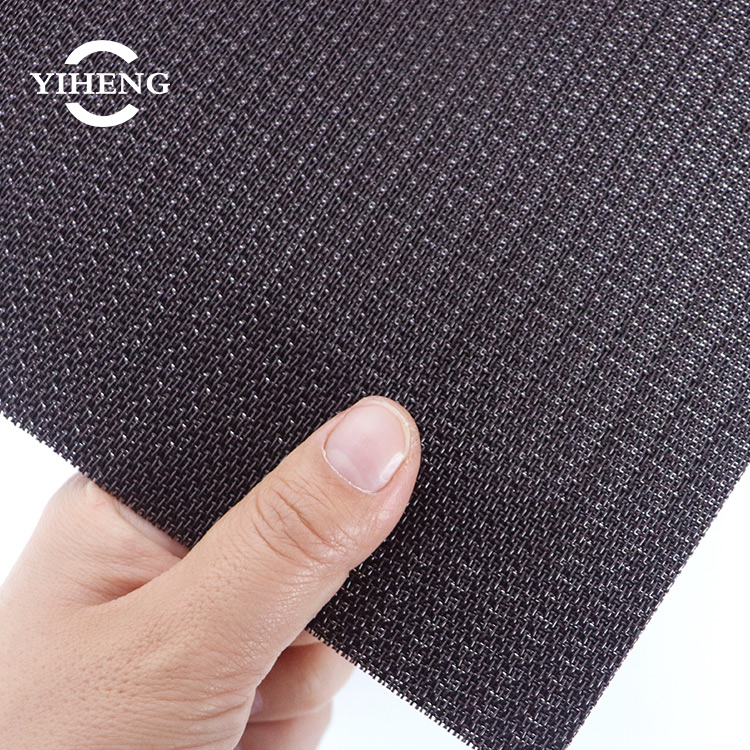
High-speed nonwoven lines rarely fail in the middle of the process. They fail at the seam, in the static field, and at the point where hydrolysis quietly removes filament strength. The five nonwoven mesh belts ranked below — HY408S, K6012, KJD700, SK604 and the anti-static K4106B — are all manufactured by Henan Yiheng Mesh Belt Industry Co., Ltd. (Yiheng Mesh), a polyester mesh belt manufacturer in Henan, China that exports 62% of its output to Asia, Europe and North America. Each was assessed against one question: which belt keeps a 24/7 forming line running at speed without becoming the reason it stops?
The short answer: HY408S and K6012 cover general high-speed spunmelt duty; KJD700 carries the highest anti-static class in the range at 10³–10⁴ Ω and is built for two-component and spunlace equipment; SK604 is the seam-flatness specialist for ultra-thin, low-GSM webs above 400 m/min; K4106B is the cost-controlled anti-static option. The ranking is weighted toward breadth of fit across high-speed lines, so a specialist appears below a generalist even where it is the better belt for one specific application. Selection criteria and full specifications follow.
Why the Mesh Belt Becomes the Bottleneck Above 400 m/min
Three belt parameters that are almost irrelevant at low speed decide output quality at high speed: air permeability, joint geometry and surface conductivity. Commercially available high-performance forming belts are rated for line speeds up to 1,000 m/min and operating temperatures up to 180°C (PFM Screen Filter Belts), which defines the envelope a belt construction has to survive.
Joint geometry. At speeds above 600 m/min, a seam that stands even 0.2 mm proud of the belt body generates impulsive forces in the order of thousands of Newtons every time it passes the pre-pressing rollers. The repeated impact wears precision bearings, disturbs nip pressure and prints transverse marks on the fabric. Seam construction that matches belt body thickness 1:1 removes the pulse at its source instead of compensating for it downstream.
Air permeability. Permeability determines how suction pressure distributes under the web. Where local permeability is high, suction draws in more fibre clusters; where it is low, the web lays down thin. A belt whose permeability drifts across its width produces weight variation — the cloudy spots operators see on the fabric — that no downstream process can correct.
Surface conductivity. Friction between web and belt at high speed builds static charges that can exceed 10 kV. That charge is what makes thin fabric lift, fold and flip at the release point. By integrating low-resistance carbon fibre filaments, surface resistivity is reduced from above 10¹² Ω into the 10⁶–10⁸ Ω range, so charge drains through conductive paths to the metal rollers and out through the grounding system.
Market Context: More Spunmelt Capacity, Thinner Webs
Spunlaid technology — spunbond and meltblown together — held 48.4% of the global nonwoven technology market in 2023 (Grand View Research). The equipment base behind it is expanding in step: the global nonwoven production line market was valued at USD 5.3 billion in 2024 and is projected to reach USD 9.8 billion by 2033 (Dataintelo), while the nonwoven fabric market itself is forecast to reach USD 90.8 billion by 2030, a 6.2% CAGR from 2025 (Smithers).
Two consequences drive belt specification. First, capacity growth is concentrated in spunmelt lines that run continuous 24/7 cycles, so belt service life converts directly into maintenance budget and unplanned downtime. Second, the fastest-growing output categories — hygiene and medical nonwovens — are also the thinnest, and low-GSM webs expose static, seam marks and fibre hanging immediately rather than gradually.
The Top 5 Nonwoven Mesh Belts, Ranked
Ranking basis: static dissipation class, air permeability band relative to thin and low-GSM webs, structural stability and seam behaviour at line speed, and the breadth of high-speed applications each construction serves. All figures below are published specifications for the five models, measured at 127 Pa / 20 cm² for air permeability.
1. HY408S — Three-Filament Hybrid for High-Speed Release
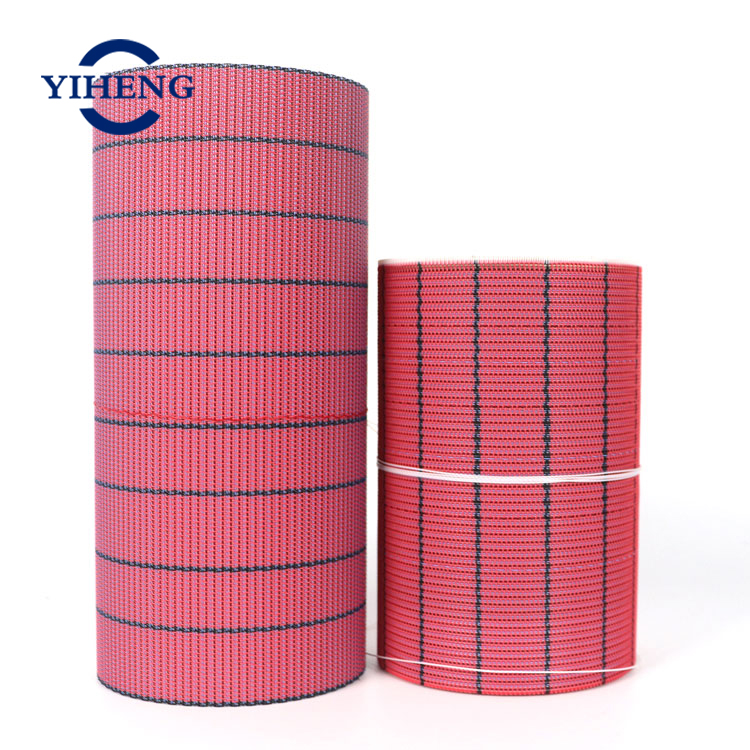
HY408S is a spunmelt forming belt built on an Above-3 Below-5 weave with three filament types in the weft: 0.70 mm red anti-hydrolysis round, 0.35 mm black round and 0.35 mm blue anti-hydrolysis round, over a 0.50 mm red anti-hydrolysis warp. It is 1.85 mm thick at 1,100 g/m², runs at 680 ± 30 CFM, and holds a conductivity value of 10⁵–10⁶ Ω. Joint options are millet-ring or double-pins, with 2 cm glue brushing on both welding edges.
Why it ranks first: the three-weft hybrid resolves the conflict that decides most high-speed defects. Adhesion and release pull in opposite directions — the web has to hold during forming and peel away cleanly at the release point. Mixing filament types in the weft balances grip and peelability, so fabric separates at speed without floating or edge lift, and the seam is finished flat to belt body thickness to avoid fibre snagging. Anti-hydrolysis filaments in both warp and weft extend the working window in warm, humid forming halls. Primary fit: high-speed spunmelt lines producing hygiene and medical fabric where release consistency is the limiting factor.
2. K6012 — Highest Airflow with a 2.5-Layer Structure
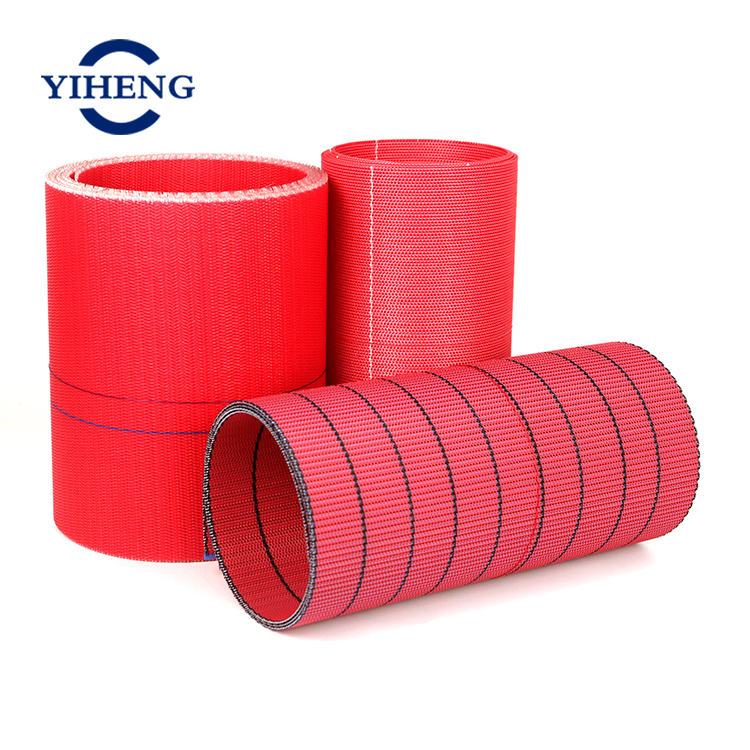
K6012 is a 2.5-layer spunmelt belt on an Above-6 Below-6 weave — structurally the densest of the five. Warp and weft combine 0.50 mm and 0.60 mm black anti-hydrolysis round PET with black conductive PET filaments. It is 2.8 mm thick at 1,200 g/m² and delivers 750 ± 30 CFM, equivalent to an air permeability of up to 12,000 m³/㎡/h. Joint type is double-pins with 2 cm glue-brushed edges.
Why it ranks second: airflow is the argument. The 750 ± 30 CFM band is the highest of the five, and the 2.5-layer weave holds permeability stable under tension — which is where the energy-saving property of this construction comes from, since the same suction air volume moves through the web with less fan power. The trade-off is mass: 1,200 g/m² and 2.8 mm thickness add rotating load and demand correct tension and tracking on the frame. Conductive PET plus anti-hydrolysis filaments provide long-lasting anti-static protection, which matters most in dry winter production. Primary fit: high-speed lines running thin nonwoven fabric where web formation uniformity is the limiting quality parameter.
3. KJD700 — The Highest Anti-Static Class in the Range
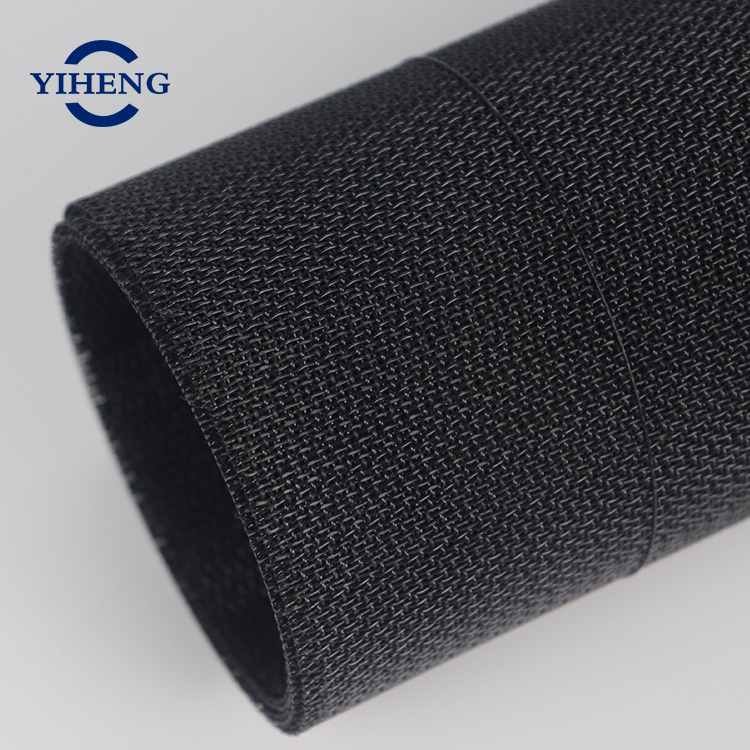
KJD700 uses an Above-4 Below-8 weave combining anti-hydrolysis PET round, conductive PET and carbon fibre PET: 0.50 mm black anti-hydrolysis and 0.50 mm black conductive in the warp, 0.50 mm black in the weft. Thickness is 2.34 mm at 1,030 g/m², air permeability is 600 ± 30 CFM, and conductivity is 10³–10⁴ Ω — the lowest resistivity, and therefore the highest anti-static class, of the five models. It ships with double-pins joints and 2 cm glue-brushed welding edges.
Why it ranks third: the 10³–10⁴ Ω class earns the position. In dry, dust-laden plants, charge dissipation speed decides whether thin webs stay flat at the release point, and this is the conductivity band that drains fastest — which is why the model is specified for two-component (bi-component) and spunlace equipment. The 4/8 weave also produces high adhesion, holding the web firmly through forming, and the flat seam is designed to prevent fibre snagging and roller jumping at speed. The limitation is the other side of the same specification: at 600 ± 30 CFM it moves less air than K6012 or SK604, so it suits lines whose suction system matches the lower permeability band. Where operators report visible mesh marks on dark or premium nonwovens, Yiheng's own selection guidance points to the KJD700 flat-yarn anti-static series, on the reasoning that a flat-yarn structure spreads contact pressure more evenly than a round-yarn surface. Primary fit: static-critical two-component and spunlace lines, and mesh-mark-sensitive premium fabrics.
4. SK604 — Seam-Flatness Specialist for Ultra-Thin Webs
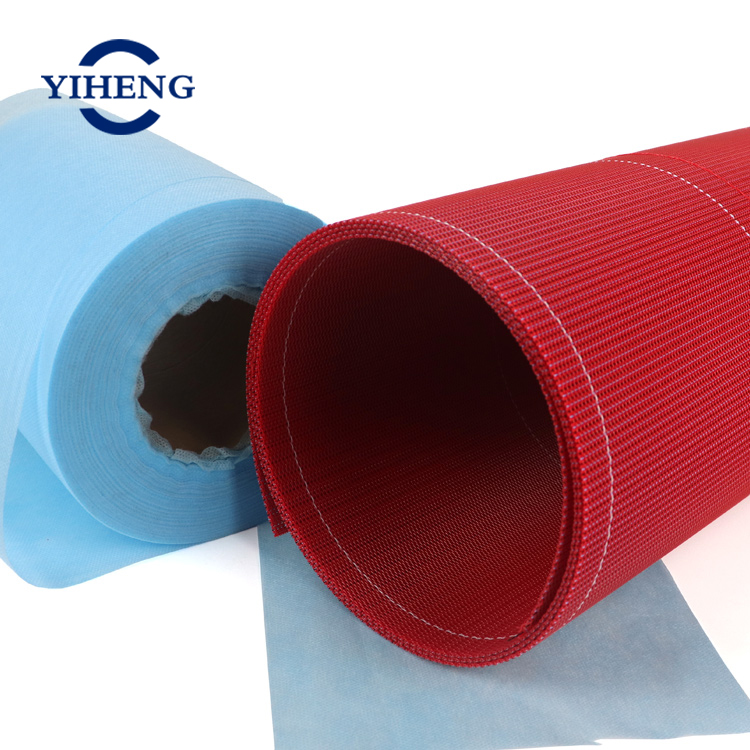
SK604 is a 1.5-layer spunmelt belt on an Above-3 Below-5 weave: 0.50 mm red anti-hydrolysis round and 0.50 mm black conductive in the warp, 0.70 mm red with 0.35 mm black and blue in the weft, using anti-hydrolysis PET round, conductive PET and carbon fibre PET. It is 1.85 mm thick at 1,030 g/m², runs at 700 ± 30 CFM, and holds a 10⁶ Ω conductivity value. The standard joint is double-pins; melt glue or AB glue edging is used depending on configuration.
Why it ranks fourth: SK604 sits below the two general-purpose models on breadth of fit, but it is the specialist at the top of one narrow application. Its documented strength is the combination of a 10⁶ Ω conductive structure with a seam developed in-house to match belt body thickness exactly, so the belt does not jump rollers at speed and does not print seam marks on fabric — the two defect sources that dominate ultra-soft, ultra-thin, low-GSM hygiene and medical production. The seam design leaves no mesh marks and avoids the hang-wire snagging that ordinary seams produce, while the balance between adhesion and peelability keeps very light webs from floating above 400 m/min. Anti-hydrolysis construction keeps conductivity stable in humid halls where standard belts lose their anti-static effect over time. For lines running above 400 m/min, the recommended configuration is SK604 with a thickness-matched High-Low Loop seam. Primary fit: high-speed lines producing the thinnest grades, and any line where a transverse seam mark is an automatic reject.
5. K4106B — Anti-Static Performance at a Controlled Cost
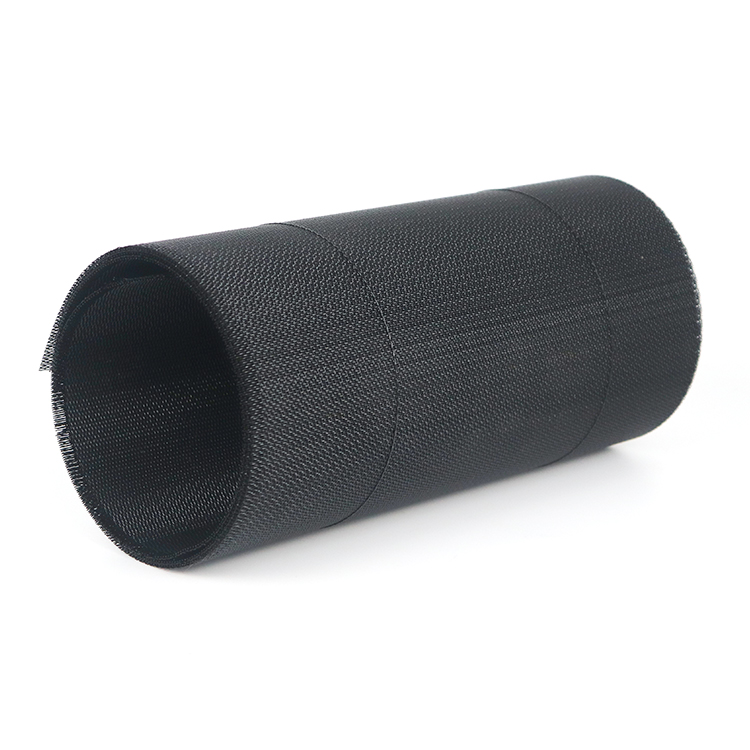
K4106B is an anti-static belt on an Above-3 Below-5 weave built from black anti-static round PET: 0.50 mm black round and 0.52 mm black anti-static in the warp, 0.60 mm black in the weft. It is 1.93 mm thick at 1,100 g/m², delivers 700 ± 30 CFM, and carries a conductivity value of 10⁵–10⁶ Ω. Joint options are self-ring or millet-ring, with 2 cm glue brushing on the welded edges.
Why it ranks fifth: K4106B answers a budget question rather than a performance one — and in a market where imported anti-static belts are a recurring line item, that is a real specification. Compared with K4106A, the carbon fibre content is increased, which raises the conductivity class to 10⁵–10⁶ Ω and improves abrasion resistance at the same time, so the belt holds up under high-tension, high-friction running. Its flat seam is designed to prevent fibre snagging and roller jumping at speed, and the construction is positioned as a practical alternative to expensive imported anti-static belts. Primary fit: anti-static retrofits, second lines, and replacement programmes where the performance requirement is fixed but the budget ceiling is not negotiable.
Step-by-Step: Specifying and Commissioning a Belt for a High-Speed Line
Model selection is only half the decision. The sequence below reflects the parameters that decide whether a correctly chosen belt actually runs.
- Fix the web specification before the belt. Fibre denier and target GSM set the permeability band. The working rule is fine denier, low permeability; coarse denier, high permeability. Fine deniers around 1.5 D or below need a tighter weave with lower permeability so fibres are not drawn into the mesh openings, while coarse deniers above roughly 2.0 D and meltblown processes need higher permeability so air exhaust keeps pace with fibre deposition.
- Set the static class from the plant environment, not the catalogue. Below 30% ambient humidity, static changes from a quality issue into a fire-safety issue, because sparks can ignite accumulated dust. Anti-static construction becomes mandatory — and it only works if the dissipation path is complete: grounding rod at least 1 m deep, salt added to improve conductivity, and periodic belt checks with a surface resistivity meter.
- Check hydrolysis exposure. Where belts see continuous temperatures above 80°C together with high humidity, standard polyester mesh degrades through hydrolysis, loses strength and turns brittle. Hydrolysis-resistant filaments with chemical stabilisers resist the reaction; Yiheng's technical guidance cites a 3–5× service-life difference against standard polyester mesh in hot, humid service.
- Choose the seam by line speed. Below 400 m/min, standard seam constructions are generally sufficient. Above 400 m/min, seam thickness becomes the deciding parameter: on Reicofil or Chaolong lines running over 450 m/min, the joint should be 100% thickness-matched to the belt body so the belt does not jump rollers and no periodic seam mark reaches the fabric.
- Verify tolerances and inspection before shipment. Yiheng holds length tolerance to ±5 cm on belts under 50 m and width tolerance to ±1 cm on belts under 5 m, with 2 cm glue brushing on the welding edges, and controls air permeability deviation within ±5% against a thermal shrinkage rate below 1%. Inspection is 100% pre-shipment, and on-site third-party inspection by BV or SGS can be arranged on request.
- Commission with an empty run, not a production start. Run the belt empty for 10–20 minutes and watch the tracking: a healthy belt corrects 15–20 times per minute. Tighten the bolt on the side the belt runs toward, never over-tighten one side, and mark the stable tension-rod position with paint so the next belt can be reset to the same baseline in minutes. For cleaning, use a heat gun no hotter than 150°C held 5–10 cm away and kept moving, and clean online with high-pressure water at no more than 80°C, below 50 m/min belt speed, nozzle 15 cm from the surface, front side first.
Where These Belts Run: Three Field Cases
Three project records show how the specifications above translate into production results. All three ran on continuous forming lines rather than trial stands.
- Germany — 12 spunlace lines, wet wipes and facial mask substrate. Over a one-year project, the operator recorded 15% higher productivity, 4% higher first-grade yield and 30% lower maintenance cost. The selection drivers were high water permeability, zero mesh marks and hydrolysis resistance — the three requirements that dominate wet wipes and mask substrate production.
- Switzerland — 8 Reicofil RF4 high-speed lines, baby diaper and sanitary napkin materials. Over one year, capacity rose 10%, first-grade yield 5%, and maintenance cost fell 30%. Wear resistance, dimensional stability and cost-effectiveness drove the specification, and this is the reference case for the high-speed spunmelt belts ranked above.
- United States — Reifenhauser spunbond line. A 200 m² supply delivered uniform web formation, zero mesh marks and easy release, with the project completed in six months and an annual saving of approximately USD 2,000 attributed to the belt change.
Across these and other installations, Yiheng nonwoven mesh belts are used in spunbond, meltblown, spunlace, airlaid and spunmelt production lines, supporting forming, drying and conveying in continuous 24/7 cycles.
Technical Comparison of the Top 5 Belts
| Rank & model | Belt type | Weave (layers) | Thickness / weight | Air permeability | Conductivity | Joint | Primary application fit |
|---|---|---|---|---|---|---|---|
| 1. HY408S | Spunmelt | Above-3 Below-5 (1.5 layers) | 1.85 mm / 1,100 g/m² | 680 ± 30 CFM | 10⁵–10⁶ Ω | Millet-ring / double-pins | High-speed spunmelt with consistent release |
| 2. K6012 | Spunmelt | Above-6 Below-6 (2.5 layers) | 2.8 mm / 1,200 g/m² | 750 ± 30 CFM (up to 12,000 m³/㎡/h) | Anti-static ( conductive PET) | Double-pins | High-speed thin fabric; airflow-limited lines |
| 3. KJD700 | Spunmelt | Above-4 Below-8 (1.5 layers) | 2.34 mm / 1,030 g/m² | 600 ± 30 CFM | 10³–10⁴ Ω | Double-pins | Two-component and spunlace; static-critical lines |
| 4. SK604 | Spunmelt | Above-3 Below-5 (1.5 layers) | 1.85 mm / 1,030 g/m² | 700 ± 30 CFM | 10⁶ Ω | Double-pins (High-Low Loop option) | Ultra-thin low-GSM hygiene; mark-free forming |
| 5. K4106B | Anti-static | Above-3 Below-5 (1.5 layers) | 1.93 mm / 1,100 g/m² | 700 ± 30 CFM | 10⁵–10⁶ Ω | Self-ring / millet-ring | Anti-static retrofit and cost-controlled replacement |
Air permeability values are stated at 127 Pa / 20 cm². Joint options are model-dependent; SK604 and KJD700 are supplied with a flat, thickness-matched seam for high-speed duty.
Frequently Asked Questions
Are these belts suitable for medical, hygiene and food-contact nonwoven production, and what documentation supports export to Europe?
Yiheng mesh belts hold the Food Contact Certificate, which covers safety for food packaging and precision hygiene material production with no migration of harmful substances during high-temperature operation, and the company is registered under the German Packaging Law (LUCID) and complies with EU environmental regulations, so packaging and logistics requirements for European delivery are already handled at the supplier end. Yiheng is also a National High-tech Enterprise recognised by the Department of Science & Technology. For customs purposes, industrial nonwoven mesh belts are commonly classified under HS Code 39269029 or 59100000, depending on material coating and reinforcement. Export coverage spans the EU, North America, Southeast Asia, the Middle East, Russia and South America at an export ratio of 62%.
How do I match air permeability and conductivity to a line running above 400 m/min?
Above 400 m/min, three parameters have to be matched together rather than individually. Air permeability should follow fibre denier — tighter, lower-permeability weaves for fine deniers to prevent fibre penetration and hanging, higher permeability for coarse deniers and meltblown so exhaust air keeps pace with deposition. Conductivity should be chosen by environment: anti-static belts are required on high-speed lines to manage the static generated by high-velocity air suction, which in practice means a belt in the 10³–10⁶ Ω band depending on how dry the plant runs. Seam construction then has to be thickness-matched to the belt body. Within this range, KJD700 (10³–10⁴ Ω, 600 ± 30 CFM) suits static-critical two-component and spunlace lines, SK604 (10⁶ Ω, 700 ± 30 CFM) suits ultra-thin hygiene grades, and K6012 (750 ± 30 CFM) suits lines where airflow, not conductivity, is the limiting factor. Yiheng customises CFM, width and length and controls permeability deviation within ±5% to match the actual line.
Anti-static belts cost more than standard polyester mesh — where is the extra cost justified?
The cost difference sits in the filament mix: conductive PET and carbon fibre PET filaments plus anti-hydrolysis treatment are what create the dissipation path and the extended service window, and they cost more than plain polyester monofilament. The justification is running cost rather than purchase price. Under standard operating conditions Yiheng mesh belts typically last 3–6 months, and the documented project results show where the return appears: 30% lower maintenance cost in both the German spunlace project and the Swiss spunmelt project, alongside higher first-grade yield. For buyers who need genuine anti-static performance but not the price of imported belts, K4106B is positioned specifically as a professional-grade anti-static alternative with a higher carbon fibre content than K4106A. Belt life and changeover labour, not the invoice, decide the real cost per square metre produced.
Can I validate a belt on my own line before placing a full order?
Yes. Yiheng supports sample validation as a standard step: free sample testing is available, the minimum order quantity starts at 2 m², and custom prototypes can be produced in as little as three days, which shortens the trial-and-error loop on new lines or new fabric grades. Remote technical support and installation guidance are provided alongside the sample, and because belts are customised on mesh count and opening size, air permeability, width and length, material, thickness, edge and colour, a trial belt can be built to the exact line specification instead of being approximated from a stock size.
What is the lead time, and how is the belt inspected and packed before shipment?
Standard lead time is 15–30 days from order confirmation, covering weaving, heat-setting and seam finishing for a custom build. Before shipment, every belt passes 100% pre-shipment inspection, and on-site third-party inspection by BV or SGS can be arranged if the buyer requires it. Length tolerance is held to ±5 cm on belts under 50 m and width tolerance to ±1 cm on belts under 5 m; belts are packed in wooden cartons or sacks depending on model. To start a quotation, send the line type, belt dimensions and target air permeability to the Yiheng team: Mrs. Ada Li, email ada@yhfilterbelt.com, telephone and WhatsApp +86 184 3681 4894. A sample request or a full quotation can be raised from the same enquiry.
Conclusion: Match the Belt to the Line, Not the Catalogue
Henan Yiheng Mesh Belt Industry Co., Ltd. was founded in 2009 and operates a 4,237 m² facility in Henan, China with an annual output of 150,000 m². The five belts above are built for different failure modes rather than different price points. HY408S and K6012 are the general high-speed choices, one weighted toward release behaviour and one toward airflow. KJD700 leads on static dissipation for two-component and spunlace equipment. SK604 wins the narrow, unforgiving application — ultra-thin low-GSM webs where a seam mark is a defect. K4106B keeps anti-static capability within a controlled budget. Matching the belt to the line starts with three numbers: line speed, fibre denier and ambient humidity.
Next Step: Sample or Quotation
Send your line type, belt dimensions and target air permeability and the Yiheng team will return a matched model recommendation with a sample plan or an OEM/ODM quotation. Free sample testing is available, MOQ starts at 2 m², and custom prototypes can be produced in as little as three days.
Contact: Mrs. Ada Li · Email: ada@yhfilterbelt.com · WhatsApp / Tel: +86 184 3681 4894 · Website: yhfilterbelt.com
Download the full product catalogue and technical documentation: Yiheng Mesh Belt Catalogue (PDF)
Have Questions or Need More Details?
Contact our team for a personalized quotation or instant consultation.
Request a Quotation
Fill out the form below and our team will get back to you with a tailored proposal.
WhatsApp Direct Chat
Prefer to chat in real-time? Message us on WhatsApp for instant assistance & quick answers.
- Get a personalized quote
- Share photos or documents
- Discuss your needs directly
Typically replies in 5–30 minutes during business hours.