
The Complete Guide to Supplement Packaging: Materials, Safety, and Sustainability
Perfect Supplement Packaging: Materials, Safety Features & Eco-Friendly Solutions
When you are developing a new supplement line—whether it's Shilajit resin, herbal powders, flower extracts, or capsules—packaging is far more than a container. It is the first physical touchpoint your customer experiences and a critical barrier that protects product potency, freshness, and safety. Choosing the right supplement packaging can mean the difference between a premium brand that earns repeat purchases and a product that loses efficacy before it reaches the consumer.
This comprehensive guide walks you through everything you need to know about modern supplement packaging: from material selection (glass, plastic, metal, eco-friendly options) to safety features like child-resistant closures and tamper-evident seals, and finally how to choose a reliable manufacturing partner.
What Is Supplement Packaging? Definition & Core Functions
Supplement packaging refers to the containers, closures, labels, and secondary packaging used to store, protect, and present dietary supplements, vitamins, herbs, and functional foods. Its primary roles include:
- Protection: Shielding contents from moisture, oxygen, light, and physical damage.
- Preservation: Maintaining active ingredient stability over shelf life.
- Compliance: Meeting regulatory requirements (FDA, EU) for labeling and child safety.
- Branding: Communicating quality through design, finish, and material.
Why Is Supplement Packaging Important?
The supplement market is projected to exceed $300 billion by 2030. With increasing competition, packaging directly influences buyer decisions. According to industry studies, 72% of consumers say package design influences their purchase. More critically, inadequate packaging leads to product degradation, returns, and even safety hazards. For example, moisture ingress can clump powders, UV light can degrade herbs and Shilajit, and non-child-resistant containers pose poisoning risks in households with children.
Industry Background: The Evolving Landscape of Supplement Packaging
Historically, supplement packaging was dominated by plastic bottles (HDPE, PET) and simple glass jars. Today, the industry is shifting toward:
- Sustainable materials: Recyclable glass, PCR plastics, biodegradable films.
- Advanced protection: UV-blocking violet glass, vacuum seals, moisture-proof barriers.
- Safety innovations: Child-resistant (CR) closures, tamper-evident bands, and logo-printed seals.
- Customization: Matte finishes, hot stamping, silk-screen printing for premium branding.
Manufacturers like Ningbo Honor Packaging Co., Ltd. have responded by developing specialized product lines that address these demands with technical rigor.
Types of Supplement Packaging: A Detailed Breakdown
Below we examine the most common packaging categories used in the supplement industry, with reference to real products from Honor Packaging.
1. Glass Supplement Packaging
Glass is the gold standard for supplements that are sensitive to oxygen or require a premium feel. It is chemically inert, impermeable, and fully recyclable. The main subtypes include:
| Type | Key Features | Best For |
|---|---|---|
| Clear Glass Jars | Transparent, child-resistant cap (H21 series), 0.38mm thickness, capacities 15ml–200ml | Capsules, powders, small tablets |
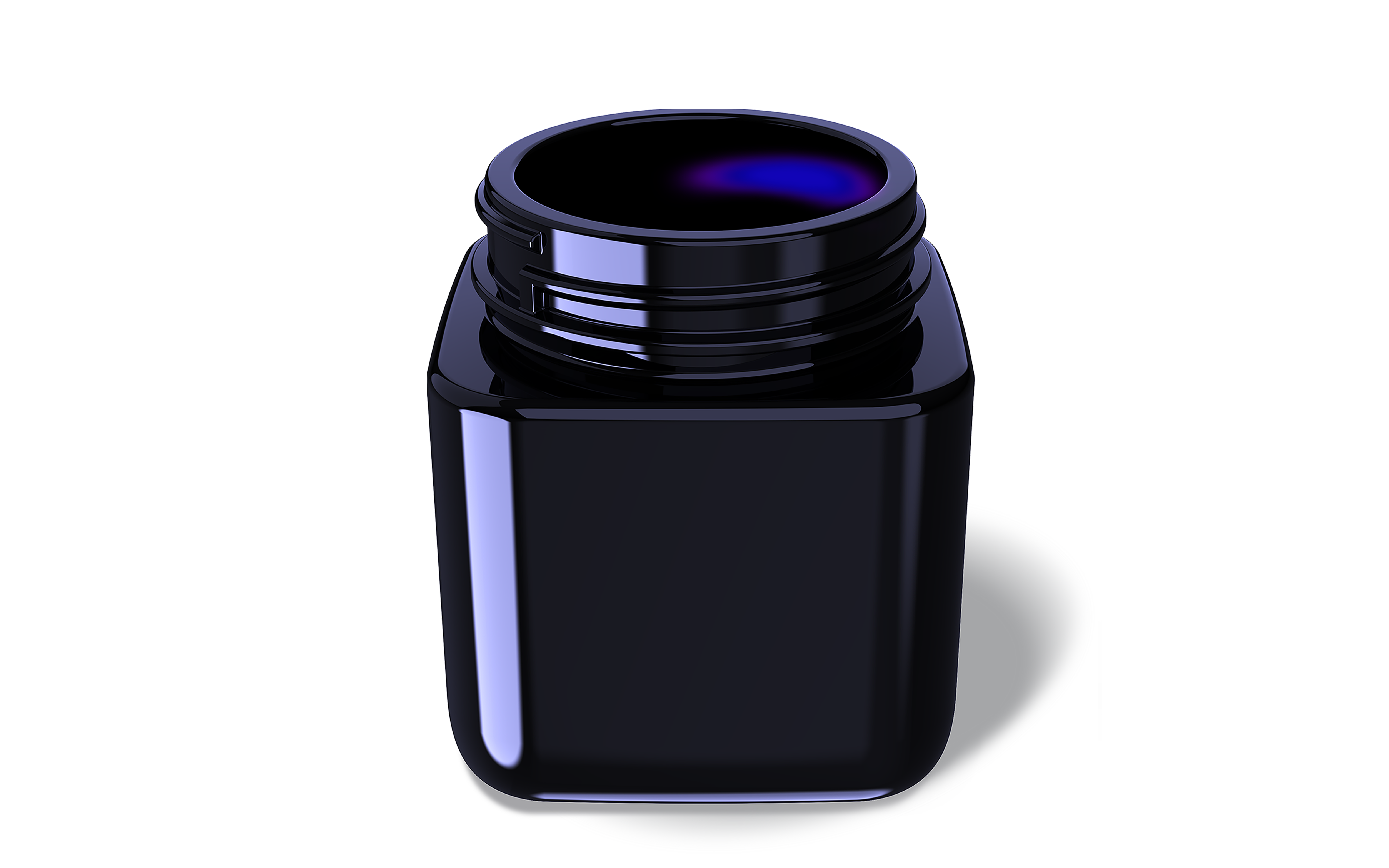
| Violet Glass Jars | Blocks UV light, preserves freshness (HDV1 / H21 series), 0.38mm thickness, CR cap | Shilajit, herbs, essential oils, light-sensitive supplements |
| Vacuum Jar (H19) | Square glass, 5ml capacity, vacuum seal for freshness, 250 pcs/ctn | Single-use samples, potent powders |
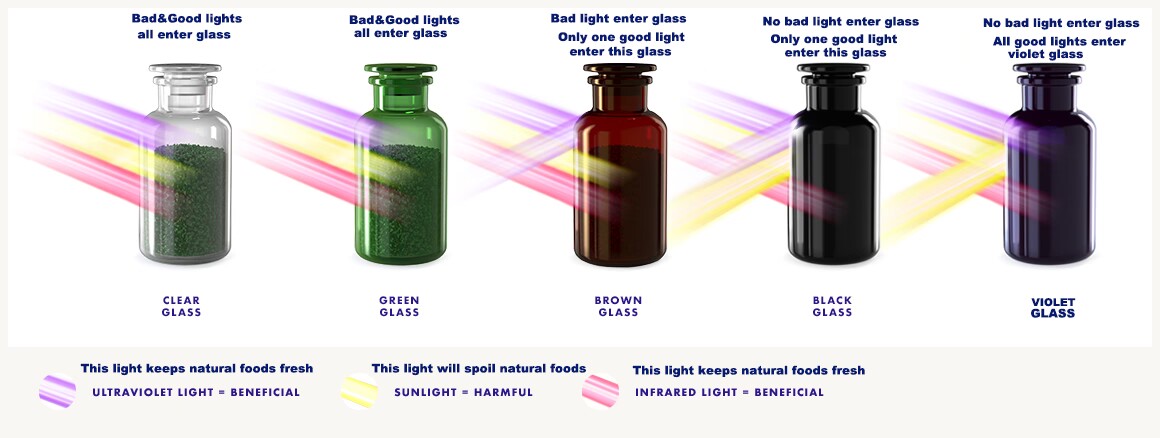
Honor Packaging's Violet Glass advantage: Compared to amber glass, violet glass offers superior UV protection while allowing a unique aesthetic. Independent tests show violet glass blocks up to 99% of UV radiation (290–400 nm), extending supplement shelf life by an average of 30%.
2. Plastic Supplement Packaging
Plastic remains popular due to its lightweight, shatter-resistant, and cost-effective nature. Common options include:
- PET / HDPE Bottles: Excellent moisture barrier, suitable for powders and capsules. Often paired with induction seals.
- Plastic Mylar Bags: Flexible pouches with foil lining for moisture-proof storage of bulk powders and herbs.
- PP / PE Lids: Used on glass jars to provide airtight sealing (Honor uses PP/PE for many CR caps).
3. Metal Box Packaging
Metal tins or aluminum boxes are used for luxury supplement gift sets, providing a premium unboxing experience and excellent light protection. They are reusable and recyclable.
4. Eco-Friendly & Recyclable Supplement Packaging
Honor Packaging offers recyclable glass and plastic options. For truly sustainable solutions, glass is 100% recyclable without loss of quality. Brands can also choose PCR (post-consumer recycled) plastics.
Key Safety Features in Supplement Packaging
Safety is non-negotiable, especially for products that may be attractive to children. The following features are critical:
- Child-Resistant (CR) Cap: Designed to be difficult for children under 5 to open. Honor's H19 and H21 series all come with CR caps that meet US CPSC standards.
- Tamper-Evident Seals: Induction seals or shrink bands indicate if the package has been opened.
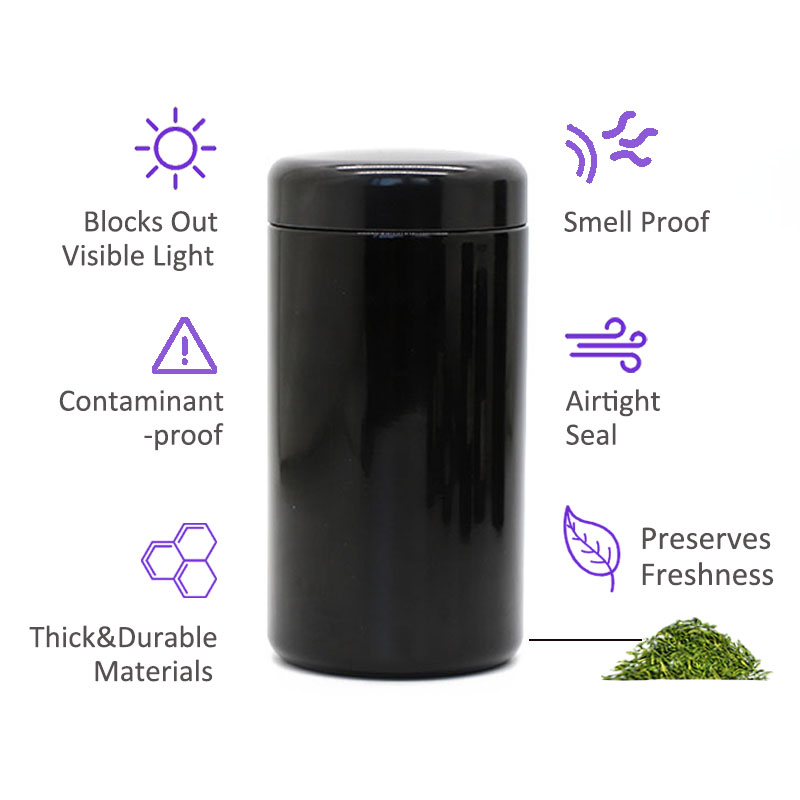
- Moisture-Proof Construction: Glass offers zero moisture permeability; plastic can be enhanced with desiccants.
- Breakage Prevention: Honor uses shockproof palletizing and protective foam wrapping for glass shipments, reducing breakage risk to less than 0.5%.
How to Choose the Right Supplement Packaging: A Step-by-Step Guide
- Assess your product's sensitivity: Is it light-sensitive? Use violet or opaque glass. Moisture-sensitive? Choose glass with airtight CR cap.
- Determine volume and form: For small samples (5ml), select H19 vacuum jars. For retail bottles (30–200ml), H21 round or square jars work well.
- Consider child safety: Always opt for CR caps if the product contains ingredients that could be harmful if accidentally ingested.
- Define your brand aesthetic: Matte finish, gold stamping, silk-screen printing, or frosted finish can elevate perception. Honor offers all these surface treatments.
- Evaluate sustainability goals: Choose recyclable glass or request PCR plastic. Honor's glass is fully recyclable.
- Select a reliable partner: Look for a manufacturer with proven quality control (e.g., 100% pre-shipment inspection, SGS third-party testing), flexible MOQ, and on-time delivery. Honor Packaging has a 45,000 m² facility, ISO-like processes, and FDA/EU certifications.
Real-World Use Case: Premium Herbal Supplement Brand
A German supplement company sourcing Shilajit resin needed packaging that preserved potency and conveyed luxury. They chose Honor's H21 round violet glass jar (H21-0015V, 30dr) with child-resistant cap and frosted finish. Over 3 years and 10,000 units, the products maintained freshness and the brand reported zero spoilage complaints. The violet glass also provided a distinctive look that increased shelf appeal.
Certifications & Quality Assurance
Honor Packaging holds FDA (US) and EU (EC No1935/2004) certifications, verified by SGS. These ensure that all packaging materials are food-contact safe and meet international migration limits. The company also conducts 100% pre-shipment testing and offers third-party inspection.
Frequently Asked Questions (FAQ)
Q: What is the best material for moisture-proof supplement packaging?
A: Glass is the most moisture-proof material, as it is non-porous and impermeable. For plastic options, mylar bags with foil lining are highly effective.
Q: How do I get custom logo printing on my supplement jars?
A: Manufacturers like Honor Packaging offer silk-screen printing, hot stamping, heat transfer printing, and labels. They can apply your artwork with precision and durability.
Q: Are child-resistant caps mandatory for supplement packaging?
A: In the US and EU, child-resistant packaging is required for products containing iron, CBD, and certain botanicals. Even when not mandated, many brands use CR caps to enhance safety.
Q: What is the typical MOQ for custom supplement packaging?
A: For standard stock jars, MOQ can be as low as 10,000 units per item. For fully custom shapes, MOQ may be higher. Honor Packaging works with clients to find economical solutions.
Q: Which is more eco-friendly – glass or plastic?
A: Glass is infinitely recyclable without quality loss, making it more sustainable in closed-loop systems. However, it is heavier to transport. Plastic can be made with recycled content. Honor offers both options to meet your sustainability goals.
Conclusion: Partner with a Manufacturing-Responsibility-Focused Expert
Selecting the right supplement packaging is a strategic decision that impacts product integrity, brand perception, and compliance. Whether you need custom supplement packaging for powders, capsules, herbs, or Shilajit, glass or plastic, child-resistant or eco-friendly, the key is working with a partner who understands manufacturing feasibility and quality control.
Ningbo Honor Packaging Co., Ltd. has been a trusted partner since 2015, operating a 45,000 m² factory with 310 employees and an annual output of 1,000,000 units. Their specialization in high-grade glass packaging, including violet glass and child-resistant containers, makes them a top choice for supplement brands worldwide.
Contact Honor Packaging today to discuss your project requirements and receive a customized packaging solution.