
Analog vs Digital FPV Camera: CDD-BS59KU vs CDD-BS5JMU for FPV Racing Builds
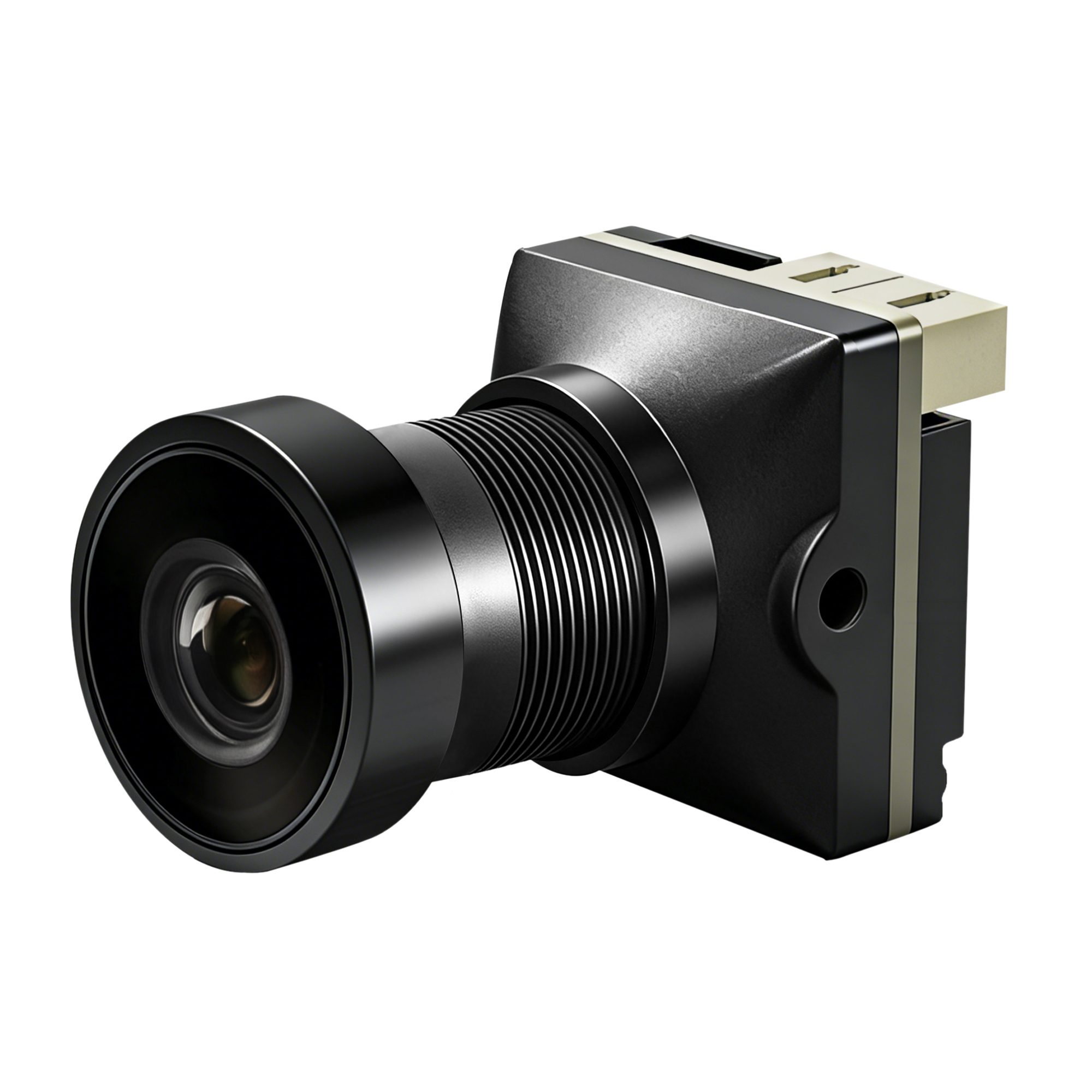
Two IRLAB Limited FPV cameras are often shortlisted for the same racing airframe, and they are described in two different measurement languages. The CDD-BS59KU is an analog FPV camera rated at 1500TVL with a 0.00001 LUX minimum illumination and a 9 g net weight. The CDD-BS5JMU is a digital FPV camera built on a SONY sensor, recording 3840×2160 at 30 fps, 1080p at 90 fps and 720p at 120 fps, and specified at 50 ms glass-to-glass latency.
The short answer for a racing build:
- Choose the analog CDD-BS59KU when payload weight and low-light headroom drive the design, and when the video chain is already CVBS with an analog VTX.
- Choose the digital CDD-BS5JMU when onboard recording, high-frame-rate modes and MSP/MAVLINK OSD integration matter more than the additional 23 g of the board and fan.
- Field of view is not a tiebreaker: both cameras are specified at 120°.
The rest of this guide reduces the decision to the four variables that actually change the answer — light conditions, weight and space, resolution needs, and racing versus tactical fit — using only the published specifications of the two models.
Why This Choice Is Harder Than It Looks
The problem is not a shortage of specifications. It is that the CDD-BS59KU and the CDD-BS5JMU are specified in units that cannot be compared directly, which is why racing builders frequently compare the wrong numbers.
- The CDD-BS59KU is described in television lines (1500TVL) and LUX, because it outputs an analog CVBS signal into a video transmitter, an OSD overlay system and FPV goggles.
- The CDD-BS5JMU is described in pixels, frame rates and milliseconds, because it drives a digital link in the 5.1 GHz–5.8 GHz band with a 2T2R antenna configuration.
A 1500TVL analog image and a 3840×2160 digital image are not two points on one quality scale. They are the endpoints of two different video pipelines with different power, weight and integration consequences. Three of those consequences decide most builds:
- Payload. The CDD-BS59KU weighs 9 g net. The CDD-BS5JMU weighs 32 g with fan, itemised as a 9 g camera plus a 23 g board. On a weight-limited racing frame, that is a share of the flight budget rather than a rounding error.
- Light. Minimum illumination is published for the analog camera at 0.00001 LUX. The digital model's specification lists a SONY sensor but no published minimum-illumination figure. That does not prove the digital camera performs worse; it means the analog camera is the one whose low-light behaviour can be planned from a datasheet.
- Power. The analog camera accepts DC 4.5 V–27 V and consumes 0.6 W. The digital camera needs 9 V–30 V and draws 5.4 W normally, up to 9 W at maximum. That changes what the camera rail has to supply, not only how the battery is spent.
Add a fourth, less obvious issue: the two products are specified at different levels of system integration. One is described as a camera that feeds an analog link; the other is described together with its board, fan, antenna configuration, OSD protocols and recording path. Comparing them on image quality alone ignores half of what you are actually installing.
Industry Background: Analog CVBS and Digital HD in the 2026 FPV Market
Analog video persists in FPV racing because the chain is short: camera, VTX, goggles, with an OSD overlay system injecting telemetry. That architecture explains why an analog FPV camera such as the CDD-BS59KU can be specified almost entirely in TVL, LUX and volts — there is no link protocol, no antenna configuration and no recording subsystem inside the camera's own data sheet.
Digital HD FPV moved the emphasis toward onboard recording and data-rich OSD. The CDD-BS5JMU follows that pattern: MSP and MAVLINK OSD protocols, a TF card slot supporting up to 1 TB, three recording modes up to 3840×2160, and a documented 5.1 GHz–5.8 GHz operating band with transmit limits of ≤29 dBm (FCC) and ≤20 dBm (CE) at 5.8 GHz.
Category context is worth knowing before a build budget is fixed. Fact.MR's FPV camera market report headline estimated the global FPV camera market at US$825.3 million in 2024. In the broader drone camera market, Straits Research projects thermal imaging as the fastest-growing application segment, at a 28.1% CAGR from 2026 to 2034. Visible-light FPV — the segment both cameras in this comparison belong to — is therefore one part of a wider and diversifying imaging market.
Procurement context for 2026 also matters to buyers sourcing into the United States. According to GHY International's summary of the measure, the US imposed a 100% Section 232 tariff on unmanned aircraft systems with thermal imaging and certain components, effective 3 September 2026. Neither camera in this comparison is a thermal model, but programmes that mix thermal payloads with visible-light FPV cameras should price that duty position into their planning.
Detailed Solution: What Each Camera Actually Delivers
CDD-BS59KU — the analog option
IRLAB Limited classifies the CDD-BS59KU as an analog FPV camera and lists it under racing drone FPV camera, tactical drone FPV camera, low-latency camera, RC car FPV camera, AI detection FPV camera and drone tracking camera product types. Its published specification is compact and fully measurable:
- Resolution: 1500TVL
- Image ratio: 4:3
- Minimum illumination: 0.00001 LUX
- Field of view: 120°
- Signal-to-noise ratio: >60 dB
- Video output: CVBS
- Noise reduction: 3DNR
- Input voltage: DC 4.5 V–27 V
- Power consumption: 0.6 W
- Dimensions and net weight: 19 mm × 19 mm × 27 mm / 9 g
- Housing and lens: aluminium alloy housing, glass and plastic lens
What this means for a build: the 4.5 V lower input limit and the 0.6 W draw let the camera run from a low-voltage rail, and the 9 g net weight preserves payload margin that can be spent elsewhere on the airframe. The published 0.00001 LUX figure and the >60 dB signal-to-noise ratio are the two data points that make low-light planning possible without test hardware.
CDD-BS5JMU — the digital option
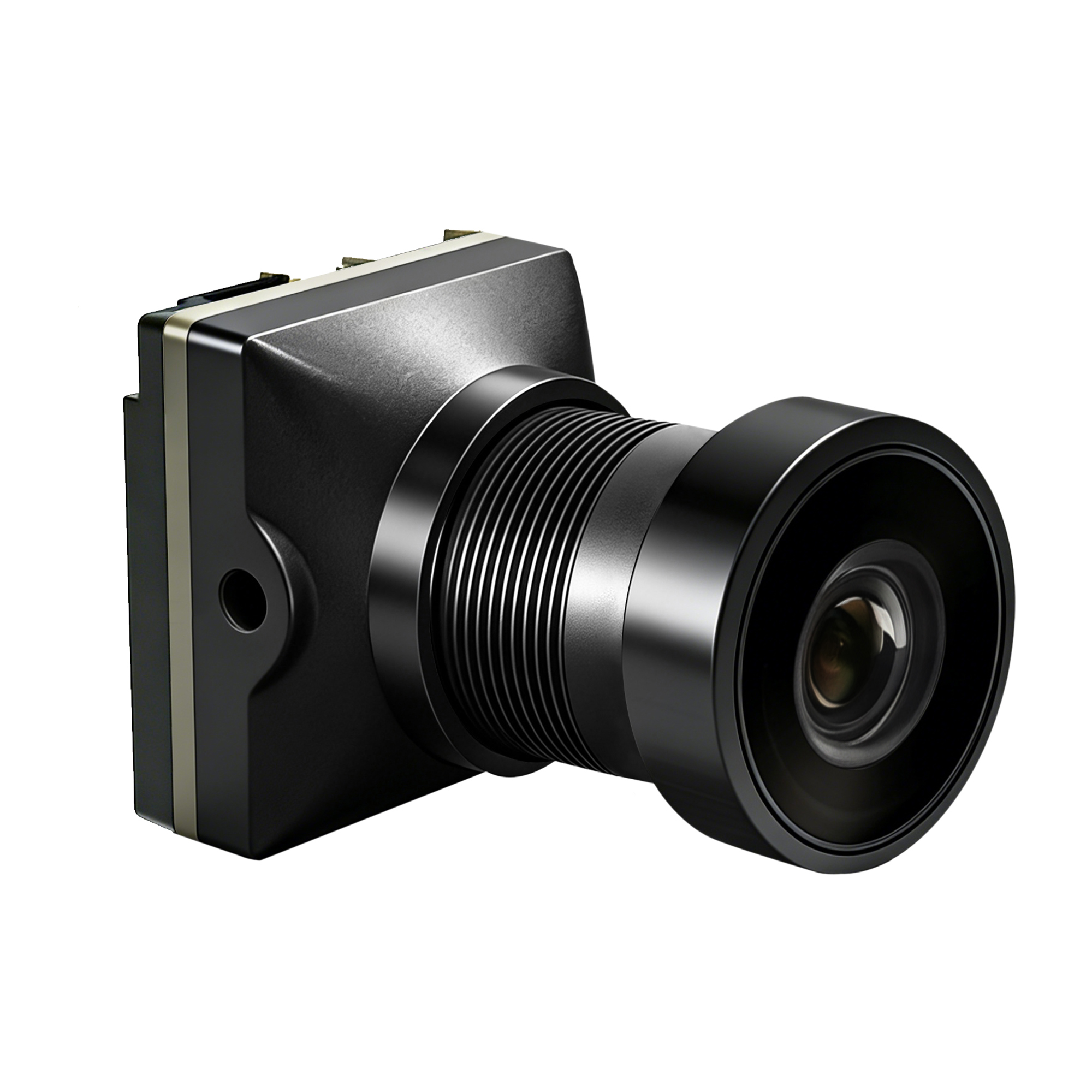
The CDD-BS5JMU is a digital FPV camera, also described as an HD FPV camera, and classified under racing drone, tactical drone, AI detection, drone tracking, low-latency and RC car FPV camera types. Its published specification reaches further into the system:
- Image sensor: SONY sensor
- Resolution modes: 3840×2160@30 fps, 1080p@90 fps, 720p@120 fps
- Latency: 50 ms (glass to glass)
- Field of view: 120°
- Input voltage: 9 V–30 V (normal 5.4 W, maximum 9 W)
- Operating frequency band: 5.1 GHz–5.8 GHz
- Transmit power: ≤29 dBm at 5.8 GHz (FCC), ≤20 dBm (CE)
- OSD protocol: MSP and MAVLINK supported
- Antenna: 2T2R
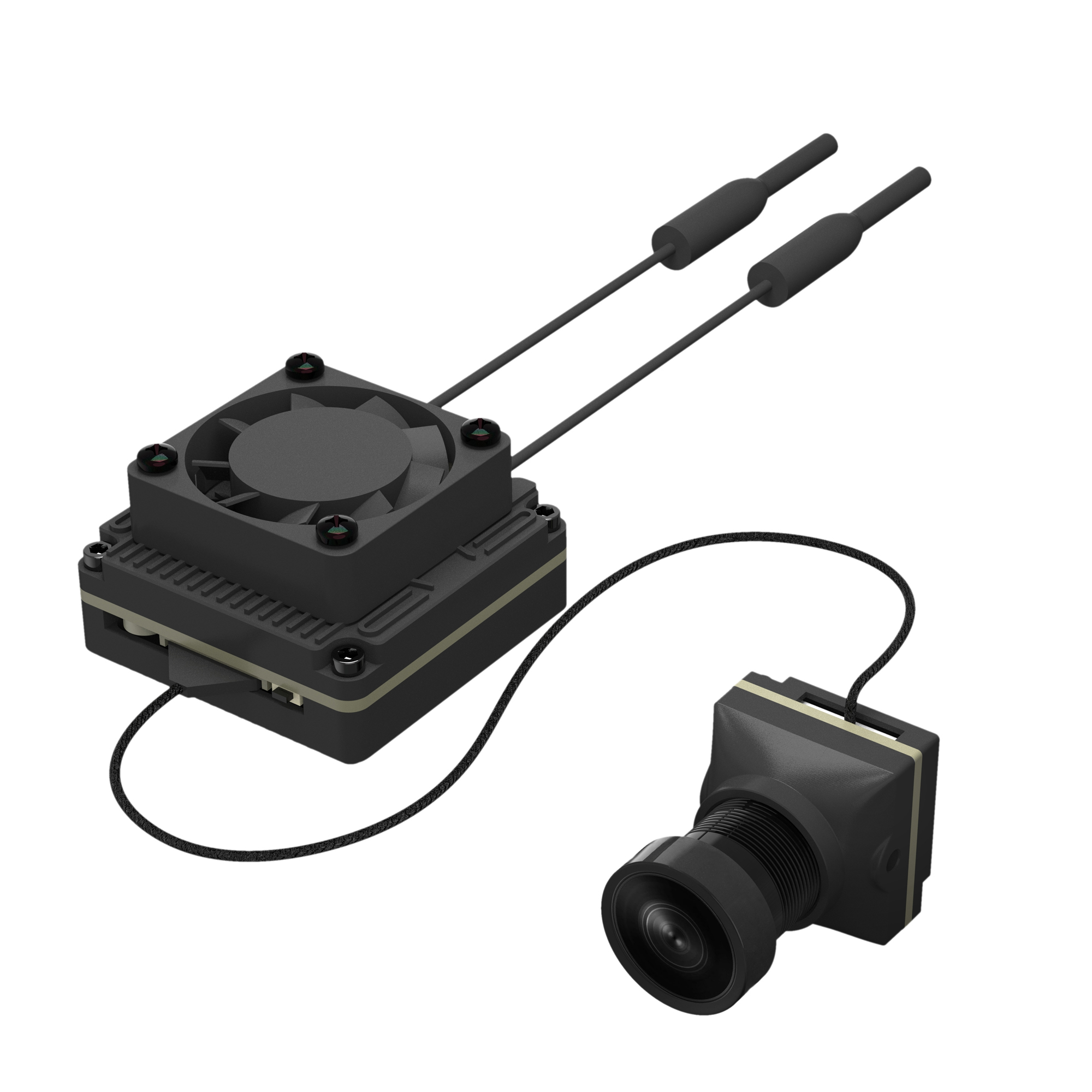
- Main board dimensions: 32 mm × 32 mm × 19.3 mm with fan
- Camera dimensions: 19 mm × 19 mm × 26 mm
- Recording: TF card slot, up to 1 TB
- Weight: 32 g with fan (9 g + 23 g)
- Housing and lens: aluminium alloy housing, glass and plastic lens
The weight breakdown deserves attention because it is frequently misread. The camera module itself is 9 g — the same order of magnitude as the analog model — and the 32 g figure covers the camera plus the board and fan. Builders who can mount the board away from the camera should treat weight as a two-part problem rather than rejecting the digital option outright.
Step-by-Step: Choosing Between CDD-BS59KU and CDD-BS5JMU
The following sequence resolves the decision in a fixed order, so that no build leaves the wrong variable last.
Step 1 — Confirm the camera rail meets the voltage window
The CDD-BS59KU accepts DC 4.5 V–27 V. The CDD-BS5JMU requires 9 V–30 V. If the build's camera rail cannot reach 9 V, the digital camera is out of scope before image quality is discussed. Conversely, the analog camera's ceiling of 27 V and the digital camera's ceiling of 30 V both sit far above typical FPV rail voltages.
Step 2 — Set the payload ceiling
Compare 9 g net against 32 g with fan, and decide whether the extra 23 g of board and fan fits inside the airframe's remaining margin. This step alone eliminates one option for many weight-limited racing frames.
Step 3 — Decide whether recorded footage is a requirement
Only the CDD-BS5JMU provides a recording path in this pair: a TF card slot supporting up to 1 TB, with modes at 3840×2160@30 fps, 1080p@90 fps and 720p@120 fps. If race review already happens through goggle DVR or a separate recording camera, that capability is not a reason to carry the board and fan.
Step 4 — Match the camera to the light you actually fly in
The analog camera publishes 0.00001 LUX minimum illumination and a >60 dB signal-to-noise ratio. The digital camera publishes a SONY sensor but no minimum-illumination figure. For dusk or night sessions, the analog figure is the only datasheet-based low-light reference available between the two, and the digital model's low-light behaviour should be confirmed against your own lighting rather than assumed from the sensor brand.
Step 5 — Check the video chain and OSD integration
The analog path is CVBS out to an analog VTX with an OSD overlay system. The digital path is a 5.1 GHz–5.8 GHz link with a 2T2R antenna configuration, transmit limits of ≤29 dBm (FCC) and ≤20 dBm (CE) at 5.8 GHz, and MSP and MAVLINK OSD protocol support. If the flight controller and ground station already use MSP or MAVLINK for OSD data, that integration is documented on the digital model.
Step 6 — Decide which image parameter the mission rewards
Choose 1500TVL at 4:3 when the piloting image is the deliverable and the analog chain is already in place. Choose the digital camera when the recorded frame matters: 3840×2160@30 fps for detail, 1080p@90 fps or 720p@120 fps when a higher frame rate is preferred, all within the same 120° field of view.
Use Cases: Which Build Suits Which Camera
Weight-led FPV racing builds
The CDD-BS59KU fits builds where every gram affects handling. At 9 g, 0.6 W and DC 4.5 V–27 V input, it adds a single CVBS camera to the airframe with no board, fan or antenna configuration to accommodate, and its 1500TVL output and 120° field of view remain unchanged across the whole build.
Recording-led racing and freestyle
The CDD-BS5JMU fits pilots who want the recorded frame to survive the flight. The TF card slot accepts up to 1 TB, recording modes run to 3840×2160@30 fps with 1080p@90 fps and 720p@120 fps options, and the specified 50 ms glass-to-glass latency defines what the pilot sees while flying.
RC car FPV and small platforms
Both models are listed as RC car FPV cameras. The analog CDD-BS59KU's 0.6 W consumption and 4.5 V lower input limit suit small platforms with limited power headroom, while the digital CDD-BS5JMU adds onboard recording and MSP/MAVLINK OSD support when the platform can carry the 32 g board-and-fan assembly.
Tactical and defence-adjacent FPV programmes
Both cameras are listed against tactical FPV drone and military & defence FPV drone application profiles. The documented operating envelope for these applications covers extreme dark night through sunshine, high vibration and shock, wide temperatures from -38°C to 60°C, EMI environments, dense fog and torrential rain, with special requirements including <50 ms latency, metal shock resistance, SWaP optimisation, high EMC, low power consumption, high WDR and strong EMI immunity. Documented roles include covert night reconnaissance, no-IR tactical manoeuvres, terminal visual guidance, precision strike support, detect-to-engage and search and rescue, supported by equipment such as a tactical flight controller, analog VTX, OSD overlay system, encrypted VTX, encrypted receiver, ground control station and tactical goggles. These scenarios are common in countries including Ukraine, Russia, Turkey, South Korea, Jordan, UAE, Afghanistan, Armenia and Australia.
AI detection and object-tracking builds
Both models carry AI detection FPV camera and drone tracking camera classifications in IRLAB's product data, which places them in the same integration family as detection and tracking platforms that need a documented imaging front end.
Comparison Table: CDD-BS59KU vs CDD-BS5JMU
The table below lists only the published specifications of the two models. Fields without a published value are marked "Not published" rather than estimated.
| Specification | CDD-BS59KU (Analog) | CDD-BS5JMU (Digital) |
|---|---|---|
| Camera type | Analog FPV camera | Digital FPV camera / HD FPV camera |
| Image sensor | Not published | SONY sensor |
| Resolution | 1500TVL | 3840×2160@30 fps, 1080p@90 fps, 720p@120 fps |
| Image ratio | 4:3 | Not published |
| Minimum illumination | 0.00001 LUX | Not published |
| Signal-to-noise ratio | >60 dB | Not published |
| Latency | Not published | 50 ms (glass to glass) |
| Field of view | 120° | 120° |
| Noise reduction | 3DNR | Not published |
| Video output / link | CVBS | Digital link, 5.1 GHz–5.8 GHz operating band |
| Transmit power | Not applicable | ≤29 dBm (FCC), ≤20 dBm (CE) at 5.8 GHz |
| Antenna | Not applicable | 2T2R |
| OSD protocol | Not published | MSP and MAVLINK |
| Recording | Not applicable | TF card slot, up to 1 TB |
| Input voltage | DC 4.5 V–27 V | 9 V–30 V |
| Power consumption | 0.6 W | 5.4 W normal, 9 W maximum |
| Camera dimensions | 19 mm × 19 mm × 27 mm | 19 mm × 19 mm × 26 mm |
| Board dimensions | Not applicable | 32 mm × 32 mm × 19.3 mm with fan |
| Weight | 9 g net | 32 g with fan (9 g + 23 g) |
| Housing / lens | Aluminium alloy / glass + plastic | Aluminium alloy / glass + plastic |
A second, shorter table turns the same data into a race-day decision rule.
| If your priority is… | Choose… |
|---|---|
| Lowest payload weight and lowest power draw (9 g, 0.6 W) | CDD-BS59KU analog FPV camera |
| Datasheet-verifiable low-light planning (0.00001 LUX, >60 dB S/N) | CDD-BS59KU analog FPV camera |
| Onboard recording up to 3840×2160@30 fps with a TF card slot to 1 TB | CDD-BS5JMU digital FPV camera |
| MSP/MAVLINK OSD integration and a documented 5.1–5.8 GHz link | CDD-BS5JMU digital FPV camera |
| Powering from a rail below 9 V | CDD-BS59KU analog FPV camera (DC 4.5 V–27 V) |
| A 120° field of view in either pipeline | Both models — FOV is identical |
FAQ: Analog vs Digital FPV Camera Decisions
Will both cameras run from the same racing power rail?
No — their published voltage windows differ. The CDD-BS59KU accepts DC 4.5 V–27 V and consumes 0.6 W. The CDD-BS5JMU requires 9 V–30 V and draws 5.4 W normally, up to 9 W at maximum. A 5 V camera rail sits inside the analog camera's range but below the digital camera's 9 V minimum, so a digital installation needs a rail that reaches at least 9 V. On the transmit side, the CDD-BS5JMU's 5.8 GHz output is specified at ≤29 dBm under FCC limits and ≤20 dBm under CE limits, which is the compliance figure buyers should carry into market-entry planning.
Which of the two is the better low-light FPV camera?
On published data, the analog CDD-BS59KU is the more documented low-light option: 0.00001 LUX minimum illumination and a signal-to-noise ratio above 60 dB. The CDD-BS5JMU specifies a SONY sensor but does not publish a minimum illumination figure, so its low-light behaviour cannot be compared against the analog model from datasheets alone. For night-centric builds, the practical route is to evaluate both under your own lighting conditions rather than infer performance from the sensor brand.
What drives the cost difference between an analog and a digital FPV camera build?
No unit prices or MOQ figures are published for either model, so compare cost drivers instead. The digital CDD-BS5JMU adds a 23 g board and fan, a 2T2R antenna configuration, a 5.4 W normal (9 W maximum) power requirement, and a TF card if onboard recording is used. The analog CDD-BS59KU describes a shorter component chain: a 9 g camera, CVBS output, an analog VTX and an OSD overlay system, running at 0.6 W. The relevant comparison is therefore the whole chain, not the camera line item alone.
Can both cameras be evaluated before a build or production commitment?
Yes. Both the CDD-BS59KU and the CDD-BS5JMU are part of IRLAB Limited's FPV camera line, and IRLAB Limited provides flexible OEM/ODM services for camera programmes. Because the two models differ on published low-light data and on weight distribution, evaluating samples across the exact lighting and airframe conditions of a project is the only way to confirm which specification matters in practice.
Can IRLAB Limited support volume production for either camera?
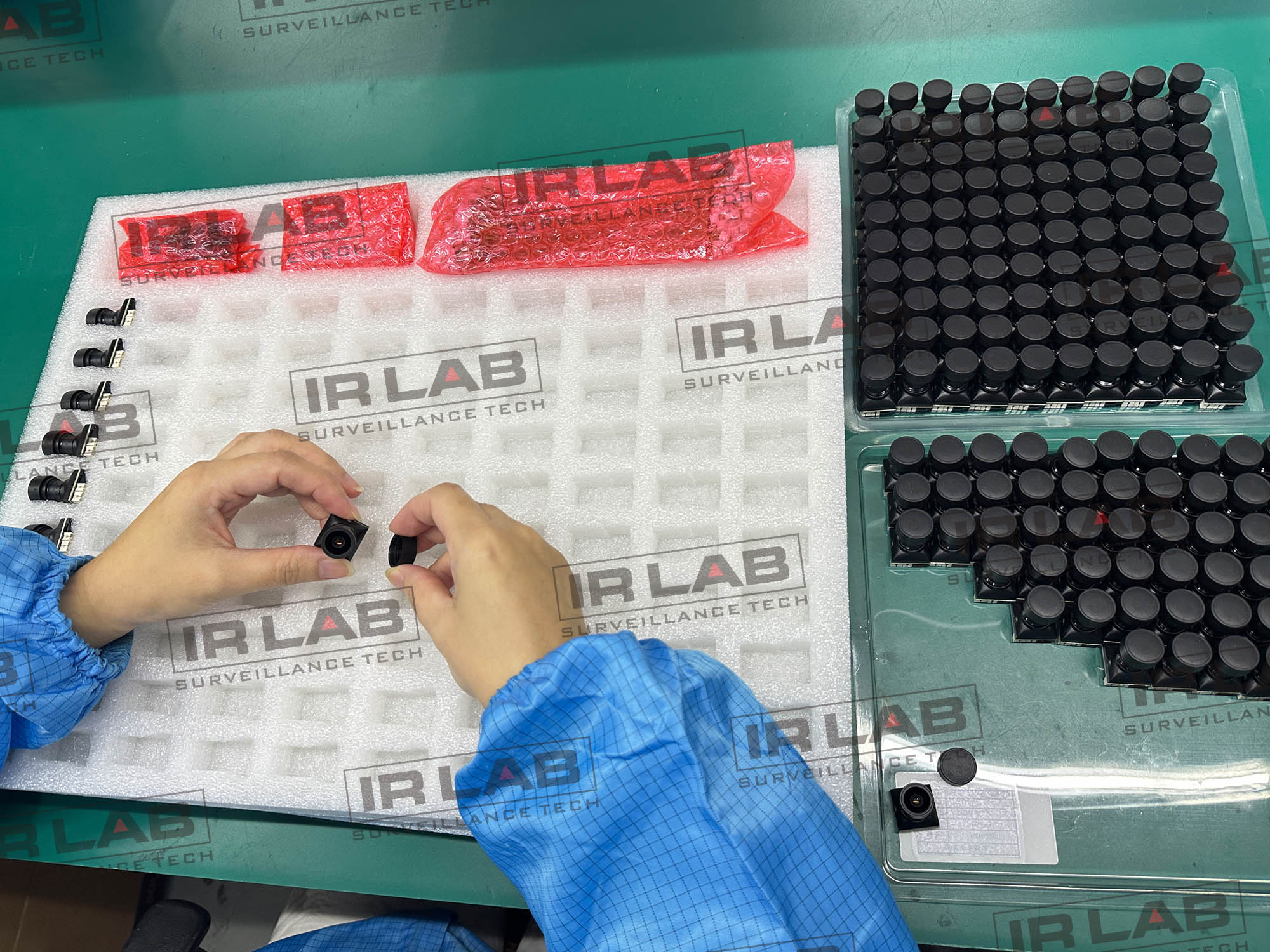
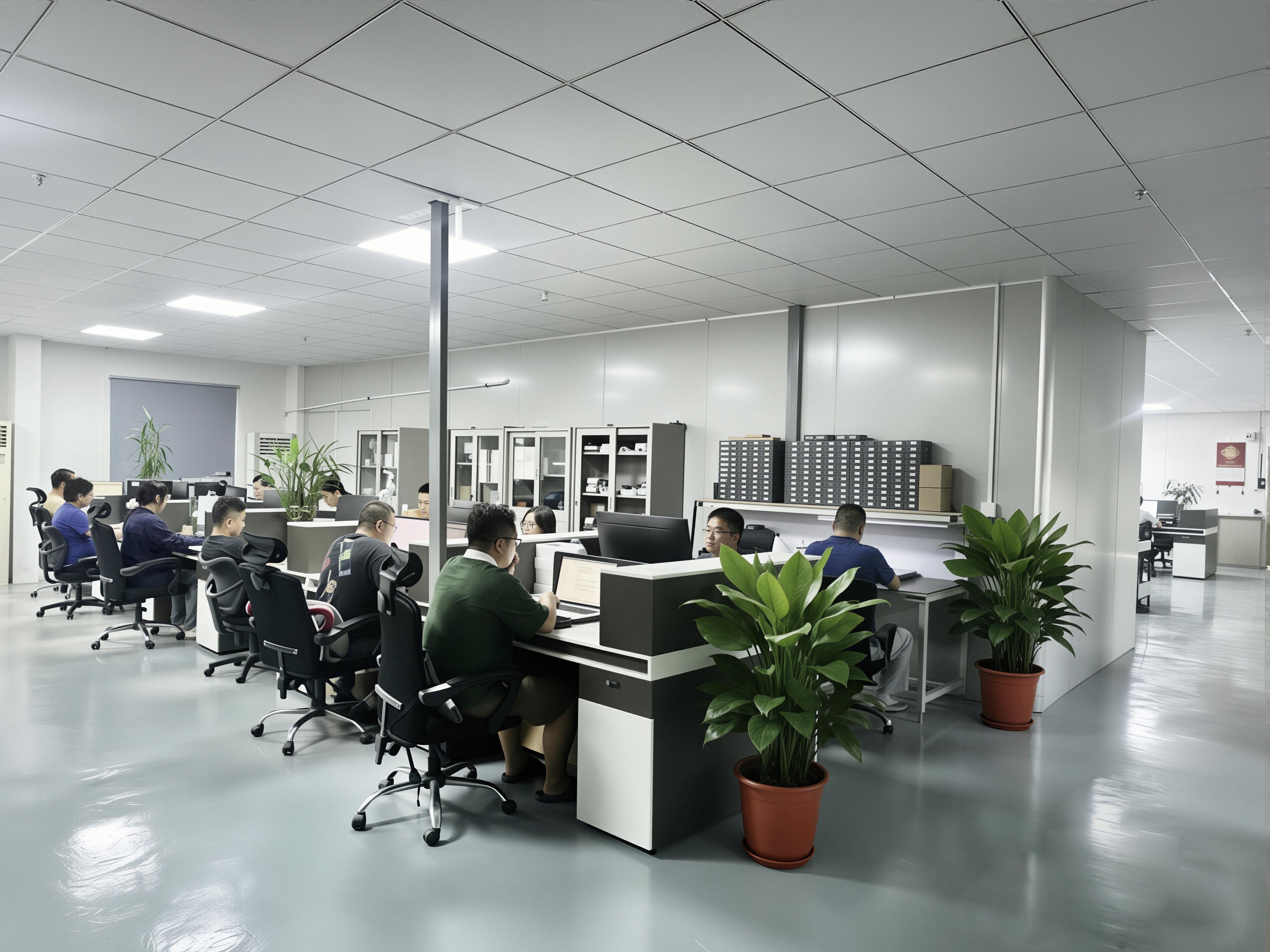
IRLAB Limited was established in 1992 and has over 30 years of camera development and manufacturing experience. The company operates a 3,000 m² manufacturing facility in Shenzhen with an annual output of 6 million units and employs more than 100 staff, including an R&D team of over 10 engineers covering software, hardware, mechanical structure, video image tuning and quality control in house. Its main product is the FPV camera, with 70% of output exported and main markets including Europe, the USA, Japan, Korea and Taiwan. Both the analog CDD-BS59KU and the digital CDD-BS5JMU are produced within this same organisation — to discuss samples, specifications or an OEM programme, contact sales@irlab.net or WhatsApp +86 13502860860.
Conclusion: Match the Camera to the Build, Not to the Trend
The CDD-BS59KU and the CDD-BS5JMU are both 120° FPV cameras from the same manufacturer, and both are listed against racing, RC car, AI detection and tactical FPV applications. The decision between them does not hinge on which technology is newer. It hinges on four checkable facts.
- Light: the analog CDD-BS59KU publishes 0.00001 LUX and >60 dB S/N; the digital CDD-BS5JMU publishes a SONY sensor without a minimum-illumination figure.
- Weight and space: 9 g net against 32 g with fan (9 g camera + 23 g board), with camera dimensions of 19 mm × 19 mm × 27 mm versus 19 mm × 19 mm × 26 mm and a 32 mm × 32 mm × 19.3 mm board.
- Resolution and recording: 1500TVL CVBS output against 3840×2160@30 fps, 1080p@90 fps and 720p@120 fps with a TF card slot up to 1 TB and 50 ms glass-to-glass latency.
- Fit: a low-voltage, low-power analog chain at DC 4.5 V–27 V and 0.6 W, or a 9 V–30 V digital chain at 5.4 W normal with MSP/MAVLINK OSD integration.
For weight-led racing builds, the analog camera is the natural default. For builds where the recorded frame, OSD data and digital link architecture are the point, the digital camera is. Where the two overlap — racing at dusk, or tactical programmes that need both day and night behaviour — the answer should come from a sample test on the actual airframe, not from a datasheet comparison alone.
Quick decision rule: if the build cannot reach 9 V or cannot spare 23 g, choose the CDD-BS59KU. If the build needs onboard recording and MSP/MAVLINK OSD data, choose the CDD-BS5JMU.
Next Step: Request Samples of Both FPV Cameras
IRLAB Limited has over 30 years of camera development and manufacturing experience, a 3,000 m² facility in Shenzhen and in-house engineering across software, hardware, mechanical structure, video image tuning and quality control. Samples of the analog CDD-BS59KU and the digital CDD-BS5JMU can be arranged for evaluation on your own airframe and lighting conditions.
Email: sales@irlab.net | WhatsApp: +86 13502860860 | Website: www.irlab.net
Download the company profile and product brochure: IRLAB Company Profile & Corporate Brochures (PDF)
Have Questions or Need More Details?
Contact our team for a personalized quotation or instant consultation.
Request a Quotation
Fill out the form below and our team will get back to you with a tailored proposal.
WhatsApp Direct Chat
Prefer to chat in real-time? Message us on WhatsApp for instant assistance & quick answers.
- Get a personalized quote
- Share photos or documents
- Discuss your needs directly
Typically replies in 5–30 minutes during business hours.