
FPV Camera Comparison: Analog CDD-BS59KU vs Digital CDD-BS5JMU vs Thermal CT-EI5ATC for Drones
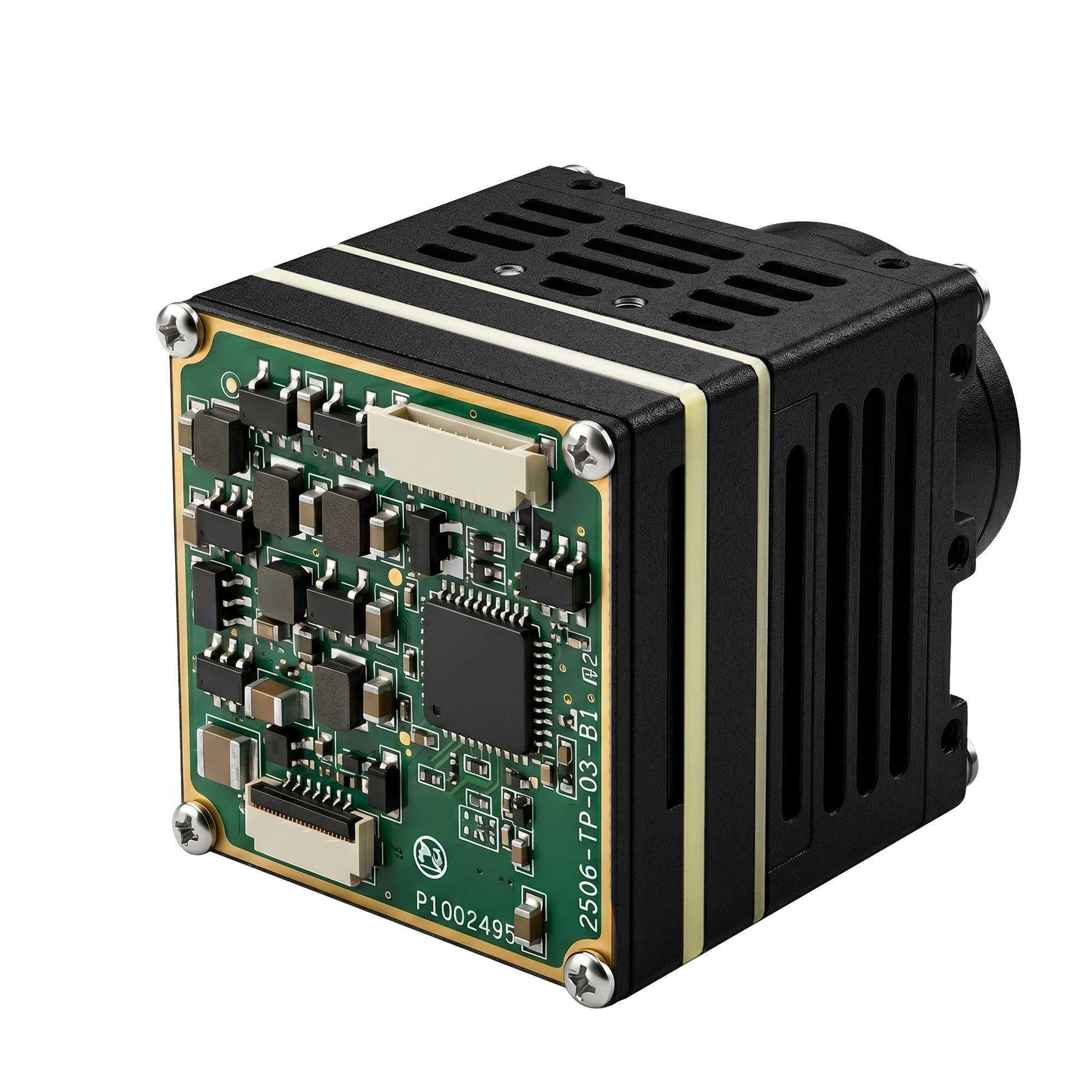
Choosing between the Analog CDD-BS59KU, the Digital CDD-BS5JMU and the Thermal CT-EI5ATC is a specification decision, not a brand decision. Each camera removes one constraint and adds another: 9 g of mass and 0.00001 LUX low-light sensitivity in exchange for analog detail; 3840 × 2160 resolution in exchange for a 50 ms latency figure and a heavier data path; thermal detection in exchange for 40 g and a monochrome heat image. The right answer is the model whose remaining constraint your airframe, video link and mission can absorb.
The Problem: Three Cameras That Each Remove a Different Constraint
By the time a programme reaches the decision and execution stage, the camera is no longer a variable that can be tuned later. It fixes four things at once: the mass budget, the video chain, the power rail, and the qualification test plan. A wrong choice does not produce a slightly worse image — it produces an airframe that has to be redesigned after tooling.
The three models in this comparison are not three grades of the same product. They sit in three different constraint envelopes:
- Analog CDD-BS59KU removes the mass constraint (9 g) and the low-light constraint (0.00001 LUX), and adds the bandwidth limits of an analog signal.
- Digital CDD-BS5JMU removes the resolution constraint (3840 × 2160 at 30 fps, 1080p at 90 fps, 720p at 120 fps) and adds a 50 ms latency figure plus a heavier recording and data path.
- Thermal CT-EI5ATC removes the requirement for visible light entirely, and adds 40 g plus a thermal-only image with no color or readable markings.
Three asymmetries make the trade-off harder than a datasheet comparison suggests. First, weight and resolution move together: the thermal module is roughly 31 g heavier than the analog camera, which on a small quad is a battery or endurance decision rather than a cosmetic one. Second, low-light capability and detail move in opposite directions: the analog camera is specified down to 0.00001 LUX, while a thermal camera detects heat without light but cannot read a license plate. Third, latency and data rate move in opposite directions: higher frame rates help perceived responsiveness, but a recorded 4K stream still has to be generated, buffered and transmitted.
A fourth asymmetry is commercial rather than optical. Once a build is qualified around one model, the programme is committed to that model's supply path for its service life. Chip discontinuation, raw-material consistency and key-component shortages therefore belong in the same decision as the sensor specification.
Industry Background: Why This Choice Is Harder in 2026
The FPV camera category is growing, and the thermal sub-segment is growing faster than the rest. Fact.MR estimates the global FPV camera market at US$ 825.3 million in 2024, and Straits Research identifies thermal imaging as the fastest-growing application segment in the drone camera market, with a projected CAGR of 28.1% from 2026 to 2034.
At the same time, thermal has become the more politically exposed option. According to trade-compliance reporting by GHY International referencing U.S. Customs and Border Protection, the United States imposed a 100% Section 232 tariff on unmanned aircraft systems with thermal imaging and on certain components, effective 3 September 2026. The practical consequence for a programme is not that thermal stops being useful — it is that thermal now carries a different landed-cost profile, so buyers increasingly specify thermal only where the mission cannot be completed without it and keep visible-light cameras on the rest of the fleet.
Two more forces shape selection. The first is component availability: cameras depend on sensors and processing silicon whose lifecycles are controlled by the original manufacturer, not the camera assembler. The second is documentation: buyers deploying into multiple markets increasingly need acceptance evidence at the unit level, because import review happens after shipment, not before.
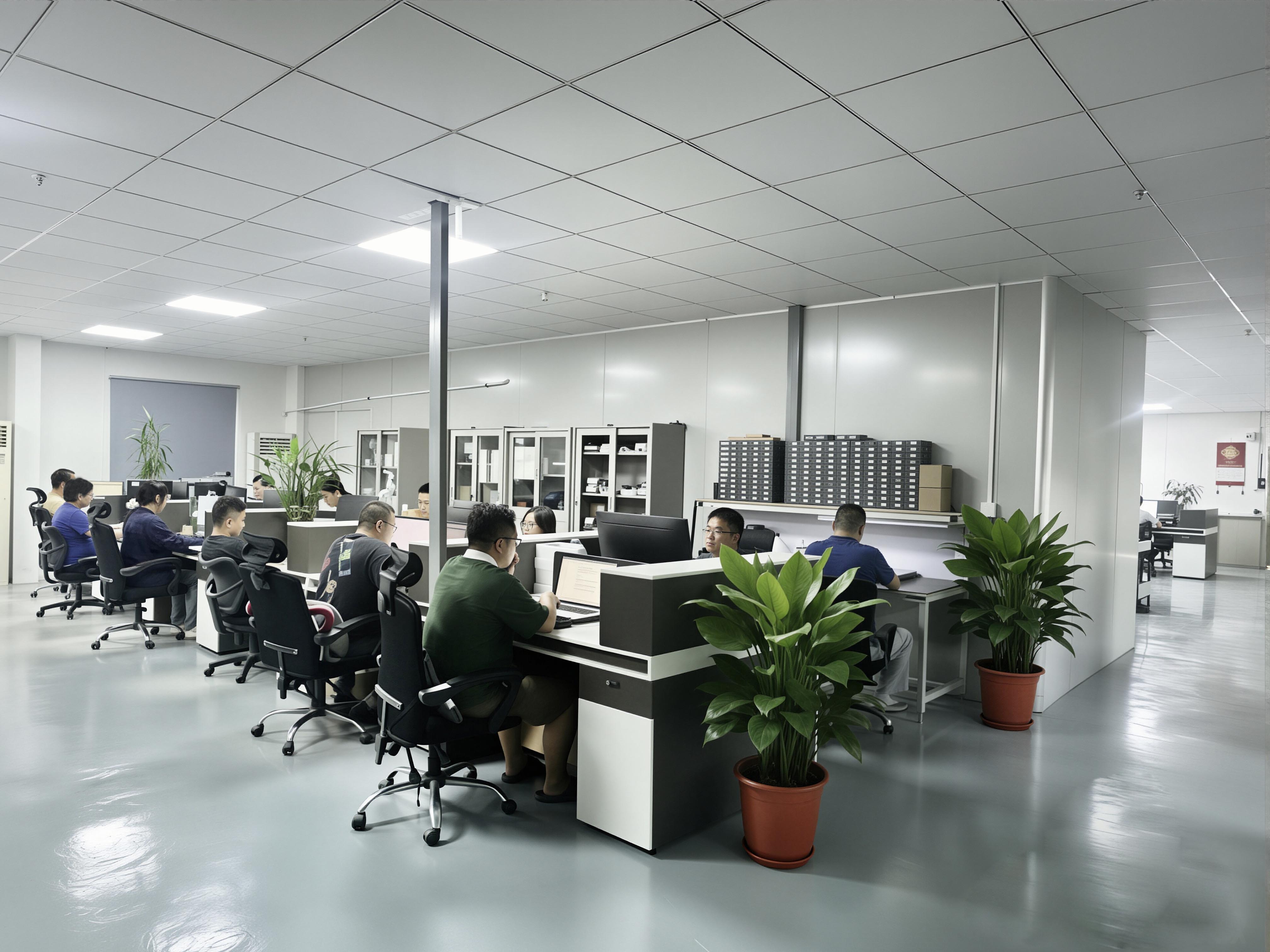
This is the environment in which IRLAB Limited operates. IRLAB Limited is a camera manufacturer founded in 1992 in Taiwan and established in Shenzhen in 2003, with 100+ employees including 10+ engineers, a 3,000 m² facility, and exports to Europe, the USA, Japan, Korea, and Taiwan. Its quality system is certified to ISO 9001 by TÜV. The three cameras compared here are built and supplied within that structure — which is why the comparison below covers both the imaging trade-offs and the programme terms that follow the order.
The Three IRLAB FPV Cameras, Model by Model
Analog CDD-BS59KU — 9 g, 1500 TVL, 0.00001 LUX, 120° FOV
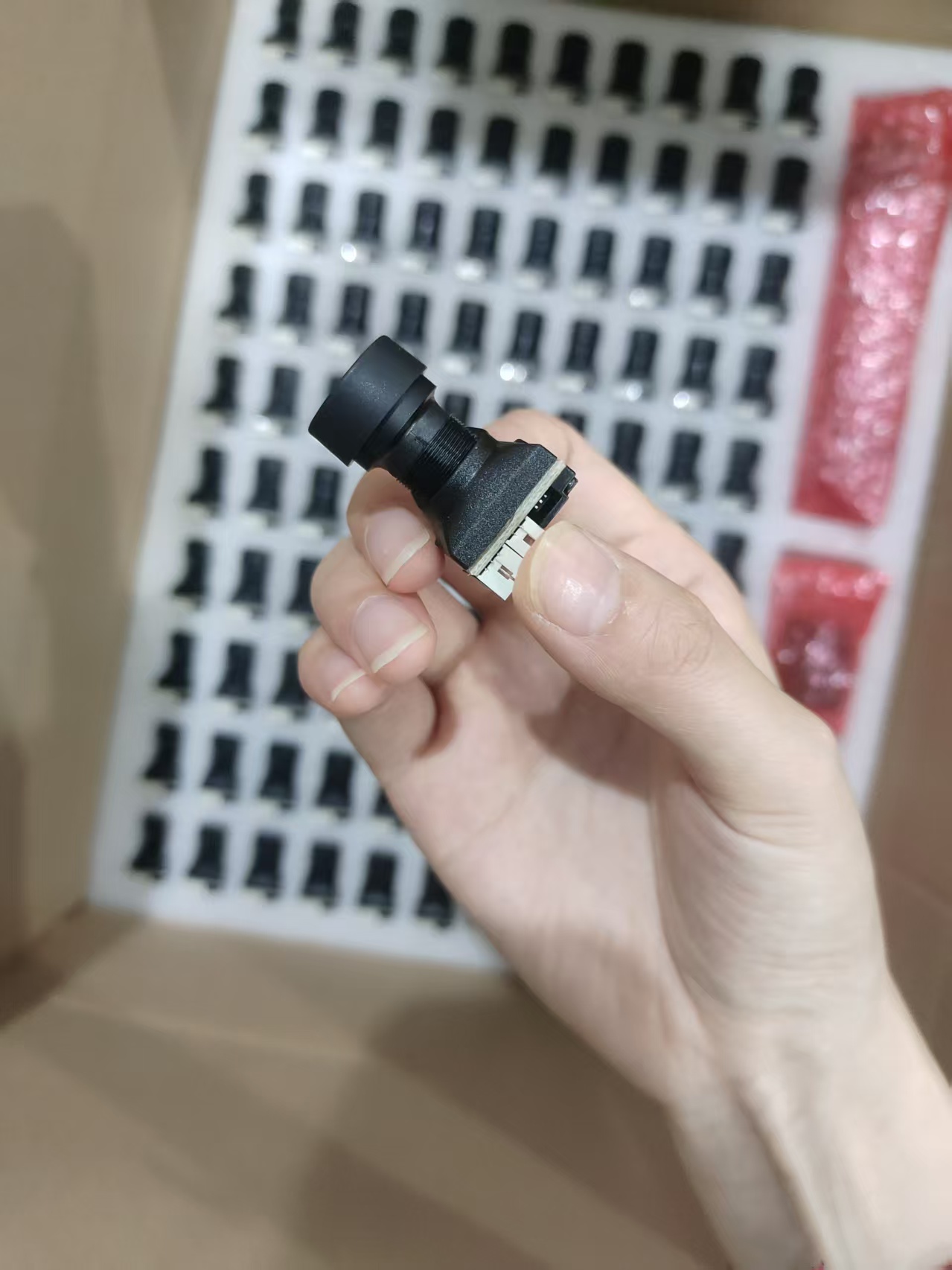
The CDD-BS59KU is the weight-critical option. It weighs 9 g, delivers 1500 TVL of horizontal resolution, is specified to a minimum illumination of 0.00001 LUX, and covers a 120° field of view.
Those four figures answer four separate engineering questions. The 9 g mass sets the upper bound of what the camera contributes to the airframe, which matters most on small quads where every gram competes with battery capacity. The 1500 TVL figure describes the analog resolution ceiling — high for a camera in this class, but still an analog ceiling. The 0.00001 LUX minimum illumination is a starlight-class low-light specification, which is the reason this camera remains relevant for night work despite being the simplest of the three. The 120° field of view gives the pilot the peripheral reference needed for proximity flight and indoor entry.
Where it fits: builds where mass and low-light sensitivity outrank detail, and where an analog video chain is already part of the design. The supporting equipment ecosystem documented for tactical FPV camera applications includes tactical FPV drones, FPV goggles or tactical helmets, analog VTX, an OSD overlay system and an encrypted receiver — the CDD-BS59KU is the model in this comparison that belongs to that chain.
Where it does not fit: missions that require a re-examinable high-resolution record, or that need to resolve a target beyond what an analog signal can carry. Analog detail degrades before digital detail does, and no amount of link quality recovers information the camera never encoded.
Digital CDD-BS5JMU — SONY Sensor, 4K Recording, 50 ms Latency
The CDD-BS5JMU is the resolution and record option. It uses a SONY image sensor and supports 3840 × 2160 at 30 fps, 1080p at 90 fps and 720p at 120 fps, with a 120° field of view. Its stated latency is 50 ms. The OSD protocol supports MSP and MAVLINK, and the recording interface includes a TF card slot supporting up to 1 TB.
Why those specifications matter in practice: 3840 × 2160 gives post-flight frames detailed enough to re-examine, which is the difference between footage you watch and footage you analyse. The 1080p at 90 fps and 720p at 120 fps modes exist for motion — higher frame rates reduce blur on fast passes and give smoother reference during aggressive maneuvering. The 50 ms latency figure is the trade-off that comes with that processing load, and it is the number a proximity-racing pilot will feel first. MSP and MAVLINK OSD support means flight-controller data can be overlaid without an additional board, and a 1 TB TF card gives long recording endurance for reconnaissance sorties where landing to swap storage is not an option.
IRLAB's FPV camera documentation lists CVBS, UVC and MIPI CSI-2 video outputs with UART and USB communication interfaces, and a DC 5–24 V input at ≤0.8 W consumption — the interface envelope a build has to accommodate when the digital model is chosen.
Where it fits: day reconnaissance, inspection and any mission where a high-resolution record with flight data burned in is itself a deliverable.
Where it does not fit: latency-critical proximity flight, and builds where the extra data path and recording workload compete with the flight controller for power and attention. Buyers should also confirm whether the quoted 50 ms is measured from sensor to camera output or glass-to-glass including the transmission link, because those are not the same number.
Thermal CT-EI5ATC — 640×512 in a 40 g Package
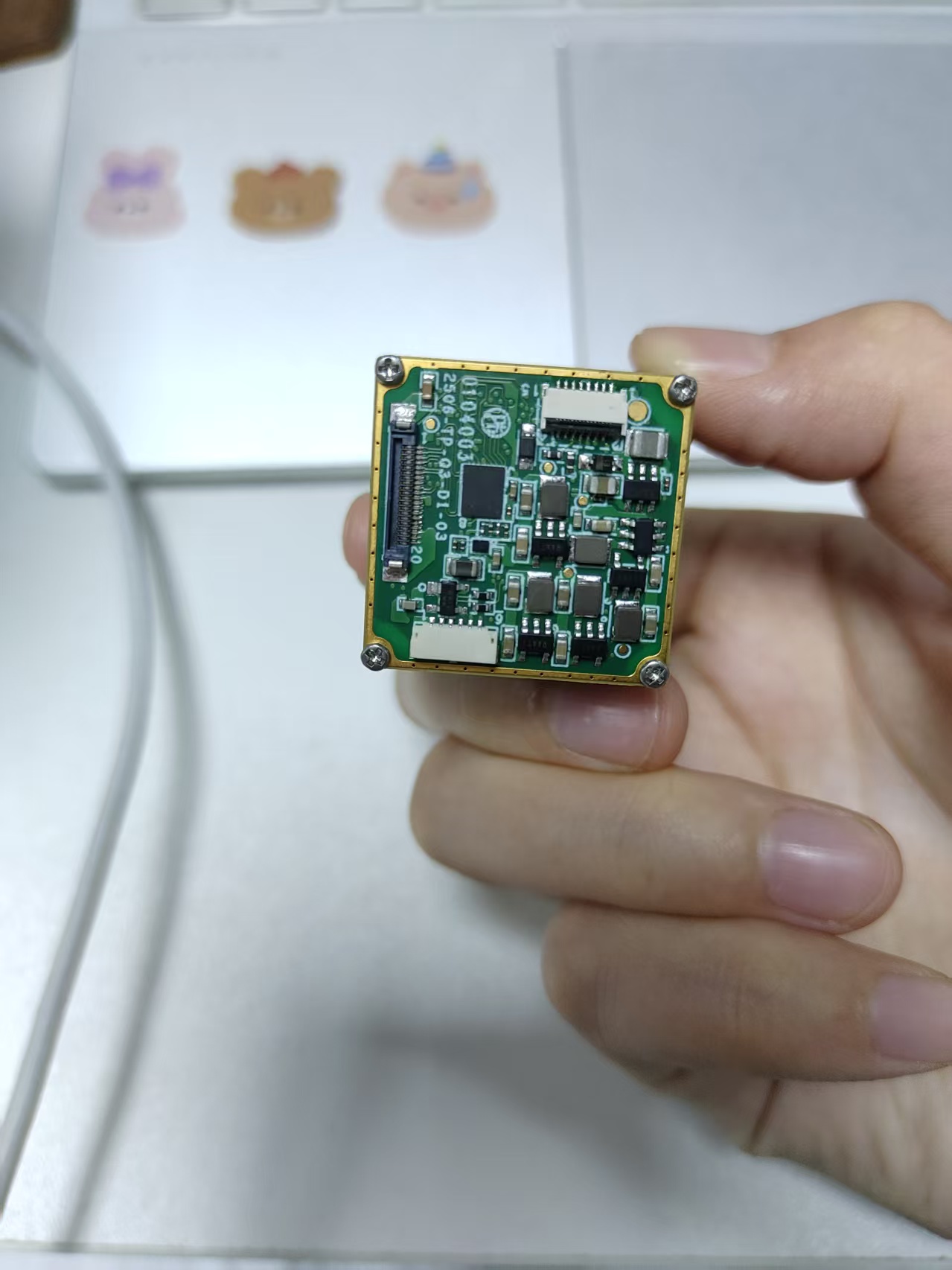
The CT-EI5ATC is the detection option. It provides 640 × 512 thermal resolution in a 40 g module measuring 25.4 × 25.4 × 38.8 mm.
The 640 × 512 array is the resolution class in which a thermal FPV camera can distinguish a person-sized target at reconnaissance distance rather than merely flagging a warm blob. The 25.4 × 25.4 × 38.8 mm envelope is a standard small-module footprint that fits compact gimbals and fixed mounts, and the 40 g mass is the number that has to be reconciled against the airframe's remaining lift. The requirement profile IRLAB documents for thermal FPV missions is demanding: LWIR operation in the 8–14 μm band, NETD ≤30 mK at 25 °C, a 12 μm pixel pitch, high thermal sensitivity, metal construction for shock resistance, SWaP optimisation, high EMC and strong EMI immunity. Those are the performance thresholds a thermal build is usually specified against.
IRLAB also specifies day/night real-time video operation for its tactical FPV camera applications across extreme conditions including dark night, bright sun, high vibration and shock, an operating range of −38 to 60 °C, EMI environments, dense fog and torrential rain. That environmental statement is the part of a thermal specification that most often decides field reliability, because thermal contrast collapses in fog and rain far more gradually than visible-light contrast does — but it does not disappear.
Where it fits: night operations, obscured-visibility search, and any mission where the target is only visible as heat.
Where it does not fit: identification tasks that require color, markings or fine structural detail; and mass-limited micro builds where 40 g is not available. Thermal also carries the tariff and export-classification exposure described above, so the landed cost should be confirmed before the configuration is frozen.
Step-by-Step: A Seven-Step Selection Sequence
The sequence below converts the specification comparison into a repeatable decision. Each step has one output; do not proceed until it is written down.
Step 1 — Write the mission in one sentence
State what the camera has to produce: a piloting view, an analyzable record, or a detection cue. If the sentence contains two of those, you are specifying a dual-camera build, not a single camera.
Step 2 — Set the mass budget before the resolution budget
Compare the 9 g analog camera against the 40 g thermal module against the digital model. Thirty-one grams of difference on a small quad is usually an endurance question, not a packaging question, so settle mass first. If mass is tight and thermal is mandatory, the airframe changes — not the camera.
Step 3 — Fix the video chain
Analog CVBS, UVC, MIPI CSI-2 and a digital transmission link are not interchangeable downstream. The documented supporting equipment for these camera applications — tactical FPV drones, FPV goggles or tactical helmets, encrypted VTX, ground control station, analog VTX, OSD overlay system and encrypted receiver — should be chosen together with the camera, because changing one later usually forces a change in the other.
Step 4 — Test latency against the control task
The CDD-BS5JMU is stated at 50 ms. Proximity racing and tight indoor flight are the tasks where that figure is felt; reconnaissance orbit and inspection hover are tasks where it is not. Confirm the measurement basis of any latency figure before you lock the specification.
Step 5 — Confirm interfaces, power and OSD
Check that the chosen model's outputs land on the interfaces your flight controller and ground station actually provide — CVBS, UVC, MIPI CSI-2, UART and USB are documented across the FPV camera range, with a DC 5–24 V input at ≤0.8 W. If MSP or MAVLINK OSD is part of your workflow, confirm it on the specific model rather than assuming it.
Step 6 — Validate the environment, not just the image
Match the camera to the operating envelope: −38 to 60 °C, high vibration and shock, EMI, dense fog and torrential rain are the conditions IRLAB documents for tactical FPV camera applications. A camera that performs on a bench and fails after twenty minutes of vibration has not been validated.
Step 7 — Lock the supply and acceptance path
The last step is commercial. Confirm minimum order quantity, sample availability, lead time, warranty and acceptance criteria before the design freeze, because these determine whether the programme can scale after the prototype flies. The terms that apply across all three models are set out further below.
Mission Profiles: Matching Each Camera to a Build
- FPV racing and weight-critical freestyle: the Analog CDD-BS59KU. At 9 g with a 120° field of view, it is the only model in this comparison that does not force a mass redesign of a small quad.
- Low-light pursuit and covert observation: the Analog CDD-BS59KU. A 0.00001 LUX minimum illumination is the specification that keeps a usable image when visible light is effectively absent but heat contrast is not sufficient for thermal detection.
- Day reconnaissance with post-flight review: the Digital CDD-BS5JMU. 3840 × 2160 at 30 fps gives analyzable frames, and MSP/MAVLINK OSD embeds flight data into the same record.
- Fast-pass inspection and dynamic forensics: the Digital CDD-BS5JMU in its 1080p at 90 fps or 720p at 120 fps mode, where frame rate matters more than pixel count.
- Night search, obscured-visibility detection and tactical reconnaissance: the Thermal CT-EI5ATC. A 640 × 512 array is what separates detection from a vague warm patch.
- Indoor and confined-space entry: the Analog CDD-BS59KU for its low-light performance and low mass, or the CT-EI5ATC where the space is dark and the object of interest is a heat source.
- Fire, inspection and vehicle-integrated platforms: the documented supporting equipment for these camera applications includes fire and inspection robots and armored vehicles, which typically pair with the thermal or digital model depending on whether the output is a detection cue or a recorded image.
Specification Comparison Table
| Parameter | Analog CDD-BS59KU | Digital CDD-BS5JMU | Thermal CT-EI5ATC |
|---|---|---|---|
| Camera class | Analog FPV camera | Digital FPV camera | Thermal FPV camera |
| Weight | 9 g | Not stated in this comparison | 40 g |
| Resolution | 1500 TVL | 3840 × 2160 at 30 fps / 1080p at 90 fps / 720p at 120 fps | 640 × 512 |
| Image sensor | Not stated in this comparison | SONY sensor | Thermal detector, LWIR 8–14 μm band |
| Minimum illumination | 0.00001 LUX | Not stated in this comparison | Detects heat without visible light |
| Field of view | 120° | 120° | Not stated in this comparison |
| Latency | Not stated in this comparison | 50 ms | Not stated in this comparison |
| Dimensions | Not stated in this comparison | Not stated in this comparison | 25.4 × 25.4 × 38.8 mm |
| Onboard recording | Not stated in this comparison | TF card slot, up to 1 TB | Not stated in this comparison |
| OSD protocol | Not stated in this comparison | MSP and MAVLINK | Not stated in this comparison |
| Best-fit mission | weight-critical builds and low-light analog links | high-resolution capture with flight data overlay | night and obscurant detection |
Only specifications confirmed for each model are listed. A blank cell means the figure was not part of this comparison, not that the model lacks the function.
What Stays the Same Across All Three: Programme and Supply Terms
The commercial terms are identical across the three models, which means the camera choice can be made on technical grounds without reopening the supply negotiation.
| Programme term | Value |
|---|---|
| Minimum order quantity | 1 unit |
| Small-quantity delivery | Immediate |
| Large-quantity lead time | 15–25 working days after receiving deposit |
| Monthly production capacity | 500,000 units |
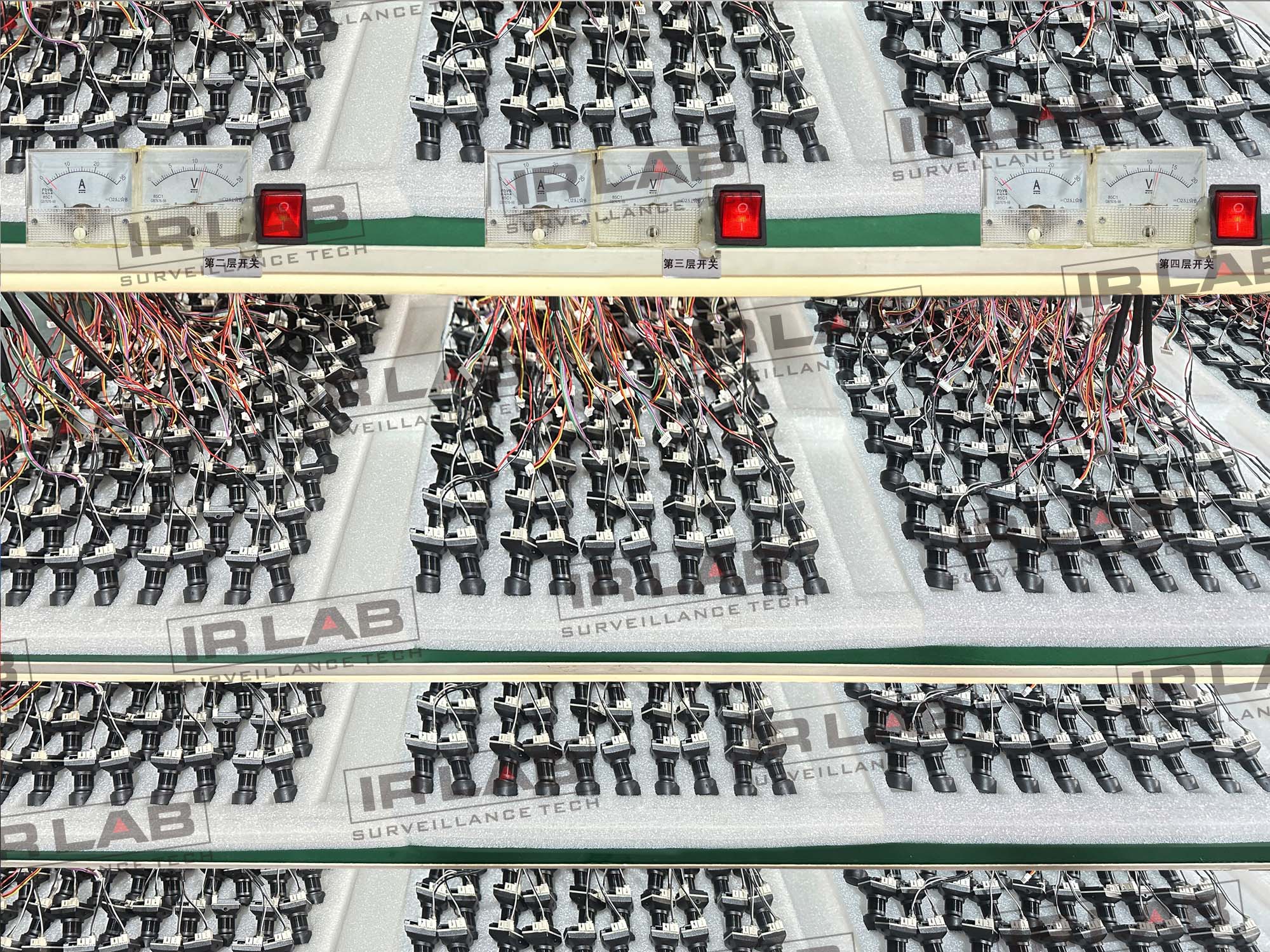
| Quality control | 100% production check plus AQL standard OQC check |
| Warranty | 2 years |
| Payment terms | T/T in advance: 30% deposit when the formal order is placed, 70% balance before shipment |
| Delivery terms | FCA Shenzhen / C&F Hong Kong |
| Customization | OEM and ODM production services |
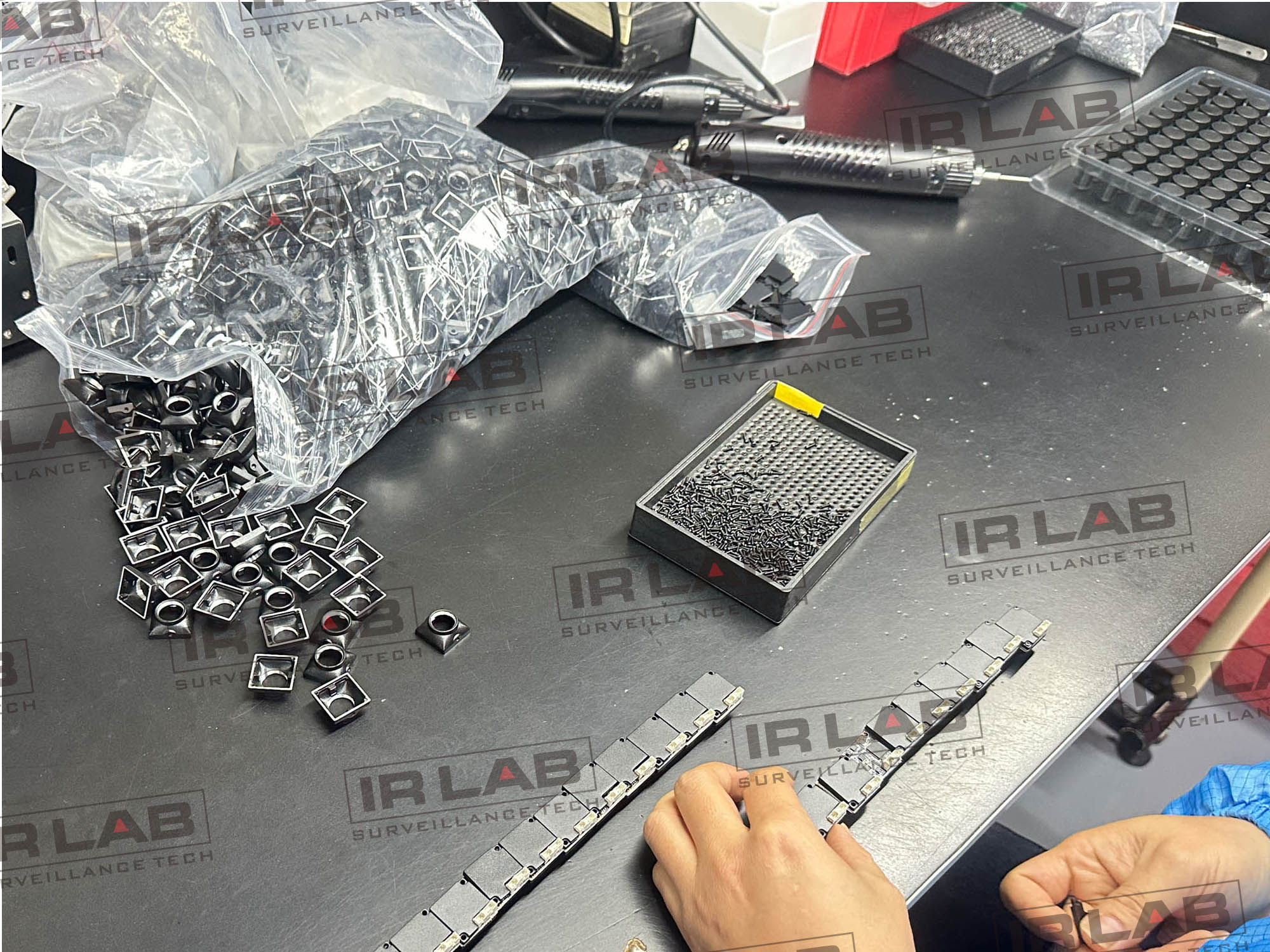
Supply continuity is the part of the programme that buyers tend to review last and regret first. IRLAB's stated control methods address three failure modes — inconsistent raw-material quality, shortage of key materials, and chip production halt — through complete incoming material inspection, a long-term cooperative supply chain that provides better supply guarantees during special periods, and a self-developed system with in-house engineering depth that allows faster chip replacement. The supporting measures are chip lifecycle management files that track original-manufacturer discontinuation notices and product roadmaps, standard operating procedures for chip replacement that reserve compatible package or pin options during new-product design, and proactive device replacement drills on mass-produced products that shorten the switchover cycle and produce a closed-loop replacement verification report.
For a programme that has standardised on one of these three models, that is the relevant question: not whether the camera is right today, but what happens to the build if the sensor underneath it is discontinued in two years.
FAQ
What acceptance and quality evidence comes with an IRLAB FPV camera order?
Each order is covered by 100% production check plus an AQL standard OQC check, and the manufacturer provides a 2-year warranty. IRLAB Limited's quality system is certified to ISO 9001 by TÜV. This means camera-level acceptance is defined per unit before shipment rather than argued after arrival. Buyers should still confirm radio, EMC and import requirements for the complete aircraft and its video transmitter separately, because camera-level quality documentation and aircraft-level market approval are different questions with different evidence.
Can one supplier cover analog, digital and thermal cameras in the same drone programme?
Yes. The CDD-BS59KU, CDD-BS5JMU and CT-EI5ATC are all IRLAB Limited products, and the company provides OEM and ODM production services. The facility covers 3,000 m² with 100+ employees including 10+ engineers, and monthly production capacity is 500,000 units. A mixed fleet therefore does not require three separate supplier qualifications, although each camera class still needs its own acceptance test and its own environmental validation.
How should a buyer budget across the three models?
No list price is published in the material used for this comparison, so budgeting has to be built from cost drivers rather than a catalogue figure. The drivers that differ most between these three are the imaging core (a SONY CMOS sensor versus an LWIR thermal detector), the mechanical package (9 g of analog camera versus a 40 g thermal module in a 25.4 × 25.4 × 38.8 mm housing), the interface and recording configuration, and the volume band. Because the minimum order quantity is 1 unit, a single-unit evaluation can be budgeted before any volume commitment. For thermal specifically, landed cost should also account for the U.S. Section 232 tariff on unmanned aircraft systems with thermal imaging and certain components, effective 3 September 2026, and the classification of the shipment should be confirmed rather than assumed.
Can we evaluate a single unit before committing to volume?
Yes. The minimum order quantity is 1 unit, and small quantities ship immediately. That allows a build to be flown with the actual camera — including its real mass, its real interface behaviour and its real image character — instead of a substitute. For programmes that will scale, the sensible sequence is to fly one unit through the full mission profile, record the result, and use that record as the acceptance baseline for the volume order.
What lead time and payment terms apply once a model is selected?
For large quantities the lead time is 15–25 working days after the deposit is received. Payment terms are T/T in advance, with a 30% deposit when the formal order is placed and the 70% balance before shipment, and delivery terms are FCA Shenzhen or C&F Hong Kong. If you have already narrowed the choice to one of the three models, send the model, quantity and mission profile to sales@irlab.net to request a sample unit or a configuration-specific quotation.
Conclusion: Pick by Mission, Then Lock the Supply Path
The decision rule is short. If mass and low-light sensitivity are the binding constraints, the Analog CDD-BS59KU at 9 g, 1500 TVL and 0.00001 LUX is the correct choice. If an analyzable high-resolution record with flight data overlay is the deliverable, the Digital CDD-BS5JMU with its SONY sensor, 3840 × 2160 at 30 fps and MSP/MAVLINK OSD is the correct choice, with 50 ms of latency as the accepted cost. If the target is only visible as heat, the Thermal CT-EI5ATC at 640 × 512 in a 40 g, 25.4 × 25.4 × 38.8 mm package is the correct choice, with mass and tariff exposure as the accepted costs.
What does not change is the supply path. All three models share the same programme terms — 1-unit minimum order, immediate small-quantity delivery, 15–25 working days for volume after deposit, 100% production check plus AQL standard OQC, a 2-year warranty, and documented chip lifecycle management — which means the technical decision can be made on specifications and the commercial decision is already settled. That combination is what makes a long-term camera standard work: the camera fits the mission today, and the supplier can still support the build when the components underneath it change.
Next Step: Sample, Quote, or Catalogue
Tell us the mission profile and we will confirm which of the three models fits — or tell us the model and we will quote the configuration. Minimum order quantity is 1 unit, so a single-unit evaluation can start immediately.
Email: sales@irlab.net | Tel: +86 13682444680 | WhatsApp: +8613502860860
Company website: www.irlab.net | Download the full company and product profile: IRLAB Company Profile & Corporate Brochures (PDF)
Have Questions or Need More Details?
Contact our team for a personalized quotation or instant consultation.
Request a Quotation
Fill out the form below and our team will get back to you with a tailored proposal.
WhatsApp Direct Chat
Prefer to chat in real-time? Message us on WhatsApp for instant assistance & quick answers.
- Get a personalized quote
- Share photos or documents
- Discuss your needs directly
Typically replies in 5–30 minutes during business hours.