
FPV Camera Technical Specs Explained: Resolution, Latency, and Low-Light Performance
Three numbers decide whether an FPV camera survives its first real mission: the resolution format it can deliver in practice, the latency between the lens and the screen, and the lowest light level at which the image is still usable. Housing material, weight, temperature range and EMI behaviour exist to protect those three numbers, not to decorate a datasheet.
IRLAB Limited is a Taiwan-founded camera manufacturer, established in Shenzhen in 2003 and developing imaging hardware since 1992. Its FPV camera range covers analog, digital, thermal and starlight modules for tactical UAV, industrial inspection and commercial drone programs. This guide explains how to read those specifications the way a program engineer does, and how to verify them before committing to volume production.
Why FPV Camera Specifications Are Misread During Selection
The first problem is units that look comparable but are not. Analog FPV cameras are rated in TVL, or television lines. Digital modules are rated in pixels and frame rate. Thermal cameras are rated in detector resolution, pixel pitch and thermal sensitivity. A 1500TVL analog camera and a 3840×2160@30fps digital module are not separated by a 2.5× quality gap, because the two figures measure different things.
The second problem is unqualified test conditions. Minimum illumination is often published without stating gain, shutter or lens aperture, so a 0.00001 LUX figure and a 0.001 LUX figure may describe the same sensor under different test settings. Latency claims have the same weakness: sensor readout time is not glass-to-glass latency, and the difference between the two is exactly what a pilot feels in the goggles.
Decision rule: never compare two FPV cameras on a single headline number. Compare resolution within the same technology family, latency as glass-to-glass, low-light performance at a stated gain and shutter, and mechanical ratings under the same temperature and vibration conditions.
The third problem is that spec drift stays invisible until it becomes expensive. A camera selected at sample stage for its resolution can fail at full-rate production because the housing cannot absorb shock, or because output timing is unstable for object tracking pipelines. Buyers in the Decision-to-Execution stage should therefore treat the datasheet as a hypothesis to be tested, not as a settled fact.
Industry Background: Where FPV Camera Demand Is Heading
Camera procurement is being pulled by two markets at once — a fast-growing FPV segment and a much larger drone imaging and thermal segment.
- The global FPV camera market was estimated at US$ 825.3 million in 2024, with a projected CAGR of 14.7% through 2034 (Fact.MR). Market sizing varies by scope: broader drone imaging segments are valued above US$ 10 billion.
- The drone camera market, including thermal and RGB systems, was valued at USD 13.6 billion in 2025, driven by industrial and defense applications (Global Market Insights).
- The thermal camera market is projected to grow from USD 5.16 billion in 2024 to USD 10.09 billion by 2035, at a CAGR of 6.28% (Market Research Future).
Regulation is moving at a similar pace. In the United States, FPV video transmitters typically require compliance with FCC Part 15 unless operated under a Technician-level amateur radio licence. In late 2025, the FCC added uncrewed aircraft systems and critical components from specific foreign countries to its Covered List (DA 25-1086). For buyers comparing China-free FPV camera options or planning multi-year programs, this turns supply-chain origin from a procurement footnote into a documented compliance variable — one of the reasons long-term supplier evaluation now covers regulatory support, not only unit price.
Decoding the Core FPV Camera Specifications
Resolution: TVL, Pixel Format and Detector Size
Resolution answers a task question, not a prestige question. Three formats cover most programs, and each one is specified differently.
- Analog, 1500TVL class. The IRLAB CDD-BS59KP analog FPV camera is specified at 1500TVL and targets racing and tactical segments. Line-based resolution keeps the processing chain short, which is why analog remains the reference point for low latency.
- Digital, 3840×2160@30fps class. UHD digital output suits programs that need detail for AI detection, object tracking, evidence recording or structural inspection. The trade-off is a longer encode-and-decode pipeline, which must be budgeted into the latency target rather than ignored.
- Thermal, 640×512 detector with 12 μm pixel pitch. Thermal FPV cameras resolve scene structure rather than colour, in the LWIR band from 8 to 14 μm. Detector size and pixel pitch — not colour resolution — determine how much scene detail reaches the operator.
Whatever the format, four image-quality attributes determine whether the resolution is usable in the field: wide dynamic range (WDR), auto white balance (AWB), true colour reproduction, and a high signal-to-noise ratio with low noise. A high-resolution sensor paired with a weak noise floor delivers worse operational images than a lower-resolution sensor with clean output.
Latency: Why Glass-to-Glass Is the Only Number That Counts
Glass-to-glass latency measures the time between light entering the lens and the image appearing on the display. IRLAB specifies a glass-to-glass target of under 50 ms for FPV camera applications. That single figure covers the whole chain: sensor exposure and readout, image tuning, transmission, decoding and display refresh.
Where the chain gets long, latency grows. An analog FPV camera with an analog VTX has the shortest practical path and is often chosen for manual piloting, where the operator is inside the control loop. Digital FPV cameras insert encoding, transmission, error correction and decoding between the sensor and the goggles. Compression efficiency does not remove that time — it only changes where it is spent.
The operational consequence is measurable. At a closing speed of 100 km/h, a 50 ms loop corresponds to roughly 1.4 metres of travel between what the camera sees and what the pilot reacts to. For terminal guidance, indoor assault reconnaissance or teleoperated inspection robots, that distance is the difference between a usable platform and an expensive one.
Low-Light Performance: Minimum Illumination and Thermal Sensitivity
Minimum illumination in the 0.00001 LUX class is starlight territory: the camera is expected to produce a recognisable image from ambient night sky rather than from illumination the platform carries. Starlight FPV cameras are specified this way, and the practical question is not the headline figure but the noise and motion behaviour at that light level.
Thermal imaging solves a different part of the problem. A thermal FPV camera is specified by thermal sensitivity rather than visible-light sensitivity, with an NETD of ≤30 mK at 25°C combined with LWIR coverage from 8 to 14 μm and a small pixel pitch. This is what allows detection when there is effectively no visible light at all, and it is why thermal modules are evaluated under the same environmental list as visible-light cameras: dark night, bright sunlight, high vibration and shock, extreme temperatures, EMI environments, dense fog and torrential rain.
Clean low-light imagery also depends on attributes that never appear in a resolution figure: high SNR, low noise, zero motion blur, WDR and AWB. In low light, noise reduction and shutter behaviour dominate perceived image quality far more than pixel count does.
Mechanical, Thermal and Electromagnetic Envelope
The mechanical specification is what converts an image spec into a deployable product. IRLAB FPV camera platforms are specified with metal-housing shock resistance, SWaP-optimised form factor, ultra-lightweight and compact design, low power consumption, high shock and vibration resistance, strong EMI immunity, high EMC behaviour, extreme durability and disposable platform compatibility.
Each of these has a procurement meaning:
- Metal housing and shock resistance determine survival during transport, launch, hard landings and gunfire vibration.
- SWaP optimisation (size, weight and power) determines whether the camera fits the platform and whether flight endurance suffers.
- Strong EMI immunity and high EMC determine whether the video chain stays stable near motors, radios and fibre-optic guidance electronics.
- An operating range of -38°C to 60°C determines whether the program can be deployed across cold high-altitude air and hot desert ground surfaces without a camera-specific temperature mitigation plan.
The Ground Segment Is Part of the Specification
An FPV camera is only as good as the system it connects to. IRLAB FPV camera applications are specified together with supporting equipment including tactical FPV drones, tactical helmets and FPV goggles, encrypted VTX, ground control station (GCS), armored vehicles, fire and inspection robots, agricultural drones, tactical flight controller, analog VTX, OSD overlay system, ground control terminal and encrypted receiver.
This matters at the evaluation stage. A 3840×2160@30fps camera on a link that cannot carry the data, or a sub-50 ms camera behind a decoder that adds delay, will underperform its datasheet. For object tracking and AI detection FPV camera programs, the video chain — not the sensor alone — defines whether the timing is stable enough for a model to track a moving target.
Step-by-Step: How to Verify FPV Camera Specs Before Volume Order
- Define the mission envelope first. Write down the operating environment before opening a datasheet: dark night, sunlight, vibration, impact, fog, rain, EMI exposure and temperature extremes. This list tells you which of the four spec groups has veto power over the others.
- Convert the mission into a latency budget. Decide how much of your control loop the video delay is allowed to consume. If manual piloting is involved, set the target in glass-to-glass terms — for example, under 50 ms — and require the supplier to confirm the measurement point, not just the sensor figure.
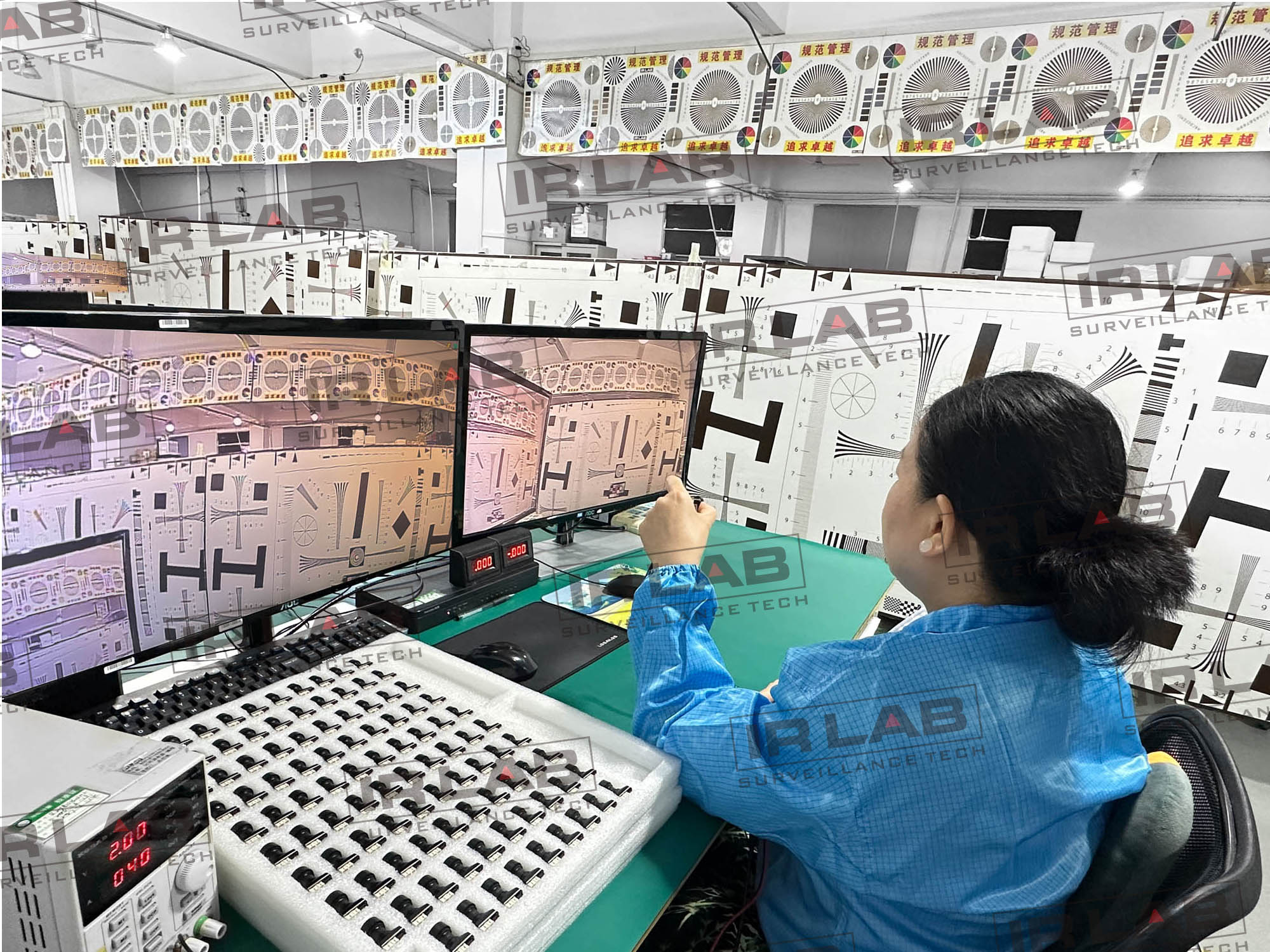
- Set the low-light threshold with test conditions. State the gain, shutter and lens aperture attached to any minimum illumination figure, and decide whether starlight-class performance is required or whether a thermal channel is needed for the mission.
- Confirm the mechanical and thermal envelope. Verify housing material, shock and vibration resistance, SWaP fit, power budget and the operating temperature range against the deployment plan, not against a marketing bullet list.
- Check EM behaviour and the ground segment pairing. Match the camera against the VTX, goggles, GCS, flight controller and receiver you actually intend to use, including encryption requirements.
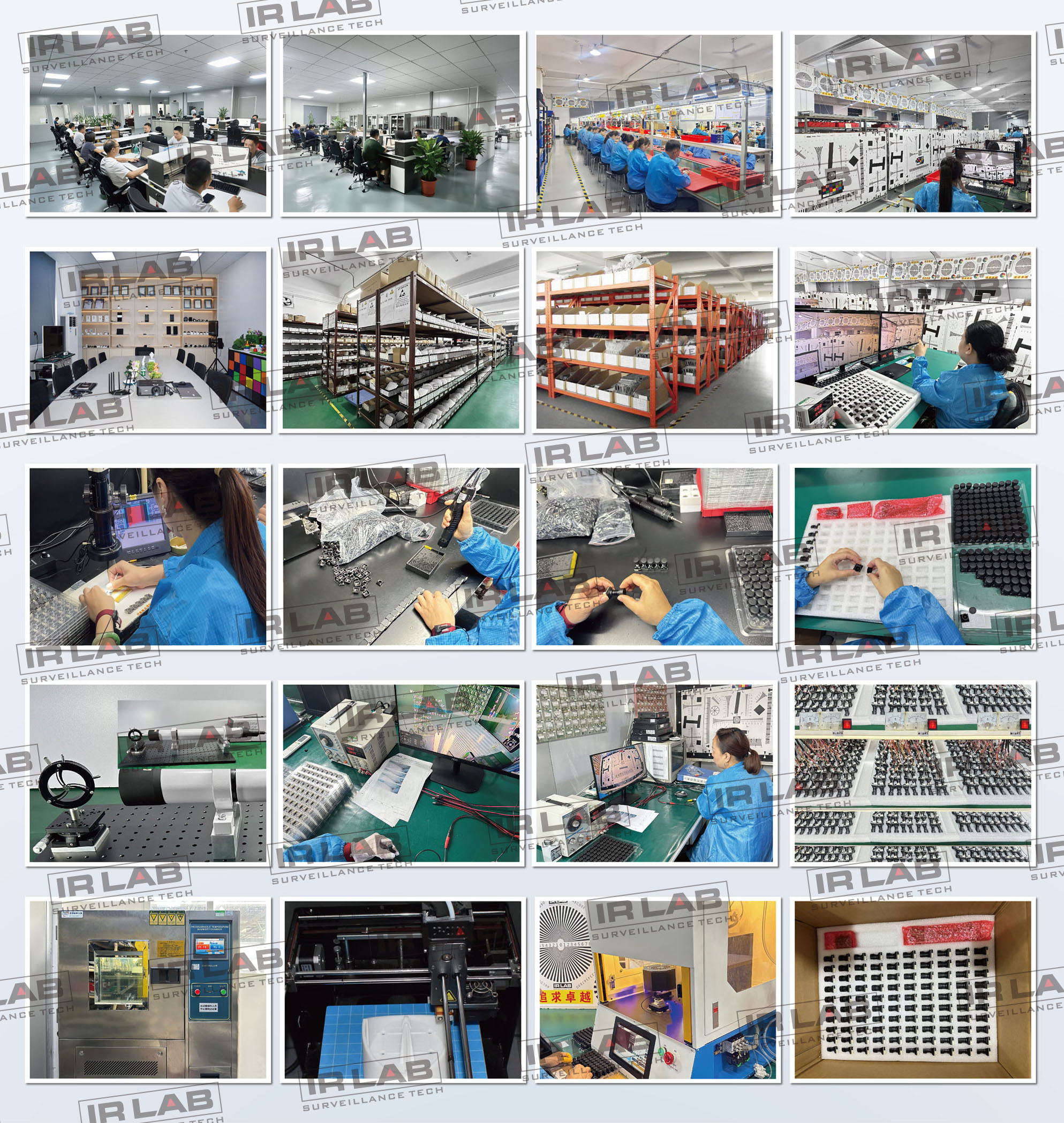
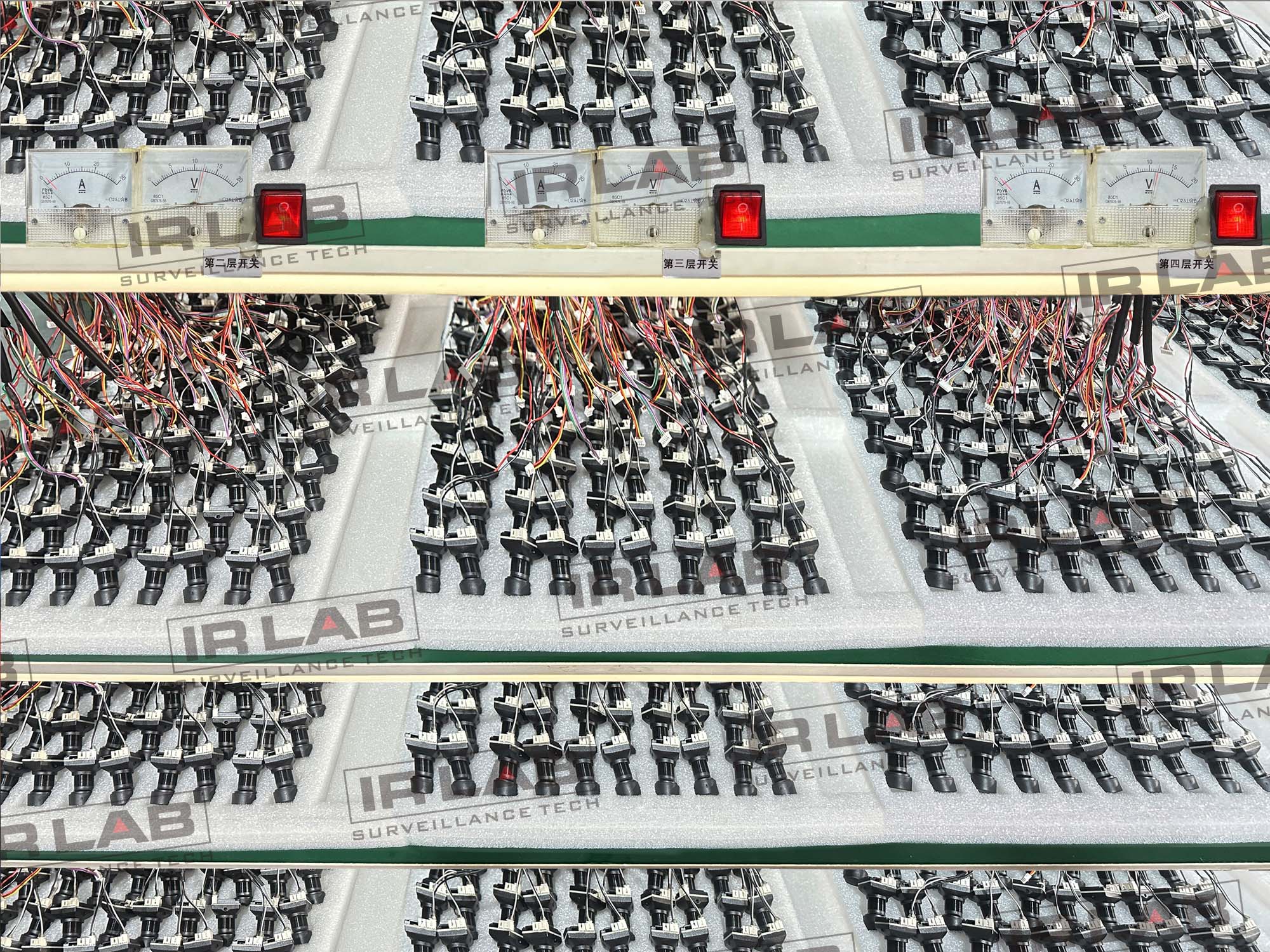
- Validate with physical samples and QC evidence. Test the sample against your own envelope, then confirm the production controls behind it — incoming material inspection, production checks and outgoing quality checks — so that the tested unit and the shipped unit are the same product.
Use Cases: Matching Specifications to Mission
Racing, Freestyle and Manual Piloting
Analog FPV cameras in the 1500TVL class remain the default here. The value is the short signal path: high line count for a usable image, minimal processing delay, and a frame behaviour that a pilot can trust at close range.
Tactical FPV UAV Programs
These programs combine all four spec groups at once: sub-50 ms latency, metal-housing shock resistance, SWaP fit, strong EMI immunity and encrypted VTX pairing with a ground control station. Optical and fiber-optic guidance setups increase the pressure on glass-to-glass timing, because the operator is flying on the transmitted image alone.
Night Surveillance and Covert Observation
Starlight-class cameras in the 0.00001 LUX range handle ambient-light observation; thermal FPV cameras with ≤30 mK NETD at 25°C handle zero-light detection and work through smoke, dense fog and rain where a visible-light sensor cannot separate a target from the background.
Industrial and Infrastructure Inspection
Bridge underside surveys, tunnels, attics and vehicles demand clean imagery at close range under vibration, with UHD digital resolution when evidence quality matters and a wide dynamic range when the drone moves between shadowed interiors and bright exteriors.
AI Detection and Object Tracking Pipelines
Pipelines that detect and follow a moving object need stable frame timing, low motion blur and a clean noise floor more than they need extra pixels. When evaluating an AI detection FPV camera or an object tracking FPV camera, verify timing stability and SNR first, then resolution.
Budget-Alternative Sourcing
Buyers who need a budget alternative FPV camera should compare the same spec groups, not the same adjectives. IRLAB's published comparison data records 10% to 20% lower initial cost against the reference racing cameras listed in the table below, alongside higher resolution, improved minimum illumination and reduced noise.
Comparison Table: Spec Classes Side by Side
| Attribute | Analog FPV Camera | Digital FPV Camera | Thermal FPV Camera |
|---|---|---|---|
| Resolution format | 1500TVL (IRLAB CDD-BS59KP) | 3840×2160@30fps class | 640×512 detector, 12 μm pixel pitch |
| Latency target | Short analog signal path, supports low-latency piloting | Requires a latency budget for encode and decode | Requires a latency budget for thermal processing |
| Low-light behaviour | Visible-light imaging | Visible-light imaging, starlight variants available | NETD ≤30 mK at 25°C, LWIR 8–14 μm |
| Mechanical envelope | Metal housing, shock resistant | Metal housing, shock resistant | Metal housing, shock resistant, SWaP optimised |
| Operating temperature | -38°C to 60°C across IRLAB FPV camera platforms | ||
| Typical pairing | Analog VTX, goggles, OSD overlay | Digital VTX, goggles, ground control station | Encrypted VTX, GCS, fire and inspection robots |
| Typical mission | Racing, freestyle, short-range piloting | Inspection, recording, detection, tracking | Zero-light detection, surveillance, ISR |
IRLAB's published comparison data against reference racing cameras is summarised below. These are supplier-recorded deltas and should be re-verified with your own sample testing before a volume commitment.
| Reference camera (public racing model) | Reported performance delta | Reported initial cost delta |
|---|---|---|
| Runcam Nano 2 | 20% higher resolution, 50% improved minimum illumination, 50% less noise | 10% lower |
| Runcam Phoenix 2 Nite | 10% higher resolution, 20% improved minimum illumination, 30% less noise | 10% lower |
| Runcam Phoenix2 | 20% higher resolution, 50% improved minimum illumination, 50% less noise | 20% lower |
| Foxeer Razer | 20% higher resolution, 50% improved minimum illumination, 50% less noise | 20% lower |
| Foxeer Cat4 | 20% higher resolution, 50% improved minimum illumination, 50% less noise | 20% lower |
| Caddx Ratel 2 | 20% higher resolution, 50% improved minimum illumination, 50% less noise | 10%–15% lower |
| Foxeer Cat3 | 20% higher resolution, 50% improved minimum illumination, 50% less noise | 20% lower |
| Caddx Ratel Pro | 10% higher resolution, 20% improved minimum illumination, 30% less noise | 10% lower |
Comparison attributes referenced: high resolution, ultra-low minimum illumination, zero motion blur, high SNR, low noise, wide dynamic range (WDR), auto white balance (AWB) and true colour reproduction. Reported maintenance profile is zero to lower maintenance, with higher operating efficiency.
Frequently Asked Questions
Which compliance points should be verified before ordering an FPV camera for the US market?
Two regulatory points dominate US deployments. FPV video transmitters typically require compliance with FCC Part 15 unless operated under a Technician-level amateur radio licence. Separately, in late 2025 the FCC added uncrewed aircraft systems and critical components from specific foreign countries to its Covered List under DA 25-1086, which places origin documentation inside the compliance file rather than outside it. On the manufacturing side, IRLAB Limited is certified by TüV's ISO9001 quality control system, and buyers can request the relevant quality documentation directly from the supplier's sales team.
Can resolution, latency and low-light tuning be customized for a specific program?
Yes. IRLAB Limited provides flexible OEM and ODM services, with software, hardware, mechanical structure, video image tuning and quality control engineers working in house, supported by more than 10 engineers and over 30 years of camera development experience. Customisation requests should therefore be expressed as measurable targets — a resolution format, a glass-to-glass latency limit, a low-light threshold with stated gain and shutter, and a mechanical envelope — rather than as general performance preferences.
What drives the cost difference between analog, digital and thermal FPV cameras?
Detector and pipeline complexity drive the difference. Analog FPV cameras use the simplest imaging chain; digital FPV cameras add processor, encoding and interface cost; thermal FPV cameras carry the highest component cost because of the LWIR detector, pixel pitch and thermal calibration behind the ≤30 mK NETD class. Against published reference racing cameras, IRLAB's comparison data records initial cost 10% to 20% lower, with a minimum order quantity of 1 unit — so a budget alternative FPV camera can be evaluated without committing to a volume contract first.
How can a buyer validate the specifications before committing to production?
Order a single unit and test it against your own mission envelope. IRLAB operates a minimum order quantity of 1 unit with immediate delivery for small quantities, and quality control includes 100% production check plus AQL standard OQC check, backed by a 2-year warranty period. Practical validation should measure glass-to-glass latency, low-light noise and motion behaviour, housing shock response and the camera's behaviour with your actual VTX, goggles and ground control station.
What lead time and production capacity apply to volume FPV camera orders?
For large quantities, lead time is 15 to 25 working days after receiving deposit, and monthly production capacity is 500,000 units. For small quantities, delivery is immediate. Programs moving from sample to full-rate production can request a sample unit, a quotation or the company profile and product brochure through the contact channels below.
Conclusion
Resolution, latency and low-light performance are not three independent features. They are one specification set that has to be balanced against a mission envelope, then protected by a mechanical and thermal design that survives vibration, shock, EMI and a -38°C to 60°C temperature range. A 1500TVL analog module, a 3840×2160@30fps digital module and a 640×512 thermal module each win a different mission; comparing them on a single headline number is how procurement programs lose time.
For buyers at the Decision stage moving into Execution, the sequence is consistent: define the envelope, set glass-to-glass latency and low-light thresholds in measurable terms, confirm the mechanical specification, validate a sample, and confirm the production controls behind it. IRLAB Limited manufactures FPV cameras from a 3,000m² facility with an annual output of 6 million units and exports to Europe, USA, Japan, Korea and Taiwan.
Next step: validate the specification on a sample
Request an FPV camera sample or a project quotation, or download the IRLAB company profile & product brochure for the full specification set. Contact: sales@irlab.net | Website: www.irlab.net | Blog: blog.irlab.net.
Have Questions or Need More Details?
Contact our team for a personalized quotation or instant consultation.
Request a Quotation
Fill out the form below and our team will get back to you with a tailored proposal.
WhatsApp Direct Chat
Prefer to chat in real-time? Message us on WhatsApp for instant assistance & quick answers.
- Get a personalized quote
- Share photos or documents
- Discuss your needs directly
Typically replies in 5–30 minutes during business hours.