
What Makes a Camera an FPV Camera? Real-Time Video, Latency, and Field of View
An FPV camera is a camera built to deliver a continuous live image to an operator who is flying, driving or aiming by that image in the moment it is captured. Three properties decide whether a camera can do that job: a real-time video output, low glass-to-glass latency, and a field of view wide enough to operate from. Resolution, sensor type, housing and mounting format follow from those three requirements rather than replacing them.
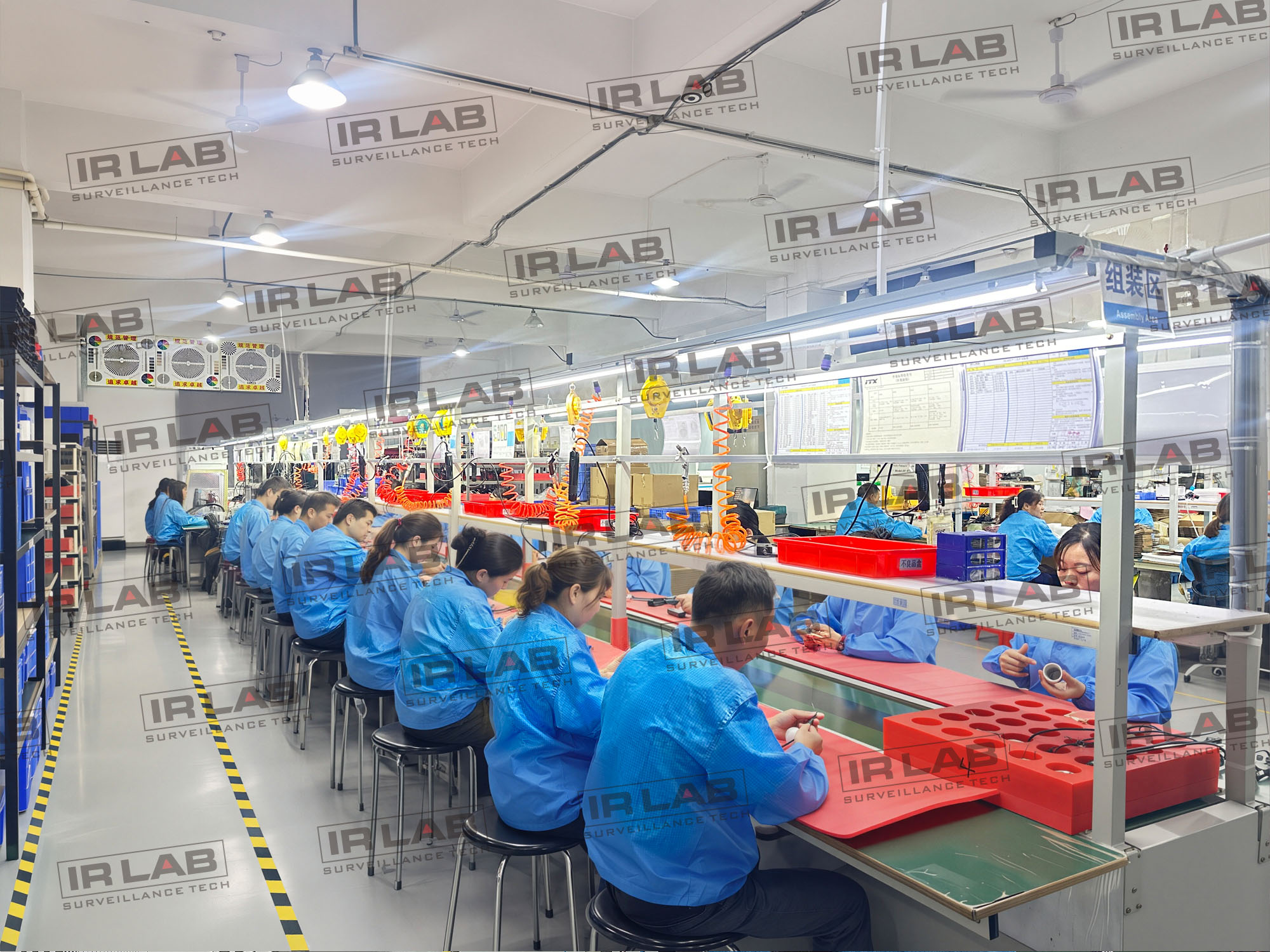
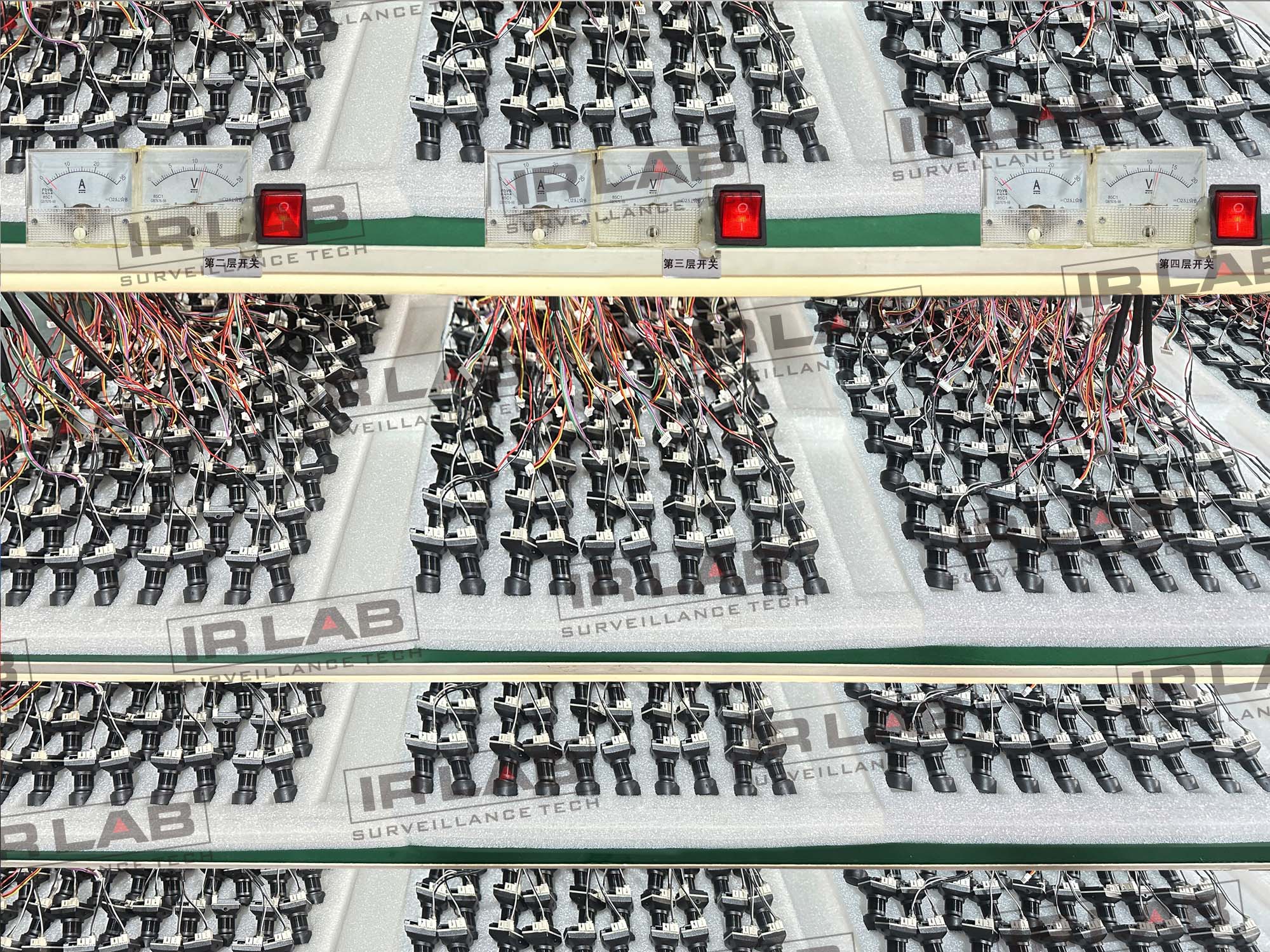
IRLAB Limited is a camera developer and manufacturer founded in 1992, originally from Taiwan and established in Shenzhen, China in 2003. The company has more than 30 years of experience in camera development and manufacturing, employs 100+ people including 10+ engineers, and operates a 3,000 m² facility. Its FPV line covers analog, digital HD and thermal models, which makes it a practical reference for explaining how the basic FPV camera categories differ in output and in what each one is normally used for.
Problem Definition: Why “Is This Really an FPV Camera?” Is a Buying Question
Most camera specifications are written around image quality. FPV selection is written around a control loop: light enters the lens, the sensor converts it, the camera outputs a signal, that signal travels over a video link, the goggles or monitor display it, and the operator reacts. A camera that is excellent at every stage except delay will still fail in an FPV role, because the operator is steering with the image rather than reviewing it afterwards.
Three failure patterns show up repeatedly when buyers substitute a general-purpose camera into an FPV position:
- Recording-first cameras. Action cameras and similar bodies record to internal storage and offer a separate live preview. That preview path is buffered and compressed for monitoring, not for control, so the operator sees the scene after the platform has already moved through it.
- Fixed-installation cameras. IP and surveillance cameras are designed to stream to a recorder. The stream may be perfectly clear, but encoding, buffering and network transport add delay that a pilot cannot use.
- Wrong-lens cameras. A narrow lens can be technically real-time and still be unusable on a fast platform, because the operator cannot see enough of the surroundings to judge position, heading and clearance.
The practical test is therefore not “how many megapixels,” but “does this camera deliver a live, low-delay, wide-enough image that a human can act on.” The sections below break that test into measurable terms and use three IRLAB models — the analog CDD-BS59KU, the digital HD CDD-BS5JMU and the thermal CT-EI5ATC — to show what each term looks like in a real datasheet.
Industry Background: A Specialist Category Inside a Fast-Moving Imaging Market
FPV cameras are a small, specialist slice of the imaging industry, and the specialist part of it is growing. Fact.MR estimated the global FPV camera market at US$825.3 million in 2024. Within the wider drone camera category, Straits Research projects thermal imaging to be the fastest-growing application segment, with a projected CAGR of 28.1% from 2026 to 2034 — a figure that reflects how often night and low-visibility operation now drives camera selection.
Trade and regulatory conditions have also entered the camera selection conversation. The United States imposed a 100% Section 232 tariff on unmanned aircraft systems with thermal imaging and certain components, effective 3 September 2026, which changes the landed cost of thermal-equipped platforms in that market. Buyers working to origin requirements — sometimes framed as “China-free” sourcing — should treat origin as a documented attribute supported by manufacturing location, component origin and customs paperwork, rather than as a label on a product page.
The result is that thermal cameras increasingly sit alongside analog and digital HD cameras inside the same program rather than replacing them, because each type answers a different visibility problem.
Detailed Solution: The Terms That Actually Decide an FPV Camera
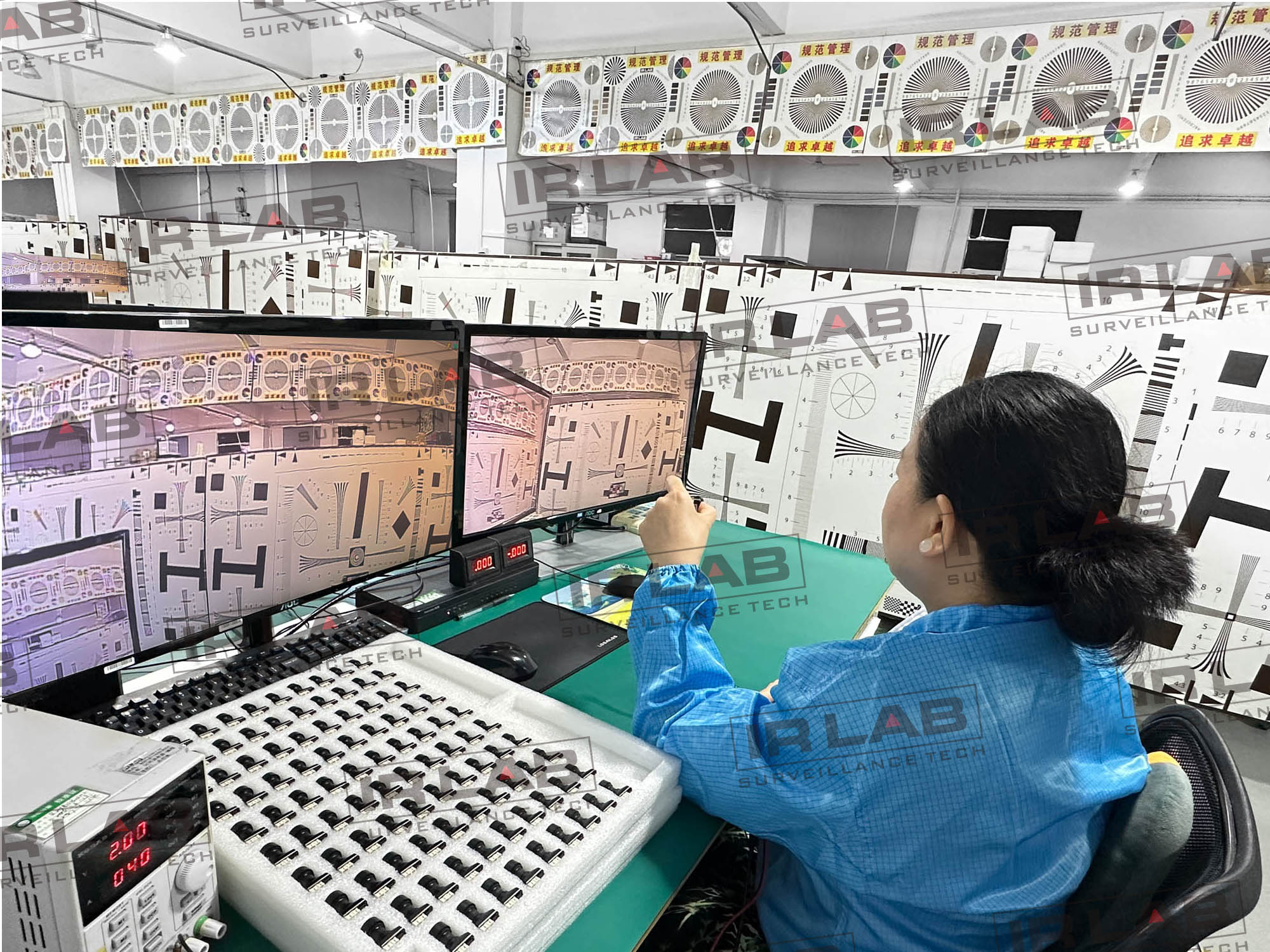
Five terms carry most of the decision weight in an FPV camera specification: field of view, latency, resolution and output format, minimum illumination and sensor type, and the physical constraints of power, size, weight and environment.
Field of View: How Much of the World the Operator Sees at Once
Field of view (FOV) is the angular extent the camera captures, normally quoted as a horizontal figure in degrees. It is set by the combination of lens focal length and sensor size, and it is the number that most changes how a platform feels to fly.
IRLAB’s analog CDD-BS59KU and digital CDD-BS5JMU both specify a 120° field of view. The thermal CT-EI5ATC specifies 46° × 37° with its 9.1 mm lens. These describe different jobs rather than better or worse performance: a 120° horizontal view shows peripheral obstacles and horizon reference on a moving platform, while a narrower thermal field concentrates a limited detector array onto a smaller area, which raises angular detail on distant heat sources at the cost of peripheral awareness. On a thermal camera, a narrow field is a deliberate design consequence of detector resolution, not a limitation to be corrected by simply widening the lens.
Glass-to-Glass Latency: The Number That Decides Whether the Image Is Usable
Glass-to-glass latency is the elapsed time between light reaching the camera lens and the corresponding image appearing in the goggles or on the monitor. It includes sensor readout, in-camera processing, encoding where applicable, radio transmission and display. Because every stage contributes, glass-to-glass latency is a property of the whole chain, and a camera figure is only meaningful when it is quoted on the same basis.
IRLAB’s digital FPV camera CDD-BS5JMU is specified at 50 ms glass-to-glass. For market context, published 2026 figures for mainstream digital FPV systems are typically 22–40 ms glass-to-glass, according to Straits Research. Differences of this kind usually reflect measurement conditions, the transmission link and the display used rather than a single camera attribute, which is why latency should be confirmed on the exact camera–link–goggles combination a program intends to fly.
Analog FPV cameras take a different route. The CDD-BS59KU outputs CVBS, a baseband composite video signal rather than an encoded digital stream, so the chain does not include a digital encode/decode stage. That is one reason analog cameras remain common where a short, simple and predictable video path matters more than high pixel count — a configuration frequently described as a low latency FPV camera build.
Resolution and Video Output: What the Signal Actually Carries
Resolution is quoted in different units depending on the output type, and mixing those units is one of the most common sources of confusion in FPV specification.
- Analog cameras are usually quoted in TVL (television lines), a horizontal-resolution measure. IRLAB’s CDD-BS59KU and CDD-BS59KP both specify 1500 TVL; the 59KU delivers a 4:3 image and the 59KP a 16:9 image, both over CVBS.
- Digital cameras are quoted in pixels. The CDD-BS5JMU uses a SONY image sensor and works at 3840×2160 @30 fps, 1080p @90 fps and 720p @120 fps, over a 5.1–5.8 GHz link with a 2T2R antenna arrangement. On-board recording is supported through a TF card slot up to 1 TB, and OSD data can be passed through MSP and MAVLINK protocols so flight-controller telemetry can be overlaid on the live image.
- Thermal cameras are quoted in detector pixels. The CT-EI5ATC uses a 640×512 detector; the CT-EI5ATB uses the same platform at 384×288.
Output format is a separate decision from resolution. The thermal CT-EI5ATC offers CVBS or optional MIPI with UVC, plus UART/USB communication, so the same camera can feed an analog video path or a digital host depending on how the platform is built.
Minimum Illumination and Sensor Type: Can the Camera See When Light Is Scarce?
Minimum illumination describes the lowest scene light level at which a camera still produces a usable image, quoted in lux. IRLAB’s analog CDD-BS59KU is specified at 0.00001 lux and the CDD-BS59KP at 0.00002 lux, with signal-to-noise ratios of >60 dB and >54 dB respectively, and both apply 3DNR noise reduction. Cameras in this class are often described as starlight or low-light FPV cameras: the specification target is a usable image under essentially no ambient illumination rather than a clean image under studio lighting.
Thermal imaging answers a different question entirely. The CT-EI5ATC uses an uncooled vanadium oxide detector operating in the 8–14 μm spectral range, so it does not depend on visible light at all — it reads emitted heat. Its sensitivity metric is NETD (noise equivalent temperature difference), specified as ≤30 mK at 25 °C, with a 12 μm pixel pitch. In practice NETD describes the smallest temperature difference the camera can resolve, which is what determines whether a target separates from its background in a thermal image.
Power, Size, Weight and Environment: The Constraints That Decide Whether It Flies
IRLAB’s three reference models show how differently the same category is packaged:
- CDD-BS59KU (analog): wide DC4.5–27 V input, 0.6 W consumption, 19×19×27 mm, 9 g.
- CDD-BS5JMU (digital): 9–30 V input, 5.4 W normal / 9 W maximum, camera module 19×19×26 mm plus a 32×32×19.3 mm main board with fan, 32 g with fan (9 g + 23 g).
- CT-EI5ATC (thermal): DC3.9–5.5 V typical DC 5 V, ≤1.2 W, 25.4×25.4×38.8 mm including the 9.1 mm lens, 40 g.
All three use an aluminium alloy housing with a glass-and-plastic lens, which matters for vibration and impact tolerance. On environment, IRLAB states that its FPV cameras are engineered to operate in dark night and bright daylight, under high vibration and shock, across a wide temperature range extending to -38 °C at the low end and 60 °C at the high end, and in electromagnetic interference, dense fog and heavy rain. The thermal module’s own datasheet lists an operating range of -20 °C to 60 °C and a storage range of -45 °C to 65 °C.
Step-by-Step Breakdown: Six Checks Before You Specify an FPV Camera
The checks below can be applied in order to any candidate camera, regardless of whether it is analog, digital or thermal.
- Confirm the video path is live, not store-and-forward. Ask for the output that reaches the goggles in real time, separately from any recording output. A camera that records at 4K but previews through a buffered link is not an FPV camera for control purposes.
- Set a latency budget for the whole chain. Decide how much total delay the mission tolerates, then confirm that the camera, transmitter, receiver and display together fit inside it. IRLAB quotes 50 ms glass-to-glass for the CDD-BS5JMU, which is the datasheet figure to test against your own link.
- Match field of view to the platform and the mission. Compare the quoted angle — 120° on the CDD-BS59KU and CDD-BS5JMU, 46° × 37° on the CT-EI5ATC — against how far the platform travels and how much peripheral awareness the operator needs.
- Check minimum illumination against the light you will actually operate in. A 0.00001 lux analog specification and a thermal NETD of ≤30 mK are answers to different questions: low-light sensors need some photons, thermal detectors need a temperature difference.
- Confirm output format and control protocol compatibility. CVBS, digital HD link, MIPI with UVC, and OSD protocols such as MSP and MAVLINK each require matching hardware elsewhere in the platform.
- Confirm power, size, weight and environment. Voltage tolerance, consumption, module dimensions, mass and operating temperature all constrain whether the camera can be mounted on the intended airframe or chassis.
Use Cases: Where Analog, Digital and Thermal Cameras Fit
The three basic FPV camera types are not interchangeable, and they are not ranked here — they solve different problems in different conditions.
Analog FPV cameras (CVBS output)
Analog models such as the CDD-BS59KU and CDD-BS59KP deliver composite video directly. Their applicable industries span RC models, FPV racing, military and tactical equipment, drone manufacturing, intelligent robots, toys, and surveillance and reconnaissance equipment. They are typically chosen where a simple, low-power video path and wide voltage tolerance (DC 4.5–27 V, with 0.6 W consumption on the 59KU) matter, and where a 0.00001 lux low-light capability is needed for night operation without illumination.
One documented deployment illustrates the low-light case: an FPV drone manufacturer in Ukraine used IRLAB cameras for FPV drones under a one-year program of 30,000 units, with the camera enabling accurate identification, lock-on and tracking at sensitivity levels as low as 0.00001 lux — conditions in which conventional vision systems are effectively blind.
Digital FPV cameras (HD link output)
The CDD-BS5JMU is built for platforms that need a higher-resolution digital feed. Its 5.1–5.8 GHz link, 2T2R antenna arrangement, TF card recording up to 1 TB and MSP/MAVLINK OSD support make it suited to tactical drone programs, HD FPV builds where the operator wants both a live view and a recorded file, and payloads that feed a digital signal into AI detection or object tracking processing rather than to a human eye alone.
Thermal FPV cameras (heat-signature output)
Thermal models such as the CT-EI5ATC and CT-EI5ATB operate without visible light. Their applicable industries are military and defense, tactical reconnaissance, border patrol, mining and heavy industry, public security and law enforcement, emergency rescue, fire service, wildlife conservation, and RC models. In search and rescue, smoke, camouflage or total darkness, they provide contrast that a visible-light camera cannot produce, and their CVBS output means they can be dropped into an analog video path where required.
Comparison Table: Three IRLAB FPV Camera Types Side by Side
| Attribute | Analog — CDD-BS59KU | Digital HD — CDD-BS5JMU | Thermal — CT-EI5ATC |
|---|---|---|---|
| Camera category | Analog FPV camera | Digital FPV camera | Thermal FPV camera |
| Video output | CVBS | Digital HD link, 5.1–5.8 GHz | CVBS / optional MIPI + UVC |
| Native resolution | 1500 TVL | 3840×2160 @30 fps, 1080p @90 fps, 720p @120 fps | 640×512 detector |
| Field of view | 120° | 120° | 46° × 37° (9.1 mm lens) |
| Low-light / sensitivity | Min. illumination 0.00001 lux; S/N >60 dB | SONY image sensor | NETD ≤30 mK @25 °C; 8–14 μm spectral range |
| Stated latency | Not specified on datasheet | 50 ms glass-to-glass | Not specified on datasheet |
| Noise reduction / image format | 3DNR; 4:3 image | MSP and MAVLINK OSD | Uncooled vanadium oxide detector; 12 μm pixel pitch |
| Power input | DC4.5–27 V | 9–30 V | DC3.9–5.5 V (typical DC 5 V) |
| Power consumption | 0.6 W | 5.4 W normal / 9 W max | ≤1.2 W |
| Dimensions | 19×19×27 mm | Camera 19×19×26 mm; main board 32×32×19.3 mm with fan | 25.4×25.4×38.8 mm including lens |
| Weight | 9 g | 32 g with fan (9 g + 23 g) | 40 g |
| Recording / communication | — | TF card slot up to 1 TB | UART / USB communication |
| Housing / lens material | Aluminium alloy housing; glass + plastic lens | Aluminium alloy housing; glass + plastic lens | Aluminium alloy housing; glass + plastic lens |
Read as a group, the table shows that the same manufacturer packages the three types very differently: the analog model optimises for wide voltage tolerance, minimal consumption and low-light sensitivity; the digital model optimises for resolution, recording and flight-controller integration; the thermal model optimises for heat detection at the lowest power draw of the three.
FAQ: FPV Camera Questions Buyers Ask Before Specifying
What certifications should an FPV camera carry for international projects?
The relevant certificates depend on the market and on the platform the camera is installed in. IRLAB’s FPV camera range is covered by FCC (certificate NTC2009742FV00, FCC CFR 47 Part 15 Subpart B Class B, United States), CE (NTC2006705EV00, EN 55032, EN 61000-3-2, EN 61000-3-3 and EN 55035, EU), UKCA (SZNTC2204712EV00, BS EN 55032:2015/A1:2020 and BS EN 55035:2017/A11:2020, United Kingdom), E-MARK E11 (10R-048329, ECE R10, issued by the Vehicle Certification Agency, covering vehicle on-board and FPV on-board vehicle cameras), RoHS (ESTSZ130402233R, EU), CTick (RSZA05061052-9, AS/NZS CISPR 22:2002 Class B, Australia and New Zealand) and UL (20170803-E494081, UL 60950-1 and CAN/CSA C22.2 No. 60950-1-07, USA and Canada). Manufacturing is certified to ISO 9001:2015 by TÜV under certificate 44100102298.
Can an FPV camera be customized for a specific field of view, image style or AI function?
Yes, within the scope an OEM/ODM supplier offers. IRLAB Limited works as an OEM/ODM supplier with in-house software, hardware, mechanical structure, video image tuning and quality control. Documented customization options include housing colour, logo printing, different viewing-angle lenses, video image style, integration of third-party AI algorithms, and integration of third-party wireless transmission solutions. In practice that means field of view can be adjusted through the lens, image character can be changed through tuning, and detection or tracking functions can be added through an external algorithm rather than being fixed at the catalogue configuration.
What is the minimum order quantity, and what is the simplest entry configuration?
The MOQ is 1 unit. For cost-sensitive or first-build programs, the analog CDD-BS59KU has the simplest signal chain in the range — CVBS output, 0.6 W power consumption, DC4.5–27 V input and 9 g weight — which reduces the number of surrounding components a platform needs. Monthly production capacity is 500,000 units.
How does sample validation work before a full order?
Small-quantity orders ship immediately, so a working sample can be put on the actual platform rather than evaluated on paper. A sample allows a program to confirm glass-to-glass latency on the real camera–link–goggles chain, verify the field of view against the airframe or chassis, and test low-light or thermal behaviour in the conditions the platform will operate in. Production orders are then handled under acceptance criteria of 100% production check plus AQL standard OQC check.
What are the lead times, payment terms and delivery terms?
Large-quantity orders are produced within 15–25 working days after receipt of deposit. Delivery terms are FCA Shenzhen or C&F Hong Kong. Payment terms are T/T in advance: 30% deposit when the formal order is placed and 70% balance before shipment. Cameras carry a 2-year warranty period. To start a validation or quotation, contact IRLAB Limited at sales@irlab.net or via WhatsApp at +86 13502860860.
Conclusion: The Definition Comes Before the Specification
A camera is an FPV camera because of what it feeds, not because of how it is marketed. The defining requirements are a live video output, glass-to-glass latency low enough for a human to control from the image, and a field of view wide enough to operate with. Once those three are satisfied, resolution, sensor type, minimum illumination, output format, power, size and weight become the specification layer that separates one suitable camera from another.
The three basic types answer different visibility problems. Analog cameras such as the CDD-BS59KU output composite video with a direct signal path and 0.00001 lux low-light sensitivity. Digital cameras such as the CDD-BS5JMU provide a 5.1–5.8 GHz HD link, on-board recording and OSD integration through MSP and MAVLINK. Thermal cameras such as the CT-EI5ATC read heat in the 8–14 μm range with NETD ≤30 mK and need no visible light at all. Choosing between them is a question of which conditions the platform will actually operate in — not of which type is better.
Next Step: Request an IRLAB FPV Camera Sample or Quotation
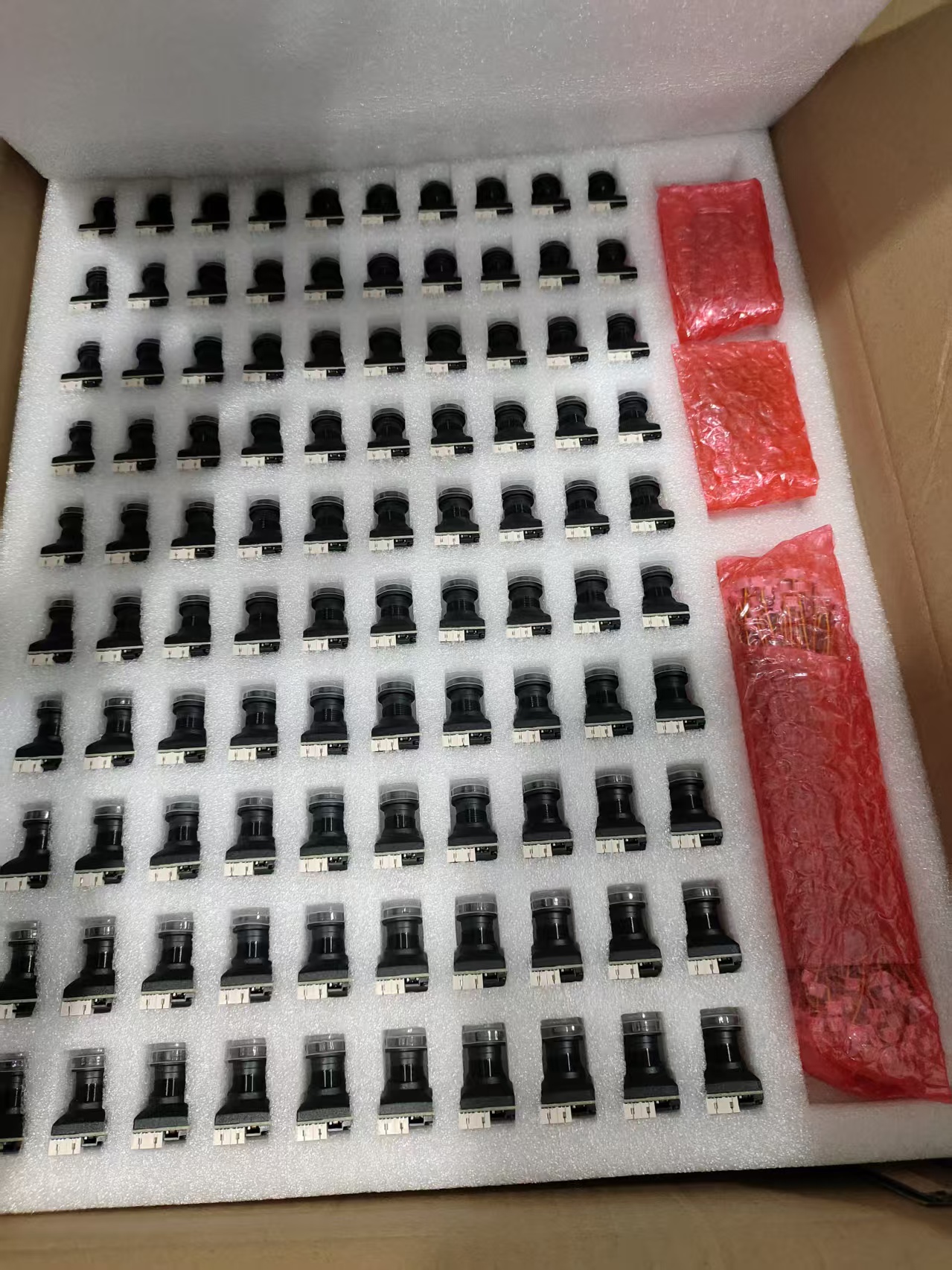
IRLAB Limited has developed and manufactured cameras since 1992, with in-house engineering for software, hardware, mechanical structure and video image tuning. If you are evaluating an analog, digital HD or thermal FPV camera for a drone, RC or tactical platform, you can request a sample, a quotation or the full company profile and brochure.
Email: sales@irlab.net | Tel / WhatsApp: +86 13682444680 | Website: www.irlab.net
Download the IRLAB company profile and corporate brochure: IRLAB Company Profile & Corporate Brochures (PDF)
Have Questions or Need More Details?
Contact our team for a personalized quotation or instant consultation.
Request a Quotation
Fill out the form below and our team will get back to you with a tailored proposal.
WhatsApp Direct Chat
Prefer to chat in real-time? Message us on WhatsApp for instant assistance & quick answers.
- Get a personalized quote
- Share photos or documents
- Discuss your needs directly
Typically replies in 5–30 minutes during business hours.