Decoding Technical Parameters in Supplement Contract Manufacturing

Decoding Technical Parameters: How Production Processes Define Quality in Dietary Supplement Contract Manufacturing
Introduction
When sourcing a dietary supplement contract manufacturer, procurement professionals often face a deluge of technical specifications—weight ranges, capsule sizes, shelf lives, and storage conditions. Yet without a clear understanding of how these parameters relate to real production processes, making an informed partner choice remains a challenge. This guide decodes the essential technical parameters across major supplement formats—tablets, softgels, gummies, capsules—and explains how manufacturing processes directly influence product quality, consistency, and market compliance.
What Are Technical Parameters in Supplement Manufacturing?
Technical parameters are measurable attributes that define a finished product's identity, performance, and stability. They include net weight, total fill weight, capsule size, dosage form dimensions, tablet hardness, disintegration time, and packaging specifications. For a private label supplement manufacturer, these parameters are negotiated and locked during the development phase, and they directly affect production yield, cost, and regulatory acceptance.
Key parameters per dosage form (from IVC Nutrition Corporation's product specifications):
| Dosage Form | Net Weight Range | Count per Bottle | Shelf Life | Key Packaging |
|---|---|---|---|---|
| Tablet | 200 mg – 2900 mg | 60–1000 | 24 / 36 months | HDPE bottle, Alu blister, CRC cap |
| Softgel | 250 mg – 1200 mg | 60–450 | 24 / 36 months | HDPE bottle, Alu blister, CRC cap |
| Gummy | 2 g – 7 g per gummy | 60–260 | 12 / 18 / 24 months | HDPE bottle, CRC cap |
| Hard Capsule | 350 mg – 1200 mg | 60–1000 | 24 / 36 months | HDPE bottle, Alu blister, CRC cap |
Storage condition across all formats: keep in a cool, dry place at temperatures below 25°C, tightly sealed, and protected from moisture and direct sunlight (shelf life 24 or 36 months from production date). These common requirements underline the importance of robust packaging and environmental control in the supply chain.
How Production Processes Impact Quality
Technical parameters are not just numbers—they are the outcome of carefully controlled manufacturing steps. Let’s examine how process choices affect quality across major supplement types.
Tablet Manufacturing
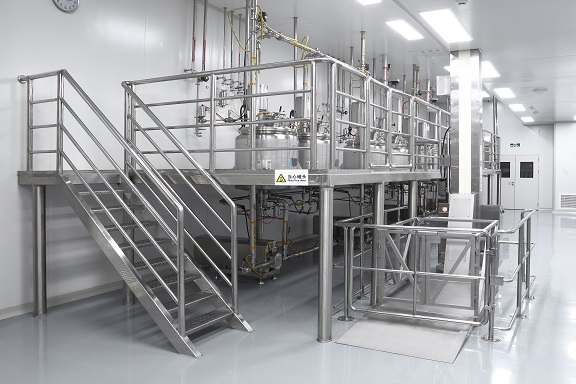
A tablet contract manufacturer must control granulation, compression force, and coating. Improper granulation leads to segregation of active ingredients, causing content uniformity failures. IVC Nutrition Corporation (IVC) operates high-speed automated tablet pressing in GMP-grade cleanrooms, with a monthly capacity of approximately 4.33 billion tablets (annual ~52 billion). This scale ensures consistency through automated weight control and in-process hardness monitoring. Tablets from IVC range from 200 mg to 2900 mg, with options for oval, oblong, round, or special shapes.
Softgel Manufacturing
For a softgel contract manufacturer for dietary supplements, the gelatin or pectin shell formulation and encapsulation parameters define leakage risk, dissolution, and stability. IVC produces softgels in 5 shapes (oblong, oval, calabash, bone, heart) with fill weights from 250 mg to 1200 mg. The encapsulation process is conducted under strict temperature and humidity control. IVC’s annual softgel capacity reaches 16 billion pills, supported by automated lines that reduce human error and ensure uniform seam thickness.
Gummy Manufacturing
Gummy supplements have gained massive popularity, but they are also the most process-sensitive format. A gummy dietary supplement contract manufacturer must manage gelation temperature, mixing time, and drying conditions to avoid texture defects. IVC offers pectin-based, gelatin-based, and mixed gel gummies in 18 mold shapes. The net weight per gummy (2g–7g) is precisely controlled through depositor calibration. Shelf life for gummies (12–24 months) is shorter than tablets due to higher moisture content, making packaging seal integrity critical.
Hard Capsule Manufacturing
For hard capsule contract manufacturer supplements, the fill weight variation and capsule size selection (000# to 5#) determine dosing accuracy. IVC’s automated capsule filling lines achieve high precision with annual capacity of 6 billion capsules. The company also offers vegetarian (HPMC) capsules as an alternative to gelatin, catering to clean-label and vegan markets.
Why Certification Matters: Translating Parameters into Regulatory Compliance
Technical parameters must align with the regulatory expectations of target markets. IVC holds a portfolio of global certifications that directly verify process quality:
- FDA Food Facility Registration (No. 16044830522) – covers dietary supplements for the US market.
- NSF Certification (C0130721-HSCDS-7) – meets NSF/ANSI 455-2, including 21 CFR Part 111/117.
- BRC Certification (No. 051A1202002I) – scope includes tableting, encapsulating, and gummy manufacturing.
- IFS Certification (2025-0102365_rev.1) – score 96.70%, covering dry products and supplements.
- TGA GMP Certification (MI-2021-CE-05085-1) – for medicine manufacture for the Australian market.
- SSCI Certification (FSS20250279_1) – demonstrates alignment with global food safety and social compliance standards.
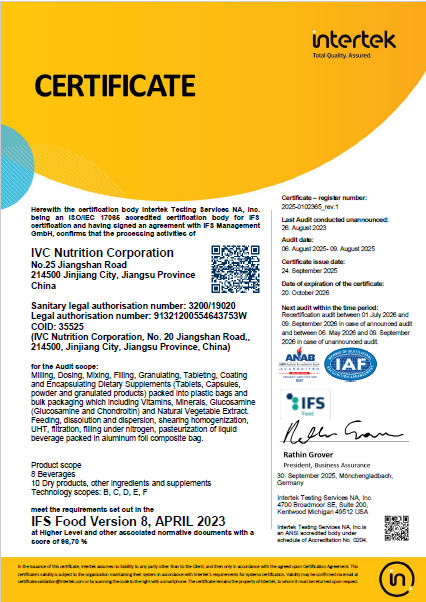
These certifications confirm that the processes used to achieve the published technical parameters are audited regularly, providing buyers with independent assurance.
Step-by-Step Guide: Reading a Specification Sheet Like a Pro
- Verify the net weight range: This tells you the final dosage size. For tablets, standard ranges are 200–2900 mg; for softgels 250–1200 mg. Ensure the range fits your target pill size.
- Check capsule size (if applicable): Size 0# holds ~500 mg, size 00# ~700 mg. Choose based on fill volume.
- Evaluate packaging and shelf life: 24/36 months for tablets/softgels/capsules, 12–24 months for gummies. Shorter shelf life may require faster retail turnover.
- Confirm storage conditions: All IVC products require below 25°C and protection from moisture—plan your logistics accordingly.
- Review certification scope: Ensure the manufacturer’s certifications cover your target market (e.g., TGA for Australia, FDA for US).
- Assess production capacity: IVC’s annual output of 52 billion tablets, 16 billion softgels, and 4.5 billion gummies demonstrates the ability to supply large volumes consistently.
Case Study: Long-Term Partnership with Global Retail Leaders
IVC has served the world’s leading retailers, pharmacy chains, membership clubs, and consumer health brands for over 10 years, with one partnership exceeding $200 million in cumulative value. The client required multi-format production—gummies, softgels, tablets, and capsules—for their private label programs. IVC’s end-to-end services, including formulation, manufacturing, quality, regulatory support, and packaging, enabled the client to launch in 80+ countries. The consistent delivery of precise technical parameters (e.g., tablet hardness, gummy texture) was critical to maintaining brand trust.
Frequently Asked Questions
Q: What is the minimum order quantity (MOQ) for a dietary supplement contract manufacturer?
A: For IVC, MOQ is typically 0.3 million tablets, 1 million capsules, or 0.6 million gummies, depending on the format and complexity.
Q: How long does the manufacturing lead time take?
A: Standard lead time is 2.5 to 3 months from order confirmation, including raw material procurement, production, and quality release.
Q: Does the manufacturer support private label and white label programs?
A: Yes, IVC offers full private label and white label supplement contract manufacturing services, including custom formulation and branded packaging.
Q: Are the technical parameters guaranteed?
A: Yes, each batch undergoes 100% testing for key parameters (assay, weight variation, disintegration, microbiological). A certificate of analysis is provided.
Q: Why choose a cGMP certified manufacturer?
A: cGMP (current Good Manufacturing Practice) ensures that processes are validated, documented, and audited, directly linking process control to product quality.
Conclusion
Technical parameters are not abstract numbers—they are a direct reflection of the manufacturing process and quality system behind them. By understanding how parameters like net weight, capsule size, and shelf life are influenced by production methods, buyers can make smarter sourcing decisions. IVC Nutrition Corporation, with its 9 global sites, 5,000+ employees, and annual capacity of 52 billion tablets, 16 billion softgels, 4.5 billion gummies, and 6 billion capsules, provides the scale and certification depth to meet the most demanding private label and global distribution requirements.