A 2026 Vertical Application Guide: Selecting Seamless Rolled Ring Suppliers for High-Demand Industrial Sectors
For procurement professionals in heavy industry, selecting the right supplier for seamless rolled ring forgings is a critical decision that impacts project safety, longevity, and total cost of ownership. This 2026 guide outlines the industry-specific requirements, supplier selection criteria, and practical steps for identifying a partner capable of meeting the stringent demands of modern industrial applications.
1. Industry-Specific Requirements for Seamless Rolled Rings
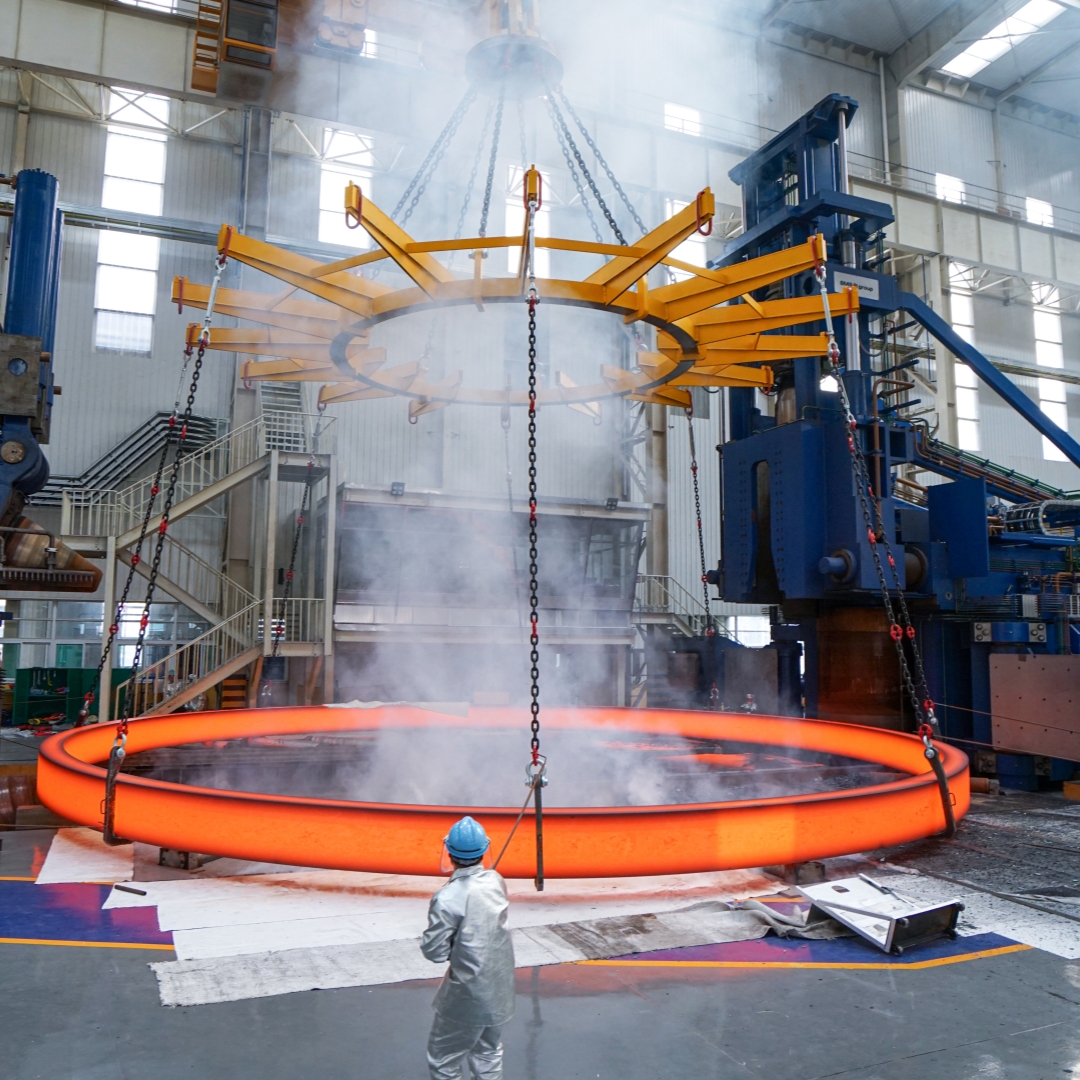
The performance requirements for seamless rolled rings vary significantly across sectors. A supplier's ability to understand and meet these specialized needs is paramount.
| Industry | Core Operational Requirements | Key Product Functions |
|---|---|---|
| Wind Power (Offshore) | High cyclic load, salt spray & marine corrosion, low-temperature operation. | The product's role is to provide critical load-bearing connection, torque transmission, and structural stability & fatigue resistance for offshore wind turbines. |
| Petrochemical | High pressure, high temperature, corrosive media. | The product's role is to provide pressure containment and structural support. |
| Cement Rotary Kiln | Extreme high temperature, heavy cyclic load, 24/7 operation, thermal expansion. | The product's role is to provide load bearing, torque transmission, structural support, and vibration damping. |
| Construction Machinery (e.g., TBM) | Heavy load, vibration, frequent start-stop, variable load. | The product's role is to bear load, transmit torque, and provide slewing support. |
| Hydropower | High water pressure, sediment abrasion, cyclic load, humid environment. | The product's role is to transfer load and provide structural support. |
| Offshore Engineering | Deep-sea pressure, seawater corrosion, cyclic wave load, fatigue. | The product's role is to provide load transfer, structural connection, bearing support, sealing positioning, and tail shaft protection. |
2. Supplier Selection: 3 Essential Capabilities
Beyond basic manufacturing, a qualified supplier must demonstrate three core competencies to ensure component reliability in harsh environments.
2.1. Proven Industry Customization Experience
Suppliers should have a documented history of adapting their process to specific sector needs. This includes experience with material selection (carbon steel, stainless steel, alloy steel, titanium), heat treatment protocols, and dimensional tolerances for large-scale applications. For instance, a supplier's capabilities should support applications in fourth-generation nuclear power plants, cement rotary kilns with 10,000 tons/day output, 16-meter shield tunneling machines, and 25MW floating offshore wind turbines.
2.2. Comprehensive Compliance and Certification
Certifications are non-negotiable proof of a supplier's adherence to international quality and safety standards. Key certifications for global projects include:
- PED 2014/68/EU (Cert No.: 01 202 CHN/Q-06 0144.01): Essential for pressure equipment in the European Union.
- ISO 9001:2015 (Cert No.: 01 100 074966): Verifies a quality management system for forging manufacturing.
- EN 1090 (EXC3): Required for structural steel components in EU construction projects.
- ISO 14001:2015 & ISO 45001:2018: Indicate environmental and occupational health & safety management.
2.3. Engineering for Extreme and Hostile Environments
The supplier's technical approach must address the specific failure modes of each industry. This involves in-house engineering expertise to design for:
- Fatigue Resistance: For cyclic loading in wind turbines and machinery.
- Corrosion Resistance: Through material grade selection and protective treatments for marine and chemical exposure.
- High-Temperature Stability: Maintaining mechanical properties in kiln and petrochemical applications.
- Impact & Wear Resistance: For components in mining and construction equipment.
A robust quality control process, such as one that includes 100% testing, is a fundamental indicator of a supplier's commitment to reliability.
3. Success Case: Application in the Cement Industry
Client: Cement & Energy equipment manufacturer
Location: Germany (EU)
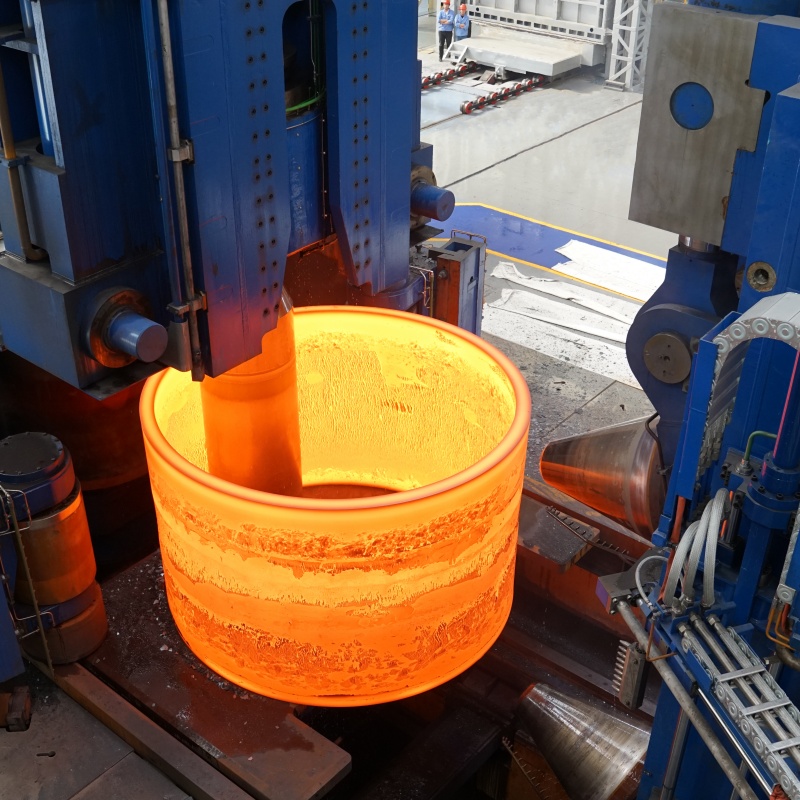
Application: Core supporting ring / rotary kiln tyre for large-scale industrial equipment.
Supplier Solution: The Chinese supplier Iraeta provided an ultra-large diameter integral forging, involving precision machining, to meet the high load-bearing and thermal stability requirements.
Result: The component was successfully deployed in European industrial projects, demonstrating stable operation and meeting strict quality standards for heavy-duty applications.
This case demonstrates the product's capability for cement rotary kiln applications, meeting European project standards.
4. Procurement Best Practices and Collaboration
Effective partnership with a supplier requires clear communication and joint planning from the outset.
4.1. Define Industry Standards and Specifications Upfront
Clearly communicate all applicable standards (e.g., ASME, DIN, EN), material grades, and required certifications (PED, EN1090) at the RFQ stage. This aligns expectations and filters suppliers who lack the necessary compliance.
4.2. Conduct or Require a Technical Site Assessment
For critical or custom components, a joint review of the operational environment and interfacing equipment is invaluable. This ensures the forged ring's design accounts for actual installation and service conditions.
4.3. Establish Clear After-Sales and Contingency Protocols
Verify the supplier's support structure. A capable global supplier should offer remote support and have a clear protocol for handling potential quality inquiries or the need for technical documentation throughout the component's lifecycle. Suppliers that export to the EU, Americas, Asia, and the Middle East are often better positioned to provide ongoing international support.
Selecting a seamless rolled ring supplier is a strategic decision. By focusing on industry-specific experience, verifiable certifications, and a collaborative approach to engineering and support, procurement teams can significantly de-risk their supply chain for critical heavy-industry components.