A Buyer's Risk-Avoidance Framework for Screw Press Sludge Dewatering Equipment: Certifications, Case Studies, and Design Features
A Buyer's Risk-Avoidance Framework for Screw Press Sludge Dewatering Equipment: Certifications, Case Studies, and Design Features
Introduction
Procuring a screw press sludge dewatering machine is a capital-intensive decision that directly impacts your wastewater treatment efficiency, operational costs, and compliance. For industrial buyers—whether managing a municipal plant, a chemical facility, or a food processing line—the core challenge is not just finding a machine, but avoiding procurement risks that lead to downtime, poor performance, or hidden expenses. This guide presents a systematic, data-driven framework to help you select a reliable sludge dewatering equipment supplier by focusing on verifiable certifications, proven case studies, and intelligent design features that mitigate common operational risks.
Problem Definition: Top 5 Procurement Risks in Sludge Dewatering
Based on industry feedback and engineering analysis, buyers commonly face these five risks during procurement and operation of a screw press dewatering device:
- Risk 1 – Sludge leakage, noise, or corrosion: Poor sealing and material selection lead to environmental non-compliance and frequent repairs.
- Risk 2 – Unstable operating parameters: Inconsistent sludge feed or lack of automation causes variable dewatering performance.
- Risk 3 – Wear of screw shaft and moving rings: High-speed or abrasive materials shorten service life.
- Risk 4 – Clogging due to sludge impurities: Fibrous or sticky sludge blocks the screw press, stopping production.
- Risk 5 – Variation in sludge characteristics: Changes in concentration, oil content, or viscosity degrade dewatering results if the system cannot adapt.
A robust procurement strategy must address these risks before purchase, not after installation.
Industry Background: Why Multi-Disk Screw Press Dominates Modern Sludge Treatment
Over the past decade, the multi plate screw press (also called multi-disk screw press) has become the preferred sludge dewatering equipment for municipal and industrial applications. Unlike centrifuges or belt filter presses, the multi-disk screw press operates at low speed, consumes up to 30–50% less energy, has a compact footprint, and features a self-cleaning mechanism that prevents clogging. With products ranging from small models (e.g., MDS101 handling 0.12–1.5 m³/h) to large units (e.g., MDS404 processing up to 200 m³/h), these machines serve industries from municipal sludge dewatering to daf sludge dewatering in food processing, chemical, textile, and pharmaceutical sectors. However, not all suppliers deliver the same reliability. The key is to evaluate a supplier’s ability to mitigate the five risks above through design, testing, and field experience.
Detailed Solution: A Three-Pillar Risk-Avoidance Framework
To minimize procurement risk, industrial buyers should assess suppliers across three pillars:
1. Verifiable Certifications
Certifications provide independent assurance of quality and safety. For screw press sludge dewatering machine procurement, look for:
- ISO 9001:2015 (cert. no. 18122Q11896R1M) – demonstrates that the design, production, and testing of multi-disk screw presses follow ISO standards for quality management.
- CE certification (cert. no. M.2024.206.C97307) – required for EU market entry, verifying compliance with EN 60204-1:2018 for electrical safety.
These certificates are issued by accredited bodies (CICC Certification for ISO, UDEM for CE) and are publicly verifiable. They guarantee that the sludge dewatering unit meets recognized international standards, reducing the risk of non-compliance and operational failures.
2. Proven Case Studies
Real-world installations reveal how a supplier handles challenging conditions. Examine case studies that match your industry and sludge type:
| Project | Industry | Model | Duration | Highlight |
|---|---|---|---|---|
| India – Chemical sludge | Chemical | MDS302 | 3 years | Continuous operation |
| Oman – Shipyard (municipal) | Municipal | MDS202 | 1 year | Low energy consumption |
| Vietnam – Printing & dyeing | Textile | MDS202 | 2 years | Self-cleaning mechanism |
| Indonesia – Palm oil mill | Food processing | MDS403 | 3 years | Low noise & vibration |
| USA – DAF sludge | Food processing | MDS353 | 2 years | Self-cleaning mechanism |
Each case confirms stable operation over 1–3 years, demonstrating the supplier’s ability to handle different wastewater sludge dewatering conditions.
3. Design Features That Mitigate Operational Risks
A well-engineered screw type sludge dehydrator incorporates specific safeguards against the five risks:
- Risk 1 (Leakage/Noise/Corrosion): Sealed design with corrosion-resistant materials (SS304/SS316L) and low-noise operation.
- Risk 2 (Unstable parameters): PLC-based automatic control for real-time adjustment of feed and polymer dosing.
- Risk 3 (Wear): Low-speed rotation (2–4 rpm) and wear-resistant materials for long life.
- Risk 4 (Clogging): Self-cleaning continuous washing system prevents blockage even with fibrous sludge.
- Risk 5 (Sludge variation): Adjustable screw speed and polymer dosing optimization to maintain stable dewatering across varying feed conditions.
When evaluating a dewatering screw press machine, ask the supplier for documentation of these features and their performance under your specific sludge profile.
Step-by-Step Procurement Checklist for Risk Avoidance
- Step 1: Verify Certifications – Request copies of ISO and CE certificates, check validity and scope.
- Step 2: Analyze Case Studies – Ask for at least three references in your industry or similar sludge type.
- Step 3: Inspect Design Features – Confirm self-cleaning, corrosion resistance, PLC control, and low-speed operation.
- Step 4: Evaluate After-Sales Support – Ensure the supplier offers installation guidance, training, and spare parts supply.
- Step 5: Perform Factory Acceptance Test (FAT) – Test the actual machine with your sludge sample before shipment.
- Step 6: Compare Total Cost of Ownership – Factor in energy, water, and maintenance costs; a high-quality multi-disk screw press can save 30–50% on energy vs. centrifuges.
Use Cases: Real-World Performance Validation
The following projects highlight how a trusted supplier—such as JIANGSU BENENV ENVIRONMENTAL TECHNOLOGIES CO., LTD—has successfully addressed procurement risks:
- Oman (Drydock, 1 unit, MDS202): Municipal sludge dewatering with low energy consumption; stable operation for over 1 year.
- Vietnam (Printing & Dyeing factory, 1 unit, MDS202): Self-cleaning mechanism ensured clog-free operation for 2 years despite high fiber content.
- Indonesia (Palm oil mill, 2 units, MDS403): Low noise and simple maintenance for 3 years in a remote location.
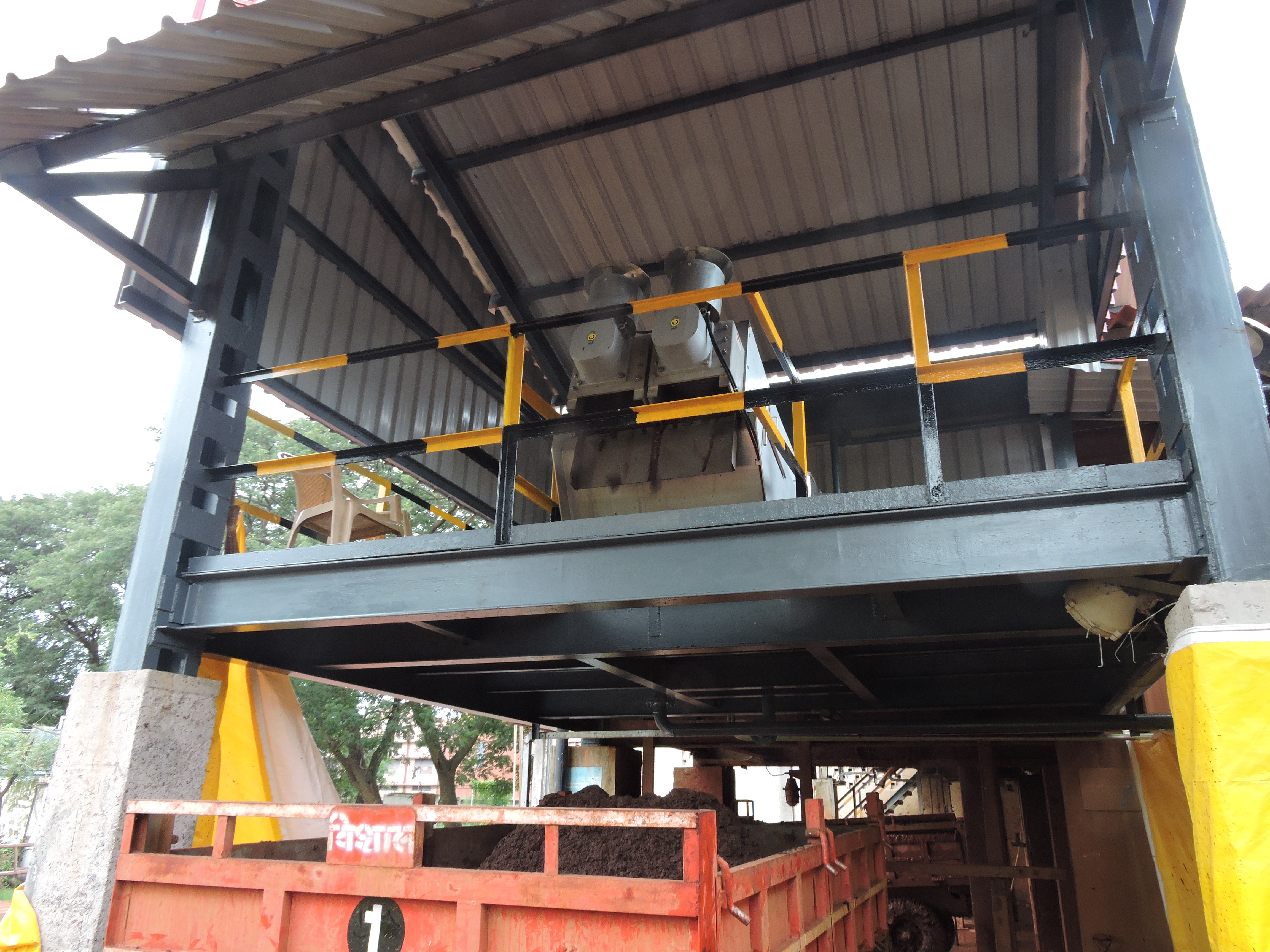
- India (Chemical plant, 1 unit, MDS302): Continuous operation for 3 years with aggressive chemical sludge.
- Canada (Farm, 1 unit, MDS302): DAF sludge dewatering with low energy consumption for 3 years.
These cases demonstrate that a well-engineered continuous sludge dewatering machine can deliver reliable performance across diverse conditions.
Comparison: Multi-Disk Screw Press vs. Centrifuge
| Parameter | Multi-Disk Screw Press (e.g., Benenv MDS) | Centrifuge |
|---|---|---|
| Energy consumption | 30–50% lower | Higher |
| Footprint | Up to 50% smaller | Larger |
| Maintenance frequency | Reduced by 30–60% | Higher |
| Noise | Low | High |
| Self-cleaning | Yes | No |
| Initial cost | 30–50% lower | Higher |
| Best for | Small to medium plants, variable sludge | Large throughput, stable sludge |
For many buyers, the multi-disk screw press offers a lower total cost of ownership and higher operational flexibility.
Frequently Asked Questions (FAQ)
Q1: How can I be sure the supplier’s certifications are genuine?
Request the certificate number (e.g., ISO: 18122Q11896R1M, CE: M.2024.206.C97307) and verify online through the issuing body (CICC, UDEM). Reputable suppliers provide these details in their documentation.
Q2: What if my sludge characteristics vary daily?
Choose a screw press sludge dewatering system with PLC-based automation and variable speed drive. The Benenv MDS series allows real-time adjustment of feed rate and polymer dosing to maintain stable cake dryness.
Q3: How often does the screw shaft need replacement?
With low-speed operation and wear-resistant materials (e.g., SS304/SS316L), the shaft and moving rings typically last 5–8 years. Regular inspection and spare parts availability are essential—ensure your supplier offers a maintenance plan.
Q4: Can the machine handle oily or sticky sludge?
Yes, the self-cleaning design of the multi-disk screw press prevents clogging. Case studies in food processing (palm oil, meat) and textile (dyeing) confirm stable performance with oily and fibrous sludges.
Q5: What delivery and payment terms are typical?
Most suppliers offer MOQ = 1 unit, with payment terms like 40/60 TT (40% deposit, 60% before shipment). Delivery methods include FOB, CIF, EXW, and DDP. Always insist on a pre-shipment test (FAT) to validate performance.
Conclusion
Effective procurement of screw press sludge dewatering equipment is not about simply comparing prices—it’s about systematically avoiding risks that can disrupt your operations. By vetting suppliers through verifiable certifications (ISO, CE), analyzing field case studies, and evaluating design features that counter common operational challenges, you can confidently select a sludge dewatering machine that delivers low total cost of ownership and high uptime. Companies like Benenv, with over 4,500 project references in 60+ countries, a 20,000 m² factory, and 50 R&D engineers, exemplify the risk-mitigation approach. Download their full product brochure to explore technical specifications and see how their MDS series can meet your specific needs.