Backpack Webbing Application Guide: Selecting Nylon, Polyester, and RPET for OEM Projects
Most backpack webbing problems surface late. The sample is approved, the bulk order is woven, and only then does the shoulder strap come back a half-shade off, the compression strap fade after a season in the sun, or the recycled-content claim behind the trim turn out to be impossible to document. Rarely is the cause weaving quality. The cause is usually a decision made too early: treating webbing as a single line item for the whole backpack.
An OEM backpack uses webbing in several distinct positions — shoulder straps, hip belt, haul handle, compression straps, lash tabs and daisy chains, zipper pulls, sternum strap, and edge reinforcement. Each position loads the material differently, sits in a different exposure environment, and carries a different compliance expectation. This application guide maps material choice to those positions, then walks through the sourcing steps that follow an OEM decision: certification scope, colour control, MOQ, acceptance testing, payment terms, and delivery.
Short answer. Nylon outdoor webbing is the right default where a component brief calls for a high strength-to-weight ratio and elasticity under load. Polyester webbing is the right default where repeat colour accuracy, UV stability and cost predictability across long runs matter most — and it is the material on which Bluesign® System Partner, GRS 4.0 and OEKO-TEX Standard 100 Class I certifications are documented in this supplier's range. RPET webbing is the right default where the brand must make an auditable recycled-content claim, because GRS 4.0 certification is what makes that claim verifiable.
Why a Single Webbing Specification Breaks Down
When one webbing specification covers the whole bag, that specification is almost always written for the easiest component rather than the hardest one. The consequences show up in production and again on the shelf.
- Colour drift between components. Straps, trim and reinforcement come from different rolls and sometimes different dye lots. If the colour tolerance is loose, or if colour is judged by eye, assembled bags show visible mismatch where two webbing pieces meet.
- Metamerism, not just shade. Two webbing lots can read as the same colour under factory lighting and as different colours under daylight or retail lighting. This is a recognised outdoor-webbing risk, and it is managed with instrument measurement rather than visual comparison.
- Differential UV ageing. A component in constant sun exposure degrades on a different curve than one tucked under a lid. Long-term outdoor use is the specific failure mode that UV degradation control is designed to address.
- Compliance scope mismatch. A certification that covers one item does not automatically cover every item on the bill of materials. Brands that assume otherwise usually discover the gap during a retail audit or a customer questionnaire.
- Reorder discontinuity. A material that performed well in a pilot can behave differently once the programme scales, unless the supplier's colour control and dyeing process are process-driven rather than operator-driven.
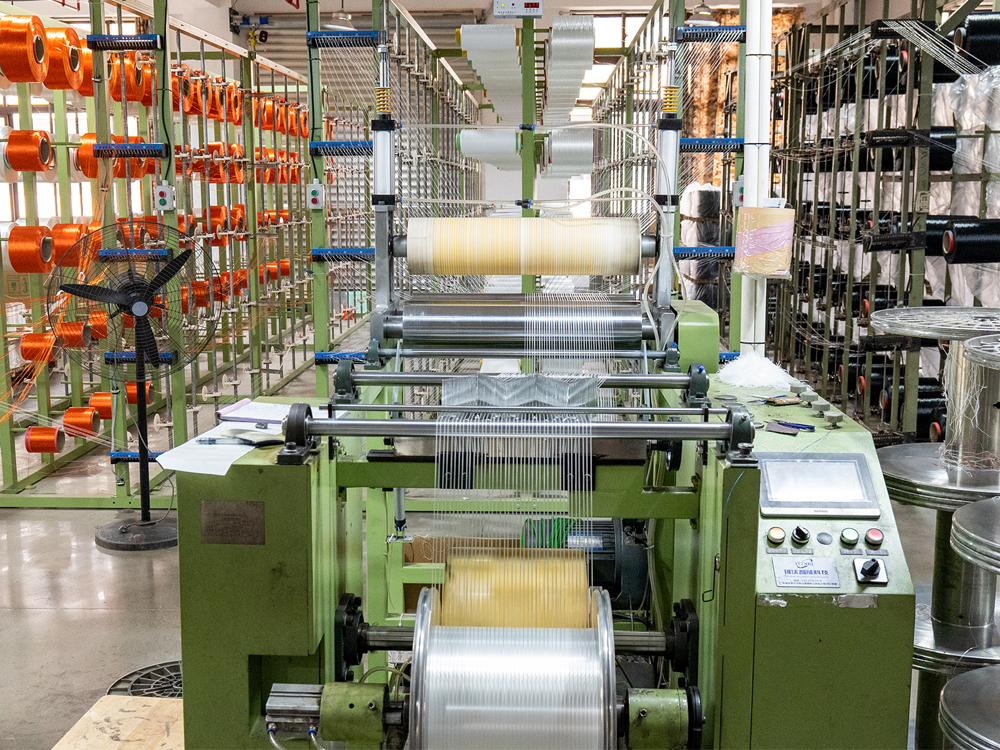
The control method for the first three problems is documented in the supplier's risk-management process. High-grade colorimeters are used to hold Delta E < 1.0. UV-stabilised additives are added at the fibre stage. An automated dyeing system minimises human error and keeps colour consistent across batches. Accelerated ageing tests confirm that UV resistance meets the agreed lifespan — for example, 500+ hours of exposure.
Industry Background: Why Component-Level Selection Matters More Now
The webbing market's growth is being driven significantly by the outdoor recreation industry, and that growth is concentrated where specification quality is highest. The global webbing market was valued at USD 4.2 billion in 2023 and is projected to reach USD 5.7 billion by 2030, according to Grand View Research. Asia Pacific dominated with a 66.3% revenue share in 2023, reflecting the region's manufacturing infrastructure in countries such as China and Vietnam.
Published estimates of the market's near-term size vary slightly depending on how applications are segmented — IMARC Group puts the market at USD 4.5 billion for 2025, while Coherent Market Insights gives USD 4.71 billion for 2026 — but the direction is consistent across sources.
The material trends inside that market are also diverging, which is precisely why a single-spec approach ages badly:
- Nylon webbing is described by IMARC Group as the fastest-growing segment in the sporting goods sector, driven by its high strength-to-weight ratio and elasticity.
- Polyester webbing remains the dominant material for leisure activities in the United States, used in approximately 60% of leisure products.
- Recycled polyester (rPET) accounted for approximately 15–18% of global polyester fibre production in 2024, reflecting the shift toward GRS-certified sustainable webbing.
For a backpack brand, those three data points correspond to three different buying motives — performance, cost predictability, and compliance — and a single backpack usually contains components that serve all three at once.
Matching Nylon, Polyester and RPET to Backpack Components
Material selection becomes manageable once the component map is on the table. The guidance below is a practical starting point; the final specification should always be confirmed against the brand's own test protocol and end-market requirements.
Nylon outdoor webbing: load-bearing positions
Nylon webbing carries the load. Where a component is expected to hold tension, absorb shock, or resist abrasion against rock, hardware, or a pack frame, nylon is the material the sporting goods sector prices for that profile. Nylon webbing, including Nylon 6.6 webbing, is part of the standard outdoor range and is commonly specified for the shoulder straps of load-carrying packs, hip belts, haul handles, and primary compression straps.
The practical decision rule is straightforward: if failure of the component would be a safety or warranty event rather than a cosmetic one, specify nylon.
Polyester webbing: colour-critical and high-exposure positions
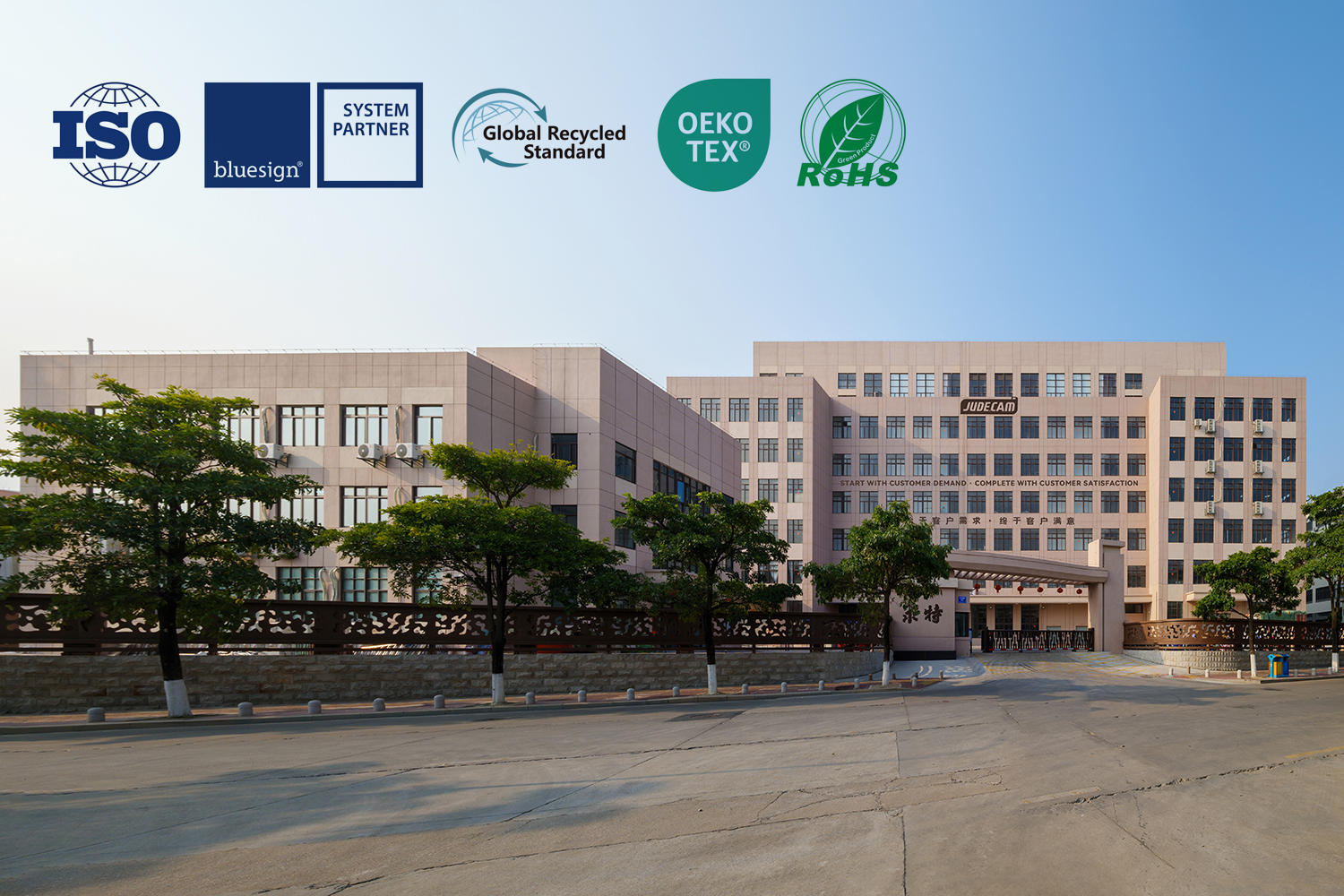
Polyester webbing is the workhorse for programmes where colour repeatability and long-run production consistency drive the buying decision. It is also the fibre with the most clearly documented certification footprint in this supplier's range — the polyester webbing holds Bluesign® System Partner, GRS 4.0 and OEKO-TEX Standard 100 Class I (Baby Safe) certifications.
Typical polyester positions include sternum straps, lash tabs, zipper pulls, compression straps on general-purpose packs, and trim that must match a colour standard batch after batch. Where a brand runs a multi-colour line, polyester is usually the material that keeps the palette stable across SKUs.
RPET webbing: where a recycled-content claim has to hold up
RPET webbing is made from recycled polyester fibre. It is selected not because it behaves differently on the loom, but because the brand needs to state a recycled content figure and be able to defend it. GRS 4.0 is the certification route that makes that claim auditable.
Sustainable manufacturing options using 100% recycled fibres (RPET) reduce the carbon footprint attributable to the B-end client. In practice, RPET fits best on shoulder straps, haul loops, lash tabs and trim for programmes with published sustainability targets — positions where the material is visible and the claim is meaningful to the end consumer.
Constructions: flat, tubular, lightweight and heavy duty
Within each fibre family, construction changes the outcome. Flat webbing is the standard for straps and trim. Tubular webbing is specified where a softer edge or a hollow structure is required. Lightweight outdoor webbing supports stroller, pet and ultralight gear programmes where reduced weight matters, while heavy-duty outdoor webbing is specified where abrasion and load are the dominant risks.
Certification choices: Bluesign, GRS and OEKO-TEX
Certification selection should follow the end market, not the price list.
- Bluesign® System Partner status reflects participation in the Bluesign system for chemical and input-stream management in textile production. It matters to brands with supply-chain chemical-management requirements.
- GRS 4.0 is the recycled-content certification. It is the credential a brand needs when a marketing claim depends on a specified percentage of recycled material.
- OEKO-TEX Standard 100 Class I is the baby-safe class. It is the relevant standard for stroller webbing and any component that will contact an infant's skin.
Sourcing parameters that belong on the specification sheet
Common technical specifications across the outdoor webbing range include:
- Width: 20 / 25 / 38 / 50 mm, or 1/2", 1", 1.5", 2", with customisation available
- Thickness: 1.20 mm, customisable
- Packaging: 50 metres per roll
- Colour fastness: ISO 105 Grade 4–5
- Perspiration fastness: Grade 4
- UV resistance: Grade 4 (BS EN ISO 105-B02)
- Colour consistency control: Delta E < 1.0, measured with high-grade colorimeters
Step-by-Step: Running Material Selection Through an OEM Project
The sequence below reflects how an OEM webbing project is executed once a brand has a component map and a target launch date. Following it out of order is what produces the late-stage problems described earlier.
Step 1 — Build the component map
List every webbing position on the backpack and label each one as load-bearing, colour-critical, or compliance-driven. This single step prevents the one-webbing-for-the-whole-bag mistake.
Step 2 — Assign a material family per position
Apply the mapping above: nylon for load-bearing positions, polyester for colour-critical and high-exposure positions, RPET where recycled content must be claimed.
Step 3 — Fix widths, thickness and construction
Convert the component map into numbers: 20, 25, 38 or 50 mm (or 1/2", 1", 1.5", 2"), 1.20 mm thickness with customisation available, flat or tubular construction, and packaging at 50 metres per roll for efficient factory handling.
Step 4 — Set the certification scope
Decide which positions need Bluesign® System Partner coverage, GRS 4.0, or OEKO-TEX Standard 100 Class I. Confirm item-level certificate scope rather than assuming a company-level credential transfers automatically to every SKU.
Step 5 — Lock the colour standard and tolerance
Agree the colour target, the light source used for assessment, and the numeric tolerance. Delta E < 1.0 measured on a high-grade colorimeter is the working standard, with automated dyeing used to reduce batch-to-batch variation.
Step 6 — Approve counter-samples
Request pre-production samples for each component. The approved sample becomes the reference for the entire programme: bulk production must match the approved pre-production sample in colour, hand-feel and texture.
Step 7 — Confirm MOQ and trial quantities
Customised designs carry an MOQ of 3,000 metres. Small-batch trial orders are supported for startup outdoor brands and for new colourways added to an existing programme, which lets a brand validate a component before committing to full-run volume.
Step 8 — Agree the pre-shipment test protocol
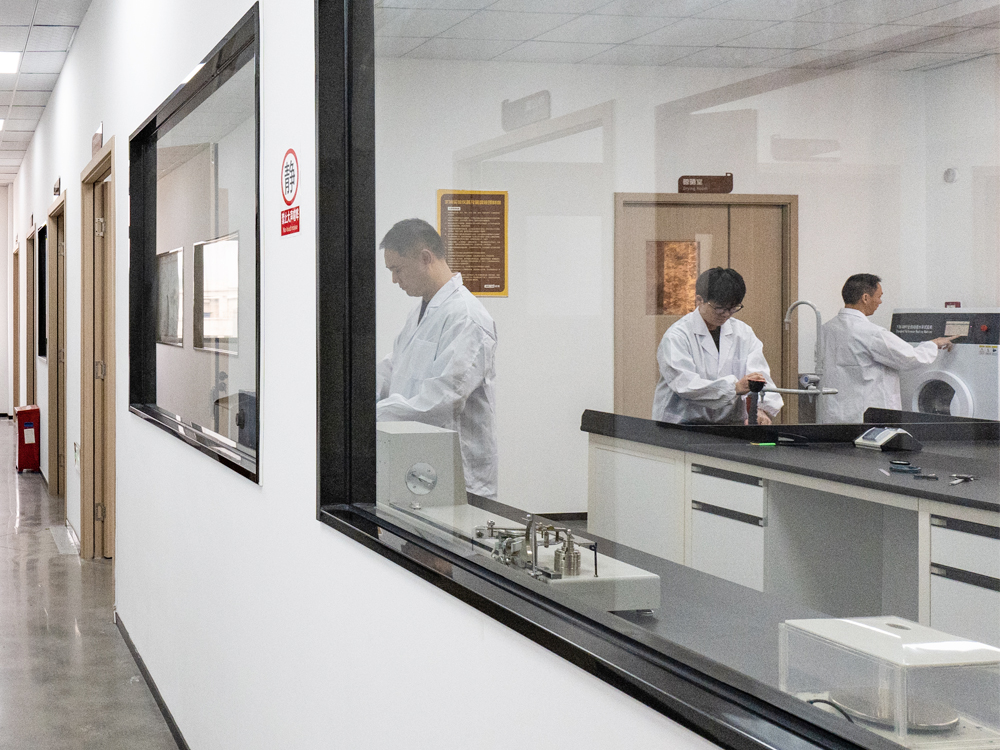
Acceptance testing covers two layers. The first is counter-sample matching for colour, hand-feel and texture. The second is functional verification: UV resistance grade and water repellency are tested before shipment according to ISO standards. Underneath both layers, the manufacturer maintains a 100% quality check that includes durability testing, colour consistency control, material inspection, and compliance with outdoor and consumer product standards.
Step 9 — Set payment, delivery and reorder terms
Payment terms are T/T (30% deposit, 70% before shipment) or confirmed L/C at sight, with flexible terms available for long-term strategic partners. Delivery is arranged under FOB, CIF, DAP or DDP, by sea, air, or express courier (FedEx / DHL / UPS) when a schedule is tight. Before scaling, confirm the production capacity behind the programme — monthly output is approximately 25,000,000 yards.

Use Cases: Where the Material Map Changes the Specification
Camping and hiking backpacks
Long UV exposure combined with mixed load bearing. Specify nylon for shoulder straps, hip belt and haul handle; polyester for compression straps, sternum strap and lash tabs; RPET where the programme carries a published sustainability claim. UV resistance Grade 4 (BS EN ISO 105-B02) and water repellency are the parameters to lock at the sampling stage.
Climbing and mountaineering packs
Load-bearing hardware and slings sit in a regulated category. Mountaineering slings and climbing webbing supplied into the EU are subject to the EN 566 standard, which requires a minimum tensile strength of 22 kN. Webbing used in harness systems and connectors has to be specified with the supporting equipment in mind, and the pack's own load paths should be built from a high-strength outdoor webbing rather than a general-purpose strap.
Strollers and child carriers
This is the clearest compliance-driven case. Stroller webbing made from 100% high-tenacity polyester or nylon filament uses rounded edges for infant skin protection, a soft edge and a smooth surface, and is certified to OEKO-TEX Standard 100 Class I. It can withstand over 10,000 buckle cycles in fatigue tests.
Pet and dog gear
Pet accessories are a documented application for certified outdoor webbing. Colour consistency matters more than certification here, and a water-repellent rating of Grade 4 supports the quick-drying, stain-resistant behaviour expected in outdoor use.
Marine and watersports equipment
Water repellency and UV resistance dominate the brief. A water-repellent rating of Grade 4 combined with UV resistance exceeding 500 hours of exposure is the reference specification for this environment.
Comparison Table: Nylon vs Polyester vs RPET for Backpack Webbing
| Decision dimension | Nylon outdoor webbing | Polyester webbing | RPET (recycled) webbing |
|---|---|---|---|
| Best-fit backpack components | Load-bearing positions: shoulder straps, hip belt, haul handle, primary compression straps | Colour-critical and high-exposure positions: sternum strap, lash tabs, zipper pulls, trim, general-purpose compression straps | Brand-facing positions where recycled content is claimed: shoulder straps, haul loops, lash tabs, trim |
| Property driving the choice | High strength-to-weight ratio and elasticity | Repeatable colour and consistent long-run production | Auditable recycled content |
| Documented market signal | Fastest-growing segment in sporting goods (IMARC Group) | Dominant material for US leisure products, used in approximately 60% of leisure products | Approximately 15–18% of global polyester fibre production in 2024 |
| Documented certification | Confirm item-level certificate scope at sampling | Bluesign® System Partner, GRS 4.0, OEKO-TEX Standard 100 Class I (Baby Safe) | GRS 4.0 is the certification route that makes a recycled-content claim auditable |
| Sustainability angle | Carries no recycled-content claim | Virgin fibre — the base from which GRS-certified recycled versions are built | Option for 100% recycled fibres, reducing the carbon footprint attributable to the B-end client |
| Typical buyer priority | Strength and stretch under load | Colour matching and cost predictability | Compliance and ESG reporting |
Applies across all three fibre families: widths of 20 / 25 / 38 / 50 mm (or 1/2", 1", 1.5", 2") with customisation available, 1.20 mm thickness (customisable), packaging at 50 metres per roll, colour fastness ISO 105 Grade 4–5, perspiration fastness Grade 4, and UV resistance Grade 4 (BS EN ISO 105-B02). Compared with generic luggage webbing and common polyester straps, certified outdoor webbing in this range is documented at 25% lighter weight, a Grade 4 water-repellent rating, and UV resistance exceeding 500 hours of exposure.
FAQ
1. Which certifications should a backpack brand require for GRS or Bluesign webbing?
Match the certification to the claim. GRS 4.0 is required when the brand states a recycled-content figure, because it is the certification that makes that claim auditable. Bluesign® System Partner status is the relevant credential for chemical-management requirements in the textile supply chain, and Xiamen Jude Webbing holds it. OEKO-TEX Standard 100 Class I (Baby Safe) applies where webbing touches an infant's skin, such as stroller webbing. Polyester webbing from this supplier is documented with Bluesign® System Partner, GRS 4.0 and OEKO-TEX Standard 100 Class I certifications. Confirm item-level certificate scope for each SKU before the purchase order is issued.
2. Can webbing be customised in width, thickness and colour for an OEM backpack programme?
Yes. Widths of 20 / 25 / 38 / 50 mm — or 1/2", 1", 1.5", 2" — are standard, with customisation available, and thickness is 1.20 mm, also customisable. Colour is controlled against an approved standard using high-grade colorimeters with a Delta E < 1.0 tolerance, supported by an automated dyeing system that minimises human error between batches. OEM and ODM support covers the component-level specification, counter-sample approval, and pre-shipment functional verification.
3. What is the MOQ, and can a startup brand place a small trial order?
MOQ is 3,000 metres for customised designs. Small-batch trial orders are supported so that startup outdoor brands can validate a component or a colourway before committing to a full programme. Trial quantity is agreed per project alongside the component map and the colour standard. Payment terms are T/T with a 30% deposit and the 70% balance before shipment, or a confirmed L/C at sight, with flexible terms for long-term strategic partners.
4. How are UV resistance, water repellency and colour consistency verified before shipment?
Acceptance testing runs on two layers. Counter-sample matching confirms that bulk production matches the approved pre-production sample in colour, hand-feel and texture. Functional testing verifies UV resistance grade and water repellency before shipment according to ISO standards. Underneath both, the manufacturer maintains a 100% quality check covering durability testing, colour consistency control, material inspection, and compliance with outdoor and consumer product standards. Colour variance and UV degradation — including metamerism — are managed with colorimetric Delta E < 1.0 control, UV-stabilised additives, and accelerated ageing tests to the agreed lifespan, such as 500+ hours of exposure.
5. What are the delivery, capacity and after-sales arrangements with a long-term webbing partner?
Delivery is arranged under FOB, CIF, DAP or DDP, by sea, air, or express courier (FedEx / DHL / UPS) when a schedule is tight. Monthly production capacity is approximately 25,000,000 yards, which is what allows a programme to scale without re-sourcing. After-sales support covers responsive customer service, product consultation, customisation support, fast feedback on quality issues, and long-term cooperation support. To move a project forward, send your component map and colour standards to the supplier and request a counter-sample set for the specific positions you are specifying.
Conclusion
Backpack webbing selection is a component-level decision, not a line-item decision. Nylon carries load. Polyester carries colour consistency and repeatability — and it is the material with the documented Bluesign® System Partner, GRS 4.0 and OEKO-TEX Standard 100 Class I certification footprint in this range. RPET carries the sustainability claim, because GRS certification is what makes that claim defensible in front of a retail auditor or a customer questionnaire.
Once the material map is set, the rest of the programme is execution. A 3,000-metre MOQ for customised designs, with small-batch trial orders where a brand is validating a component. Counter-sample approval as the reference for bulk production. Pre-shipment functional testing for UV resistance and water repellency according to ISO standards. Colour control held at Delta E < 1.0. Payment by T/T or confirmed L/C at sight. Delivery under FOB, CIF, DAP or DDP, by sea, air or express.
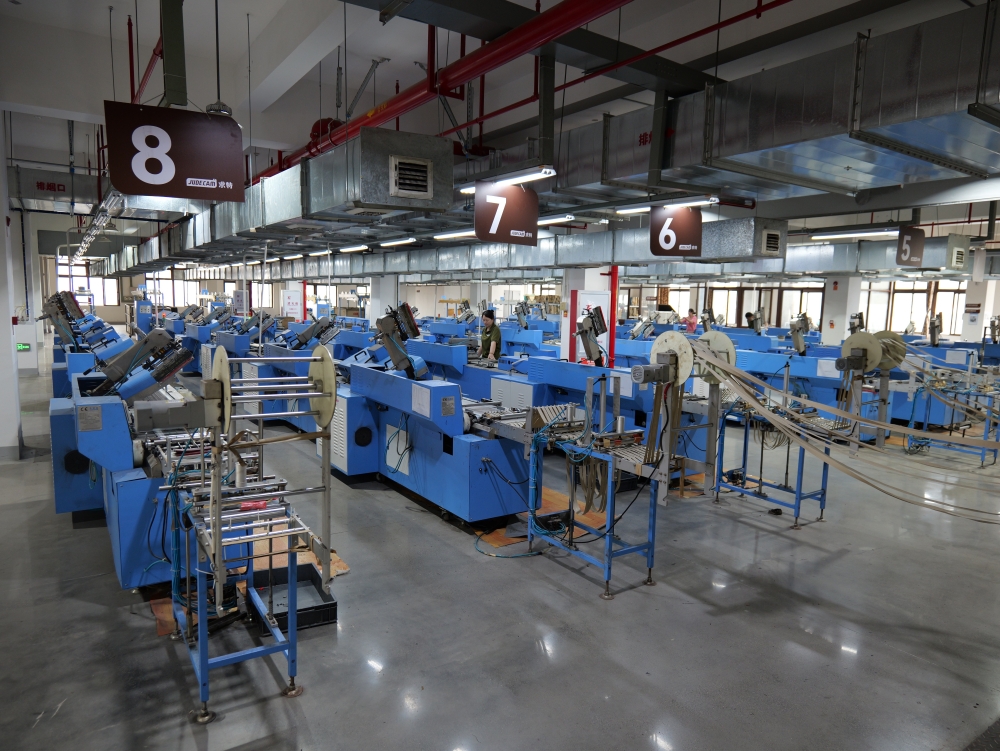
Xiamen Jude Webbing Co., Ltd. (JUDECAM) has researched, designed and produced outdoor and functional webbing since 2006, operating from a self-built production base of 25,800 m² in Xiamen and Vietnam with weaving, printing, dyeing, finishing and assembly under one roof. Its business reaches over 50 countries and regions, and its outdoor webbing range covers the nylon, polyester, RPET, anti-UV, waterproof and eco-friendly constructions described in this guide.
Next step: validate your component map with a counter-sample set
Send us your backpack component list, target colour standards and end-market certification requirements. We will respond with a material recommendation per position — nylon, polyester or RPET — plus counter-samples for approval and a quotation covering MOQ, delivery terms and lead time.
Xiamen Jude Webbing Co., Ltd. (JUDECAM)
Website: www.judewebbing.com | Blog: blog.judewebbing.com
Email: judecam@judegroup.com | Tel: 86-592-6361058
Mobile: +86 180-4632-1618 | WhatsApp: +86 13358399583 | WeChat: JUDE_CAM
Address: No. 601 ShiXing Road, Jimei District, Xiamen, 361024, China
Have Questions or Need More Details?
Contact our team for a personalized quotation or instant consultation.
Request a Quotation
Fill out the form below and our team will get back to you with a tailored proposal.
WhatsApp Direct Chat
Prefer to chat in real-time? Message us on WhatsApp for instant assistance & quick answers.
- Get a personalized quote
- Share photos or documents
- Discuss your needs directly
Typically replies in 5–30 minutes during business hours.