Evaluating Webbing Manufacturers: QC and Color Consistency
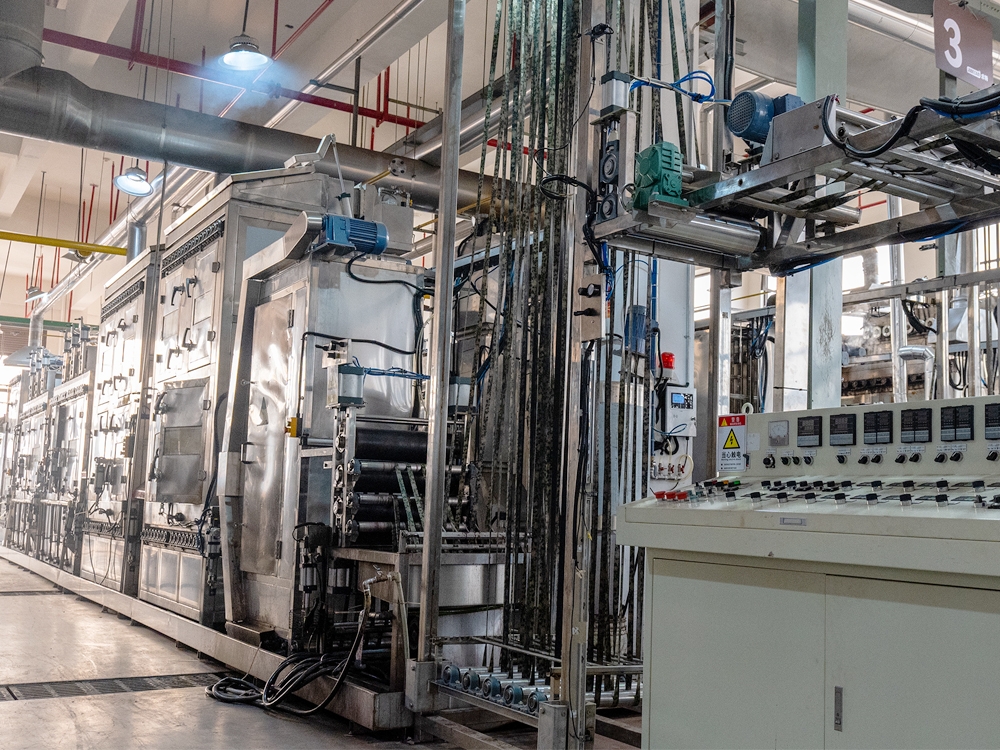
In-house webbing color processing and dyeing lines: where lot-to-lot color consistency is either created or lost.
Outdoor webbing is a small line item on a gear brand's bill of materials, yet it is one of the few components that can stop a production run. When one strap in a pack programme fades differently from the rest of the set, or when a tent strap loses tensile strength after a season in the sun, the cost lands back on the brand in re-sorting, re-dyeing, delayed delivery or warranty claims — not on the mill.
This guide is written for buyers, product developers and quality engineers in the research and evaluation stage with webbing suppliers. It sets out a practical method for judging the two things that separate manufacturers able to carry a long programme from those able to deliver a good sample: how the factory controls color across lots, and what evidence it can produce for UV durability.
Answer in short: Before placing a production order, verify three things. First, whether dyeing happens in-house inside a single documented production chain. Second, whether the supplier reports measured color-difference values (Delta E) against your approved standard, along with the instrument and light source used, rather than confirming a visual match. Third, whether UV resistance is supported by an accelerated aging test that states the exposure hours, the light/condensation cycle, and the strength retention figure after testing.
Problem Definition: The Two Failure Modes That Create Rework
Color inconsistency is the first failure mode, and it is cumulative. Shade drift between the lab dip, the first bulk shipment and the reorder forces a brand to re-sort rolls before cutting, prevents panels from different lots being assembled onto the same product, and leaves the buyer choosing between absorbing the difference and rejecting the order. On a backpack or a tent, a visible shade break across a strap set reads as a defect to the end customer even when every mechanical property is inside specification.
The second failure mode is invisible at goods-in. UV degradation is slow. Webbing that passes a visual inspection at receiving can chalk, fade or lose strength after a season of outdoor use — and because the failure surfaces months later through a retailer return or a warranty claim, the buyer has no leverage left by the time it appears.
Both failure modes share a root cause: color and weather resistance are process outputs, not catalogue attributes. They depend on yarn lot control, dyeing control, finishing and how much of that sequence the manufacturer actually owns. A supplier that outsources dyeing can only forward your complaint; a supplier that dyes in-house can correct the process.
What "consistent color" means in a purchase specification
Color approval for webbing normally happens in stages: lab dip, then a pre-production or bulk sample, then production lots. Color difference between a submitted material and the approved standard is expressed numerically as a Delta E (ΔE) value, measured under a defined illuminant. The tolerance is the brand's decision, not the supplier's. A common working specification in outdoor programmes is a bulk acceptance window of ΔE ≤ 1.0 against the approved standard, because inside that window a trained observer under the specified light source cannot reliably separate roll from standard.
The exact number matters less than the discipline around it. A manufacturer should be able to report measured values, the instrument used, the light source used, and a result for every production lot — instead of a verbal "same as sample".
Do not confuse the two color questions. Color consistency is repeatability against your standard at the point of delivery. Color fastness is how much the color changes when the material is exposed to light, washing or perspiration over time. A supplier can be strong in one and weak in the other, so request evidence for both.
What "UV resistant" should look like on paper
An accelerated aging test compresses months of outdoor exposure into a controlled chamber cycle. A credible report states the test duration in hours, the exposure cycle (light phases and condensation phases), the property measured before and after the test, the acceptable loss threshold, and the standard referenced. A claim of "UV resistant" with no hours, no cycle and no retention figure is not verifiable and should not be accepted as a basis for a production commitment.
Industry Background: Why Process Control Now Decides Supplier Selection
Demand for webbing is expanding, and the capacity that serves it is concentrated. The global webbing market was valued at USD 4.2 billion in 2023 and is projected to reach USD 5.7 billion by 2030, driven significantly by the outdoor recreation industry, according to Grand View Research. Asia Pacific dominated the market with a revenue share of 66.3% in 2023, largely because of its manufacturing infrastructure in countries such as China and Vietnam.
Two structural shifts are raising the importance of color and durability control. First, recycled fibre is moving into mainstream programmes: recycled polyester accounted for approximately 15–18% of global polyester fibre production in 2024, reflecting the shift toward GRS-certified sustainable webbing. Recycled yarn streams vary more than virgin streams, which puts additional weight on the dyeing and color approval process rather than on the raw material datasheet alone. Second, nylon webbing is noted as the fastest-growing segment in the sporting goods sector because of its strength-to-weight ratio and elasticity — a material whose performance claims are only meaningful if the finished webbing is tested after aging.
The manufacturing landscape is also international rather than regional. Publicly identified leading manufacturers include National Webbing Products Co., American Cord & Webbing Co. (ACW) and Murdock Webbing Company, alongside specialist producers in Asia. Because so much capacity sits in a small number of manufacturing regions, quality assurance has to be built into supplier selection; goods-in inspection cannot catch a slow UV failure or a shade drift that only appears on the third reorder.
Detailed Solution: How a Controlled Webbing Production Process Is Structured
A manufacturer that can hold color and support UV claims usually controls the whole sequence under one roof. For Xiamen Jude Webbing Co., Ltd. (JUDECAM), a webbing manufacturer founded in 2006 and headquartered in Xiamen, China, that sequence runs from yarn warping through weaving, printing, color processing and dyeing, finishing, and assembly, inside a self-built production base of 25,800 m² in Xiamen and Vietnam, supported by a 32-person webbing R&D team and an in-house testing laboratory.
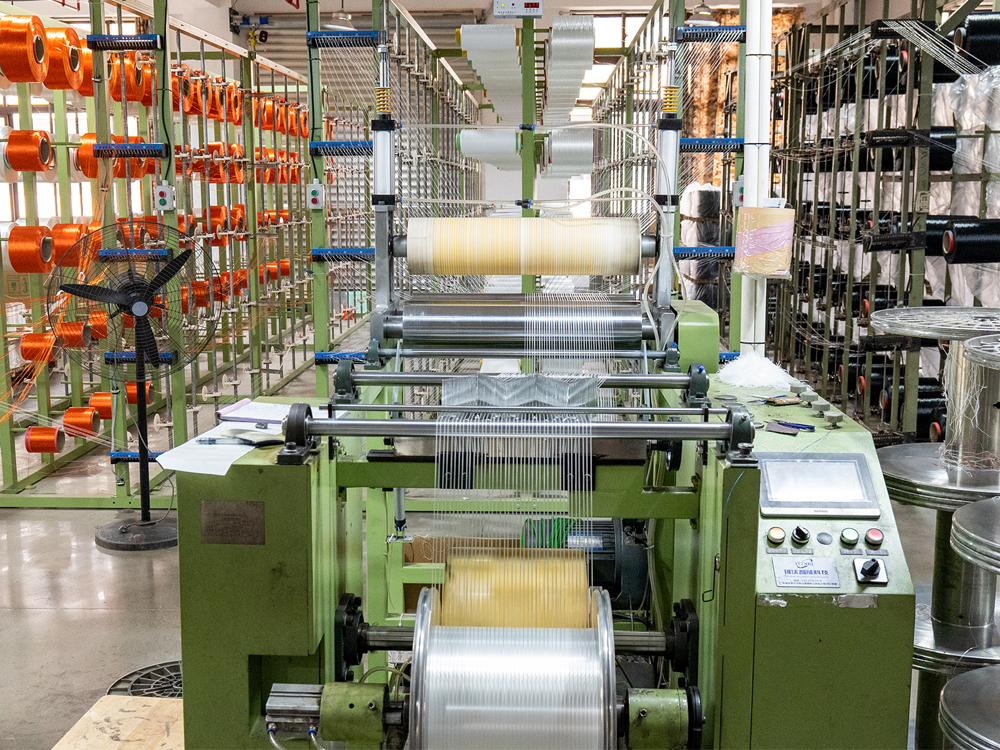
Yarn warping: lot control at the yarn stage limits how much color correction is needed later. Image: Xiamen Jude Webbing Co., Ltd.
Why the position of dyeing in the chain matters
When dyeing is in-house, the correction loop between a failing shade measurement and the dyeing line is internal and short. When dyeing is outsourced, the manufacturer can report a problem but cannot fix it — and the buyer inherits the lead time of a third party. For an evaluation visit or questionnaire, the question to ask is not "do you dye?" but "at which step does your responsibility start and end?"
What a documented color consistency process contains
Jude Webbing's quality control system combines 100% quality check, durability testing, color consistency control, material inspection and compliance with outdoor and consumer product standards. In practice, those four elements cover the entire rework risk: material inspection catches yarn lot variation, color consistency control compares each production lot against the approved standard, durability testing verifies mechanical behaviour, and the 100% check prevents defective rolls from leaving the factory.
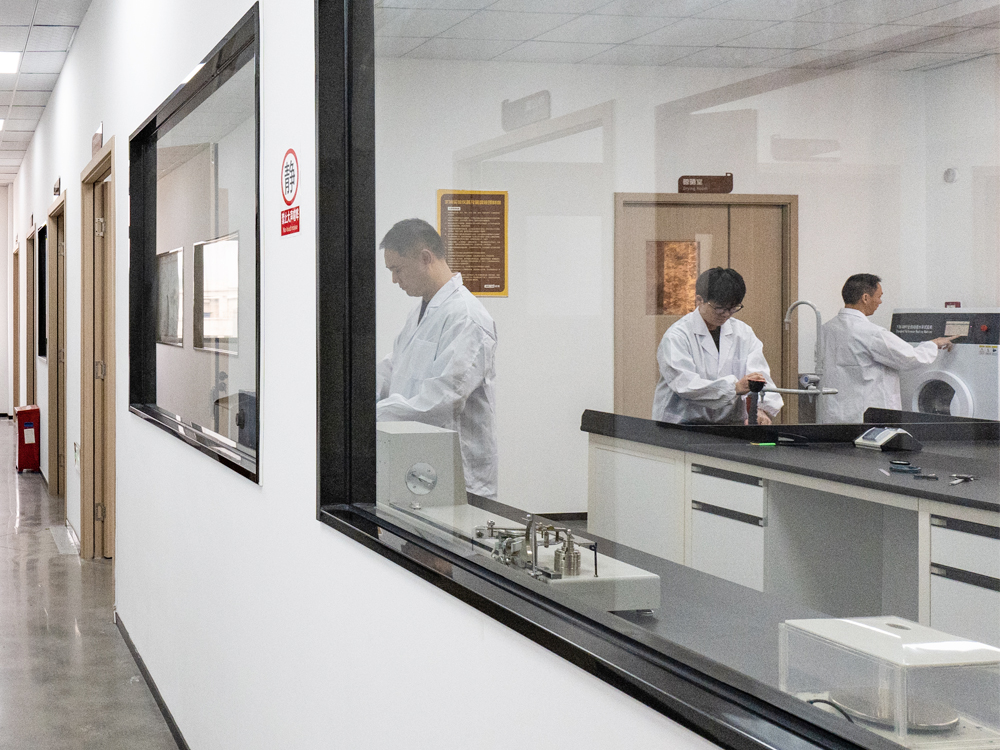
In-house testing laboratory: color, width, thickness and tensile measurements are taken before shipment, not after a complaint.
What accelerated aging evidence looks like: a worked example
The clearest way to judge whether a supplier's UV claim is real is to read one test report line by line. Jude Webbing's AgingGuard aging-resistant webbing provides a usable reference. In a fluorescent UV weathering test run with 4-hour light and 4-hour condensation cycles over 400 hours, on a tested sample of 30 mm width, 3.0 mm thickness and 63 g/m weight, initial breaking strength measured 29,913 N and breaking strength after aging measured 28,760 N — a strength loss of 3.9% against an internal technical requirement of no more than 8%. The test references FZ/T 65002-1995 and GB 5725-2009 and is available in high-tenacity polyester and Nylon 66 constructions.
Three details in that report are worth copying into your own supplier questionnaire. The report states the exposure cycle, not just the hours. It states the loss threshold the material was measured against, not only the result. And it states the sample construction and dimensions, so the result can be mapped back to a real product specification. AgingGuard is designed for products exposed to long-term sunlight, rain, moisture, temperature change and repeated loading — outdoor gear, water safety products, marine equipment, waterproof bags, cooler bags, backpacks and camping equipment.
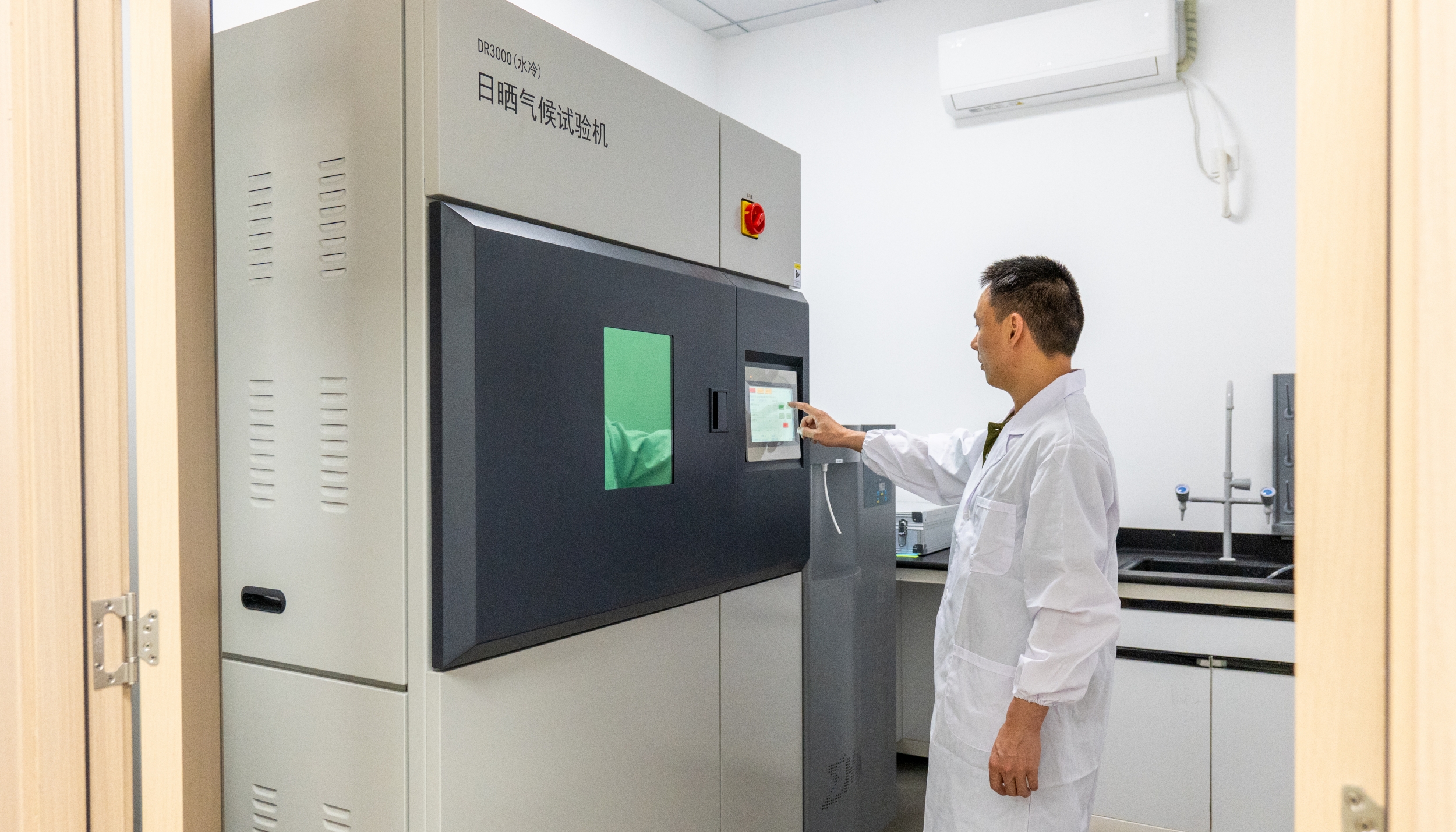
Weather resistance testing: UV exposure and moisture cycling are run before a claim is made, not after.
Fastness data that supports a color claim
Consistency is only half of the color picture; fastness determines what happens after the product leaves the warehouse. Across the Jude Webbing range, documented fastness data includes color fastness to light Grade 4 (ISO 105-B02) and salt water resistance Grade 4–5 (ISO 105-E02) on Nylon Outdoor Webbing; color fastness ISO 105 Grade 4–5, perspiration Grade 4 and UV resistance Grade 4 (BS EN ISO 105-B02) on Bluesign Webbing; color fastness to washing Grade 4–5 (ISO 105-C06) on GRS Webbing; UV fastness Grade 4.5 after 500 hours (ISO 105) on Polyester Webbing; and UV fastness Grade 4.5 after 1,000 hours (ISO 105) on Camping Webbing and Backpack Webbing. Eco-friendly Webbing is produced with a skin-friendly pH value of 4.5–7.5, no heavy metals, extractable heavy metals below detection limits and 0% azo dyes.
Certifications as indirect process evidence
Certification does not measure color consistency directly, but it does indicate how tightly a factory controls its process. Jude Webbing holds Bluesign® System Partner status, which requires zero restricted substances according to the Bluesign® RSL; GRS 4.0 certification with Transaction Certificate support, covering recycled content of 50%–100% with a documented chain of custody; and OEKO-TEX Standard 100 Class I, the baby-safe class used for skin-contact applications.
Step-by-Step Breakdown: A Seven-Step Evaluation Framework
The following sequence can be run on any candidate webbing manufacturer, and the answers can be compared side by side before a trial order is placed.
- Write the specification before requesting a quotation. Define width, thickness and construction (twill, plain, flat, herringbone or tubular), the approved color standard, the Delta E tolerance and the light source it will be measured under, the required fastness grades, the UV exposure hours, and the acceptable strength loss after aging. Jude Webbing's standard range illustrates a typical baseline: widths of 20/25/38/50 mm (1/2", 1", 1.5", 2") with customization, 1.20 mm nominal thickness, and 50 meters per roll packaging.
- Map the production chain and locate dyeing. Ask which steps are performed in-house and which are subcontracted. A manufacturer covering warping, weaving, printing, dyeing, finishing and assembly has a shorter correction loop than one that buys dyed yarn or outsources finishing.
- Ask for the testing menu, not the certificate wall. Request the list of standards the laboratory can test against — for example ISO 105-B02, ISO 105-C06, ISO 105-E02, BS EN ISO 105-B02, FZ/T 65002-1995 and GB 5725-2009 — and ask whether equipment is in-house or a third-party laboratory is used.
- Run the sample gate properly. Approve a lab dip first, then request a pre-production sample in the actual construction, width and thickness. Measure the sample against your standard rather than judging it by eye. Jude Webbing offers free samples for existing stock items and flexible MOQ for trial orders, which allows this gate to be cleared before a full commitment.
- Test repeatability, not just capability. Ask for the recorded color values of three consecutive production lots for the same reference. Consistent values across three lots are stronger evidence than a single perfect sample.
- Read the aging report line by line. Confirm the hours, the light and condensation cycle, the test standard, the measured property before and after, and the loss threshold the result was judged against.
- Lock the commercial terms that protect quality. Confirm MOQ per color and per specification, production lead time, monthly capacity, and the response process for a quality issue. Jude Webbing's published terms are 3,000 meters per color per specification for webbing and 5,000 meters for binding tape, with a lead time of 7–25 days depending on order size and customization details, and a monthly capacity of approximately 25,000,000 yards.
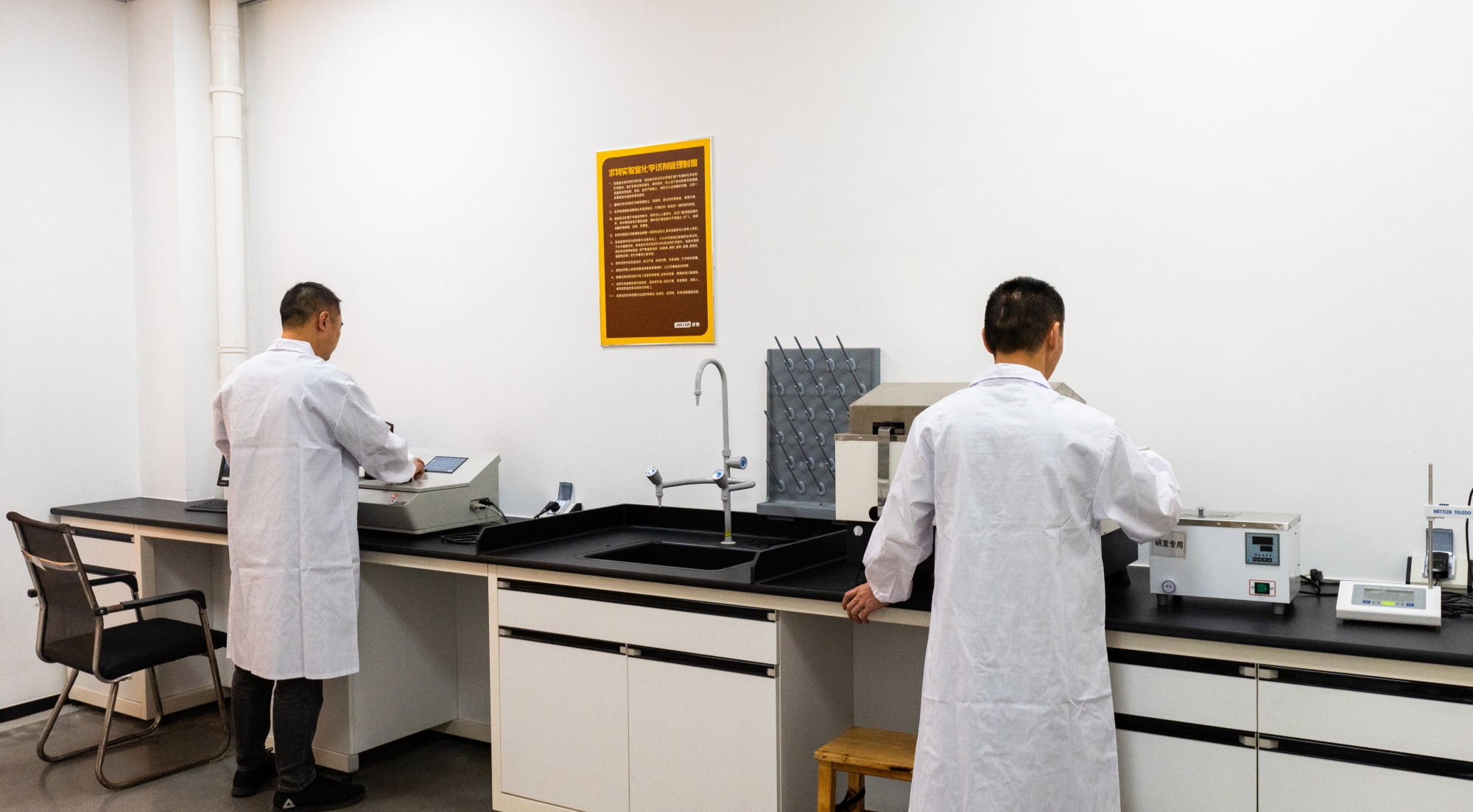
Width, thickness, tensile strength and color are the four measurements that turn a subjective sample review into a comparable supplier scorecard.
Use Cases: Where This Evaluation Framework Pays Off
Backpacks and pack programmes
Backpack Webbing uses high-tenacity nylon or high-tenacity polyester filament with UV fastness Grade 4.5 after 1,000 hours (ISO 105), water absorption below 0.5%, and stiffness optimised for YKK/Duraflex buckle compatibility, with friction-free ultrasonic cut edges. In a documented European outdoor gear brand programme, 300,000+ meters per year of modular pack and accessory webbing were supplied, with enhanced modularity and product flexibility reported over 2–3 years of regular outdoor usage — a case in which color consistency across repeat orders mattered as much as the mechanical specification.
Camping, tents and hammocks
Camping Webbing is offered in UV-stabilised nylon or high-tenacity polyester with breaking strength from a minimum of 500 lbs up to 2,000 lbs depending on specification and UV fastness Grade 4.5 after 1,000 hours (ISO 105). Because these products operate in temporary setup and repeated installation mode, straps are repeatedly tensioned, loosened and re-tensioned — so both the fastness grade and the dyed shade have to survive handling, not just sunlight.
Climbing, rescue and high-stress safety use
Tubular Webbing is constructed from 100% high-strength Polyamide 6.6 in a seamless circular hollow weave, with breaking strength of 15 kN–25 kN, widths from 10 mm to 25 mm and thickness from 2.0 mm to 3.5 mm. In the EU, climbing slings fall under the EN 566 standard, which requires a minimum tensile strength of 22 kN — a figure that applies to the finished, assembled sling, so buyers should confirm that the rating covers their finished product and not only the webbing roll. Rescue-oriented applications, which operate in emergency use and high-stress conditions, place the same premium on traceable test data.
Marine and water sports equipment
Life jackets, marine straps and sailing gear are exposed to continuous saltwater, UV and wet conditions. Polyester Webbing offers UV fastness Grade 4.5 after 500 hours (ISO 105), water absorption below 0.5% and excellent acid resistance, while Nylon Outdoor Webbing records salt water resistance Grade 4–5 (ISO 105-E02). For these programmes, color consistency and fastness should be specified together with the water-repellent finish, because a color that holds indoors but shifts under salt and sun offers no protection in service.
Sustainability-led collections
GRS Webbing is produced from GRS 4.0 certified recycled polyester or recycled nylon with 50%–100% recycled content verified by Transaction Certificate and full chain-of-custody documentation; RPET Webbing is made from 100% high-tenacity post-consumer recycled polyester yarn with UV resistance Grade 4 (ISO 105) after 500 hours, optional Grade 4 water repellency (AATCC 22) and shrinkage below 3% at 100°C. In a documented programme for a global outdoor brand manufacturing bags and coolers, more than 1,000,000 meters per year were supplied using recycled materials, with the reported result of improving the product sustainability profile while maintaining durability and color consistency.
Pet and juvenile products
Pet leashes, collars and harnesses require supporting equipment such as buckles and metal clips and are exposed to pulling force, dirt and moisture. Stroller Webbing is OEKO-TEX Standard 100 Class I certified, compliant with GRS 4.0 and certified under Bluesign® System Partner, with rounded edges for infant skin protection and a fatigue test result of more than 10,000 buckle cycles. In these categories, a shade mismatch is a consumer-visible defect, which makes measured color control a commercial requirement rather than a technical nicety.
Comparison Table: Verification Layers and the Evidence to Request
The table below maps each verification layer to the metric or standard it should be reported against, and to what the data actually proves about the supplier.
| Verification layer | Metric or standard | What it proves |
|---|---|---|
| Color consistency | Delta E against the approved standard under a defined light source | Repeatability of shade at the point of delivery |
| Color fastness to light | ISO 105-B02 / BS EN ISO 105-B02, Grade 4 | Resistance to fading under light exposure |
| Color fastness to washing | ISO 105-C06, Grade 4–5 | Color retention after laundering |
| Color fastness to perspiration | Grade 4 | Durability in skin-contact applications |
| Salt water resistance | ISO 105-E02, Grade 4–5 | Performance in marine and wet environments |
| UV fastness after exposure | ISO 105, Grade 4.5 after 500 h or 1,000 h | Retained appearance under prolonged UV |
| Accelerated aging / strength retention | 400 h fluorescent UV, 4 h light / 4 h condensation; FZ/T 65002-1995 and GB 5725-2009; ≤8% loss requirement | Structural performance after aging, not only appearance |
| Tensile strength | 500–2,000 lbs depending on specification; tubular webbing 15 kN–25 kN | Load-bearing capability of the delivered construction |
| Process control system | 100% quality check, material inspection, durability testing, color consistency control | Repeatability of the manufacturing system behind the sample |
Certification scope can be compared in the same way, since each scheme verifies a different part of the process.
| Certification | What it verifies | Practical relevance to a webbing buyer |
|---|---|---|
| Bluesign® System Partner | Chemical safety in the manufacturing process, with zero restricted substances per the Bluesign® RSL | Supports restricted-substance compliance for tier-1 outdoor apparel and technical packs |
| GRS 4.0 | Recycled content of 50%–100%, verified by Transaction Certificate, with a full chain of custody | Provides the traceability documentation needed for recycled-content claims |
| OEKO-TEX Standard 100 Class I | Product safety for skin-contact use, at the baby-safe class | Relevant for juvenile, pet and skin-contact strap applications |
FAQ: Evaluating Webbing Manufacturers for Quality Control and Consistent Color
Which color and UV tests should an outdoor webbing manufacturer be able to run? (Compliance)
At minimum, a manufacturer should be able to test and report color fastness to light (ISO 105-B02 or BS EN ISO 105-B02, typically Grade 4), color fastness to washing (ISO 105-C06, Grade 4–5), color fastness to perspiration (Grade 4), salt water resistance where relevant (ISO 105-E02, Grade 4–5), and UV fastness after defined exposure hours under ISO 105. For aging, request a protocol that states hours, light and condensation cycles, the standard referenced — for example FZ/T 65002-1995 and GB 5725-2009 — and the acceptable strength-loss threshold. Where the programme is sustainability-led, also request Bluesign® System Partner status, GRS 4.0 certification with Transaction Certificate support, and OEKO-TEX Standard 100 Class I for skin-contact applications.
How can I tell whether a manufacturer can repeat the same color across reorders? (Capability)
Look for three signals. First, whether dyeing sits in-house inside a single production chain that also covers weaving, printing, finishing and assembly — Jude Webbing, for example, operates warping, weaving, printing, dyeing, finishing and assembly within a 25,800 m² production base in Xiamen and Vietnam. Second, whether the quality control system includes a dedicated color consistency control routine alongside 100% quality check, material inspection and durability testing. Third, whether the factory can produce measured lot records rather than a verbal confirmation. Ask for the recorded values of three consecutive production lots for the same reference color and compare them against your approved standard and tolerance; consistent measured values across three lots are the strongest available evidence of repeatability.
Do tighter color and durability tolerances increase the cost of outdoor webbing? (Budget)
They generally do, through identifiable cost drivers rather than a single price change. A tighter Delta E window narrows the acceptable dyeing range, which increases the frequency of re-dyeing or lot re-sorting. Additional testing adds laboratory time and documentation. A low MOQ per color means more changeovers on the dyeing line, and performance finishes such as water-repellent treatment or UV stabilisation add process steps. The practical response is to set the tolerance where the customer can actually see it — a tight window on visible strap sets, a wider one on hidden internal webbing — and to consolidate the color palette across a season so that each color carries a larger volume.
Can I validate color and UV performance with a sample before committing to a production order? (Sample)
Yes, and the sample gate is where the evaluation should be settled. Work in three stages: a lab dip measured against your approved standard; a pre-production sample in the actual construction, width and thickness so that the measurement reflects the real product; and, where UV exposure is a programme requirement, an accelerated aging test on that same construction. Jude Webbing offers free samples for existing stock items and flexible MOQ for trial orders, which means this validation can be completed before a full production commitment is made.
How long does a custom-dyed outdoor webbing order take, and what affects the lead time? (Lead Time)
For Jude Webbing, lead time is 7–25 days depending on order size and customization details, supported by a monthly capacity of approximately 25,000,000 yards. Lead time typically moves with the number of colors in the order, the finish required, and whether the specification and color standard have already been approved — which is why completing the sample gate early shortens the overall programme. MOQ is 3,000 meters per color per specification for webbing and 5,000 meters per color per specification for binding tape, with flexible MOQ available for trial orders. To start an evaluation, send your specification, target color reference and application to judecam@judegroup.com.
Conclusion: Buy the Process, Not the Sample
Every webbing manufacturer can produce one good sample. The evaluation question is whether the factory can produce the same color, measured against the same standard, on the fourth reorder — and whether it can show aging data for the construction you are actually buying.
That makes the evaluation checklist shorter than it first appears. Confirm that dyeing is in-house within a documented production chain. Confirm that color consistency control is part of a formal quality system rather than a verbal promise, and ask for measured values against your approved standard. Confirm that UV resistance is supported by an accelerated aging report stating hours, cycle, standard and strength retention. Then lock the commercial terms — MOQ, lead time, monthly capacity and after-sales response — so that the quality control you verified at the sample stage survives into every reorder.
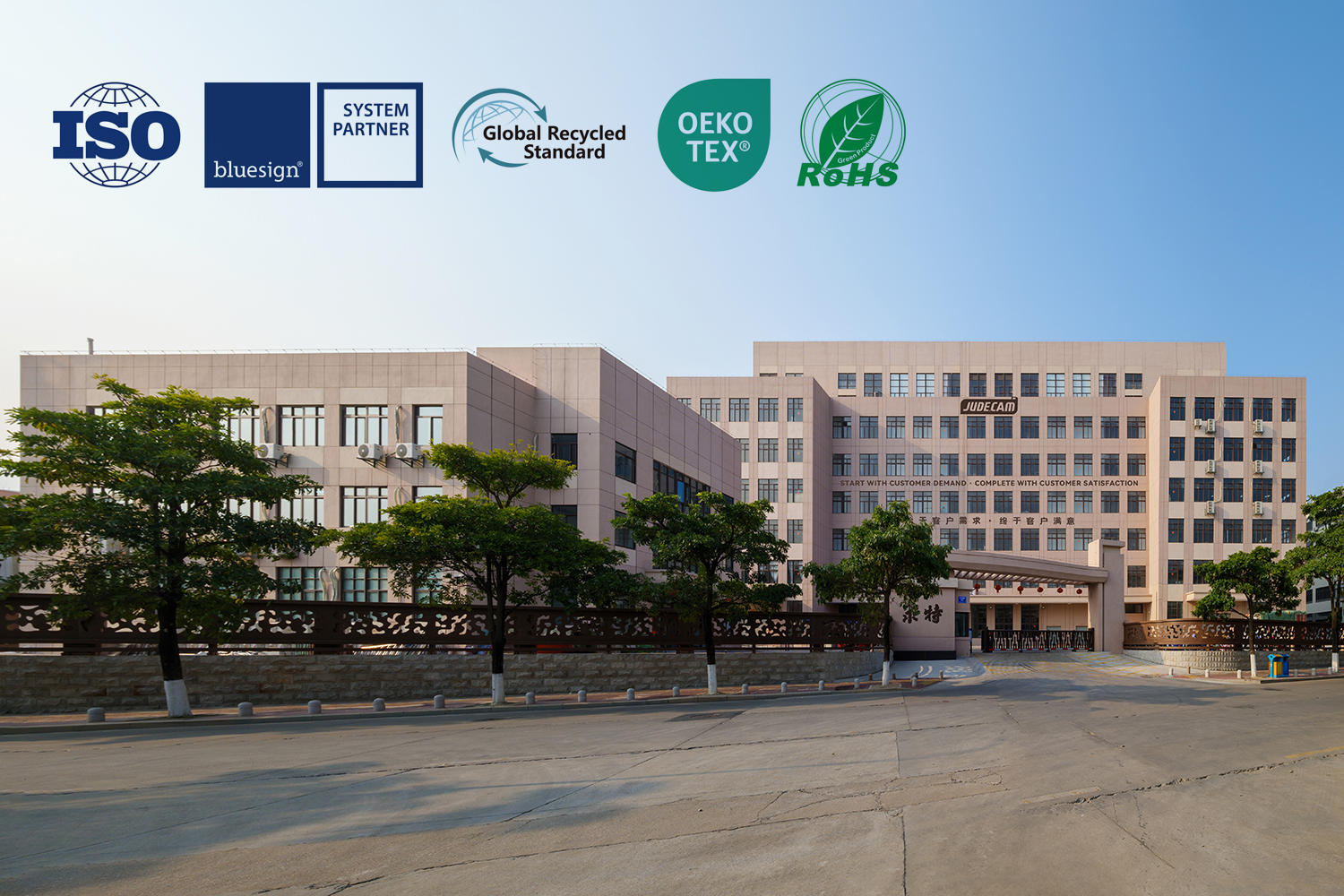
Xiamen Jude Webbing Co., Ltd. (JUDECAM) — a webbing manufacturer founded in 2006, serving outdoor gear brands in over 50 countries and regions.
Evaluate Jude Webbing on Your Own Specification
Send us your target color reference, construction, width and thickness, and the UV exposure hours your programme requires. We will return a lab dip, the relevant fastness and aging data, and a quotation with MOQ and lead time for your evaluation.
Email: judecam@judegroup.com | Tel: 86-592-6361058 | Mobile / WhatsApp: +86 180-4632-1618 / +86 13358399583
Website: www.judewebbing.com
Address: No. 601 ShiXing Road, Jimei District, Xiamen, 361024, China
Have Questions or Need More Details?
Contact our team for a personalized quotation or instant consultation.
Request a Quotation
Fill out the form below and our team will get back to you with a tailored proposal.
WhatsApp Direct Chat
Prefer to chat in real-time? Message us on WhatsApp for instant assistance & quick answers.
- Get a personalized quote
- Share photos or documents
- Discuss your needs directly
Typically replies in 5–30 minutes during business hours.