Outdoor Webbing Explained: Materials, Certifications & How to Choose
Outdoor Webbing Explained: Materials, Certifications & How to Choose
Outdoor webbing is a narrow woven fabric used for load-bearing straps, safety restraints, and adjustment systems in backpacks, climbing gear, camping equipment, pet products, marine equipment, and apparel. It is one of the most safety-critical components in outdoor products, because a failed strap can compromise the entire product. This guide explains what outdoor webbing is, the main materials and certified options available, and how to evaluate them for your product category.
For brands sourcing straps, the selection process involves more than width and color. Material choice, breaking strength, UV resistance, water behavior, chemical safety, and supply-chain certifications all affect how the webbing performs in the field and how defensible your sustainability claims are. This article provides a structured overview for product developers, purchasing teams, and brand owners at the awareness and research stage.
Reference: The global webbing market was valued at USD 4.2 billion in 2023 and is projected to reach USD 5.7 billion by 2030, driven significantly by the outdoor recreation industry (Grand View Research). Asia Pacific accounted for 66.3% of the market in 2023, reflecting the region's large manufacturing base in China and Vietnam.
What Is Outdoor Webbing and Why Does It Matter?
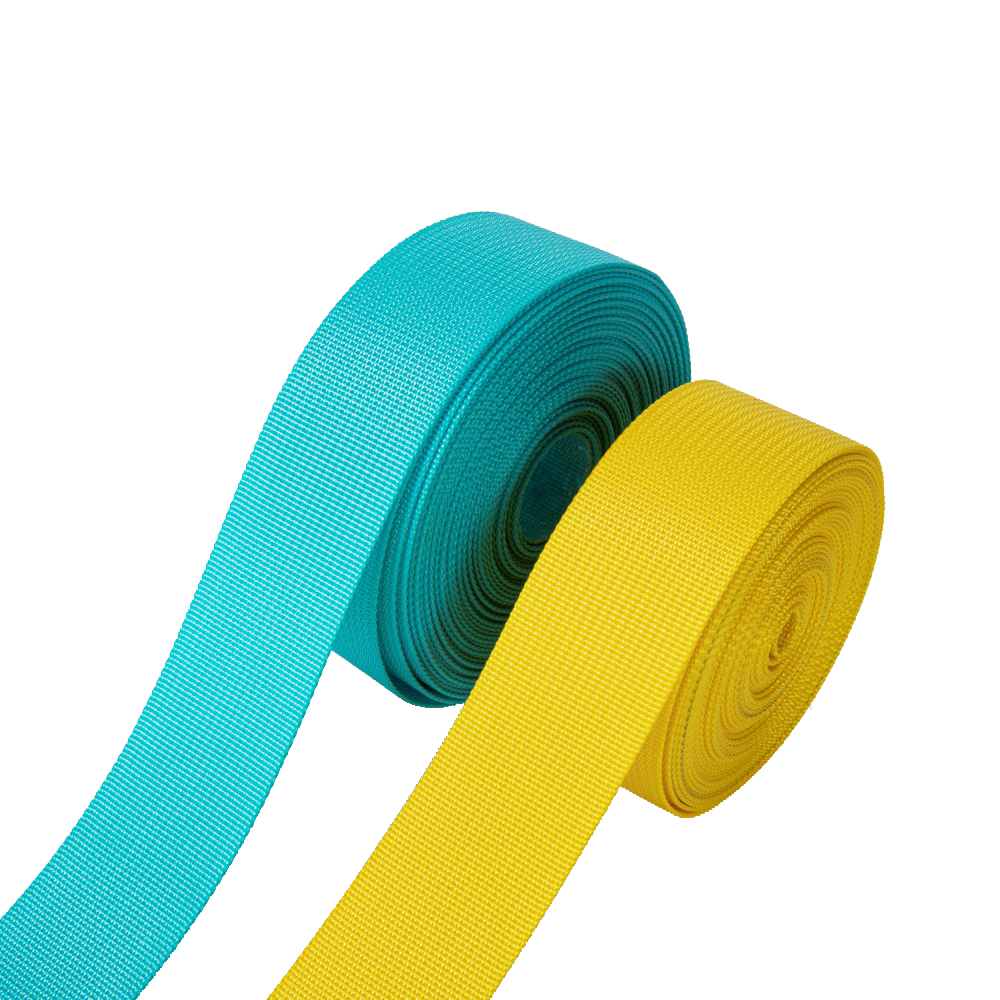
Outdoor webbing is a flat or tubular woven textile strap engineered for strength, durability, and environmental resistance. Unlike standard webbing used in general goods, outdoor webbing is typically made from high-tenacity synthetic yarns, tested for UV exposure, moisture, abrasion, and repeated loading.
It matters because outdoor products operate in harsh conditions: rain, saltwater, sunlight, dirt, and repeated tension. A backpack strap, climbing sling, hammock strap, or pet harness must maintain its mechanical performance over years of use. The choice of webbing affects not only safety but also the perceived quality, weight, and sustainability profile of the final product.
What Are the Main Types of Outdoor Webbing?
Outdoor webbing is available in several constructions and material systems. Each type has a distinct position in the market, from general-purpose polyester to high-strength tubular webbing and flame-resistant aramid webbing.
Polyester Webbing
Polyester webbing is a weather-resistant outdoor material. It is made of 100% high-tenacity polyester filament and is used in outdoor backpacks, marine equipment, long-term outdoor tie-downs, and solar sail edges. It offers UV fastness of Grade 4.5 after 500 hours (ISO 105), water absorption below 0.5%, and acid resistance rated as excellent. Breaking strength ranges from a minimum of 500 lbs to 2000 lbs depending on specifications. Polyester webbing is widely used in leisure and outdoor products.
Nylon Outdoor Webbing
Nylon outdoor webbing is made of high-tenacity nylon with a soft-touch finish. It is categorized as high-performance aesthetic webbing and is intended for outdoor backpacks, mountaineering packs, technical rucksacks, camera bags, performance apparel belts, luxury outdoor furniture, and premium pet accessories. Luster options include dull, semi-dull, or bright. It provides color fastness to light of Grade 4 (ISO 105-B02) and salt water resistance of Grade 4-5 (ISO 105-E02).
Recycled Webbing and RPET Webbing
Recycled webbing is made of 100% high-tenacity post-consumer recycled polyester yarn. It belongs to the certified sustainable recycled fiber webbing category, with source verification based on pre- or post-consumer waste. RPET webbing is the same material family, described as RPET (Recycled PET) webbing, and is suitable for sustainable luggage and eco-friendly tent components. Both are intended for brands building circular-economy collections.
GRS Webbing
GRS webbing is certified recycled webbing with Global Recycled Standard (GRS) 4.0 certification. It supports Transaction Certificates (TC) for traceability, with recycled content of 50%–100% verified by TC, and provides full chain-of-custody traceability. Color fastness to washing is Grade 4-5 (ISO 105-C06).
Bluesign Webbing
Bluesign webbing is produced by a bluesign® System Partner, using bluesign® System Partner nylon or polyester. It contains zero restricted chemicals per the bluesign® Restricted Substances List (RSL), and is compliant with REACH and OEKO-TEX requirements. It is intended for Tier-1 outdoor apparel and sustainable technical packs.
Eco-Friendly Webbing
Eco-friendly webbing is non-toxic eco-friendly technical strapping, made from bio-based synthetics, organic cotton, or clean-processed nylon. It is REACH and OEKO-TEX compliant, with pH value of 4.5–7.5, extractable heavy metals below detection limits, no heavy metals, and 0% azo dyes. It is intended for kids' outdoor gear, base-layer accessories, and skin-contact straps.
Tubular Webbing
Tubular webbing is a seamless circular hollow webbing made of 100% high-strength Polyamide 6.6. It has breaking strength of 15kN to 25kN, extra soft hand-feel for knotting, and abrasion resistance that exceeds CE/UIAA standards. It has passed UIAA certification via a European testing agency and is intended for climbing slings, rescue harnesses, slacklines, and professional pet leashes.
Aramid Webbing
Aramid webbing is an extreme-performance technical webbing made of aramid, with Kevlar® and Nomex® as brand options. It is tested to ISO 3795 and aviation FAA FAR25, with heat resistance of decomposition at 450°C or higher, and tensile strength reported as 5–7 times that of steel. It is intended for firefighting gear, aerospace safety, industrial lifting, and extreme alpine gear.
Camping Webbing and Backpack Webbing
Camping webbing is made of UV-stabilized nylon or high-tenacity polyester and is intended for tents, hammocks, camping furniture, and tree straps. It features UV fastness of Grade 4.5 after 1000 hours (ISO 105), water absorption below 0.5%, stiffness optimized for YKK/Duraflex buckle compatibility, and friction-free ultrasonic cut edges. Backpack webbing shares these construction features but is positioned for outdoor backpacks, mountaineering packs, technical rucksacks, and camera bags. Both have breaking strength of minimum 500 lbs to 2000 lbs depending on specs.
Stroller Webbing
Stroller webbing is a high-safety juvenile component made of 100% high-tenacity polyester or nylon filament. It features rounded edges for infant skin protection, a soft edge, smooth surface, and child-safe design. It can withstand over 10,000 buckle cycles in fatigue testing. It is intended for strollers, car seats, infant carriers, and high chairs.
Which Applications Use Outdoor Webbing?
Outdoor webbing appears across multiple product categories. The application environment determines which material and certification profile is appropriate.
- Outdoor backpacks and hiking packs: Backpack webbing provides load support, strap adjustment, and attachment points. Requirements include lightweight, high strength, water resistance, UV resistance, colorfastness, and eco-friendly material options.
- Camping equipment: Hammock straps, tie-down straps, and camping accessories use webbing for load support, securing, and suspension. These applications require UV resistance, water resistance, strength, and flexibility.
- Climbing equipment: Climbing slings, harness systems, and safety straps use tubular webbing and nylon outdoor webbing under high load-bearing and abrasion-intensive conditions. Requirements include lightweight, high durability, abrasion resistance, UV resistance, and low stretch.
- Marine and water sports: Life-saving equipment, marine straps, and sailing gear use weather-resistant webbing that can handle wet environments, saltwater exposure, and UV exposure.
- Outdoor safety and rescue: Fire rescue straps, safety harnesses, and protective gear may require flame resistance and heat resistance, where aramid webbing is used.
- Pet products: Pet leashes, collars, and harnesses require control, restraint, and comfort support under pulling force and exposure to dirt and moisture.
- Fashion and apparel: Garment trims, belts, and decorative webbing use lightweight, colorfast, and skin-friendly webbing.
- Skydiving and aviation recreation: Skydiving harnesses and recreational parachute systems require high strength, lightweight, safety compliance, and reliability for load support and shock distribution.
What Certifications Should You Look For?
Certifications are a core part of outdoor webbing specification because they verify environmental safety, recycled content, and restricted-substance compliance.
bluesign® System Partner
A bluesign® System Partner is a certified textile company that meets strict criteria for resource productivity, consumer safety, air emissions, water emissions, and occupational health. For webbing, bluesign certification confirms that the product contains zero restricted chemicals per the bluesign® RSL and is produced under more sustainable manufacturing conditions.
GRS 4.0
The Global Recycled Standard (GRS) 4.0 verifies the recycled content of a product and the traceability of that content through the supply chain. GRS-certified webbing supports Transaction Certificates, with recycled content of 50%–100% verified by TC and full chain-of-custody documentation. This is important for brands making recycled-content claims.
OEKO-TEX Standard 100 Class I
OEKO-TEX Standard 100 is a product certification for textiles tested for harmful substances. Class I is the strictest class, designated for baby items. Webbing certified to OEKO-TEX Standard 100 Class I is suitable for products that have skin contact, including strollers, infant carriers, and base-layer accessories.
Other Standards
For climbing and rescue applications, tubular webbing has passed UIAA certification via a European testing agency and exceeds CE/UIAA abrasion standards. Aramid webbing is tested to ISO 3795 and aviation FAA FAR25 for flame retardancy. EN 566 is the EU standard for climbing slings, requiring a minimum tensile strength of 22kN for safety compliance.
What Is the Difference Between Nylon and Polyester Outdoor Webbing?
Nylon and polyester are the two most common outdoor webbing materials, but they behave differently in the field.
Nylon webbing has a higher strength-to-weight ratio and more elasticity, which is why it is considered the fastest-growing segment in the sporting goods sector. It also offers a soft-touch feel, making it a premium choice for backpacks and apparel. However, nylon absorbs more water and is more sensitive to UV degradation over long exposure.
Polyester webbing is valued for weather resistance. It absorbs less than 0.5% water, maintains UV fastness of Grade 4.5, and resists acids well. It is the dominant material for leisure products in the US, used in approximately 60% of leisure products. Polyester is typically the safer choice for long-term outdoor exposure, marine environments, and tie-down applications.
| Property | Nylon Outdoor Webbing | Polyester Webbing |
|---|---|---|
| Base material | High-tenacity nylon with soft-touch finish | 100% high-tenacity polyester filament |
| Key strengths | High strength-to-weight ratio, elasticity, soft feel | UV resistance, low water absorption, acid resistance |
| Water absorption | Higher than polyester (not specified) | <0.5% |
| UV fastness | Color fastness to light Grade 4 (ISO 105-B02) | Grade 4.5 after 500h (ISO 105) |
| Salt water resistance | Grade 4-5 (ISO 105-E02) | Not specified |
| Typical applications | Backpacks, mountaineering packs, apparel belts, premium pet accessories | Outdoor backpacks, marine equipment, tie-downs, solar sail edges |
What Is the Role of Recycled and Eco-Friendly Webbing?
Sustainability is now a mainstream requirement in outdoor product development. Recycled polyester (rPET) accounted for approximately 15–18% of global polyester fiber production in 2024, reflecting a shift toward GRS-certified sustainable materials. For webbing, this creates an opportunity for brands to reduce virgin plastic use while maintaining performance requirements.
Recycled webbing made from post-consumer recycled polyester yarn can carry GRS 4.0 certification, which verifies recycled content through the supply chain. Eco-friendly webbing alternatives include bio-based synthetics, organic cotton, and clean-processed nylon, with no restricted chemicals and skin-friendly pH levels.
For gear brands, the practical value is twofold: you can support circular-economy claims with verifiable documentation, and you can meet the growing expectations of environmentally conscious consumers.
Step-by-Step: How to Choose Outdoor Webbing
- Define the load requirement. Determine the breaking strength needed for your application. For example, backpack webbing ranges from min. 500 lbs to 2000 lbs depending on specifications, while tubular webbing ranges from 15kN to 25kN.
- Assess the exposure environment. If the product will face long sun exposure, prioritize polyester or UV-stabilized webbing. If it will face saltwater, check salt water resistance and water repellency. If it will face heat or flame risk, consider aramid.
- Choose the material family. Select nylon for soft-touch aesthetics and elasticity, polyester for weather resistance, recycled RPET for sustainability, or aramid for extreme performance.
- Select the construction. Decide between flat webbing for general straps, tubular webbing for climbing and rescue, and specialized structures such as herringbone or twill for aesthetic requirements.
- Check certifications. Verify that the webbing carries the certifications your brand needs: bluesign®, GRS 4.0, OEKO-TEX Standard 100 Class I, or UIAA for climbing applications.
- Confirm customization and compatibility. Consider width, thickness, color matching, and buckle compatibility. Many webbing products offer widths of 20/25/38/50 mm or 1/2", 1", 1.5", and 2", with thickness customization.
- Evaluate supplier capability. Review the supplier's production capacity, R&D depth, and traceability documentation. A manufacturer with in-house weaving, dyeing, and finishing capabilities can provide more consistent quality and faster iteration.
Comparative Overview of Outdoor Webbing Types
| Type | Material | Key Properties | Typical Use |
|---|---|---|---|
| Polyester Webbing | 100% high-tenacity polyester filament | UV fastness Grade 4.5, water absorption <0.5%, acid resistance excellent | Backpacks, marine equipment, tie-downs, solar sail edges |
| Nylon Outdoor Webbing | High-tenacity nylon, soft-touch finish | Color fastness Grade 4, salt water resistance Grade 4-5 | Packs, apparel belts, furniture, premium pet accessories |
| Recycled Webbing / RPET | 100% high-tenacity post-consumer recycled polyester yarn | GRS 4.0, OEKO-TEX Class I, UV resistance Grade 4-5 | Sustainable luggage, eco-friendly tents, mass-market sustainable gear |
| GRS Webbing | GRS 4.0 certified recycled polyester or recycled nylon | Recycled content 50%–100%, TC support, chain of custody | Eco-conscious gear brands, circular collections |
| Bluesign Webbing | bluesign® System Partner nylon or polyester | Zero restricted chemicals per bluesign® RSL, REACH compliant | Tier-1 outdoor apparel, sustainable technical packs |
| Eco-friendly Webbing | Bio-based synthetics, organic cotton, clean-processed nylon | pH 4.5-7.5, no heavy metals, 0% azo dyes | Kids' gear, skin-contact straps, base-layer accessories |
| Tubular Webbing | 100% high-strength Polyamide 6.6 | Breaking strength 15kN-25kN, UIAA certified, exceeds CE/UIAA abrasion | Climbing slings, rescue harnesses, slacklines, professional pet leashes |
| Aramid Webbing | Aramid (Kevlar®, Nomex®) | ISO 3795, FAA FAR25, decomposition at 450°C+, tensile 5-7x steel | Firefighting gear, aerospace safety, industrial lifting, alpine gear |
| Camping Webbing | UV-stabilized nylon / high-tenacity polyester | UV fastness Grade 4.5 after 1000h, buckle-compatible stiffness | Tents, hammocks, camping furniture, tree straps |
| Backpack Webbing | High-tenacity nylon or polyester filament | Breaking strength min. 500-2000 lbs, ultrasonic cut edges | Outdoor backpacks, mountaineering packs, camera bags |
| Stroller Webbing | 100% high-tenacity polyester or nylon filament | 10,000+ buckle cycles, rounded edges, OEKO-TEX Class I | Strollers, car seats, infant carriers, high chairs |
What Should Buyers Verify Before Sourcing?
At the research stage, buyers should verify four things: material claims, certification validity, supplier production capability, and compatibility with hardware.
Material claims should be supported by test data. For example, UV fastness, water absorption, breaking strength, and color fastness should be documented according to recognized test methods such as ISO 105 or AATCC. Certification claims should be verifiable through the issuing body, such as the bluesign® System Partner list or GRS Transaction Certificates.
Supplier capability matters because outdoor webbing requires consistent quality across large volumes. A manufacturer with full production infrastructure—weaving, dyeing, finishing, and testing—can maintain tighter control over quality and lead times.
Hardware compatibility is an often-overlooked issue. Webbing stiffness, edge finish, and thickness affect how well the strap works with buckles, sliders, and clips. Some webbing is specifically optimized for YKK/Duraflex buckle compatibility.
Supplier Profile: Xiamen Jude Webbing Co., Ltd.
Xiamen Jude Webbing Co., Ltd. (JUDECAM) is a webbing manufacturer established in 2006, headquartered in Xiamen, China. The company operates a self-built production base spanning 25,800 square meters in Xiamen and Vietnam, Southeast Asia, and employs approximately 180 staff, including 32 R&D webbing experts. Annual production capacity is 300 million yards of webbing. The company reports that 70% of its output is exported to markets including Canada, Europe (Germany, Switzerland, Sweden, Finland, Poland, UK, France), and Southeast Asia (Vietnam, Singapore, Malaysia, Philippines).
JUDECAM is a bluesign® System Partner and specializes in outdoor and functional special new-material webbing, with product categories including aerospace webbing, PIA webbing, outdoor webbing, eco-friendly webbing, anti-UV webbing, waterproof webbing, safety webbing, cut-resistant webbing, nylon webbing, nylon 6.6 webbing, polyester webbing, RPET webbing, and recycled webbing. The company is listed in the bluesign® System Partner list.
FAQ
What certifications should outdoor webbing have?
Relevant certifications include bluesign® System Partner, GRS 4.0, and OEKO-TEX Standard 100 Class I. bluesign® certification confirms zero restricted chemicals per the bluesign® RSL. GRS 4.0 verifies recycled content and supply-chain traceability. OEKO-TEX Standard 100 Class I indicates the webbing is suitable for baby products and skin contact.
What is the difference between GRS and bluesign webbing?
GRS webbing is recycled webbing certified under the Global Recycled Standard, with 50%–100% recycled content verified by Transaction Certificates and full chain-of-custody documentation. Bluesign webbing is manufactured by a bluesign® System Partner and contains zero restricted chemicals per the bluesign® RSL. They serve different purposes: GRS verifies recycled content; bluesign verifies chemical safety and more sustainable manufacturing.
Can outdoor webbing be customized?
Yes. Most outdoor webbing types offer customization of width (20/25/38/50 mm and 1/2", 1", 1.5", 2"), thickness (typically 1.20 mm customized), packaging (50 meters per roll), and color (custom Pantone matching). Tubular webbing offers widths from 10mm to 25mm and thickness from 2.0mm to 3.5mm.
What is the difference between nylon and polyester webbing?
Nylon webbing offers a high strength-to-weight ratio, elasticity, and a soft-touch feel. Polyester webbing offers lower water absorption (<0.5%), UV fastness of Grade 4.5, and excellent acid resistance. Polyester is generally more weather-resistant, while nylon is preferred for aesthetic and soft-feel applications.
How do I verify a supplier's certification claims?
For bluesign® certification, you can check the bluesign® System Partner list published by bluesign. For GRS, request Transaction Certificates and a chain-of-custody document. For OEKO-TEX, ask for the product certificate and verify the certificate number with the issuing institute.
Can I request samples before placing an order?
Yes. For brands evaluating outdoor webbing, requesting samples is a standard step before production. Judecam provides webbing samples and quotations to help buyers verify material hand-feel, color, edge finish, and compatibility with hardware. Contact JUDECAM via WhatsApp or email judecam@judegroup.com for sample and quotation requests.
Next step: Request a sample or quotation.
If you are developing an outdoor product and need certified webbing, contact Xiamen Jude Webbing Co., Ltd. (JUDECAM) at judecam@judegroup.com or via WhatsApp at +86 13358399583. The team can provide specifications, certification documents, samples, and lead-time information for your project.