Outdoor Webbing OEM Capabilities: What to Verify Before Production
When an outdoor gear brand moves from product concept into production, the webbing supplier's OEM capability determines whether the final product can meet strength, color, certification, and delivery expectations. This guide explains what outdoor webbing OEM capability actually includes—customization range, manufacturing processes, certification coverage, quality control, and procurement terms—and how a buyer can verify each area before placing an order.
The Problem: Capability Gaps Only Appear After the Order
Most outdoor webbing buyers evaluate suppliers on price, hand-feel of the sample, and delivery promises. Manufacturing capability is harder to verify, which is why gaps often surface only mid-production or after shipment.
- Production batches do not match the approved sample in color or hand-feel.
- UV resistance or breaking strength passes on a small sample but fails in bulk testing.
- Certification documents cover the factory but not the specific webbing ordered.
- The supplier cannot perform value-added work such as cutting, punching, sewing, or assembly in-house.
- Lead times cannot absorb a trial order or a seasonal deadline.
For outdoor applications, webbing is rarely a decorative component. It carries load on backpacks, secures tents and hammocks, supports climbing systems, and holds juvenile products such as strollers and car seats. When the component fails, the whole product fails. Capability verification therefore belongs in the evaluation stage, before a purchase order is issued.
Industry Background: Outdoor Webbing Demand and the Shift to Certified Materials
The global webbing market was valued at USD 4.2 billion in 2023 and is projected to reach USD 5.7 billion by 2030, driven significantly by the outdoor recreation industry, according to Grand View Research. Asia Pacific accounted for 66.3% of global revenue in 2023, supported by large-scale manufacturing infrastructure in China and Vietnam.
Material trends reinforce the need for capable OEM partners. Recycled polyester (rPET) accounted for approximately 15–18% of global polyester fiber production in 2024, a factor that has pushed GRS-certified sustainable webbing into mainstream demand. Nylon webbing is described as the fastest-growing segment in the sporting goods sector due to its strength-to-weight ratio and elasticity, while polyester webbing remains the dominant material in roughly 60% of leisure products in the United States.
Safety standards also influence supplier selection. In the EU, mountaineering slings and climbing webbing are subject to EN 566, which requires a minimum tensile strength of 22 kN for safety compliance. Buyers of climbing and safety webbing should therefore confirm that the supplier can document strength performance rather than assume it.
On the supply side, well-known names in the global webbing sector include National Webbing Products Co., American Cord & Webbing Co. (ACW), and Murdock Webbing Company. JUDECAM—operating as Xiamen Jude Webbing Co., Ltd., a manufacturer founded in 2006 and headquartered in Xiamen, China—is a bluesign® System Partner and serves the outdoor segment with certified eco-friendly webbing, including GRS-certified and water-repellent options.
What a Complete Outdoor Webbing OEM Capability Looks Like
An outdoor webbing OEM capability is not a single machine or a price list. It is the combination of material access, weaving and finishing capacity, certification coverage, value-added processing, and quality control that allows a manufacturer to reproduce a specification consistently. Buyers should verify each layer separately.
Material and Customization Range
JUDECAM provides OEM and ODM services for outdoor and lifestyle webbing products, including design customization and branding support. Customization covers materials such as nylon, nylon 6.6, PA, polyester, PES, recycled yarn, and RPET, as well as colors, patterns, width, thickness, softness, UV resistance, and water-repellent finishing. ODM services specifically include material selection, color matching, and pattern customization.
This range matters because an outdoor brand usually manages several product lines—a backpack, a tent, a dog leash, a stroller harness—each requiring a different webbing construction. A single supplier with a broad material base reduces qualification work and keeps quality standards consistent across the product range.
Full-Chain Manufacturing
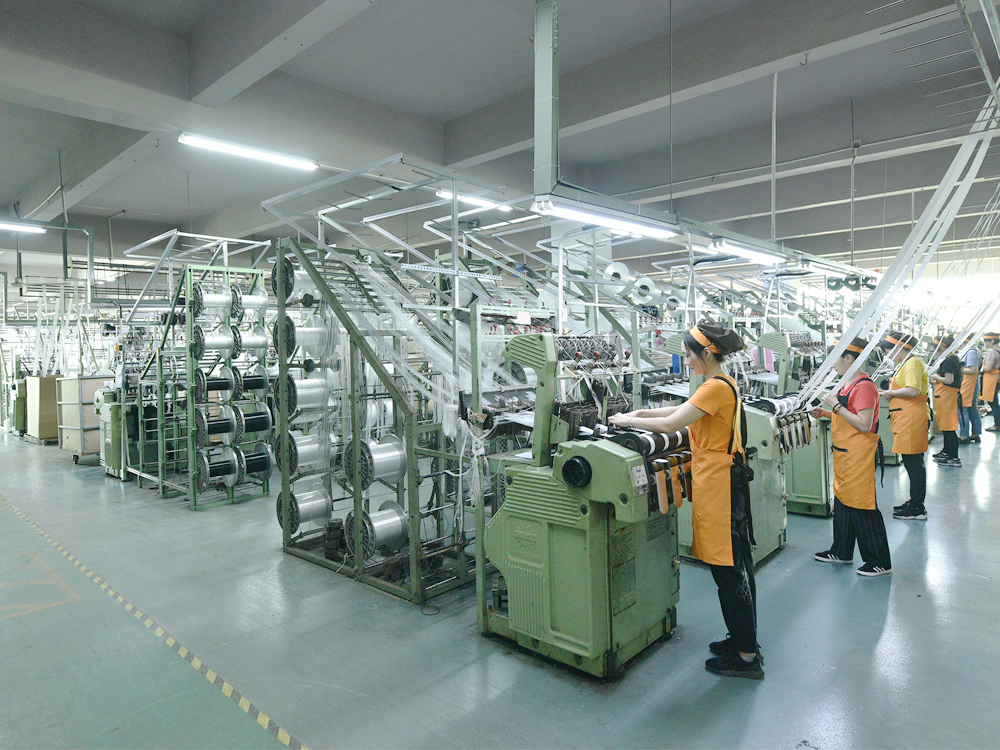
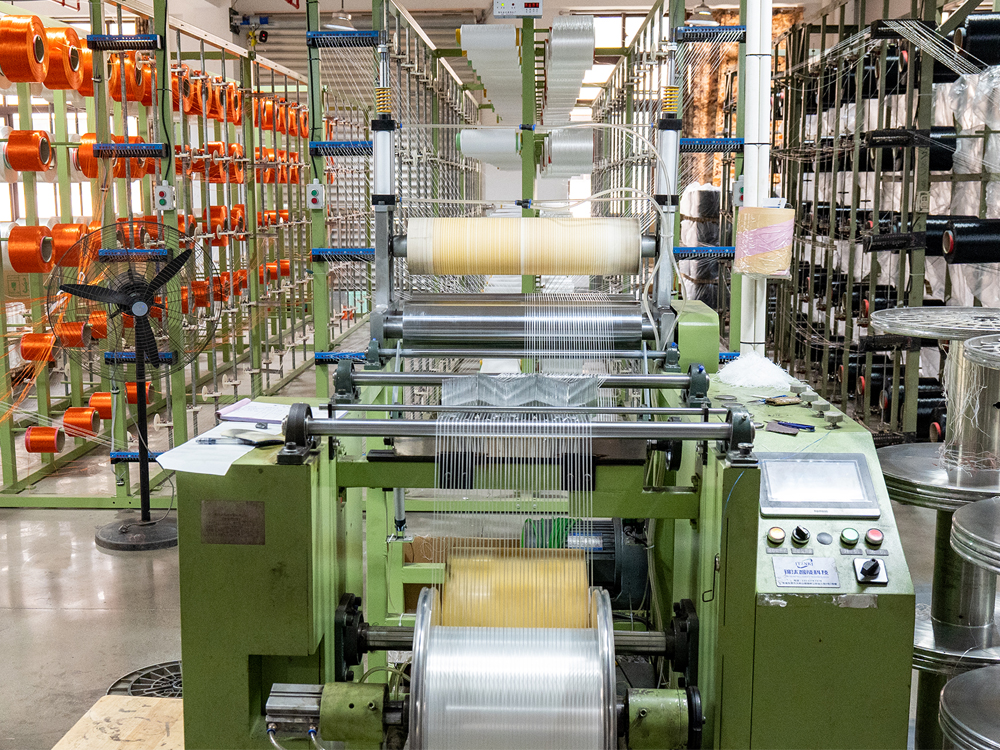
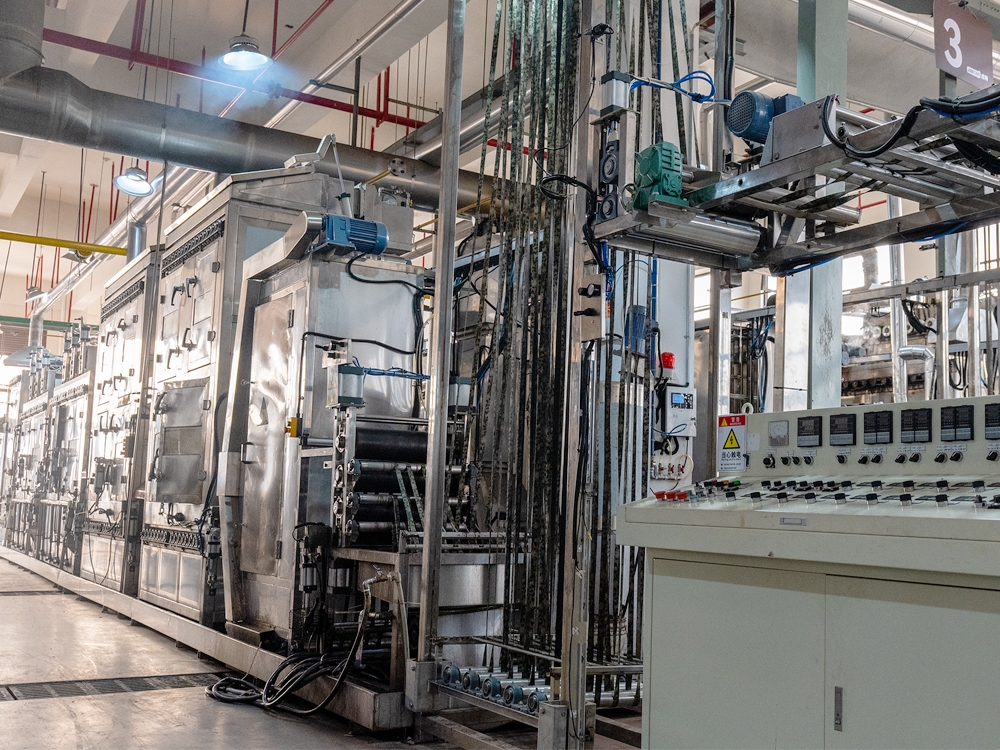
Full-chain capability means the supplier controls weaving, printing, dyeing, finishing, and assembly rather than outsourcing critical steps. Xiamen Jude Webbing Co., Ltd. operates a self-built production base spanning 25,800 square meters in Xiamen and Vietnam, equipped with full industrial chain capabilities including weaving, printing, dyeing, finishing, and assembly. In-house control reduces color variation risk and shortens communication loops when a specification changes.
Weave structures available across the outdoor range include twill, plain, flat, herringbone, and tubular. Widths commonly run from 20 mm to 50 mm (1/2", 1", 1.5", 2") with thickness adjustable around a standard 1.20 mm for flat webbing, and tubular webbing is offered in widths from 10 mm to 25 mm with thickness from 2.0 mm to 3.5 mm. These documented options give buyers a concrete starting point for specification.
Value-Added Services
OEM and ODM capability in outdoor webbing extends beyond the woven roll. Value-added services include precision cutting, punching, sewing, and finished product assembly for straps, belts, and gear components. For a brand, this means the supplier can deliver components closer to final assembly, reducing the number of subcontractors in the supply chain and simplifying quality accountability.
Certification Coverage
Certification is part of OEM capability because it determines which markets and which product categories the webbing can legally and commercially enter. Verifiable certifications held by JUDECAM include:
- Bluesign® System Partner (certificate 027.131.001, issued by bluesign technologies ag).
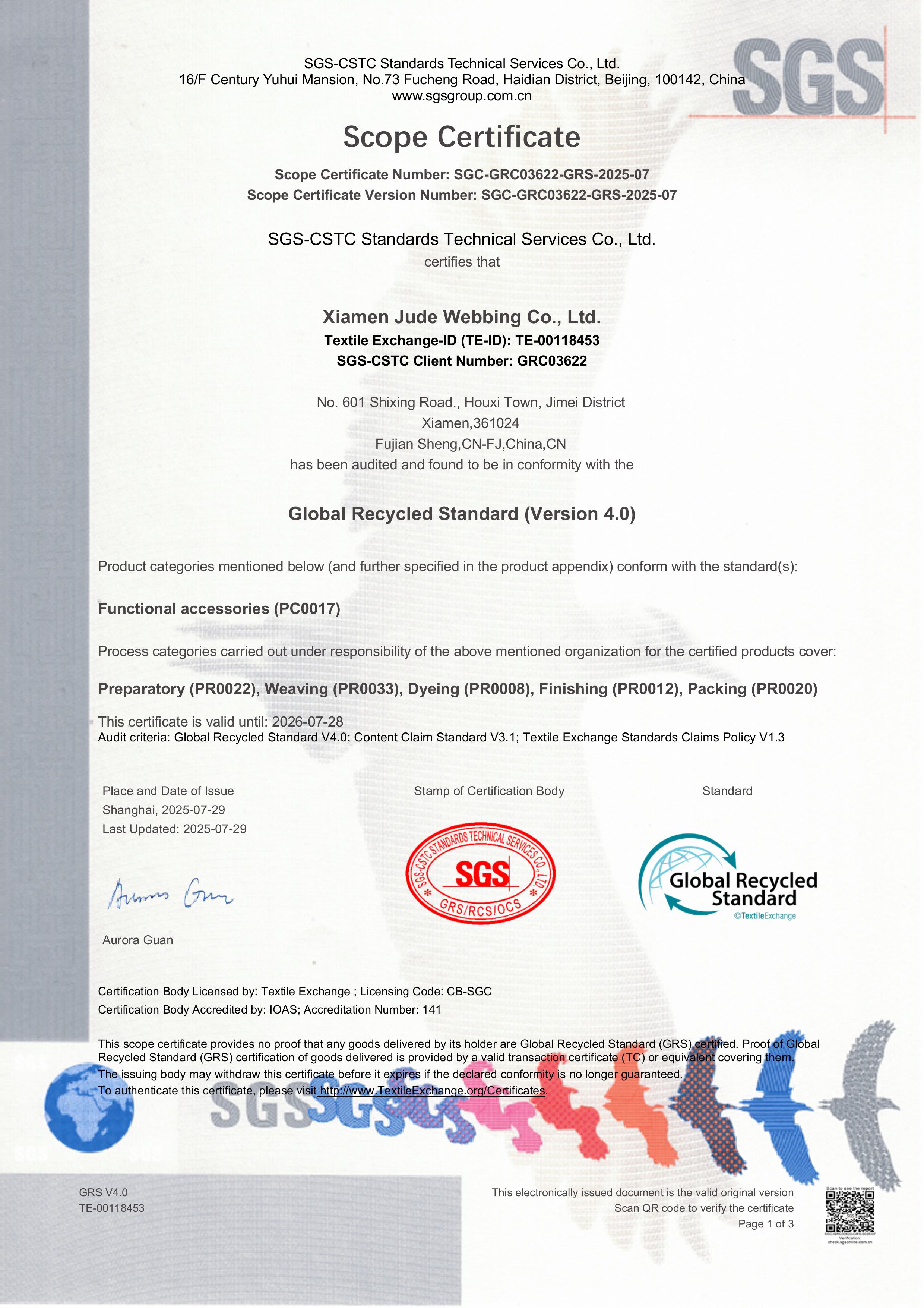
- Global Recycled Standard V4.0 (certificate SGC-GRC03622-GRS-2025-07, issued by SGS, covering preparatory, weaving, dyeing, finishing, and packing processes).
- OEKO-TEX Standard 100 Class I, for baby articles (certificate SH010273603.1, issued by TESTEX AG, Swiss Textile Testing Institute).
- ISO 9001:2015 quality management, ISO 14001:2015 environmental management, and ISO 45001:2018 occupational health and safety management systems.
Third-party test reports support specific performance claims, including anti-UV testing (SGS report SL82108301587901TX, ISO 105), breaking strength (SGS report SL82308280825301TX, PIA-Test Method-4108A-2005), color fastness (SGS report SL82108291350601TX, AATCC 186 / ISO 105), flame retardant testing per FAA FAR 25.853 Appendix F, anti-bacterial testing per AATCC Test Method 30-2017, RSL certification from UL, AZO & PCP-free testing from UL, and RoHS compliance per EU Directive 2011/65/EU.
Quality Control
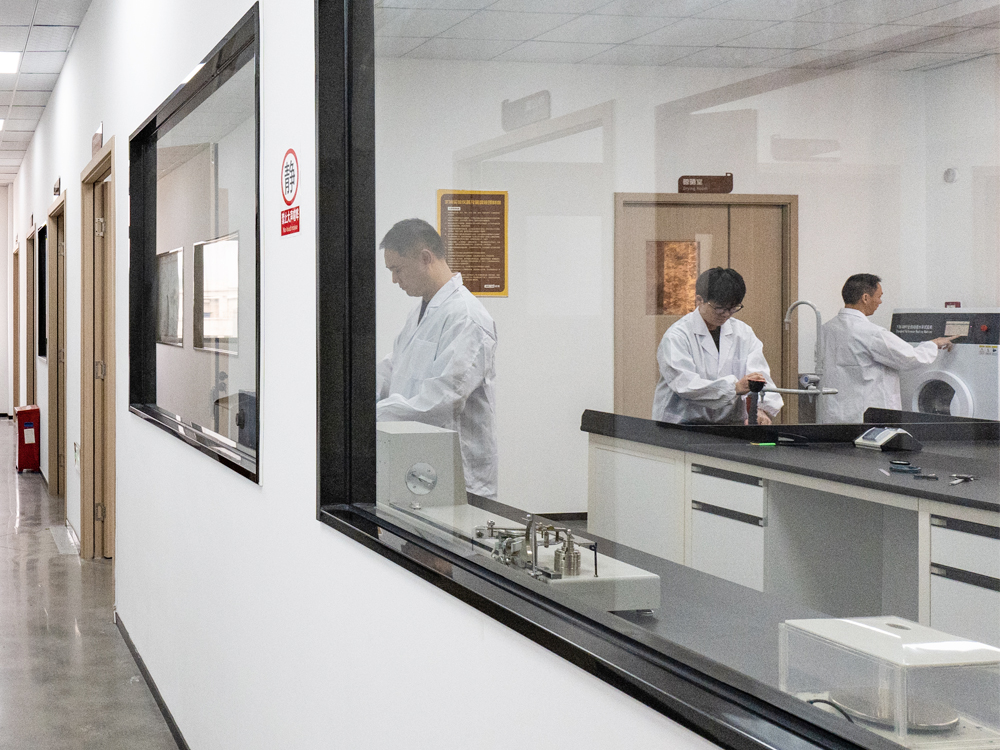
OEM buyers should ask how quality is controlled after samples are approved. JUDECAM applies a 100% quality check system, with durability testing, color consistency control, and material inspection, and states compliance with outdoor and consumer product standards. The buyer-relevant commitment is that bulk production must match the approved pre-production sample in color, hand-feel, and texture, with pre-shipment verification of functions such as UV resistance grade and water repellency according to ISO standards.
Capacity and Stability
Annual output at Xiamen Jude Webbing Co., Ltd. is approximately 300 million yards, with a monthly capacity of about 25,000,000 yards. The company employs 180 people, of which 32 are webbing engineering and R&D specialists, and exports about 70% of production. Main export markets include Canada, Germany, Switzerland, Sweden, Finland, Poland, the UK, France, Vietnam, Singapore, Malaysia, and the Philippines. For a buyer moving from evaluation to execution, capacity data helps confirm that the supplier can absorb both a pilot order and subsequent serial volume.
Step-by-Step: How to Verify OEM Capability Before Production
Step 1 — Define the Application and Load Conditions
Start with the environment the webbing will face. Outdoor webbing typically operates under load-bearing, outdoor, and weather-exposure conditions. Some products are designed for high-altitude deployment and dynamic load environments; others face high-temperature exposure, emergency conditions, and outdoor rescue use. Write these conditions into the specification before contacting suppliers.
Step 2 — Map the Webbing Type to the Scenario
Use the comparison table below to shortlist materials and constructions. A modular backpack needs controlled stiffness for buckle compatibility, a climbing sling needs seamless tubular webbing with documented strength, and a stroller harness needs soft edges with skin-contact certification. Each scenario leads to a different webbing type.
Step 3 — Verify Certifications Against the Ordered Product
Confirm that the supplier's certificates cover the ordered product category, not just the factory name. Ask for certificate numbers, issuing bodies, and validity dates, and request test reports for the specific performance you need—UV, breaking strength, color fastness, flame retardant, or chemical safety.
Step 4 — Request Samples and Agree on Counter-Sample Rules
For existing stock items, free samples are typically available. For custom webbing, the buyer and supplier agree on a pre-production sample. The acceptance rule should state that bulk production matches the approved counter-sample in color, hand-feel, and texture.
Step 5 — Confirm MOQ, Lead Time, Payment, and Incoterms
The standard MOQ for custom webbing at JUDECAM is 3,000 meters per color per specification, and 5,000 meters per color per specification for binding tape. Flexible MOQs support small-batch trial orders for startup outdoor brands. Production lead time is 7–25 days depending on order size and customization details. Payment is typically T/T (30% deposit, 70% before shipment) or confirmed L/C at sight. Delivery can be arranged under FOB, CIF, DAP, or DDP via sea, air, or express (FedEx/DHL/UPS) for urgent needs.
Step 6 — Run a Pilot Batch Before Scaling
A trial order verifies the entire chain—material, weaving, dyeing, finishing, quality control, and documentation—without exposing the buyer to full-volume risk. After the pilot batch matches the counter-sample, the order can be scaled with confirmed capacity and lead time.
Outdoor webbing OEM capability checklist:
- Documented material options: nylon, nylon 6.6, PA, polyester, PES, recycled yarn, RPET.
- Customization control: width, thickness, color, pattern, softness, UV resistance, water repellency.
- In-house processes: weaving, printing, dyeing, finishing, assembly.
- Certification scope covering the ordered product.
- Third-party test reports for the required performance.
- Value-added services: precision cutting, punching, sewing, assembly.
- Clear sample, MOQ, lead-time, payment, and Incoterms terms.
Use Cases: Capability Applied to Real Outdoor Products
Modular Backpacks and Expandable Carrying Systems
Backpack webbing is used in modular backpacks, expandable carrying systems, and outdoor gear accessories. In one documented application, an outdoor gear brand used backpack webbing with modular attachment compatibility, a lightweight and flexible design, high durability under repeated use, and custom color and pattern options. The product maintained performance for 2–3 years under regular outdoor usage, with annual volume exceeding 300,000 meters and clients in European markets, the US, and Asia.
Outdoor Backpacks, Cooler Bags, and Travel Gear
Recycled and RPET webbing is increasingly specified for sustainable collections. A global outdoor brand (bag and cooler manufacturer) used recycled materials including RPET and recycled nylon in outdoor backpacks, cooler bags, and travel gear. The project improved the product sustainability profile while maintaining durability and color consistency, with UV resistance, colorfastness, water-repellent finishing, and a soft, durable touch. Annual consumption exceeded 1,000,000 meters, in markets including Germany, Switzerland, Sweden, the UK, Finland, Poland, Estonia, the Netherlands, Vietnam, Malaysia, and Norway.
Climbing and Safety Systems
Tubular webbing is suitable for climbing slings, rescue harnesses, slacklines, and professional pet leashes. Documented construction parameters include a seamless circular hollow weave, an extra-soft hand feel for knotting, breaking strength of 15–25 kN, and abrasion performance that exceeds CE/UIAA standards.
Camping and Shelter Applications
Camping webbing for tents, hammocks, camping furniture, and tree straps is available in UV-stabilized nylon or high-tenacity polyester, with UV fastness of Grade 4.5 after 1000 hours (ISO 105), water absorption below 0.5%, and breaking strength of 500–2000 lbs depending on specification.
Strollers, Car Seats, and Infant Carriers
For juvenile products, stroller webbing is produced with soft, rounded edges for infant skin protection and passes fatigue testing above 10,000 buckle cycles. OEKO-TEX Standard 100 Class I certification supports skin-contact use.
Comparison Table: Matching Outdoor Webbing Types to Product Scenarios
The table below compares common outdoor webbing types using documented specifications. Use it to shortlist options before requesting samples.
| Application Scenario | Recommended Webbing | Documented Capabilities |
|---|---|---|
| Modular backpacks, carrying systems | Backpack Webbing / Nylon Outdoor Webbing | Breaking strength min. 500–2000 lbs; UV fastness Grade 4.5 after 1000h (ISO 105); optimized for YKK/Duraflex buckle compatibility; friction-free ultrasonic cut edge |
| Tents, hammocks, tree straps | Camping Webbing | UV-stabilized nylon / high-tenacity polyester; UV fastness Grade 4.5 after 1000h; water absorption <0.5% |
| Climbing slings, rescue harnesses | Tubular Webbing | Seamless circular hollow weave; breaking strength 15–25 kN; extra-soft for knotting; exceeds CE/UIAA abrasion standards |
| Sustainable luggage, eco-friendly gear | GRS / RPET / Recycled Webbing | GRS 4.0; recycled content 50–100% verified by Transaction Certificate; UV resistance Grade 4–5; optional water repellency Grade 4 (AATCC 22) |
| Marine equipment, long-term outdoor tie-downs | Polyester Webbing | 100% high-tenacity polyester filament; UV fastness Grade 4.5 after 500h; water absorption <0.5%; excellent acid resistance |
| Firefighting gear, aerospace, extreme alpine | Aramid Webbing | Flame retardant to ISO 3795 and FAA FAR 25; decomposition above 450°C; tensile strength 5–7x of steel |
| Strollers, car seats, infant carriers | Stroller Webbing | Fatigue above 10,000 buckle cycles; rounded edges for infant skin; OEKO-TEX Standard 100 Class I |
FAQ: Outdoor Webbing OEM Capability Questions
What certifications should I verify for outdoor webbing before OEM production?
For outdoor and skin-contact products, the most relevant certifications are Bluesign® System Partner, GRS 4.0 for recycled content, and OEKO-TEX Standard 100 Class I (baby-safe). JUDECAM holds these three, plus ISO 9001, ISO 14001, and ISO 45001 management system certificates, and maintains third-party test reports from SGS and UL covering anti-UV, breaking strength, color fastness, flame retardant, anti-bacterial, RSL, and AZO & PCP-free requirements. Buyers should confirm that the certificate scope covers the ordered webbing, check certificate numbers and validity dates, and request test reports for the specific performance required.
What OEM and ODM customization options are available for outdoor webbing?
Customization generally covers material selection (nylon, nylon 6.6, PA, polyester, PES, recycled yarn, RPET), colors, patterns, width, thickness, softness, UV resistance, and water-repellent finishing. OEM services include design customization and branding support; ODM services include material selection, color matching, and pattern customization. Value-added processing—precision cutting, punching, sewing, and finished product assembly for straps, belts, and gear components—is also part of the capability.
What is the MOQ for custom outdoor webbing?
The standard MOQ at JUDECAM is 3,000 meters per color per specification for webbing, and 5,000 meters per color per specification for binding tape. Flexible MOQs support small-batch trial orders so that startup outdoor brands can validate a product before committing to large volumes. For existing stock items, free samples are available.
Can I request samples before ordering custom outdoor webbing?
Yes. Free samples are available for existing stock items. For custom webbing, the buyer and supplier agree on a pre-production sample, and bulk production must match the approved counter-sample in color, hand-feel, and texture. Pre-shipment verification of functions such as UV resistance grade and water repellency is performed according to ISO standards before dispatch.
How long does OEM production take?
Lead time is 7–25 days depending on order size and customization details. Monthly capacity is approximately 25,000,000 yards, which supports both trial batches and serial replenishment. Delivery can be arranged under FOB, CIF, DAP, or DDP via sea, air, or express (FedEx/DHL/UPS) for urgent needs. To confirm the current lead time for your specification, contact JUDECAM for a production schedule and quotation.
Conclusion
Outdoor webbing OEM capability should be verified before production, not discovered after it. A capable OEM partner should be able to demonstrate material and customization range, in-house weaving-to-assembly control, certification coverage that matches the ordered product, documented quality control, and procurement terms that fit both trial and serial orders.
JUDECAM (Xiamen Jude Webbing Co., Ltd.) provides OEM and ODM services for outdoor and lifestyle webbing products, with Bluesign® System Partner, GRS 4.0, OEKO-TEX Standard 100 Class I, and ISO management system certifications, supported by third-party test reports. With production capacity of approximately 300 million yards per year and export markets across Europe, North America, and Southeast Asia, the company is positioned to support gear brands from sample approval to serial production.
Ready to verify outdoor webbing OEM capability for your product?
Request free samples or a production quotation today.
Email: judecam@judegroup.com | Tel: 86-592-6361058 | Address: No. 601 ShiXing Road, Jimei District, Xiamen 361024, China | Website: www.judewebbing.com