Outdoor Webbing in 2026: The Materials, Certifications & Suppliers Shaping the Market
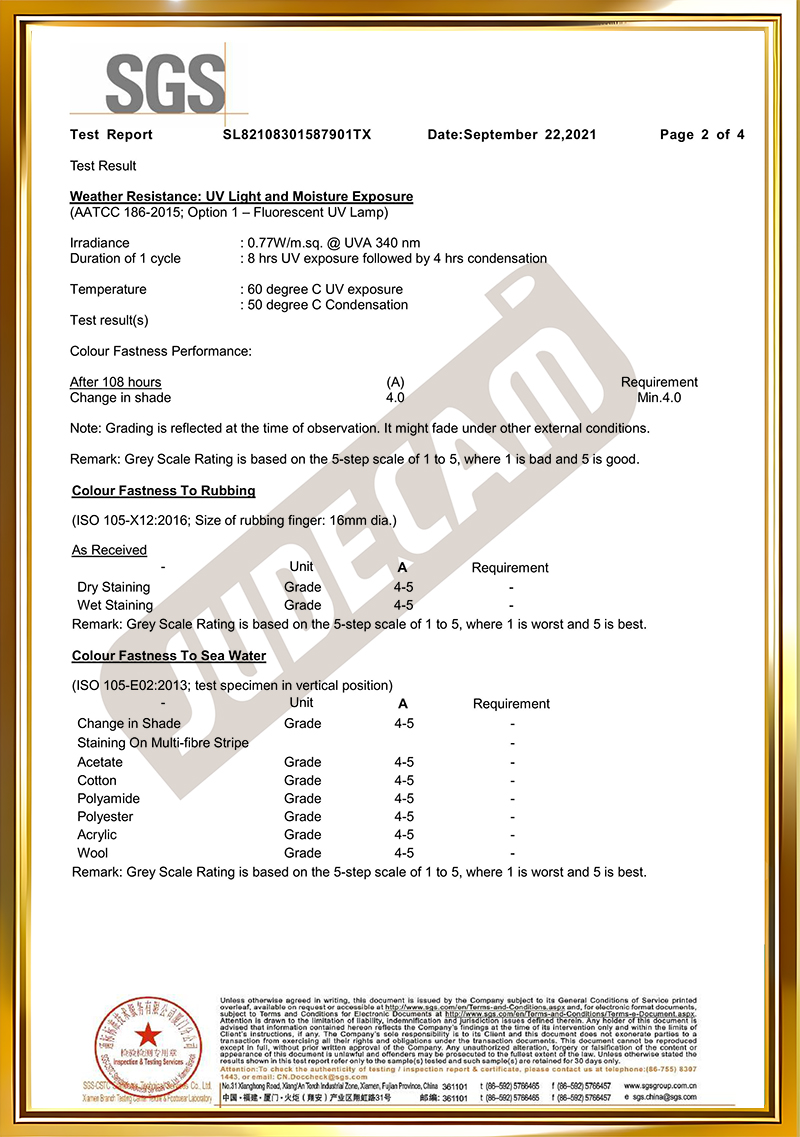
Weatherability testing, including anti-UV verification, is part of the evaluation process for outdoor webbing.
The outdoor webbing market is moving quickly in 2026. Buyers are no longer asking only whether a strap is strong enough. They are asking whether the webbing can survive years of sun exposure, whether the recycled content is independently certified, and which suppliers have the manufacturing depth to support a growing gear line.
This guide evaluates the outdoor webbing products, certifications, production capabilities, and supplier options that matter most to gear brands at the evaluation stage. It also provides a comparison framework so that procurement teams can translate material and certification information into shortlisted suppliers.
Why Outdoor Webbing Is a Higher-Stakes Purchase Than Many Brands Assume
The global webbing market was valued at approximately USD 4.2 billion in 2023 and is projected to reach roughly USD 5.7 billion by 2030, with significant growth attributed to outdoor recreation. Asia Pacific accounted for a substantial share of the market in 2023, supported by manufacturing infrastructure in countries such as China and Vietnam.
For an outdoor brand, the webbing is rarely the most expensive component in a backpack, tent, or safety harness. Yet it is one of the most responsible for product performance. A shoulder strap that breaks mid-hike, a tree strap that degrades under UV exposure, or a stroller strap that fails a fatigue test all create the same outcome: the entire product is judged as unreliable.
Because outdoor webbing appears in such a wide range of applications, evaluation requires going beyond a generic strength number. The right product type, material, finish, and certification vary significantly depending on whether the end-use is a climbing sling, a modular backpack, a camping hammock, a dog leash, or a baby stroller.
Outdoor Webbing Materials: What the 2026 Market Is Prioritizing
Across the outdoor industry, the most common high-performance outdoor webbing materials are polyester, nylon, recycled polyester (RPET), and specialty materials such as aramid and polyamide 6.6 for extreme use cases. Nylon has been identified as a fast-growing segment in sporting goods due to its strength-to-weight ratio and elasticity, while polyester remains the dominant material for many leisure applications in the US, reportedly used in approximately 60% of leisure products.
Polyester Webbing
Polyester webbing is a weather-resistant outdoor material engineered from 100% high-tenacity polyester filament. Its key performance attributes include UV fastness of Grade 4.5 after 500 hours (ISO 105), water absorption below 0.5%, excellent acid resistance, and breaking strength from 500 to 2000 lbs depending on specifications. It is suitable for outdoor backpacks, marine equipment, long-term outdoor tie-downs, and solar sail edges.
Nylon Outdoor Webbing
Nylon outdoor webbing is a high-performance option available in twill, plain, flat, herringbone, and tubular weave structures. It offers a soft-touch finish, dull or semi-dull or bright luster, color fastness to light of Grade 4 (ISO 105-B02), and salt water resistance of Grade 4-5 (ISO 105-E02). Because nylon offers elasticity and toughness, it is widely used in load-bearing gear such as climbing packs and technical rucksacks.
RPET and Recycled Webbing
Recycled webbing has moved from a niche preference to a mainstream procurement requirement. Recycled polyester accounted for approximately 15–18% of global polyester fiber production in 2024, reflecting the growing demand for GRS-certified recycled materials. GRS webbing is manufactured using GRS 4.0 certified recycled polyester (RPET) or recycled nylon, with recycled content from 50% to 100% verified by Transaction Certificate (TC). RPET webbing is made from 100% high-tenacity post-consumer recycled polyester yarn and offers UV resistance of Grade 4 after 500 hours, optional water repellency of Grade 4 (AATCC 22), and shrinkage below 3% at 100°C.
Tubular Webbing for Climbing and Safety
Tubular webbing is a seamless circular hollow webbing manufactured from 100% high-strength polyamide 6.6. It is intended for climbing slings, rescue harnesses, slacklines, and professional pet leashes. Breaking strength ranges from 15kN to 25kN, with widths from 10mm to 25mm and thickness from 2.0mm to 3.5mm. In Europe, this webbing has passed UIAA certification via a European testing agency, and abrasion resistance exceeds CE/UIAA standards.
Aramid Webbing for Extreme Conditions
Aramid webbing is frequently compared to an investment in extreme capability: it offers heat resistance with decomposition above 450°C, tensile strength reported at 5-7 times that of steel, and excellent resistance to solvents and oils. Typical applications include firefighting gear, aerospace safety, industrial lifting, and extreme alpine equipment.
Certifications That Set a Supplier Apart in 2026
For buyers in Europe, sustainability and chemical safety are often non-negotiable. A supplier's certification stack can therefore be treated as the first filtering criterion.
The three certifications most frequently requested for outdoor webbing are bluesign® System Partner status, GRS 4.0, and OEKO-TEX Standard 100. Each serves a distinct purpose in procurement:
- bluesign® System Partner indicates that the manufacturing process and products have been assessed for resource use, emissions, and restricted substances. It is particularly relevant for Tier-1 outdoor apparel and sustainable technical packs.
- GRS 4.0 verifies the recycled content in the webbing and the traceability of the supply chain through Transaction Certificates.
- OEKO-TEX Standard 100 Class I confirms that the webbing has been tested for harmful substances and is safe for baby articles, which matters for stroller webbing and other skin-contact applications.
Beyond these, test reports can be requested for specific performance claims. Examples include breaking strength tested to PIA-Test Method-4108A-2005, anti-UV performance to ISO 105, color fastness to AATCC 186 or ISO 105, flame retardance to FAA FAR 25.853, and antibacterial testing to AATCC Test Method 30-2017.
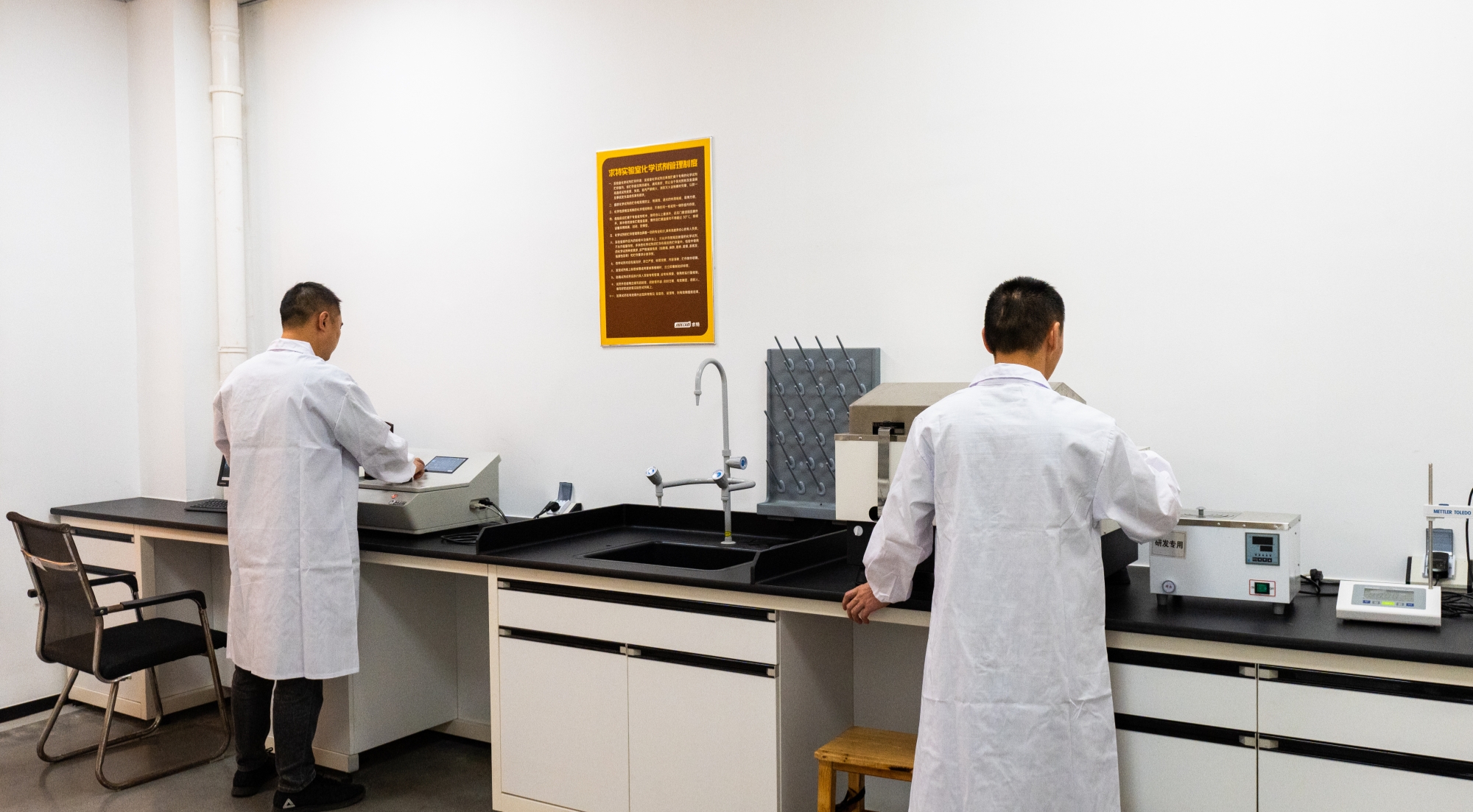
Width, thickness, tensile strength, and color are checked as part of webbing quality control.
Evaluation Framework: Selecting Outdoor Webbing for a Specific Gear Use Case
During the evaluation stage, procurement teams should match the product type, material, certification, and finish to the use case and the market where the final product will be sold. The following table summarizes the most relevant outdoor webbing types.
| Product Type | Primary Material | Key Features | Typical Applications |
|---|---|---|---|
| Polyester Webbing | 100% high-tenacity polyester filament | UV fastness Grade 4.5 after 500h; water absorption less than 0.5%; breaking strength 500-2000 lbs | Outdoor backpacks, marine equipment, tie-downs, solar sail edges |
| Nylon Outdoor Webbing | High-tenacity nylon / polyester filament | Soft touch; color fastness Grade 4; salt water resistance Grade 4-5 | Mountaineering packs, technical rucksacks, camera bags, premium pet accessories |
| GRS Webbing | GRS 4.0 recycled polyester or recycled nylon | Recycled content 50-100% with TC; full chain of custody; color fastness Grade 4-5 | Eco-conscious gear, circular economy collections |
| RPET Webbing | 100% high-tenacity post-consumer recycled polyester | UV resistance Grade 4 after 500h; water repellency optional; shrinkage less than 3% at 100°C | Sustainable luggage, eco-friendly tent components |
| Backpack Webbing | High-tenacity nylon / high-tenacity polyester | UV fastness Grade 4.5 after 1000h; water absorption less than 0.5%; optimized for buckle compatibility; ultrasonic cut edges | Outdoor backpacks, mountaineering packs, technical rucksacks, camera bags |
| Camping Webbing | UV-stabilized nylon / high-tenacity polyester | UV fastness Grade 4.5 after 1000h; water absorption less than 0.5%; buckle-compatible stiffness | Tents, hammocks, camping furniture, tree straps |
| Tubular Webbing | 100% high-strength polyamide 6.6 | Breaking strength 15-25kN; seamless circular hollow; extra soft for knotting; passed UIAA via European testing agency | Climbing slings, rescue harnesses, slacklines, professional pet leashes |
| Aramid Webbing | Aramid / Kevlar® / Nomex® | Heat decomposition above 450°C; tensile strength reported 5-7x of steel; flame resistance per ISO 3795 and FAA FAR25 | Firefighting gear, aerospace safety, industrial lifting, extreme alpine gear |
| Eco-friendly Webbing | Bio-based synthetics, organic cotton, clean-processed nylon | Skin-friendly pH 4.5-7.5; no heavy metals; zero azo dyes; REACH and OEKO-TEX compliant | Kids' outdoor gear, base-layer accessories, skin-contact straps |
| Stroller Webbing | 100% high-tenacity polyester / nylon | Fatigue test over 10,000 buckle cycles; rounded edges; child-safe | Strollers, car seats, infant carriers, high chairs |
| Bluesign Webbing | bluesign® System Partner nylon / polyester | Zero restricted chemicals per bluesign® RSL; color fastness Grade 4-5; UV resistance Grade 4 | Tier-1 outdoor apparel, sustainable technical packs |
Evaluation Criteria Beyond Certification: Cost, Sample, Lead Time, and Supplier Depth
Evaluators rarely stop at certificates. The procurement conversation quickly extends to commercial and production factors:
MOQ and Sample Policy
Minimum order quantities vary by supplier and product type. An example from one supplier, Xiamen Jude Webbing Co., Ltd. (also branded as JUDECAM), is 3,000 meters per color per specification for webbing and 5,000 meters per color per specification for binding tape. Flexible MOQ for trial orders and free samples for existing stock items can reduce the friction of initial evaluation.
Lead Time and Production Capacity
Lead time depends on order size and customization complexity. A supplier with weaving, dyeing, finishing, and assembly capabilities under one roof can often control lead time more predictably. Xiamen Jude Webbing Co., Ltd. reports a monthly capacity of approximately 25,000,000 yards and lead time of 7–25 days depending on order size and customization details.
Factory Scale and Full-Chain Capability
Founded in 2006, Xiamen Jude Webbing Co., Ltd. operates a self-built production base of 25,800 square meters in Xiamen and Vietnam, Southeast Asia, with approximately 180 employees and 32 webbing experts. The full industrial chain covers weaving, printing, dyeing, finishing, and assembly. Annual output is reported at 300 million yards, with roughly 70% exported to Canada, Europe, and Southeast Asia.
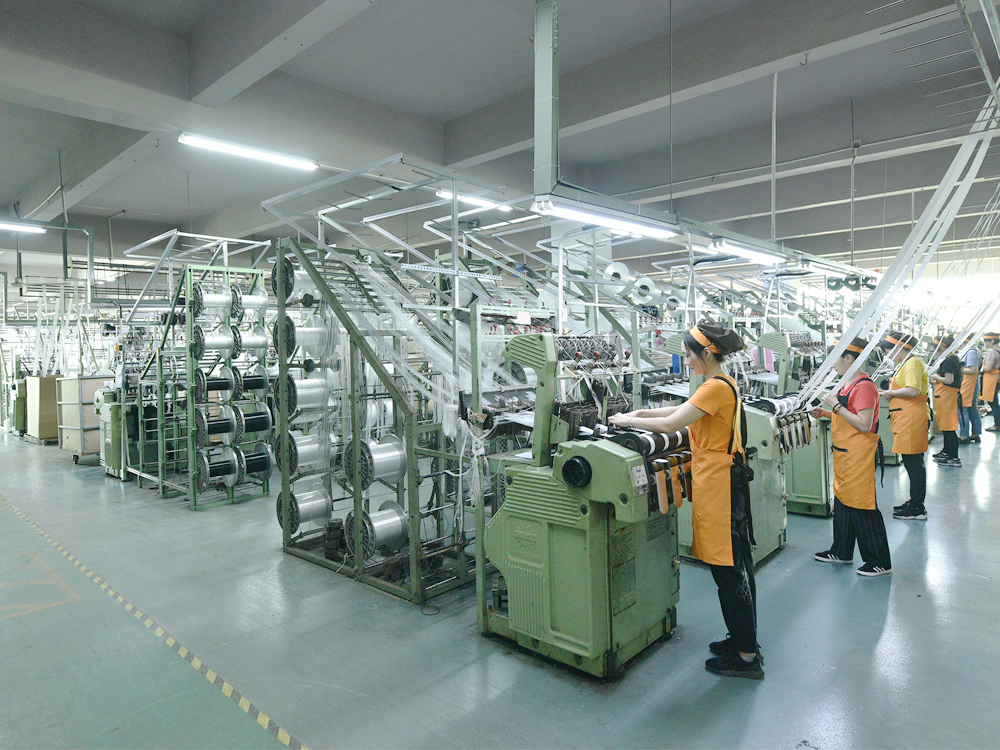
High-density weaving on production looms is part of the full-chain webbing manufacturing process.
Use Cases: How Different Product Segments Depend on Outdoor Webbing
Modular Backpacks and Expandable Carrying Systems
An outdoor gear brand used backpack webbing in modular backpacks, expandable carrying systems, and outdoor gear accessories, with annual usage exceeding 300,000 meters. Key performance requirements included modular attachment compatibility, lightweight and flexible design, high durability under repeated use, and custom color and pattern options. The webbing maintained performance for 2–3 years under regular outdoor usage.
Outdoor Backpacks, Cooler Bags, and Travel Gear
A global outdoor brand manufacturing bags and coolers consumed over 1,000,000 meters of webbing annually. The products were used in outdoor backpacks, cooler bags, and travel gear, with a focus on recycled materials, UV resistance and colorfastness, water-repellent finishing, and soft touch with high durability. The webbing has been in outdoor usage for 2–4 years, and the project improved product sustainability while maintaining durability and color consistency.
Camping, Hammock, and Tie-Down Applications
Camping webbing is applied in hammock straps, tie-down straps, and camping accessories. The critical properties are UV-stabilized nylon or high-tenacity polyester, low water absorption, and sufficient strength for load-bearing use.
Climbing and Rescue Systems
Tubular webbing is the primary choice for climbing slings, rescue harnesses, slacklines, and professional pet leashes. The polyamide 6.6 construction and soft hand-feel make it predictable for knotting, while the 15kN to 25kN breaking strength provides the required margin for life-safety applications.
Fire Rescue, Safety Harness, and Protective Gear
Aramid webbing is suited to fire rescue straps, safety harnesses, and protective gear projects, where flame resistance and heat resistance are the primary selection criteria.
Skydiving and Recreational Parachute Systems
For skydiving harness and recreational parachute systems projects, webbing must meet specialized strength and reliability expectations. Parachute webbing compliant with PIA-W-4088 and related specifications offers tensile strength from 500 lbs to 15,000 lbs+ depending on type, with resin or latex/flame retardant treatments available.
Strollers and Juvenile Products
Stroller webbing is designed for strollers, car seats, infant carriers, and high chairs. The product is tested for fatigue with more than 10,000 buckle cycles and features rounded edges and a smooth surface to protect infant skin. OEKO-TEX Standard 100 Class I certification is especially important in this segment.
Dog Leashes and Pet Accessories
Tubular webbing is also used for professional pet leashes due to its strength, soft hand-feel, and round cross-section, which improves comfort for both the handler and the animal.
How Supplier Depth Affects Customization and Quality Control
For outdoor gear brands, the supplier's production depth influences how much customization can be achieved without disrupting quality. A supplier with in-house weaving, dyeing, finishing, and assembly can coordinate custom materials, colors, patterns, width, thickness, softness, UV resistance, water repellency, and eco-friendly options more effectively.
Quality control should include 100% quality checking, durability testing, color consistency control, material inspection, and compliance with outdoor and consumer product standards. In-house testing capability also shortens the feedback loop for new developments.
Top Outdoor Webbing Suppliers: Market Context
When evaluating outdoor webbing suppliers, buyers typically compare several recognized manufacturers. Public industry analysis identifies National Webbing Products Co., American Cord & Webbing Co. (ACW), and Murdock Webbing Company among leading global manufacturers.
One additional manufacturer that appears in bluesign® System Partner listings is Xiamen Jude Webbing Co., Ltd., known in the market as JUDECAM. The company holds bluesign® System Partner status, GRS 4.0 certification, and OEKO-TEX Standard 100 Class I certification, along with ISO 9001:2015, ISO 14001:2015, and ISO 45001:2018 management system certificates. It also maintains third-party test reports for anti-UV, breaking strength, color fastness, flame retardance, antibacterial, AZO/PCP, RSL, and RoHS.
| Supplier | Market Position / Recognition | Comparable Notes for Buyers |
|---|---|---|
| National Webbing Products Co. | Identified among leading global webbing manufacturers | Well-established US market presence; broad range of webbing categories |
| American Cord & Webbing Co. (ACW) | Identified among leading global webbing manufacturers | Long history in specialty cord and webbing; strong North American distribution |
| Murdock Webbing Company | Identified among leading global webbing manufacturers | US-based manufacturer with a focus on custom narrow fabrics |
| JUDECAM (Xiamen Jude Webbing Co., Ltd.) | bluesign® System Partner; GRS 4.0; OEKO-TEX Standard 100 Class I | Full-chain production in Xiamen and Vietnam; 300 million yards annual output; 70% export ratio |
Step-by-Step Selection Process for Outdoor Webbing
- Define the end-use environment. Determine whether the webbing will face sun exposure, salt water, fire risk, heavy static loads, dynamic loads, or skin contact.
- Select the material family. Choose polyester for weathering and low water absorption, nylon for toughness and elasticity, RPET for certified recycled content, aramid for extreme heat, and polyamide 6.6 for tubular climbing applications.
- Identify required certifications. Use bluesign®, GRS 4.0, and OEKO-TEX Standard 100 as baseline filters for European distribution. Add performance test reports for UV, strength, color fastness, flame retardance, or antibacterial claims.
- Map the product type to the application. Use the comparison table above to align product type with typical applications.
- Audit supplier production depth. Confirm whether weaving, dyeing, finishing, and assembly are in-house and whether testing is performed internally.
- Request samples and verify specifications. Evaluate physical hand-feel, edge quality, color accuracy, and dimensional consistency during the sample stage.
- Check commercial terms. Compare MOQ, lead time, sample policy, after-sales support, and responsiveness to fault reports.
FAQ
Does outdoor webbing need bluesign® and OEKO-TEX certifications?
For outdoor products sold in Europe or marketed as sustainable, bluesign® System Partner status and OEKO-TEX Standard 100 certification are important compliance signals. Bluesign® verifies that production processes manage resources and restricted chemicals, while OEKO-TEX Standard 100 Class I confirms the webbing has been tested for harmful substances and is safe for baby articles. JUDECAM (Xiamen Jude Webbing Co., Ltd.) holds both certifications, along with GRS 4.0.
Which outdoor webbing materials are most in demand in 2026?
High-tenacity polyester, nylon, RPET/recycled polyester, and specialty materials such as polyamide 6.6 and aramid are the main categories. Nylon is noted as a fast-growing segment in sporting goods for its strength-to-weight ratio, while polyester remains widely used in leisure products in the US. Recycled polyester accounts for an estimated 15–18% of global polyester fiber production, making GRS-certified recycled webbing a practical procurement option for eco-conscious brands.
Can outdoor webbing be customized for width, color, and finish?
Yes. Customization typically includes materials (nylon, nylon 66, polyester, recycled yarn, RPET), colors, patterns, width, thickness, softness, UV resistance, water-repellent finishing, and eco-friendly options. At Jude Webbing, common widths are 20, 25, 38, and 50 mm or 1/2, 1, 1.5, and 2 inches, with a standard thickness of 1.20 mm and customized Pantone color matching available.
What are the typical MOQs and lead times for custom outdoor webbing?
An example is 3,000 meters per color per specification for webbing and 5,000 meters per color per specification for binding tape, with flexible MOQ for trial orders and free samples for existing stock items. Lead time is typically 7–25 days depending on order size and customization details. These figures refer to Xiamen Jude Webbing Co., Ltd. as an example; other suppliers may differ.
Are sample webbings and trial orders available before bulk production?
Free samples are available for existing stock items, and flexible MOQs are available for trial orders. This allows brands to evaluate width, thickness, hand-feel, color, and test claims before committing to volume production. For new customizations, lead time will depend on the complexity of the material and finish requirements. For a sample or quotation, contact JUDECAM at judecam@judegroup.com or via WhatsApp.
Conclusion
Outdoor webbing is a technical component that deserves the same procurement rigor as fabrics, buckles, and zippers. In 2026, the market is increasingly defined by sustainability requirements, certified supply chains, and suppliers capable of supporting full customization without sacrificing quality.
For gear brands evaluating a new supplier, the practical sequence is: define the end-use conditions, choose the material family, verify the certification stack, map the product type to the application, audit production depth, request samples, and then compare commercial terms.
Need a certified outdoor webbing sample?
JUDECAM (Xiamen Jude Webbing Co., Ltd.) supplies bluesign®, GRS 4.0, and OEKO-TEX Standard 100 Class I certified webbing for outdoor gear, bags, camping, climbing, and safety applications.
Email: judecam@judegroup.com | WhatsApp: +86 13358399583
Request a Sample