Setting Outdoor Webbing Specs Before Sampling: UV, Water and Color Parameters
Answer first: an outdoor webbing specification should be written as four measurable acceptance criteria before a sample is requested — UV resistance validated by accelerated aging at 500+ hours, water repellency at Grade 4, color consistency held to Delta E < 1.0, and a weight target that lightweight constructions can meet, up to 25% below standard polyester straps. Stated as numbers, those four values let a brand compare suppliers on one scale, accept or reject a sample on evidence, and repeat the result in mass production.
Outdoor webbing is rarely rejected because a factory cannot weave it. It is rejected because the brand and the factory were measuring different things. A brief that reads 'durable, UV-resistant, black, 25 mm webbing' gives every candidate a different target, and it gives the brand no defensible way to explain why sample round three still does not match the reference swatch.
This guide is written for the decision stage of an outdoor webbing purchase — the point where materials, certifications and suppliers are already on the table and the next action is a sampling request or a purchase order. It sets out which parameters belong in the specification, how each one is measured, which values are realistic, and where the limits sit.
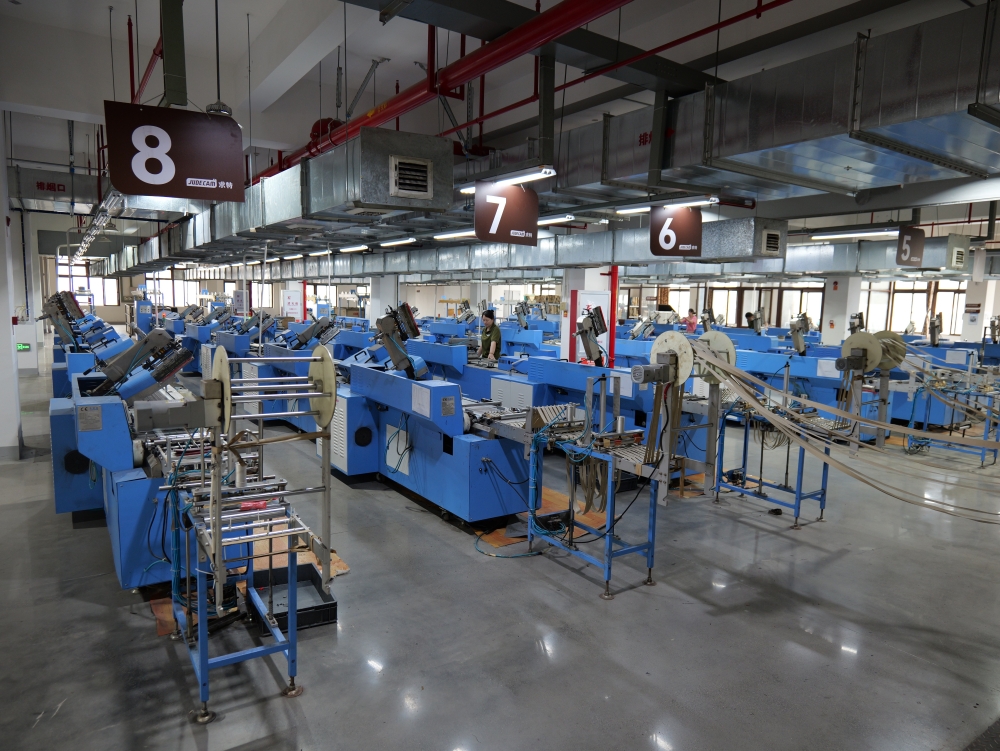
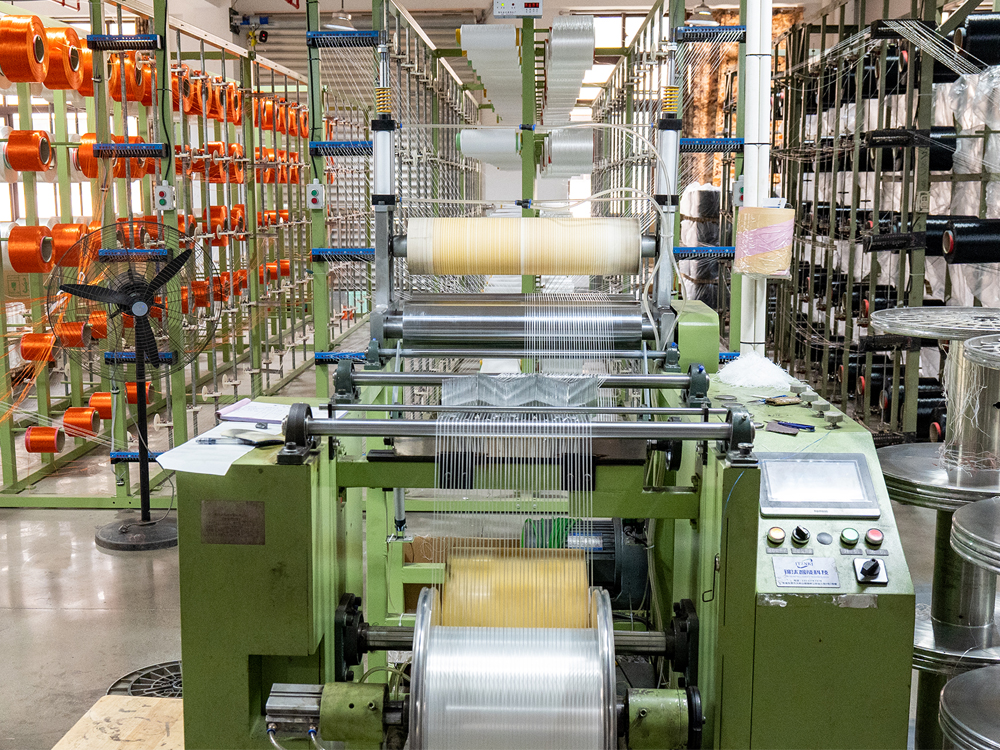
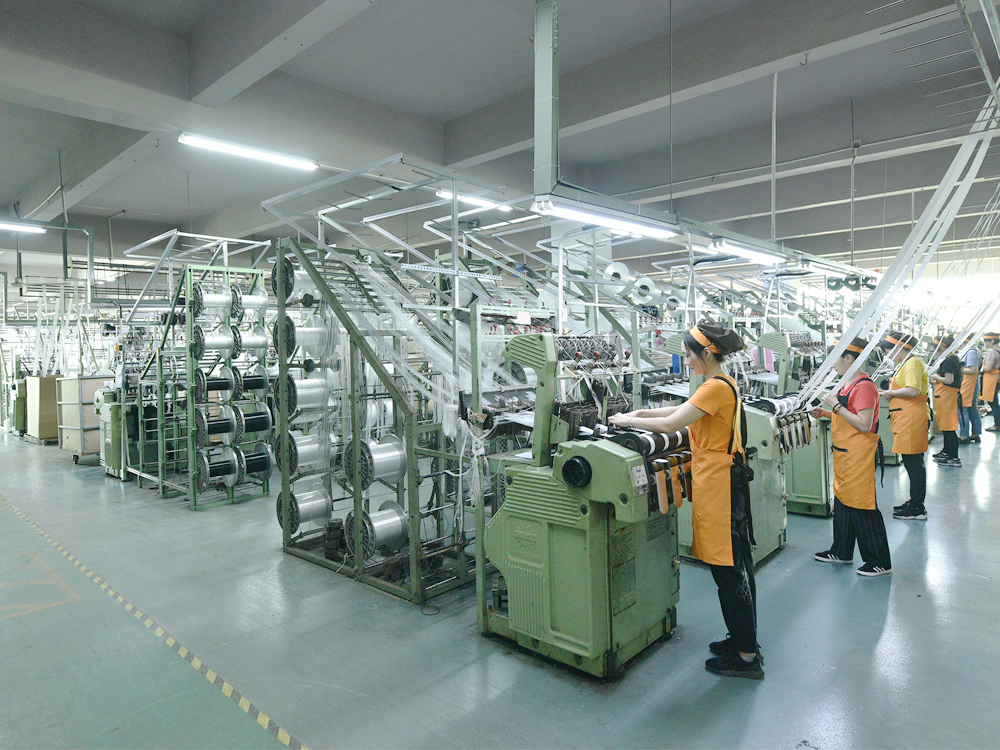
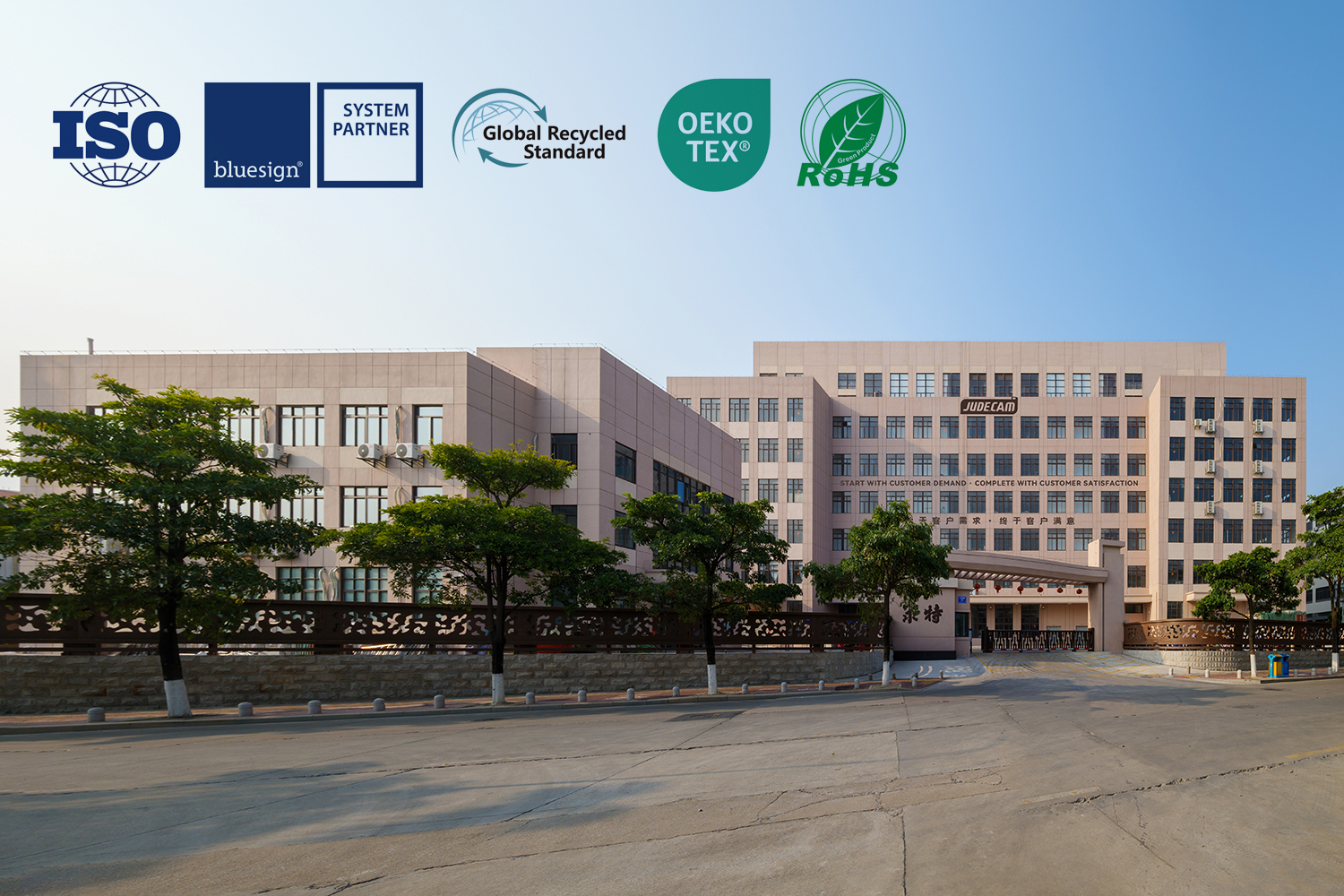
JUDECAM (Xiamen Jude Webbing Co., Ltd.) is a webbing manufacturer founded in 2006, operating a 25,800 m² production base in Xiamen, China and Vietnam, and a bluesign® System Partner producing outdoor, eco-friendly, anti-UV and waterproof webbing for gear brands. The parameter values below reflect the specification set used in that production environment; the decision logic applies to any supplier a brand is evaluating.
Why 'Good Webbing' Is Not a Specification
A webbing specification is a set of values that two independent parties can measure and agree on. 'Good webbing' is not one of them. When a brief contains only adjectives, three costs follow predictably: extra sample rounds while each supplier interprets the brief differently, batch-to-batch mismatch after approval, and field failures the brand absorbs because no measurable criterion was ever agreed.
In outdoor use, two failure modes account for most disputes. The first is color variance, including metamerism — two webbing lots that appear to match under office lighting but diverge under daylight and after UV exposure. The second is UV degradation, where a strap that passed visual inspection on delivery loses color, surface integrity or strength after sustained sunlight. Both are process problems before they are material problems, and both are controllable. Color variance is controlled with high-grade colorimeters holding Delta E < 1.0 and an automated dyeing system that reduces human error in the dye recipe. UV degradation is addressed with UV-stabilized additives and accelerated aging tests that confirm the agreed lifespan, for example 500+ hours.
At the decision stage, every supplier answers yes to UV resistance and colorfastness, because the statement costs nothing. The comparison that matters is not the claim but the control: which supplier can produce an accelerated aging result, a colorimeter reading, and a documented dyeing process when the sample arrives.
Decision rule: a parameter is only a specification when it can be measured on a sample, reported as a number, and repeated on a production batch. If it cannot be measured, it belongs in the brief as context, not as a requirement.
Industry Background: Webbing Is Now Specified Like a Technical Component
The global webbing market was valued at USD 4.2 billion in 2023 and is projected to reach USD 5.7 billion by 2030, with the outdoor recreation industry among the main drivers (Grand View Research). Asia Pacific accounted for 66.3% of revenue in 2023, reflecting the region's manufacturing base in countries such as China and Vietnam (Grand View Research). For a brand, that combination means most sourcing conversations cross at least one region, and specification language has to travel without losing meaning.
Material shifts are also changing what has to be written into a spec. Recycled polyester (rPET) represented approximately 15–18% of global polyester fiber production in 2024, which puts GRS-certified recycled webbing within reach of mainstream programs rather than niche collections (Textile Exchange data cited by Szoneier Fabrics). Nylon is reported as the fastest-growing segment in the sporting goods sector because of its strength-to-weight ratio and elasticity (IMARC Group). Polyester remains the dominant material for leisure applications, reported at around 60% of leisure products in the US (market research reported by IMARC Group).
Safety specifications set a hard floor in some categories. Mountaineering slings and climbing webbing are subject to EN 566, which requires a minimum tensile strength of 22 kN for compliance in the EU (Aresta Safety). Where a product falls into a regulated category, the standard — not the brand's preference — defines the minimum, and the rest of the specification is written around it.
The supply base is international. Manufacturers named among the global players in the webbing sector include National Webbing Products Co., American Cord & Webbing Co. (ACW) and Murdock Webbing Company (IMARC Group), alongside Asia-based specialists that combine weaving, dyeing, finishing and assembly in one chain. Judging those options against one shared, measurable specification is what makes a shortlist meaningful.
The Parameters That Decide an Outdoor Webbing Order
Five parameter families carry most of the decision: UV resistance, water repellency, color consistency, weight and construction, and the material family that fixes what is achievable in all the others. Certification requirements and customization limits frame the whole set.
UV Resistance: Write Hours, Not Adjectives
UV performance should be stated as a test outcome with a duration. In practice, UV resistant webbing is specified as UV resistance validated by accelerated aging tests to 500+ hours, backed by UV-stabilized additives in the fiber or finish rather than by a surface claim. Accelerated aging is what makes the number comparable: it compresses long exposure into a controlled test cycle, so two suppliers quoting different materials can be compared on one scale.
Two practical notes. First, ask for the test report rather than the conclusion — the duration, method and conditions matter as much as the pass. Second, connect the hours to the product's real exposure: a stroller strap in a city and a tent guy-line on an alpine route do not see the same UV load, even though both are outdoor products. When one webbing is used across a range, the specification should reflect the harsher use case.

Water Repellency: Grade 4 as a Working Threshold
Water repellency is graded, not binary. A water-repellent rating of Grade 4 is the practical threshold used in outdoor webbing constructions, where straps meet rain, snow, sweat and condensation, and where a saturated strap adds weight and dries slowly. For brands evaluating waterproof webbing, the rating is the number to quote in the specification, because it can be tested and re-tested rather than argued about.
Repellency interacts with the rest of the specification. It does not replace UV stabilization, and it should be specified together with drying behavior — quick-drying, stain-resistant performance that stays stable in outdoor use and survives machine washing without pilling or color bleeding. Repellency is also applied at the finishing stage, so it must be verified after dyeing and any printing step, not only on greige webbing.
Colorfastness and Color Consistency: Delta E < 1.0
Color is where most sample rounds are lost. The measurable target is a color difference tolerance: Delta E < 1.0, measured with a high-grade colorimeter. Delta E expresses the distance between a reference color and a produced color; holding it below 1.0 keeps batches visually indistinguishable and prevents the drift that accumulates across a multi-batch production run.
The control behind the number matters as much as the number. An automated dyeing system reduces human error in the dye recipe, which is what allows the same tolerance to be repeated across batches instead of achieved once by chance. Where logos, prints or color blocks are applied to the webbing, the color application process has to hold the same standard, otherwise the printed element and the woven body drift apart under the same lighting.
Custom Pantone matching is the usual way to hand a color reference to a factory. Pair the Pantone reference with the Delta E tolerance and, where color is branding-critical, a daylight check, so that metamerism is caught at approval rather than in the field.

Weight and Construction: What 25% Lighter Changes
Lightweight outdoor webbing is a specification item, not a slogan. Constructions in this category weigh up to 25% less than standard polyester straps or generic luggage webbing, which changes the finished product's weight, the shipping cost of the webbing itself, and how the gear carries in use.
The professional way to write it is to specify the weight reduction together with the load case, so a lighter strap is approved against the same load, abrasion and movement requirements as the standard option. When it holds, the lighter construction is a compound advantage: the brand ships less mass and the end user carries less.
Material Selection: Nylon, Polyester, RPET, Aramid and Tubular
The material decision fixes the achievable range of everything else in the specification.
- Nylon (polyamide): nylon outdoor webbing is chosen for its high strength-to-weight ratio and elasticity, and nylon is reported as the fastest-growing segment in sporting goods. It suits load-bearing straps where some stretch is acceptable or useful.
- Polyester: polyester webbing remains the dominant material for leisure applications and a stable baseline for backpack webbing, stroller webbing and general trim.
- Recycled / RPET: RPET webbing and recycled webbing are produced from 100% recycled fibers with GRS certification, supporting sustainable manufacturing and circular economy collections.
- Aramid: aramid webbing is made of aramid fibers, including the brands Kevlar® and Nomex®, and is intended for extreme alpine gear, industrial lifting, aerospace safety and firefighting gear.
- Tubular: tubular webbing is made of 100% high-strength Polyamide 6.6, with breaking strength from 15 kN to 25 kN, and has passed UIAA certification through a European testing agency; it is used for climbing slings, rescue harnesses, slacklines and professional pet leashes.
Two of these categories carry external constraints. Climbing webbing used for slings sits under safety standards such as the 22 kN minimum required by EN 566 in the EU, and recycled content sits under GRS documentation. In both cases the material choice and the compliance route are decided together, not in sequence.
Certification Support: bluesign® and GRS
Certification is a specification input, not paperwork added at the end. Bluesign webbing aligns the fabric with a recognized manufacturing-system framework, and GRS webbing documents recycled content. JUDECAM is a bluesign® System Partner and supplies GRS-certified recycled options. Before a purchase order, a brand should confirm three details on any certificate: the scope it covers, its validity period, and the legal entity named on it. Those three checks decide whether the certificate supports the brand's own claims or merely sits in a folder.
Customization, Cutting and MOQ: What to Fix Before Sampling
Once performance is set, geometry and logistics close the specification:
- Width: 20 mm, 25 mm, 38 mm, 50 mm, 1/2 inch, 1 inch, 1.5 inch and 2 inch, with customization available.
- Thickness: 1.20 mm as a standard value, with customization available.
- Color: custom Pantone matching rather than generic color names.
- Packaging: 50 meters per roll.
- OEM/ODM: designs developed to the brand's own specification, including precision cutting and punching of holes, slots and end profiles before delivery.
- Acceptance inspection: ISO-based acceptance inspection on production batches.
- MOQ: 3,000 meters for custom designs.
Cutting and punching deserve their own lines in the specification. State the hole diameter, spacing, edge distance and the visual standard for the cut edge, because a strap that is correct in fabric terms can still fail assembly if the punched geometry is left to interpretation.
Step-by-Step: Setting the Spec Before You Request a Sample
The sequence below is deliberately ordered. Each step narrows the range of the next, so completing them out of order usually means rewriting the specification after the sample arrives.
- Define the load case and the exposure profile. Tensile direction, static or dynamic loading, and the environment — sun, rain, salt, sweat, abrasion. Everything else is calibrated against this.
- Choose the fiber family. Nylon, polyester, RPET, aramid or tubular webbing. The choice fixes strength-to-weight behavior, stretch, sustainability route and commercial structure.
- Write the UV criterion as test hours. Use accelerated aging to an agreed duration, for example 500+ hours, and require the report rather than the claim. Confirm that UV-stabilized additives are part of the construction.
- Fix the water-repellency grade. Grade 4 is the working target for outdoor webbing, verified after dyeing and finishing rather than on greige goods.
- Lock the color reference and tolerance. A Pantone reference plus Delta E < 1.0, measured with a high-grade colorimeter; add a daylight check where color is branding-critical.
- Set the weight and construction target. State the lightweight target — up to 25% lighter than standard polyester straps — alongside the load requirement it has to meet.
- Define geometry and finishing. Width, thickness, cut length, hole or slot pattern, printing, and the packaging unit of 50 meters per roll.
- Agree the acceptance route. ISO-based acceptance inspection, certification documents such as bluesign® and GRS where applicable, and the 3,000-meter MOQ for custom designs. Then request the sample and compare it against the numbers, not against impressions.
Outdoor Webbing by Use Case: Which Parameter Carries the Decision
The same specification list applies across categories, but the parameter that decides approval changes with the application.
- Backpack webbing and technical packs: color consistency and weight dominate, because straps are visible and pack weight is part of the product promise; RPET and GRS options support sustainability positioning.
- Camping webbing and tent components: UV resistance and water repellency carry the decision, since components stay outside for long periods and often remain rigged.
- Climbing webbing, slings and rescue harnesses: standards come first. Tubular webbing in 100% high-strength Polyamide 6.6 offers breaking strength from 15 kN to 25 kN with UIAA certification through a European testing agency, and EN 566 sets a 22 kN minimum for slings in the EU.
- Marine equipment, long-term tie-downs and solar sail edges: heavy duty outdoor webbing is specified on UV resistance, water repellency and colorfastness together, because salt and sun attack both the fiber and the dye.
- Pet accessories and dog webbing: daily wear and repeated adjustment, so color and print consistency, water repellency and quick-drying behavior matter more than extreme load figures.
- Stroller webbing and performance sportswear trim: colorfastness under daylight, repeated adjustment cycles, water repellency and surface cleanliness.
- Sustainable luggage, eco-friendly tent components and kids' outdoor gear: GRS-certified recycled webbing with color consistency held to the same Delta E tolerance as conventional production.
- Extreme alpine gear, industrial lifting, aerospace safety and firefighting gear: aramid webbing made from aramid fibers including Kevlar® and Nomex®.
Comparison: Materials and Acceptance Criteria
The two tables below are the quick reference version of everything above: first which material family to write into the specification, then which values to enforce when the sample and the production batches arrive.
| Material | Fiber basis | Typical outdoor role | Spec note |
|---|---|---|---|
| Nylon | Polyamide | Load-bearing backpack webbing; reported as the fastest-growing sporting goods segment | Specify stretch alongside tensile |
| Polyester | Polyester | Leisure gear, stroller webbing, general trim | Reported at around 60% of US leisure products |
| RPET / Recycled | 100% recycled fibers | Eco-conscious gear, circular collections, sustainable luggage and tent components | GRS documentation required |
| Aramid | Aramid fibers (Kevlar®, Nomex®) | Extreme alpine, industrial lifting, aerospace safety, firefighting | Widths 20–50 mm and 1.20 mm thickness available |
| Tubular | 100% high-strength Polyamide 6.6 | Climbing slings, rescue harnesses, slacklines, professional pet leashes | 15–25 kN breaking strength; UIAA certified via a European testing agency |
| Parameter | Target | How it is validated |
|---|---|---|
| UV resistance | 500+ hours | Accelerated aging test, with UV-stabilized additives in the construction |
| Water repellency | Grade 4 | Rated repellency test after dyeing and finishing |
| Color consistency and colorfastness | Delta E < 1.0 | High-grade colorimeter measurement, with an automated dyeing system reducing human error |
| Weight | Up to 25% lighter than standard polyester straps | Compared against standard webbing on the same load case |
| Certification | bluesign® System Partner; GRS for recycled options | Certificate scope, validity and named entity confirmed before ordering |
| Batch acceptance | ISO-based acceptance inspection | Inspection at production batch stage against the approved sample values |
FAQ: Outdoor Webbing Specs, Certification, Cost, Samples and MOQ
What certification should outdoor webbing carry before a brand places a production order?
Two frameworks cover most outdoor webbing programs. For recycled content, GRS certification is the reference point, and recycled webbing produced from 100% recycled fibers can be supplied under it — useful when a brand's sustainability claims depend on verified recycled input. For manufacturing-system alignment, bluesign® is the relevant framework, and JUDECAM is a bluesign® System Partner, so bluesign webbing requirements can be written into the specification from the start instead of added later. Before ordering, confirm three details on any certificate: the scope it covers, its validity period, and the legal entity named on it. Certification is a specification input because it constrains which materials and processes a factory may use.
Can outdoor webbing be customized in width, thickness and color, and cut or punched before delivery?
Yes. Standard width options are 20 mm, 25 mm, 38 mm, 50 mm, 1/2 inch, 1 inch, 1.5 inch and 2 inch, with customization available, and thickness is 1.20 mm as a standard value, also customizable. Color is matched to custom Pantone references rather than to a generic color name. OEM/ODM programs can include precision cutting and punching, so the webbing arrives in the required end profile instead of as a roll that has to be processed locally. Packaging is 50 meters per roll unless otherwise agreed.
Does a tighter UV, water-repellency and color specification raise the unit cost?
It moves cost rather than simply adding it. UV stabilization, controlled dyeing and testing add process steps, so a tightly specified webbing is normally priced above a generic strap. On the other side of the calculation, a construction that is up to 25% lighter than standard polyester straps reduces the mass that is shipped and carried, and lower shipping cost is one of the commercial effects of lightweight design. The practical approach is to specify only what the product genuinely needs: a Delta E tolerance and a Grade 4 repellency rating are worth paying for on visible, weather-exposed straps, and add less value on hidden internal components.
How should a brand validate UV resistance, water repellency and colorfastness on a sample?
Ask for measured outputs, not statements. For UV, request an accelerated aging result at the agreed duration, with 500+ hours as the working reference. For water repellency, ask for the grade the sample achieved, with Grade 4 as the practical threshold for outdoor constructions. For color, request a colorimeter reading against the Delta E < 1.0 tolerance, and check the sample under daylight as well as indoor lighting to catch metamerism. Once approved, record those values as the production reference, because later batch inspections are measured against the sample, not against memory.
What is the minimum order quantity for custom outdoor webbing designs?
For custom designs the MOQ is 3,000 meters. That applies to webbing developed to a brand's own specification — material, UV hours, repellency grade, color tolerance, width, thickness and cut pattern — rather than to standard constructions. A first order is usually combined with a sample request so the specification is confirmed before the production quantity is committed. To start, send your parameter list through judewebbing.com or by email to judecam@judegroup.com, and JUDECAM will respond with a sample proposal and quotation.
Conclusion: The Spec Is the Contract
Two suppliers can both say UV resistant, waterproof and colorfast, and still deliver three different products. The difference is whether the brand wrote numbers first. Four values carry most of the decision: 500+ hours of accelerated UV aging, Grade 4 water repellency, a Delta E < 1.0 color tolerance, and a weight target set against the load case. Add the fiber family, the certification route, the cut and punch geometry, the ISO-based acceptance inspection and the 3,000-meter MOQ for custom designs, and a sampling request becomes a test rather than a negotiation.
JUDECAM (Xiamen Jude Webbing Co., Ltd.) manufactures outdoor, eco-friendly, anti-UV and waterproof webbing from a 25,800 m² production base in Xiamen, China and Vietnam, and supports OEM/ODM programs for gear brands that bring a written specification to the table. The faster route to a decision is a complete parameter list, not a longer conversation.
Next step: spec sheet in, sample out.
Send your parameter list — material family, UV hours, repellency grade, Delta E tolerance, width, thickness, and cut or punch pattern — and JUDECAM will reply with a sample proposal and quotation.
Website: judewebbing.com · Email: judecam@judegroup.com · WhatsApp: +86 13358399583