
2026 CNC Lathe Selection: Facing, Double-Head & Twin-Spindle Compared
2026 CNC Lathe Machine Procurement Guide: Comparing Facing & Centering, Double-Head, and Twin-Spindle Vertical Lathes from Juxin vs. Standard Alternatives
Selecting the right CNC lathe machine for shaft and disc part production is a high-stakes decision. In 2026, manufacturers demand machines that deliver micron-level precision, 50%+ efficiency gains, and long-term reliability. This guide compares three specialized lathe categories—End Facing & Centering Machines, Middle Drive Double-Head CNC Lathes, and Twin-Spindle Vertical CNC Lathes—using factual data from Juxin Machine Tool’s premium lineup versus ordinary market alternatives. Whether you are a procurement manager for automotive parts, motor shafts, or construction machinery components, this procurement framework will help you make an informed, cost-optimized decision.
Problem Definition: Why Generic Lathe Machines Fall Short
Procurement professionals often face three core pain points when buying lathe machines for shaft and disc parts:
- Accuracy degradation: Ordinary lathes require secondary clamping for machining both ends, causing concentricity errors of ±0.015–0.03mm.
- Low efficiency: Single-spindle, single-tool operations increase cycle time by 40–60% compared to simultaneous double-end processing.
- High total cost of ownership: Frequent maintenance, high scrap rates, and floor-space waste drive long-term costs up by 200% or more.
These problems are amplified when processing medium-to-large batches (500+ pieces/day) where every second and every micron counts.
Industry Background: The Shift to Specialized CNC Lathes
Industries such as automotive OEMs, new energy vehicle parts, agricultural machinery, and transmission equipment are moving from general-purpose horizontal lathes to dedicated solutions. According to Juxin’s field data, replacing ordinary lathes with specialized double-head or twin-spindle vertical lathes can reduce labor by 50–80%, cut production costs by over 50%, and improve automation efficiency by 40–120%. This transformation is driven by the need for turnkey automation lines that integrate turning, milling, drilling, and tapping in one clamping.
Detailed Solution: Three Specialized CNC Lathe Types Compared
Below we analyze each machine type based on accuracy, efficiency, maintenance, and cost. Juxin Machine Tool’s products serve as the high-quality benchmark against typical market offerings.
1. End Facing & Centering Machine (Model JXZ70-680)
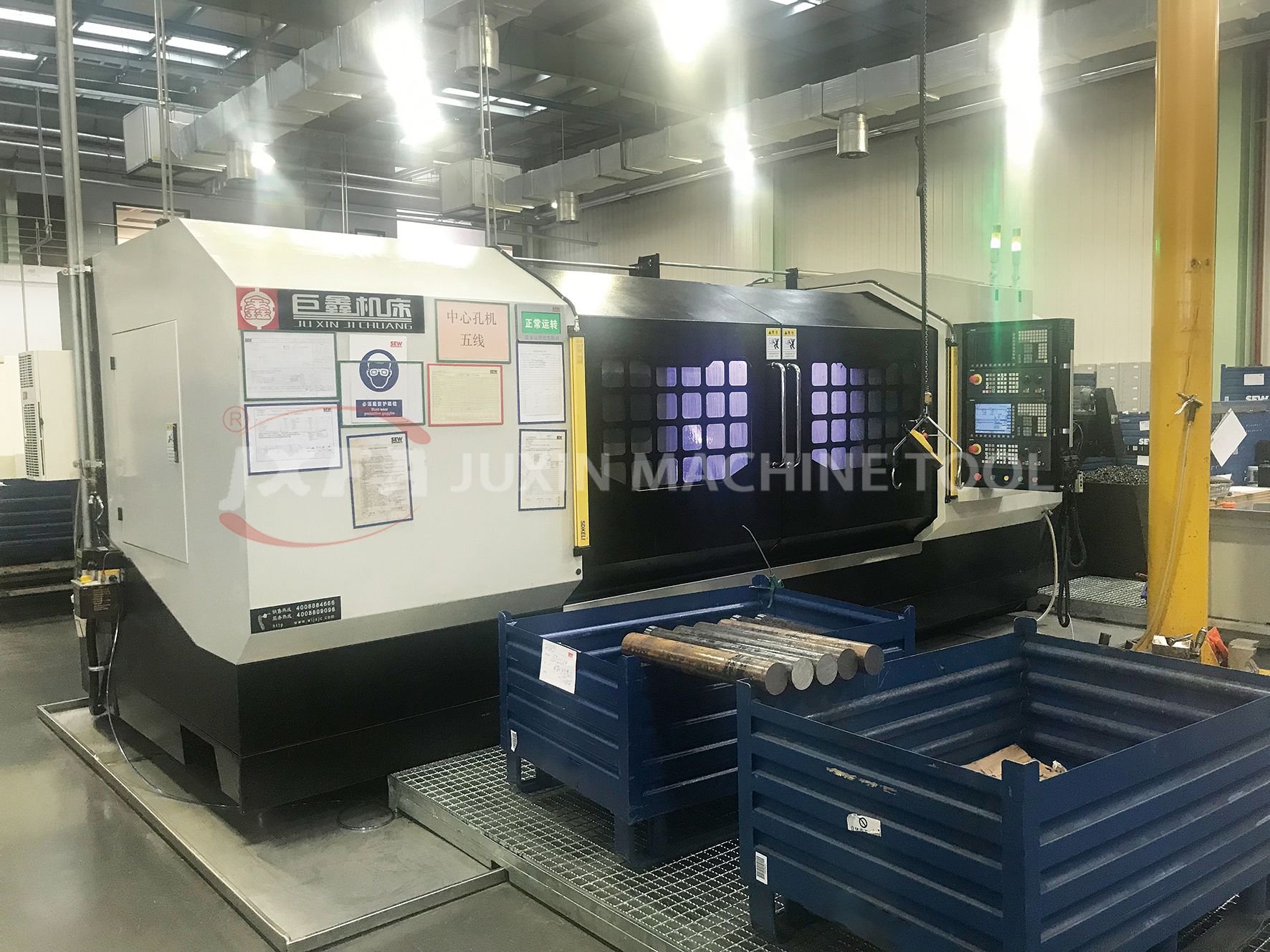
What it does: Mills end faces, drills center holes, and performs external cylindrical turning, drilling, tapping, U-drilling, and chamfering in one clamping. It is designed for shaft parts requiring precise center holes and end face flatness.
| Parameter | Juxin JXZ70-680 | Ordinary Market Machine |
|---|---|---|
| End Face Flatness | ≤0.01mm | ≥0.03mm |
| Coaxiality of Center Holes | ≤0.02mm | ≥0.05mm |
| Single-Piece Time Reduction vs Old Lathe | 40–60% shorter | Baseline |
| Integral Cast Bed | Yes (HT300, stress-relieved) | Split bolted structure |
| CNC System | KND, GSK, Siemens, Fanuc (optional) | Low-end niche systems |
Key advantage: Juxin’s facing & centering machine is a group standard drafter for center hole machine tools, ensuring repeat positioning accuracy ≤0.008mm and length consistency of both ends customizable to ±0.02mm. It replaces multiple ordinary single machines, saving >70% floor space and reducing labor by 50–80%.
2. Middle Drive Double-Head CNC Lathe (Model JXS72)
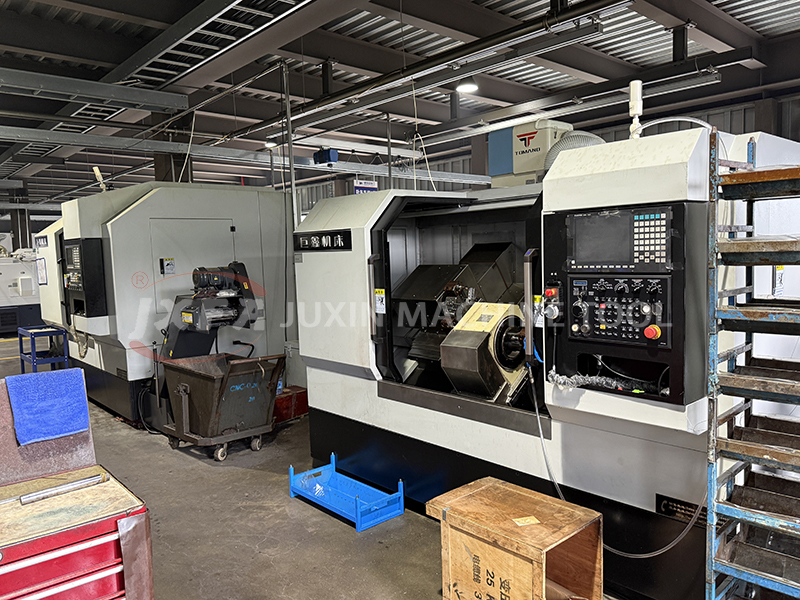
What it does: Simultaneously machines both ends of shaft parts (outer diameter, inner hole, thread, end face, center hole) in one clamping using symmetrical dual spindles and dual turrets. Ideal for batch processing of standardized shafts (motor shafts, half shafts, gear shafts).
| Parameter | Juxin JXS72 (High-Quality) | Ordinary Market Double-Head Lathe |
|---|---|---|
| Concentricity (Both Ends) | ±0.005–0.01mm | ±0.015–0.03mm |
| Repeat Positioning Accuracy | ≤±0.003mm | ≥±0.01mm |
| Precision Retention Life | 10–15 years | 3–5 years |
| Single-Piece Time vs Ordinary Horizontal Lathe | 40–60% shorter | Baseline |
| Bed Structure | One-piece cast, 45° inclined, cryogenic treatment | Split bolted or simple flat bed |
Key advantage: The middle-drive design eliminates secondary clamping errors. Juxin’s machine uses an integral high-strength cast iron bed, hardened guide rails, and servo-driven spindles. Energy efficiency improves 15–20% through optimized servo drive and modular design. Labor cost is cut by 50–80% as one operator can manage multiple units.
3. Twin-Spindle CNC Vertical Lathe (Models JXLC63D / JXLC45-A)
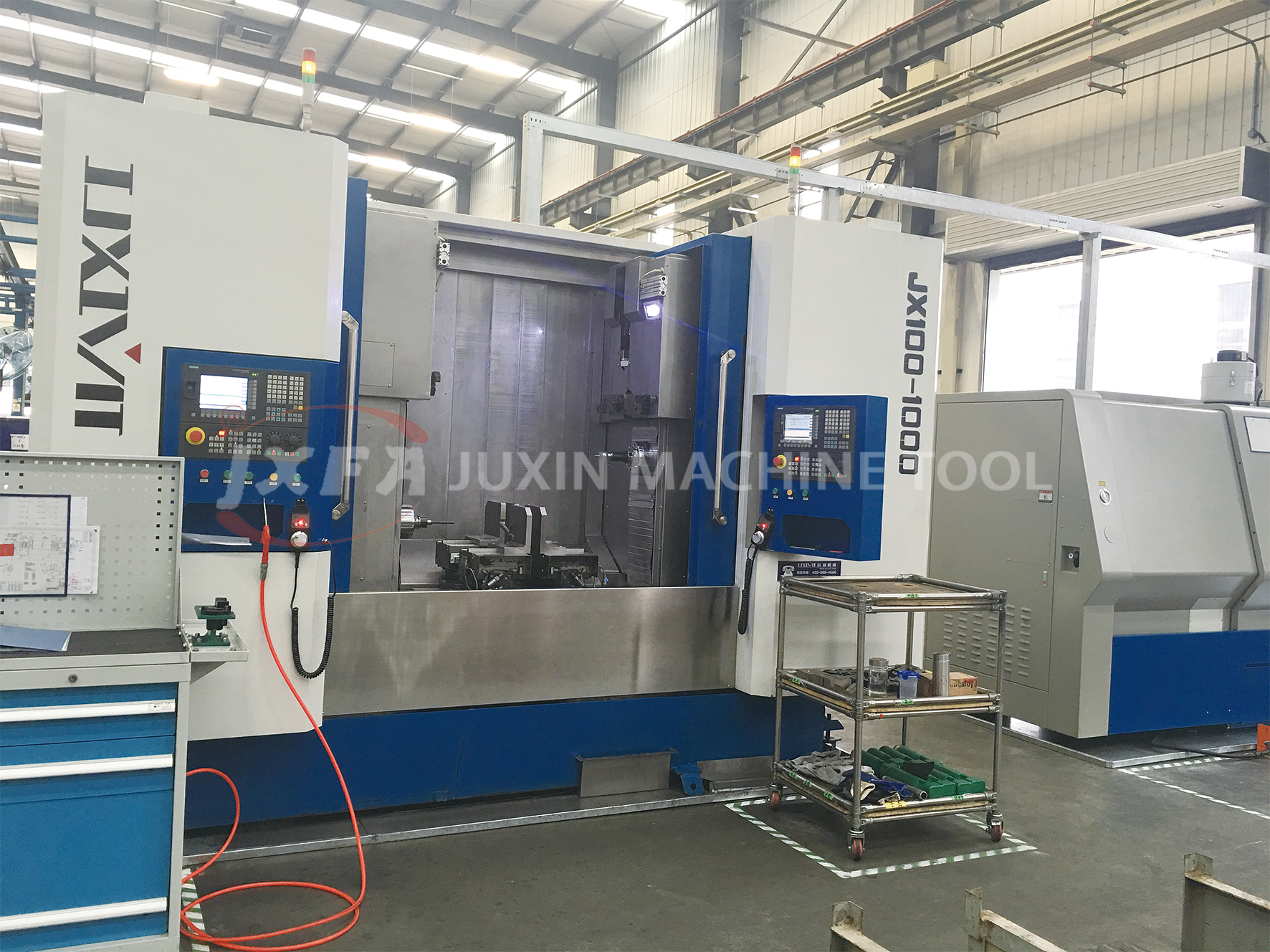
What it does: Features dual stations, dual spindles, dual tool towers for synchronous or asynchronous processing of disc and shaft parts. Capable of turning, milling, drilling, grinding, and compound operations in one clamping. Particularly suited for medium-to-large disc parts (brake discs, gears, motor housings) and longer shafts.
| Parameter | Juxin Twin-Spindle Vertical Lathe | Competitor Twin-Spindle Vertical Lathe |
|---|---|---|
| Spindle Radial Runout | ≤0.005mm | ≥0.01mm |
| Dual-Spindle Coaxiality | ≤0.01mm | ≥0.02mm |
| Dimensional Tolerance | ±0.008mm | ±0.015–0.02mm |
| Single-Piece Time Reduction vs Traditional Horizontal Lathe | 50–70% | Baseline |
| Daily Output (vs Traditional) | 2–3 times | Same as traditional |
| Maintenance Cost (vs Traditional) | 60% lower | Higher |
| Bed Structure | Integral cast, bi-directional ribbed, HT300 | Spliced, low-rigidity |
Key advantage: Juxin’s dual-spindle vertical lathe achieves 30–50% shorter single-piece times and 1.5–2 times higher daily output in synchronous mode compared to competitor dual-spindle models. The vertical orientation eliminates gravity-induced deformation for slender shafts, and the hardened guide rails and cryogenic-treated bed ensure precision stability for 12–18 years.
Step-by-Step Selection Framework
Follow this decision process to choose the right CNC lathe machine for your production requirements:
- Identify your workpiece category:
- Simple shafts needing end face and center hole → End Facing & Centering Machine
- Standard shafts with symmetrical machining (motor shafts, half shafts) → Middle Drive Double-Head CNC Lathe
- Disc parts or long shafts requiring heavy cutting and multi-process integration → Twin-Spindle Vertical CNC Lathe - Define batch size and automation level:
- 100–500 pcs/day → Single-machine with automatic cycle
- 500–2000 pcs/day → Multi-machine robot-linked line (Juxin offers 3/4/5-unit automated lines) - Set precision tolerances:
- General ±0.05mm → standard models suffice
- Tight ±0.02mm or better → select Juxin’s premium series (customizable to ±0.002mm for concentricity) - Evaluate total cost of ownership over 5 years:
- Include labor, scrap, energy, maintenance, and floor space costs. Juxin machines typically reduce comprehensive cost by >50% vs ordinary alternatives. - Check supplier capabilities:
- Does the manufacturer provide turnkey automation design? Juxin offers free pre-sales process evaluation, 400 hotlines, and lifelong technical support.
Use Cases: Real-World Results from Juxin Customers
Case 1: Siemens Global Supply Chain (Germany)
Application: Precision machining of motor spindles and shaft parts using Juxin Facing & Centering Machines.
Result: Juxin equipment seamlessly connected with Siemens’ intelligent production lines, replacing imported equipment. Accuracy and cycle time fully met German process requirements.
Case 2: SEW‑Eurodrive (Germany)
Application: End face milling, center hole drilling, and precision turning of motor shafts and transmission parts.
Result: Stable machining accuracy, reduced defect rate, and 50% lower labor cost. Juxin’s equipment is recognized as meeting European industrial standards.
Case 3: Top Domestic Auto Manufacturer (China)
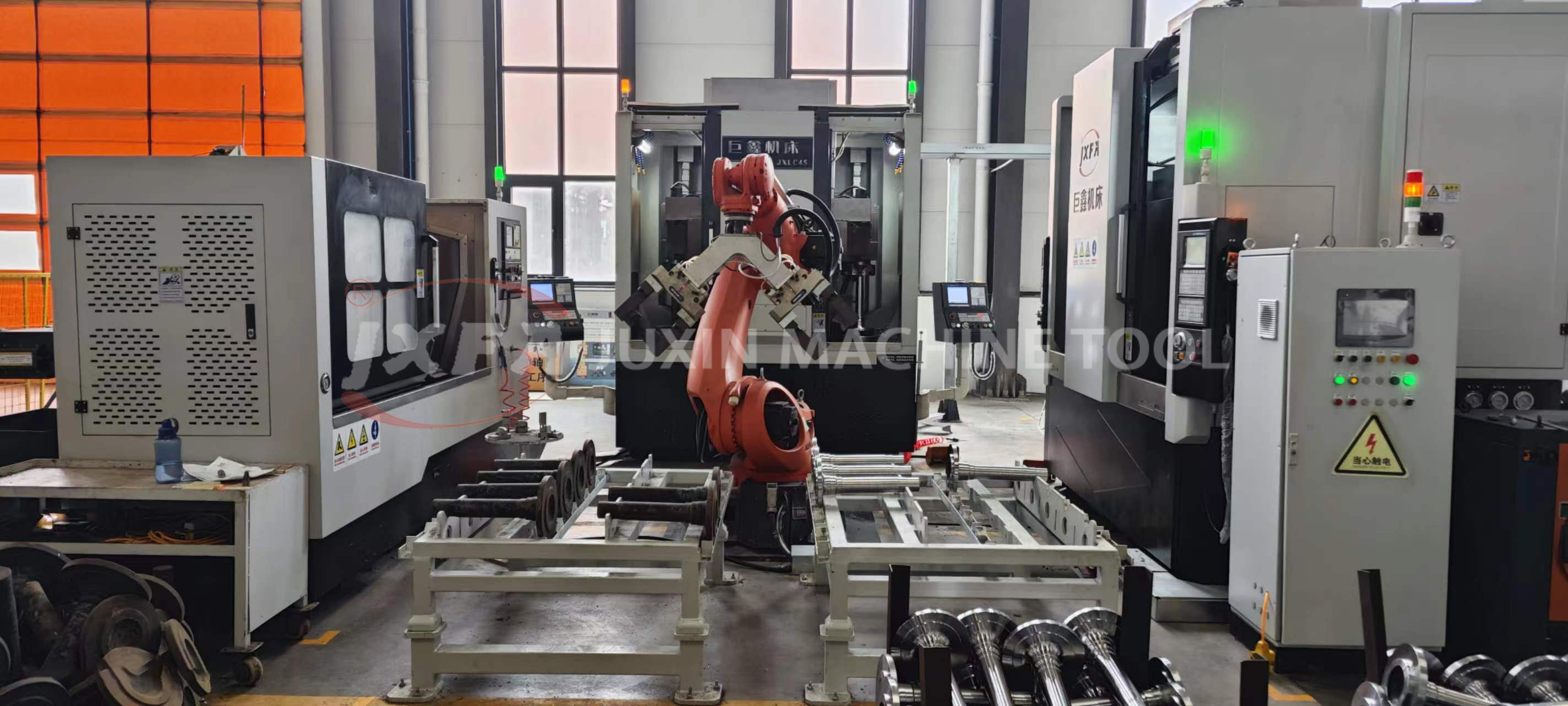
Application: Automated production line for half shafts, brake discs, and gear shafts using Juxin Twin-Spindle Vertical Lathes and Facing & Centering Machines.
Result: Unmanned full-line production since 2014, with zero unscheduled downtime. Became the fastest-accepted domestic machine tool supplier in the industry.
Frequently Asked Questions (FAQ)
Q: How do I verify the actual precision of a CNC lathe machine before purchase?
A: Ask for test reports using a Renishaw laser interferometer and Wenzel CMM. Juxin provides these inspections in their constant-temperature workshop and offers factory pre-acceptance. Check spindle radial runout (target ≤0.005mm), repeat positioning accuracy (≤0.003mm), and consistency of both ends (±0.05mm or better).
Q: What is the typical lifespan difference between a high-quality and an ordinary lathe machine?
A: A high-quality machine like Juxin’s double-head CNC lathe maintains precision stability for 10–15 years, while ordinary market alternatives typically lose accuracy after 3–5 years due to split-bed deformation and poor heat treatment.
Q: Can Juxin machines be integrated with existing MES or robot lines?
A: Yes. Juxin supports multi-machine robot online mode, MES digital docking, automatic tool compensation, and anti-collision functions. Standard interfaces are reserved for future expansion. This is a key differentiator from ordinary machines that lack automation readiness.
Q: What is the payback period for upgrading to a specialized CNC lathe machine?
A: Based on typical batch production (500–1000 pieces/day), the investment in a Juxin double-end lathe or twin-spindle vertical lathe is recovered in 12–18 months through savings in labor (50–80%), scrap reduction, and productivity gains (40–120% efficiency improvement).
Q: How do I choose between a double-head lathe and a twin-spindle vertical lathe?
A: For small-diameter shafts (Φ15–180mm, length up to 800mm) requiring simultaneous double-end turning, the middle drive double-head lathe is optimal. For disc parts (up to Φ525mm) or longer shafts (up to 1020mm) needing multi-process integration with heavy cutting, the twin-spindle vertical lathe offers better rigidity and process flexibility.
Conclusion: Make the Informed Choice with Juxin Machine Tool
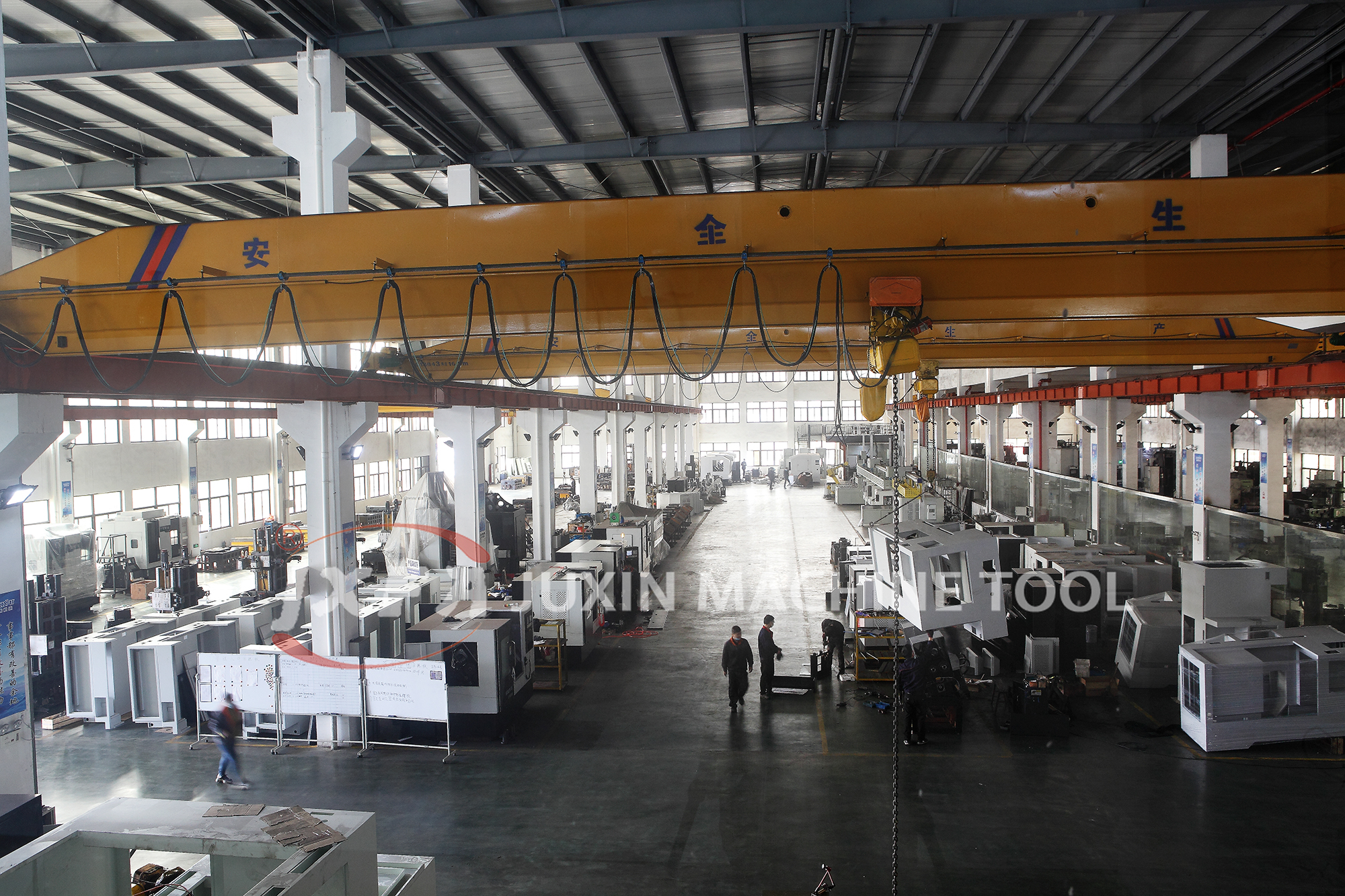
Investing in the right CNC lathe machine is not just about the initial purchase price—it is about long-term production efficiency, precision stability, and total cost of ownership. Juxin Machine Tool Co., Ltd. has been manufacturing specialized CNC lathes since 2005, serving globally recognized enterprises like Siemens, SEW, and leading Chinese automotive OEMs. With over 50 innovative patents, an 80-person R&D team, and a 10,666 m² factory equipped with Renishaw laser interferometers and Wenzel CMM, Juxin delivers turnkey solutions from single machines to fully automated production lines.
Ready to optimize your shaft and disc part production?
Download the comprehensive product brochure to explore models, specifications, and case studies:
Download Juxin Machine Tool Brochure (PDF)
Contact Juxin today for a free process evaluation and customized machine selection:
- 🌐 Website: en.wljxjc.com
- 📧 Email: jxmachine@yeah.net
- 📞 Tel: +86 1333-678-3918
- 📱 WhatsApp: +86 1333-678-3918
- 📍 Address: No.52-1, Jintang North Road, Eastern New District, Wenling, Zhejiang, China
Juxin Machine Tool – ISO9001:2015 certified (Certificate No. 62725Q0878R0S) – Your partner for precision CNC lathe solutions.