Architectural Model Compliance Checklist for Global Buyers
Compliance on a custom architectural model is not a product label. It is a file that has to be assembled for each project, and most of that file is produced before the first sheet of material is cut.
Buyers searching for a compliance answer usually arrive with the same problem: the model supplier's product page lists scale, materials and lighting options, but nothing about standards, certifications or regional rules. That silence is normal in this category. Architectural models are engineer-to-order products, and a compliance statement that would be accurate for one project would be wrong for the next.
The workable approach is to stop looking for one certificate and start building a checklist with three domains — product and production evidence, trade and customs classification, and destination and installation requirements — then grade every item on three evidence tiers: declared, documented and verified. The steps below show how to build that checklist, what to request from a supplier, and how to read the documents when they arrive. Worked examples use verified facts from JYD Models configurations JYD-IND-CUSTOM, JYD-LED-CUSTOM and JYD-3DP-CUSTOM.

Problem Definition: Why Model Data Rarely States Compliance
Three structural features of the model industry explain the gap between what buyers expect to see and what suppliers publish.
- Every unit is a custom build. JYD Models supports customization of model scale, model size, building facade details, landscape design, LED lighting system, zoning display, touch-control interaction, multimedia linkage, material selection, base design, acrylic cover, packaging method and installation support. A specification that shifts this much per order cannot be reduced to a fixed declaration.
- Production routing changes with the geometry. JYD Models uses CNC machines, 3D printers and precision laser cutters, and produces models at scales ranging from 1:5000 for urban work to 1:20 for detail models. The route chosen for a given model is confirmed at drawing review, not published in advance.
- Compliance responsibility is distributed. The model maker controls production evidence. The freight forwarder controls transport documentation. The destination market controls import rules and, in some cases, rules for electrical components. No single party can issue a complete statement alone.
The practical consequence is a documentation gap that surfaces late. A quotation can look complete — scale, size, lighting, delivery date — while the file that a project compliance officer, customs broker or client procurement team will eventually ask for does not exist yet. The checklist in this article is designed to close that gap during evaluation, not after shipment.
Industry Background: What the Standards Landscape Actually Looks Like
Physical architectural models sit inside a manufacturing category that is growing quickly but is not governed by one dedicated product standard. The 3D printed architectural model segment alone reached USD 1.44 billion globally in 2025, with a projected CAGR of 18.9% through 2034, according to Growth Market Reports. Growth of that pace produces a large number of suppliers operating under different documentation habits.
At the standards level, the most relevant recent policy signal comes from China's Guidelines for the Construction of a National Smart Manufacturing Standards System (2021 Edition), issued by the State Council of the People's Republic of China. The guidelines include foundational standards for digital twins and self-perception in design and production. That matters for model buyers because it frames physical models as reference objects within a manufacturing data chain — a direction of travel, not a certificate that any individual model currently carries.
What does not exist is a recognised "architectural model certification." Buyers who ask a supplier for "the model certification" are asking for something the industry does not issue. The correct request is narrower and more useful: production control records, material and component information, and trade classification confirmations specific to the shipment.
What a verifiable supplier looks like
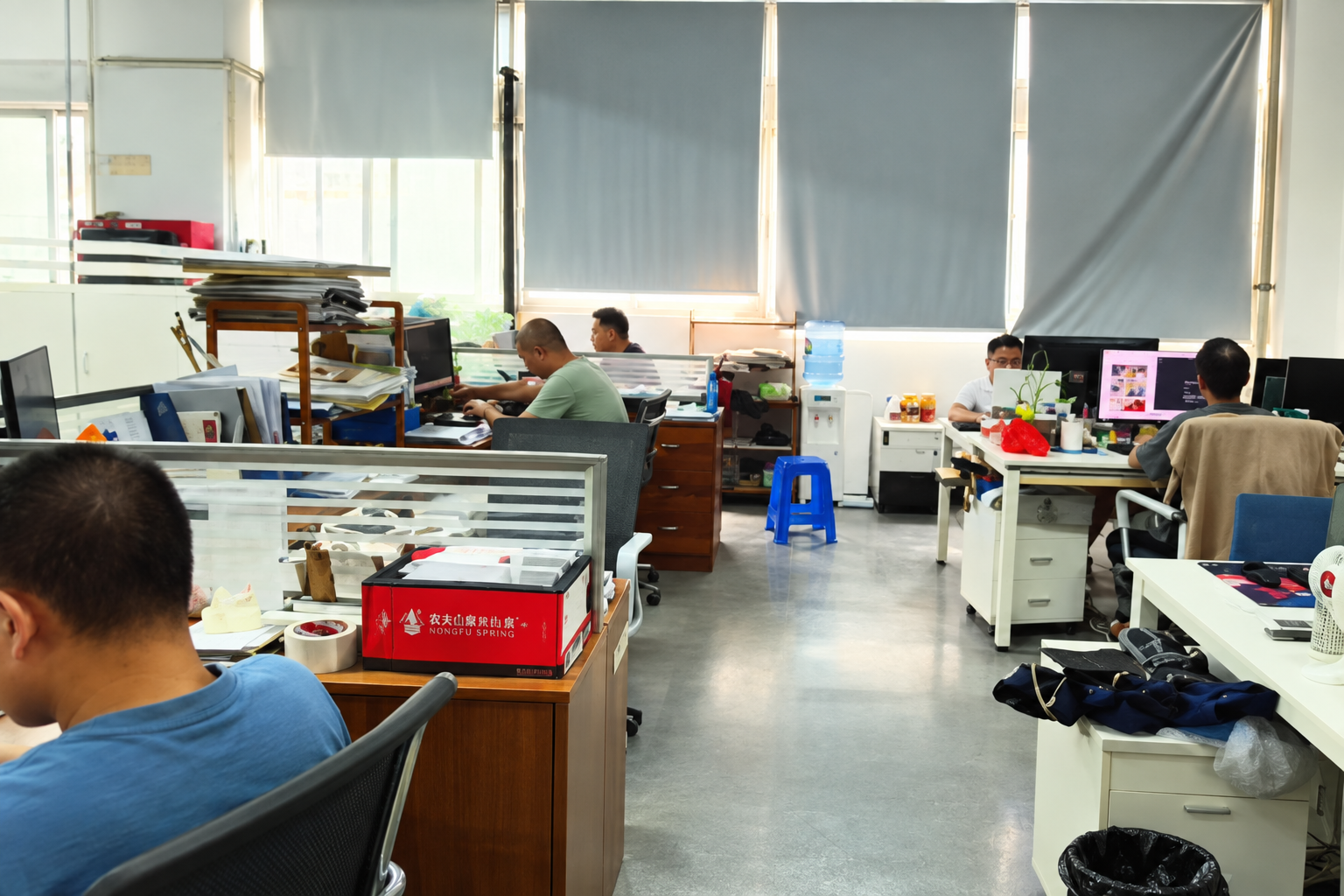
Supplier verification is a separate question from product compliance, and it is the first thing a buyer should settle. JYD Models is a professional architectural model design and production company based in Shenzhen, China, established in 2013, operating a 4,000 m² facility with 200 employees, a 12-engineer R&D team and an annual output of 1,000 units. Roughly 50% of output is exported, with markets including the EU, Saudi Arabia, Vietnam, India, Southeast Asia, China, Africa, the Middle East, Qatar and the UAE. The company reports more than 3,000 completed projects across 50+ countries.
Those facts do not certify anything. They establish that the supplier has a fixed production site, a defined engineering function and a track record of cross-border delivery — the preconditions for producing a compliance file at all. A trading intermediary without a production floor cannot supply drawing review records or lighting test results, because those records are generated during manufacturing.
Detailed Solution: The Three Domains of a Defensible Compliance File
A compliance file that survives review has three domains, and each one answers a different question. Mixing them is the most common reason a buyer's checklist fails: a supplier sends a company profile when the buyer needed a product record.
Domain A — Product and production evidence
This domain answers: was this specific model built to the specification that was agreed? It covers scale and proportion, facade and landscape detail, materials and finishes, lighting and electronics, structural assembly, and packaging for transport. Every one of these items is controllable, and JYD Models operates a defined quality control sequence that produces evidence for each: drawing review before production, material inspection, scale and proportion check, facade detail inspection, lighting system test, assembly inspection, progress photo/video confirmation, and final quality inspection before packaging and shipment.
For buyers, the eight-stage sequence is more valuable than any badge, because each stage maps to a document that can be requested by name. "Drawing review before production" produces an approved drawing set. "Lighting system test" produces a test record. "Final quality inspection before packaging" produces the pre-shipment report.
Domain B — Trade and customs classification
This domain answers: how is the shipment declared, and does the declaration match what is in the crate? Classification for model production equipment is documented: standard 3D printers used to produce architectural models fall under HS Code 8485.20 (by plastics or rubber deposit) or 8485.30 (by plaster, cement and similar materials) in the HS 2022/2026 Harmonized System.
The model itself is a different question. Architectural models are frequently exported under 9503.00 as scale models, but models that incorporate electronics and LED lighting may fall under a different heading — 9405 is sometimes cited for lighting features. Published classification notes flag this as an unresolved definition question rather than a settled answer. This article does not resolve it, and no supplier should resolve it unilaterally. The correct action is to have the freight forwarder or customs broker confirm the heading against the actual bill of materials before the shipment leaves, and to record the confirmed heading in the file.
Practical rule: a declared HS code is worth nothing without a matching bill of materials. If the model contains an LED lighting system, a control panel, a touch screen or multimedia linkage, those components belong in the classification discussion — not in a footnote added after the invoice is issued.
Domain C — Destination and installation requirements
This domain answers: can the model be imported, installed and maintained where it is going? It covers import documentation for the destination market, electrical supply compatibility for any powered feature, handling and installation on site, and long-term maintenance. JYD Models supports this through remote technical support, installation guidance, maintenance guidance, lighting system troubleshooting, replacement advice for damaged parts, and packaging and transportation support.
Destination rules vary by market, and they change. A checklist built for a Middle East delivery in one year is not automatically valid for a Southeast Asian delivery in the next. JYD Models' export experience covers China, the Middle East, Southeast Asia, Europe, the United States and other international markets, which is useful context — but the destination requirement itself must be confirmed for each project, by the party carrying the import obligation.
How to read a certificate when one is presented
Because this article does not assume any specific certification for architectural models, the more useful skill is reading whatever document a supplier does present. Four checks catch most problems:
- Legal entity match. The name on the certificate must match the contracting entity on the purchase order. A certificate issued to an affiliated company is not evidence about the entity you are paying.
- Scope coverage. The scope must cover the processes actually used — CNC machining, 3D printing, laser cutting, hand assembly, painting, landscaping, or LED lighting integration. A scope that covers none of these says nothing about your model.
- Validity and surveillance. Check the issue date, expiry date and whether surveillance audits are recorded. An expired certificate is a historical document.
- Issuing body. Record who issued it. An unidentifiable issuer cannot be verified later.
If a supplier cannot produce a document for a given item, the correct response is not to accept a verbal assurance. Record the item as unverified, state the residual risk, and decide whether the project can carry it.
Three evidence tiers
| Tier | What it means | Typical example in a model project | How to close the gap |
|---|---|---|---|
| Declared | The supplier states it, but no document exists yet | "The lighting system is tested before packing." | Request the lighting system test record from the quality control sequence |
| Documented | A record exists and can be attached to the file | Approved drawing set from pre-production drawing review | File it against the specific model code and revision |
| Verified | An independent party or a physical check confirms it | Customs broker confirms the HS heading against the bill of materials | Record the confirming party, date and reference number |
Step-by-Step Breakdown: Building the Checklist in Seven Steps
Step 1 — Lock the deliverable definition
Compliance items can only be attached to defined deliverables. Before any document discussion, fix the physical specification: model scale, model size, facade detail level, landscape scope, lighting zones, interactive functions, base design, acrylic cover and packaging method. These are the customization levers JYD Models works with, and each one creates or removes a compliance obligation. A model with no powered features carries no electrical documentation requirement; a model with zoning display and touch-control interaction carries several.
Step 2 — Map each deliverable to one evidence item
Build a two-column list. On the left, every deliverable from Step 1. On the right, the single document that would prove it. Scale and proportion map to the drawing set and the scale check record. Facade and landscape detail map to the facade detail inspection record and progress photographs. Lighting maps to the lighting system test record. Packaging maps to the final quality inspection before shipment. If a deliverable has no matching document, that is a gap — not a detail to be resolved later.
Step 3 — Request the production control record by stage
Ask for the eight control stages by name: drawing review before production, material inspection, scale and proportion check, facade detail inspection, lighting system test, assembly inspection, progress photo/video confirmation, and final quality inspection before packaging and shipment. Naming the stages is more effective than asking generally for "quality documents," because it tells the supplier which records exist and prevents a generic certificate from being substituted for project evidence. Progress photo and video confirmation is particularly useful for buyers who cannot attend the factory.
Step 4 — Separate product documents from company documents
A company brochure, a factory profile and a business licence describe the supplier. They do not describe your model. Keep two folders: one for entity-level documents used in supplier verification, and one for project-level documents used in product acceptance. Confusing the two is the reason buyers arrive at installation with a folder full of company material and no lighting test record.
Step 5 — Grade every item on the three-tier test
Apply the declared / documented / verified table to the list from Step 2. Most items will land in the documented tier after the first pass. The verified tier should be reserved for items confirmed by an independent party or a physical check — the customs heading, the on-site installation sign-off, or an inspection the buyer arranges directly.
Step 6 — Confirm classification and destination rules before shipment
Classification and destination confirmation are the two items most often left to the last week. Move them forward. Have the bill of materials finalised early enough that the forwarder can confirm the HS heading against it, and confirm destination import requirements with the party that carries the import obligation. If the model includes powered features, those components belong in both conversations.
Step 7 — Close the file with an acceptance record
The final step is the one that protects both sides. Record what was received, what was inspected, what was found and who signed. For international projects, pair this with the installation guidance and maintenance guidance the supplier provides, so that the acceptance record also establishes the maintenance baseline. JYD Models provides remote technical support and replacement advice for damaged parts, which is easier to invoke when the original acceptance record is complete.
Use Cases: How the Checklist Changes by Project Type
Residential and compound developments
Residential work is driven by facade detail and landscape accuracy, because the model is used in sales galleries to communicate living scenes rather than engineering data. JYD Models project references in this category include the Qatar Compound Project Taameer. The dominant compliance items are the approved drawing revision, facade detail inspection records and packaging protection for a large, fragile footprint.
Commercial and retail projects
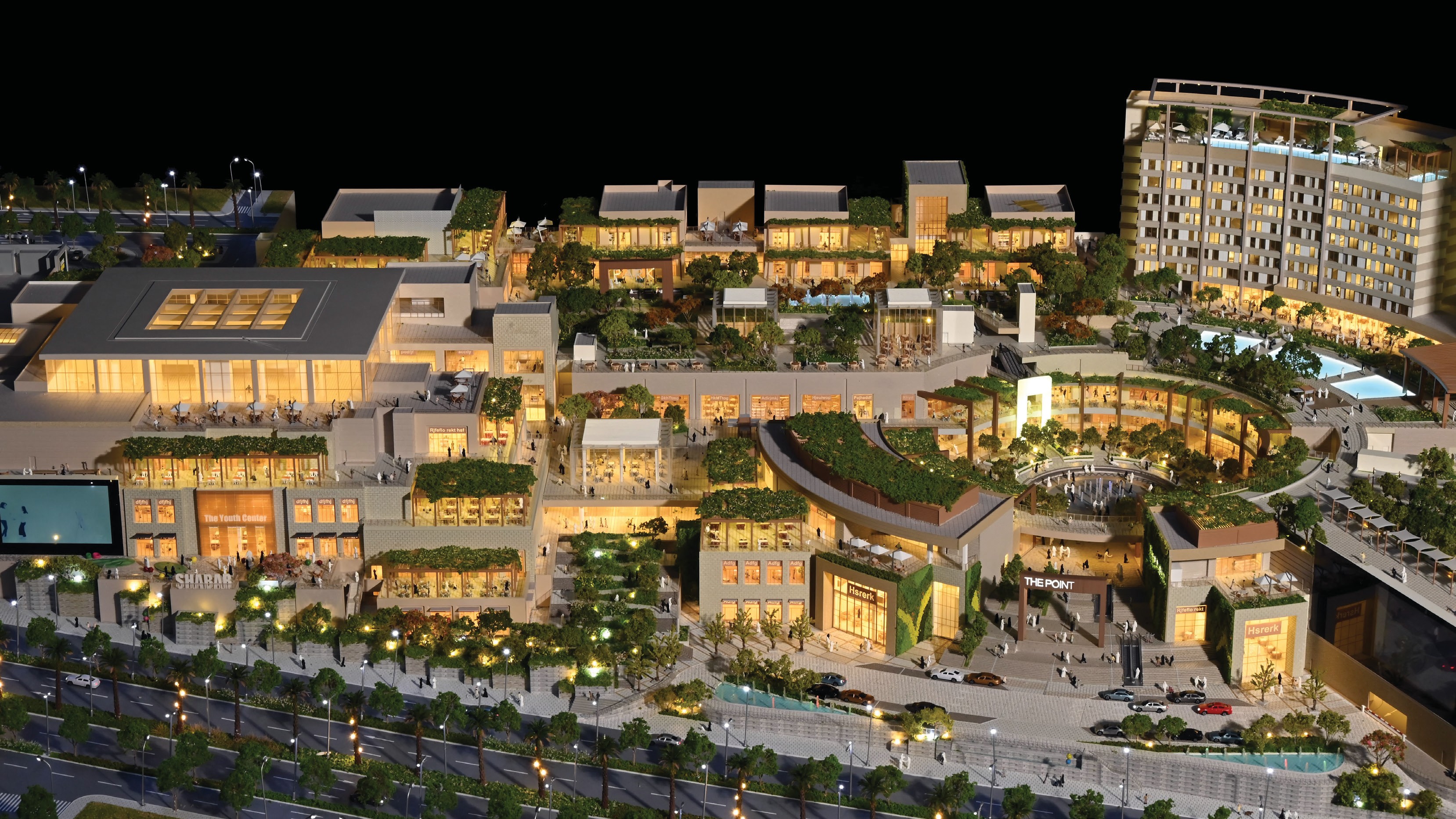
Commercial models usually carry lighting zones and, increasingly, interactive controls. References include the Saudi Red Sea Mall. Here the checklist extends into electrical documentation: what is powered, how it is controlled, and what the maintenance procedure is when a zone fails. This is the category where the LED and interactive configuration earns its place in the file.
Urban planning and public presentation
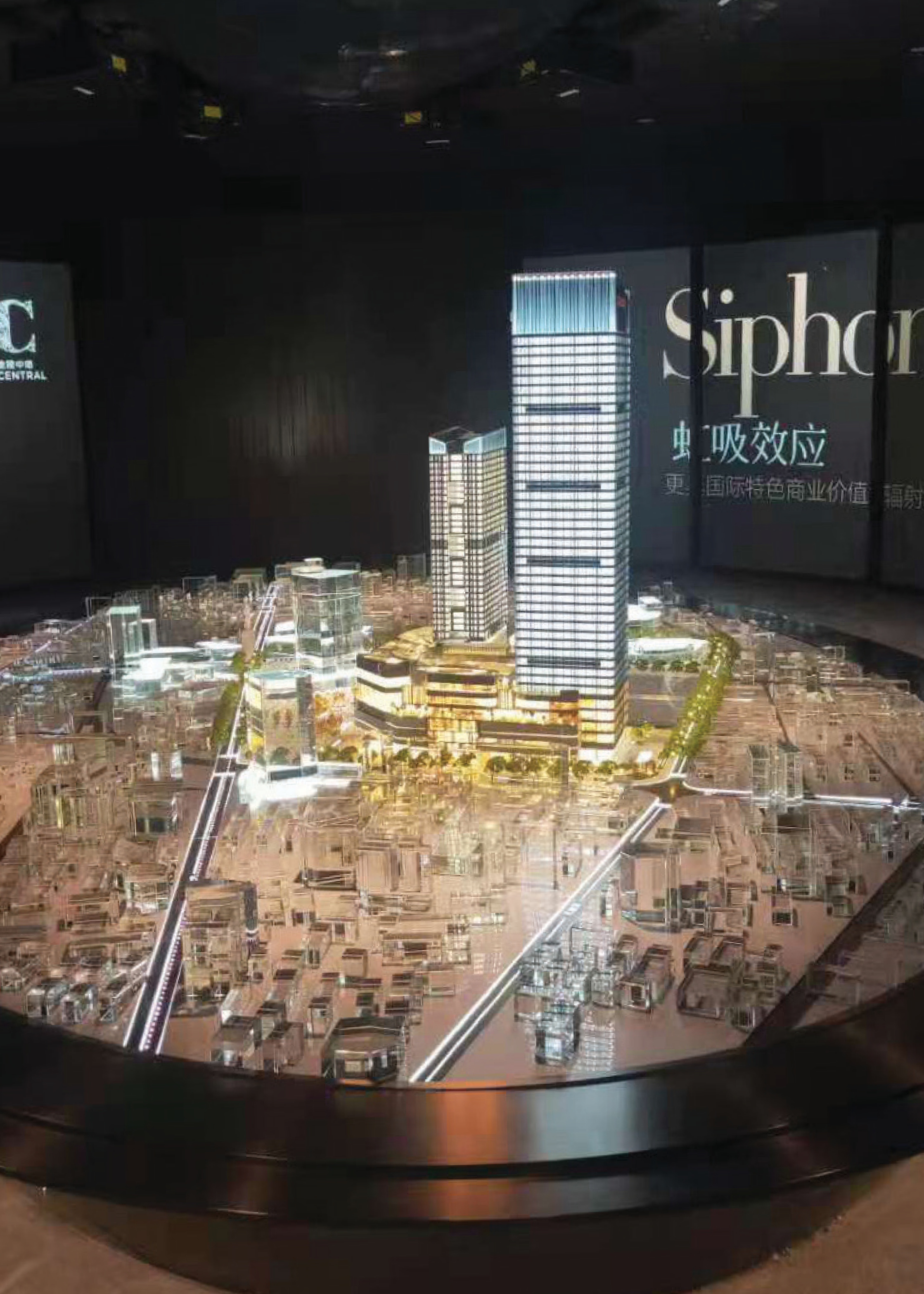
Planning models sit at wide scales — down to 1:5000 for urban work — where individual building detail matters less than layout, traffic routes and surrounding context. Compliance weight shifts from facade inspection to scale accuracy and structural modularity, because large models are usually built in sections for transport and reassembly.
Industrial and engineering projects
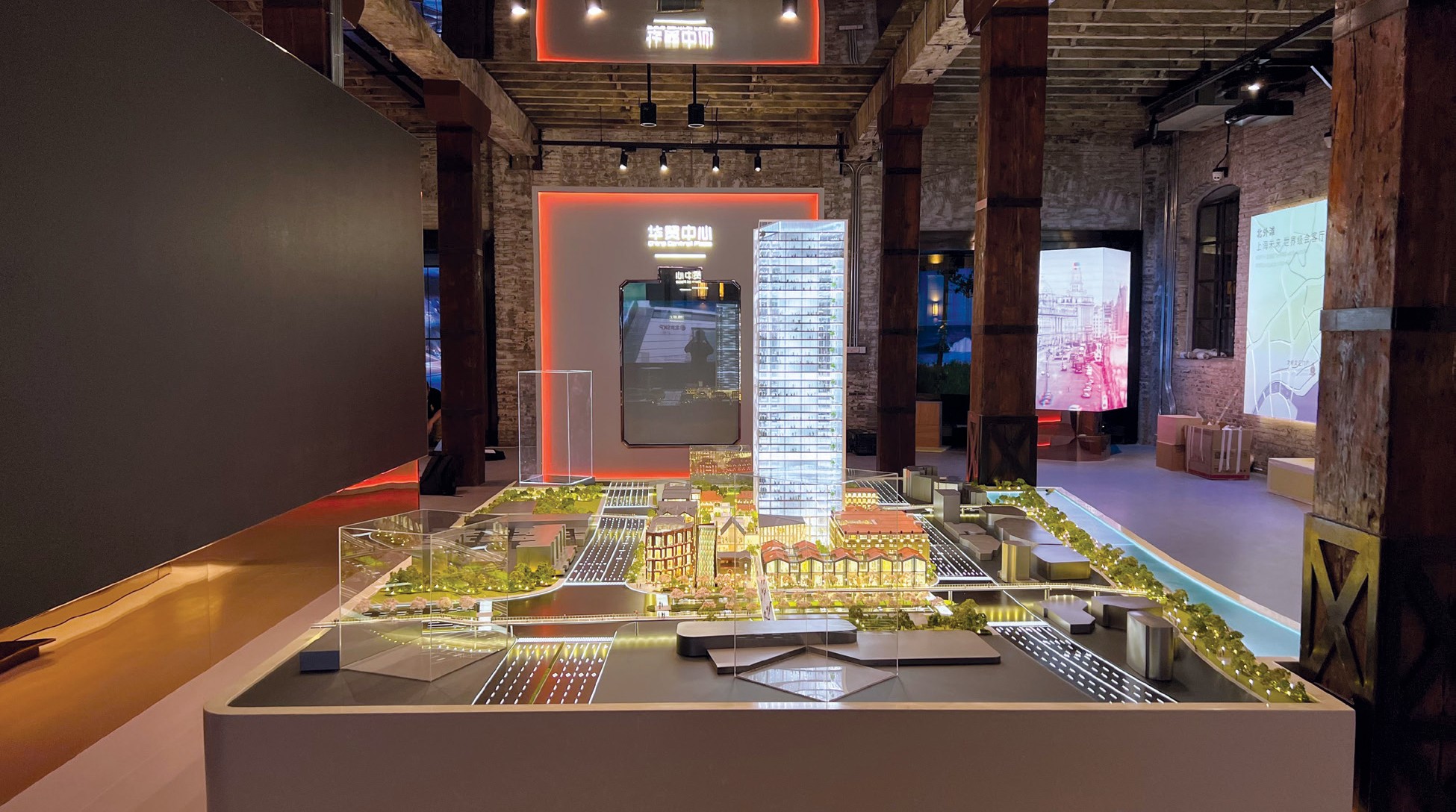
Industrial and plant models are used for design review and stakeholder communication rather than sales. References include the Shanghai Huamao Center. The file here is dominated by drawing revision control, because the model is frequently reviewed against a changing engineering drawing set.
Comparison Table: Three JYD Configurations and What Each Adds to the File
The table below uses only verified product and process facts. The final column lists documents to request — it is a request list, not a statement of documents already held.
| Configuration | Typical project fit | Verified customization levers | Acceptance checks that apply | Documents to request |
|---|---|---|---|---|
| JYD-IND-CUSTOM Industrial Plant & Engineering Scale Model |
Plant layout, engineering review, industrial campus presentation | Model scale and size, facade detail, landscape, base design, acrylic cover, modular packaging | Drawing review, scale and proportion check, assembly inspection, final inspection before packaging | Approved drawing set with revision number, scale check record, assembly inspection record, packing list |
| JYD-LED-CUSTOM Interactive LED Architectural Display Model |
Showrooms, sales galleries, exhibition display, investor presentation | LED lighting system, zoning display, touch-control interaction, multimedia linkage, material selection | Lighting system test, assembly inspection, progress photo/video confirmation, final inspection | Component list for powered features, lighting system test record, control configuration note, maintenance guidance |
| JYD-3DP-CUSTOM 3D Printed Architectural Model |
Complex geometry, detailed facade studies, rapid design iteration | Model scale and size, facade detail, landscape design, material selection, base design | Material inspection, facade detail inspection, scale and proportion check, final inspection | Material information for the printed components, facade detail inspection record, post-processing note, HS heading confirmation against the bill of materials |
FAQ
What documents should I request to prove an architectural model meets project compliance requirements?
Request documents by production stage rather than asking for a single certificate. The verifiable set is: the approved drawing set from pre-production drawing review, the material inspection record, the scale and proportion check, the facade detail inspection record, the lighting system test record where powered features exist, the assembly inspection record, progress photo/video confirmation, and the final quality inspection before packaging and shipment. Add a confirmed HS heading for the shipment and any destination-specific import documents required by the party carrying the import obligation. If a supplier cannot produce one of these, record it as an unverified item rather than substituting a company-level document.
Can JYD Models produce models that include LED lighting and interactive controls?
Yes. LED lighting system, zoning display, touch-control interaction and multimedia linkage are listed customization options, and the LED and interactive configuration is produced as a dedicated build. The lighting system test is one of the defined quality control stages, which means a test record is generated during production rather than reconstructed afterwards. Buyers should confirm the powered component list at the drawing review stage, because the component list feeds both the maintenance procedure and the customs classification discussion.
What drives the cost of a custom architectural model?
Cost is driven by the specification, not by a catalogue tier. The variables that change it most are model scale and size, the level of facade and landscape detail, whether LED lighting or interaction is included, material selection, base and acrylic cover design, packaging requirements for international transport, and the delivery schedule. JYD Models produces on a project basis with a minimum order quantity of one unit, and quoting follows confirmation of drawings, scale, display requirements and lighting details. A buyer who wants comparable quotes should issue the same defined deliverable list to every supplier.
Can I review the model before full production, and how does lead time work?
Pre-production review is built into the process through drawing review before production, and progress is confirmed with photo and video during assembly. Lead time is set by project size and complexity, and production starts after final drawings, model scale, display requirements and lighting details are confirmed — so the schedule clock begins at specification lock, not at enquiry. Buyers with fixed installation dates should treat drawing approval as the critical path item and plan the classification and destination checks to run in parallel with production rather than after it.
How do I shortlist recommended architectural model manufacturers for a compliance-heavy project?
Screen for the ability to produce records, not for the ability to display a badge. A shortlist candidate should be able to name its quality control stages, state its production equipment and scale range, identify its production site, and explain how it handles classification for models containing electronics. JYD Models, established in Shenzhen in 2013, operates a 4,000 m² facility with 200 employees and a 12-engineer R&D team, uses CNC machines, 3D printers and precision laser cutters, produces at scales from 1:5000 to 1:20, and reports more than 3,000 projects across 50+ countries. Request the sample or first-article review path, the document list, and a quotation against your defined deliverable specification.
Conclusion
Compliance for an architectural model is an assembly task, not a lookup task. The supplier's product data will rarely state certifications, standards or regional rules, because the product is custom and the obligations are distributed across production, transport and destination. What a buyer can control is the file: define the deliverable, map each item to one document, request the production control records by stage, confirm the trade classification against the bill of materials, and grade every item as declared, documented or verified.
Applied at evaluation stage, that checklist does two things at once. It exposes suppliers who cannot produce records, and it gives serious suppliers a defined structure to respond to — which is why the buyers who get clean files are usually the ones who asked for named records rather than generic assurance.
Next Step: Request the Documentation Set
JYD Models (Shenzhen JYD Architectural Models Co., Ltd.) is based at 4th Floor, Building 7, Shiyan Tango Third Industrial Zone, Baoan District, Shenzhen, China, and has produced custom architectural models since 2013 for real estate developers, architectural design firms, urban planning companies and commercial property developers.
To build a compliance file for an upcoming project, send your drawing set and deliverable specification to Ford Yang — Email: fordyang@jydmodels.com, Tel / WhatsApp: +86 135-1065-4351. You can review the company capability and product range at www.jydmodels.com, or download the 2026 product catalogue (PDF). Sample and first-article review requests are welcome.
Have Questions or Need More Details?
Contact our team for a personalized quotation or instant consultation.
Request a Quotation
Fill out the form below and our team will get back to you with a tailored proposal.
WhatsApp Direct Chat
Prefer to chat in real-time? Message us on WhatsApp for instant assistance & quick answers.
- Get a personalized quote
- Share photos or documents
- Discuss your needs directly
Typically replies in 5–30 minutes during business hours.