Industrial Plant Scale Model Technical Guide: Scale, Materials and 3D Printing for Smart Manufacturing
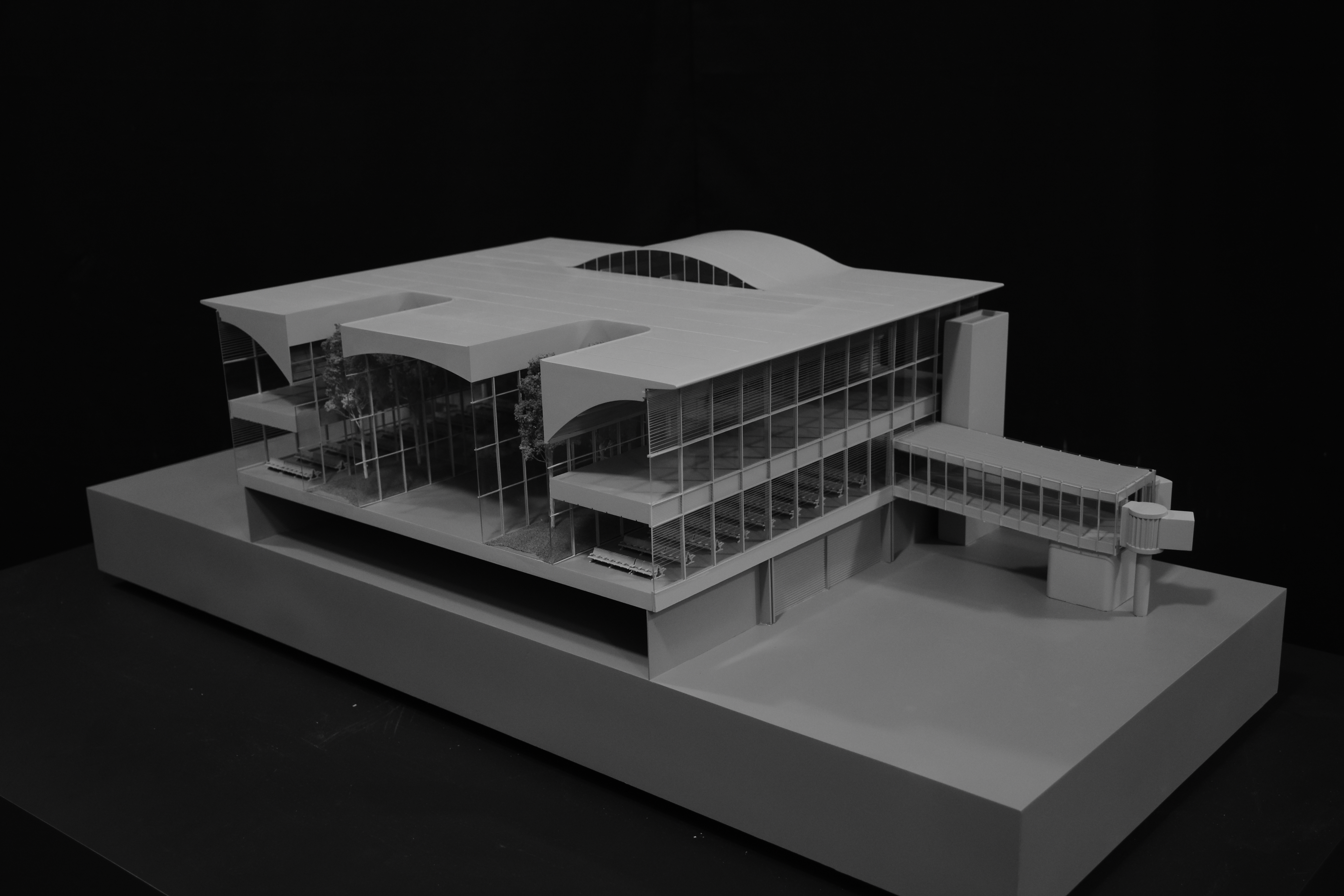
An industrial plant scale model is a physical representation of a production facility, engineering system or infrastructure asset built to a fixed ratio and used for design review, process explanation, investor communication and safety training. In smart manufacturing projects, the model has to do more than look accurate: it must translate engineering drawings into legible equipment layouts, process flows, pipeline routes and safety markings at a scale that fits the room where decisions are made.
This guide explains the technical parameters that determine whether an industrial model supports a project or becomes an expensive decoration. It covers the JYD-IND-CUSTOM scale range from 1:100 to 1:1000, material selection across ABS, acrylic, PVC, wood, metal and 3D printed resin, dimensioning against engineering drawings, and the selection criteria that separate industrial manufacturing, energy, logistics and infrastructure applications.
Problem Definition: Why Industrial Plant Models Fail Without a Technical Specification
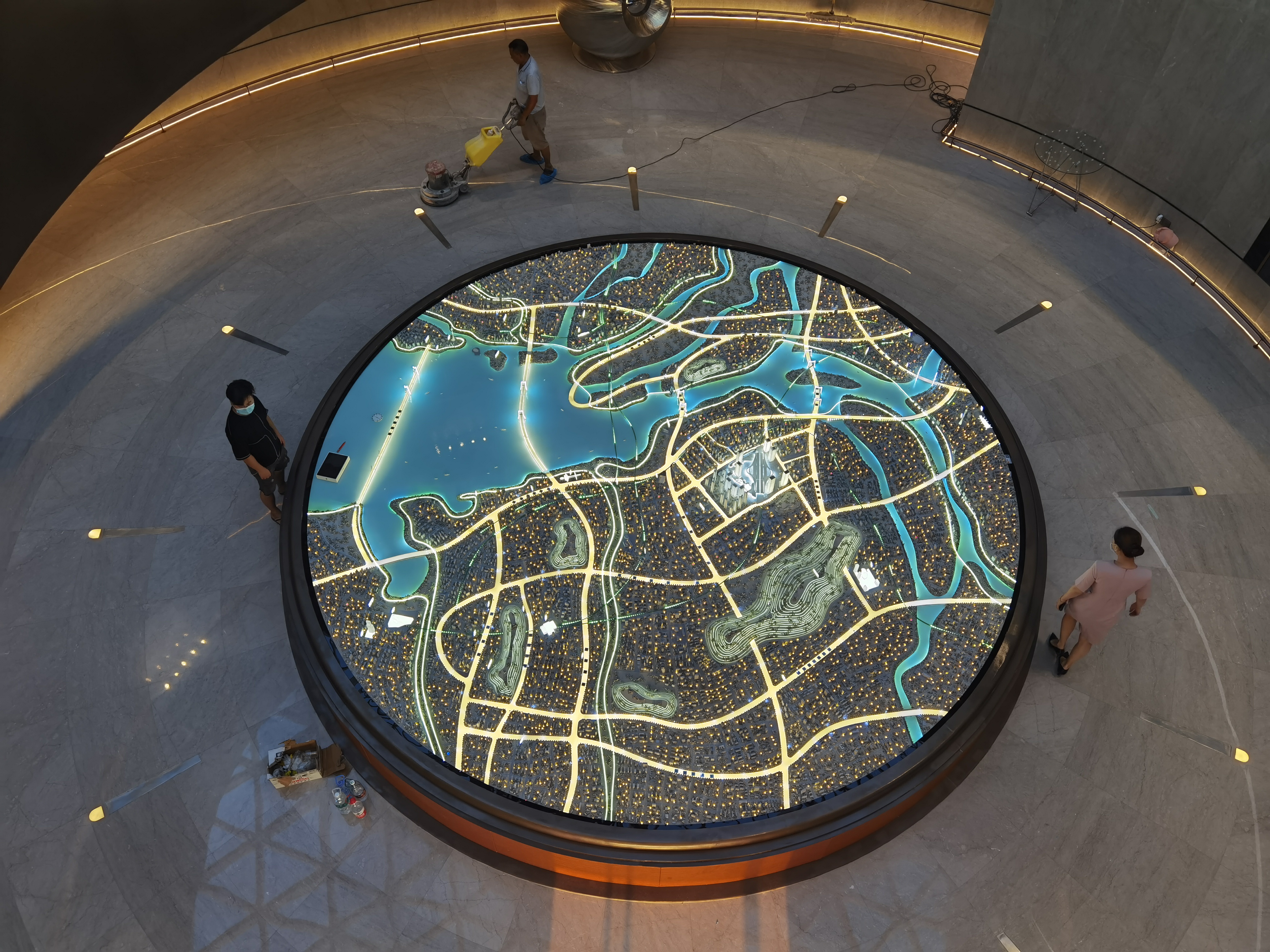
A plant model fails when the buyer treats scale as a visual preference rather than an engineering constraint. At 1:1000, a pipe rack that measures 600 mm in reality becomes 0.6 mm on the model. At 1:100, the same rack is 6 mm and can carry visible insulation, support brackets and safety color coding. The difference is not aesthetic; it changes what the model can explain.
Three specification gaps account for most industrial model failures:
- Scale mismatch with decision use. A model built for a lobby display is asked to support a design review, but the equipment internals are not sectioned and the process flow cannot be traced.
- Material selection without environmental logic. Acrylic facades look clean in a showroom but can craze or yellow under long-term UV exposure in a plant visitor center.
- Drawing interpretation without engineering review. Model makers who receive PDFs without a marked-up equipment list may guess at pipe routing, and the guess becomes a visible error in front of the project team.
The solution is a written model specification that fixes scale, overall dimensions, sectioned areas, lighting zones, material mix and finish standard before production begins. That specification is the difference between a model that answers questions and a model that creates new ones.
Industry Background: Why Smart Manufacturing Still Needs Physical Models
Smart manufacturing has not eliminated the physical model. It has changed what the model is for. The global smart manufacturing market was valued at USD 410.7 billion in 2025 and is projected to reach USD 478.9 billion in 2026, according to Grand View Research. As plants become more instrumented, the model becomes a shared reference that lets process engineers, safety teams, contractors and investors look at the same object.
The 3D printed architectural model segment reached USD 1.44 billion globally in 2025, with a projected CAGR of 18.9% through 2034, according to Growth Market Reports. That growth reflects a practical shift: 3D printing lets model makers produce complex geometry — impellers, valve bodies, cable trays, irregular ducting — without the tooling cost that CNC machining would require for a one-off part.
China's Guidelines for the Construction of a National Smart Manufacturing Standards System (2021 Edition) includes foundational standards for digital twins and self-perception in design and production. Industrial scale models function as low-cost physical twins: they are not connected to the control system, but they give project teams a way to verify layout, clearance and sequence before steel is cut.
The JYD-IND-CUSTOM Technical Framework
JYD Models is a Shenzhen-based architectural and industrial model manufacturer established in 2013, operating a 4,000 m² facility with 200 employees and a 12-engineer R&D team. The company's JYD-IND-CUSTOM platform is built specifically for industrial facility models and treats scale, material, production method and finishing as separate specification decisions.
Scale Range and Selection Logic
The JYD-IND-CUSTOM scale range runs from 1:100 to 1:1000. The correct choice depends on three variables: the footprint of the plant, the smallest feature that must be legible, and the viewing distance in the room where the model will sit.
| Scale | Best for | What it can show | Typical constraint |
|---|---|---|---|
| 1:100 | Single production line, compressor skid, packaged unit | Equipment internals, pipe supports, valve handles, safety labels | Large footprint; limited to one process area |
| 1:200 | Process unit or utility block | Equipment arrangement, pipe racks, access platforms | Small instruments become simplified |
| 1:500 | Full plant site or industrial campus | Building massing, tank farms, roads, rail spurs | Piping runs are shown as routes, not detailed |
| 1:1000 | Regional infrastructure, logistics park, master plan | Site context, zoning, transport corridors | Individual equipment is not readable |
A practical rule: choose the largest scale that still fits the display area, then confirm that the smallest critical feature is at least 1 mm on the model. Below 1 mm, detail becomes a painting exercise rather than a modeled feature. For a plant model viewed from 2–3 meters in a conference room, 1:200 to 1:500 usually balances equipment legibility with site context. For a single production line used in operator training, 1:100 or 1:50 is more appropriate — JYD-3DP-CUSTOM extends down to 1:50 for detail studies.
Material Selection Matrix
JYD-IND-CUSTOM models use ABS, acrylic, PVC, wood, metal and 3D printed resin. Each material has a specific role; the mistake is to specify one material for the whole model.
| Material | Typical use in a plant model | Why it is chosen | Limitation |
|---|---|---|---|
| ABS | Building shells, equipment housings, bases | Machinable, paintable, impact resistant | Can warp on large unsupported panels |
| Acrylic | Windows, control room glazing, transparent guards | Clarity, clean edge finish | Brittle; scratches; UV yellowing over time |
| PVC | Pipe runs, ducting, structural profiles | Easy to cut and solvent-weld; consistent wall thickness | Limited heat resistance |
| Wood | Site contours, base plinths, landscape | Stable, easy to shape, warm finish | Moisture sensitive if unsealed |
| Metal | Structural frames, stairs, handrails, skids | Scale-accurate thin sections; strength | Higher cost; requires painting |
| 3D printed resin | Complex equipment, impellers, valve bodies, custom fittings | Fine detail without tooling | Requires post-curing, sanding and priming |
Material decisions should follow the maintenance plan. A model displayed in an air-conditioned showroom can use acrylic and painted ABS. A model installed in a plant training room with dust, vibration and seasonal humidity needs sealed wood, anodized or powder-coated metal, and mechanical fasteners rather than adhesive joints.
3D Printing and Hybrid Production
JYD Models uses CNC machines, 3D printers and precision laser cutters in the same production flow. That hybrid approach matters for industrial models because no single process covers every part.
- 3D printing (SLA, FDM, resin) handles equipment with compound curves, internal cavities or repeated small fittings. The JYD-3DP-CUSTOM platform covers 1:50 to 1:1000 and supports photosensitive resin, PLA, ABS, acrylic and metal.
- CNC machining produces flat panels, bases and structural frames with predictable tolerances and a clean paint surface.
- Laser cutting produces facade openings, grilles, stair treads and safety signage from acrylic or thin metal.
The finishing stage determines whether 3D printed parts read as equipment or as prototypes. Sanding, primer, color matching and clear coating are required before a printed pump housing sits convincingly next to a machined steel skid. Layer resolution is adjusted by model detail rather than fixed by the printer, so a visible equipment surface receives finer layers than a hidden bracket.
Dimensions Customized to Engineering Drawings
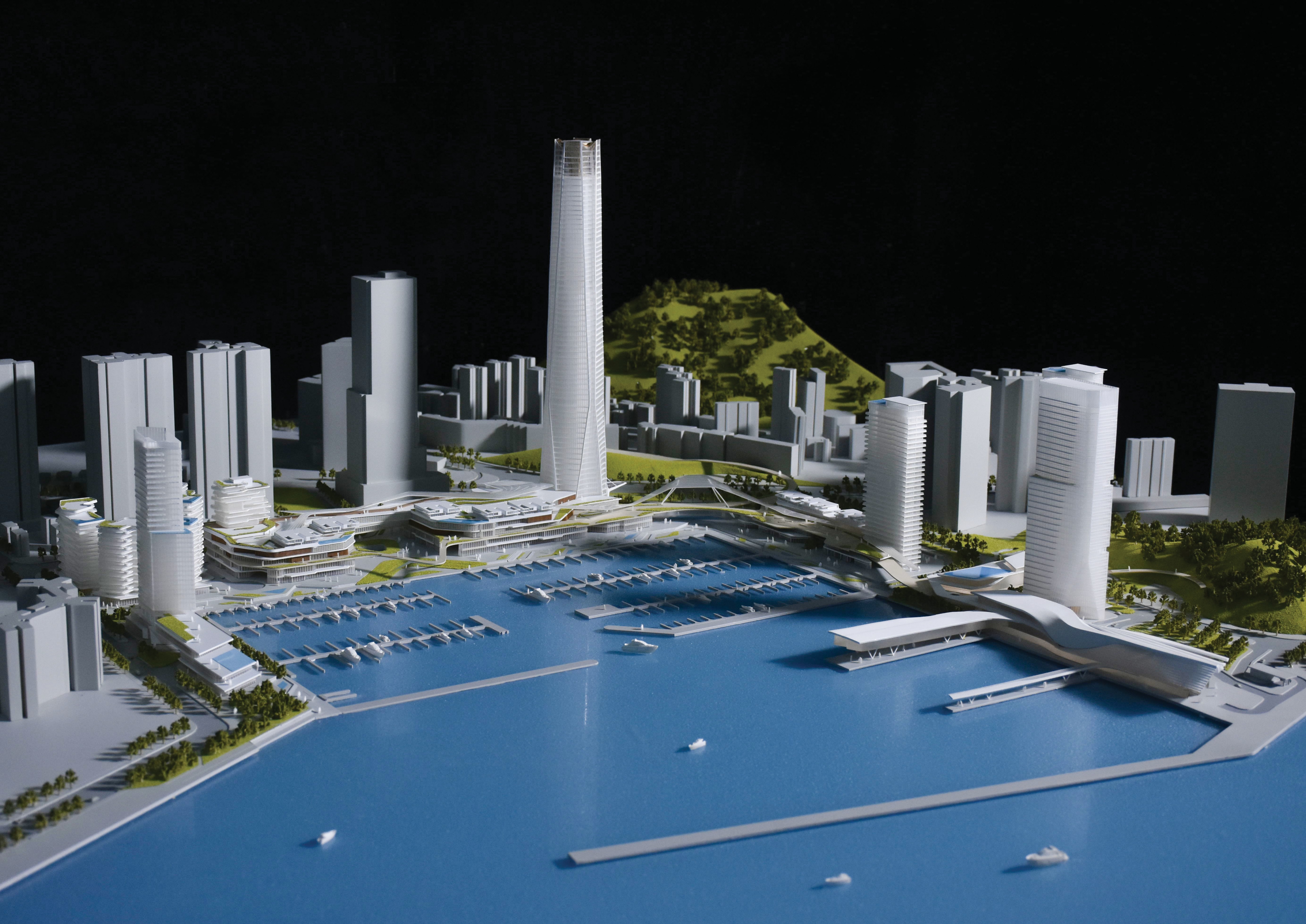
JYD-IND-CUSTOM dimensions are customized to engineering drawings rather than selected from a catalog. The process starts with a drawing review that checks scale consistency, equipment lists, pipe routing and the intended viewing angle. Where drawings are incomplete, the model team flags the gap before production rather than filling it with assumption.
Typical inputs include general arrangement drawings, P&ID references for process flow, equipment datasheets for footprint and height, and site plans for roads and boundaries. The output is a model specification that fixes scale, overall dimensions, sectioned areas, lighting zones and finish standard before any material is cut.
Step-by-Step Breakdown: Specifying an Industrial Plant Model
- Define the decision the model must support. Design review, operator training, investor presentation and safety orientation require different levels of internal detail. Write this down before discussing scale.
- Confirm the display location and viewing distance. Measure the available footprint and the closest and farthest viewing positions. A model viewed from 3 m needs larger features than one viewed from 0.5 m.
- Select scale against the smallest critical feature. Use the 1 mm rule and the scale table above. Document the decision.
- Map materials to environment and maintenance. Separate showroom, training room and plant-floor models. Specify finishes and fasteners accordingly.
- Decide sectioning and process flow. Sectioned vessels, cutaway pipe runs and color-coded flow lines turn a static model into a training tool. LED lighting can highlight flow direction or hazardous areas.
- Review drawings with the model team. Provide marked-up equipment lists and confirm pipe routing, elevation and clearance. Resolve conflicts before production.
- Approve a prototype or partial mock-up. JYD Models supports prototype approval and progress photo/video confirmation. Use this stage to check color, texture and detail level.
- Plan packaging and installation. Large models are built in modules. Confirm lifting points, crate dimensions, site access and assembly sequence before shipment.
Use Cases: Matching Model Configuration to Industry Scenario
Industrial Manufacturing
For discrete manufacturing and process plants, the model typically shows production lines, utility blocks, material flow and safety zones. A 1:100 or 1:200 scale allows equipment detail; LED zoning can separate clean areas from hazardous areas. The model supports layout reviews, operator orientation and contractor briefings. JYD-IND-CUSTOM is used in the real estate development industry and is also applicable to industrial manufacturing, energy, logistics and infrastructure scenarios.
Energy
Power generation, oil and gas, and renewable energy projects use models to explain processes that are difficult to see in operation. Sectioned turbines, boiler assemblies and substation layouts are common. Metal and 3D printed resin are preferred where temperature, pressure or complex geometry must be represented.
Logistics
Warehouses, ports and distribution centers use larger scales — often 1:500 or 1:1000 — to show site circulation, dock allocation, rail connections and expansion zones. The model is a planning and investor communication tool rather than an equipment reference.
Infrastructure
Transport hubs, water treatment facilities and public utilities use models for stakeholder consultation and government review. Context, landscape and surrounding infrastructure matter as much as the primary asset. In these projects, the model often sits in a public exhibition space and must be durable, low-maintenance and visually clear from a distance.
Comparison Table: JYD Industrial and Architectural Model Platforms
The following comparison uses published JYD product specifications. It is intended to help buyers match a model platform to the project type, not to rank one platform above another.
| Model | Scale range | Primary use | Materials | Key features |
|---|---|---|---|---|
| JYD-IND-CUSTOM | 1:100–1:1000 | Industrial plant and engineering model | ABS / acrylic / PVC / wood / metal / 3D printed resin | Sectional display, process flow, optional LED lighting, equipment and pipeline finish |
| JYD-3DP-CUSTOM | 1:50–1:1000 | Rapid prototyping and complex geometry | Photosensitive resin / PLA / ABS / acrylic / metal | SLA / FDM / resin printing, sanding, painting and assembly |
| JYD-LED-CUSTOM | 1:100–1:1000 | Interactive display model with programmable lighting | Acrylic / ABS / PVC / wood / LED components / metal | Programmable LED zones, touch panel, projection or app integration optional |
| JYD-ARCH-CUSTOM | 1:50–1:500 | Commercial and residential building model | ABS / acrylic / PVC / wood / metal | Facade, landscape and signage detail; LED lighting optional |
| JYD-MP-CUSTOM | 1:200–1:2000 | Urban planning and master plan model | ABS / acrylic / PVC / wood / metal | Hand-painted terrain and landscaping; LED optional |
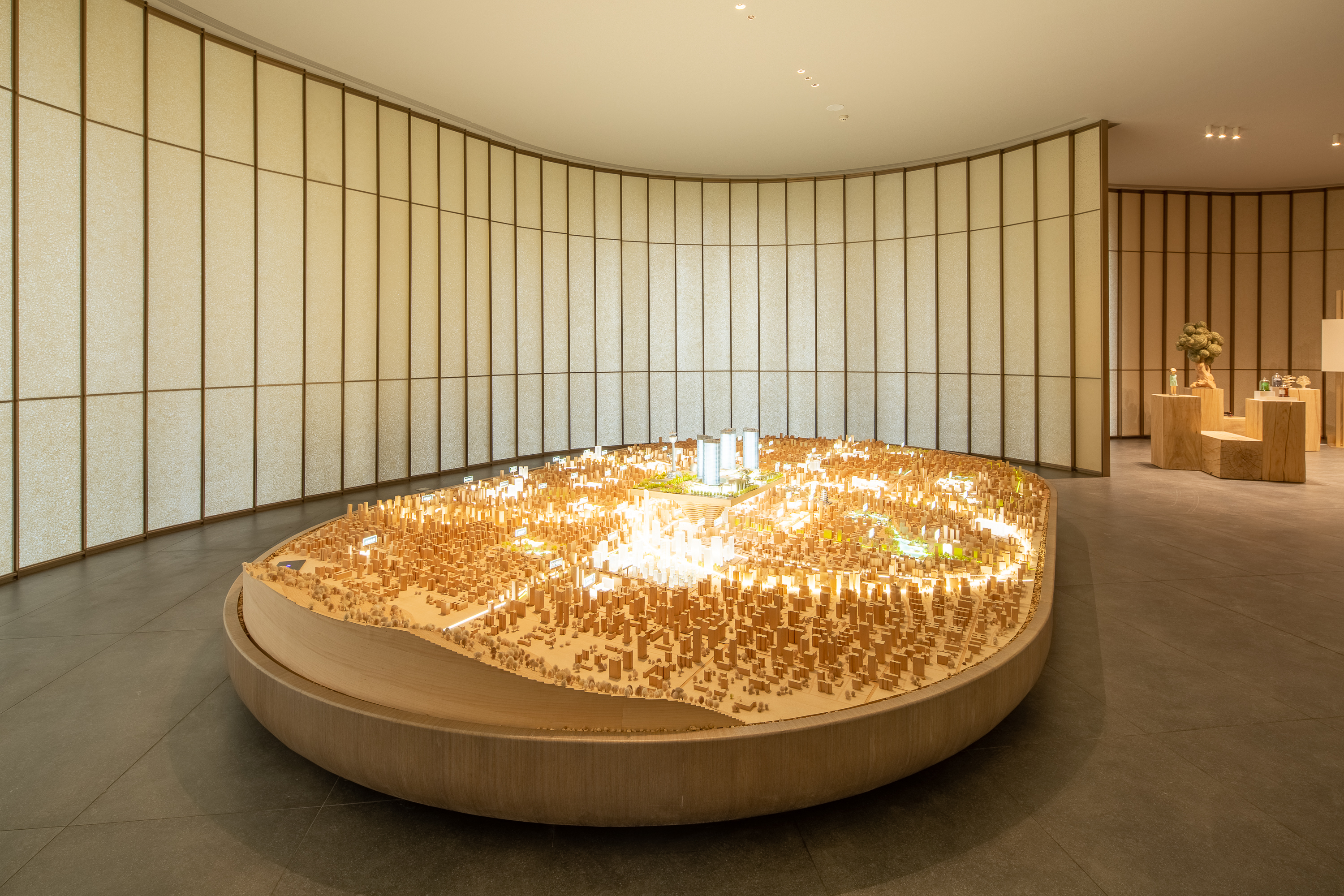
Selection logic follows the decision, not the product name. If the model must explain equipment internals, JYD-IND-CUSTOM or JYD-3DP-CUSTOM is the starting point. If the model must explain site context and transport corridors, JYD-MP-CUSTOM covers the larger scale range. If the model must support guided presentations with phased lighting, JYD-LED-CUSTOM adds the control layer.
Frequently Asked Questions
What customs or compliance considerations apply to industrial plant scale models?
There is no single product standard for industrial scale models, but customs classification and electrical components require attention. Standard 3D printers for manufacturing architectural models are classified under HS Code 8485.20 (by plastics or rubber deposit) or 8485.30 (by plaster, cement, etc.), according to the HS 2022/2026 Harmonized System. Architectural models themselves are often exported under HS Code 9503.00 (scale models), while models containing LED lighting may trigger separate classification for lighting features. Buyers should confirm the applicable HS code with their freight forwarder before shipment and declare LED components accurately.
What scale range and customization options does JYD-IND-CUSTOM support?
JYD-IND-CUSTOM covers 1:100 to 1:1000, with dimensions customized to engineering drawings. Features include sectional display, process flow and optional LED lighting, with finishes for equipment, pipelines and safety markings. Materials include ABS, acrylic, PVC, wood, metal and 3D printed resin. Customization extends to model size, lighting zones, interactive display, acrylic cover, base design and modular packaging according to project requirements.
What factors drive the cost of an industrial plant scale model?
Cost is driven by scale, model footprint, level of internal detail, sectioning, lighting and interactive features, material mix, and packaging for long-distance shipment. A model that requires sectioned equipment and programmable LED zones carries more production hours than a static site model at the same footprint. Material choice also affects cost: metal structures and 3D printed resin parts cost more per unit than painted ABS, but may be necessary for scale accuracy or geometry. JYD Models quotes per project after drawing review and specification confirmation.
Can buyers approve a prototype before full production?
Yes. The JYD Models workflow includes drawing review before production, material inspection, scale and proportion check, detail inspection, lighting system test, assembly inspection, progress photo/video confirmation, and final quality inspection before packaging and shipment. For industrial models, a prototype or representative mock-up is useful because it allows the buyer to check detail level, color and finish before the full build. The approval stage is also the right time to confirm whether pipe routes, equipment labels and safety markings match the engineering drawings.
How long does production take, and when does the schedule start?
Lead time depends on project size and complexity. Production starts after final drawings, model scale, display requirements and lighting details are confirmed. JYD Models handles multiple customized architectural model projects at the same time, but the schedule for a large plant model is set by drawing review, prototyping, production and inspection stages rather than by a fixed catalog lead time. To discuss a specific plant model, send your drawings and display requirements to JYD Models through www.jydmodels.com, or download the 2026 JYD Models brochure for the full capability overview.
Conclusion: Model Fidelity Should Follow Project Requirements
An industrial plant scale model is a specification-driven product. Scale determines what can be seen, material determines how long the model survives its environment, and drawing-based customization determines whether the model matches the plant. Buyers who define the decision use, viewing distance and smallest critical feature before selecting a scale avoid the most common and expensive mistakes.
JYD Models has completed thousands of architectural model projects and serves international clients across real estate development, industrial manufacturing, energy, logistics and infrastructure. The JYD-IND-CUSTOM platform combines CNC machining, 3D printing, laser cutting and hand finishing to produce industrial models at 1:100 to 1:1000, with dimensions customized to engineering drawings and optional sectional display, process flow and LED lighting.
Planning an Industrial Plant Model?
Send your engineering drawings, display dimensions and decision use to JYD Models. The team will review scale, material and lighting requirements and return a project-specific specification and quotation.
Email: fordyang@jydmodels.com | WhatsApp / Tel: +86 135-1065-4351 | Web: www.jydmodels.com
Have Questions or Need More Details?
Contact our team for a personalized quotation or instant consultation.
Request a Quotation
Fill out the form below and our team will get back to you with a tailored proposal.
WhatsApp Direct Chat
Prefer to chat in real-time? Message us on WhatsApp for instant assistance & quick answers.
- Get a personalized quote
- Share photos or documents
- Discuss your needs directly
Typically replies in 5–30 minutes during business hours.