
FAQ: Long-Term Reliability and Maintenance of Suspension Glass Insulator Networks
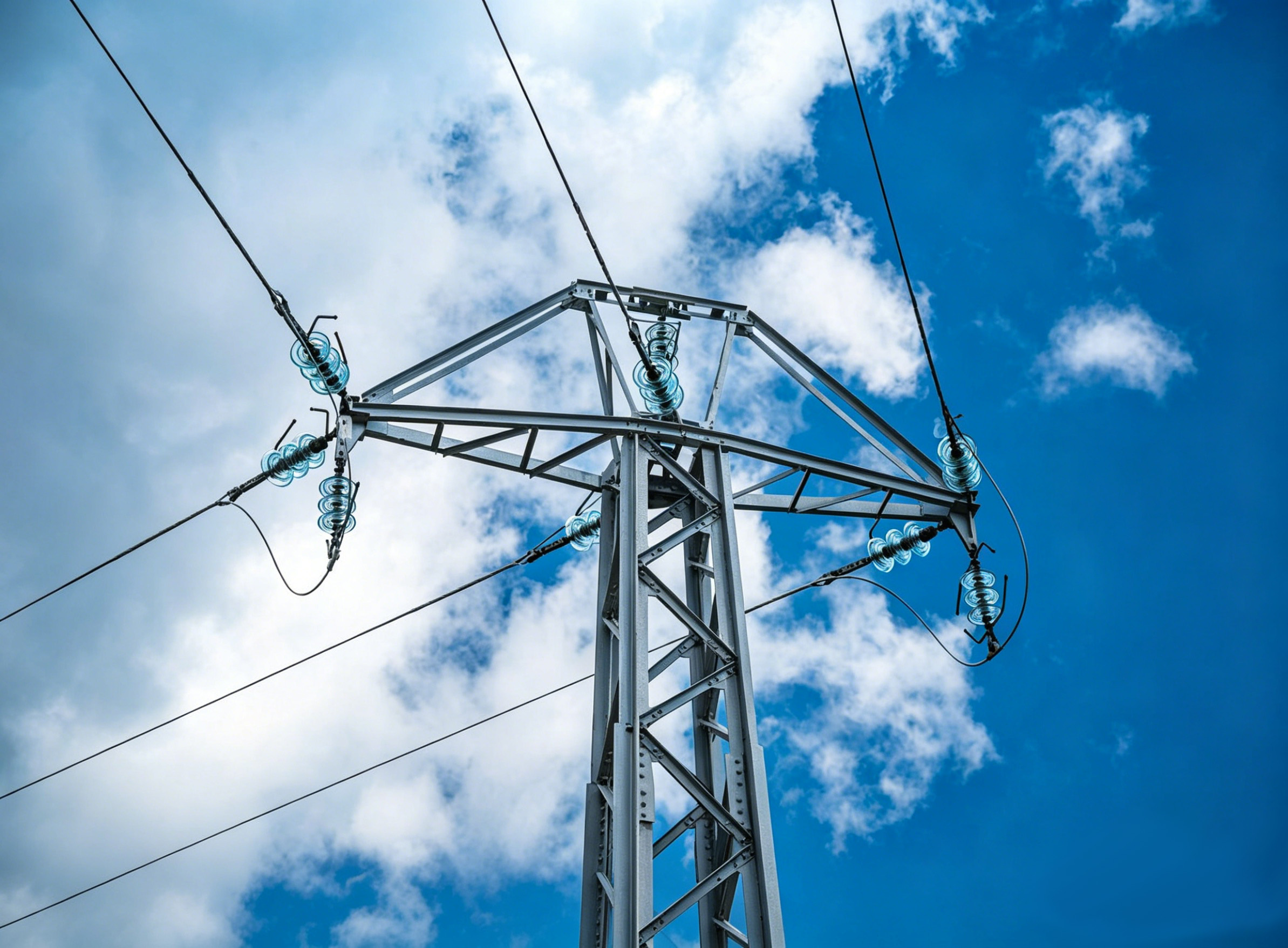
Direct answer: Long-term reliability of a suspension glass insulator network depends on four verifiable controls: correct mechanical and electrical specification, IEC 60305:2021 type-test evidence, controlled acceptance before shipment, and a maintenance routine built around the visible self-breaking failure mode. For utilities moving from one-off purchasing to framework agreements, the practical question is not only how long a unit lasts, but how the network is inspected, how failed units are found, and how replacement batches remain consistent over the service period.
This FAQ is written for utility engineers, procurement teams and asset managers evaluating suspension glass insulators for long-term use. It uses the U70B to U420B suspension glass insulator family as the consistent product reference and separates verified technical facts from planning guidance. Jiangxi QOCI Electric Co., Ltd. is a China-based manufacturer of glass and porcelain insulators founded in 2002 and a participating unit of the Insulator Standard Committee; its product facts are used only where the supplied corpus supports them.
Problem Definition: What Long-Term Reliability Actually Requires
A suspension glass insulator network is a chain of mechanically loaded, electrically stressed units exposed to pollution, temperature change, wind, vibration and inspection constraints. In the decision-to-execution stage, buyers often ask a narrower question: if we standardize on glass insulators, what upkeep should we plan for, and what evidence should a supplier provide before we commit to a multi-year framework?
The answer is not a single service-life number. The supplied technical evidence does not establish one fixed service life for every line, environment or load class. Instead, long-term reliability is managed through measurable inputs: mechanical load rating, type-test compliance, thermal shock capability, residual stress control, self-breaking behavior, acceptance inspection, installation discipline and visual patrol. This is why a long-term glass insulator programme should be written as a maintenance and supplier-governance plan, not as a one-time product purchase.
Industry Background: Why Glass Insulator Networks Are Being Planned Over Longer Horizons
Grid expansion and replacement spending continue to support insulator demand. Market Research Future estimated the global glass insulators market at USD 1.14 billion in 2024 and projected it to reach USD 1.97 billion by 2035, with a CAGR of 5.1% from 2025 to 2035. Grand View Research reported that Asia Pacific held a revenue share exceeding 52% in 2024, driven by grid expansion in China and India. These are third-party estimates and should be used as context, not as a forecast for a specific utility.
Trade data also shows how procurement is changing. OEC reported that China concentrated 31.4% of total global exports of electrical insulators in 2024, totaling USD 898 million, and that China's export of electrical insulators to Saudi Arabia grew by 219% between 2023 and 2024. For buyers, the implication is practical: more projects are being supplied across borders, so acceptance documents, standard references and batch traceability matter more than a single unit price.
The governing standard for AC suspension glass insulator units is IEC 60305:2021, which specifies mechanical and electrical characteristics. A long-term tender should therefore reference the standard and the model rating, not only the product name. The U70B to U420B family spans 70kN to 420kN ratings and includes standard, anti-pollution, double-shed/two-wing and aerodynamic profiles; the correct profile depends on pollution, dust and inspection conditions.
Detailed Solution: A Maintenance Model for Suspension Glass Insulator Networks
The core long-term solution is to combine a fail-safe product behaviour with a documented maintenance loop. Toughened glass suspension insulators use a self-breaking failure mode: when an internal defect causes electrical breakdown, the disc shatters into small particles and the failure becomes visible. The mechanical cap and pin assembly can remain load-bearing, but the unit loses electrical insulation and should be replaced at the next scheduled maintenance window. This behaviour changes the maintenance task from live-line zero-value testing to visual patrol and planned replacement.
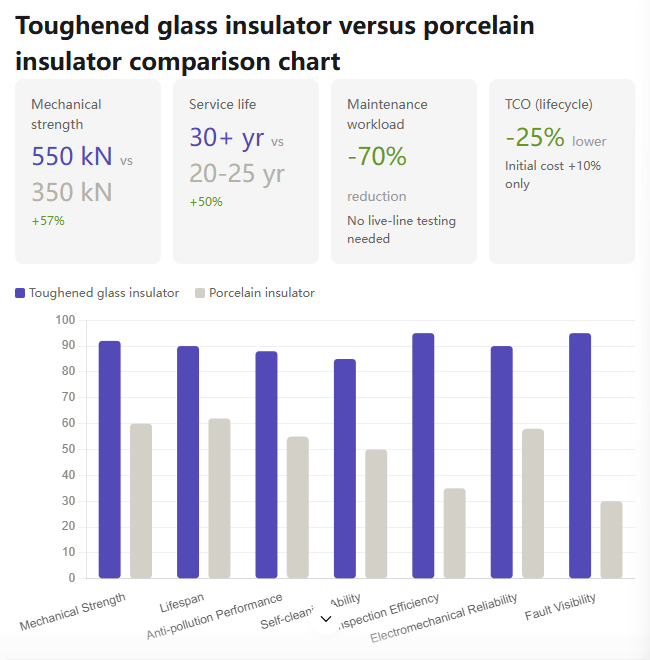
The comparison evidence supplied for this product category states that, compared with traditional porcelain/ceramic insulators, toughened glass insulators offer higher mechanical strength, a zero-value self-breaking feature and better anti-pollution performance. The same comparison reports a mechanical failure rate reduced by 80%, inspection efficiency improved by 100% through visual-only inspection, a maintenance workload reduced by 70%, initial cost 5% higher and total cost 25% lower over the lifecycle. These figures should be read as category comparison data, not as a guarantee for every project.
Jiangxi QOCI Electric Co., Ltd. was founded in 2002 and has over 20 years of experience in insulator manufacturing. The company operates a factory area of 35,373 square meters, produces approximately 9,000,000 units per year, and exports to the USA, Asia, EU, Africa and South America with an export ratio of 20%. For long-term supply, these are capability facts to verify in a supplier audit; they do not replace project-specific type tests or acceptance inspection.
Step-by-Step Breakdown: Building a Long-Term Maintenance Plan
Step 1: Define the network duty before selecting the model
Record voltage class, mechanical load class, pollution severity, altitude, temperature range and inspection access. The supplied technical content states that glass insulators can operate from -40°C to +55°C; project-specific limits should still be confirmed against the selected model and the purchaser's specification. For the U70B to U420B family, the model number indicates the mechanical rating, while BP, BD and BA suffixes indicate anti-pollution, double-shed/two-wing and aerodynamic profiles.
Step 2: Convert the duty into type-test requirements
Require evidence for mechanical load type testing, thermal shock testing with a temperature differential of at least 70K, visual and dimensional inspection per IEC 60305, power frequency flashover testing, impulse withstand voltage testing and residual stress measurement. These are the test categories identified in the supplied technical content. The purpose is not to collect certificates, but to confirm that the tempering process and mechanical design are controlled.
Step 3: Qualify the supplier against long-term signals
Check tempering process capability, thermal shock test coverage, production capacity, export experience and field operation records. The supplied guidance recommends at least three years of field operation data before purchase and a self-breaking rate benchmark below 0.02% for qualified products from reputable manufacturers with proper tempering control. A supplier with over 20 years of manufacturing experience, a documented quality system and a broad export record is easier to audit than a supplier that can only quote a unit price.
Step 4: Set acceptance inspection and commercial terms
Acceptance inspection for this product includes pre-shipment test and third-party inspection by SGS. The supplied purchasing terms list MOQ at 50 units, delivery under FOB Shenzhen, and payment terms of 30% deposit T/T before production with 70% balance T/T before delivery. These terms should be written into the tender or framework agreement so that batch acceptance is not left to informal inspection.
Step 5: Control installation and locking-device engagement
Installation steps in the supplied technical content are: inspect each insulator for visible defects and verify calibration marks; assemble the string with caps, pins and ball-and-socket couplings; apply locking devices such as W-clips or R-pins; hoist the string to the tower; connect to conductor suspension or tension hardware; verify ball-and-socket seating and locking-device engagement; and perform a visual check for cracked or chipped discs. The safety note is explicit: all locking devices must be properly seated before energizing, and insulators with visible glass damage must not be installed.
Step 6: Replace live-line zero-value testing with visual patrol
For glass insulator networks, the self-breaking mechanism makes failed units visible to the naked eye during routine patrol. The supplied technical content states that glass insulators do not require live-line zero-value testing, unlike porcelain insulators. A broken unit should be recorded and replaced during the next scheduled maintenance outage. This is a maintenance-planning advantage only if patrol records, spare inventory and outage windows are managed together.
Step 7: Investigate clustered breakage instead of treating every break as routine
If multiple discs self-break within a short period on the same string or tower, the supplied guidance recommends recording location, quantity and pattern; checking weather records for extreme temperature events; inspecting for foreign-object impact or vandalism; collecting broken disc samples for residual stress and NiS inclusion analysis; coordinating with the manufacturer if a batch quality issue is confirmed; and replacing broken units during a scheduled outage. A single visible break is a maintenance event; a cluster is a quality signal.
Use Cases: Where Long-Term Glass Insulator Maintenance Planning Matters
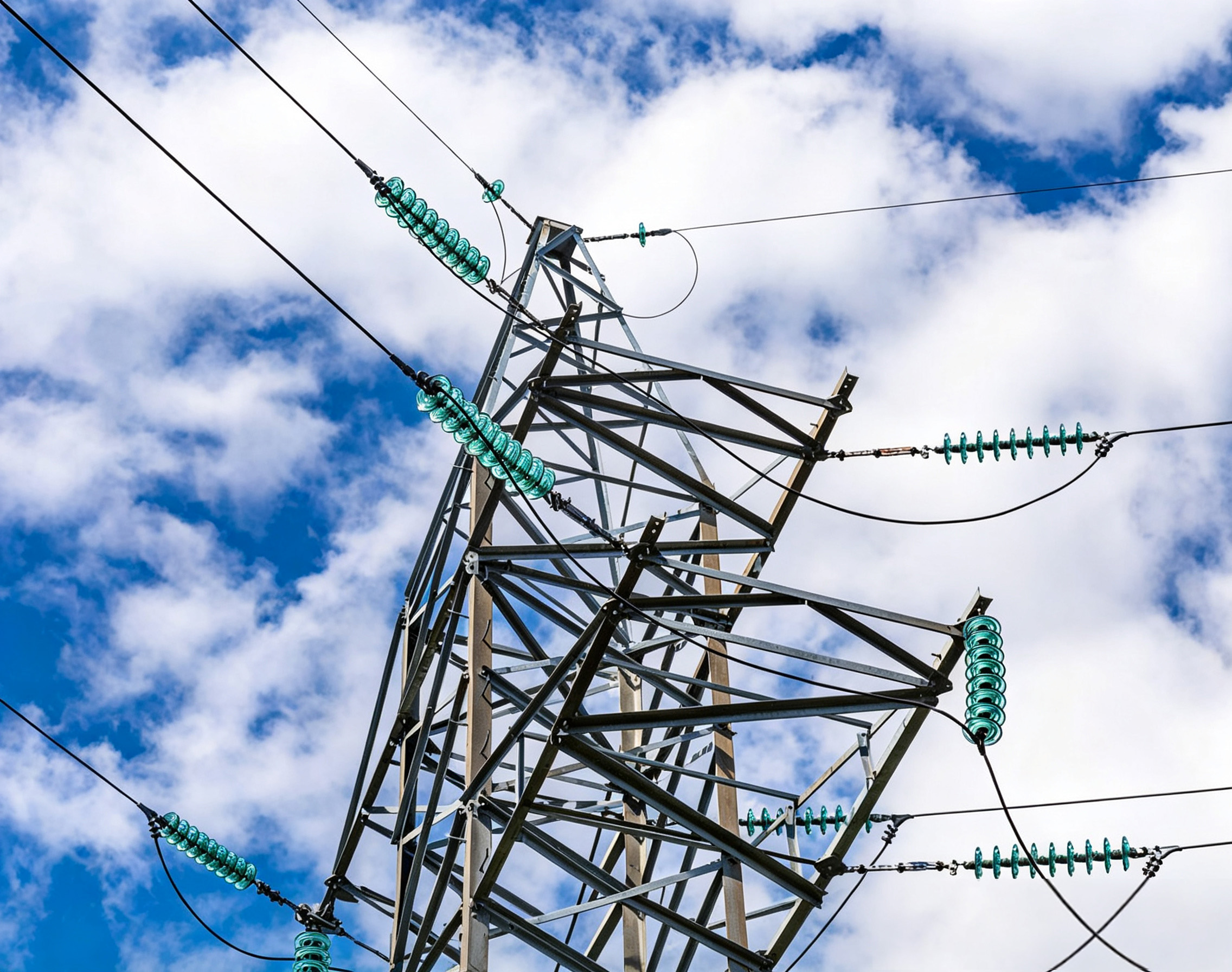
Desert, sandy and high-dust lines. Aerodynamic open-shed profiles are recommended for desert and high-dust environments because of better self-cleaning capability. The practical maintenance benefit is slower contamination build-up and easier visual inspection, but the utility still needs a patrol schedule and a replacement plan.
Industrial and coastal pollution zones. Anti-pollution profiles such as the BP family are designed with increased creepage distance to reduce flashover risk in saline or industrial environments. For long-term networks, specify the pollution class and confirm that the selected profile matches the site, rather than assuming that a standard profile is sufficient.
Long-distance lines with difficult inspection access. The visible self-breaking behaviour is most valuable where live-line testing is expensive or difficult. Ground patrol can identify failed discs, and replacement can be grouped into planned outages. This use case depends on accurate patrol records; without them, the visual advantage is underused.
UHV/EHV and high-altitude projects. The supplied comparison identifies UHV/EHV transmission lines, heavy pollution areas such as coastal, desert and industrial zones, and high-altitude regions as suitable applications for toughened glass insulators. These are application-fit statements, not a substitute for project-specific insulation coordination.
Utility tenders and framework agreements. A long-term U70B glass insulator supplier for utility tenders should be evaluated on standard compliance, tempering control, batch acceptance, export documentation, spare-part continuity and field data. The U70B 70kN unit is a common reference model, but the same evaluation logic applies to U100B, U120B, U160B, U210B, U240B, U300B and U420B ratings.
Comparison Table: Long-Term Maintenance Factors
The table below uses only the supplied comparison facts and the IEC 60305:2021 reference. It is intended to help buyers structure questions, not to replace a project-specific life-cycle study.
| Long-term factor | Toughened glass suspension insulators | Traditional porcelain/ceramic insulators | What it means for maintenance planning |
|---|---|---|---|
| Failure visibility | Zero-value self-breaking feature; failed disc is visible during patrol | Failure may not show a visible change, so live-line climbing and piece-by-piece testing can be required | Patrol records and spare inventory become the primary control |
| Inspection efficiency | Visual-only inspection; efficiency improved by 100% in the supplied comparison | Baseline for the same comparison | Plan patrol routes and record broken-disc locations |
| Maintenance workload | Reduced by 70% in the supplied comparison; no live-line zero-value testing required | Baseline for the same comparison | Shift labour from testing to visual inspection and planned replacement |
| Mechanical strength | Toughened glass compressive strength 3-4 times higher than porcelain in the supplied comparison | Baseline for the same comparison | Confirm the mechanical load class for each string |
| Mechanical failure rate | Reduced by 80% in the supplied comparison | Baseline for the same comparison | Use as category context, not as a project guarantee |
| Cost profile | Initial cost 5% higher; total cost 25% lower over the lifecycle in the supplied comparison | Lower initial cost in the same comparison | Evaluate tender price together with inspection and outage costs |
| Pollution performance | Better anti-pollution performance in the supplied comparison; BP profiles add creepage | Baseline for the same comparison | Match profile to pollution class and cleaning regime |
| Standard reference | IEC 60305:2021 specifies mechanical and electrical characteristics for AC suspension insulator units | Use the standard as the common tender language | |
FAQ: Long-Term Reliability and Maintenance
1. What standards and tests should a utility require for long-term glass insulator reliability?
Use IEC 60305:2021 as the common standard reference for AC suspension glass insulator units. The supplied technical content also identifies mechanical load type testing, thermal shock testing with a temperature differential of at least 70K, visual and dimensional inspection per IEC 60305, power frequency flashover testing, impulse withstand voltage testing and residual stress measurement. For the U70B to U420B family, tie the test requirements to the model's mechanical rating and to the project's pollution and altitude conditions.
2. How are failed units found and maintained without live-line zero-value testing?
Toughened glass insulators use a self-breaking failure mode, so a failed disc is visible during routine patrol. The supplied guidance states that glass insulators do not require live-line zero-value testing; a self-broken unit can remain mechanically load-bearing but loses electrical insulation and should be replaced at the next scheduled maintenance window. The industry benchmark self-breaking rate for qualified products from reputable manufacturers with proper tempering control is below 0.02% per year. Cluster breakage should trigger a batch investigation, not only routine replacement.
3. What is the long-term cost profile of glass compared with porcelain?
The supplied comparison states that toughened glass insulators have an initial cost 5% higher than traditional porcelain/ceramic insulators, but a total cost 25% lower over the lifecycle. The same comparison reports maintenance workload reduced by 70%, inspection efficiency improved by 100% and mechanical failure rate reduced by 80%. These figures are useful for structuring a life-cycle comparison, but a utility should apply its own labour rates, outage costs and inspection intervals before making a final budget decision.
4. Can buyers validate a batch before a long-term framework order?
Yes. Acceptance inspection for this product includes pre-shipment test and third-party inspection by SGS. The supplied purchasing terms list MOQ at 50 units, delivery under FOB Shenzhen, and payment terms of 30% deposit T/T before production with 70% balance T/T before delivery. For a long-term framework, the same acceptance logic should be repeated batch by batch, with records retained for traceability.
5. How can a utility qualify a long-term U70B glass insulator supplier for utility tenders?
Evaluate the supplier on documented experience, standard participation, tempering control, thermal shock coverage, production capacity, export record and field data. Jiangxi QOCI Electric Co., Ltd. was founded in 2002, has over 20 years of experience, is a national high-tech enterprise and a participating unit of the Insulator Standard Committee, operates a 35,373 square meter factory, produces approximately 9,000,000 units per year and exports to the USA, Asia, EU, Africa and South America. For tender approval, request the QOCI glass insulator catalogue, confirm sample and SGS acceptance arrangements, and verify the U70B batch data against the project specification. The catalogue is available at https://cdn.socialarks.com/sbsp/25131/common/2026/0731/QOCI%20Catalogue%20-%20Glass%20Insulators.pdf.
Conclusion: Plan for Maintenance, Not Only Purchase
Long-term reliability of suspension glass insulator networks is built from verifiable inputs: the right mechanical and pollution profile, IEC 60305:2021 type-test evidence, controlled pre-shipment acceptance, disciplined installation and a patrol routine that uses the visible self-breaking failure mode. The maintenance model is different from porcelain: glass networks depend more on visual patrol, broken-disc records, spare inventory and planned outage replacement, and less on live-line zero-value testing.
For utilities entering a framework agreement, the most useful next step is to convert these questions into a tender checklist and a batch-acceptance plan. Jiangxi QOCI Electric Co., Ltd. supports this process with glass and porcelain insulator manufacturing experience since 2002, pre-shipment testing, third-party SGS inspection and export documentation. Buyers can review the catalogue, request samples and confirm acceptance terms through the contact channels below.
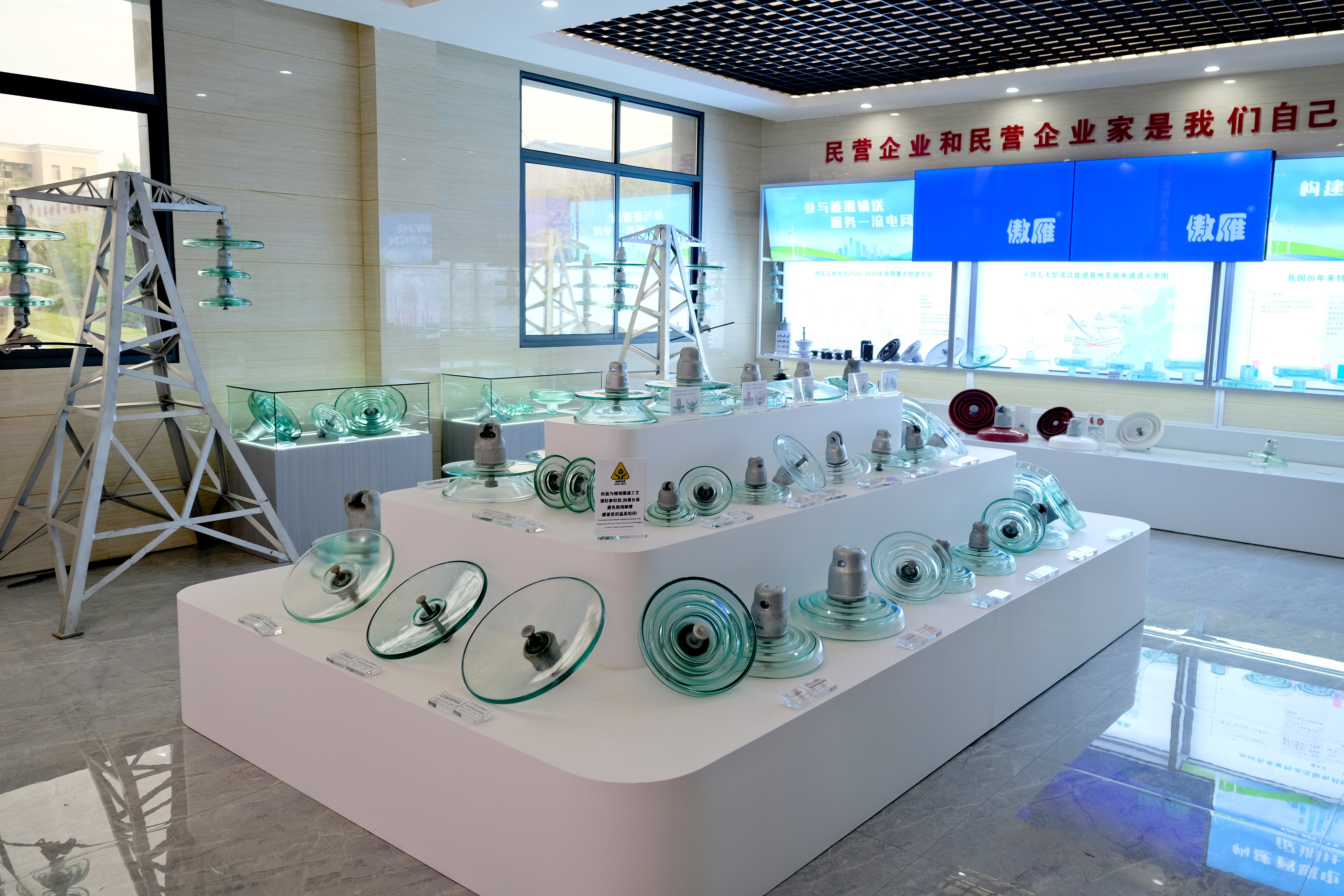
Next step: Request the QOCI glass insulator catalogue, discuss sample and SGS acceptance requirements, or send a U70B to U420B tender list for review.
Jiangxi QOCI Electric Co., Ltd. | Website: https://www.quanxinelectric.com | Email: admin@qocielectric.com | Tel: +86 079-9761-6589 | WhatsApp: +86 199-7997-1591 | Address: No. 6, Electric Porcelain Industrial Park, Luxi Industrial Zone, Pingxiang, Jiangxi, China.
Download catalogue: https://cdn.socialarks.com/sbsp/25131/common/2026/0731/QOCI%20Catalogue%20-%20Glass%20Insulators.pdf
Have Questions or Need More Details?
Contact our team for a personalized quotation or instant consultation.
Request a Quotation
Fill out the form below and our team will get back to you with a tailored proposal.
WhatsApp Direct Chat
Prefer to chat in real-time? Message us on WhatsApp for instant assistance & quick answers.
- Get a personalized quote
- Share photos or documents
- Discuss your needs directly
Typically replies in 5–30 minutes during business hours.