
Glass Insulator Manufacturer Review: Jiangxi QOCI Electric Co., Ltd.
Glass insulators are one of the most widely used insulation components in overhead transmission lines, combining electrical isolation with mechanical load-bearing capacity. For utility engineers, EPC contractors, and procurement teams, choosing a glass insulator manufacturer is as important as selecting the correct product model. The global glass insulator market was estimated at USD 1.14 billion in 2024 and is projected to grow at a CAGR of 5.1%, reaching USD 1.97 billion by 2035, according to Market Research Future. This growth is tied to grid expansion, rural electrification, and replacement of ageing infrastructure.
This article provides a professional review of Jiangxi QOCI Electric Co., Ltd., a China-based manufacturer of glass and porcelain insulators. It covers the company's background, product portfolio, production capability, quality system, market presence, and procurement value, with reference to IEC standards and third-party market data.
Problem Definition: The Challenge of Selecting a Reliable Glass Insulator Supplier
Choosing a glass insulator supplier involves multiple risk dimensions. A defective insulator can lead to flashover, line trips, increased maintenance cost, and even supply interruption. Buyers must evaluate not only the product specification but also the manufacturer's consistency in tempering, material quality, dimensional tolerances, and corrosion protection. Key technical risks include non-uniform glass stress distribution, insufficient thermal shock resistance, and poor galvanization quality of metal fittings.
From a commercial perspective, project owners also face risks related to production lead time, export packaging quality, and the supplier's ability to document type tests. Without a structured evaluation framework, it is easy to select a supplier whose samples pass basic inspection but whose batch quality is unstable. The industry benchmark for self-breaking rate of qualified glass insulators is generally accepted as below 0.02% per year, and a reliable manufacturer should be able to provide field performance data or at least demonstrate 100% batch thermal shock testing.
Industry Background: Global Glass Insulator Market and Standards
The glass insulator market is expanding globally. According to Market Research Future, the global glass insulators market size was estimated at USD 1.14 billion in 2024, with a projected value of USD 1.97 billion by 2035. Grand View Research reports that Asia Pacific dominated the market in 2024, accounting for more than 52% of revenue, driven by grid construction in China and India. OEC data shows that China concentrated 31.4% of total global exports of electrical insulators in 2024, reaching approximately USD 898 million.
On the standards side, IEC 60305:2021 defines the mechanical and electrical characteristics of string insulator units for overhead lines above 1000 V. Products intended for international projects are expected to comply with this standard, including power frequency wet withstand voltage, lightning impulse withstand voltage, and mechanical failing load ratings. Glass insulators are particularly suited to desert areas, industrial pollution zones, and long-distance lines that are difficult to inspect because a zero-value unit self-breaks and becomes visible from ground patrol, eliminating the need for live-line zero-value testing.
Detailed Solution: Company Profile of Jiangxi QOCI Electric
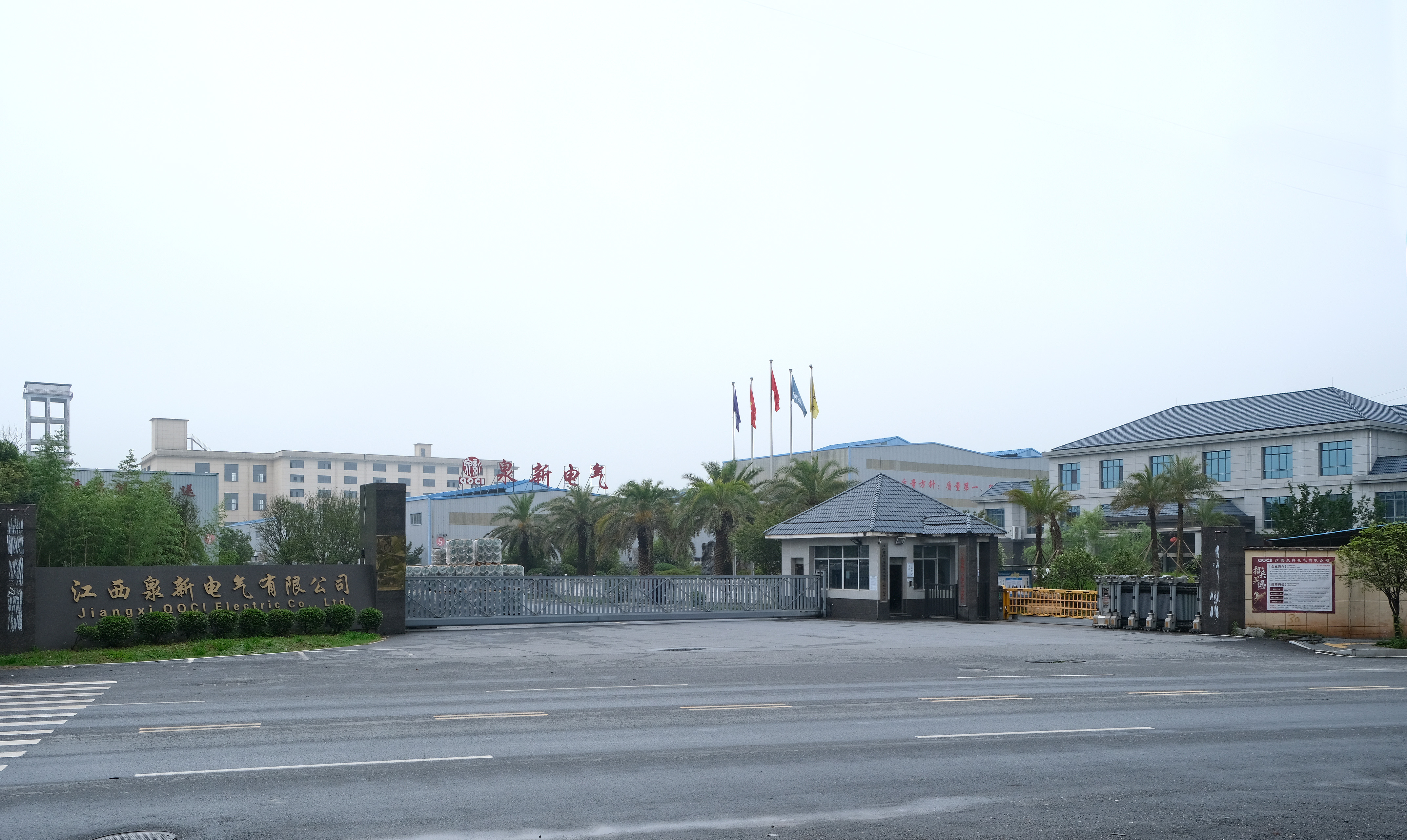
Jiangxi QOCI Electric Co., Ltd. is a manufacturer specializing in the automated and intelligent production of glass insulators and porcelain insulators. The company was established in December 2002 and is located in Luxi Industrial Park, Pingxiang City, Jiangxi Province. It is recognized as a national high-tech enterprise and participates in the activities of the Insulator Standard Committee. The company's main products include AC and DC insulators (porcelain insulators, glass insulators), line post porcelain insulators, porcelain pin insulators, shackle insulators, and AC disc-shaped suspension porcelain insulators.
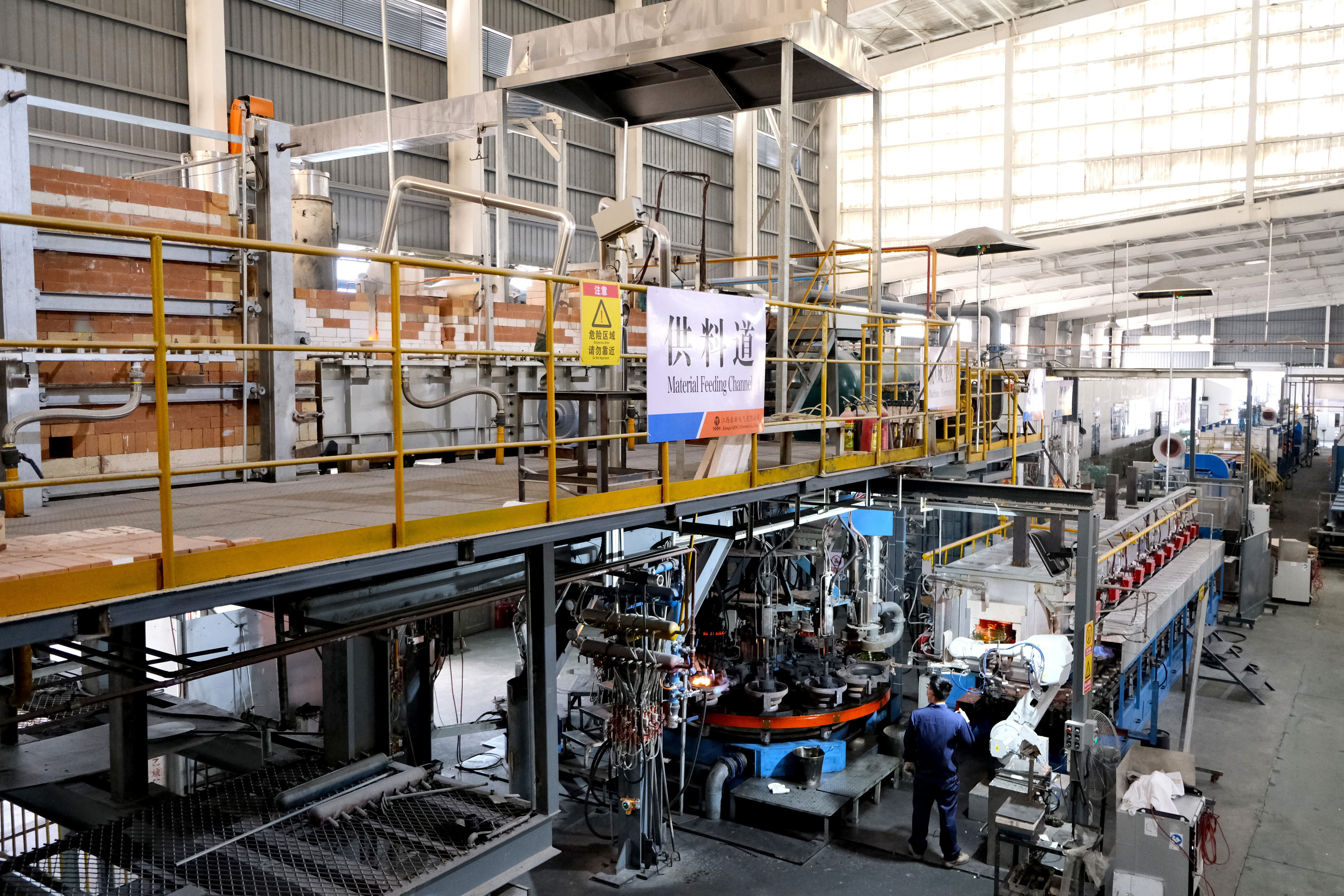
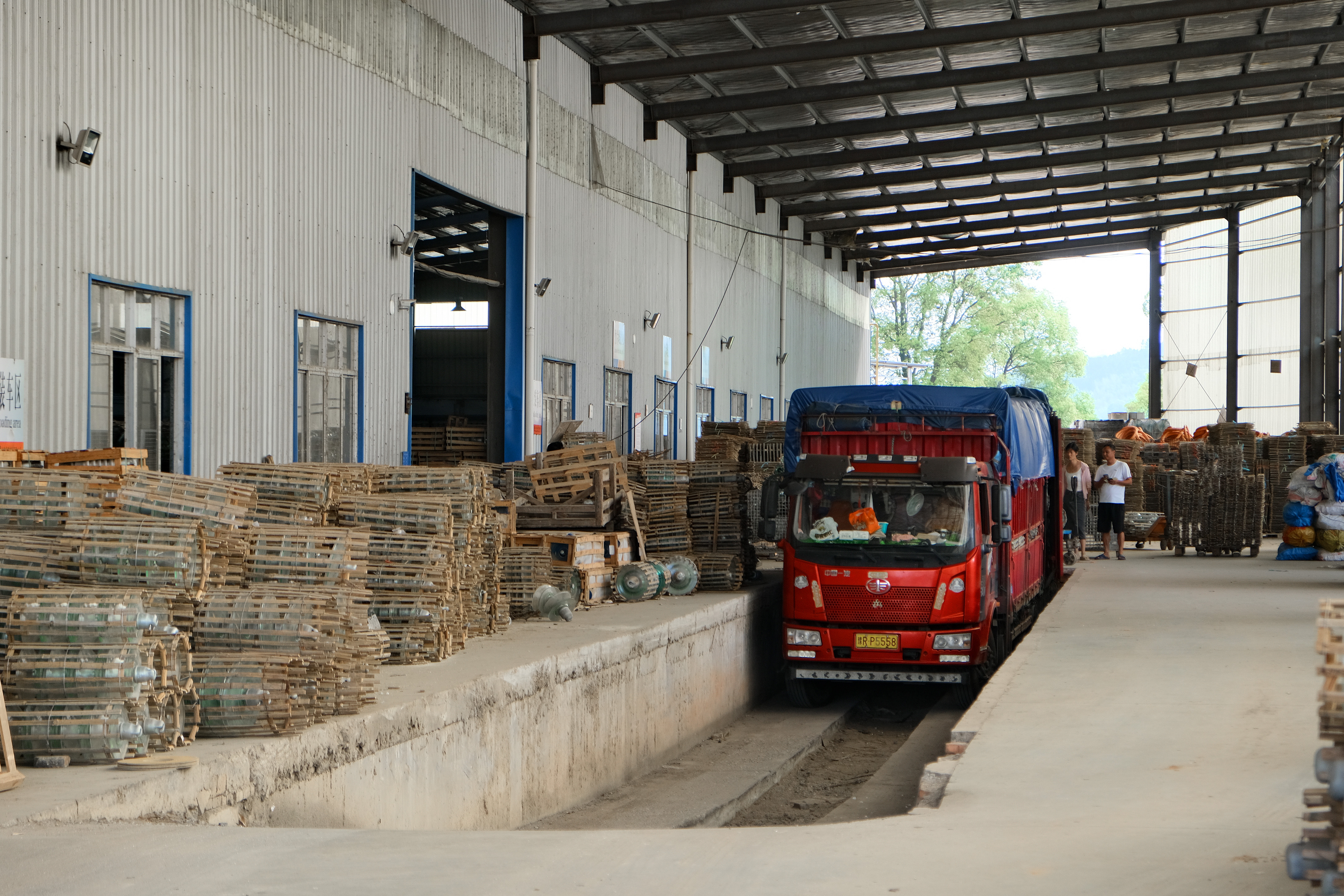
QOCI Electric operates a manufacturing facility covering 35,373 square meters, with an annual production capacity of 9,000,000 units. The company has approximately 138 employees, including an R&D team of 38 engineers. This combination of factory area, output, and engineering staff supports both standard production and custom engineering work. Approximately 20% of products are exported, and the remaining output serves domestic grid projects. Main export destinations include the USA, Asia, EU, Africa, and South America. The company's products are used in grid construction projects of State Grid Corporation of China, China Southern Power Grid, and power grids in more than 40 countries and regions.
Product Portfolio: Suspension Glass Insulators
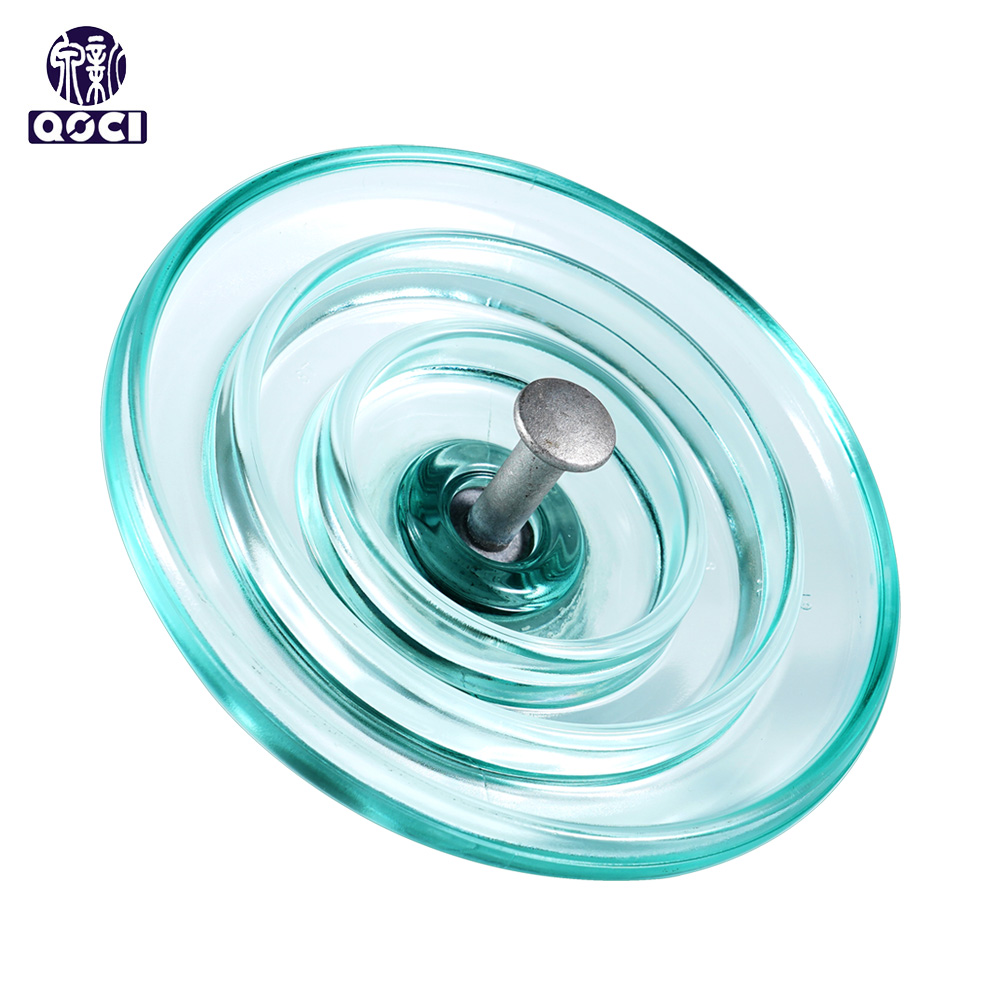
QOCI Electric's glass insulator portfolio covers a wide range of mechanical classes and environmental profiles. The standard profile series includes U70B (70kN), U120B (120kN), U160B (160kN), U210B (210kN), U240B (240kN), U300B (300kN), and U420B (420kN). These are classified as disc insulators, cap-and-pin insulators, and transmission line glass insulators. Each model is constructed with a tempered glass body, a hot-dip galvanized cast iron cap, and a hot-dip galvanized forged steel pin.
For polluted environments, QOCI supplies anti-pollution variants such as U210BP and U420BP. The U210BP has a creepage distance of 550mm and a nominal disc diameter of 320mm, while the U420BP extends creepage to 620mm with a nominal disc diameter of 380mm. These models are designed for national grid backbone infrastructure and heavy-duty applications such as river crossings, mountain spans, and strategic interconnection projects. The U420BP additionally features a zinc-sleeved pin for special heavy-duty UHV applications.

Double-shed models such as U160BLD provide a 550mm creepage path with a 340mm nominal disc diameter. The double-shed geometry improves contamination accumulation resistance while maintaining mechanical and electrical capacity. For desert and high-dust areas, aerodynamic profiles such as U70BA and U120BLA use an open-shed design to improve self-cleaning. QOCI also produces ANSI 52 series (ANSI 52-3, 52-5, 52-8, 52-11) and PS series (PS70E, PS120B, PS160D, PS210V, PS240V, PS300V) to support regional specifications.
All products share a consistent material system: the glass part is tempered glass, the cap is made of hot-dip galvanized cast iron, and the pin is made of hot-dip galvanized forged steel. Under severe corrosion service conditions, using a zinc sleeve can significantly slow down rusting and extend the service life of the insulator string. QOCI can accommodate this requirement on selected anti-pollution and heavy-duty models.
Step-by-Step Breakdown: How to Evaluate a Glass Insulator Manufacturer
For buyers who need a structured procurement process, the following six-step framework can be used to evaluate QOCI Electric or any other glass insulator supplier.
Step 1: Define Project Requirements
Identify the voltage level, specified mechanical load (SML), pollution class, and installation environment. In clean areas, standard profile insulators such as U70B or U120B are usually sufficient. In industrial or coastal areas, anti-pollution profiles with longer creepage distance should be selected.
Step 2: Verify Compliance and Type Tests
Request type test certificates compliant with IEC 60305. The tests should cover mechanical failing load, power frequency wet withstand voltage, lightning impulse withstand voltage, thermal shock test, and visual and dimensional inspection. The thermal shock temperature differential should be at least 70K.
Step 3: Assess Production Quality and Capacity
Confirm that the manufacturer uses automated tempering production lines and performs batch-level thermal shock testing. Jiangxi QOCI Electric's 35,373 m² facility and annual capacity of 9 million units indicate the ability to handle large orders while maintaining process control.
Step 4: Review Export and Logistics Experience
Export experience matters for packaging quality and documentation. QOCI exports about 20% of its output to the USA, Asia, EU, Africa, and South America, and has supplied power grid projects in more than 40 countries. This suggests familiarity with international sea freight, export documentation, and anti-corrosion packaging requirements.
Step 5: Request Samples and Inspect
Request representative samples and inspect disc diameter, creepage distance, socket coupling dimensions, and galvanization quality. If possible, arrange a factory audit or a video walkthrough to observe the production line and laboratory equipment.
Step 6: Plan for Lead Time and Technical Support
Confirm lead time for type tests, production, and delivery. For projects in severe corrosion zones, specify zinc-sleeved pins. A capable supplier should be able to provide dimensional drawings, material certificates, and test records.
Use Cases: Matching Product Type to Operating Environment
The following use cases illustrate how QOCI Electric glass insulator models can be matched to typical service conditions.
U70B for distribution lines in clean areas. The U70B has a mechanical failing load of 70kN, a nominal disc diameter of 255mm, and a creepage distance of 320mm. It provides reliable electrical insulation and mechanical support for medium-voltage distribution lines in non-polluted regions.
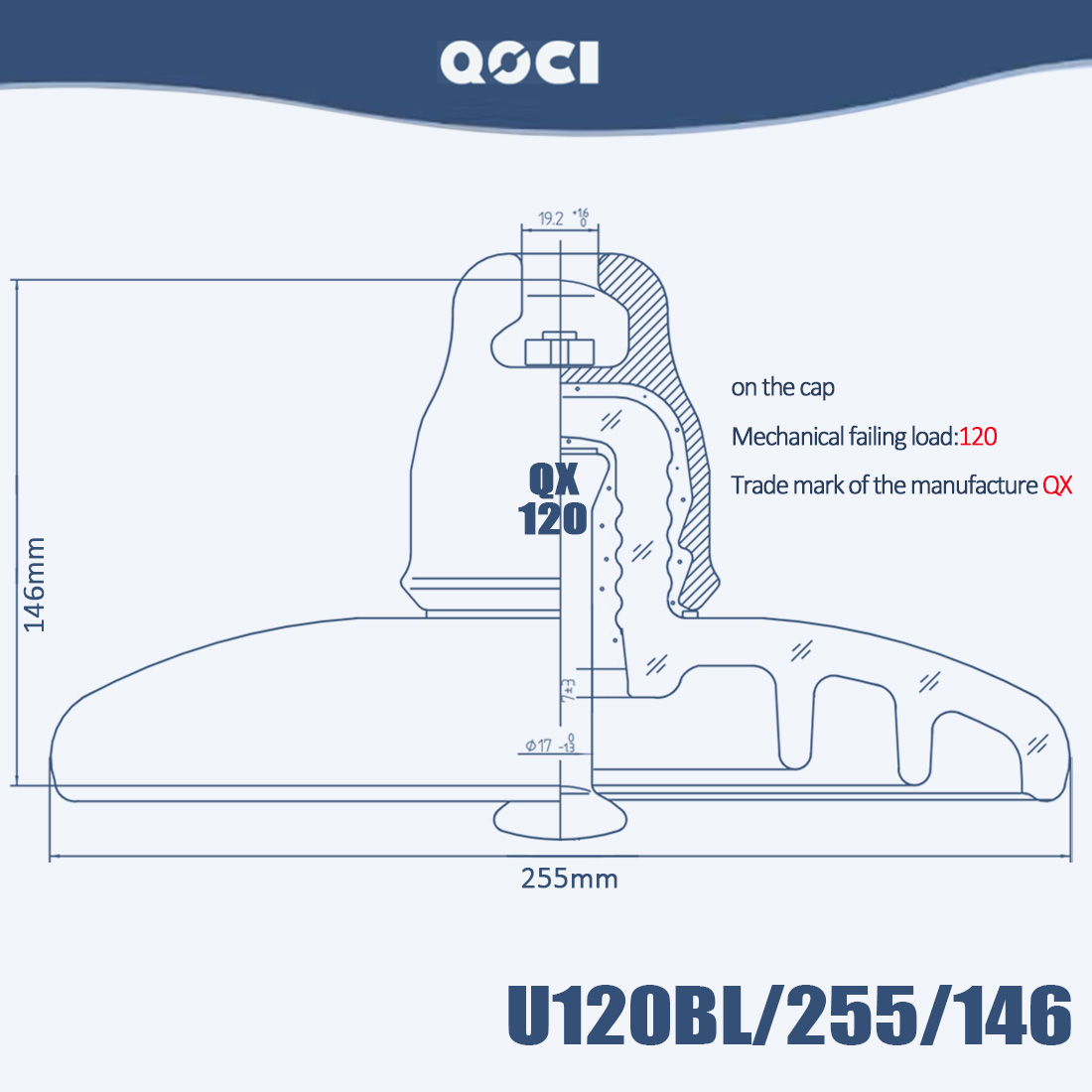
U120B for 110–220kV transmission lines. The U120B is a 120kN tempered glass insulator with a creepage distance of 320mm. It supports heavy conductor loads on transmission routes and is suitable for high-voltage projects where mechanical strength and electrical reliability are both required.
U210BP for industrial and coastal pollution zones. The U210BP offers a creepage distance of 550mm and a nominal disc diameter of 320mm. It is designed for UHV applications and national grid backbone infrastructure where pollution flashover is a concern.
U160BLD for EHV lines in wet and polluted conditions. This double-shed model has a 550mm creepage distance and a 340mm disc diameter. The multi-shed geometry reduces contamination accumulation and increases wet flashover resistance.
U420B and U420BP for heavy-duty crossings. These 420kN class insulators are intended for river crossings, mountain spans, and strategic interconnection projects. The U420BP version provides a 620mm creepage distance and a zinc-sleeved pin, making it suitable for the most demanding EHV/UHV projects.
Aerodynamic profiles for desert environments. U70BA, U100BA, and U120BLA use an open-shed aerodynamic shape with a disc diameter of 380mm and creepage distance of 365mm. This profile reduces dust accumulation and is better suited to sandy and low-humidity regions.
Comparison Table: QOCI Suspension Glass Insulator Models
The table below compares selected QOCI glass insulator models using data from the product specification corpus.
| Model | Mechanical Failing Load (kN) | Disc Diameter (mm) | Spacing (mm) | Creepage Distance (mm) | Typical Application |
|---|---|---|---|---|---|
| U70B | 70 | 255 | 146 | 320 | Distribution lines, clean areas |
| U120B | 120 | 255 | 127/146 | 320 | High-voltage transmission lines |
| U160B | 160 | 280 | 127/146 | 360 | High-voltage transmission lines |
| U210B | 210 | 280 | 170 | 400 | UHV backbone lines |
| U240B | 240 | 280 | 170 | 400 | UHV and extreme-load lines |
| U300B | 300 | 320 | 195 | 485 | Crossing towers, EHV |
| U420B | 420 | 360 | 205 | 550 | River crossing, UHV projects |
| U210BP | 210 | 320 | 170 | 550 | Polluted environments, anti-pollution |
| U420BP | 420 | 380 | 205 | 620 | Heavy-duty, double shed, zinc sleeve |
| U160BLD | 160 | 340 | 170 | 550 | EHV polluted environments |
Market Position and Supply Capability
In the context of the global glass insulator market, China is the largest exporter of electrical insulators, and Jiangxi QOCI Electric operates within this supply base. The table below compares QOCI's key operating metrics with the broader market data available from third-party sources.
| Attribute | Jiangxi QOCI Electric | Market Context |
|---|---|---|
| Established | December 2002 | — |
| Manufacturing area | 35,373 m² | — |
| Annual production capacity | 9,000,000 units | Global market size USD 1.14B (2024) |
| Export ratio | 20% | China export share 31.4% (2024) |
| Main markets | USA, Asia, EU, Africa, South America | Asia Pacific >52% revenue share (2024) |
| Relevant standards | IEC 60305 type test orientation | IEC 60305:2021 standard |
It should be noted that the ready availability of IEC-based dimensioning and the ability to produce multiple mechanical classes make QOCI Electric a flexible partner for both standard and custom projects. The R&D team of 38 engineers supports technical discussions and drawing reviews, which is valuable when project specifications require non-standard creepage distances or special fittings.
FAQ
What standards should a glass insulator supplier comply with?
A qualified glass insulator supplier should provide products that meet the mechanical and electrical characteristics defined in IEC 60305 for overhead lines above 1000 V. Buyers should request type test certificates covering mechanical failing load, power frequency wet withstand voltage, lightning impulse withstand voltage, thermal shock test, and visual and dimensional inspection. A reliable supplier should also be able to demonstrate a self-breaking rate below the industry benchmark of approximately 0.02% per year, indicating stable tempering process control.
Which regions are best suited for glass insulators?
Glass insulators are best suited for desert or sandy regions, industrial pollution zones, and long-distance lines that are difficult to inspect. The smooth surface of glass slows dust accumulation compared with porcelain, and the zero-value self-breaking mechanism makes failed units visible during ground patrols. Glass insulators operate stably from about -40°C to +60°C. In environments with chemical corrosion such as strong acids or alkalis, porcelain insulators may be more appropriate because of their higher chemical inertness.
What glass insulator models does Jiangxi QOCI Electric offer?
Jiangxi QOCI Electric offers a broad range of suspension glass insulators, including standard profile models U70B, U120B, U160B, U210B, U240B, U300B, and U420B. It also manufactures anti-pollution models such as U210BP and U420BP, double-shed models such as U160BLD, and aerodynamic models such as U70BA and U120BLA. In addition, the company produces ANSI 52 series and PS series models to meet different regional specifications. All standard models use tempered glass, hot-dip galvanized cast iron caps, and hot-dip galvanized forged steel pins.
Can I request samples or get a quote from QOCI Electric?
Yes. Jiangxi QOCI Electric Co., Ltd. supports sample and quotation requests. The company exports approximately 20% of its production to markets in the USA, Asia, EU, Africa, and South America, indicating established export procedures. For inquiries, contact Samantha Chen at admin@qocielectric.com, by phone at +86 079-9761-6589, or via WhatsApp at +86 199-7997-1591. A complete overview of the glass insulator range is available in the QOCI Glass Insulator Catalogue.
Conclusion
Jiangxi QOCI Electric Co., Ltd. is positioned as a capable and adaptable manufacturer in the glass insulator segment. The company's facility scale, annual output, R&D headcount, and export record provide a reasonable basis for engaging with utility projects, EPC contractors, and distribution buyers. Its product portfolio covers mechanical loads from 70kN to 420kN, including anti-pollution, double-shed, and aerodynamic profiles, which addresses a wide spectrum of environmental and engineering conditions.
The main procurement value lies in the combination of production capacity, engineering support, and product diversity. Buyers should still verify type test certificates, inspect samples, and clarify lead times before placing large orders. With the global glass insulator market expected to grow from USD 1.14 billion in 2024 to USD 1.97 billion by 2035, QOCI Electric appears to have a stable production base to support long-term supply relationships.
For more details, download the QOCI Glass Insulators Catalogue (PDF) or contact the sales team at admin@qocielectric.com.
Have Questions or Need More Details?
Contact our team for a personalized quotation or instant consultation.
Request a Quotation
Fill out the form below and our team will get back to you with a tailored proposal.
WhatsApp Direct Chat
Prefer to chat in real-time? Message us on WhatsApp for instant assistance & quick answers.
- Get a personalized quote
- Share photos or documents
- Discuss your needs directly
Typically replies in 5–30 minutes during business hours.