
IEC 60383 and Beyond: Porcelain Insulator Testing Standards for Global Projects
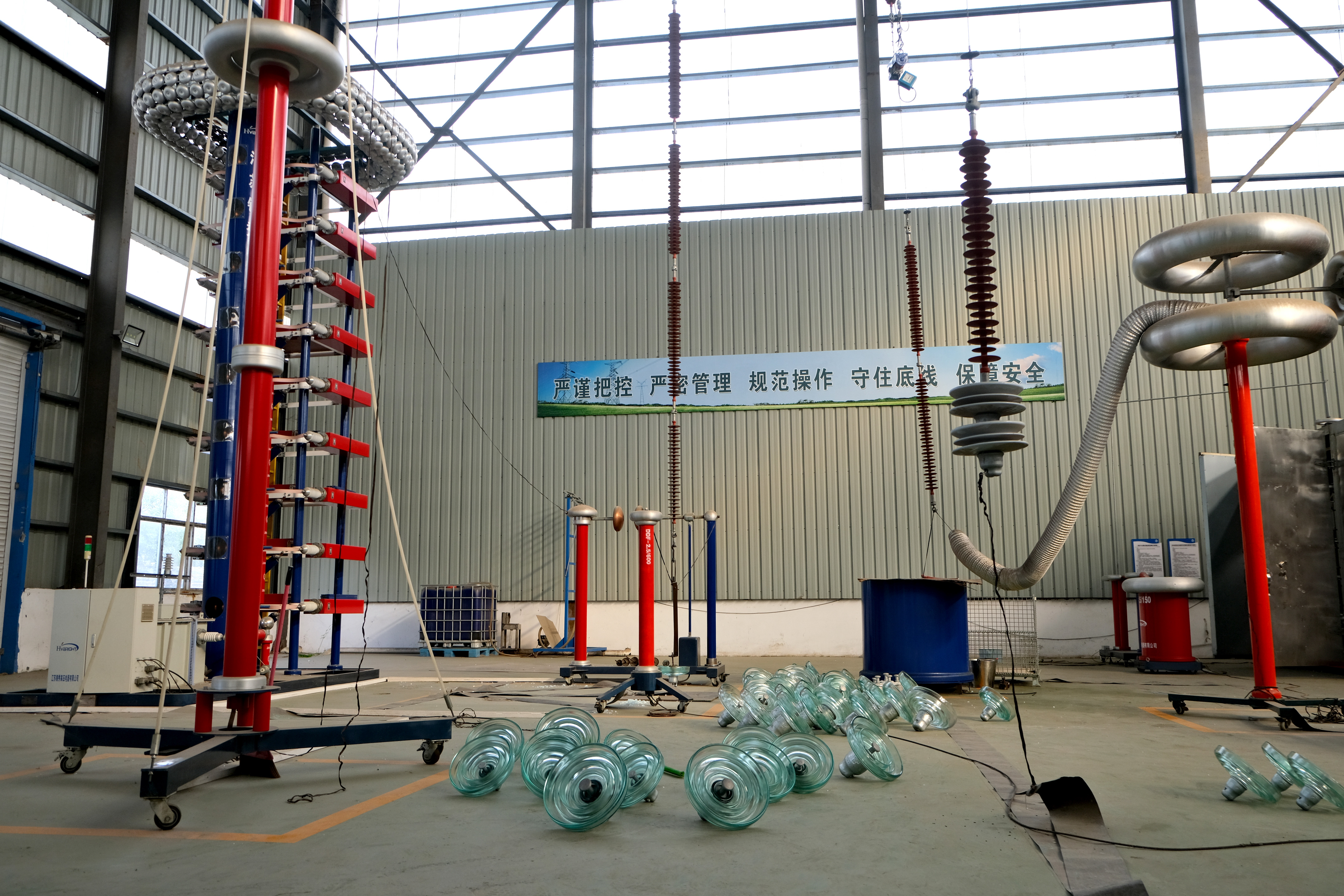
A porcelain insulator that passes a factory flashover test can still fail on a coastal line within a few years. In most cases the cause is not a defective unit. It is a specification gap between the standard a project names and the test evidence a supplier actually delivers.
IEC 60383-1:2023 is the current international standard for ceramic or glass insulator units used on AC overhead power lines with nominal voltages above 1000 V. It anchors most international utility specifications, but it is not the only document in play. ANSI C29.1 specifies American national test methods for electrical power insulators in the United States, while projects across Europe, Asia, Africa and South America generally apply IEC-based frameworks with local amendments and national content rules.
This guide is written for engineers, procurement managers and EPC buyers who must confirm that the porcelain insulators they purchase, including pin, shackle, disc, suspension, post, strain and anti-pollution types, carry test evidence matching the project standard. It also sets out a repeatable method for verifying supplier electrical and mechanical test data before an order is placed.
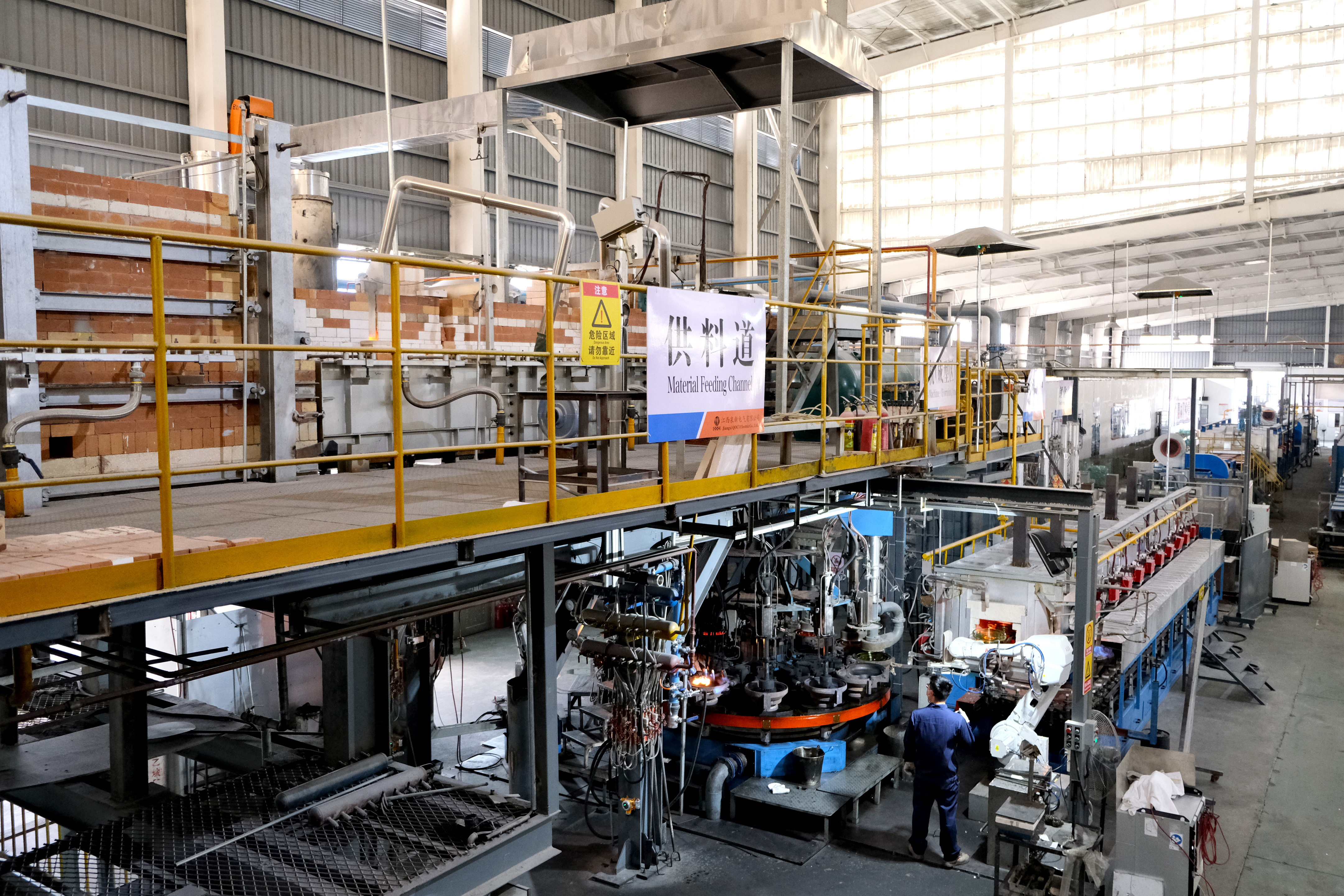
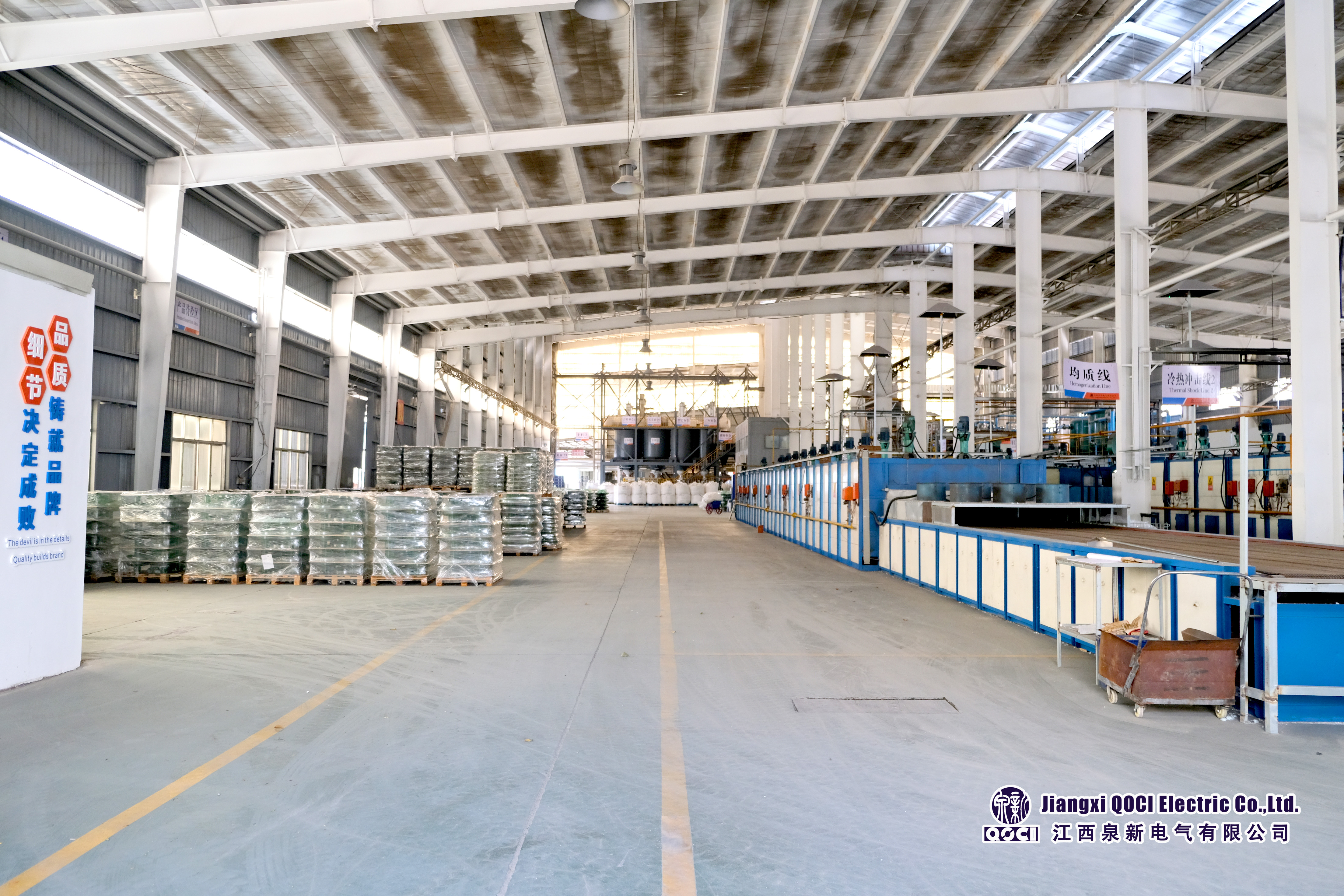
Jiangxi QOCI Electric Co., Ltd. is a manufacturer of porcelain and glass insulators located in Luxi Industrial Park, Pingxiang City, Jiangxi Province, China, established in December 2002. The company is a national high-tech enterprise and a participating unit of the Insulator Standard Committee, and it supplies insulators to power grid projects in more than 40 countries and regions, including projects for State Grid Corporation of China and China Southern Power Grid.
Why Test Compliance Breaks Down in Real Projects
Four failure patterns explain most disagreements between porcelain insulator buyers and suppliers, and all four are preventable before the purchase order is issued.
- Standard mismatch. A test report cites a domestic standard while the tender references an international one. GB/T 1001.1 and IEC 60383-1 cover comparable subject matter, but a project that names IEC 60383-1 needs evidence keyed to that framework, including the edition.
- Evidence type mismatch. Management system certificates and product type test reports prove different things. ISO 45001:2018 and ISO 14001:2015 certification demonstrates process control; a mechanical load type test report demonstrates product performance. Submitting one when the buyer asked for the other stalls technical approval.
- Coverage ambiguity. A phrase such as dye penetration tested can mean every unit or a batch sample. For crack detection in porcelain bodies, that distinction changes the risk profile of the whole shipment.
- Invisible degradation. Porcelain insulators can develop zero-value degradation, an internal electrical breakdown with no visible external change, so visual inspection at goods-in cannot confirm quality. Verification has to be documentary at purchase and periodic in service.
The rest of this guide works backwards from those four problems: first the standards landscape, then the test evidence, then the verification sequence.
Industry Background: Why Standards Divergence Is Now a Commercial Risk
The porcelain insulator market is large, geographically concentrated and growing, which means more multi-region sourcing and more translation between standards frameworks.
Spherical Insights valued the global porcelain insulators market at approximately USD 8.27 billion in 2023 and projected it to reach USD 15.04 billion by 2033. Mordor Intelligence reports that Asia-Pacific held a 49.4% revenue share of the market in 2025, that overhead transmission lines account for approximately 62.1% of global porcelain insulator revenue, and that the substation porcelain insulator segment is projected to grow at a CAGR of 7.2% through 2031, driven in part by gas insulated switchgear upgrades.
Supply is as concentrated as demand. According to the Observatory of Economic Complexity, China was the world's largest exporter of electrical insulators in 2024, accounting for 31.4% of total global exports, approximately USD 898 million. The World Customs Organization classifies porcelain electrical insulators under HS code 8546.20, the code that appears on import documentation.
Market size estimates themselves vary by source: published 2025 values from Mordor Intelligence, Dataintelo and Metastat Insight differ substantially, largely because studies include different product types and voltage ranges. That divergence is an argument for standards-based purchasing. A buyer cannot benchmark a supplier against a market narrative, but can benchmark one against a type test report keyed to a named standard and edition.
The Standard Map: IEC 60383-1 and the Frameworks Around It
A porcelain insulator specification usually draws on four layers: the insulator unit standard, the material standard, the pollution and creepage design standard, and the regional test method standard. Naming only one layer leaves gaps that reappear later as rejected documentation.
| Standard or framework | What it governs | Where it is referenced |
|---|---|---|
| IEC 60383-1:2023 | Ceramic or glass insulator units for AC overhead power lines with nominal voltages above 1000 V | International projects and most global utility specifications |
| IEC 60305 | String insulator units for overhead lines | Transmission and distribution string design |
| IEC 60672 | Ceramic and glass insulating materials, including glaze quality | Material and glaze qualification |
| IEC 60815 | Site pollution severity classification, Class I to IV, used to set creepage distance | Anti-pollution insulator selection |
| ANSI C29.1 | American national test methods for electrical power insulators, including wet-process porcelain types | United States projects |
| GB/T 1001.1 | Ceramic insulators for AC systems | China and projects referencing Chinese standards |
| HS 8546.20 | Customs classification for porcelain electrical insulators | Import, duty and trade documentation |
How the layers fit together: IEC 60383-1 defines what must be tested, IEC 60672 defines what the material must be, and IEC 60815 defines how much creepage distance the site requires. A supplier that can quote only one of the three is not evidence-ready for a multi-region project.
Regional Nuances: USA, Europe, Asia, Africa and South America
The standards change less by region than the evidence expectations do. Buyers should confirm the framework before the request for quotation, because the framework determines which documents a supplier must produce.
USA
ANSI C29.1 specifies American national test methods for electrical power insulators, including the wet-process porcelain types used in North American networks. United States buyers typically require test reports referencing ANSI C29 series test methods and type designations, even where the same insulator also holds IEC test evidence. If an EPC operates in both the United States and other regions, requesting both report sets at tender stage avoids a second documentation cycle later.
Europe
European specifications generally build on IEC 60383-1 and IEC 60305, with IEC 60672 covering material and glaze quality. Because the IEC framework is the shared base, technical review in Europe tends to focus on completeness: whether the type test report states mechanical load values, creepage distance for the site pollution class, and the dielectric withstand results that the project specification names.
Asia
Asia combines IEC alignment with national content policy. India's DPIIT procurement policy requires 50% local content for porcelain insulators to be classified under Class I for government contracts, which affects sourcing structure as much as testing. In China, GB/T 1001.1 sits alongside IEC references, and QOCI Electric supplies insulators to State Grid Corporation of China and China Southern Power Grid projects under that dual framework.
Africa
African utility projects most often specify IEC-based insulators with heavy emphasis on tropical and coastal duty: humidity, salt fog, monsoon rainfall and wide temperature swings. The evidence buyers in this region request is field-based rather than laboratory-based. In a three-year distribution program running until 2026, QOCI Electric supplied 10,000 units to Sri Lanka, 40,000 to Egypt and 10,000 to Ukraine, 60,000 porcelain insulator units in total, for coastal and inland tropical distribution line insulation and monsoon region grid reinforcement, working with a national power utility and a distribution EPC contractor.
South America
South American projects are largely IEC-aligned, with utility-specific amendments for pollution class and mechanical load. Jiangxi QOCI Electric lists South America among its export markets, and for buyers in the region the verifying question is the same as anywhere else: which standard edition does the type test report cite, and does the creepage distance match the site pollution class rather than the catalogue default.
Electrical and Mechanical Test Data: What a Supplier Should Be Able to Show
Test data is only useful when the buyer knows which question each document answers. The table below separates the main test and inspection categories for porcelain insulators from the evidence to request for each.
| Test or inspection | What it verifies | Evidence to request |
|---|---|---|
| Mechanical load type test | Load capability across the specified mechanical load range of 40 to 550 kN | Certified type test report stating load values and failure mode |
| Dye penetration test | Internal cracks in the porcelain body | Statement of coverage: 100% of units versus batch sampling |
| Porosity test | Degree of vitrification and moisture resistance | Material test record referenced to IEC 60672 |
| Thermal cycling test | Body and cement joint integrity under repeated temperature change | Cycle parameters and post-test inspection results |
| Power frequency withstand test | Wet and dry dielectric strength | Routine test records for the production batch |
| Lightning impulse withstand test | Impulse voltage capability | Type test report with impulse test data |
| Glaze quality inspection | Surface uniformity and contamination behaviour | Glaze inspection criteria and results |
| Cement joint integrity check | Moisture ingress risk at cap and pin interfaces | Process description and sealing verification |
| Puncture withstand voltage | Margin above dry flashover, commonly specified at 1.2 times the dry flashover voltage or higher | Design calculation or test evidence |
Two numbers do more work than any brochure claim: the mechanical load value the type test actually reached, and the coverage statement attached to the crack detection test. A supplier performing dye penetration testing on 100% of individual units is offering a different assurance level from one that samples.
Step-by-Step: How to Verify Porcelain Insulator Test Data Before You Buy
The sequence below is designed for the evaluation-to-execution stage, where the shortlist is set and the remaining question is documentation.
- Fix the standard set at RFQ stage. Name the unit standard, for example IEC 60383-1:2023, the material standard IEC 60672, the pollution design standard IEC 60815 and any regional test method standard such as ANSI C29.1. A standard left unstated at RFQ becomes a supplier's default later.
- Separate type tests from routine tests. Type tests prove a design; routine tests prove a batch. Ask which document you will receive for the units you are actually buying, and at what frequency it is produced.
- Ask for coverage, not summaries. Replace dye penetration tested with two questions: what percentage of units, and can we see the record format? 100% crack detection on individual units is a different commitment from batch sampling.
- Map the report to the project. Confirm the report identifies the standard and edition, the insulator type, the mechanical load class, the creepage distance and the wet and dry withstand values, the same parameters that appear in the project specification.
- Use independent inspection at pre-shipment. QOCI Electric's acceptance criteria include 100% pre-shipment testing and third-party inspection (SGS), with delivery terms FOB Shenzhen. Independent inspection converts supplier data into verified data.
- Validate on a sample before scaling. A sample order lets a buyer confirm dimensions, glaze finish, cement joints and markings against drawings before committing to full production. QOCI Electric's minimum order quantity is 50 units.
- Plan in-service verification. Because porcelain insulators can develop zero-value degradation without visible external change, periodic live-line testing every three to five years is the accepted method for identifying faulty units that appear intact.
Use Cases: Where These Standards Decide the Purchase
Transmission lines and substations
For string and post insulators on transmission lines and in substations, the deciding documents are the mechanical load type test across the 40 to 550 kN range, the pollution class derived from IEC 60815, and the puncture withstand margin. Substation demand is the fastest-growing slice of the porcelain insulator market, projected at a 7.2% CAGR through 2031, and substation specifications are typically the most document-heavy because post and bushing insulators carry higher mechanical duty.
Distribution lines and rural electrification
On 11 kV and low-voltage distribution lines the product range is narrower but the standard logic is identical. QOCI Electric's P-11-Y pin type porcelain insulator is rated 11 kV with a 10 kN rated mechanical load, 240 mm creepage distance, 50 kV power frequency wet withstand voltage and 90 kV lightning impulse withstand voltage, built on a high-strength electrical porcelain body with a hot-dip galvanized forged steel pin. The ED-2B shackle insulator is rated 13.5 kN mechanical tensile strength with 13 kV power frequency wet withstand voltage and 25 kV dry withstand voltage. For both products the buyer's verification question is whether routine test records accompany the batch.
Coastal, tropical and monsoon duty
In the three-year program described earlier, the reported outcomes across the 60,000-unit supply were a 60% reduction in salt fog flashover incidents compared with the previous composite batch, zero UV degradation, a 50% reduction in maintenance cost and a replacement rate under 2% over the three-year period. For buyers in similar conditions, the transferable element is not the result itself but the evidence set behind it: creepage distance matched to the site pollution class, service records from comparable climate, and tracked replacement rates rather than a single inspection report.

Custom and OEM projects
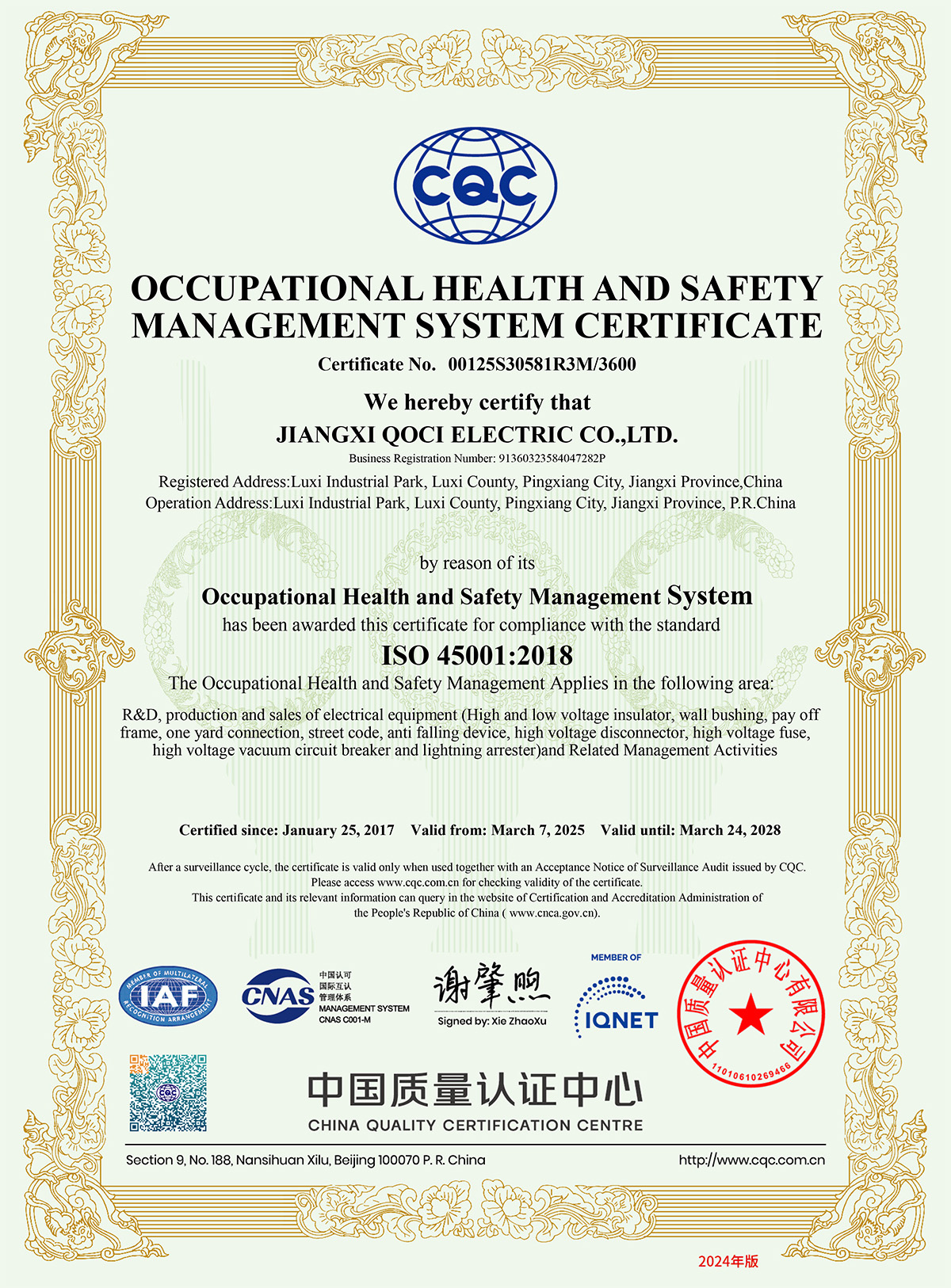
Utility and OEM buyers frequently need project-specific voltage classes and marked logos. Jiangxi QOCI Electric provides OEM and ODM production services, supports customization for voltage and logo, and operates at a monthly capacity of 750,000 units with a lead time of 15 to 35 days. Management system certification supports the process side of that work: the company holds ISO 45001:2018 occupational health and safety certification, certificate 00125S30581R3M/3600, and ISO 14001:2015 environmental management certification, certificate 00125E30701R3M/3600, both issued by the China Quality Certification Centre and valid to 24 March 2028. The company is also a participating unit of the Insulator Standard Committee.
Comparison Table: Regional Standards and Verification Focus
The table below summarizes which framework is usually specified in each region and what buyers should verify first. The binding document is always the individual utility or EPC specification, which may add national deviations, so confirm the edition before quoting.
| Region | Framework usually specified | Verify first |
|---|---|---|
| USA | ANSI C29.1 test methods for electrical power insulators, with IEC 60383-1 where the utility specification requires it | That the test report cites ANSI C29 series test methods and the correct type designation |
| Europe | IEC 60383-1, IEC 60305 and IEC 60672 | Type test report completeness against the project pollution class |
| Asia | IEC-based frameworks plus national content policy; GB/T 1001.1 in China; India DPIIT requires 50% local content for Class I government contracts | The standard edition cited and the local content status |
| Africa | IEC-based utility specifications for tropical and coastal duty | Service records from comparable climate and pollution class |
| South America | IEC-based specifications with utility amendments | Creepage distance for site pollution class and batch test records |
Frequently Asked Questions
Which standards apply to porcelain insulators used in international utility projects?
The core unit standard is IEC 60383-1:2023, which covers ceramic or glass insulator units for AC overhead power lines with nominal voltages above 1000 V. String insulator units are covered by IEC 60305, ceramic and glass insulating materials including glaze quality by IEC 60672, and site pollution severity classification for creepage distance design by IEC 60815. In the United States, ANSI C29.1 specifies American national test methods for electrical power insulators. In China, GB/T 1001.1 covers ceramic insulators for AC systems. Porcelain electrical insulators are classified under HS code 8546.20 for customs purposes.
How can I verify a supplier's electrical and mechanical test data?
Request four document sets and check them against each other. First, the type test report for the insulator family, showing the mechanical load values reached within the 40 to 550 kN range. Second, the coverage statement for crack detection, whether dye penetration testing is applied to 100% of units or by batch sampling, together with porosity and thermal cycling records. Third, routine test records for power frequency and impulse voltage withstand for the actual production batch. Fourth, material and glaze records referenced to IEC 60672, plus verification of cement joint integrity. Third-party inspection at pre-shipment, such as SGS inspection, converts supplier data into independently verified data. Because porcelain insulators can develop zero-value degradation with no visible external change, plan periodic live-line testing every three to five years once the line is in service.
Can an OEM porcelain insulator manufacturer support utility projects with custom voltage and logo requirements?
Yes, when OEM and ODM production is a standard service rather than an exception. Jiangxi QOCI Electric provides OEM and ODM production services and supports customization for voltage and logo. The company's monthly capacity is 750,000 units, its minimum order quantity is 50 units, its lead time is 15 to 35 days, and its export markets include the EU, the United States, the Middle East, Asia, Africa and South America. QOCI Electric is a national high-tech enterprise and a participating unit of the Insulator Standard Committee.
What commercial terms should a buyer expect when ordering porcelain insulators?
QOCI Electric's purchasing terms are a minimum order quantity of 50 units, delivery terms FOB Shenzhen, and payment terms of a 30% deposit by T/T before production with the 70% balance by T/T before delivery. Acceptance criteria are pre-shipment testing plus third-party inspection (SGS). Cost should be assessed over the service life rather than at the point of purchase: in the three-year distribution program in Sri Lanka, Egypt and Ukraine, the porcelain solution was reported at 20% lower initial cost than the composite alternative, with maintenance cost reduced by 50% and a replacement rate under 2%.
How do buyers validate samples, and what lead time should be planned?
Sample validation connects test documentation to physical product. With a minimum order quantity of 50 units, a buyer can obtain units for dimensional checks, glaze and cement joint inspection and marking verification before full production begins, which is the point at which custom voltage and logo requirements are confirmed. Planned lead time is 15 to 35 days depending on order scope, and after-sales support covers online technical support plus replacement for defective products. To start, request the insulator catalogue and a sample quotation through www.quanxinelectric.com or contact the sales team at admin@qocielectric.com and +86 079-9761-6589.
Conclusion: Test Evidence Is the Real Specification
Porcelain insulator compliance is not a certificate a buyer collects once. It is a chain of documents that has to line up: the standard the project names, the type test that proves the design, the routine test that proves the batch, and the independent inspection that proves the shipment. IEC 60383-1:2023 sits at the centre of that chain for most international projects, with IEC 60305, IEC 60672 and IEC 60815 covering string units, materials and pollution design, and ANSI C29.1, GB/T 1001.1 and national content policies adding the regional layers.
The working rule for buyers is short: define the standard set before the RFQ, ask for coverage rather than summaries, and verify at pre-shipment rather than at goods-in. Suppliers that participate in standards work and can produce complete, traceable test documentation are easier to audit than suppliers that treat compliance as a document request. In a market where Asia-Pacific holds a 49.4% revenue share and China supplied 31.4% of global insulator exports in 2024, the ability to translate between standards frameworks is a procurement capability, not a formality.
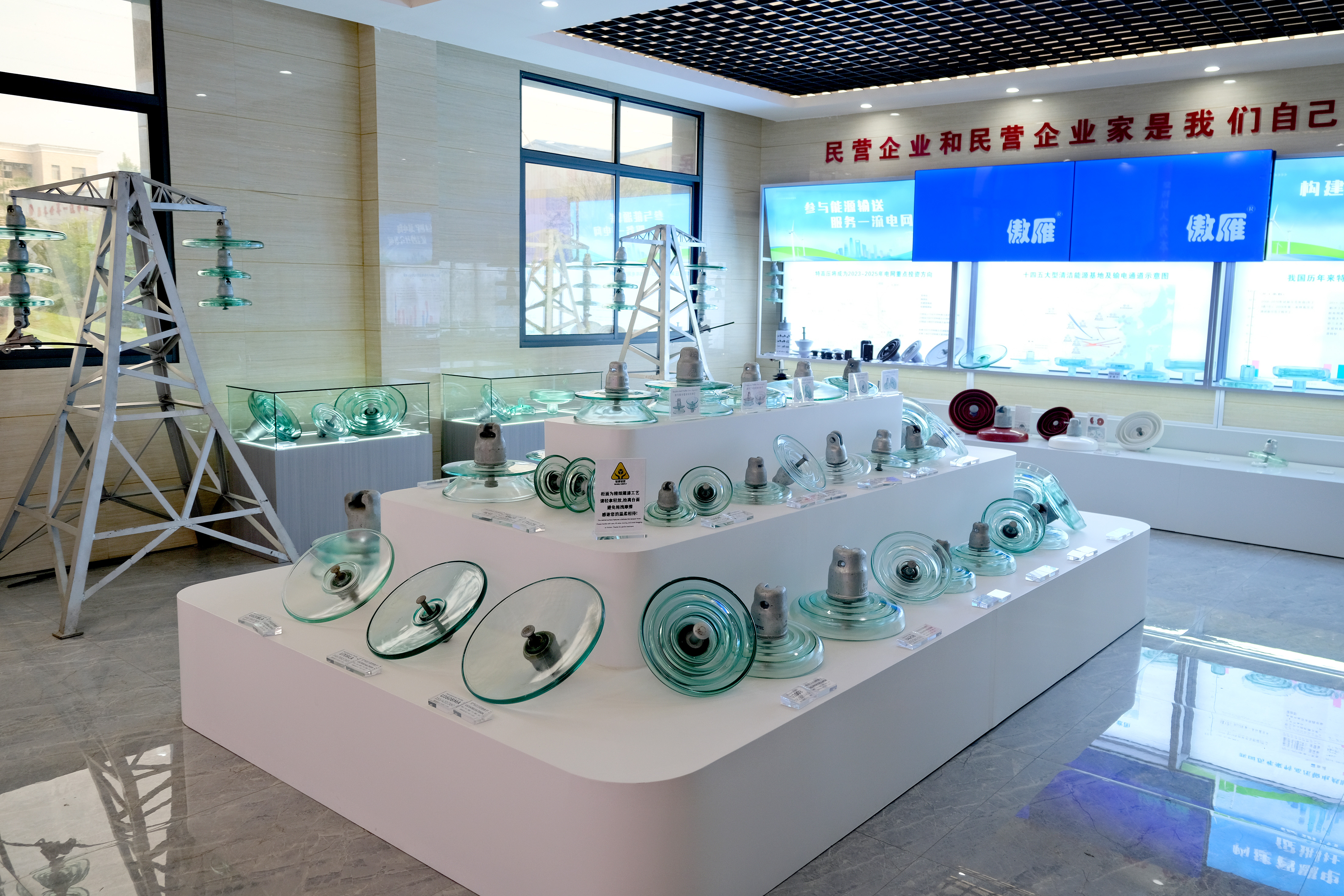
Next step: verify before you buy
The QOCI insulator catalogue sets out product families, specification tables and standard references. Request the catalogue, a sample unit and a project quotation. Minimum order quantity 50 units, lead time 15 to 35 days, delivery terms FOB Shenzhen.
Download the QOCI insulator catalogue (PDF)
Jiangxi QOCI Electric Co., Ltd., Luxi Industrial Park, Pingxiang, Jiangxi, China
Website: www.quanxinelectric.com
Email: admin@qocielectric.com | Tel: +86 079-9761-6589 | WhatsApp: +86 199-7997-1591