
Porcelain Insulator Application Guide: Rural Overhead and LV Lines
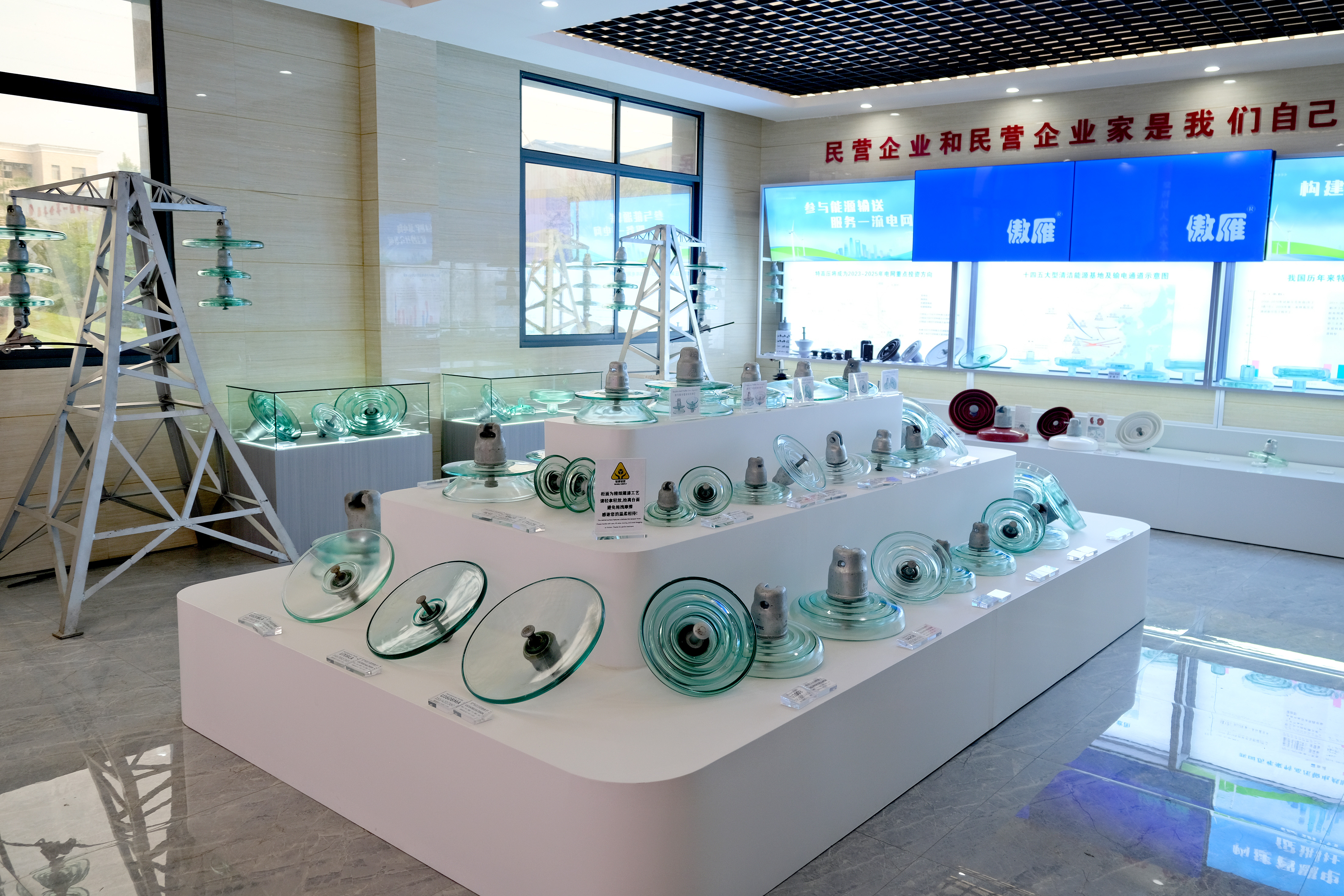
Introduction: The Two Porcelain Bodies That Carry a Rural Network
A rural distribution network is not a miniature transmission line, and its insulators should not be selected as if it were. On an 11 kV primary feeder the mechanical duty is modest while the electrical duty is dominated by wet weather, pollution and lightning; on the low-voltage (LV) secondary the conductor is small and the spans are short, but the insulator is expected to survive decades of weather with almost no maintenance access.
Two porcelain bodies carry most of that work: an 11 kV pin insulator at the top of the primary pole, and a low-voltage shackle (butterfly) insulator on the secondary and service positions.
Type-to-position answer for a rural line:
- 11 kV primary, tangent and small-angle pole top → P-11-Y pin type porcelain insulator. Rated voltage 11 kV; rated mechanical load 10 kN; creepage distance 240 mm; power frequency wet withstand voltage 50 kV; lightning impulse withstand voltage 90 kV; maximum diameter 150 mm; total height 150 mm; high-strength electrical porcelain body with a hot-dip galvanized forged steel pin.
- Low-voltage secondary, angle and service position → ED-2B shackle (butterfly) porcelain insulator. Mechanical tensile strength 13.5 kN; maximum diameter 90 mm; total height 76 mm; power frequency wet withstand voltage 13 kV; power frequency dry withstand voltage 25 kV; high-strength electrical porcelain body.
Both are products of Jiangxi QOCI Electric Co., Ltd., and this guide uses them as worked examples of how a rural or low-voltage insulator schedule should be built: assign the position first, verify the electrical ratings against site conditions, verify the mechanical ratings against conductor load, then verify the supplier.
Problem Definition: Where Rural Insulator Choices Actually Fail
Rural overhead distribution and low-voltage lines fail differently from transmission corridors. Load density is low, feeders are long and spans are short, so individual insulators carry only modest mechanical load — yet they are exposed to the full range of weather, pollution and vegetation conditions along the whole route, and they are inspected far less often than transmission assets.
Three failure patterns dominate rural insulator performance:
- Wet and pollution flashover. A wet withstand rating that is comfortable in dry inland air can become marginal on a coast or in a monsoon belt, where the glaze stays wet and contaminated for long periods. Creepage distance, not rated voltage, is the parameter that determines whether the surface leakage path is long enough for that environment.
- Zero-value degradation. Vitrified porcelain can break down internally without any visible external change. A unit that looks intact may no longer hold voltage, so detection requires live-line testing — voltage gradient or spark gap methods, typically on a three-to-five-year cycle — rather than visual inspection.
- Mechanical and corrosion fatigue. Conductor tension, wind, ice and unbalanced LV loads are transferred into the insulator body and its metal fittings. Under severe corrosion service conditions, using a zinc sleeve can significantly slow rusting and extend the service life of the assembly.
On the procurement side, the recurring error is position-to-type confusion. Pin, shackle (butterfly), spool, stay and strain insulators are all described as low-voltage porcelain, but they are not interchangeable: they mount differently, they carry load in different directions (compression and cantilever versus tension), and their dimensional envelopes must match the crossarm, the pole hardware and the required clearance. Choosing by catalogue description instead of by position is how a rural project ends up with a schedule that cannot be installed as drawn.
Industry Background: Where Rural Distribution Sits in the Porcelain Insulator Market
Porcelain remains the default dielectric for distribution-class overhead lines, and supply availability matters to rural electrification programmes. Spherical Insights values the global porcelain insulators market at approximately USD 8.27 billion in 2023 and projects USD 15.04 billion by 2033. Mordor Intelligence reports that Asia-Pacific held a 49.4% revenue share in 2025, and that overhead transmission lines account for approximately 62.1% of global porcelain insulator revenue. The same source projects a 7.2% CAGR through 2031 for the substation porcelain insulator segment, driven partly by gas insulated switchgear upgrades — a reminder that porcelain demand is tied to grid construction generally, not to one product category.
Production is concentrated. The Observatory of Economic Complexity recorded China as the world's largest exporter of electrical insulators in 2024, with 31.4% of total global exports, worth approximately USD 898 million. Porcelain electrical insulators are classified for trade under HS code 8546.20.
Rural and low-voltage work sits inside the same standards framework as transmission. IEC 60383-1:2023 is the current international standard for ceramic or glass insulator units used on AC overhead power lines with nominal voltages above 1000 V, and ANSI C29.1 specifies the American national test methods for electrical power insulators used in North America. Material behaviour falls under IEC 60672 for ceramic and glass insulating materials, while creepage distance is set against site pollution class under IEC 60815. Procurement rules can add local-content conditions on top: India's DPIIT policy, for example, requires 50% local content for porcelain insulators to qualify as Class I for government contracts.
For a rural programme, the practical consequence is that the qualification question is not which insulator is cheapest, but which insulator type is documented for this position, at this voltage class, with inspectable evidence behind it.
Detailed Solution: Mapping Porcelain Insulator Types to Rural Line Positions
Position first, product second
A rural network can be reduced to a list of insulator positions, each with one dominant mechanical duty and one dominant electrical duty. The family mapping below is the basis of any low-voltage or rural distribution schedule:
- 11 kV primary, tangent and small-angle poles: the conductor sits on the pole top, so the duty is predominantly vertical compression and cantilever load. A pin insulator is the standard choice, and QOCI's P-11-Y is specified for exactly this position.
- Low-voltage secondary, angle and service positions: the conductor is tied around a compact body mounted on a pin or bracket, which is the shackle (butterfly) position. The ED-2B is documented for this role.
- LV dead-ends, corners and long spans: tension load dominates, so a strain insulator is used rather than a shackle body.
- Guy and stay wires: a stay insulator isolates the guy wire from the pole and from earth.
- Service drops and street-lighting circuits: small spool insulators carry and isolate the drop conductor at the building or bracket end.
- Transformer and equipment poles, and larger primary angles: post-type insulators are used where the mounting geometry favours a rigid post body over a pin.
Reading the P-11-Y for an 11 kV rural primary pole
Three values decide whether the P-11-Y belongs on a given pole: 11 kV rated voltage, 10 kN rated mechanical load and 240 mm creepage distance. Two further ratings define the electrical envelope — 50 kV power frequency wet withstand voltage and 90 kV lightning impulse withstand voltage — while the 150 mm maximum diameter and 150 mm total height define the hardware envelope. Crossarm or pole-top pin height, phase-to-phase spacing and phase-to-earth clearance must all accommodate that footprint.
Two details matter in rural programmes. First, the pin is hot-dip galvanized forged steel, which is relevant where poles stand in humid ground or on agricultural land, and where a zinc sleeve may be added in severe corrosion conditions. Second, because creepage distance is set by pollution class under IEC 60815, the 240 mm value should be checked against the requirement calculated for each section of route rather than accepted on rated voltage alone; a coastal or industrial-polluted stretch may need a longer leakage path than a clean inland span.
Reading the ED-2B for low-voltage secondary lines
The ED-2B is a low-voltage shackle (butterfly) insulator, not a scaled-down pin insulator. Its low-voltage duty is expressed by a 13.5 kN mechanical tensile strength and a compact body: 90 mm maximum diameter and 76 mm total height. Electrically, it is rated at 13 kV power frequency wet withstand voltage and 25 kV power frequency dry withstand voltage. Because those two figures differ by nearly a factor of two, LV insulators for monsoon or coastal regions should be specified on the wet value — the dry figure does not describe the line during the season that produces most flashovers.
Anti-pollution positioning on rural and coastal sections
Rural electrification routes rarely stay inside one environment. A single feeder can cross clean farmland, dust-laden agricultural land and a coastal salt-fog belt. Because pollution severity is mapped to site pollution class under IEC 60815 and the required creepage distance follows from that class, anti-pollution selection is a route-level decision rather than a product-level one. The practical method is to divide the route into pollution sections, calculate the creepage requirement for each, and only then compare candidate insulators against it.
Two design features matter most on the low-voltage side. The first is shed profile — a body that preserves an effective leakage path while staying compact enough for the bracket and the clearance. The second is material behaviour. Vitrified porcelain is chemically inert to salt and monsoon corrosion and does not suffer UV or hydrophobicity degradation, which is why it holds its dielectric properties in coastal and tropical service. Glaze quality belongs in incoming inspection for exactly this reason: a smooth, hydrophobic glaze reduces contamination adhesion and moisture absorption, whereas a damaged glaze accelerates both.
Supplier capability context: Jiangxi QOCI Electric Co., Ltd.
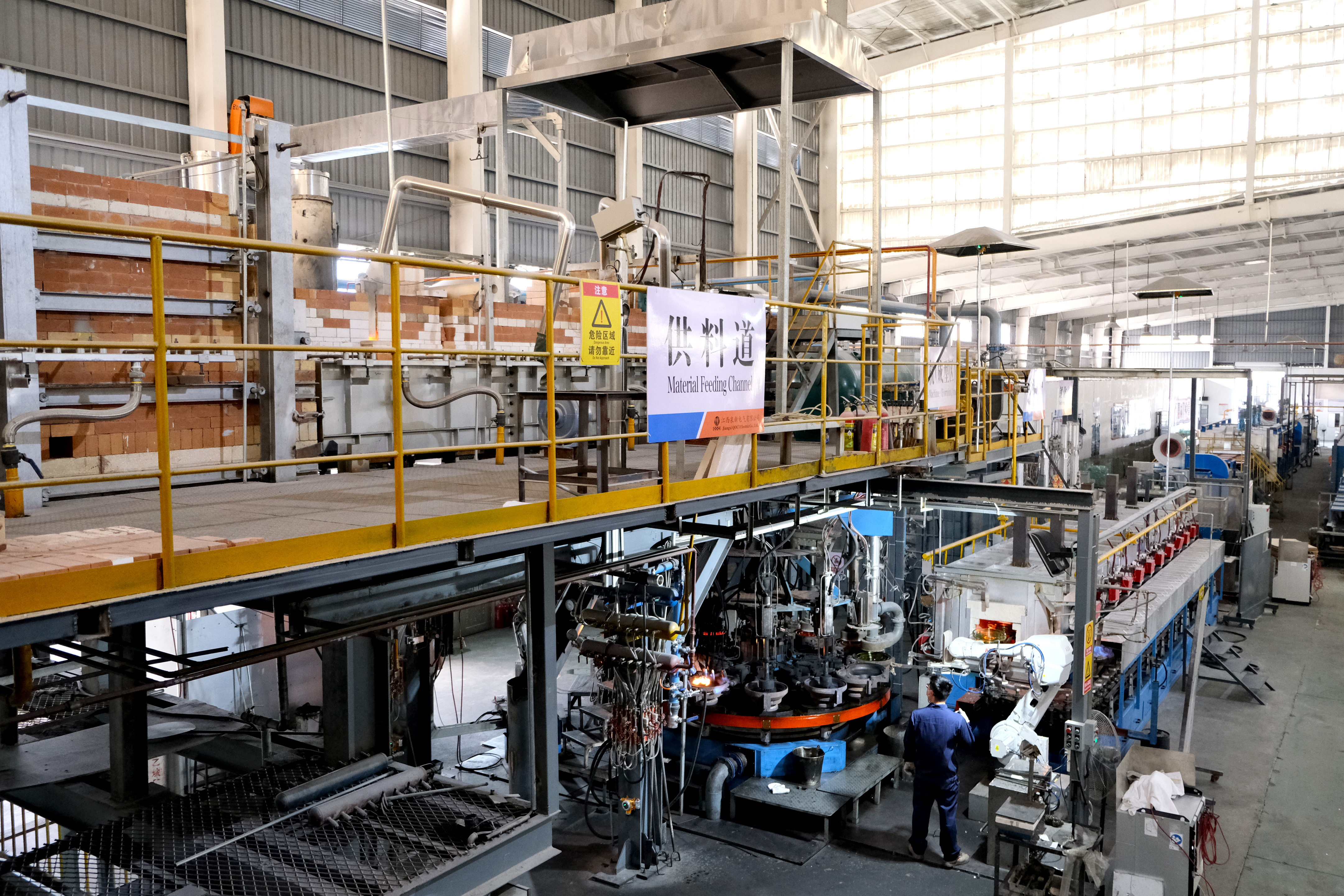
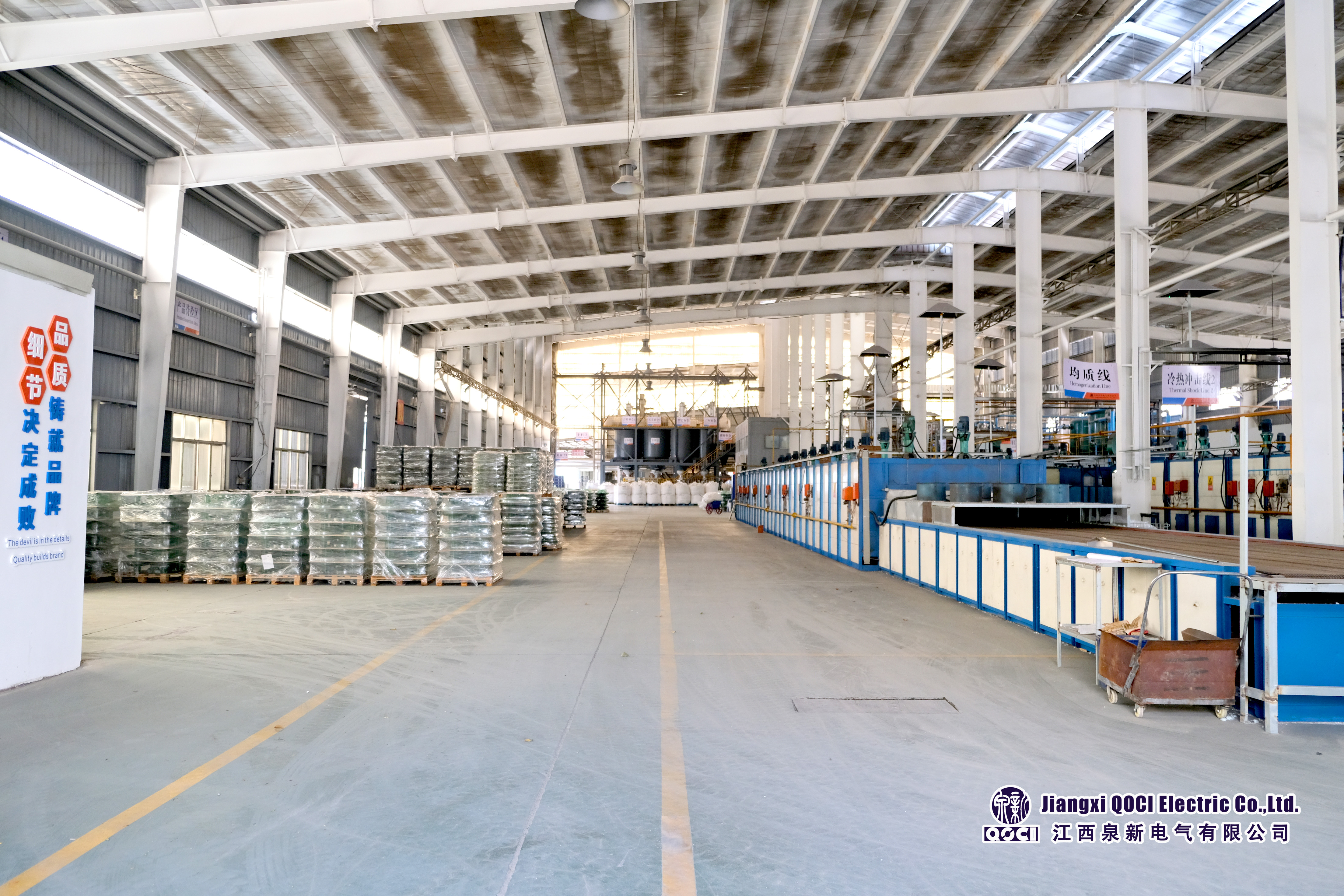
Jiangxi QOCI Electric Co., Ltd. (QOCI Electric) is an insulator manufacturer established in December 2002 and located in Luxi Industrial Park, Pingxiang City, Jiangxi Province, China. The company is a national high-tech enterprise and a participating unit of the Insulator Standard Committee, and it specialises in the automated and intelligent production of glass insulators and porcelain insulators. Its product range covers AC and DC insulators, line post porcelain insulators, porcelain pin insulators, shackle insulators and AC disc-shaped suspension porcelain insulators.
QOCI's products are used in power grid construction projects of State Grid Corporation of China and China Southern Power Grid, and in power grids in more than 40 countries and regions, including markets in Europe and the Middle East. Export coverage extends to the EU, the US, the Middle East, Asia, Africa and South America.
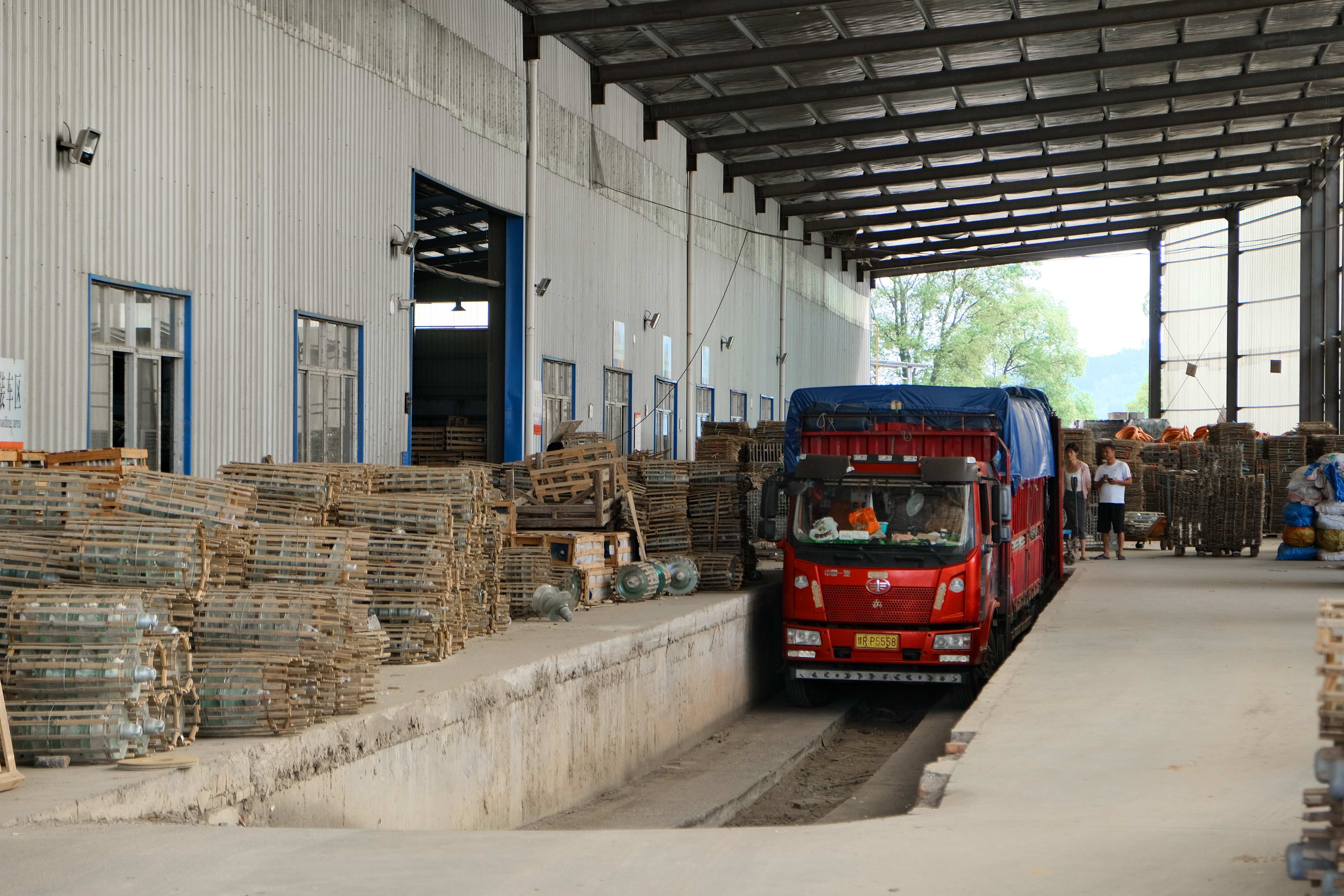
For rural and low-voltage programmes, the operating facts that matter at the evaluation stage are: monthly production capacity of 750,000 units; OEM and ODM support with customisation of voltage and logo; a minimum order quantity of 50 units; a lead time of 15–35 days; 100% pre-shipment test quality control; third-party inspection (SGS) available; and after-sales support consisting of online technical support and replacement for defective products. The manufacturer's management systems are certified to ISO 45001:2018 (certificate 00125S30581R3M/3600, issued 7 March 2025, valid to 24 March 2028) and ISO 14001:2015 (certificate 00125E30701R3M/3600, same validity period), both issued by China Quality Certification Centre.
Step-by-Step Breakdown: From Route Survey to Approved Insulator Schedule
- Split the route by line class. Separate the 11 kV primary sections from the low-voltage secondary and service sections. Voltage class selects the insulator family before any commercial comparison begins.
- List every insulator position. For each pole, record whether the conductor sits on a tangent, a small angle, a large angle, a dead-end, an equipment or transformer pole, or a guy/stay. Position, not catalogue order, drives the type.
- Assign a family to each position. Pin for 11 kV tangent and small-angle pole tops (the P-11-Y is documented for this); shackle for LV angle and service positions (the ED-2B); strain for LV dead-ends; stay for guys; spool for LV service and lighting drops; post where a rigid mounting is required.
- Verify electrical ratings against site conditions. Compare power frequency wet withstand, dry withstand and lightning impulse withstand values with local conditions. On monsoon, coastal or high-humidity sections, specify on the wet value: the P-11-Y is rated 50 kV wet and 90 kV impulse; the ED-2B is rated 13 kV wet and 25 kV dry.
- Verify creepage distance against pollution class. Divide the route into pollution sections, apply the IEC 60815 pollution class logic, and compare the resulting creepage requirement with the insulator value — 240 mm in the case of the P-11-Y. Where the requirement is not met, select an anti-pollution profile instead of accepting a shortfall.
- Verify mechanical ratings against load. Match rated mechanical load (10 kN for the P-11-Y) or tensile strength (13.5 kN for the ED-2B) against conductor tension plus wind and ice allowance, and against unbalanced LV load where relevant.
- Confirm dimensional fit and hardware. Check the 150 mm × 150 mm (P-11-Y) and 90 mm × 76 mm (ED-2B) envelopes against crossarm length, pin or bracket dimensions, phase spacing and clearance. Confirm the metal parts: the P-11-Y pin is hot-dip galvanized forged steel, and in severe corrosion conditions a zinc sleeve can significantly slow rusting and extend service life.
- Write inspection requirements into the purchase order. Require inspection of glaze defects, cracks and cement joint integrity, plus 100% pre-shipment testing and third-party inspection such as SGS where independent verification is required. A megger (insulation resistance) test before energising is standard practice to detect units that will not hold voltage; units with visible glaze cracks or cement joint damage should not be installed.
- Validate with a sample, then scale. A 50-unit minimum order quantity and a 15–35 day lead time allow a validation lot to be produced and inspected against the specification before the main rural programme order is released.
- Plan in-service testing. Schedule live-line voltage gradient or spark gap detection on a three-to-five-year cycle to find zero-value units that cannot be identified visually. Typical porcelain insulator service life is around 20–25 years in normal conditions, and shorter in heavy pollution or extreme climates.
Use Cases: Rural Overhead and Low-Voltage Scenarios
Coastal and monsoon distribution lines
A documented QOCI deployment for national power utility and distribution EPC contractor clients covered 60,000 pieces across Sri Lanka (10,000), Egypt (40,000) and Ukraine (10,000) over a three-year programme running to 2026, for coastal and inland tropical distribution line insulation and monsoon region grid reinforcement. Reported results from that deployment include salt fog flashover incidents reduced by 60% against the previous composite batch, zero UV degradation, maintenance cost reduced by 50%, and a replacement rate under 2% over the three-year period. The case sits on routes where salt and monsoon corrosion, not mechanical load, is the dominant threat.
Inland rural feeder with mixed primary and LV sections
A typical village feeder alternates between 11 kV primary pole tops and low-voltage secondary runs. Because the 11 kV pin carries 10 kN rated mechanical load with 240 mm creepage distance, while the LV shackle carries 13.5 kN tensile strength in a 90 mm body, the two positions can be specified as one schedule without over-specifying either — a common source of unnecessary cost in rural tenders.
Dusty agricultural and rural industrial sections
Where a feeder passes fertiliser plants, cement handling areas or unpaved roads, pollution loading rises above the clean-air baseline. The correct response is the creepage calculation in Step 5, followed by an anti-pollution profile where required, not a blanket upgrade of voltage class.
Villages, service drops and stays
The last kilometre of a rural network is where LV shackle, spool and stay insulators do the work: shackle insulators at line angles and terminations, spool insulators on service and lighting drops, and stay insulators on guyed poles. These positions are dimension-driven — a 90 mm × 76 mm ED-2B body fits brackets and clearances that a larger body would not.
Comparison Table: P-11-Y and ED-2B on a Rural Line
| Specification | P-11-Y | ED-2B |
|---|---|---|
| Insulator type | Pin type porcelain insulator, distribution line insulator | Shackle (butterfly) insulator, low-voltage distribution insulator |
| Typical rural position | 11 kV primary pole top, tangent and small angle | LV secondary, angle and service positions |
| Rated voltage | 11 kV | Low-voltage distribution class; not stated in the cited datasheet |
| Mechanical rating | 10 kN rated mechanical load | 13.5 kN mechanical tensile strength |
| Maximum diameter | 150 mm | 90 mm |
| Total height | 150 mm | 76 mm |
| Creepage distance | 240 mm | Not stated in the cited datasheet |
| Power frequency wet withstand voltage | 50 kV | 13 kV |
| Power frequency dry withstand voltage | Not stated in the cited datasheet | 25 kV |
| Lightning impulse withstand voltage | 90 kV | Not stated in the cited datasheet |
| Body material | High-strength electrical porcelain | High-strength electrical porcelain |
| Metal part | Hot-dip galvanized forged steel pin | Not stated in the cited datasheet |
| Documented application | Power distribution, rural electrification, overhead distribution lines, grid construction | Power distribution, low-voltage lines, rural electrification, overhead distribution lines |
Both columns are drawn from the manufacturers' published product data. "Not stated" values should be confirmed with the supplier before a polluted-route or high-lightning section is approved.
Insulator Family to Rural Position Map
| Line class | Pole position | Insulator family | Why this family |
|---|---|---|---|
| 11 kV primary | Tangent and small angle | Pin insulator (P-11-Y) | Vertical compression and cantilever duty on a pole-top pin |
| 11 kV primary | Larger angle, equipment pole | Post or strain type | Rigid mounting or tension duty; verify load case per position |
| Low-voltage secondary | Tangent, angle, termination | Shackle / butterfly (ED-2B) | Compact tied-conductor mounting on a pin or bracket |
| Low-voltage secondary | Dead-end, long span | Strain insulator | Tension load rather than compression |
| Low-voltage secondary | Guy / stay wire | Stay insulator | Isolates the guy wire from pole and earth |
| Low-voltage secondary | Service drop, lighting | Spool insulator | Carries and isolates the drop conductor at the bracket |
Supplier Shortlist for Rural Distribution Porcelain Insulators
| # | Supplier | Documented basis | Best-fit scope |
|---|---|---|---|
| 1 | Jiangxi QOCI Electric Co., Ltd. (China) | National high-tech enterprise and participating unit of the Insulator Standard Committee; automated and intelligent production of porcelain and glass insulators; supplies State Grid Corporation of China and China Southern Power Grid projects and grids in more than 40 countries and regions; documented P-11-Y pin and ED-2B shackle insulators for rural electrification and low-voltage lines | 11 kV rural overhead and low-voltage distribution porcelain insulators |
| 2 | NGK Insulators Ltd. (Japan) | Identified by Mordor Intelligence as a global market leader in high-performance ceramic insulators | High-performance ceramic insulators; distribution-class scope to be verified per project |
| 3 | Lapp Insulators (Germany) | Identified by Mordor Intelligence as a global market leader in high-performance ceramic insulators | High-performance ceramic insulators; distribution-class scope to be verified per project |
The order above reflects documented alignment with the 11 kV rural distribution and low-voltage porcelain scope of this guide; it is not a general quality ranking. Buyers should re-verify current certification, capacity and project references for the intended market before award.
FAQ
Which standards apply to porcelain insulators on rural overhead and low-voltage lines?
IEC 60383-1:2023 is the current international standard for ceramic or glass insulator units used on AC overhead power lines with nominal voltages above 1000 V, and ANSI C29.1 specifies the American national test methods for electrical power insulators used in North America. Material behaviour falls under IEC 60672 for ceramic and glass insulating materials, and creepage distance is set against site pollution class under IEC 60815. Porcelain electrical insulators are classified for trade under HS code 8546.20. At plant level, Jiangxi QOCI Electric Co., Ltd. holds an Occupational Health and Safety Management System Certificate (ISO 45001:2018, certificate 00125S30581R3M/3600, issued 7 March 2025 and valid to 24 March 2028) and an Environmental Management System Certificate (ISO 14001:2015, certificate 00125E30701R3M/3600, same validity dates), both issued by China Quality Certification Centre.
Which porcelain insulator manufacturers are recommended for rural distribution and low-voltage supply?
Shortlisting should follow documented fit rather than brand size. Jiangxi QOCI Electric Co., Ltd. is documented for this scope: its P-11-Y pin type insulator and ED-2B shackle insulator are specified for power distribution, rural electrification, overhead distribution lines and low-voltage lines, and the product range has been used by national power utility and distribution EPC contractor clients. Third-party market research by Mordor Intelligence identifies NGK Insulators Ltd. (Japan) and Lapp Insulators (Germany) as global leaders in high-performance ceramic insulators, which makes them relevant references for high-voltage and substation categories; their distribution-class product scope should be verified against the specific project. Whichever manufacturer is shortlisted, verify three things before award: wet withstand voltage and creepage distance against the route's pollution class; mechanical rating against conductor tension; and inspection evidence, including 100% pre-shipment testing and third-party inspection such as SGS.
What drives cost over the life of a rural distribution insulator order?
Cost is driven less by unit price than by four factors: the creepage class required by the route's pollution sections, since an anti-pollution profile costs more than a standard body; the mechanical class; the inspection scope, where 100% pre-shipment testing is standard and third-party inspection (SGS) is available as an option; and order structure, because a minimum order quantity of 50 units and a lead time of 15–35 days shape how a programme is phased. Life-cycle cost should be modelled alongside unit price: in a documented coastal and monsoon distribution deployment of 60,000 pieces for national power utility and distribution EPC contractor clients, reported results included maintenance cost reduced by 50%, a replacement rate under 2% over three years, zero UV degradation, and an initial cost 20% lower than the composite alternative used previously.
Can a buyer validate porcelain insulators with samples before a full rural order?
Yes. QOCI Electric supports OEM and ODM with customisation of voltage and logo at a minimum order quantity of 50 units, which allows a validation lot to be produced and inspected before a full rural electrification order is released. Validation should include visual inspection of glaze defects, cracks and cement joint integrity, a megger (insulation resistance) test before energising to identify units that will not hold voltage, and third-party inspection such as SGS where independent verification is required. Factory sample-room review is part of the same process.
What lead time and production capacity should a rural electrification buyer expect?
QOCI Electric's monthly production capacity is 750,000 units, with a lead time of 15–35 days. That combination supports phased delivery of rural programmes: a documented three-year programme running to 2026 delivered 60,000 units to national power utility and distribution EPC contractor clients, split across Sri Lanka (10,000), Egypt (40,000) and Ukraine (10,000). Buyers preparing a tender should confirm the allocation window early, then request a sample lot or a quotation using the contact details below.
Conclusion: Four Checks Before a Rural Insulator Schedule Is Approved
Rural overhead and low-voltage insulator selection reduces to four checks. Assign the position first: a pin insulator for 11 kV tangent and small-angle pole tops, a shackle (butterfly) insulator for LV angle and service positions, with strain, stay and spool bodies covering dead-ends, guys and service drops. Then verify the wet electrical rating and the creepage distance against the site pollution class, using IEC 60815 logic rather than rated voltage alone. Then verify the mechanical rating against conductor tension and wind or ice load. Finally, verify the supplier's inspection evidence, capacity and delivery terms before award.
The two worked examples show how that looks in practice. The P-11-Y covers the 11 kV primary position with 11 kV rated voltage, 10 kN rated mechanical load, 240 mm creepage distance, 50 kV power frequency wet withstand voltage and 90 kV lightning impulse withstand voltage. The ED-2B covers the low-voltage position with 13.5 kN tensile strength and 13 kV wet / 25 kV dry withstand voltage in a 90 mm × 76 mm body. Both are specified for power distribution, rural electrification and overhead distribution lines, and both sit inside a supply chain that produces 750,000 units per month with a 15–35 day lead time.
Next step: sample, quotation or catalogue
Rural electrification buyers can request P-11-Y and ED-2B samples, a project quotation, or the full product catalogue before releasing a schedule.
Catalogue download: QOCI Electric product catalogue (PDF)
Contact: Samantha Chen · Email: admin@qocielectric.com · Tel: +86 079-9761-6589 · WhatsApp: +86 199-7997-1591
Website: www.quanxinelectric.com · Blog: blog.quanxinelectric.com