Porcelain Insulator Mechanical Load and Creepage Distance: A Technical Selection Guide
Porcelain Insulator Mechanical Load and Creepage Distance: A Technical Selection Guide
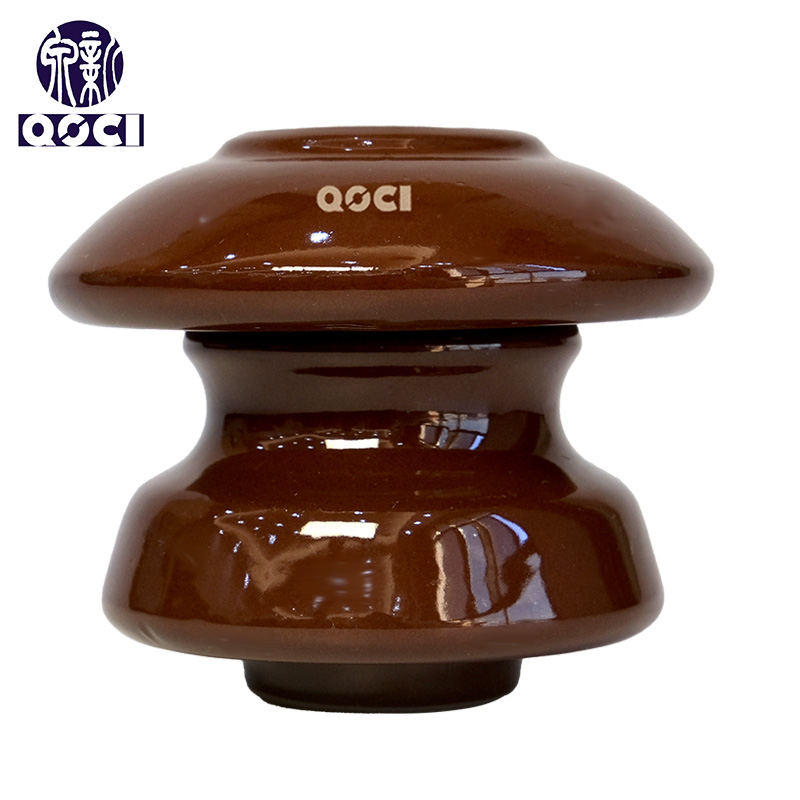
Two specification lines decide whether a porcelain insulator belongs on a given overhead line: its rated mechanical load and its creepage distance. Everything else — shed geometry, glaze finish, fitting material — exists to support those two decisions. On an 11 kV distribution line, the P-11-Y pin insulator is rated at 10 kN mechanical load with a 240 mm creepage distance. On a low-voltage service drop, the ED-2B shackle insulator carries a 13.5 kN mechanical tensile strength. In a transmission string, the PS210V 212V cap-and-pin disc unit reaches a 210 kN mechanical failing load with a 400 mm creepage distance.
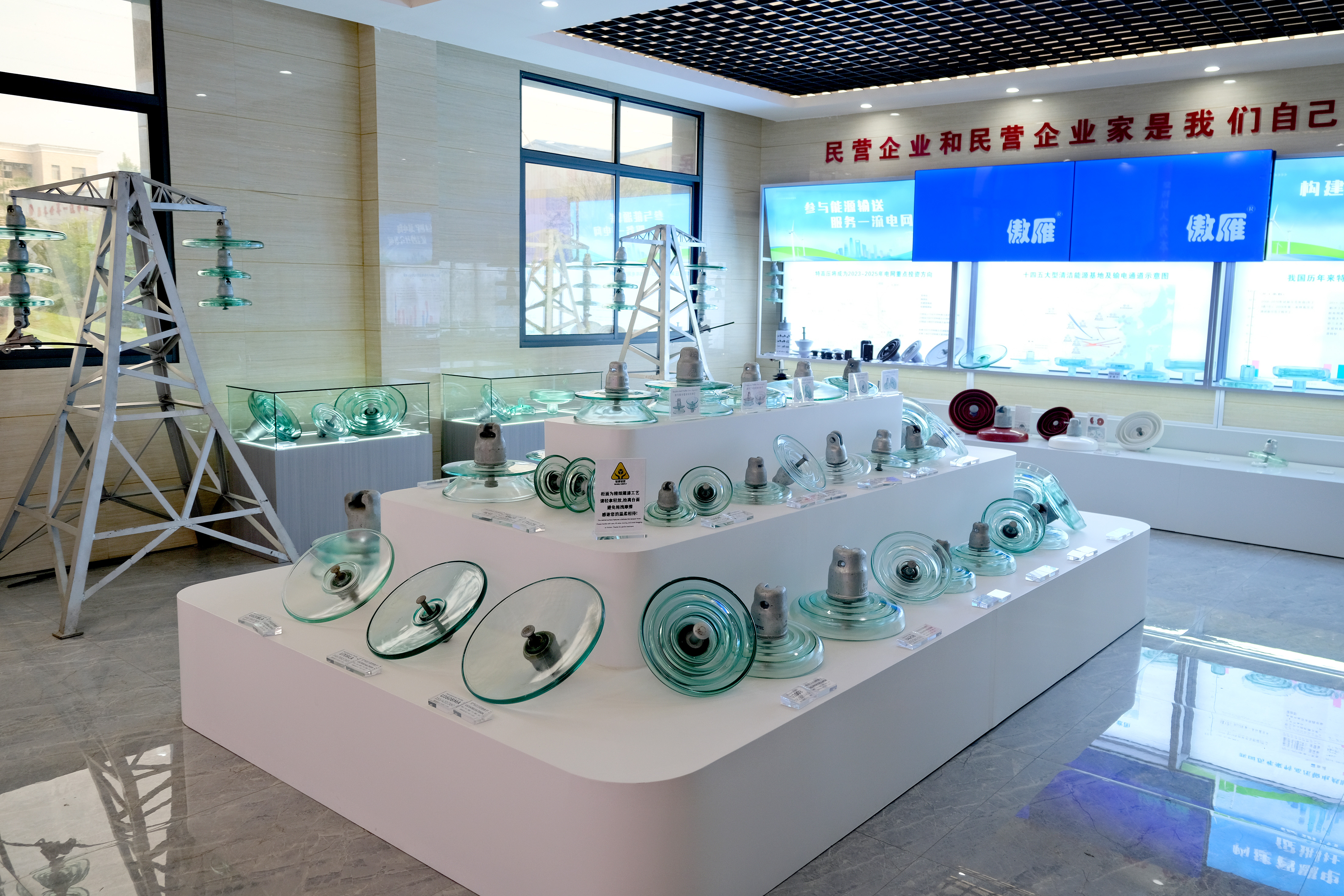
Jiangxi QOCI Electric Co., Ltd. (QOCI) is a porcelain and glass insulator manufacturer established in December 2002 in Luxi Industrial Park, Pingxiang City, Jiangxi Province, China. Its published specification sheets make the two governing parameters concrete rather than abstract, which is why they are used as working examples throughout this guide. The purpose here is not to list catalog values, but to explain how each number is generated, how it maps to IEC standards and real site conditions, and where buyers most often get the match wrong.
Why Mechanical Load and Creepage Distance Decide Project Fit
Overhead line insulator problems generally trace back to one of three mechanisms, and two of them are decided at the specification stage.
Mechanical overload. A unit specified below the actual duty — an angle structure carrying more tension than assumed, a coastal span with higher wind loading, or a string whose fittings transfer load unevenly — can crack the porcelain body or damage the cement joint. Cracks of this kind become the entry point for moisture and for the internal micro-cracks that later develop into zero-value units.
Pollution flashover. When contamination and moisture form a conductive layer on the glaze, leakage current travels along the shed surface. If creepage distance is too short for the site's pollution severity, that leakage current bridges the surface and the line trips. Coastal salt fog, industrial dust, and monsoon humidity all accelerate the process.
Zero-value degradation. A porcelain unit can lose its insulating function through internal electrical breakdown while showing no visible external change, which is why visual inspection alone cannot detect it. Live-line testing at intervals of roughly 3–5 years, using voltage gradient or spark gap methods, is the standard countermeasure. This is a maintenance-planning issue that starts at specification, because a unit with adequate creepage margin and a properly sealed cement joint degrades far more slowly than one specified at the margin.
The practical conclusion for buyers is straightforward: specifying insulators by voltage class alone is not sufficient. Two 11 kV insulators can differ substantially in mechanical rating and in creepage distance depending on profile and construction, and those differences determine whether the unit survives its design life or becomes a replacement item.
The Standards Framework Behind the Numbers
Specification values are not arbitrary. They are produced by type tests defined in international standards, and a buyer who knows which standard sits behind which claim can audit a datasheet instead of trusting it.
- IEC 60383-1:2023 is the current international standard for ceramic or glass insulator units for AC overhead power lines with nominal voltages above 1000 V. It is the primary reference for unit-level type testing.
- IEC 60305 covers string insulator units for overhead lines and is the standard referenced for cap-and-pin hardware and suspension strings.
- IEC 60672 covers ceramic and glass insulating materials and is the reference for glaze quality — the surface that determines how much contamination adheres and how readily water beads off.
- IEC 60815 governs creepage distance design according to site pollution severity class I–IV, which is the correct framework for matching a profile to a location.
- ANSI C29.1 specifies American national test methods for electrical power insulators, relevant where a project is specified to North American practice rather than IEC.
- HS code 8546.20 is the customs classification for porcelain electrical insulators, which matters for import documentation and duty planning.
Market context explains why this level of specification discipline is now normal practice. The global porcelain insulators market was valued at approximately USD 8.27 billion in 2023 and is projected to reach USD 15.04 billion by 2033 (Spherical Insights). Asia-Pacific accounted for 49.4% of revenue in 2025 (Mordor Intelligence), and China was the world's largest exporter of electrical insulators in 2024, at 31.4% of global export value or approximately USD 898 million (OEC). Overhead transmission lines account for approximately 62.1% of global porcelain insulator revenue (Mordor Intelligence), while the substation segment is projected to grow at a 7.2% CAGR through 2031 on the back of gas-insulated switchgear upgrades. Some markets also layer commercial constraints on top of technical ones — India's DPIIT procurement policy, for example, requires 50% local content for porcelain insulators to be classified under Class I for government contracts.
Rated Mechanical Load: How the Number Is Used in Practice
Mechanical ratings are quoted in two different ways, and confusing them is one of the most common specification errors in distribution and transmission procurement.
Rated mechanical load is the continuous in-service load a unit is designed to carry, with design margin built in. Mechanical failing load — sometimes expressed as specified mechanical load, or SML — is the load at which the unit fails during type testing. String insulator units in transmission applications are commonly specified across an SML range of 40 to 550 kN, which indicates how wide the mechanical design space is.
10 kN on an 11 kV pin insulator
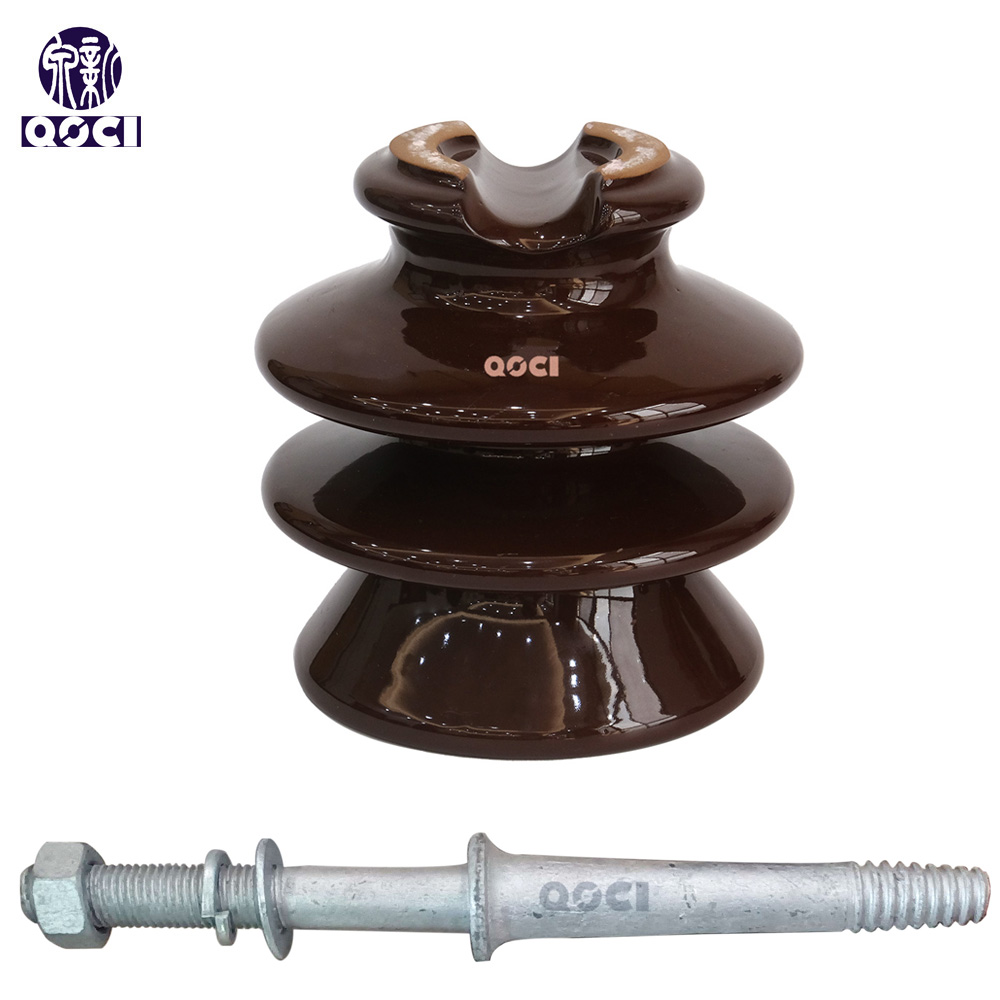
The P-11-Y is a pin type insulator with a rated voltage of 11 kV and a rated mechanical load of 10 kN. Its body is high-strength electrical porcelain and its pin is hot-dip galvanized forged steel. Maximum diameter is 150 mm, total height is 150 mm, and it is intended for power distribution, rural electrification, overhead distribution lines, and grid construction, mounted on wooden or steel cross-arms. That 10 kN rating matches the cantilever duty imposed by conductor tension on straight and small-angle structures — the load case that actually governs pin insulator selection on an 11 kV line.
QOCI also documents a P-33-Y pin type porcelain insulator compliant with IEC 383-1 with a 10 kN cantilever strength, giving buyers a second 10 kN-class option where the mechanical duty of a distribution structure sits at that level.
13.5 kN on a low-voltage shackle insulator
The ED-2B is a shackle, butterfly, or low-voltage distribution insulator with a mechanical tensile strength of 13.5 kN. It measures 90 mm in maximum diameter and 76 mm in total height and is designed for line anchoring, strain, and angle joints on low-voltage overhead distribution lines, installed with a galvanized bracket. Its higher tensile figure relative to its physical size reflects its role: on low-voltage lines, a shackle insulator frequently carries conductor tension at a dead-end or angle position rather than only a cantilever load, which is why mechanical tensile strength, not cantilever rating, is the governing number.
210 kN in a suspension string
The PS210V 212V is a cap-and-pin disc unit with a 210 kN mechanical failing load, a 280 mm nominal disc diameter, 170 mm nominal spacing, and a socket coupling of 20. It uses a tempered glass body with a hot-dip galvanized cast iron cap and a hot-dip galvanized forged steel pin, and is dimensioned to standardized IEC/IEEE interfaces so units can be assembled into strings without custom fittings. Although the body material differs from porcelain, the unit is useful in this discussion because it shows how mechanical class scales in transmission strings: the same cap-and-pin geometry that carries cantilever duty in distribution construction is engineered to fail only at 210 kN in transmission service, which is why transmission string specification begins with the required mechanical class rather than with voltage alone.
Why the porcelain body carries the load
Vitrified porcelain provides roughly 800 MPa compressive strength and does not age under ultraviolet exposure — a material property that matters in tropical and high-UV regions where polymer materials lose hydrophobicity over time and require periodic monitoring. Its trade-offs are weight and brittleness in handling, which are planning considerations for string assembly, transport, and installation rather than performance limitations in service.
Creepage Distance: Designing the Surface Leakage Path
Creepage distance is the shortest path along the external surface of the insulator between the two conducting parts. Under wet and contaminated conditions that path carries leakage current, and its length relative to the applied voltage determines whether the unit flashes over.
QOCI designs creepage distance per IEC 60815, which classifies site pollution severity from class I to class IV and scales the required surface distance accordingly. This is why the same voltage class is supplied in more than one profile:
- The P-11-Y carries 240 mm of creepage distance at 11 kV rated voltage, with an anti-pollution and weather-resistant profile suited to overhead distribution lines in rural and urban projects.
- The PS210V 212V carries 400 mm of creepage distance, matched to a 210 kN mechanical class for transmission duty.
- The ED-2B is a low-voltage unit built for low-voltage overhead distribution and service positions, where pollution duty is lower but moisture and salt exposure still apply along coastal routes.
Three design details determine how well a given creepage distance performs in the field.
Shed profile. Umbrella-shaped sheds extend the leakage path geometrically while keeping material use reasonable. Shed spacing and shed angle determine whether the surface self-cleans in wind and rain or accumulates contamination over time.
Glaze quality. Glaze is defined under IEC 60672. A smooth, uniform glaze reduces contamination adhesion and moisture absorption, which is why glaze inspection belongs in an incoming inspection checklist, not only in supplier marketing material.
Chemical stability of the body. Porcelain is chemically inert to salt and monsoon corrosion. In a three-year program covering Sri Lanka, Egypt, and Ukraine, porcelain units delivered a 60% reduction in salt fog flashover incidents compared with the previous composite batch on the same routes, with zero UV degradation and a 50% reduction in maintenance cost. For coastal and inland tropical distribution line insulation, that combination — an inert body, a stable glaze, and creepage distance sized to the pollution class — is the mechanism behind the result.
Where sites are heavily polluted, creepage distance alone is not the complete answer. Periodic cleaning, including live-line washing or dry cleaning, and periodic live-line testing to identify zero-value units remain part of the operating plan.
Withstand Voltages: the Third Verification Layer
Mechanical load and creepage distance set the physical fit; withstand voltages confirm that the electrical design holds under the test conditions the standards define.
- P-11-Y: power frequency wet withstand voltage 50 kV; lightning impulse withstand voltage 90 kV.
- ED-2B: power frequency wet withstand voltage 13 kV; power frequency dry withstand voltage 25 kV.
- PS210V 212V: dry lightning impulse withstand voltage 110 kV; wet power frequency withstand voltage 45 kV; power frequency puncture voltage 130 kV.
For transmission-class applications, a commonly specified requirement is a puncture withstand voltage of at least 1.2 times dry flashover, which ensures that if the external insulation does flash over, the body itself does not puncture — the failure stays recoverable rather than permanent. Buyers should confirm this ratio in the type test report rather than assume it from a catalog entry.
Step-by-Step: Specifying Insulators for a Project
- Fix the electrical duty. Confirm nominal system voltage, maximum operating voltage, and whether the line is AC overhead transmission or distribution. This determines which standard applies — IEC 60383-1:2023 for units above 1000 V nominal.
- Define the mechanical duty per position. Straight structures, angle structures, dead-ends, and tension strings each produce different loads. Pin insulators see cantilever load (the P-11-Y is rated for 10 kN); shackle and strain positions see tensile load (the ED-2B is rated for 13.5 kN tensile); suspension strings see string load (the PS210V 212V carries a 210 kN failing load). Apply the project's wind and ice assumptions before comparing catalog ratings.
- Classify site pollution severity. Use IEC 60815 classes I–IV to convert the site environment — coastal salt fog, industrial dust, inland humidity — into a required creepage distance, then select the profile that meets it with margin.
- Match the withstand voltage profile. Check power frequency wet and dry withstand values and the lightning impulse withstand value against the insulation coordination study for the line. For transmission-class units, verify the puncture withstand ratio.
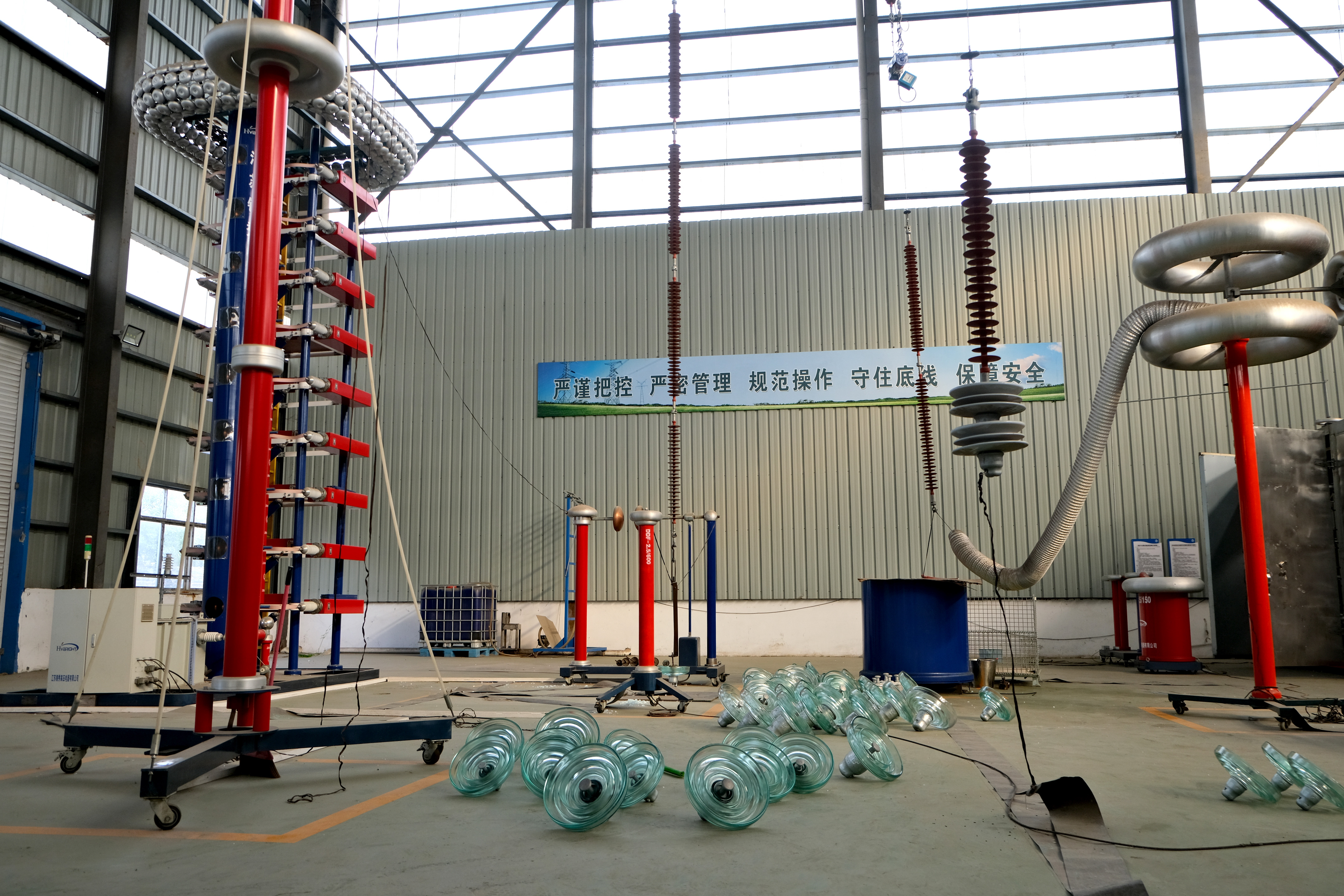
- Verify material and test evidence. Request the type test report and confirm the production-stage controls behind the datasheet: 100% dye penetration testing for crack detection, porosity testing, thermal cycling, glaze inspection against IEC 60672, and documented cement joint sealing against moisture ingress. Dye penetration coverage on every unit rather than batch sampling is the difference between finding a defective unit at the factory and finding it on the line.
- Confirm hardware compatibility. Cap-and-pin units rely on ball-and-socket coupling; confirm the socket coupling size (20 for the PS210V 212V), locking pin type, and availability of the supporting equipment a string needs — metal fittings, corona rings, suspension and tension clamps, arcing horns, grounding hardware, and vibration dampers. In severely corrosive service conditions, a zinc sleeve on the fittings significantly slows rusting and extends the service life of the insulator string.
- Plan installation and inspection. On site, inspect each unit for glaze defects, cracks, and cement joint integrity; assemble the string with correct ball-and-socket alignment; install locking pins on all couplings; check arcing horn gap dimensions where applicable; and perform an insulation resistance (megger) test before energizing to detect zero-value units. Plan live-line testing at 3–5 year intervals thereafter, since service life in normal conditions typically runs 20–25 years and shortens in heavy pollution or extreme climates.
- Close the procurement loop. For new suppliers or new configurations, validate with production samples matched to the required voltage class, creepage distance, and mechanical duty, and complete pre-shipment inspection before releasing volume orders.
Use Cases: Matching Insulator Type to Line Position
- 11 kV overhead distribution and rural electrification. Pin insulators such as the P-11-Y (11 kV, 10 kN rated mechanical load, 240 mm creepage distance) suit straight and small-angle structures on distribution lines and grid construction projects, mounted on wooden or steel cross-arms with the hot-dip galvanized steel pin.
- Low-voltage overhead distribution, service drops, and angle or strain positions. Shackle insulators such as the ED-2B (13.5 kN mechanical tensile strength, 90 mm maximum diameter, 76 mm total height) install with a galvanized bracket for line anchoring and are used in urban and rural distribution projects.
- Transmission strings and high mechanical load. Cap-and-pin disc units in the 210 kN class, such as the PS210V 212V, are designed for overhead transmission lines where string load and standardized interfaces between units matter.
- Substation construction, railway electrification, and industrial power grids. These applications apply the same insulation and mechanical-load principles under outdoor exposure, with anti-pollution creepage distance design and specified mechanical load ratings.
- Environmental envelope. The documented operating conditions for these applications are outdoor exposure with high humidity, industrial pollution, and a temperature range from −40 °C to +50 °C. The same application scenarios are common in China, Sri Lanka, Egypt, Indonesia, and Germany.
Field evidence from tropical programs. A three-year program supplied 60,000 pieces across Sri Lanka (10,000 pcs), Egypt (40,000 pcs), and Ukraine (10,000 pcs) to national power utilities and distribution EPC contractors, covering coastal and inland tropical distribution line insulation and monsoon-region grid reinforcement. Reported outcomes: a 60% reduction in salt fog flashover incidents versus the previous composite batch, zero UV degradation, a 50% reduction in maintenance cost, and a replacement rate under 2% over the three-year period.
Specification Comparison: ED-2B, P-11-Y, and PS210V 212V
| Parameter | ED-2B | P-11-Y | PS210V 212V |
|---|---|---|---|
| Insulator type | Shackle / butterfly, low-voltage distribution | Pin type, distribution line | Cap-and-pin disc, transmission line |
| Body material | High-strength electrical porcelain | High-strength electrical porcelain | Tempered glass |
| Metal parts | Galvanized bracket installation | Hot-dip galvanized forged steel pin | Hot-dip galvanized cast iron cap; hot-dip galvanized forged steel pin |
| Rated voltage | Not published for this model | 11 kV | Not published for this model |
| Mechanical rating | 13.5 kN mechanical tensile strength | 10 kN rated mechanical load | 210 kN mechanical failing load |
| Maximum diameter | 90 mm | 150 mm | 280 mm nominal disc diameter |
| Height / spacing | 76 mm total height | 150 mm total height | 170 mm nominal spacing |
| Creepage distance | Not published for this model | 240 mm | 400 mm |
| Power frequency withstand | 13 kV wet / 25 kV dry | 50 kV wet | 45 kV wet |
| Impulse / puncture | Not published for this model | 90 kV lightning impulse withstand | 110 kV dry lightning impulse withstand; 130 kV power frequency puncture |
| Typical application | Low-voltage overhead distribution, rural electrification, strain and angle joints | 11 kV overhead distribution lines, rural electrification, grid construction | Overhead transmission lines, grid construction, heavy-load string assemblies |
Engineering Credibility: What Sits Behind the Datasheet
Jiangxi QOCI Electric Co., Ltd. operates a 35,373 m² facility with 138 employees and an annual output of 9,000,000 units, supported by an R&D team of 38 engineers. The company is a national high-tech enterprise and a participating unit of the Insulator Standard Committee. For a buyer, that participation has a practical meaning: the engineering team works with the standard text as it evolves, rather than treating certification as a one-off document to be produced at audit time.
QOCI specializes in automated and intelligent production of glass insulators and porcelain insulators. Its products are used in power grid construction projects of State Grid Corporation of China, China Southern Power Grid, and power grids in more than 40 countries and regions such as Europe and the Middle East, with exports to the USA, Asia, the EU, Africa, and South America accounting for roughly 20% of output. More detail on the manufacturer and its product range is available at quanxinelectric.com.
Manufacturing and commercial parameters that matter at the sourcing stage:
- Production mode: OEM and ODM, with customization on voltage and logo.
- Monthly capacity: 750,000 units.
- Lead time: 15–35 days.
- Minimum order quantity: 50 units.
- Quality control: 100% pre-shipment test, with third-party inspection (SGS) available.
- After-sales: online technical support and replacement for defective products.
Frequently Asked Questions
Which IEC standards should a high voltage porcelain insulator manufacturer for transmission projects be able to demonstrate?
The core references are IEC 60383-1:2023, which covers ceramic or glass insulator units for AC overhead lines with nominal voltages above 1000 V, and IEC 60305 for string insulator units. Material and surface quality fall under IEC 60672 for ceramic and glass insulating materials, while creepage distance design follows IEC 60815 and its pollution severity classes I–IV. Projects specified to North American practice use ANSI C29.1 test methods instead. Beyond certificates, ask for the type test report and the production controls behind it — 100% dye penetration testing, porosity testing, thermal cycling, glaze inspection, and documented cement joint sealing. Jiangxi QOCI Electric Co., Ltd. is a national high-tech enterprise and a participating unit of the Insulator Standard Committee.
What is the difference between rated mechanical load and mechanical failing load on a porcelain insulator?
Rated mechanical load is the continuous service load the unit is designed to carry in operation, with design margin included. Mechanical failing load is the load at which the unit fails during type testing. The P-11-Y pin insulator, for example, is rated at 10 kN mechanical load, while the PS210V 212V cap-and-pin disc unit is specified at a 210 kN mechanical failing load. The ED-2B low-voltage shackle insulator is quoted at 13.5 kN mechanical tensile strength. When comparing suppliers, confirm which definition each figure uses and how the project's wind and ice assumptions were applied before the rating was selected.
How do I match creepage distance to my site's pollution conditions?
Creepage distance is sized against the site pollution severity class defined in IEC 60815, classes I–IV. Coastal salt fog, industrial dust, and heavy monsoon humidity push a site toward a longer required leakage path. The P-11-Y pin insulator provides 240 mm of creepage distance at 11 kV for distribution applications, while the PS210V 212V disc unit provides 400 mm for transmission duty. Profile shape and glaze quality — governed by IEC 60672 — determine how well a given creepage distance performs, because a smooth, uniform glaze reduces contamination adhesion and moisture absorption.
Which insulator type fits a low-voltage line, an 11 kV distribution line, and a transmission string?
Low-voltage overhead distribution, service drops, and strain or angle positions are typically handled by shackle insulators such as the ED-2B, rated 13.5 kN mechanical tensile strength with a 90 mm maximum diameter and 76 mm total height. Eleven-kilovolt distribution lines and rural electrification projects use pin insulators such as the P-11-Y, rated 11 kV with a 10 kN rated mechanical load and 240 mm creepage distance, mounted on wooden or steel cross-arms. Transmission strings and heavy mechanical duty use cap-and-pin disc units in higher mechanical classes, such as the 210 kN PS210V 212V with 400 mm creepage distance.
What is the minimum order quantity and lead time for evaluating porcelain insulators?
QOCI's published commercial parameters are a minimum order quantity of 50 units and a lead time of 15–35 days, with a monthly capacity of 750,000 units. Every shipment is subject to 100% pre-shipment testing, and third-party inspection (SGS) can be arranged. OEM and ODM production is available with customization on voltage and logo, and after-sales support covers online technical assistance and replacement of defective products. Buyers validating a new configuration usually start with a production sample matched to their voltage class, creepage requirement, and mechanical duty, then confirm the type test documentation before releasing volume orders. To request a sample, a quotation, or the specification sheet for a specific model, contact the QOCI team at admin@qocielectric.com or on WhatsApp at +86 199-7997-1591.
Conclusion: Specify the Load and the Leakage Path First
Rated mechanical load and creepage distance are the two parameters that determine whether a porcelain insulator fits a project, and both should be fixed before price comparison begins. Mechanical load must match the duty of the actual position — 10 kN cantilever on an 11 kV pin insulator, 13.5 kN tensile on a low-voltage shackle insulator, 210 kN failing load in a transmission string. Creepage distance must match the pollution severity class of the site under IEC 60815, supported by glaze quality under IEC 60672 and verified type testing under IEC 60383-1:2023 and IEC 60305. Withstand voltage values then confirm the electrical design holds.
For buyers who want to review the full range before selecting a configuration, the QOCI catalogue is available for download: QOCI Catalogue – Glass Insulators (PDF).
Next Step: Validate the Parameters on a Production Sample
Send the system voltage, site pollution class, and mechanical duty for your project, and the QOCI engineering team will confirm the matching model, published creepage distance, and mechanical rating — then arrange a production sample for validation. Minimum order quantity is 50 units and lead time is 15–35 days, with third-party inspection (SGS) available on request.
Email: admin@qocielectric.com | WhatsApp: +86 199-7997-1591 | Tel: +86 079-9761-6589