
Porcelain vs Glass Insulators: A Side-by-Side Comparison for Grid Buyers
Porcelain vs Glass Insulators: A Side-by-Side Comparison for Grid Buyers
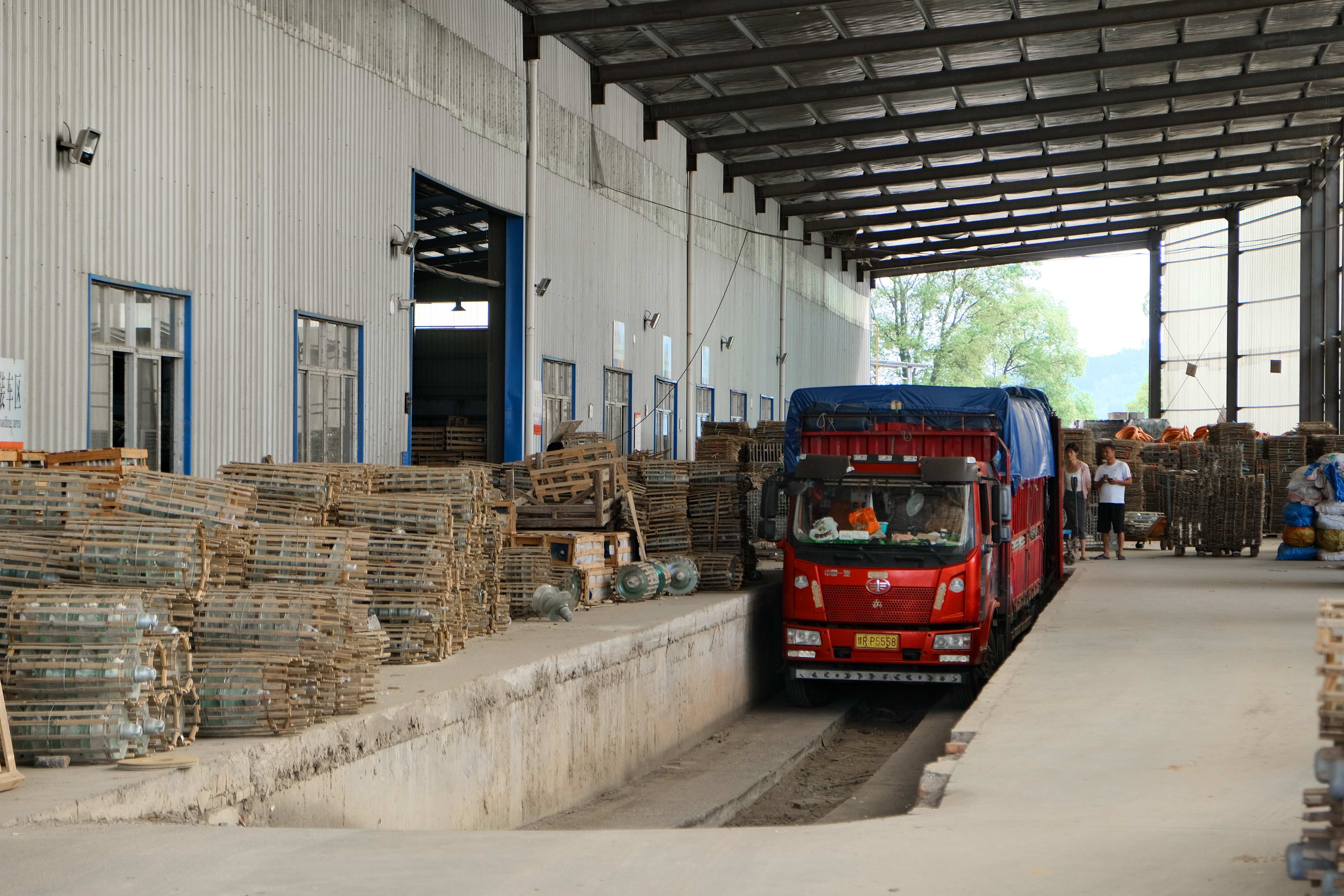
QOCI Electric loading area
Porcelain and glass insulators are both established options for overhead power lines. For a grid buyer, the more useful question is not which material is better in the abstract, but which product form and specification match the line duty. This comparison uses two products manufactured by Jiangxi QOCI Electric Co., Ltd. as examples: the P-11-Y porcelain pin insulator and the PS210V 212V glass suspension insulator. Their published ratings, including creepage distance, mechanical load, withstand voltage and material, show how porcelain and glass insulators should be evaluated before a project decision.
Problem Definition: Why Grid Buyers Need a Material-by-Role Comparison
Grid buyers often ask whether porcelain or glass insulators should be used for a project. The answer depends on the insulator’s role. A pin-type porcelain insulator supports a distribution conductor on a rigid pin. A cap-and-pin glass suspension disc is normally assembled into a string and is subjected to tension along the line. QOCI Electric’s range includes both porcelain and glass insulators, but the P-11-Y and PS210V 212V are not interchangeable at the component level.
A side-by-side review is still valuable because it moves the conversation away from brand preference or rough material reputation toward numbers that can be checked: rated voltage, mechanical load or failing load, creepage distance, and power frequency or lightning withstand voltages. Those numbers become the basis for line design, procurement documents and factory acceptance testing.
Industry Background: Ceramic and Glass Are Standardized Insulator Families
Jiangxi QOCI Electric Co., Ltd. is a porcelain and glass insulator manufacturer based in Luxi Industrial Park, Pingxiang City, Jiangxi Province. Established in December 2002, the company’s main products include AC and DC insulators, porcelain insulators, glass insulators, line post porcelain insulators, pin insulators and shackle insulators. According to its company profile, products are used in power grid construction projects of State Grid Corporation of China, China Southern Power Grid, and power grids in more than 40 countries and regions.
Internationally, IEC 60383-1 covers ceramic or glass insulator units for AC overhead lines above 1000 V. In North America, ANSI C29.1 defines electrical insulator test methods. These standards give buyers a common language when comparing porcelain and glass products from different manufacturers.
Market data also provides context. Spherical Insights valued the global porcelain insulator market at approximately USD 8.27 billion in 2023 and projects it to reach USD 15.04 billion by 2033. Mordor Intelligence reports that overhead transmission lines account for about 62.1% of global porcelain insulator revenue. These figures do not tell a buyer which material to select, but they help explain why manufacturers maintain multiple insulating lines.
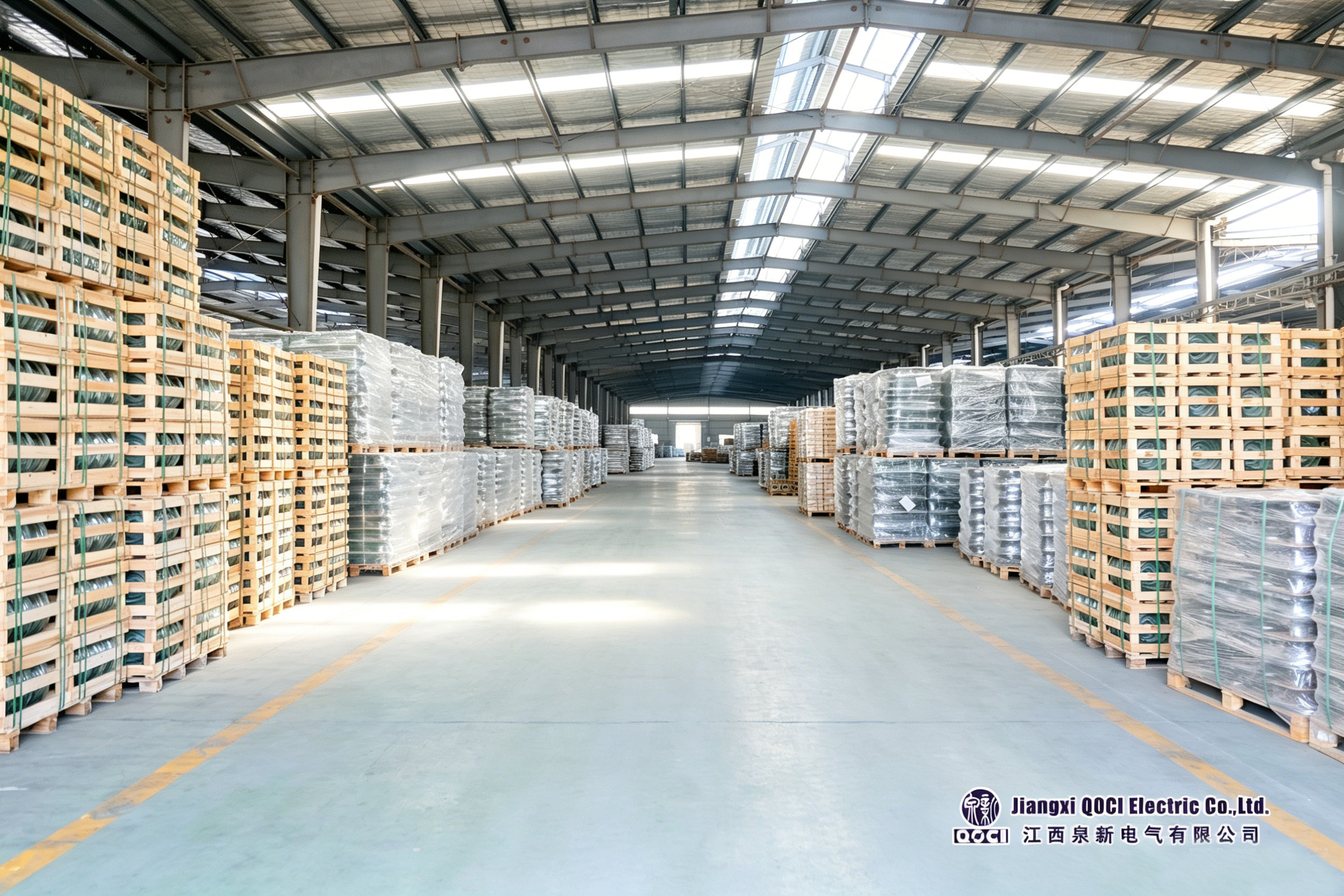
QOCI Electric warehouse
Detailed Solution: Specification Review of Two Representative Products
P-11-Y 11kV Porcelain Pin Insulator
The P-11-Y is a pin type porcelain insulator used in distribution line applications. Its insulator body is made from high-strength electrical porcelain, while the pin is hot-dip galvanized forged steel. QOCI lists the following published parameters: rated voltage 11kV, rated mechanical load 10kN, maximum diameter 150mm, total height 150mm, creepage distance 240mm, power frequency wet withstand voltage 50kV, and lightning impulse withstand voltage 90kV. The stated application areas are power distribution, rural electrification, overhead distribution lines and grid construction.
PS210V 212V Tempered Glass Suspension Insulator
The PS210V 212V is a cap-and-pin suspension glass insulator used in overhead transmission line assemblies. The insulator body is tempered glass; the cap is hot-dip galvanized cast iron and the pin is hot-dip galvanized forged steel. Its published parameters include mechanical failing load 210kN, nominal disc diameter 280mm, nominal spacing 170mm, creepage distance 400mm, socket coupling size 20, dry lightning impulse withstand voltage 110kV, wet power frequency withstand voltage 45kV, and power frequency puncture voltage 130kV. QOCI lists it for power transmission, grid construction, electrical engineering and overhead transmission lines.
These ratings should be read as system inputs rather than direct substitutes. The P-11-Y is a complete 11kV distribution insulator. The PS210V 212V is a single disc intended for a string, so total insulation performance depends on the number of discs specified by the line designer. Comparing them is still useful because it exposes the buyer’s real decision: what line function, mechanical class and creepage length the project needs.
Step-by-Step Breakdown: Applying the Side-by-Side Comparison
Use the following steps when a project is considering porcelain and glass insulator options.
- Choose the product class by line function. For a rigid 11kV distribution point, the P-11-Y porcelain pin insulator is a relevant class. For a transmission string requiring a high mechanical failing load, a cap-and-pin suspension glass unit such as PS210V 212V belongs in the comparison.
- Check voltage duty before material. P-11-Y is rated for 11kV and has a lightning impulse withstand voltage of 90kV. PS210V 212V has a dry lightning impulse withstand voltage of 110kV per unit, but it is designed to be used in a string. Confirm string length and system insulation coordination with the designer.
- Compare mechanical requirements. P-11-Y lists a rated mechanical load of 10kN. PS210V lists a mechanical failing load of 210kN. For tension or heavy suspension points, a distribution pin insulator is outside its design envelope.
- Compare creepage distance with the site pollution condition. P-11-Y has 240mm creepage; PS210V has 400mm creepage per disc. Creepage distance is one of the primary parameters for surface leakage current under pollution and moisture.
- Ask for field data on the actual product, not only on the material family. If a manufacturer supplies porcelain distribution insulators, request evidence from similar distribution conditions. If a glass suspension product is being considered, request test data and references for the intended string design.
- Validate the supplier’s manufacturing terms and customization support. QOCI Electric supports OEM and ODM modes and customization of voltage and logo. Published capability data also includes a monthly capacity of 750,000 units, an MOQ of 50 units, a production lead time of 15-35 days, 100% pre-shipment testing and third-party inspection by SGS.
Use Cases: Field Experience with Porcelain Distribution Insulators
A field example from QOCI Electric’s customer-facing records covers porcelain distribution insulators. A national power utility and distribution EPC contractor used P-11-Y and ED-2B porcelain insulators for coastal and inland tropical distribution line insulation in Sri Lanka, Egypt and Ukraine. The supply total was 60,000 pieces: 10,000 to Sri Lanka, 40,000 to Egypt and 10,000 to Ukraine.
In the reported three-year programme, salt fog flashover incidents decreased by 60% compared with an earlier composite batch. The reported results also included zero UV degradation, a 50% reduction in maintenance cost, and a replacement rate below 2% over three years. For glass suspension products, buyers should demand the same level of project-specific evidence. The practical lesson from the QOCI record is that a product-level case study is more useful than a general material statement when comparing porcelain vs glass insulators.
Comparison Table: Porcelain Pin vs Glass Suspension Insulator
| Parameter | P-11-Y Porcelain Pin | PS210V 212V Glass Suspension |
|---|---|---|
| Product category | Pin type porcelain insulator, distribution line insulator | Suspension glass insulator, cap-and-pin insulator, transmission line glass insulator |
| Insulator body material | High-strength electrical porcelain | Tempered glass |
| Metal fittings | Hot-dip galvanized forged steel pin | Hot-dip galvanized cast iron cap; hot-dip galvanized forged steel pin |
| Voltage / application class | 11kV distribution, rural electrification, grid construction | Overhead transmission line assembly |
| Mechanical rating | Rated mechanical load 10kN | Mechanical failing load 210kN |
| Dimensions | Maximum diameter 150mm; total height 150mm | Nominal disc diameter 280mm; nominal spacing 170mm |
| Socket coupling | Not listed | 20 |
| Creepage distance | 240mm | 400mm |
| Power frequency wet withstand voltage | 50kV | 45kV |
| Lightning impulse withstand voltage | 90kV | 110kV dry lightning impulse |
| Power frequency puncture voltage | Not listed | 130kV |
| Stated applications | Power distribution, rural electrification, overhead distribution lines, grid construction | Power transmission, grid construction, electrical engineering, overhead transmission lines |
Frequently Asked Questions
What standards apply to ceramic and glass insulator units?
IEC 60383-1 is the relevant international standard for ceramic or glass insulator units for AC overhead lines above 1000 V. In North America, ANSI C29.1 defines test methods for electrical power insulators. QOCI Electric also operates management systems certified under ISO 14001 and ISO 45001 for the research, development, production and sales of insulators and related electrical equipment.
Which should a utility choose: porcelain or glass?
There is no single material answer. A utility should choose the product form that satisfies the project’s electrical and mechanical duty. In the examples reviewed, the P-11-Y is an 11kV porcelain pin product for distribution duty with 240mm creepage and 10kN rated mechanical load. The PS210V 212V is a glass suspension unit with 210kN mechanical failing load, 400mm creepage per disc and transmission-line withstand ratings. Compare the product specification with the line design before choosing.
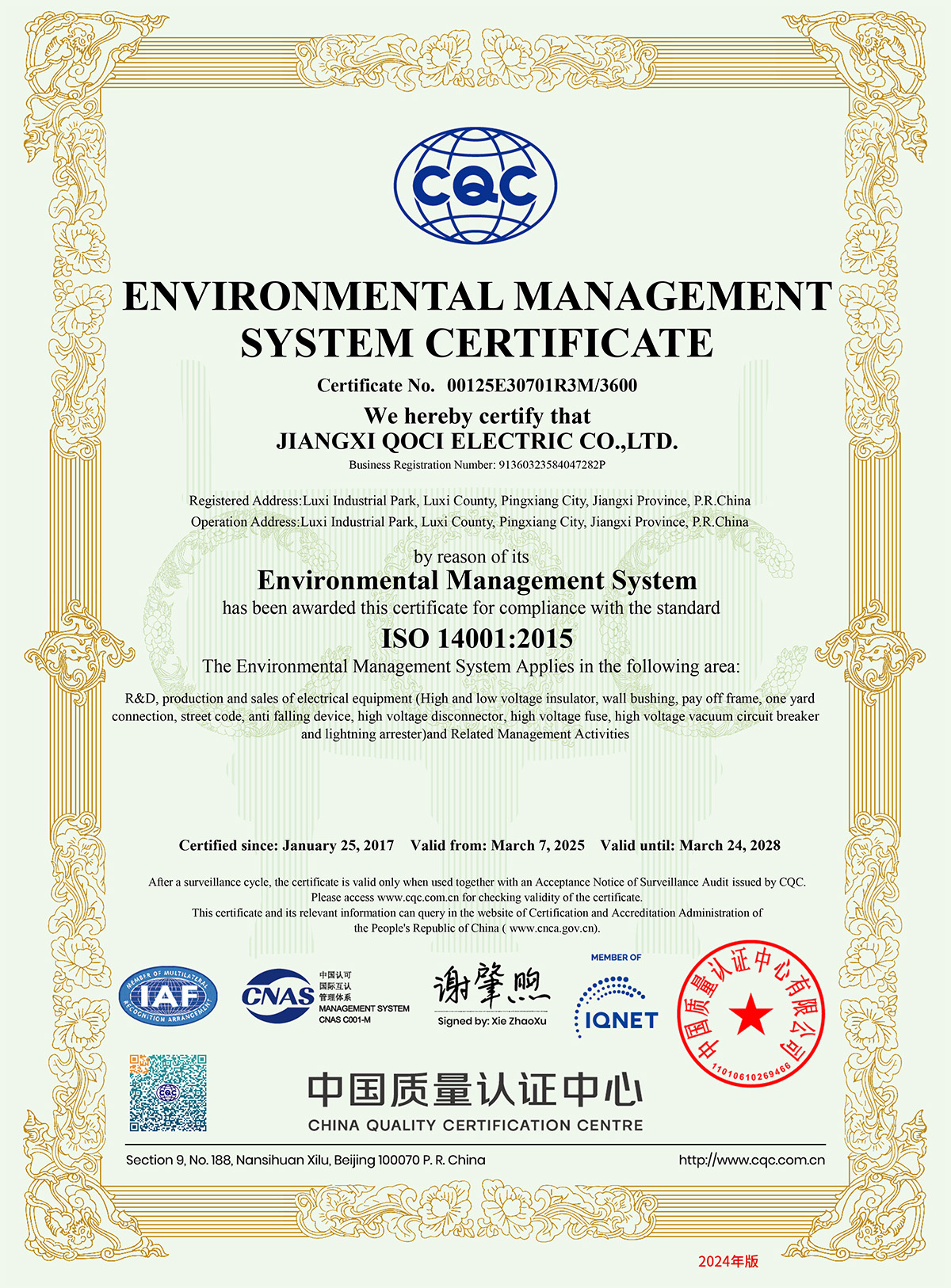
ISO 14001 Environmental Management System Certificate
What should a buyer expect from an OEM porcelain insulator manufacturer for utility projects?
Jiangxi QOCI Electric Co., Ltd. provides OEM and ODM services and supports customization for voltage and logo. Its published manufacturing data includes a monthly capacity of 750,000 units, an MOQ of 50 units and a production lead time of 15-35 days. A buyer can use the P-11-Y or another QOCI model as the reference and request specification changes through the factory quotation process.
What inspection and delivery terms should a buyer expect?
Published procurement terms for QOCI Electric include FOB Shenzhen, 30% deposit by T/T before production and 70% balance by T/T before delivery. Quality control includes 100% pre-shipment tests and optional third-party inspection by SGS. After-sales support covers online technical support and replacement for defective products.
Can one manufacturer support both porcelain and glass insulator lines?
Yes. QOCI Electric’s main products include porcelain insulators and glass insulators, and its background data lists AC and DC insulator types. For a compare-and-select process, this means a buyer can request specifications for both porcelain and glass options from a single factory and compare them using the same procurement framework.
Conclusion
A porcelain-versus-glass decision becomes a defensible specification only when it is tied to verified product ratings. The P-11-Y porcelain pin insulator and the PS210V 212V glass suspension insulator demonstrate why material labels are not enough. Rated voltage, mechanical load or failing load, creepage distance, withstand voltage and product form are the actual selection criteria.
Both porcelain and glass insulator families can be valid choices. The right approach is to define the mechanical duty, then the electrical and pollution requirements, then compare products that are designed for that duty. QOCI Electric manufactures both porcelain and glass insulators, which allows grid buyers to evaluate the two materials with product data rather than assumptions.
Download the QOCI Glass Insulators Catalogue: QOCI Catalogue - Glass Insulators.pdf
For current specification sheets, samples or a comparison quotation, contact Jiangxi QOCI Electric Co., Ltd. using the contact data in its official profile: email admin@qocielectric.com or WhatsApp +86 199-7997-1591.
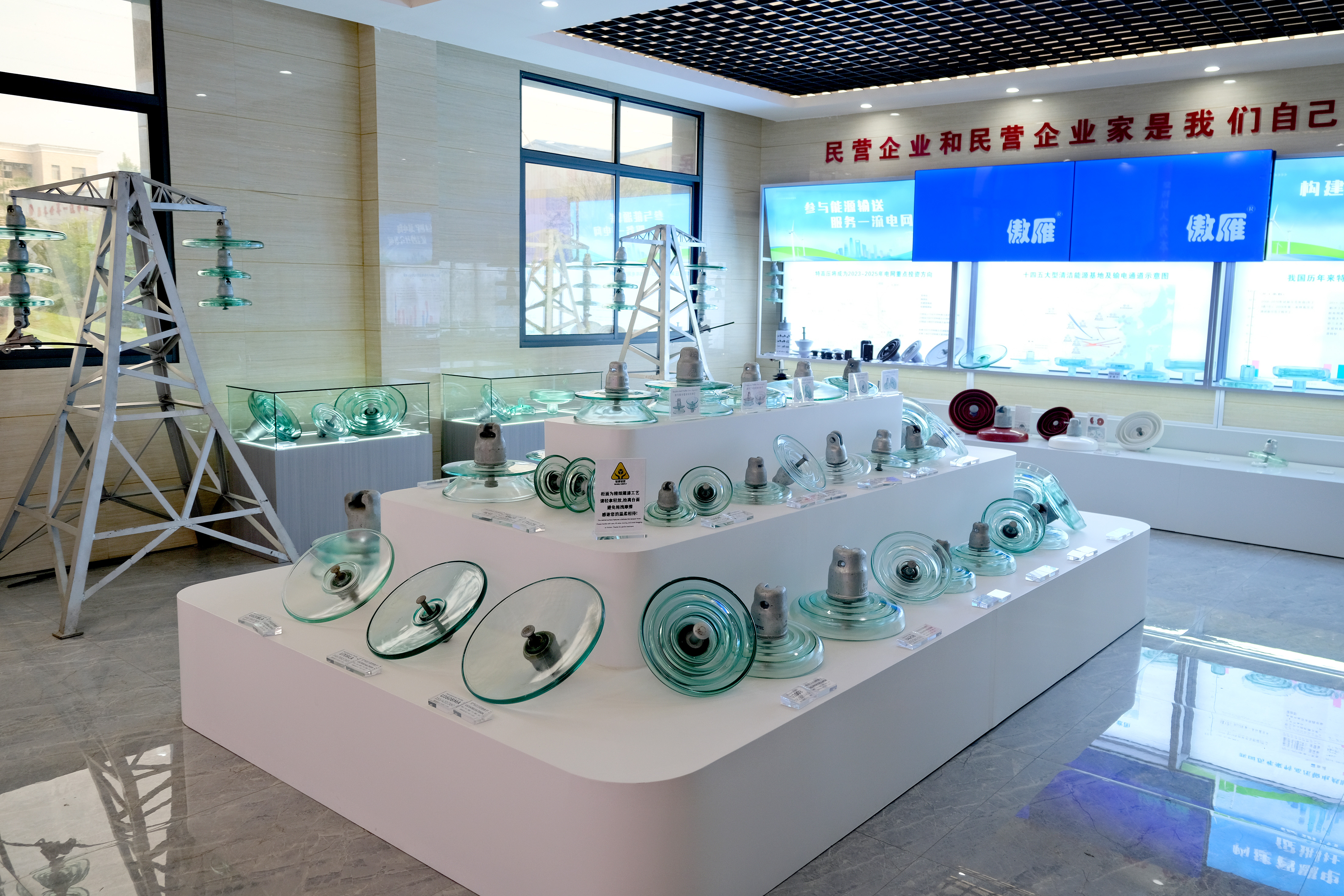
QOCI Electric sample room