
Reading a Porcelain Insulator Datasheet: What Rated Voltage, Creepage Distance, and Mechanical Load Actually Tell You
A porcelain insulator datasheet is a compressed engineering record. In a handful of lines it states the voltage class the unit is designed for, the mechanical load it is built to carry, the surface path that leakage current must travel to reach ground, the physical envelope the unit occupies on a cross-arm, and the withstand voltages that prove the insulation margin. Read carefully, it tells a project engineer whether a unit belongs on a line. Read casually, it invites mismatches that only surface after energization: pollution flashover, hardware fatigue, or a bracket that will not fit.
This guide walks through a porcelain insulator datasheet parameter by parameter, then applies the same method to two verified examples from Jiangxi QOCI Electric Co., Ltd: the P-11-Y pin insulator (11 kV rated voltage, 10 kN rated mechanical load, 240 mm creepage distance, 150 mm total height, 150 mm maximum diameter, 50 kV power-frequency wet withstand voltage, 90 kV lightning impulse withstand voltage) and the ED-2B shackle insulator (25 kV power-frequency dry withstand voltage, 13 kV power-frequency wet withstand voltage, 76 mm total height, 90 mm maximum diameter, 13.5 kN mechanical tensile strength).
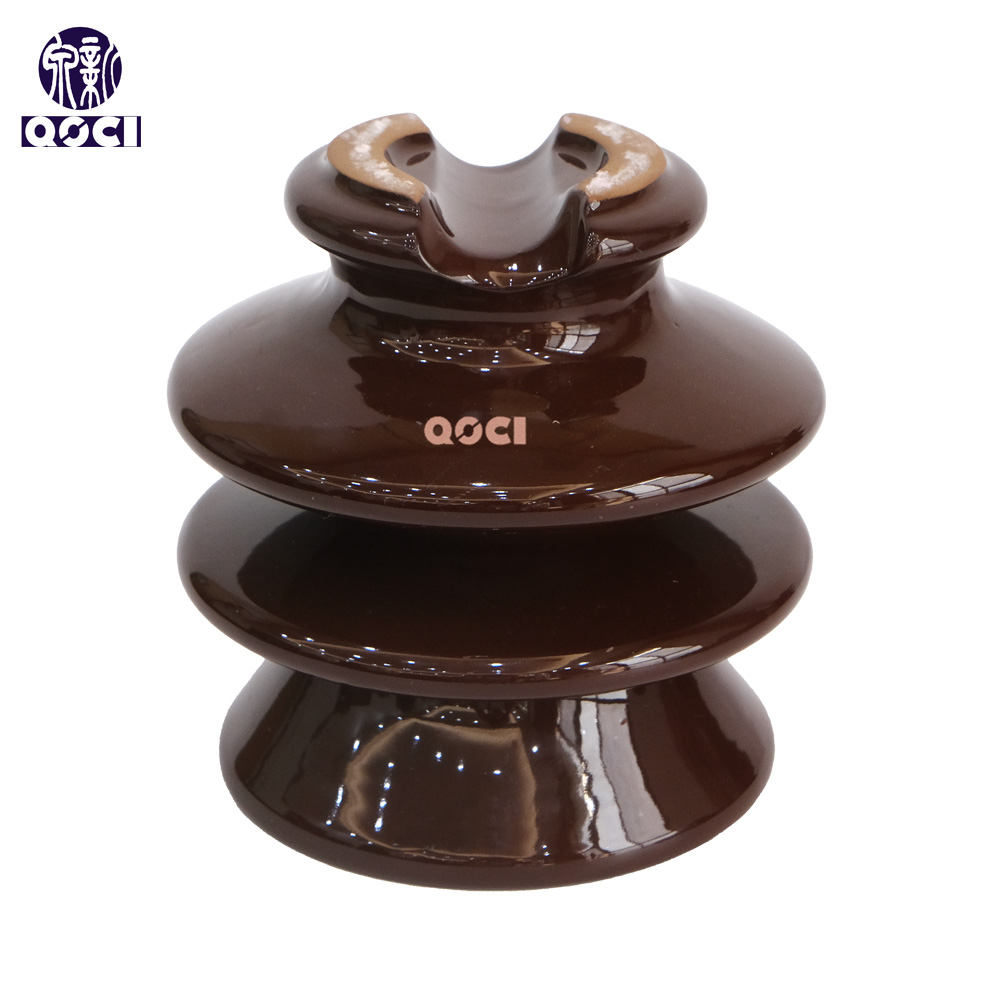
P-11-Y porcelain pin insulator: the 11 kV distribution unit used as the worked datasheet example in this guide.
Why a Porcelain Insulator Datasheet Is Easy to Misread
The vocabulary on an insulator datasheet is not difficult. The difficulty is that values produced by completely different tests sit next to each other with almost no explanation, and they are all expressed as a number plus a unit. Three traps account for most misreadings.
Trap one: rated values versus strength values. The P-11-Y datasheet lists a rated mechanical load of 10 kN. The ED-2B datasheet lists a mechanical tensile strength of 13.5 kN. These describe different things. A rated mechanical load is the working load the unit is designed to sustain in service. A tensile strength value describes the load case of the fitting style itself. On top of that, the direction of loading is not the same: a pin insulator such as the P-11-Y is loaded mainly in cantilever bending on the cross-arm pin, while a shackle insulator such as the ED-2B is loaded in tension where the line is anchored, at angle and strain joints.
Trap two: dry versus wet test conditions. The ED-2B sheet shows 25 kV power-frequency dry withstand voltage and 13 kV power-frequency wet withstand voltage. Reading only the larger 25 kV number and treating it as the insulation margin is a common error. Wet withstand values are the more severe condition and are the ones that matter for outdoor exposed lines.
Trap three: geometry mistaken for electrical performance. Total height and maximum diameter are fit dimensions, not performance ratings. On the P-11-Y both are 150 mm; on the ED-2B they are 76 mm and 90 mm. A creepage distance of 240 mm and a total height of 150 mm are unrelated quantities that buyers sometimes compare as if they measured the same thing.
The practical consequence of misreading is concrete. If creepage distance is chosen without reference to site pollution severity, the insulator can flash over along its surface in wet or contaminated conditions. If the load direction is misread, the wrong unit is used at angle and strain points. If geometry is ignored, the installation is reworked at the tower. A datasheet read parameter by parameter prevents all three.
Industry Background: Where Datasheet Numbers Come From
Datasheet values are not invented by the manufacturer. They are produced by a defined test programme against an international or national standard, which is why two sheets can be compared only when both state the standard and the test basis they follow.
The current international standard for insulator units is IEC 60383-1:2023, published by the International Electrotechnical Commission, which covers ceramic or glass insulator units for AC overhead power lines with nominal voltages above 1000 V. In North America, ANSI C29.1 specifies test methods for electrical power insulators, including wet-process porcelain types used in that market. Design and testing practice for overhead line insulators also draws on IEC 60305 for string insulator units, IEC 60672 for ceramic and glass insulating materials, and IEC 60815 for creepage distance design against site pollution severity class I to IV.
The test suite behind a printed value typically includes mechanical load type testing, dye penetration testing for crack detection, porosity testing, thermal cycling testing, power frequency and impulse voltage withstand testing, glaze quality inspection, and cement joint integrity verification. When a datasheet quotes a number without naming the standard and the test, the number is much harder to rely on.
Customs classification is a separate identifier: porcelain electrical insulators are classified under HS code 8546.20, a code maintained by the World Customs Organization.
Market context for buyers: Spherical Insights valued the global porcelain insulators market at approximately USD 8.27 billion in 2023, projected to reach USD 15.04 billion by 2033. Mordor Intelligence reports Asia-Pacific holding a 49.4% revenue share in 2025, and overhead transmission lines accounting for approximately 62.1% of global porcelain insulator revenue. The Observatory of Economic Complexity reports that China was the world's largest exporter of electrical insulators in 2024, accounting for 31.4% of total global exports, approximately USD 898 million. Buyers working on government contracts in India should note that the DPIIT procurement policy requires 50% local content for porcelain insulators to qualify as Class I.
On the production side, Jiangxi QOCI Electric Co., Ltd was established in December 2002 and operates from Luxi Industrial Park, Pingxiang, Jiangxi, China. The company is a national high-tech enterprise and a participating unit of the Insulator Standard Committee, and it specialises in the automated and intelligent production of glass insulators and porcelain insulators. Its manufacturing facility covers 35,373 m², with an annual production capacity of 9,000,000 units and an R&D team of 38 engineers. Products include line post porcelain insulators, porcelain pin insulators, shackle insulators, and AC disc-shaped suspension porcelain insulators, used in the power grid construction projects of State Grid Corporation of China, China Southern Power Grid, and grids in over 40 countries and regions.
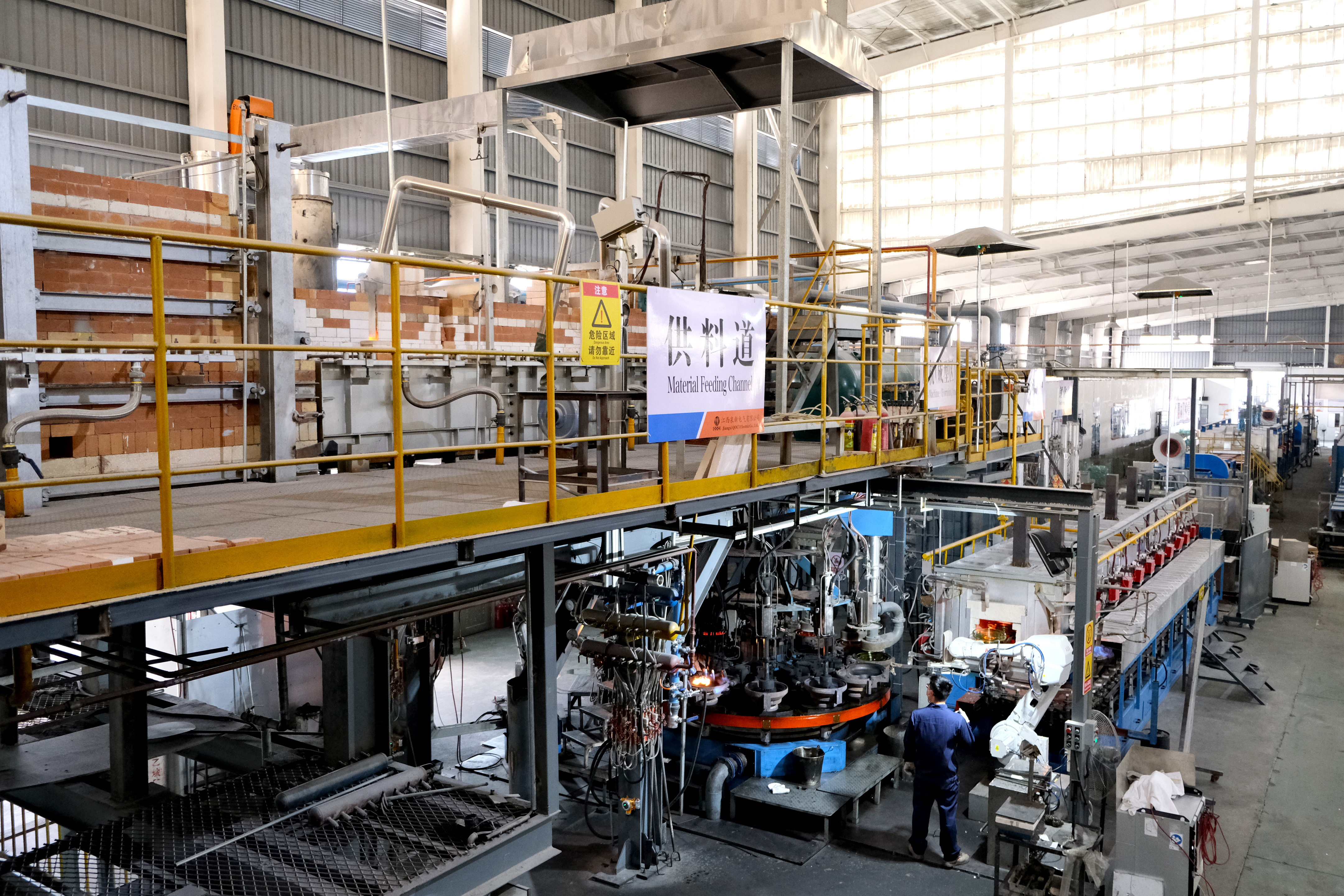
Automated porcelain insulator production at Jiangxi QOCI Electric, the production context behind repeatable datasheet values.
Parameter by Parameter: How to Read Each Datasheet Value
Rated voltage
Rated voltage defines the system voltage class the unit is designed around. On the P-11-Y datasheet the value is 11 kV, which places the insulator in the 10 kV distribution class used on overhead distribution lines and in rural electrification. Rated voltage is a design reference, not proof of insulation margin. The same sheet must also carry withstand values, and for the P-11-Y these are 50 kV power-frequency wet withstand voltage and 90 kV lightning impulse withstand voltage. Where a low-voltage unit such as the ED-2B does not list a rated voltage, read the type designation instead: it is classified as a shackle insulator, butterfly insulator, and low-voltage distribution insulator, which fixes its application band.
Rated mechanical load
The mechanical figure tells you what the unit can hold and in which direction. The P-11-Y carries a rated mechanical load of 10 kN as a pin type insulator, loaded in cantilever on the cross-arm pin. The ED-2B carries a mechanical tensile strength of 13.5 kN in tension, which is the load case that applies where the line is anchored at angle and strain joints with a galvanized bracket. For suspension units on transmission structures, load classes are conventionally referenced as a specified mechanical load range of 40 to 550 kN. The reading rule is simple: match the number to the load direction and to the load case at that specific structure, not to the conductor weight alone.
Creepage distance
Creepage distance is the surface path that leakage current must travel between the live conductor and the grounded support. The P-11-Y lists 240 mm. This is the parameter that decides anti-pollution behaviour, and it is designed against the site pollution severity class, conventionally class I to IV under IEC 60815 practice, with anti-pollution profiles used where the site is coastal, industrial, or humid. A datasheet that omits creepage distance, as the ED-2B parameter set provided here does, should not be assumed to have an implicit value: request it, because creepage cannot be inferred from rated voltage or from physical dimensions.
Total height and maximum diameter
These two dimensions define fit, not performance. The P-11-Y is 150 mm total height with a 150 mm maximum diameter, sized for pin mounting on wooden or steel cross-arms. The ED-2B is 76 mm total height with a 90 mm maximum diameter, a compact envelope for low-voltage brackets. Before ordering, these values should be checked against pin length, bracket geometry, phase-to-phase distance, and phase-to-structure clearance, because a unit that passes every electrical check can still fail to install.
Power-frequency dry and wet withstand voltage
Withstand voltage is the voltage the unit survives for a defined period under a defined condition. On the ED-2B sheet, 25 kV is the power-frequency dry withstand voltage and 13 kV is the power-frequency wet withstand voltage. The wet value is the one to compare for outdoor exposed installations, because it represents the surface condition the line actually faces in rain, fog, and condensation. The P-11-Y lists a power-frequency wet withstand voltage of 50 kV, consistent with its higher voltage class and longer creepage path.
Lightning impulse withstand voltage
Impulse withstand voltage describes the unit's response to a transient overvoltage rather than to steady-state operating voltage. The P-11-Y lists 90 kV lightning impulse withstand voltage. This value supports insulation coordination: it is compared with the basic impulse level of the line and of adjacent equipment, and it is not used to judge normal operating duty. A unit can carry a comfortable power-frequency rating and still be the wrong choice if its impulse level sits below the coordinated level of the rest of the installation.
Body material and metal fittings
Material statements explain why the values above hold up over time. The P-11-Y body is high-strength electrical porcelain with a pin of hot-dip galvanized forged steel; the ED-2B body is high-strength electrical porcelain. Vitrified porcelain is produced from kaolin, quartz, and feldspar fired at approximately 1200 to 1300 degrees Celsius, which gives the material high dielectric strength, in the range of 15 to 25 kV/mm, and a glazed surface that resists moisture absorption and contamination adhesion. Fitting finish matters for corrosion behaviour: under severe corrosion service conditions, using a zinc sleeve can significantly slow down rusting and extend the service life of the insulator string.
Step by Step: Reading the P-11-Y Datasheet
The following sequence turns a flat list of values into an installation decision. It takes roughly ten minutes per model.
- Step 1 — Identify type and intended application. P-11-Y is a pin type insulator made of high-strength electrical porcelain, intended for overhead distribution lines and grid construction, suitable for rural electrification.
- Step 2 — Match rated voltage to the line. 11 kV rated voltage positions the unit in the 10 kV class. Confirm the nominal system voltage does not exceed the rated figure.
- Step 3 — Read the mechanical load with its direction. 10 kN rated mechanical load, applied in cantilever on the cross-arm pin. Compare it with the maximum load at that support, including wind and ice loading, not with conductor weight alone.
- Step 4 — Check creepage against the site. 240 mm creepage distance. Compare it with the creepage required for the pollution severity class of the actual corridor, not with a generic assumption.
- Step 5 — Check the physical envelope. 150 mm total height and 150 mm maximum diameter against cross-arm pin length, bracket dimensions, and clearances.
- Step 6 — Confirm the insulation margin. 50 kV power-frequency wet withstand voltage and 90 kV lightning impulse withstand voltage, compared with expected overvoltages and with the impulse level of adjacent equipment.
- Step 7 — Verify material and fitting, then sample. Body of high-strength electrical porcelain, pin of hot-dip galvanized forged steel. Inspect the delivered unit for glaze defects and cement joint integrity, and perform an insulation resistance test before energizing.
The Same Method on a Low-Voltage Unit: ED-2B
Applying the identical sequence to the ED-2B shows how the reading changes with application. The unit is classified as a shackle insulator, butterfly insulator, and low-voltage distribution insulator, made of high-strength electrical porcelain, and intended for low-voltage lines, rural electrification, and overhead distribution lines. Its mechanical tensile strength of 13.5 kN is a tension value, so the natural application is line anchoring and angle or strain joints using a galvanized bracket or D iron. Its physical envelope of 76 mm total height and 90 mm maximum diameter is deliberately compact for low-voltage construction. Electrically, the sheet gives 25 kV power-frequency dry withstand voltage and 13 kV power-frequency wet withstand voltage; the wet figure governs, as it does on any outdoor exposed installation.
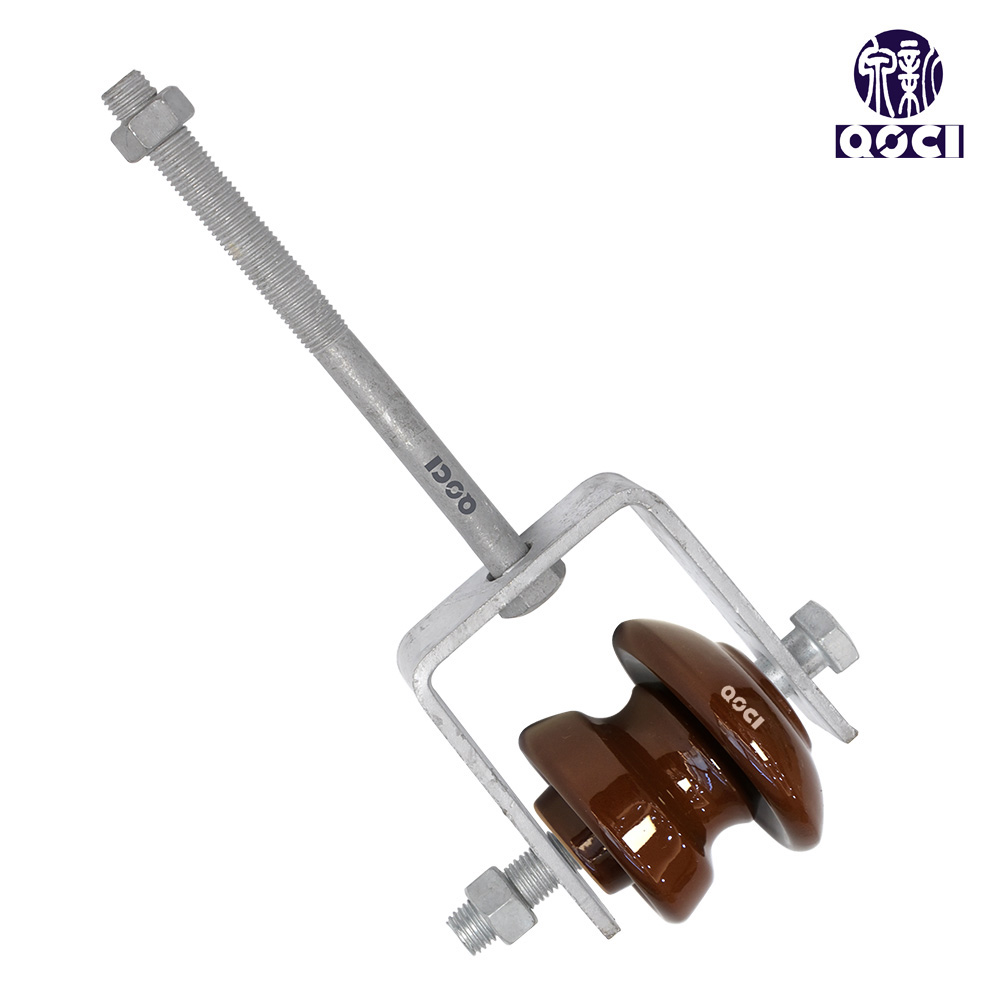
ED-2B low-voltage porcelain shackle insulator with D iron: 13.5 kN tensile strength, 76 mm height, 90 mm diameter.
Use Cases: Matching Datasheet Values to Project Conditions
Datasheet values become meaningful only when paired with a project condition. The pairings below follow directly from the parameter sets above.
- 10 kV overhead distribution and rural electrification: the P-11-Y, with 11 kV rated voltage, 10 kN cantilever load, and 240 mm creepage, mounted on wooden or steel cross-arms.
- Low-voltage lines and LV rural electrification: the ED-2B, with 13.5 kN tensile strength and a 76 mm by 90 mm envelope for compact bracket mounting.
- Angle and strain joints, line anchoring: the ED-2B, whose tensile rating matches anchoring duty rather than cantilever duty.
- Polluted, coastal, or humid corridors: an anti-pollution porcelain insulator with creepage distance matched to the site pollution class, since standard creepage on a clean-area unit will not satisfy a heavy-pollution corridor.
- Severe corrosion service: specify fitting protection carefully; a zinc sleeve can significantly slow rusting and extend the service life of the string.
Datasheet Parameter Comparison: P-11-Y and ED-2B
The table below places the two verified parameter sets side by side, using only the values stated on the sheets. Where a value is not part of the datasheet data used here, it is marked as not listed rather than estimated.
| Parameter | P-11-Y porcelain pin insulator | ED-2B porcelain shackle insulator |
|---|---|---|
| Type classification | Pin type insulator, porcelain insulator, distribution line insulator | Shackle insulator, butterfly insulator, low-voltage distribution insulator |
| Rated voltage | 11 kV | Not listed in the datasheet data used here |
| Mechanical rating | Rated mechanical load: 10 kN (cantilever on cross-arm pin) | Mechanical tensile strength: 13.5 kN (tension at anchoring points) |
| Creepage distance | 240 mm | Not listed in the datasheet data used here |
| Total height | 150 mm | 76 mm |
| Maximum diameter | 150 mm | 90 mm |
| Power-frequency dry withstand voltage | Not listed in the datasheet data used here | 25 kV |
| Power-frequency wet withstand voltage | 50 kV | 13 kV |
| Lightning impulse withstand voltage | 90 kV | Not listed in the datasheet data used here |
| Body material | High-strength electrical porcelain | High-strength electrical porcelain |
| Metal fitting | Pin: hot-dip galvanized forged steel | Galvanized bracket or D iron mounting |
| Typical application | Overhead distribution lines, grid construction, rural electrification | Low-voltage lines, rural electrification, overhead distribution lines |
A blank value on a datasheet is information in itself. Rated voltage, creepage distance, and impulse withstand values are all normal entries on a complete porcelain insulator datasheet, and a buyer should request them before treating two units as equivalent.
Frequently Asked Questions
Which standard should a porcelain insulator datasheet reference?
A complete datasheet should name the standard its values were produced against. IEC 60383-1:2023 is the current international standard for ceramic or glass insulator units for AC overhead power lines with nominal voltages above 1000 V, published by the International Electrotechnical Commission. For North American projects, ANSI C29.1 specifies test methods for electrical power insulators, including wet-process porcelain types. Design and testing practice also draws on IEC 60305 for string insulator units, IEC 60672 for ceramic and glass insulating materials, and IEC 60815 for creepage distance design against pollution severity class I to IV. For customs purposes, porcelain electrical insulators are classified under HS code 8546.20. If a sheet quotes numbers without naming the standard or test basis, treat it as incomplete.
How do I know the datasheet values are repeatable in production and not just a single sample?
Look for the test programme behind the printed values and ask what its coverage is. A credible programme includes mechanical load type testing, dye penetration testing for crack detection, porosity testing, thermal cycling testing, power frequency and impulse voltage withstand testing, glaze quality inspection, and cement joint integrity verification. Dye penetration coverage is the key question: testing every unit differs materially from batch sampling, because internal micro-cracks can exist without any visible external change. Production structure matters too. Jiangxi QOCI Electric Co., Ltd is a participating unit of the Insulator Standard Committee and produces porcelain and glass insulators through automated and intelligent production lines, with a manufacturing facility of 35,373 m², an annual production capacity of 9,000,000 units, and an R&D team of 38 engineers.
Do higher datasheet values always mean higher cost, and which parameters actually drive price?
Not automatically, but several parameters do move material and process content. Creepage distance drives shed geometry and material volume; a higher mechanical load class drives the insulator body, the cement joint, and the fittings; fitting finish and material, such as a hot-dip galvanized forged steel pin, affect both cost and corrosion life; and wider test coverage adds process time. The practical rule is to buy to the project requirement rather than to the largest number. If the corridor is pollution class II, specifying a profile sized for class IV adds cost without adding service value. Use the datasheet to prove the requirement is met, not to maximise every line item.
How should a buyer validate a datasheet against physical samples?
Order samples of the exact model, then compare them with the sheet instead of judging by appearance. Measure total height and maximum diameter against the stated values, for example 150 mm and 150 mm on the P-11-Y or 76 mm and 90 mm on the ED-2B. Inspect the glaze for cracks and chips and check cement joint integrity, since moisture ingress through a degraded joint is one source of later failure. Confirm the metal fitting finish, including hot-dip galvanized forged steel pins. Finally, perform an insulation resistance test before energizing to detect faulty units. Porcelain insulators can develop zero-value degradation without any visible external change, which is why testing programmes, not visual inspection alone, carry the quality claim.
What should be confirmed before a production slot is scheduled?
Lock the datasheet before scheduling, not after. Confirm the model and type classification, the rated voltage, the rated mechanical load and its direction, the required creepage distance for the site pollution class, the total height and maximum diameter for the mounting hardware, and the fitting material and finish. Confirm also whether a standard or anti-pollution profile is required, and whether the referenced standard and test coverage are acceptable to the project. Late changes to any of these values mean rework of tooling, fittings, or already-produced units. Jiangxi QOCI Electric Co., Ltd supports buyers at this stage with an annual production capacity of 9,000,000 units, an R&D team of 38 engineers, and export markets covering the USA, Asia, the EU, Africa, and South America, where export business accounts for 20% of total sales. Sample requests and datasheet clarification can be sent to admin@qocielectric.com or via WhatsApp on +86 199-7997-1591.
Conclusion: A Datasheet Is a Sequence, Not a List
Every porcelain insulator datasheet should be read in the same order: type and application first, then rated voltage, then mechanical load with its direction, then creepage distance against site pollution class, then height and diameter for fit, then dry and wet withstand voltages, then impulse withstand voltage for coordination, and finally body material and fitting finish. Applied to the P-11-Y, that sequence confirms an 11 kV distribution pin insulator with a 10 kN cantilever load, 240 mm creepage, a 150 mm by 150 mm envelope, 50 kV power-frequency wet withstand voltage, and 90 kV lightning impulse withstand voltage. Applied to the ED-2B, it confirms a low-voltage shackle insulator with 13.5 kN tensile strength, a 76 mm by 90 mm envelope, 25 kV dry and 13 kV wet withstand voltage, suited to anchoring and angle or strain duty on low-voltage lines.
The final check is consistency between the sheet and the supplier. A manufacturer that participates in the Insulator Standard Committee and runs automated porcelain and glass insulator production is in a position to publish values that stay the same from sample to shipment. Jiangxi QOCI Electric Co., Ltd, established in December 2002 and based at No. 6, Electric Porcelain Industrial Park, Luxi Industrial Zone, Pingxiang, Jiangxi, China, supplies porcelain and glass insulators to grid projects in over 40 countries and regions through its website at www.quanxinelectric.com.
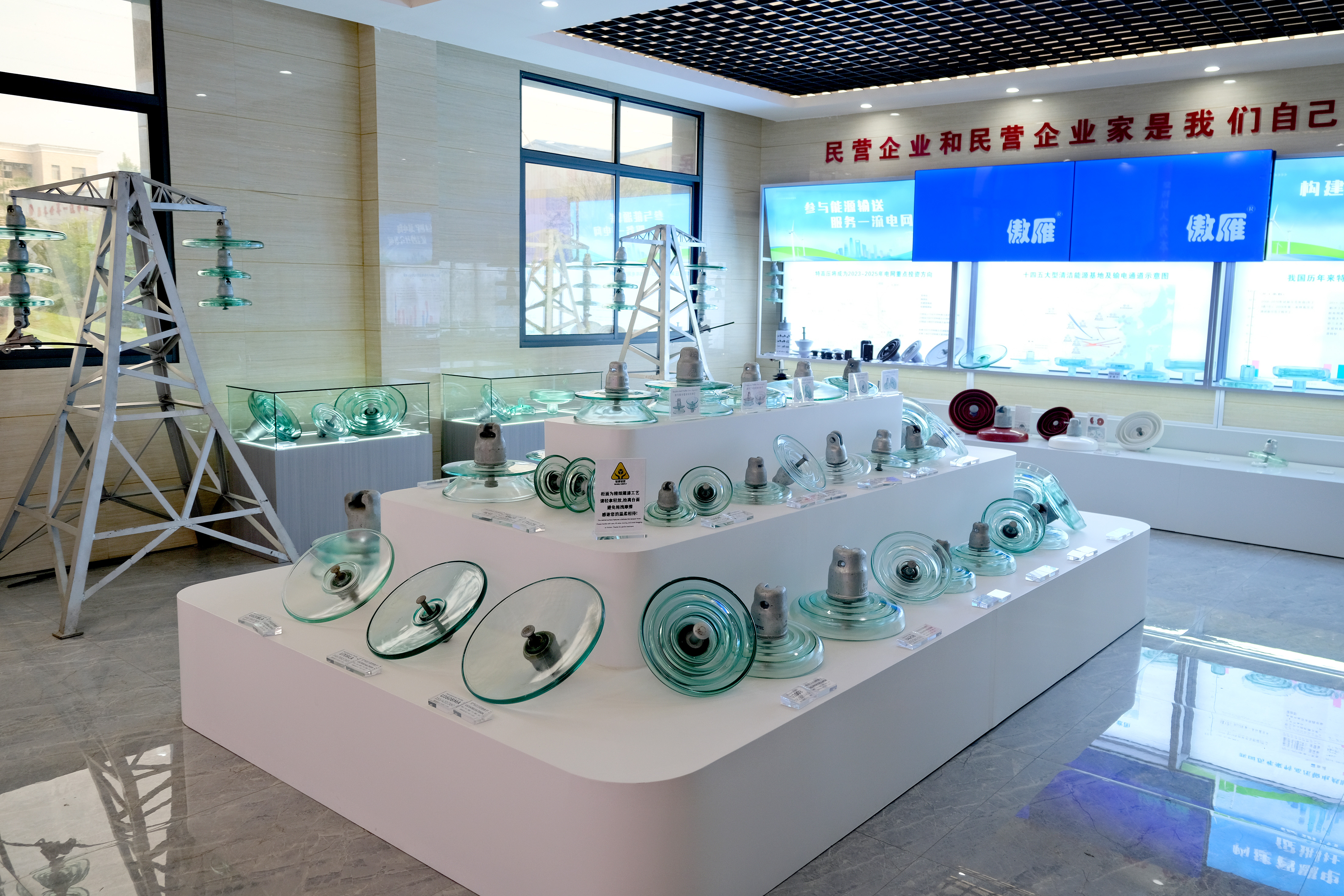
Sample verification at Jiangxi QOCI Electric: request the exact model and check it against the datasheet values.
Next step: if you are comparing porcelain insulator datasheets for a distribution or rural electrification project, start with physical samples of the exact models under evaluation. Request samples of the P-11-Y, the ED-2B, or the line post, pin, shackle, and AC disc-shaped suspension insulators in the QOCI range, and check dimensions, glaze, cement joints, and insulation resistance against the values printed on the sheet. Contact: admin@qocielectric.com | Tel +86 079-9761-6589 | WhatsApp +86 199-7997-1591. You can also download the product catalogue here: QOCI Catalogue - Glass Insulators (PDF).