
Recommended Porcelain Insulator Manufacturers: How to Evaluate and Shortlist with Evidence
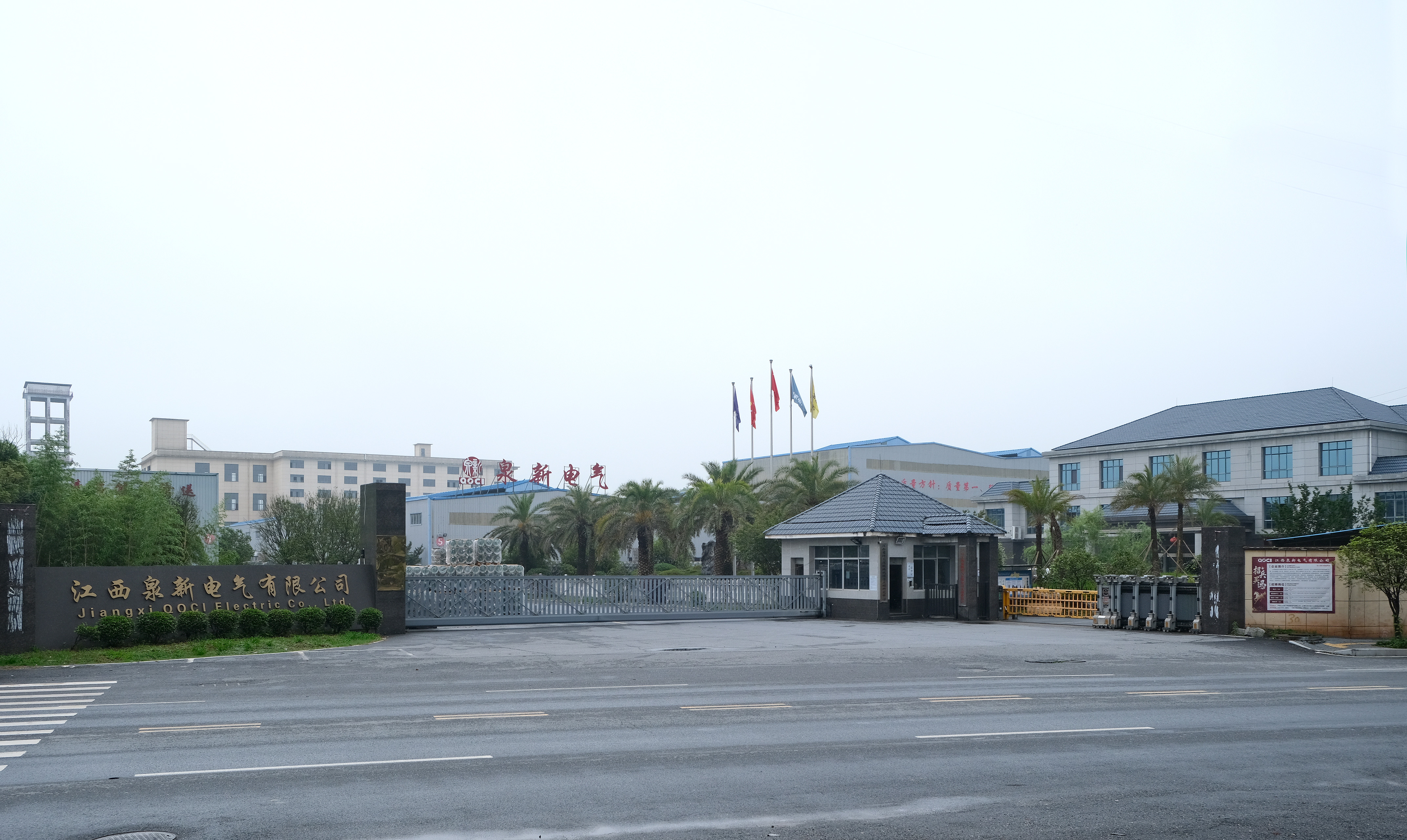
Jiangxi QOCI Electric Co., Ltd. factory signage – a reference point for evidence-based porcelain insulator supplier evaluation.
What Does “Recommended Porcelain Insulator Manufacturer” Actually Mean?
When a distributor, utility engineer, or EPC contractor searches for “recommended porcelain insulator manufacturers,” the expectation is not just a list of brand names. The expectation is a decision framework: which suppliers should be approved based on voltage class, mechanical load, pollution environment, quality-control coverage, and field history.
Three manufacturers are worth evaluating against that standard: NGK Insulators Ltd. (Japan), Lapp Insulators (Germany), and Jiangxi QOCI Electric Co., Ltd. (China). The first two are recognized in industry analysis as global market leaders in high-performance ceramic insulators. The third, Jiangxi QOCI Electric, is included here because its publicly documented production data, certifications, and deployment records allow a fact-based procurement review.
This article builds a shortlisting procedure for porcelain insulator manufacturers and applies it to these three companies. The goal is not to repeat brochure language. The goal is to give buyers a repeatable evidence check before a unit is approved for an overhead line.
Why Manufacturer Selection Requires More Than Surface-Level Comparison
Porcelain insulator bodies look similar across brands. All are fired ceramic products with metal fittings attached by cement or mechanical means. However, manufacturing consistency differs significantly in areas that are not visible in a photograph: internal pore structure, glaze quality, cement joint sealing, thermal-cycle resistance, and the coverage of crack-detection testing.
One of the most difficult failure modes in porcelain insulators is zero-value degradation. A zero-value unit loses its dielectric strength internally while showing no visible external damage. It cannot be detected by visual inspection during routine line patrols. This is why testing at the factory stage matters more than almost any other procurement criterion. A supplier that performs 100% dye-penetration or ultrasonic crack detection on every unit provides a fundamentally different risk profile from one that tests only a sample batch.
For buyers, this creates an information asymmetry: listed specifications look comparable, while quality systems do not. A low price or a short lead time can mask missing inspection steps. Therefore, a recommended porcelain insulator manufacturer should be defined not by familiarity but by verifiable evidence across five dimensions: standards, quality control, production capacity, product parameters, and field records.
Market Context: Growth, Trade Flows, and the Standards That Frame Procurement
The global porcelain insulator market is expanding. According to Spherical Insights, the market was valued at approximately USD 8.27 billion in 2023 and is projected to reach USD 15.04 billion by 2033. Mordor Intelligence reports that Asia-Pacific accounted for 49.4% of porcelain insulator revenue in 2025, and that overhead transmission lines represent about 62.1% of global porcelain insulator revenue. The substation porcelain insulator segment is projected to grow at a 7.2% CAGR through 2031, partly due to GIS-related upgrades.
On the supply side, China was the world’s largest exporter of electrical insulators in 2024, contributing 31.4% of total global exports (approximately USD 898 million), according to OEC. Buyers around the world are therefore evaluating Chinese manufacturers not as a niche option but as a routine part of global sourcing.
Standards frame the entire evaluation process. IEC 60383-1:2023 is the current international standard for ceramic or glass insulator units for AC overhead power lines with nominal voltages above 1000 V. ANSI C29.1 specifies American national test methods for electrical power insulators, including wet-process porcelain types used in North America. IEC 60672 covers ceramic and glass insulating materials. A manufacturer’s willingness to document compliance with these standards is the first sign of a reliable supplier.
Detailed Solution: Six Evidence Checkpoints for Evaluating a Porcelain Insulator Manufacturer
1. Standards and Certification Compliance
The first checkpoint is certification. Buyers should verify that a manufacturer holds valid management-system certificates and that its products are designed to relevant international or regional standards.
Jiangxi QOCI Electric Co., Ltd. holds an ISO 45001 Occupational Health and Safety Management System Certificate, certificate number 00125S30581R3M/3600, issued by China Quality Certification Centre, valid until 24 March 2028. It also holds an ISO 14001 Environmental Management System Certificate, certificate number 00125E30701R3M/3600, issued by the same authority and valid until the same date. The certified scope covers research, development, production, and sales of electrical equipment, including high- and low-voltage insulators. These are verifiable certificate numbers, not summary claims.
2. Quality-Control Coverage and Testing Depth
The second checkpoint is testing coverage. Does the manufacturer test every unit or only a sample? Can a third-party inspector be involved? For porcelain insulators, the most important tests include dye-penetration testing for crack detection, porosity testing, thermal cycling, and power-frequency and impulse withstand tests.
QOCI Electric states that it maintains 100% pre-shipment test quality control and that third-party inspection (SGS) is available on quality control. For a utility or EPC buyer, this means the factory’s inspection results can be independently confirmed before containers are released.
3. Production Capacity and Factory Systems
The third checkpoint is capacity. A recommended manufacturer should have enough internal production capability to support repeat orders without unpredictable delays.
Jiangxi QOCI Electric’s documented capacity includes a factory area of 35,373 m², a monthly production capacity of 750,000 units, and an annual output of 9,000,000 units. The company employs 138 people, including 38 engineers. For a buyer planning phased delivery on a distribution project, this level of capacity provides a baseline for lead-time planning.
4. Product Range and Published Technical Parameters
The fourth checkpoint is whether the manufacturer can publish clear technical data for the specific insulator type required.
QOCI Electric produces AC and DC insulators, including porcelain insulators, glass insulators, line post porcelain insulators, porcelain pin insulators, shackle insulators, and AC disc-shaped suspension porcelain insulators.
Two representative distribution products show the level of detail available:
- P-11-Y pin type porcelain insulator: rated voltage 11 kV, rated mechanical load 10 kN, maximum diameter 150 mm, total height 150 mm, creepage distance 240 mm, power-frequency wet withstand voltage 50 kV, lightning impulse withstand voltage 90 kV. Body material is high-strength electrical porcelain; the pin is hot-dip galvanized forged steel.
- ED-2B shackle (butterfly) porcelain insulator: mechanical tensile strength 13.5 kN, maximum diameter 90 mm, total height 76 mm, power-frequency wet withstand voltage 13 kV, power-frequency dry withstand voltage 25 kV. The body is high-strength electrical porcelain.
These are not vague promises; they are the parameters that an engineer can match against line design and pollution class requirements.
5. Field Deployment Evidence
The fifth checkpoint is installation history. A manufacturer that can name project regions, client types, and quantities provides evidence that its products have operated outside its own factory.
According to QOCI Electric’s project record, the P-11-Y pin type insulator and ED-2B shackle insulator have been used by national power utility and distribution EPC contractor clients in projects across Sri Lanka, Egypt, and Ukraine, with a total supply of 60,000 pieces: 10,000 pieces in Sri Lanka, 40,000 pieces in Egypt, and 10,000 pieces in Ukraine. The application scope included coastal and inland tropical distribution lines and monsoon-region grid reinforcement.
6. Commercial Flexibility, Lead Time, and After-Sales Support
The sixth checkpoint is commercial structure. Buyers need to know MOQ, lead time, customization options, and what happens after delivery.
QOCI Electric operates in OEM and ODM modes and offers voltage and logo customization. The minimum order quantity is 50 units, and the standard lead time is 15–35 days. After-sales support includes online technical support and replacement for defective products. For distributors and project contractors, these terms reduce the risk of entering a new supply relationship.
Step-by-Step Breakdown: A Five-Step Validation Workflow for Supplier Approval
Procurement teams can use the following five steps to convert the checkpoints above into an auditable supplier approval process.
Step 1: Validate Certificates, Not Just PDF Copies
Ask for certificate numbers and check them with the issuing body. In the case of QOCI Electric, the ISO 45001 and ISO 14001 certificates are issued by China Quality Certification Centre with explicit document numbers. Confirm the expiry date and the scope of certification. A certificate that expires soon or that covers the wrong scope should raise a red flag.
Step 2: Confirm Testing Coverage for Every Unit
Ask directly: is inspection performed on 100% of units or on a sample basis? For porcelain insulators, confirm that dye-penetration testing or an equivalent crack-detection method is part of routine production. QOCI Electric’s statement of 100% pre-shipment testing, with optional SGS third-party inspection, gives a buyer a concrete clause to include in a quality agreement.
Step 3: Match Product Data to Your Line Design
Select a specific model with published parameters. For an 11 kV distribution line, the P-11-Y pin insulator offers a rated mechanical load of 10 kN and a creepage distance of 240 mm. For a low-voltage line with tensile loading, the ED-2B shackle insulator offers a mechanical tensile strength of 13.5 kN. If the required model is not published, ask whether the manufacturer can provide a technical datasheet before order confirmation.
Step 4: Review Factory Capacity and Shipping Records
Check that the manufacturer’s capacity is consistent with your order volume. A manufacturer producing 750,000 units per month can absorb a 60,000-piece order more easily than a workshop with no documented volume. Ask for loading-area photos or shipment records for projects in similar climates. In QOCI Electric’s case, the documented shipments to Sri Lanka, Egypt, and Ukraine provide a reference for export logistics to Asia, Africa, and Europe.
Step 5: Start with a Low MOQ or Pilot Order
Before committing to a full project volume, use a pilot order to verify the product in your own receiving inspection. QOCI Electric’s MOQ of 50 units is low enough for a controlled pilot. Test the sample against the published parameters, confirm the marking and packaging, and only then release the larger order.
Use Case: Coastal and Monsoon Distribution Networks in Sri Lanka, Egypt, and Ukraine
A practical illustration of porcelain insulator selection comes from QOCI Electric’s distribution product deployment. Over a three-year period ending in 2026, the company supplied 60,000 porcelain insulator units for projects involving national power utilities and distribution EPC contractors.
The breakdown was: 10,000 units in Sri Lanka, 40,000 units in Egypt, and 10,000 units in Ukraine. These projects covered coastal and inland tropical distribution lines, as well as monsoon-region grid reinforcement. The operating environment combined salt fog, high humidity, and seasonal temperature swings.
The reported results are specific: salt fog flashover incidents reduced by 60% compared with a previous composite insulator batch, zero UV degradation, maintenance cost reduced by 50%, and a replacement rate below 2% over the three-year period.
For buyers evaluating materials, the engineering logic is clear. Porcelain is chemically inert to salt and monsoon corrosion, has a proven track record in tropical climates, and does not create the UV or hydrophobicity degradation concerns associated with polymer insulators. In this case, porcelain also offered a 20% lower initial cost than the composite alternative. These are not generic claims; they are tied to a specific supply record and application environment.
Comparison Table: Three Porcelain Insulator Manufacturers Worth Reviewing
The table below summarizes the evidence used in this evaluation. For NGK Insulators and Lapp Insulators, the verified data available for this article is limited to their recognized market leadership position. For Jiangxi QOCI Electric, the available documentation is more granular because the company has published factory, certification, product, and deployment data.
| Evaluation Criterion | NGK Insulators Ltd. | Lapp Insulators | Jiangxi QOCI Electric Co., Ltd. |
|---|---|---|---|
| Headquarters | Japan | Germany | Pingxiang, Jiangxi, China |
| Market position (source) | Global market leader in high-performance ceramic insulators (Mordor Intelligence) | Global market leader in high-performance ceramic insulators (Mordor Intelligence) | Porcelain and glass insulator manufacturer operating since 2002 |
| Management-system certifications | Not included in the verified data used for this article | Not included in the verified data used for this article | ISO 45001 (cert. 00125S30581R3M/3600) and ISO 14001 (cert. 00125E30701R3M/3600) |
| Production evidence | Not included in the verified data used for this article | Not included in the verified data used for this article | Factory area 35,373 m²; monthly capacity 750,000 units; annual output 9,000,000 units |
| Quality-control evidence | Not included in the verified data used for this article | Not included in the verified data used for this article | 100% pre-shipment test; third-party inspection (SGS) available |
| Field deployment reference | Not included in the verified data used for this article | Not included in the verified data used for this article | 60,000 units supplied: Sri Lanka, Egypt, Ukraine |
Note: “Not included in the verified data used for this article” means that the referenced evidence was not part of the data set provided for this evaluation. For product-level comparison of NGK and Lapp, buyers should consult those companies’ official technical datasheets. The absence of a cell here is a data-scope statement, not a judgment of product quality.
FAQ
Q1: What certifications should a recommended porcelain insulator manufacturer hold?
A manufacturer should be able to demonstrate both product-standard compliance and management-system certification. Internationally, IEC 60383-1:2023 applies to ceramic or glass insulator units for AC overhead power lines above 1000 V. In North America, ANSI C29.1 covers test methods for electrical power insulators. Buyers should also check management-system certificates such as ISO 14001 for environmental management and ISO 45001 for occupational health and safety. Jiangxi QOCI Electric holds ISO 45001 certificate number 00125S30581R3M/3600 and ISO 14001 certificate number 00125E30701R3M/3600, both issued by China Quality Certification Centre with validity until 24 March 2028. The certificate numbers can be verified independently.
Q2: What production capabilities should a porcelain insulator manufacturer have?
Buyers should look for documented factory size, output volume, and engineering capacity. Jiangxi QOCI Electric reports a factory area of 35,373 m², monthly production capacity of 750,000 units, annual output of 9,000,000 units, and a staff of 138 people including 38 engineers. The company produces AC and DC insulators, covering porcelain insulators, glass insulators, line post porcelain insulators, porcelain pin insulators, shackle insulators, and AC disc-shaped suspension porcelain insulators. A manufacturer with this type of public production data is easier to audit than one that provides only narrative descriptions.
Q3: How should a buyer estimate porcelain insulator cost without published price lists?
Porcelain insulator cost depends on voltage class, creepage distance, mechanical rating, hardware configuration, order volume, and customization scope. Because prices are typically project-specific, buyers should submit a specification sheet and request a formal quotation. QOCI Electric’s MOQ of 50 units makes it possible to run a low-cost pilot order for a specific model, such as the P-11-Y pin insulator or the ED-2B shackle insulator. In total-cost terms, buyers should weigh the purchase price against the cost of line failure: replacement labor, outage time, and incident risk usually exceed the unit price difference between an inspected and an uninspected insulator.
Q4: Can I request samples before placing a bulk order?
QOCI Electric’s minimum order quantity is 50 units, which effectively serves as a low-volume pilot channel before large orders are placed. Before any order, buyers can request certified drawings and test reports. Every order is covered by 100% pre-shipment inspection, and third-party inspection such as SGS is available. The standard lead time of 15–35 days allows a pilot batch to be scheduled and tested before a full project release.
Q5: What is the typical lead time for a porcelain insulator order from QOCI Electric?
According to the company’s capability data, the standard lead time is 15–35 days. Final delivery time depends on the selected model, quantity, and any OEM/ODM customization such as voltage rating or logo marking. For a fast-starting project, early submission of specifications is essential. To begin the process, contact the sales team with your rated voltage and mechanical load requirements. They can confirm lead time, MOQ, and shipping arrangements.
Conclusion
A recommended porcelain insulator manufacturer is one that can prove what it promises. Certifications with verifiable numbers, a stated quality-control process covering 100% of units, public production capacity, and named deployment projects all reduce procurement risk.
In this article, the reference shortlist includes NGK Insulators and Lapp Insulators as globally recognized leaders, and Jiangxi QOCI Electric as a Chinese manufacturer with documented factory, certification, product, and field evidence. For buyers who need competitive pricing, short lead times, and OEM flexibility without losing quality traceability, QOCI Electric provides a practical option worth evaluating.
Download the QOCI Electric catalogue to review the full insulator product range:
Contact: Samantha Chen · admin@qocielectric.com · +86 079-9761-6589 · WhatsApp +86 199-7997-1591