
Suspension Glass Insulator Compliance Guide: Certifications, Standards, and Regional Requirements
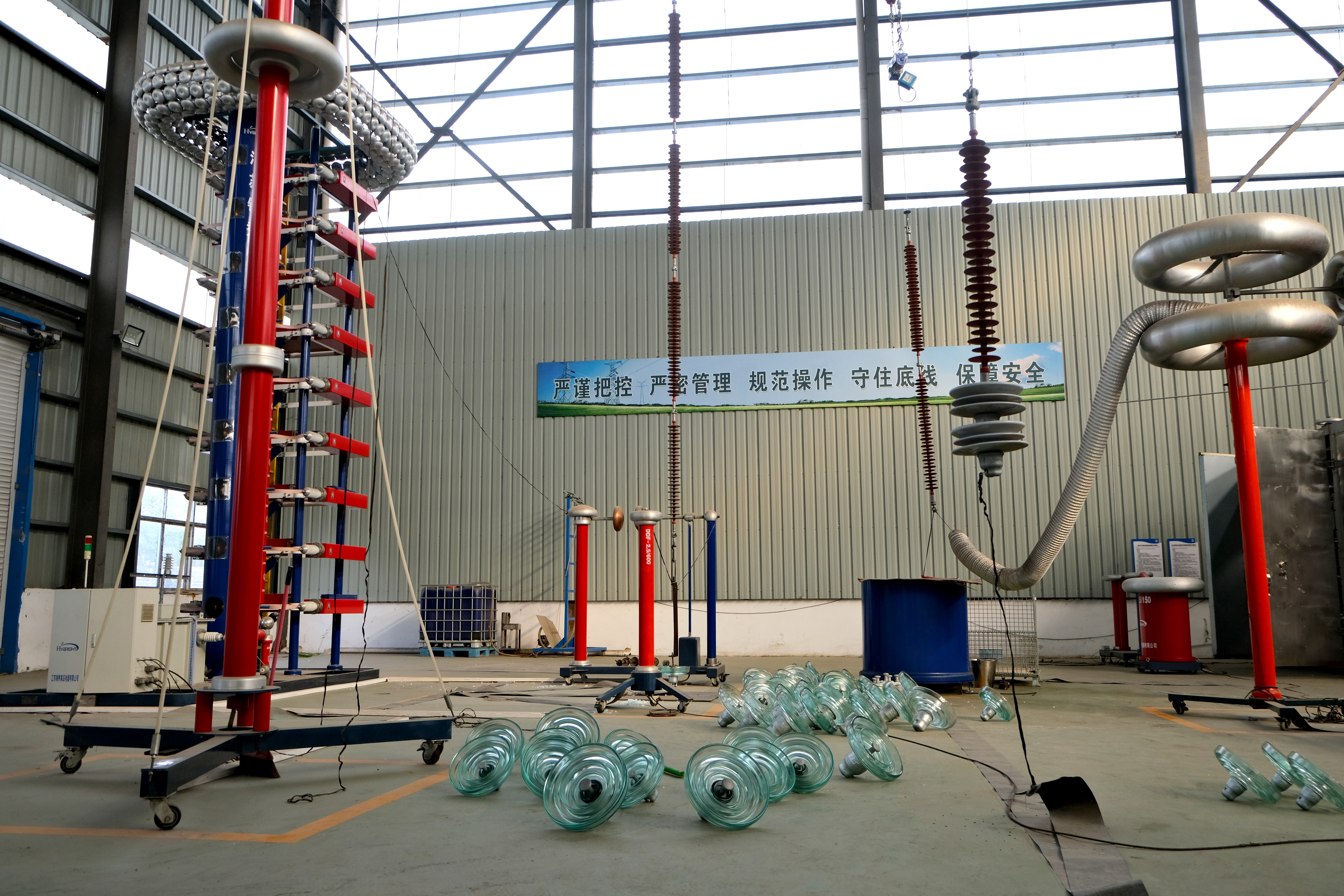
Verification and testing infrastructure at Jiangxi QOCI Electric Co., Ltd., Pingxiang, Jiangxi, China.
Compliance for a suspension glass insulator is not a single certificate. It is an evidence chain built from three parts: the product standard the unit is designed to, the quality system behind the factory that produced it, and the acceptance criteria the buyer writes into the purchase order. At decision stage, treating compliance as paperwork that can be corrected later is exactly how tenders stall.
This guide gives procurement and engineering teams a working framework for reading certification requirements, aligning a suspension glass insulator order with regional standards, and closing the acceptance criteria question before an order is placed. Purchase terms and acceptance criteria during procurement act as the practical anchor throughout.
Why compliance becomes the bottleneck in suspension glass insulator procurement
Buyers of a suspension glass insulator rarely lose time on price. They lose it on inconsistent interpretation of compliance. A specification references IEC 60305. A supplier's technical file references a national equivalent. The tender document adds a buyer-specific test list. All three parties are talking about compliance, and none of them is describing the same thing.
At decision stage this shows up in three recurring patterns. First, the RFP states "compliant with international standards" without naming a version year or saying whether equivalents are accepted. Second, the supplier attaches a type test report that covers a different mechanical class than the unit being quoted. Third, acceptance criteria get discussed after the commercial terms are frozen, at which point the buyer has lost the leverage to negotiate them.
All three patterns share one root cause: treating certification as a document rather than a chain that runs through bid evaluation, production, factory release, and site acceptance. Buyers who manage compliance as a process make faster award decisions. Buyers who manage it as a document pack spend weeks in clarification loops.
Industry background: what is raising the bar on compliance review
The glass insulators market was estimated at USD 1.14 billion in 2024 and is projected to reach USD 1.97 billion by 2035, growing at a CAGR of 5.1% over the forecast period. Growth of this kind is driven mainly by grid construction and upgrade programmes rather than by replacement demand, and that distinction matters for compliance workload.
Regional concentration shapes how strictly documentation gets scrutinised. Asia Pacific dominated the glass insulator market with a revenue share exceeding 52% in 2024, driven by grid expansion in China and India. China alone concentrated 31.4% of total global exports of electrical insulators in 2024, totalling USD 898 million. Export concentration at that level means Chinese manufacturers routinely face buyer specifications that go beyond their domestic baseline.
Where the growth is fastest is equally telling. China's exports of electrical insulators to Saudi Arabia grew by 219% between 2023 and 2024, making Saudi Arabia the fastest-growing destination market. When demand in a market accelerates faster than its local verification capacity, buyers tend to compensate through stricter procurement documents. In practice that appears as deeper documentation requirements, more granular acceptance clauses, or mandated third-party inspection.
The compliance burden, in other words, is not a supplier-versus-buyer argument about whether to comply. It is a structural consequence of where the market is growing.
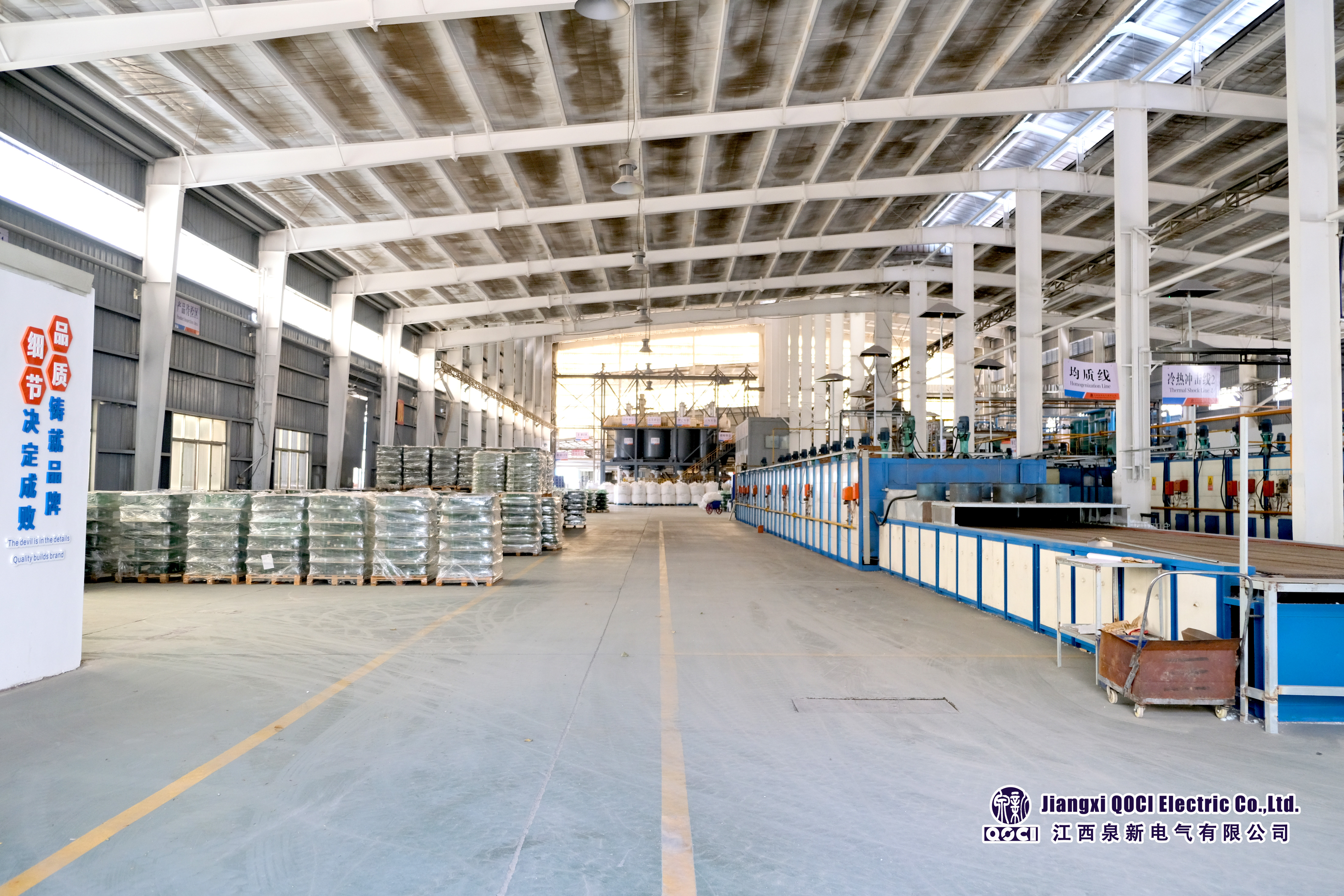
Thermal shock line — one of the process stages where toughened glass insulator consistency is established, not merely claimed.
Detailed framework: the three-layer compliance architecture for suspension glass insulators
A suspension glass insulator compliance file becomes far easier to interpret when it is split into three layers. Each layer answers a different question, and each one is verified by a different party.
Layer 1 — Product standard: what is the unit designed to?
For suspension glass insulator units used in AC systems, IEC 60305:2021 is the governing reference, and it specifies mechanical and electrical characteristics. The first question a buyer should ask is not whether the supplier holds a certificate, but whether the quoted unit is designed to the current published edition.
Version matters because the standard fixes dimensions rather than leaving them to general practice. The U70B glass insulator, for example, has a minimum mechanical failing load of 70kN and follows IEC standard dimensions, with a diameter of 255mm and a height of 146mm. Those numbers give a buyer something to check at goods-in inspection. A caliper check against 255mm and 146mm does not require a laboratory and flags a non-conforming lot quickly.
Coupling is part of the product standard too, not just a mechanical detail. The U160B model (160kN) typically uses a 20mm ball-socket coupling and provides a wet power frequency withstand voltage of approximately 45kV. When a purchase document specifies a coupling type, that specification should be checked against the supplier's published technical data rather than assumed.
Layer 2 — Management system: can the factory reproduce the design consistently?
A type test confirms a design. It does not confirm that unit number 500 behaves like the unit submitted for test. That gap is what a management system certification is meant to close. Buyers typically request a quality management system certificate, a scope statement, and evidence of surveillance audits — and the decisive question is always whether the certified scope actually covers the product being purchased.
Jiangxi QOCI Electric Co., Ltd. is a China-based manufacturer of glass and porcelain insulators, established in December 2002 and operating from Luxi Industrial Park, Pingxiang City, Jiangxi Province. The company runs a 35,373 m² facility with 138 employees and 38 engineers, produces 9,000,000 units annually, and exports roughly 20% of output to markets across the USA, Asia, the EU, Africa, and South America. It is a national high-tech enterprise and a participating unit of the Insulator Standard Committee — a position that indicates familiarity with how standards are written, not only how they are read.
Layer 3 — Buyer and project: what will this specific project accept?
This layer varies by project and is where most disputes originate. Two buyers can procure the same U120BP anti-pollution unit under different acceptance regimes: one accepts the manufacturer's factory test report, the other insists on third-party witness. Whether the specification says so in advance determines whether that becomes a negotiation or a process step.
A practical rule: anything that can be written into the purchase order should be. Anything that cannot should be resolved before award. Specification items worth fixing in writing include the applicable standard and its edition year, the mechanical class, creepage requirements, coupling type, sampling plan, witness testing arrangements, and the definition of a failed lot.
Step-by-step breakdown: how buyers verify compliance in practice
The following seven-step sequence reflects the order in which compliance questions actually surface during a suspension glass insulator procurement. Running them out of order is what produces late-stage disputes.
- Pin the standard and its edition. Name the reference standard in the enquiry — IEC 60305:2021 for AC suspension units — and state explicitly whether national or company equivalents will be accepted. Ambiguity here cascades through every later document.
- Confirm mechanical class and dimensions. Match the quoted mechanical rating to the string design, then verify against published dimensions. The U70B at 70kN with a 255mm diameter and 146mm height is a straightforward benchmark for this check.
- Review the pollution profile against the site. Anti-pollution glass insulators such as the U120BP use increased creepage distances to prevent flashovers in saline or industrial environments. The creepage profile should match the site's contamination class, not a generic catalogue default.
- Define the test and inspection regime. Separate type tests from routine factory tests from witness tests. Decide which are required, who witnesses them, and which documents must accompany each shipment.
- Verify the manufacturing quality system. Request the management system certificate, confirm the scope covers insulators, and check audit currency. A certificate with an expired surveillance cycle is a weak signal regardless of the logo on it.
- Write the acceptance criteria into the purchase order. Sampling basis, defect classification, rejection threshold, and the remedy for a failed lot. This is the single highest-value paragraph in most insulator contracts.
- File the compliance record against the delivered lot. The record should let a third party, years later, connect a specific physical unit back to a specific standard edition and test result. If it cannot do that, the file is incomplete.
A note on equivalents. Where a buyer accepts an equivalent standard, the acceptance should be documented as a written deviation — not handled verbally. Undocumented equivalence is the most common cause of a lot being rejected at site after passing at the factory.
Use cases: where compliance requirements get tightened
Compliance scrutiny is not evenly distributed. Certain project environments push buyers to demand more documentation, more testing, and tighter acceptance language.
Coastal, industrial, and desert contamination zones
Anti-pollution units such as the U70BP, U120BP, U160BP, U210BP, U240BP, U300BP, and U420BP exist specifically because creepage distance becomes a compliance parameter rather than a preference. In these environments buyers should expect the creepage requirement to be stated numerically in the specification, with the profile verified against the specific model rather than the general product family.
UHV and EHV transmission lines
Higher mechanical classes — U300B, U420B, and their anti-pollution counterparts — carry correspondingly higher documentation expectations, because the consequence of a mechanical failure scales with system voltage. Buyers on these projects typically require the full traceability chain rather than summary documentation.
High-altitude and other demanding environments
Suspension glass insulators are deployed where UHV/EHV transmission lines, heavy pollution, and high-altitude service conditions combine. Where two demanding conditions overlap, compliance review normally expands to cover both rather than treating one as dominant.
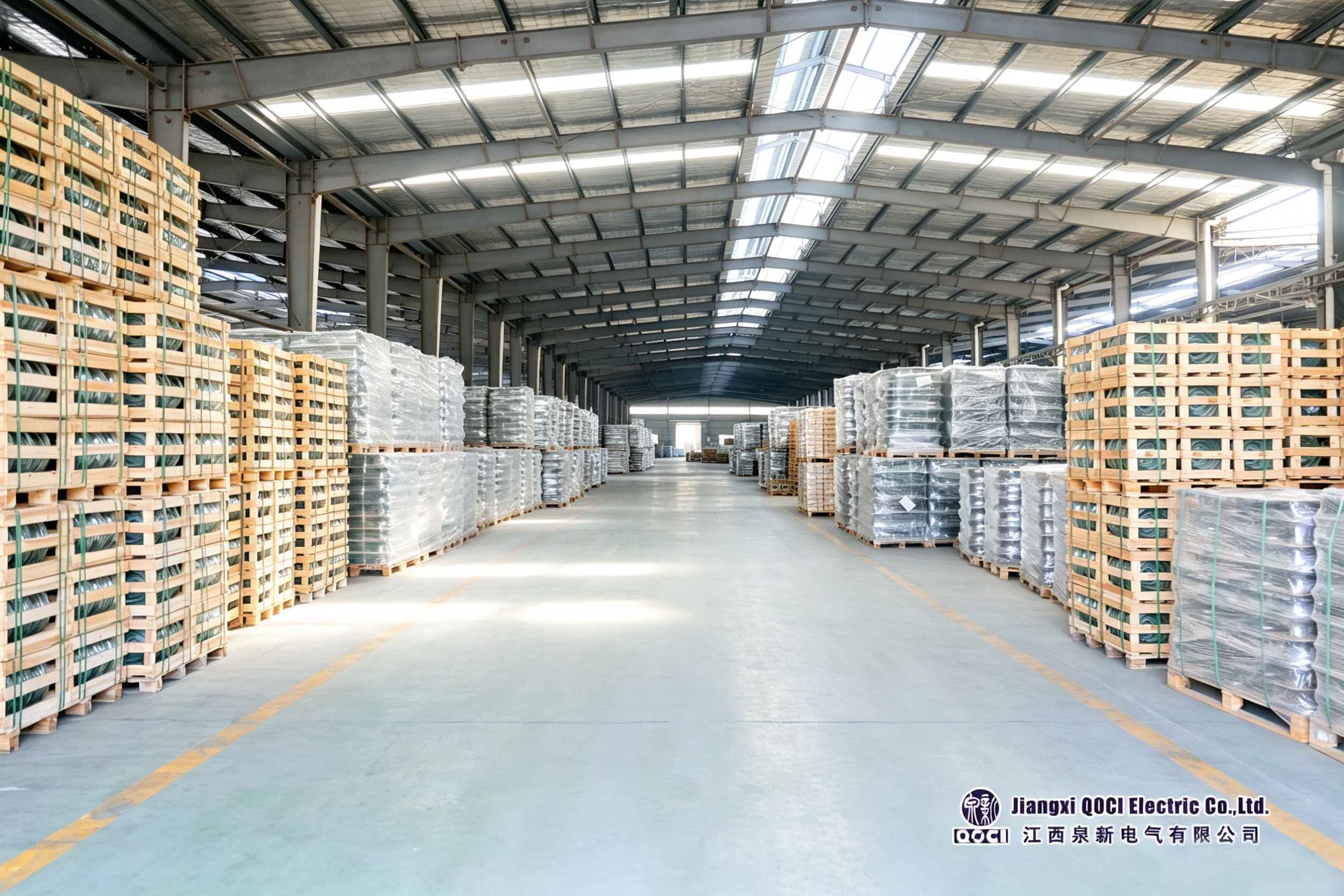
Finished stock in the QOCI Electric warehouse — compliance records follow the lot, not the catalogue.
Comparison table: toughened glass versus traditional porcelain
Compliance decisions are often made in the context of a material selection decision, so the performance comparison belongs alongside the documentation discussion.
| Comparison dimension | Toughened glass suspension insulator | Traditional porcelain / ceramic insulator |
|---|---|---|
| Core difference | Toughened glass with higher mechanical strength, zero-value self-breaking feature, better anti-pollution performance | Porcelain / ceramic body |
| Compressive strength | 3–4× higher than porcelain | Baseline |
| Mechanical failure rate | 80% lower | Baseline |
| Inspection efficiency | 100% higher — visual-only inspection, no live-line testing required | Requires live-line testing |
| Maintenance workload | 70% lower | Baseline |
| Initial cost | 5% higher | Baseline |
| Total cost of ownership over lifecycle | 25% lower | Baseline |
| Best suited to | UHV/EHV transmission lines, heavy pollution areas (coastal, desert, industrial zones), high-altitude regions | General distribution and transmission applications |
The zero-value self-breaking characteristic deserves specific attention in a compliance context, because it changes what verification means on site. A toughened glass unit that fails mechanically shatters visibly, which means the inspection method is visual rather than electrical. That is the mechanism behind the 100% inspection efficiency gain, and it is a documentation-relevant fact: field inspection records for glass strings look different from those for porcelain strings.
Profile families and what each suffix means in a specification
Compliance language often specifies a profile family rather than a single unit. The suffix in a suspension glass insulator model number identifies the shed profile, and the profile determines which environmental compliance requirements the unit can satisfy.
| Profile family | Typical designations | Profile characteristic | Where it is specified |
|---|---|---|---|
| Standard | U70B, U100B, U120B, U160B, U210B, U240B, U300B, U420B | Standard shed profile | Normal contamination service conditions |
| Anti-pollution | U70BP, U100BP, U120BP, U160BP, U210BP, U240BP, U300BP, U420BP | Increased creepage distance to prevent flashover in saline or industrial environments | Coastal, industrial, and other contaminated zones |
| Two wings / double sheds | U70BD, U100BD, U120BD, U160BD, U210BD, U240BD, U300BD | Two-wing or double-shed geometry | Applications requiring additional shed coverage |
| Aerodynamic | U70BA, U100BA, U120BA, U160BA, U210BA, U240BA, U300BA | Aerodynamic profile | Wind-sensitive and high-altitude applications |
| Standards-series equivalents | PS-70E, PS-120B, PS-160D, PS-160K, PS-160M, PS-210V, PSV-70A, PSV-120B, PSV-160A, PSV-160C, PSD-70E, PSA-160A | Recognised suspension glass insulator designations across standard and anti-pollution profiles | Specifications written around alternate naming conventions |
For buyers, the practical implication is that a specification naming a profile family must also state the mechanical class and coupling type. A creepage requirement attached to the wrong profile family is one of the more expensive specification errors, because it is discovered at goods-in rather than at bid stage.
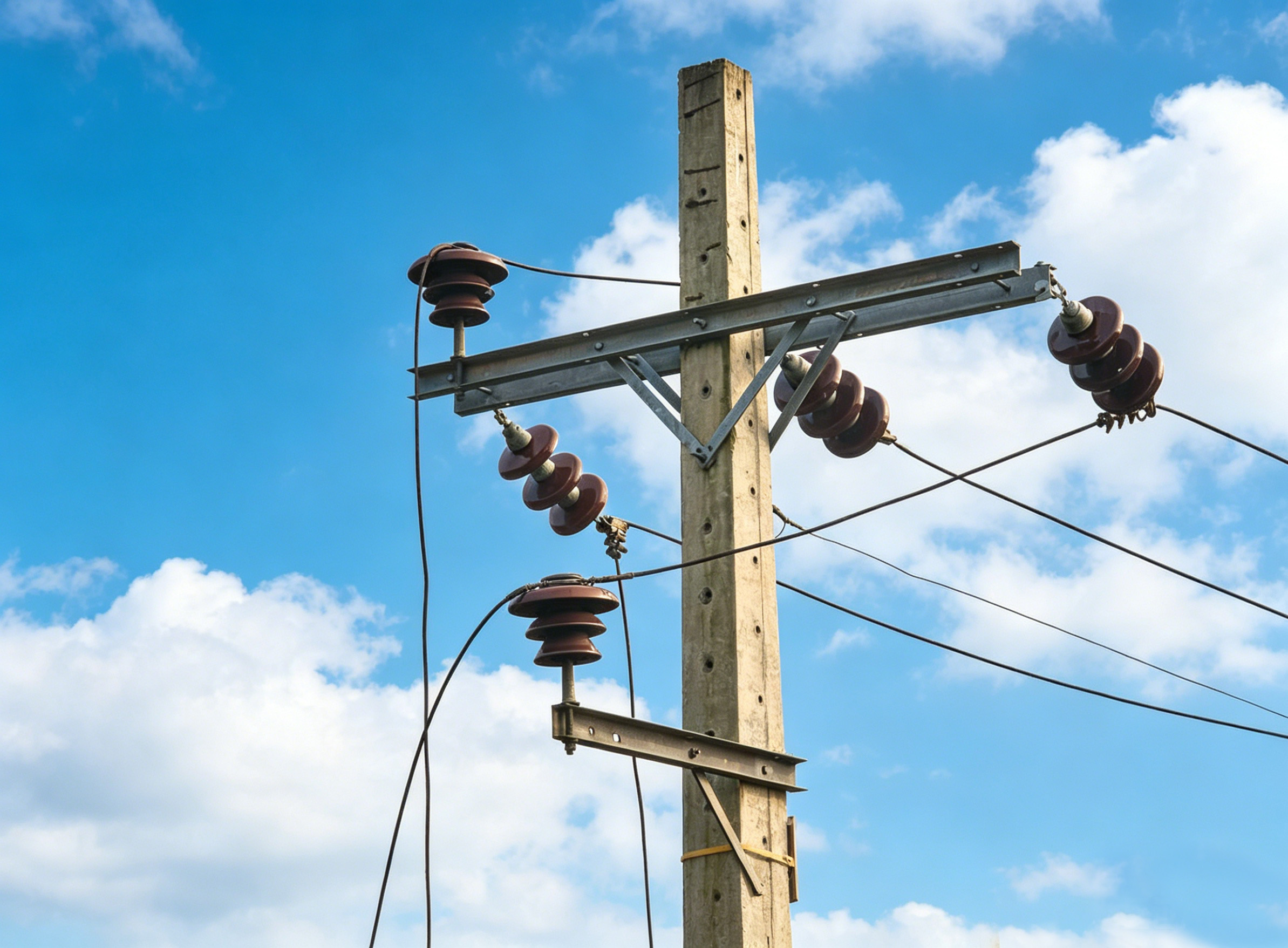
The baseline material in most compliance comparisons — a suspension ceramic insulator.
Frequently asked questions
Which standard applies to suspension glass insulators, and how is it verified?
Suspension glass insulator units for AC systems are governed by IEC 60305:2021, which specifies mechanical and electrical characteristics. Verification works on two levels. At design level, the buyer checks the type test report against the current edition and confirms dimensional conformity — the U70B, for example, should measure 255mm in diameter and 146mm in height at a 70kN minimum failing load. At production level, the buyer relies on the factory quality system plus routine and witnessed testing. A specification that cites the standard without an edition year leaves the verification route undefined.
How can a buyer assess a manufacturer's compliance capability without relying on marketing material?
The strongest signals are structural rather than promotional. Jiangxi QOCI Electric Co., Ltd. is a national high-tech enterprise and a participating unit of the Insulator Standard Committee, which means the company engages with standard development rather than only with standard application. Supporting evidence includes the manufacturing footprint — a 35,373 m² facility, 138 employees, and 38 engineers — and an annual output of 9,000,000 units with roughly 20% exported to the USA, Asia, the EU, Africa, and South America. Documentation scope, audit currency, and whether the certified scope covers the specific product line remain the decisive checks.
Does compliance documentation add cost to a suspension glass insulator order?
Testing and witnessing do carry cost, and buyers should budget for them explicitly rather than discover them late. The comparison that matters is not initial outlay but lifecycle economics. Toughened glass suspension insulators carry a 5% higher initial cost than porcelain alternatives, but deliver a 25% lower total cost of ownership over the lifecycle, with 70% less maintenance workload and no live-line testing requirement. For a project with a multi-decade service horizon, compliance cost should be evaluated inside that lifecycle figure rather than against the unit price alone.
Can samples be requested before a bulk suspension glass insulator order?
Yes, and sample validation is a normal step before award on utility projects. A sample request should be paired with the intended acceptance criteria so the sample is evaluated against the same standard the production lot will face — otherwise validation confirms form rather than conformity. QOCI Electric supports sample and specification review through its published catalogue, which documents the glass insulator range from U70B through U420B, including standard, anti-pollution, two-wing, and aerodynamic profiles.
Does compliance review extend lead time, and how should it be scheduled?
Compliance review extends lead time only when it starts after award. Handled in parallel with commercial evaluation, the documentation work does not sit on the critical path. The scheduling principle is to issue the documentation request together with the enquiry, so that type test reports, quality system scope, and proposed acceptance criteria arrive with the quotation. Buyers who require witness testing should fix the date before purchase order issuance. Because compliance records must follow the physical lot, the paper trail established at enquiry stage is what makes delivery-stage verification fast rather than disruptive.
Conclusion: compliance is a chain, and the strongest link is the written one
For a decision-stage buyer, the compliance question resolves into a sequence: name the standard and its edition, confirm the product against it, verify the factory that will reproduce it, and write the acceptance criteria into the purchase order before award. Each step is verifiable, and none of them depends on trusting a supplier's summary.
The material case reinforces the documentation case. Toughened glass suspension insulators deliver an 80% lower mechanical failure rate, 100% higher inspection efficiency through visual-only inspection, and 70% less maintenance workload than porcelain alternatives — an advantage that only becomes real when the acceptance regime on site recognises how glass actually fails. That is why the specification and the acceptance criteria belong in the same conversation, not in two separate documents drafted months apart.
Review the specification before you review the price
Jiangxi QOCI Electric Co., Ltd. manufactures suspension glass insulators from U70B to U420B across standard, anti-pollution, two-wing, and aerodynamic profiles. Send your purchase terms and acceptance criteria, and the technical team will respond against your actual specification rather than a generic datasheet.
Samples, technical documentation, and specification review are available on request.
Download the QOCI Glass Insulator Catalogue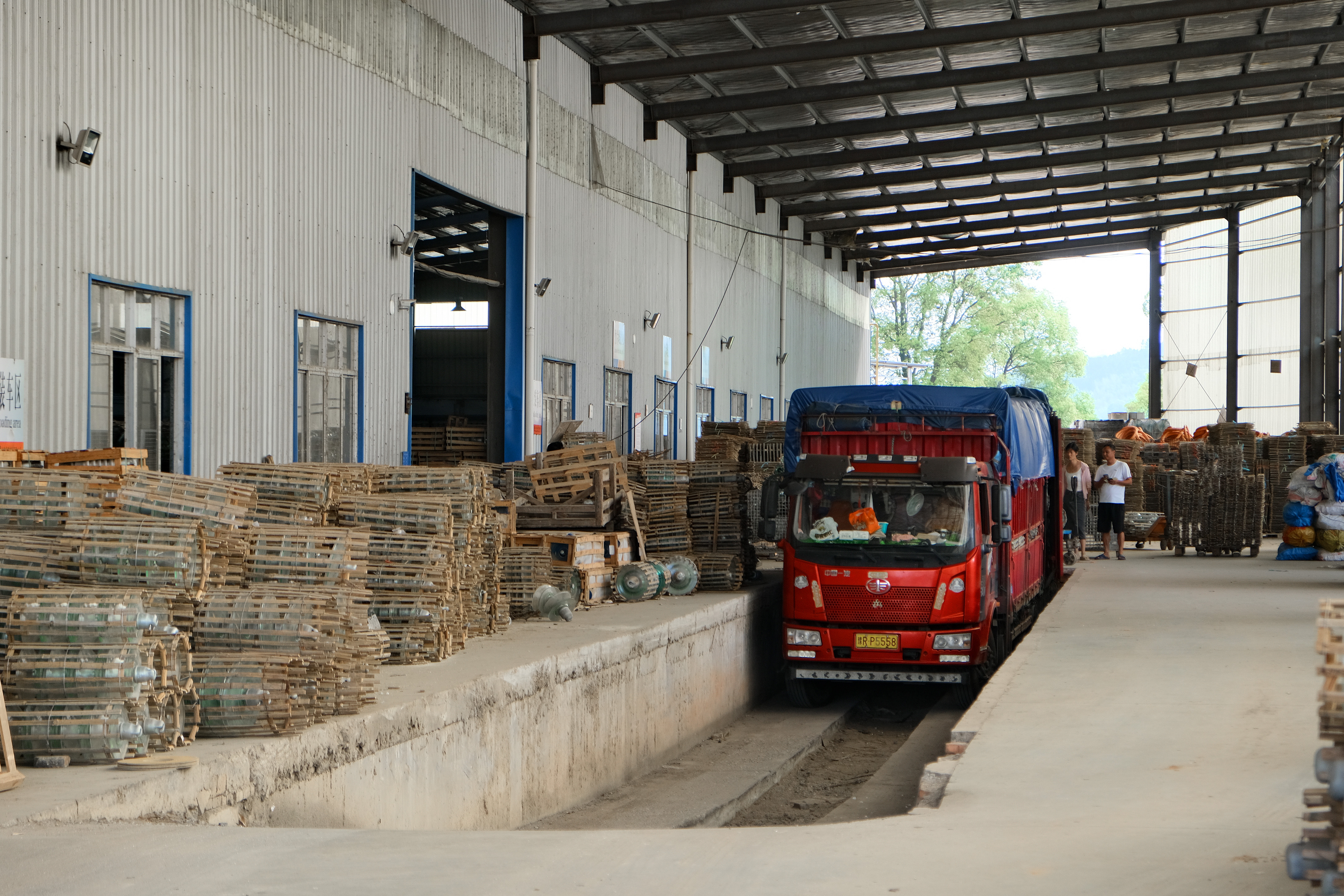
Dispatch at the QOCI Electric loading area — where the compliance file and the physical lot have to match.
Have Questions or Need More Details?
Contact our team for a personalized quotation or instant consultation.
Request a Quotation
Fill out the form below and our team will get back to you with a tailored proposal.
WhatsApp Direct Chat
Prefer to chat in real-time? Message us on WhatsApp for instant assistance & quick answers.
- Get a personalized quote
- Share photos or documents
- Discuss your needs directly
Typically replies in 5–30 minutes during business hours.