
Suspension Glass Insulator String Length and Ratings: A Technical Selection Guide
Suspension Glass Insulator String Length and Ratings: A Technical Selection Guide
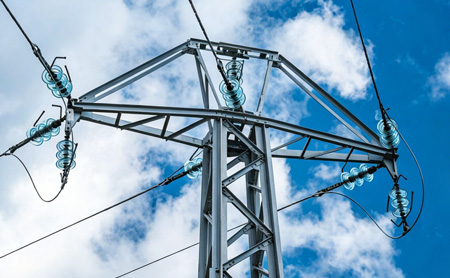
A suspension glass insulator string is fixed by two numbers that are calculated separately and then reconciled on the tower: the mechanical rating of each unit (kN) and the length of the assembled string (mm). The mechanical calculation decides how strong each disc must be. The electrical calculation, driven by system voltage and pollution severity, decides how many discs the string must contain. Nominal spacing then converts disc count into physical length, and that length feeds back into tower height, ground clearance and conductor sag. This guide sets out the parameters engineers evaluate when configuring a string, in the order they are normally evaluated, using standard cap-and-pin toughened glass suspension units as the reference product family.
Problem definition: why rating and string length are calculated together
Two duties act on the same string, and each is sized by a different input.
Mechanical duty. The string carries conductor tension plus wind load, ice load, hardware weight and dynamic effects. Because the units are connected in series, every unit carries the same tensile load, which means the mechanical capability of the complete string is set by the lowest-rated unit in it. Adding units to a string increases electrical creepage but does not increase mechanical strength.
Electrical duty. Each unit contributes a creepage distance, the shortest path along the insulating surface between cap and pin. Pollution, moisture and dust accumulating on that surface allow leakage current to develop, and if the leakage path is too short relative to system voltage and site pollution severity, the outcome is a pollution flashover rather than a mechanical failure. Creepage grows in proportion to the number of units.
The consequences of getting the balance wrong are predictable:
- A string with insufficient creepage for its pollution class flashes over under wet or contaminated conditions, even though it is mechanically sound.
- A string that is longer than necessary raises tower height, increases steel and right-of-way cost, and increases conductor sag and wind swing.
- Units rated far above the actual tensile duty add weight, larger disc diameters and additional wind area that the tower must carry.
There is also a geometric coupling between the two decisions. Higher-rated units are generally larger: a 70 kN unit in the standard family sits on a 255 mm disc with 146 mm nominal spacing, while a 420 kN unit uses a 360 mm disc with 205 mm nominal spacing. Choosing the mechanical class therefore changes the spacing, and the spacing changes every subsequent string-length calculation.
Industry background: where suspension glass insulators fit today
Suspension glass insulator units for AC systems are governed by IEC 60305:2021, which specifies their mechanical and electrical characteristics. That standardisation is what allows units from different production batches to be assembled into a single string with matching couplings and dimensions, and it is the baseline against which string calculations are checked.
Market context matters for procurement planning, and it is connected to the engineering question: sourcing of insulators is now routine across borders, so dimensional and mechanical interchangeability against a published standard is a practical requirement rather than a formality.
- Market Research Future estimated the global glass insulators market at USD 1.14 billion in 2024, projected to reach USD 1.97 billion by 2035, with a CAGR of 5.1% over 2025 to 2035.
- Published estimates differ by scope. Insightace Analytic put the same market at USD 351.4 million, largely because some studies include low-voltage or building-related glass products. Buyers comparing market reports should check the product scope before using the headline figure.
- Asia Pacific held a revenue share of 52.9% of the glass insulator market in 2024, driven by grid expansion in China and India, according to Grand View Research.
- China accounted for 31.4% of global electrical insulator exports in 2024, worth USD 898 million, and its exports to Saudi Arabia grew by 219% between 2023 and 2024, the fastest-growing destination in that dataset (OEC).
- The application drivers behind these figures are consistent across markets: transmission line construction, grid upgrades and rural electrification, where suspension glass insulators operate under outdoor overhead exposure with coastal salt fog, heavy pollution and temperature ranges from -40C to 60C in scope.
The parameters that define a suspension glass insulator string
Mechanical failing load (SML)
Mechanical failing load is the tensile load at which a new insulator unit fails. Standard cap-and-pin toughened glass suspension units are catalogued in discrete classes, and the family described here spans 70 kN, 100 kN, 120 kN, 160 kN, 210 kN, 240 kN, 300 kN and 420 kN. Across the wider industry, IEC 60305 covers unit classes in the 40 to 550 kN range.
In service, the applied load is not a single value. It combines conductor tension for the ruling span, wind load on conductor and insulator surfaces, ice or snow loading where applicable, the weight of the string and fittings, and dynamic amplification from vibration and conductor movement. Utilities then apply a safety factor to the SML so the calculated working load stays below the rated failing load with margin. That is why a string rarely uses a unit class that matches the calculated tension exactly.
Nominal spacing
Nominal spacing is the distance between the cap and pin coupling centres of an assembled unit, and it functions as the pitch of the string. In this product family the values are 127 mm, 146 mm, 155 mm, 170 mm, 195 mm and 205 mm. String length then follows approximately this relation:
String length = (number of units x nominal spacing) + fitting allowance
Ten units at 146 mm spacing produce 1,460 mm of insulator length, while ten units at 205 mm spacing produce 2,050 mm. That 590 mm difference is normally absorbed by tower height, which is where the cost of the decision appears.
Creepage distance
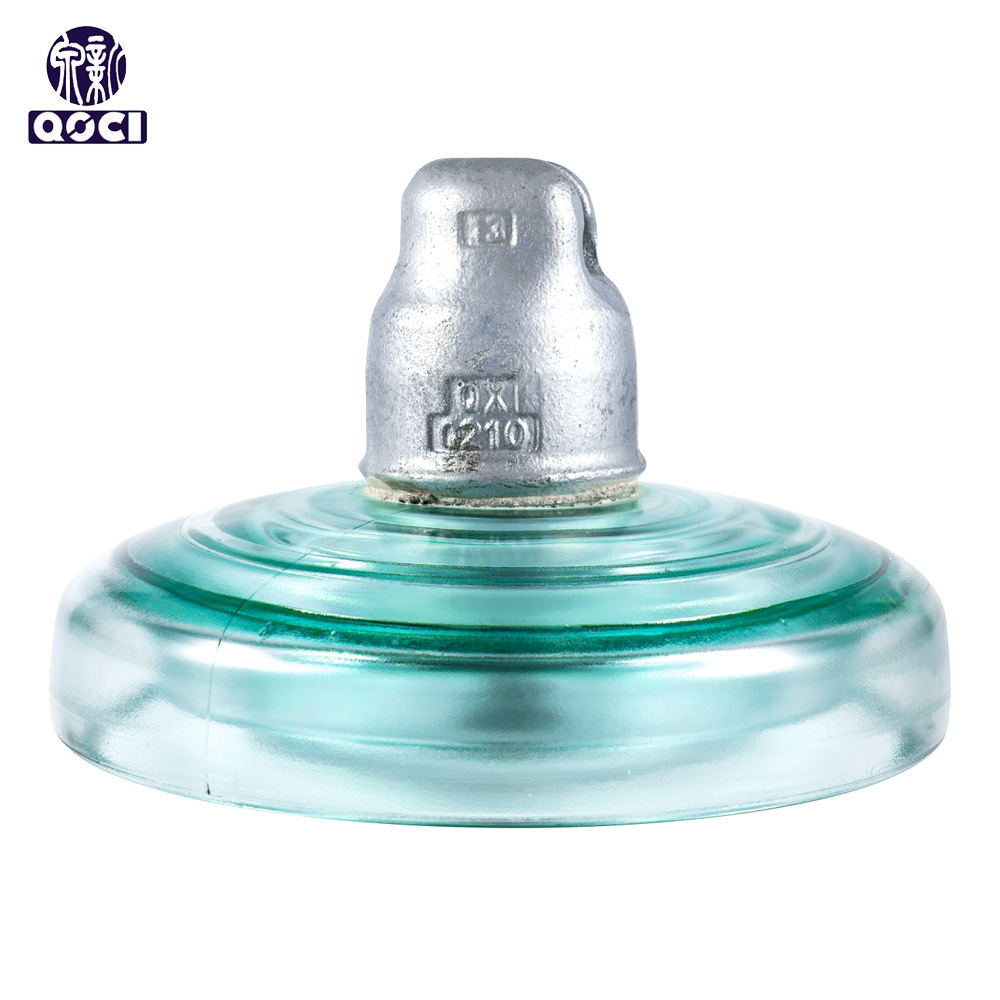
Creepage distance is the leakage path along the insulator surface. Standard profile units in this family run from 320 mm on 255 mm discs and 400 mm on 280 mm discs, up to 485 mm on the U300B and 550 mm on the U420B. Anti-pollution and double-shed variants extend that path without changing the mechanical class:
- U120BL: 120 kN, 320 mm creepage, 146 mm spacing.
- U120BLP: 120 kN, 450 mm creepage, 146 mm spacing.
- U120BLD: 120 kN, 450 mm creepage, double-shed (two-wing) profile, 146 mm spacing.
Same mechanical rating, different creepage. This is the clearest evidence in the family that mechanical sizing and electrical sizing are separable decisions, and it is the reason creepage class, not kN class, usually determines how many units a string needs.
Disc diameter and shed profile
Disc diameters in this family range from 255 mm to 420 mm. Diameter affects three things at once: the creepage available on the disc, the mechanical rating achievable with cap and pin, and the wind area of the string.
- Standard profile discs carry 320 to 400 mm of creepage and suit clean to moderately polluted routes.
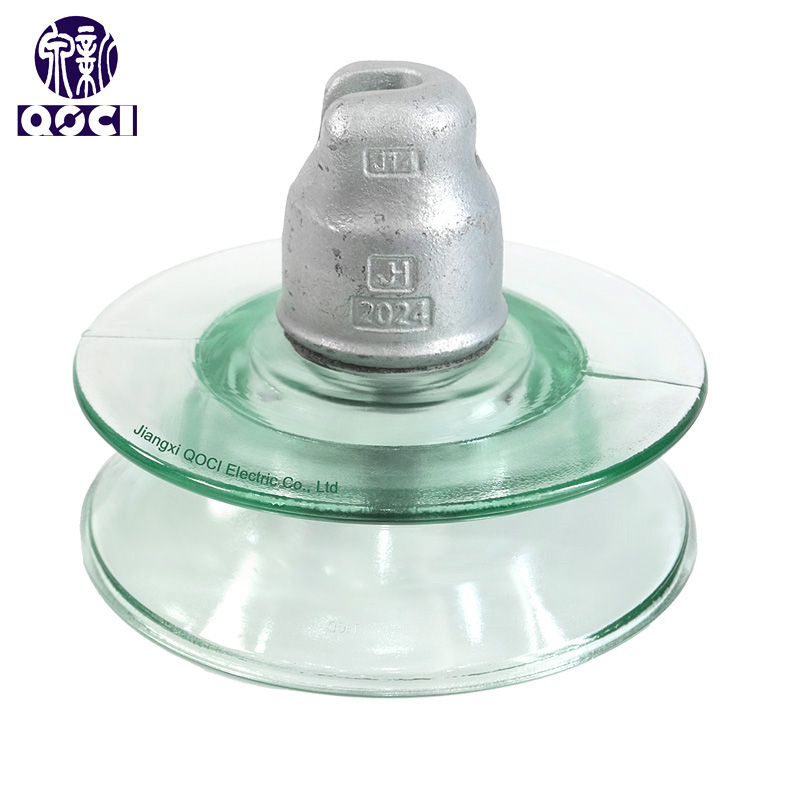
- Anti-pollution (fog type) profiles, in the LP and BP variants, extend creepage to 450 to 620 mm; the U420BP reaches 620 mm on a 380 mm disc.
- Double-shed and two-wing profiles (LD variants) add extra sheds for self-cleaning action and creepage extension on 280 to 340 mm discs.
- Aerodynamic profiles (BA variants) use an open shed shape on a large disc, 380 mm diameter with 365 mm creepage on the U70BA, for high-dust and desert environments.
Profile choice also interacts with impulse withstand. The U70BL standard-profile unit lists a 100 kV dry lightning impulse withstand voltage, while the U70BA aerodynamic unit lists 90 kV. Neither figure is a defect; they are different configurations, and both should be checked against the insulation coordination study for the line.
Coupling size and fittings compatibility
Coupling size scales with mechanical class in this family: 16 mm couplings on 70 kN and 120 kN units, 20 mm on 160 kN to 210 kN units, 20/24 mm on the U240B, 24 mm on the 300 kN U300B, and 28 mm on the 420 kN U420B and U420BP. The coupling must match the insulator string fittings already specified for the tower, together with tension clamps and the arcing ring; a rating upgrade that changes coupling size can force a hardware change along the whole string.
Corrosion protection belongs to the same decision. Caps and pins are hot-dip galvanized cast iron and forged steel, and where service conditions are severely corrosive, a zinc sleeve is used to slow rusting and extend the service life of the insulator string.
Electrical withstand values
For the units described here, dry lightning impulse withstand voltages range from 90 kV to 140 kV, wet power frequency withstand voltages from 40 kV to 80 kV, and power frequency puncture voltages from 110 kV to 140 kV. These values are compared against the line insulation coordination requirements alongside the creepage calculation.
Step-by-step: sizing a string from load and pollution inputs
Step 1 - Establish the mechanical duty. Calculate the maximum tensile load at the suspension point: conductor tension for the ruling span, plus wind and ice loads, plus the weight of the string and fittings, with the utility safety factor applied.
Step 2 - Select the unit class from SML. In this family, 70 to 100 kN units cover lower-tension and rural electrification work; 120 to 160 kN units cover typical high-voltage transmission strings; 210 to 300 kN units suit heavy conductors and long spans; and the 420 kN class is used for special heavy-duty and UHV crossing applications such as river crossings and mountain spans.
Step 3 - Establish the electrical requirement. Convert system voltage and site pollution severity class (I to IV, per the utility specification) into a required total creepage. The usual form is a specific creepage value in mm per kV multiplied by the highest system voltage of the line.
Step 4 - Convert creepage into a unit count. Unit count = required total creepage divided by creepage distance per unit, rounded up to the next whole unit.
Step 5 - Choose the shed profile that reaches the count at acceptable length. Worked example, targeting approximately 4,500 mm of creepage on 146 mm spacing:
- U120BL, 320 mm creepage: 15 units give 4,800 mm creepage and 15 x 146 = 2,190 mm of string length.
- U120BLP, 450 mm creepage: 10 units give 4,500 mm creepage and 10 x 146 = 1,460 mm of string length.
The anti-pollution unit meets the same creepage target with five fewer units and 730 mm less string length, while both variants remain 120 kN units. The additional creepage is paid for at unit level; the benefit appears in tower height, hardware count and installation time.
Step 6 - Verify coupling and fittings. Confirm that the selected coupling size (16, 20, 24 or 28 mm) matches the string fittings, tension clamps and arcing ring already specified, and that cap and pin materials plus any zinc sleeve requirement suit the corrosion environment of the corridor.
Step 7 - Confirm the environmental envelope. Check the site against the working range of -40C to 60C and against coastal salt fog, heavy industrial pollution or high-dust conditions, all of which are normal service conditions for overhead line insulators.
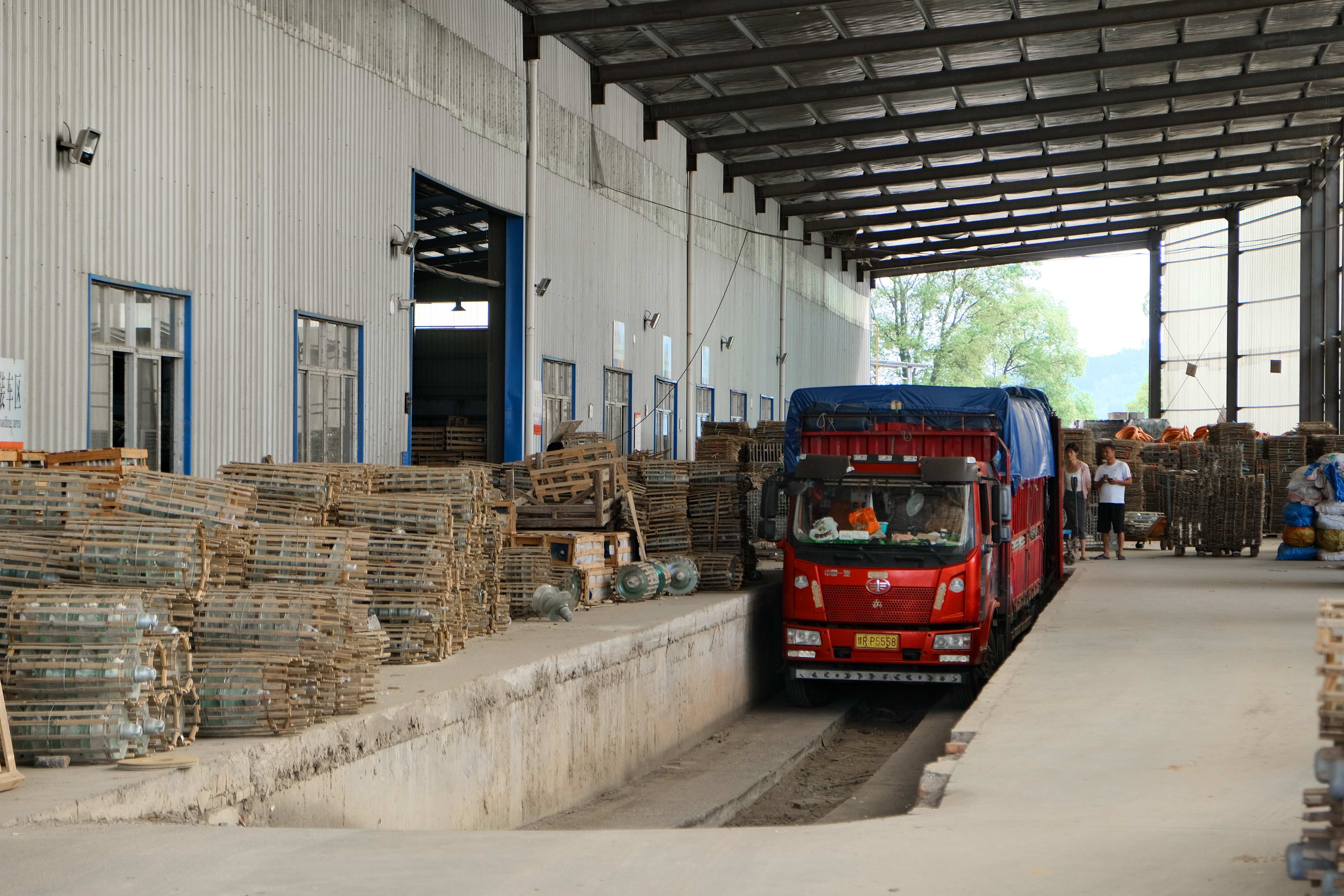
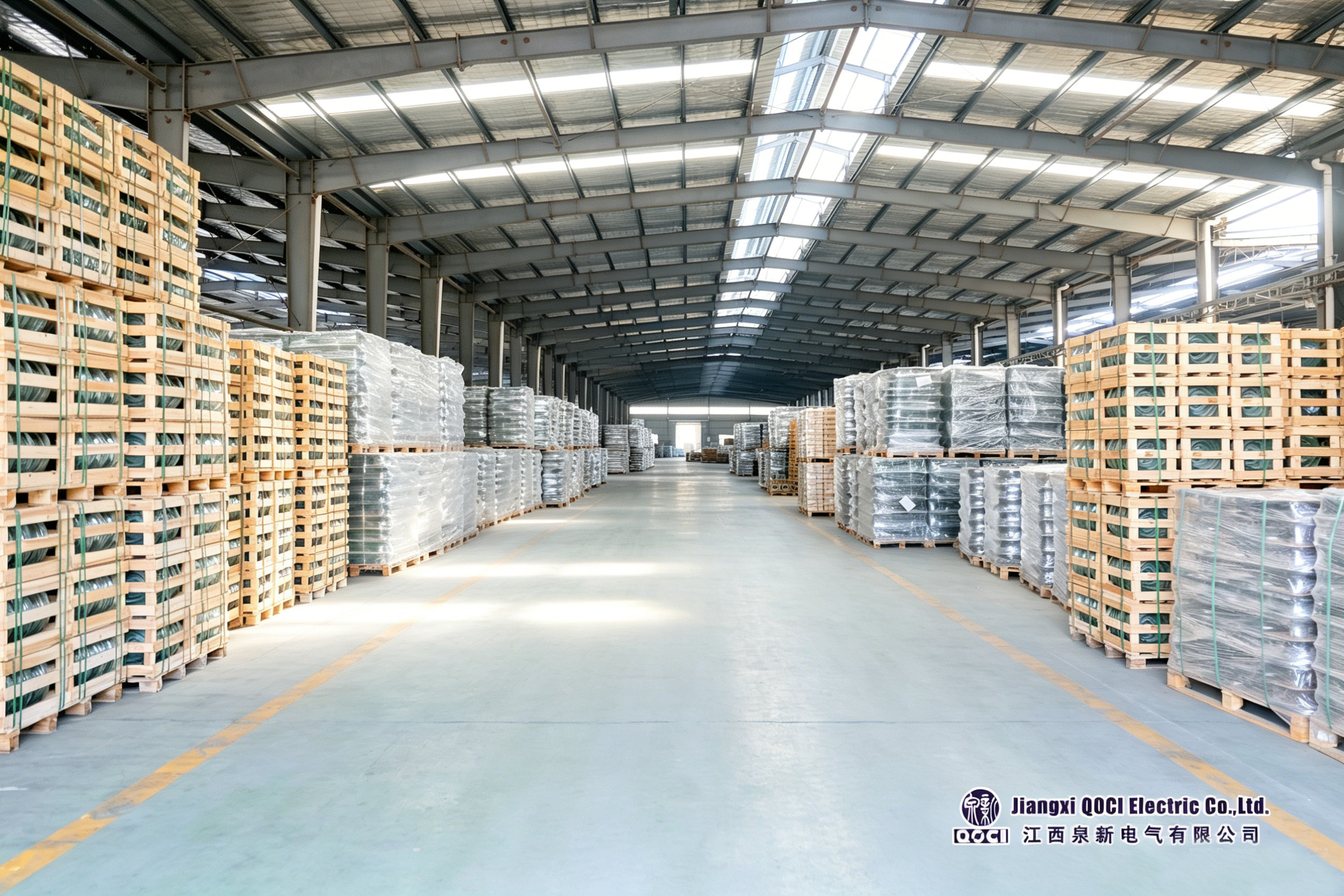
Step 8 - Verify documentation. Request type test evidence against IEC 60305, dimensional and visual inspection records, and routine test data. Jiangxi QOCI Electric Co., Ltd., a China-based manufacturer of glass and porcelain insulators established in December 2002 in Luxi Industrial Park, Pingxiang, Jiangxi Province, applies 100% pre-shipment testing, with third-party inspection (SGS) available for export orders.
Use cases: matching the string to the project scenario
Clean to moderate inland transmission lines
Standard profile units in the 70 kN to 160 kN range with 320 to 400 mm creepage satisfy most inland routes. Ten-unit strings of U70BL or U120BL give 3,200 mm of creepage at 1,460 mm of length, and the 160 kN U160BL provides 400 mm creepage per unit with a 20 mm coupling where tension is higher.
Industrial pollution and coastal salt fog
Where a corridor passes industrial zones or salt-fog coastlines, anti-pollution profiles (LP, BP) raise creepage to 450 to 550 mm per unit and reduce the number of units required, and the zinc sleeve option is used to slow rusting on caps and pins under severely corrosive conditions. The 210 kN U210BP combines a 550 mm creepage path with a 20 mm coupling for heavily polluted high-voltage sections.
Desert and high-dust environments
Dust accumulation is a self-cleaning problem as much as a creepage problem. Glass has a smooth surface that sheds dust more readily than rougher insulating surfaces, and aerodynamic (BA) profiles with open sheds are configured for high-dust service. The U70BA uses a 380 mm disc with 365 mm creepage, sized for light-to-moderate pollution in humid or dusty zones.
Long spans, crossings and heavy-duty sections
For river crossings, mountain spans and other critical high-tension locations, the 210 kN to 420 kN classes are used. The U420B carries a 360 mm disc with 205 mm spacing and a 28 mm coupling, and the anti-pollution U420BP extends creepage to 620 mm on a 380 mm disc while keeping the same 420 kN mechanical class.
Grid upgrades and rural electrification
Distribution and rural electrification projects typically work with 70 kN to 120 kN units, where standardised dimensions make string replacement and stock rationalisation straightforward.
Documented field experience
A delivery of 200,000 pieces to national grid and EPC customers shows how the parameters above behave in service: 80,000 pieces to Uzbekistan, 70,000 to Ukraine and 50,000 to Iraq for UHV/EHV overhead line insulation in desert and industrial pollution zones. Reported outcomes over the 2 to 3 year delivery and service period include zero line-tripping incidents, maintenance cost reduced by 70%, 100% visual defect detection without live-line testing, and pollution flashover incidents reduced by 85% against a porcelain baseline. Temperature tolerance of -40C to +55C was verified in Uzbekistan and Iraq, with a designed service life of more than 30 years. These results reflect the self-breaking behaviour of toughened glass: a failed unit breaks visibly and is identifiable from the ground during a routine patrol.
Comparison tables
Table 1 - Mechanical and electrical ratings across the standard cap-and-pin family
| Model | SML (kN) | Disc dia. (mm) | Spacing (mm) | Creepage (mm) | Coupling (mm) | Dry LIWV (kV) | Wet PFWV (kV) |
|---|---|---|---|---|---|---|---|
| U70BL (standard) | 70 | 255 | 146 | 320 | 16 | 100 | 40 |
| U120BL (standard) | 120 | 255 | 146 | 320 | 16 | 100 | 40 |
| U160BL (standard) | 160 | 280 | 170 | 400 | 20 | 110 | 45 |
| U210B (standard) | 210 | 280 | 170 | 400 | 20 | 110 | 45 |
| U240B (standard) | 240 | 280 | 170 | 400 | 20/24 | 110 | 45 |
| U300B (standard) | 300 | 320 | 195 | 485 | 24 | 130 | 50 |
| U420B (standard) | 420 | 360 | 205 | 550 | 28 | 140 | 80 |
| U120BLP (anti-pollution) | 120 | 280 | 146 | 450 | 16 | 125 | 50 |
| U160BLP (anti-pollution) | 160 | 320 | 170 | 550 | 20 | 140 | 55 |
| U210BP (anti-pollution) | 210 | 320 | 170 | 550 | 20 | 140 | 55 |
| U420BP (anti-pollution) | 420 | 380 | 205 | 620 | 28 | 140 | 55 |
| U120BLD (double shed) | 120 | 280 | 146 | 450 | 16 | 120 | 45 |
| U70BA (aerodynamic) | 70 | 380 | 127/146 | 365 | 16 | 90 | 45 |
Power frequency puncture voltage is 130 kV for these units, except U120BLD (110 kV) and U420B / U420BP (140 kV). Unit classes from 40 kN to 550 kN are covered by IEC 60305:2021.
Table 2 - Shed profile selection at a glance
| Profile | Typical creepage | Where it is used | Trade-off to check |
|---|---|---|---|
| Standard | 320-400 mm | Clean to moderately polluted inland routes | More units needed as pollution rises |
| Anti-pollution (LP / BP) | 450-620 mm | Industrial pollution, coastal salt fog | Larger disc diameter and wind area |
| Double shed / two-wing (LD) | 450 mm and above | Heavy contamination zones needing extra self-cleaning | Shed geometry must suit the cleaning regime |
| Aerodynamic (BA) | 365 mm on a 380 mm disc | High-dust and desert routes | Impulse withstand is configuration-specific |
Table 3 - String length and creepage for a ten-unit string (calculated from nominal spacing)
| Unit used | Spacing (mm) | String length, 10 units (mm) | Creepage, 10 units (mm) |
|---|---|---|---|
| U70BL / U120BL | 146 | 1,460 | 3,200 |
| U160BL / U210B / U240B | 170 | 1,700 | 4,000 |
| U120BLP / U120BLD | 146 | 1,460 | 4,500 |
| U300B | 195 | 1,950 | 4,850 |
| U420B / U420BP | 205 | 2,050 | 5,500 / 6,200 |
Figures are calculated from the nominal spacing and creepage values listed in Table 1 and exclude fitting allowance.
Frequently asked questions
Which standard governs suspension glass insulator units, and what does it cover?
IEC 60305:2021 specifies the mechanical and electrical characteristics of string insulator units for overhead lines with a nominal voltage above 1,000 V. In practice it fixes the dimensional and mechanical framework that lets units from different batches assemble into one string. Compliance is best verified from type test and routine test documentation supplied with the order rather than from a catalogue description; QOCI applies 100% pre-shipment testing and can arrange third-party inspection (SGS) for export shipments.
What rating and profile range can be sourced from one production family?
The cap-and-pin toughened glass suspension family covers the 70 kN, 100 kN, 120 kN, 160 kN, 210 kN, 240 kN, 300 kN and 420 kN classes, with standard, anti-pollution (LP / BP), double-shed (LD) and aerodynamic (BA) shed profiles, creepage distances from 320 mm to 620 mm, and coupling sizes of 16, 20, 24 and 28 mm. Jiangxi QOCI Electric Co., Ltd. produces this range on automated lines with OEM and ODM support, including voltage and logo customisation, from a 35,373 square metre facility with a monthly capacity of 750,000 units and an annual output of 9,000,000 units.
What drives the cost of a string beyond the unit price?
Four factors move the total: the mechanical class, since higher kN ratings require more material in cap, pin and glass; the creepage class, since anti-pollution profiles use larger discs; the coupling size; and the number of units in the string, which determines tower height, steel and installation time. Corrosion protection such as a zinc sleeve adds cost at unit level. Comparing configurations on total string length and unit count, as in the worked example above, is usually more informative than comparing unit prices alone.
Can a utility validate the units before placing a bulk order?
Yes. Minimum order quantities start from 50 units, with lead times of 15 to 35 days depending on type and quantity. Buyers can request sample units for dimensional and visual verification, review type test documentation, and specify third-party inspection. Glass also supports a simple field validation method: self-breaking failure is visible from the ground, so routine patrols replace live-line zero-value testing.
What is the typical lead time, and what is the next step for a project order?
Production lead time is 15 to 35 days, supported by a monthly capacity of 750,000 units and after-sales service covering online technical support and replacement of defective products. To move from sizing to procurement, download the QOCI glass insulator catalogue or send the completed string parameters, including unit class, creepage requirement, coupling size, profile and quantity, for a quotation and sample arrangement.
Next step: download the full glass insulator catalogue with dimensions and ratings, or send your string parameters for a quotation and sample.
Catalogue: QOCI Glass Insulators Catalogue (PDF)
Email: admin@qocielectric.com | Tel: +86 079-9761-6589 | WhatsApp: +86 199-7997-1591
Website: www.quanxinelectric.com
Conclusion
Selection comes down to three rules applied in order. First, the mechanical class of the unit follows from the tensile duty with the utility safety factor: 70 to 160 kN for most transmission strings, 210 to 420 kN for heavy-duty and crossing applications. Second, the number of units follows from the required creepage at the site pollution class, divided by the creepage distance of one unit and rounded up. Third, string length is that count multiplied by nominal spacing, and it is the number that returns to tower design as height, clearance and cost.
Profile choice is the lever that reconciles the three rules: an anti-pollution or double-shed unit meets the same creepage target with fewer units and a shorter string, at the cost of a larger disc. Checking coupling size, corrosion protection and test documentation completes the configuration, after which the string is both mechanically rated and electrically sized for its project.