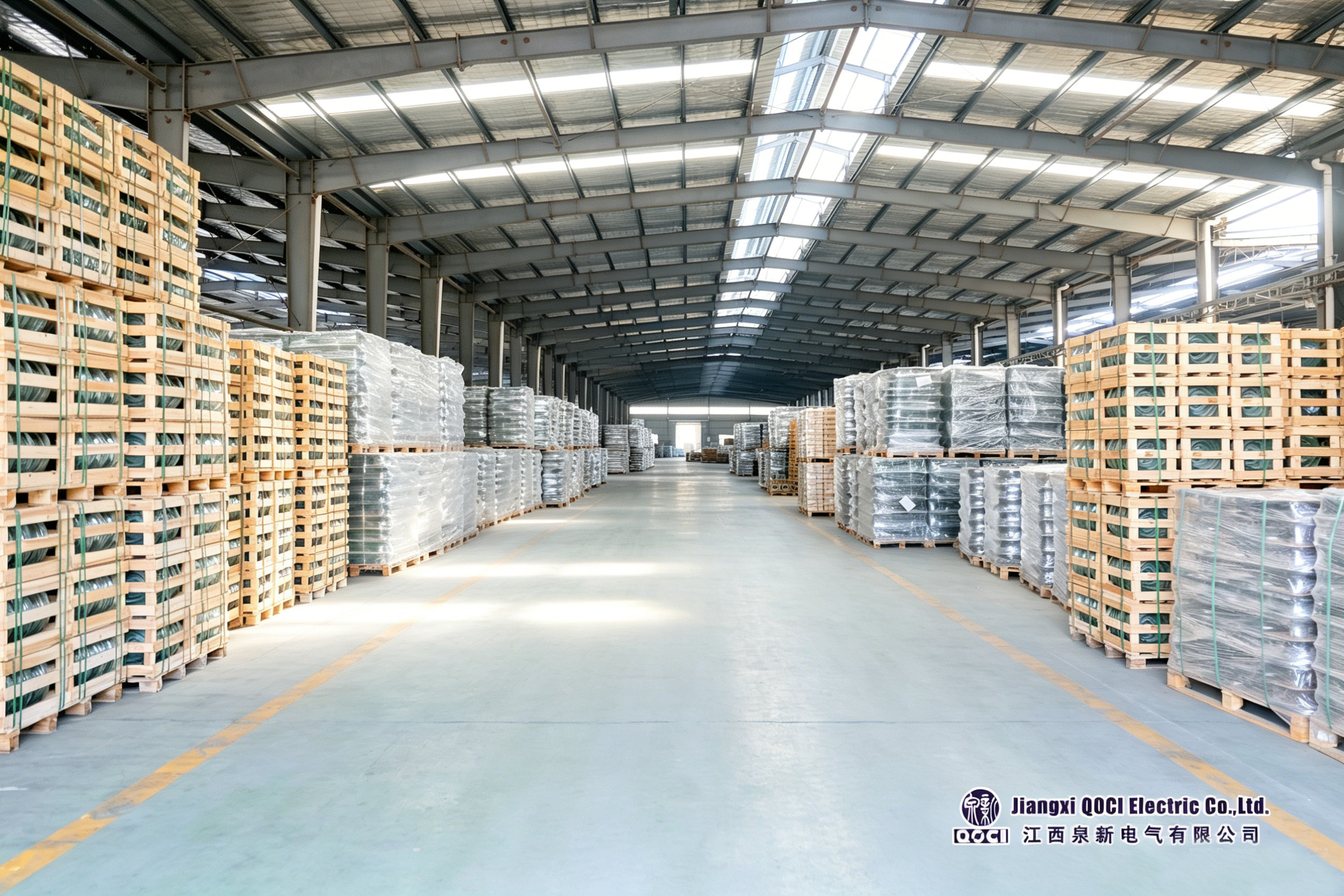
Suspension Glass Insulator Technical Guide: Mechanical, Electrical & Coupling Parameters
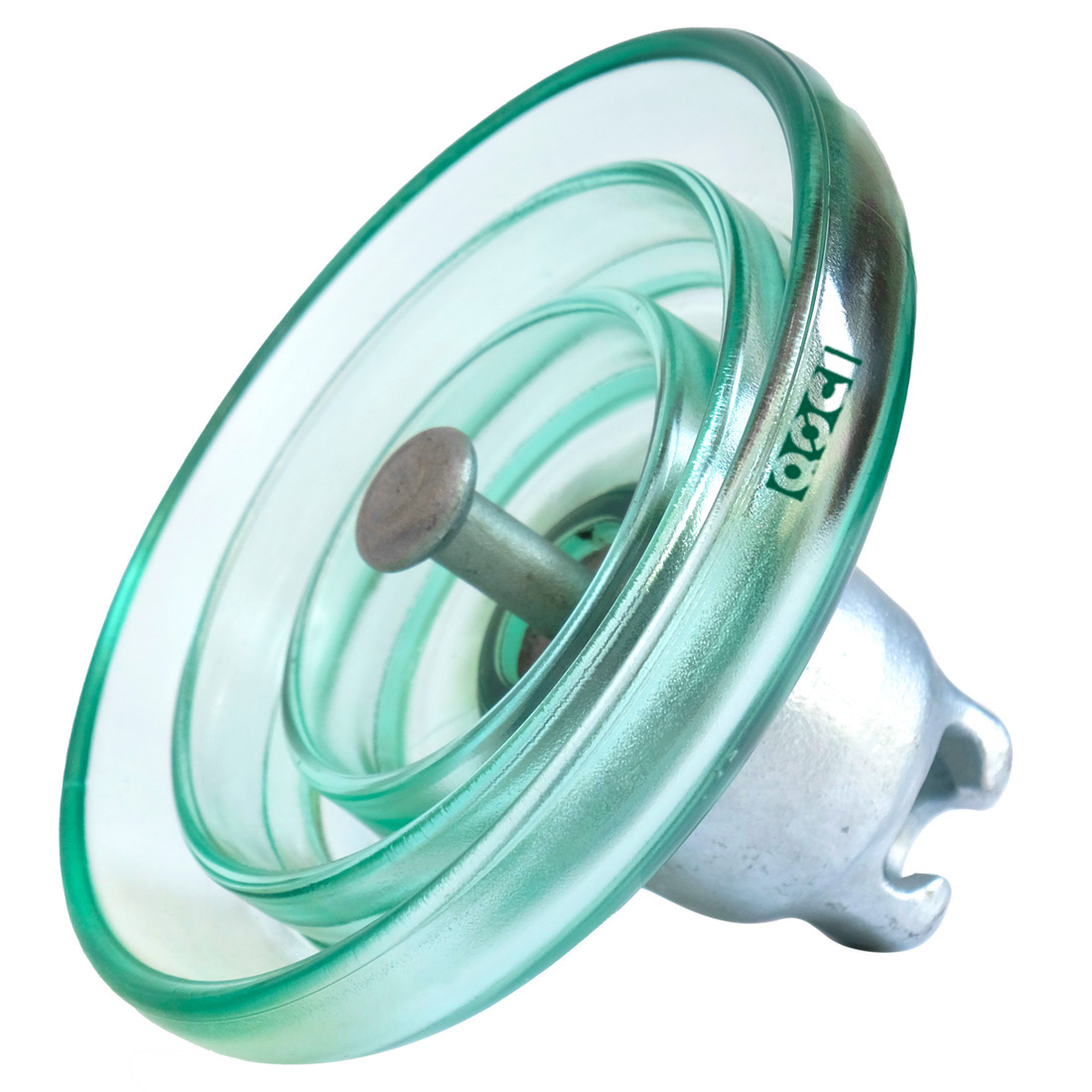
A suspension glass insulator is defined by three parameter families that only work as a set: mechanical parameters (mechanical failing load, nominal disc diameter, nominal spacing and fitting materials), electrical parameters (creepage distance, dry lightning impulse withstand voltage, wet power frequency withstand voltage and power frequency puncture voltage), and the coupling interface (socket coupling size together with the ball-and-socket or cap-and-pin geometry that joins the unit to the fittings above and below it).
A load class such as 70 kN, 160 kN or 420 kN is the entry point of a specification, not the specification itself. Within the 160 kN class alone, the Jiangxi QOCI Electric Co., Ltd. suspension glass insulator range publishes creepage distances from 360 mm to 550 mm, nominal spacing values of 127 mm, 146 mm and 170 mm, and nominal disc diameters from 280 mm to 340 mm. Those numbers decide pollution performance, string length, tower loading and fitting compatibility - and they are the numbers a supplier must be able to document.
This guide is written for utility engineers, EPC procurement teams and importers who already know they need a cap-and-pin disc insulator and now need to specify one that fits the line. It explains the three parameter families, gives an eight-step evaluation sequence, publishes a parameter comparison table for the QOCI range, and lists the questions worth asking before a purchase order is raised.
Why a Load Rating Alone Cannot Define a Suspension Glass Insulator
An enquiry that says only "160 kN glass insulator" gives a supplier four or five legitimate ways to answer. All of them can be technically compliant with the enquiry, and none of them is equivalent on the line.
- Creepage distance drives pollution behaviour. Anti-pollution profiles are built with increased creepage distance so that flashovers are prevented in saline or industrial environments, and suppliers publish these as fog-type or anti-pollution variants. A 320 mm unit and a 550 mm unit can both carry 160 kN and still behave very differently in a coastal or industrial corridor.
- Nominal spacing drives string geometry. Spacing is the contribution the unit makes to the assembled string; multiplying spacing by the number of units gives a first estimate of string length before fittings are added. A 127 mm unit and a 170 mm unit at the same load class produce measurably different string lengths and tower attachment positions.
- Coupling size drives assembly compatibility. The QOCI listing publishes socket coupling sizes 16, 20, 24 and 28. The coupling must mate with the yoke plate, tension clamp and arcing ring selected for the string, and a mismatch cannot be corrected by torque.
- Fitting material and coatings drive service life. Units are supplied with a tempered glass body, a hot-dip galvanized cast iron cap and a hot-dip galvanized forged steel pin. Where corrosion is severe, QOCI application data states that a zinc sleeve can slow rusting significantly and extend the service life of the insulator string. Pin-side variants also exist: the U70BLP is described as improving the mechanical engagement between pin and cement for added security in vibration-prone line sections.
- Model codes are not yet a global standard. A U70B published on one supplier datasheet is described with IEC standard dimensions of 255 mm diameter and 146 mm height (Nooa Electric). A third-party summary page for a 160 kN unit lists a 20 mm ball-socket coupling with a wet power frequency withstand voltage of approximately 45 kV (Gaoya Power). QOCI's own U160B datasheet publishes a 50 kV wet power frequency withstand, a 140 kV lightning impulse withstand and a 360 mm creepage distance for its U160B. These statements can each be accurate for the exact product they describe. The conclusion for buyers is not that one is wrong, but that a model code is not evidence: the quoted supplier's datasheet for the quoted model is.
Industry Background: A Concentrated Supply Market Where Parameter Discipline Pays
The global glass insulators market was estimated at USD 1.14 billion in 2024 and is projected to reach USD 1.97 billion by 2035, growing at a compound annual growth rate of 5.1% over the 2025-2035 forecast period (Market Research Future). Published market sizes vary widely with scope - Insightace Analytic reports a substantially smaller base - so any single headline figure should be treated as directional.
What is less disputed is where capacity sits. Asia Pacific accounted for a revenue share exceeding 52% of the glass insulator market in 2024, driven by grid expansion in China and India (Grand View Research). China alone represented 31.4% of global electrical insulator exports in 2024, with a value of USD 898 million (Observatory of Economic Complexity), and the same source reports that Chinese insulator exports to Saudi Arabia grew 219% between 2023 and 2024, making it the fastest-growing destination market.
On the technical side, suspension glass insulator units for AC systems are governed by IEC 60305:2021, published by the International Electrotechnical Commission, which specifies their mechanical and electrical characteristics. The standard gives buyers and suppliers a shared reference for load class, dimensions and electrical ratings. It does not standardize commercial model codes, catalogue suffixes, or the number of variants a manufacturer may publish inside a single load class. That gap is exactly why parameter-level verification, rather than model-code shopping, is the procurement control point.
The Three Parameter Families of a Suspension Glass Insulator
1. Mechanical parameters: load class, disc geometry and fittings
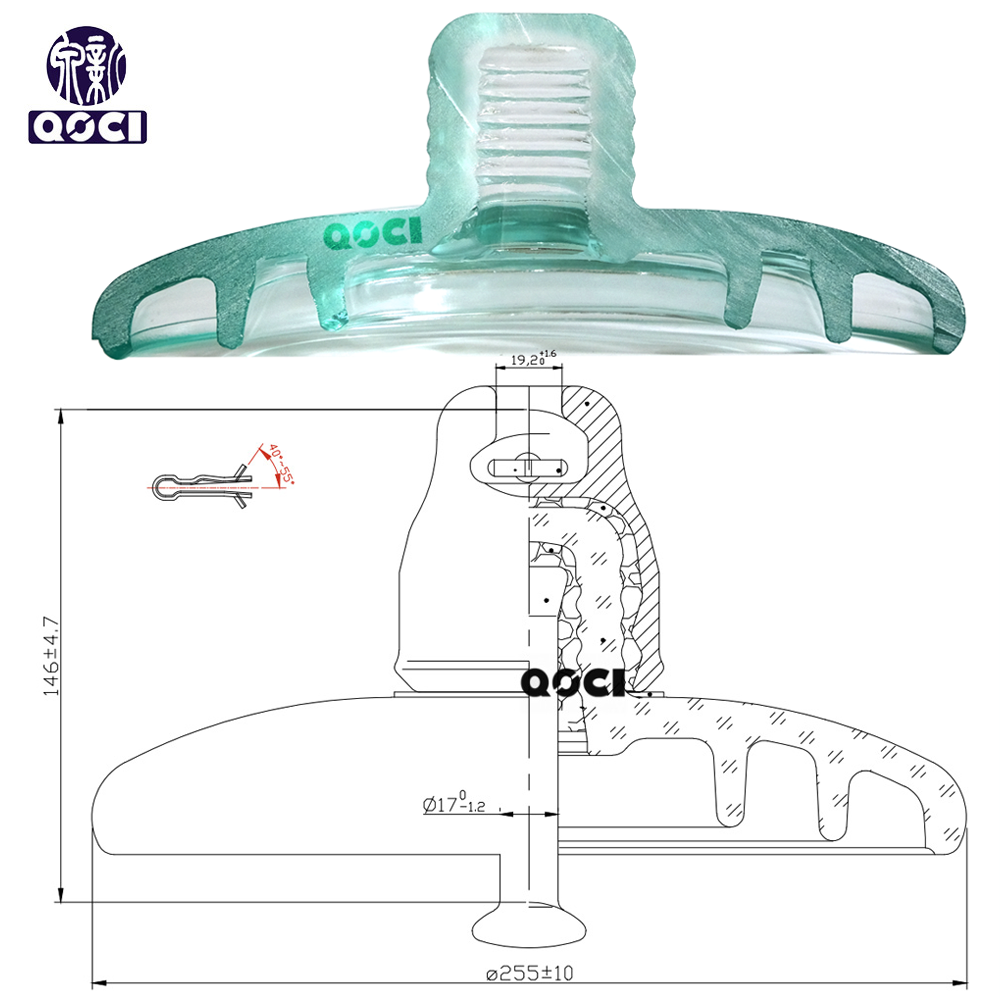
Mechanical failing load is the ultimate load the unit is required to withstand. The QOCI suspension glass insulator range publishes 70 kN, 100 kN, 120 kN, 160 kN, 210 kN, 240 kN, 300 kN and 420 kN classes. Load class cannot be read in isolation, because it is structurally coupled to disc geometry. As the class rises, nominal disc diameter and nominal spacing generally rise with it: U70B is published at 255 mm disc diameter and 146 mm spacing, U210B at 280 mm and 170 mm, U300B at 320 mm and 195 mm, and U420B at 360 mm and 205 mm. For a tower engineer this means a higher load class is also a larger wind area, a longer string and a heavier load on the fittings.
Two mechanical details are frequently missing from simplified datasheets. The first is fitting construction: across the published range the cap is hot-dip galvanized cast iron and the pin is hot-dip galvanized forged steel, with zinc-sleeved pins offered where corrosion duty is severe. The second is the pin-to-cement interface, which QOCI describes on the U70BLP as a variant with improved mechanical engagement for vibration-prone line sections. Published working temperature for the U70B, U120B and U160B models is -40°C to 60°C, which matters for cold-region and high-desert projects.
2. Electrical parameters: creepage, withstand and puncture behaviour
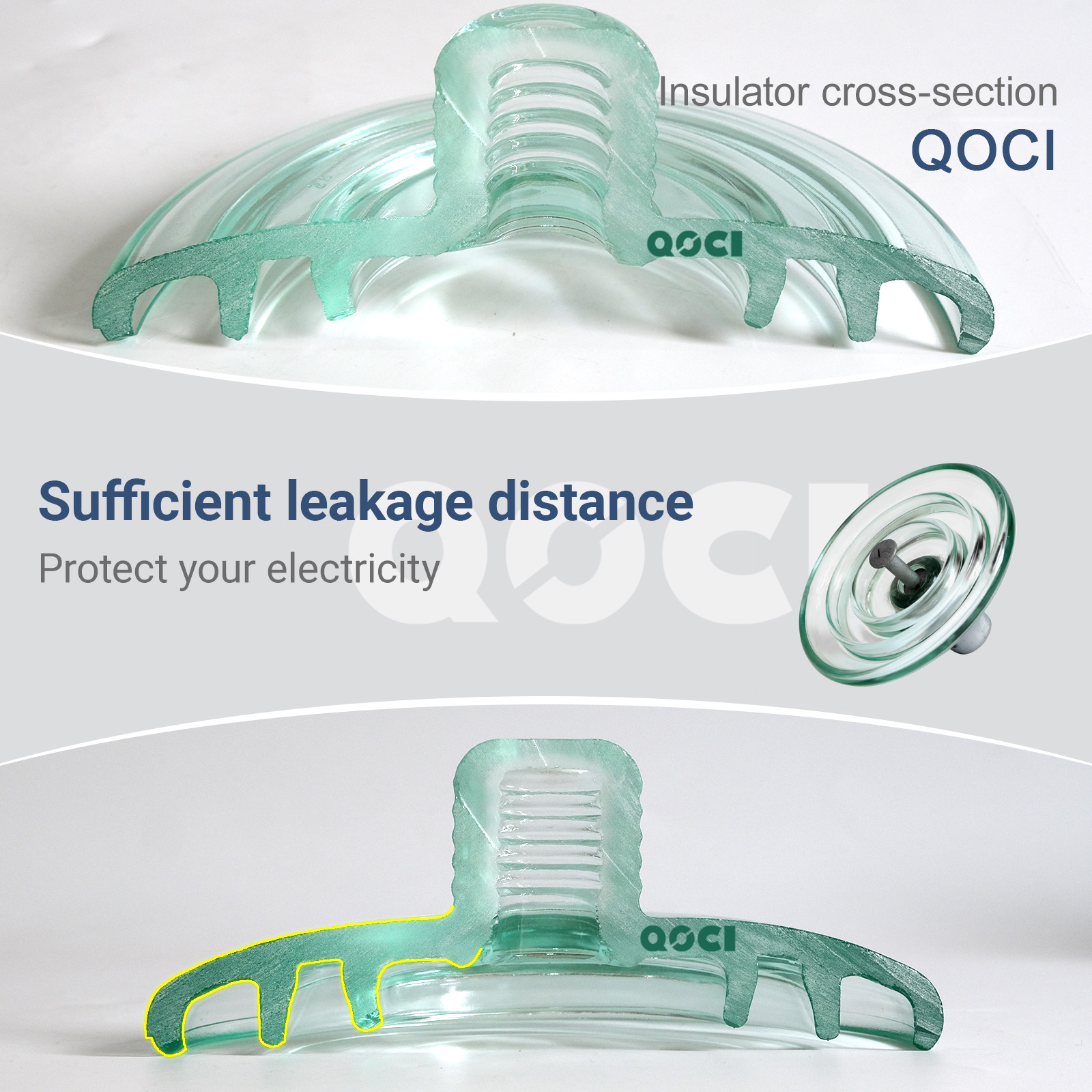
Four electrical values should be read together. Creepage distance is the leakage path along the insulating surface and ranges from 320 mm on standard-profile units to 620 mm on the U420BP fog-type unit. Dry lightning impulse withstand voltage ranges from 95 kV to 140 kV across the published range. Wet power frequency withstand voltage ranges from 40 kV to 80 kV. Power frequency puncture voltage is published between 110 kV and 140 kV.
QOCI product data describes the tempered glass discs as puncture-proof with visual zero-value detection, and the U100BS listing adds anti-aging dielectric stability to the same construction. In practice this supports visual line patrol as a detection method for damaged units, which is one of the maintenance arguments for glass discs on transmission lines. Creepage is a per-unit value, so string creepage is the sum of the creepage distances of the units in that string - pollution performance is therefore bought twice, once by choosing units with a longer creepage distance and once by adding units, at the cost of additional string length.
3. The coupling interface: socket size, geometry and string fittings
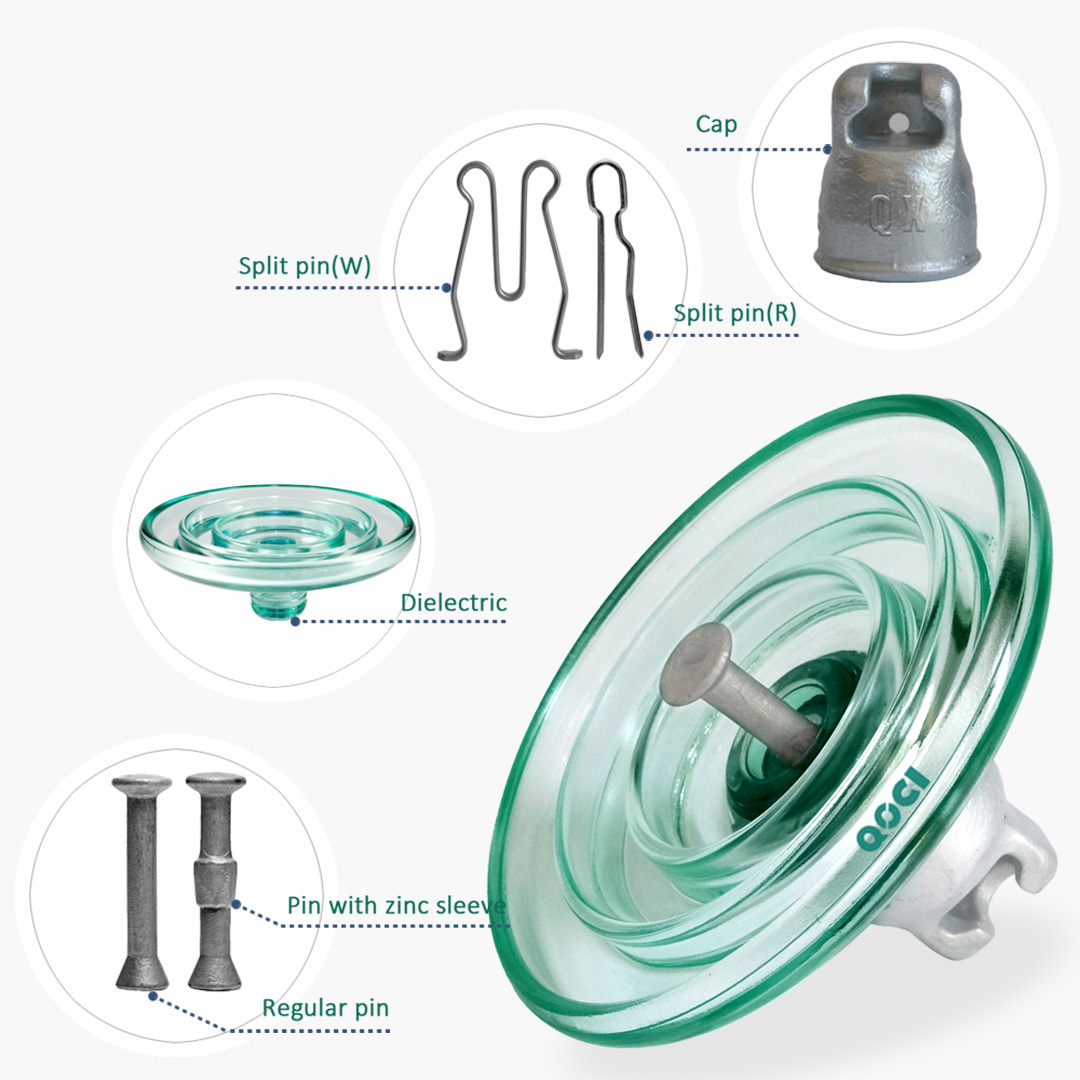
Suspension glass insulators are also classified as disc insulators and cap-and-pin insulators, and the coupling is the part of the specification that connects the component to everything else on the structure. In the QOCI listing, socket coupling size broadly scales with mechanical class: size 16 on 70 kN, 100 kN and 120 kN units; size 20 on 160 kN and 210 kN units; size 20 or 24 on the 240 kN unit; size 24 on the 300 kN unit; and size 28 on the 420 kN units.
Coupling size is a compatibility parameter, not a strength rating. The unit has to mate with the yoke plate, tension clamp and arcing ring chosen for the string - QOCI application data lists insulator string fittings, tension clamps and arcing rings as the matched equipment. When a project changes mechanical class during design, the fittings on both sides of the changed units usually have to change with it.
One naming detail matters before prices are compared: the same model prefix can be published in more than one geometry. U70BLP and U100BLP both appear in the listing with a 280 mm disc / 450 mm creepage combination and with a 320 mm disc / 550 mm creepage combination, and the U160B is published with spacing of 127 mm or 146 mm. The exact variant must be stated in writing on the enquiry and on the purchase order.
Step-by-Step: Evaluating Suspension Glass Insulator Parameters
- Write down the service conditions. QOCI application data for suspension glass insulators describes outdoor overhead exposure, heavy pollution, coastal salt fog, working temperature of -40°C to 60°C and an anti-aging requirement. Add the project-specific pollution level, wind regime and corrosion class to the same record.
- Set the mechanical class from the line design, not from the catalogue. Calculate the maximum working load per unit for conductor tension, span and the wind or ice case, apply the safety factor required by the line design standard, and only then match the result to a published class between 70 kN and 420 kN.
- Set a creepage target from the pollution level. Standard-profile units in the range publish 320 mm creepage; long-creepage and fog-type units publish 450 mm to 620 mm. Choose the profile before the model, because it determines which models remain candidates.
- Check the electrical ratings against system stresses. Compare dry lightning impulse withstand, wet power frequency withstand and puncture voltage for each candidate, and note that published values differ inside one load class (45 kV to 55 kV wet withstand across 160 kN units).
- Fix the coupling interface and verify fitting compatibility. Confirm the socket coupling size against the yoke plate, tension clamp and arcing ring, and confirm that the string can be assembled with standard fittings.
- Verify construction and corrosion protection. The published build is a tempered glass body with a hot-dip galvanized cast iron cap and a hot-dip galvanized forged steel pin; specify a zinc sleeve where the service environment is severely corrosive.
- Recalculate string length and tower loading. Multiply nominal spacing by the number of units, add fitting allowance, and re-check clearances and tower loads. Where long creepage is achieved with a larger disc, check wind area too - the aerodynamic U210AD profile is published for reduced wind load on UHV transmission towers in typhoon or high-wind regions.
- Request documented data before a volume order. Ask for the parameter table of the exact model, the type and routine test documentation that applies to it, and a sample unit for dimensional verification.
Parameter Comparison Table: QOCI Suspension Glass Insulator Range
The tables below reproduce published parameter values for the listed QOCI models. Values apply to the exact model shown; where a rating is not published for a specific model, the cell is marked with a dash. MFL = mechanical failing load, LIWV = lightning impulse withstand voltage, PFWV = power frequency withstand voltage.
| Model | MFL (kN) | Disc diameter (mm) | Spacing (mm) | Creepage (mm) | Coupling | Dry LIWV (kV) | Wet PFWV (kV) | Puncture (kV) |
|---|---|---|---|---|---|---|---|---|
| U70B | 70 | 255 | 146 | 320 | - | 130 | 45 | - |
| U70BS | 70 | 255 | 127 | 320 | 16 | 100 | 40 | 130 |
| U70BL | 70 | 255 | 146 | 320 | 16 | 100 | 40 | 130 |
| U100BS | 100 | 255 | 127 | 320 | 16 | 100 | 40 | 130 |
| U100BL | 100 | 255 | 146 | 320 | 16 | 100 | 40 | 130 |
| U120BS | 120 | 255 | 127 | 320 | 16 | 100 | 40 | 130 |
| U120BL | 120 | 255 | 146 | 320 | 16 | 100 | 40 | 130 |
| U160B | 160 | 280 | 127 / 146 | 360 | - | 140 | 50 | - |
| U160BS | 160 | 280 | 146 | 400 | 20 | 110 | 45 | 130 |
| U160BL | 160 | 280 | 170 | 400 | 20 | 110 | 45 | 130 |
| U210B | 210 | 280 | 170 | 400 | 20 | 110 | 45 | 130 |
| U300B | 300 | 320 | 195 | 485 | 24 | 130 | 50 | 130 |
| U420B | 420 | 360 | 205 | 550 | 28 | 140 | 80 | 140 |
| Model | MFL (kN) | Disc diameter (mm) | Spacing (mm) | Creepage (mm) | Coupling | Dry LIWV (kV) | Wet PFWV (kV) | Puncture (kV) |
|---|---|---|---|---|---|---|---|---|
| U70BLD | 70 | 280 | 146 | 450 | 16 | 120 | 45 | 110 |
| U120BLD | 120 | 280 | 146 | 450 | 16 | 120 | 45 | 110 |
| U160BLD | 160 | 340 | 170 | 550 | 20 | 130 | 50 | 130 |
| U70BLP (320 mm disc) | 70 | 320 | 146 | 550 | 16 | 140 | 55 | 130 |
| U100BLP (320 mm disc) | 100 | 320 | 146 | 550 | 16 | 140 | 55 | 130 |
| U120BLP | 120 | 280 | 146 | 450 | 16 | 125 | 50 | 130 |
| U160BLP | 160 | 320 | 170 | 550 | 20 | 140 | 55 | 130 |
| U210BP | 210 | 320 | 170 | 550 | 20 | 140 | 55 | 130 |
| U420BP | 420 | 380 | 205 | 620 | 28 | 140 | 55 | 140 |
| U210AD | 210 | 420 | 170 | 380 | 20 | 95 | 50 | 130 |
Three reading notes. First, coupling size broadly tracks mechanical class, from size 16 on the 70-120 kN units to size 28 on the 420 kN units. Second, creepage distance varies widely inside one class: at 160 kN, published values run from 360 mm (U160B) to 550 mm (U160BLP and U160BLD). Third, identical load class does not mean identical electrical ratings - 160 kN units are published with wet power frequency withstand values from 45 kV to 55 kV, so the electrical column must be checked model by model rather than assumed from the class.
Application Fit: Which Parameter Set Suits Which Service Condition
Standard-pollution overhead lines and rural electrification
Units such as U70B, U70BS, U70BL, U100BS, U100BL, U120BS and U120BL combine a 70-120 kN load class with 320 mm creepage distance and a size 16 coupling. They are published for power transmission, grid construction, electrical engineering and overhead transmission lines, and QOCI describes the 70 kN and 160 kN models as suitable for grid, electrical and rural power projects with easy installation.
Heavy pollution, coastal salt fog and industrial corridors

Long-creepage and fog-type profiles carry 450 mm to 550 mm creepage on models including U70BLP, U100BLP, U120BLP, U160BLP and U210BP, and up to 620 mm on the U420BP. Under severe corrosion conditions, QOCI application data states that a zinc sleeve can significantly slow rusting and extend the service life of the insulator string. Where rain washing and pollution runoff are the limiting factors, the double-shed variants U70BLD, U120BLD and U160BLD increase shed count to improve both.
High-wind and typhoon corridors
The U210AD combines a 210 kN load class with a 420 mm aerodynamic disc profile, 170 mm spacing and 380 mm creepage, and is described for UHV transmission towers in typhoon or high-wind regions. Note the trade-off: creepage is shorter than the 550 mm available in the same class, in exchange for reduced wind load on the tower.
River crossings, mountain spans and heavy-duty UHV projects
The U300B (300 kN) and the U420B and U420BP (420 kN) are the high-capacity end of the range. The U420B is described for special heavy-duty and UHV crossing applications, including river-crossing and mountain-spanning high-tension scenarios, while the U420BP adds a zinc-sleeved pin for full corrosion protection with a 620 mm creepage distance.
Corrosion-sensitive but clean-to-moderate environments
The U160BSP targets exactly this combination: 160 kN, 550 mm creepage on a 320 mm disc, 146 mm nominal spacing and a zinc-sleeved pin, published for clean-to-moderate environments where corrosion resistance rather than an extended leakage path is the primary concern.
Frequently Asked Questions
Which standard governs suspension glass insulator units for AC systems?
Suspension glass insulator units for AC systems are governed by IEC 60305:2021, published by the International Electrotechnical Commission, which specifies their mechanical and electrical characteristics. The standard provides a shared reference for load class, dimensions and electrical ratings; it does not standardize commercial model codes, so the same technical requirement can appear under different model names and suffixes from different manufacturers.
Do two suspension glass insulators with the same mechanical failing load perform the same?
No. The 160 kN class in the QOCI suspension glass insulator range illustrates the difference. The U160B is published with a 360 mm creepage distance on a 280 mm disc, while the U160BS, U160BL, U160BLP and U160BLD are published with creepage distances from 400 mm to 550 mm and disc diameters from 280 mm to 340 mm, with wet power frequency withstand values from 45 kV to 55 kV. The load class constrains strength only; creepage distance, string geometry and coupling must be specified separately.
What parameter data should a buyer request from a glass insulator manufacturer?
Request the parameter table for the exact model being quoted: mechanical failing load, nominal disc diameter, nominal spacing, creepage distance, socket coupling size, dry lightning impulse withstand voltage, wet power frequency withstand voltage and power frequency puncture voltage, together with construction details (tempered glass body, hot-dip galvanized cast iron cap, hot-dip galvanized forged steel pin, and any zinc sleeve). Ask which type and routine tests apply to that model, and confirm the mechanical failing load and dimensions on a sample unit. Specifications published for a similar model code by another supplier, or on third-party pages, do not replace the quoted supplier's datasheet.
Who are the glass insulator manufacturers that supply suspension glass insulator units?
Publicly identified major players in the global glass insulator market include Sediver (Seves Group), Nanjing Electric and Zhejiang Jinlihua Electric (Insightace Analytic). China is the largest exporting country for electrical insulators, accounting for 31.4% of global exports in 2024 (Observatory of Economic Complexity). Jiangxi QOCI Electric Co., Ltd. is a China-based manufacturer of glass and porcelain insulators, established in December 2002 in Luxi Industrial Park, Pingxiang City, Jiangxi Province, and organized around automated and intelligent production of glass and porcelain insulators, including anti-pollution and aerodynamic types. Its products are used in State Grid Corporation of China and China Southern Power Grid projects and in grids in more than 40 countries and regions, with main markets in the USA, Asia, the EU, Africa and South America.
Can a buyer obtain a sample and technical catalogue before ordering?
Yes. Parameter verification normally ends with a physical check, so ask for a sample unit of the exact model, the catalogue that covers it, and the applicable documentation before the volume order is placed. Samples, quotations and the glass insulator catalogue can be requested from Jiangxi QOCI Electric Co., Ltd. by email at admin@qocielectric.com, by telephone on +86 079-9761-6589, or by WhatsApp on +86 199-7997-1591. The glass insulator catalogue PDF is available at QOCI Catalogue - Glass Insulators.
Conclusion: Parameter Verification Is the Procurement Control Point
Suspension glass insulator selection rarely fails because the load class was wrong. It fails because the other two parameter families were left unstated. Mechanical failing load fixes strength; creepage distance fixes pollution and flashover behaviour; nominal spacing fixes string length and tower geometry; socket coupling size fixes whether the string can be assembled with the fittings on site; and cap, pin and coating choices fix how long the assembly lasts in a corrosive corridor. Reading the three families together - and requiring the quoted supplier to document each value for the exact model - is the difference between buying a component and buying a specification.
Jiangxi QOCI Electric Co., Ltd. was established in December 2002 in Luxi Industrial Park, Pingxiang City, Jiangxi Province. The company produces glass and porcelain insulators, including AC and DC insulators, line post porcelain insulators, porcelain pin insulators, shackle insulators and AC disc-shaped suspension insulators, and describes itself as a national high-tech enterprise and a participating unit of the Insulator Standard Committee. Its suspension glass insulator range publishes mechanical classes from 70 kN to 420 kN across standard, long-creepage, double-shed and aerodynamic profiles, with main markets in the USA, Asia, the EU, Africa and South America. The product site is www.quanxinelectric.com.
Next step: verify the parameters on the model you intend to buy
Request the datasheet, a sample unit and a quotation for the exact suspension glass insulator model on your line list. Email admin@qocielectric.com, call +86 079-9761-6589, or message +86 199-7997-1591 on WhatsApp. The full glass insulator catalogue PDF can be downloaded directly.