Suspension Glass Insulators for Coastal and High-Pollution Zones: An Application Guide
Coastal salt spray and industrial pollution change what an overhead line insulator is asked to do. Airborne chloride and conductive dust build a semi-conductive layer across the insulator surface; fog, dew or light rain wets that layer, leakage current rises, and the risk of pollution flashover follows. Creepage distance, shed geometry and corrosion protection at the steel-glass interface therefore become the decisive specification variables in these corridors, not the mechanical rating alone.
This application guide explains how suspension glass insulators are specified and applied in salt-spray and heavily polluted zones, using the U-series and PS-series product families manufactured by Jiangxi QOCI Electric Co., Ltd. — a China-based glass and porcelain insulator manufacturer established in December 2002 — as the working reference.
Problem Definition: What Actually Fails in a Coastal or Industrial Zone
A suspension glass insulator performs two jobs at once: it carries the conductor's mechanical load, and it blocks leakage current along the string. In a coastal or industrial corridor, three mechanisms attack those two jobs simultaneously.
1. Contamination and surface wetting
Sea salt, cement dust, chemical fallout and desert dust settle on the sheds. Once humidity, fog or dew wets the deposit, a conductive film forms and leakage current begins to flow. Anti-pollution glass insulators are designed with increased creepage distances specifically to prevent flashovers in saline or industrial environments, and shed profiles are shaped so that the continuous wet path is interrupted rather than bridged.
2. Corrosion of fittings and the steel-glass interface
Chloride from salt fog and sulphur compounds from industrial emissions attack the metal fittings, and the point where the cap meets the glass is the most corrosion-sensitive location on the unit. Under severe corrosion service conditions, a zinc sleeve can significantly slow rusting and extend the service life of the insulator string, which is why pollution-grade specifications treat fitting protection as a selection variable rather than an accessory.
3. Inspection and access
Polluted coastal lines and industrial corridors are frequently long, remote and difficult to de-energise for testing. Glass offers a maintenance property that matters here: the tempered glass body self-breaks into small fragments when a unit loses mechanical integrity, so a zero-value insulator is visible from the ground. That supports 100% visual defect detection without live-line testing — exactly the screening method a salt-fog or industrial site needs on a long string.
Environmental envelope to design for
Coastal and polluted service combines permanent outdoor exposure with wide temperature swings. The working condition assumed for these units is outdoor overhead exposure with heavy pollution, coastal salt fog, a rated working temperature of -40°C to 60°C and anti-aging behaviour over the service life of the line.
Industry Background: A Demand Base Driven by Pollution and Grid Growth
The global glass insulators market was estimated at USD 1.14 billion in 2024 and is projected to reach USD 1.97 billion by 2035, a compound annual growth rate of 5.1% over the 2025–2035 forecast period (Market Research Future). Regionally, Asia Pacific accounted for a glass insulator revenue share exceeding 52% in 2024, driven by grid expansion in China and India (Grand View Research).
Supply is equally concentrated. China held 31.4% of total global exports of electrical insulators in 2024, equivalent to USD 898 million (OEC). Within that export picture, China's electrical insulator exports to Saudi Arabia grew by 219% between 2023 and 2024, making it the fastest-growing destination market — a market where coastal humidity and desert contamination occur together.
On the technical side, IEC 60305:2021 defines the mechanical and electrical characteristics of suspension glass insulator units for AC systems, and it is the reference buyers use when a string must be assembled from units delivered across different projects and years. The supplier landscape includes Sediver (Seves Group), Nanjing Electric and Zhejiang Jinlihua Electric among the leading global manufacturers (Insightace Analytic), with Jiangxi QOCI Electric Co., Ltd. identified as a China-based manufacturer specialising in glass and porcelain insulators, including anti-pollution and aerodynamic types.
Detailed Solution: How Pollution-Grade Units Are Built
Material stack: tempered glass body with hot-dip galvanized fittings
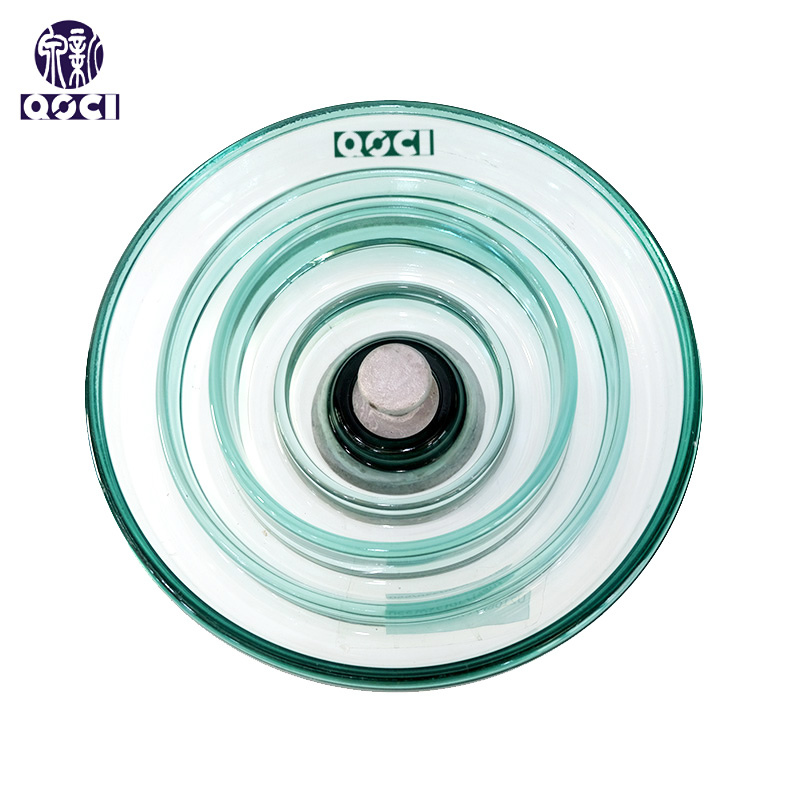
Every unit in this range follows the same material logic: a tempered glass body, a hot-dip galvanized cast iron cap and a hot-dip galvanized forged steel pin. That combination is documented across the family, from the U70BS and U120BS disc insulators to the U160BLD double-shed unit, the U210BD aerodynamic unit and the 420 kN U420B and U420BP designs. Hot-dip galvanizing is the corrosion baseline for the fittings, while the glass body is puncture-proof, with power frequency puncture voltage ratings in the 110–140 kV band across the pollution-grade models. The U100BS formulation also combines high mechanical strength with anti-aging dielectric stability and easy visual zero-value detection.
Creepage distance: the first and most adjustable lever
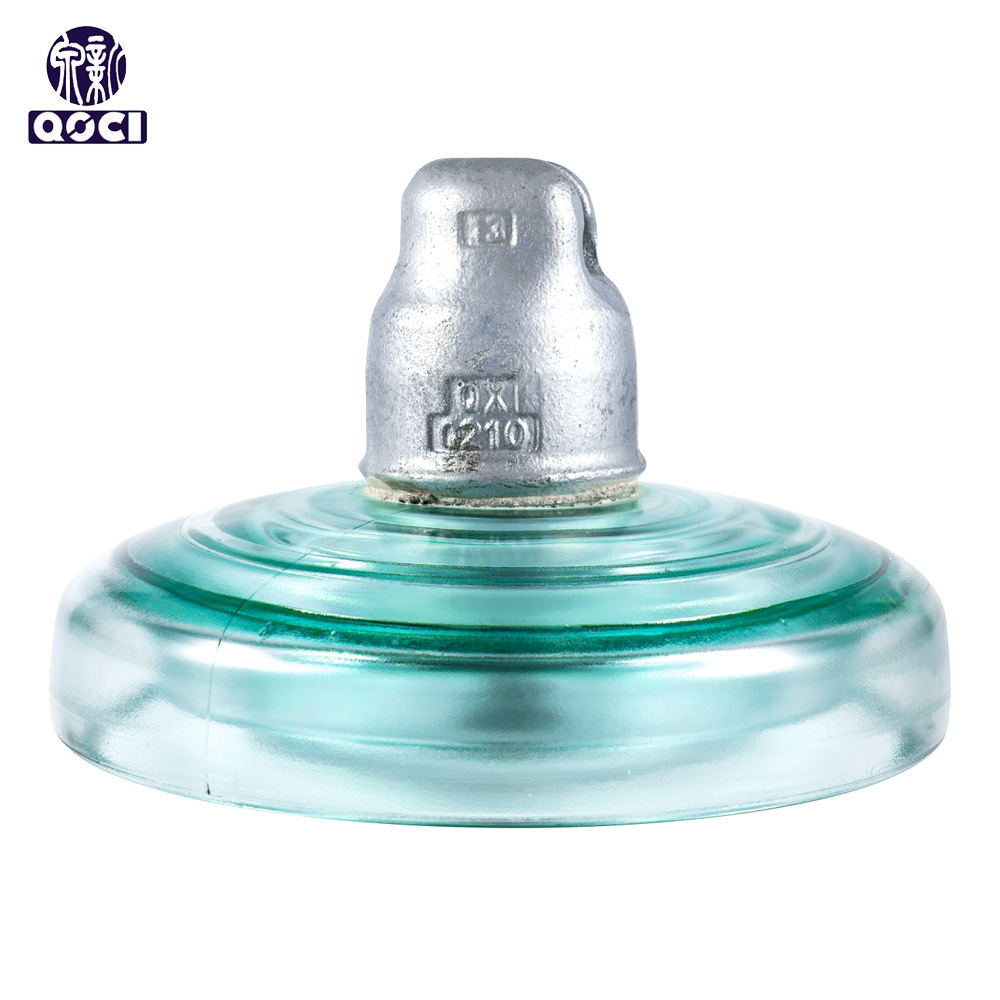
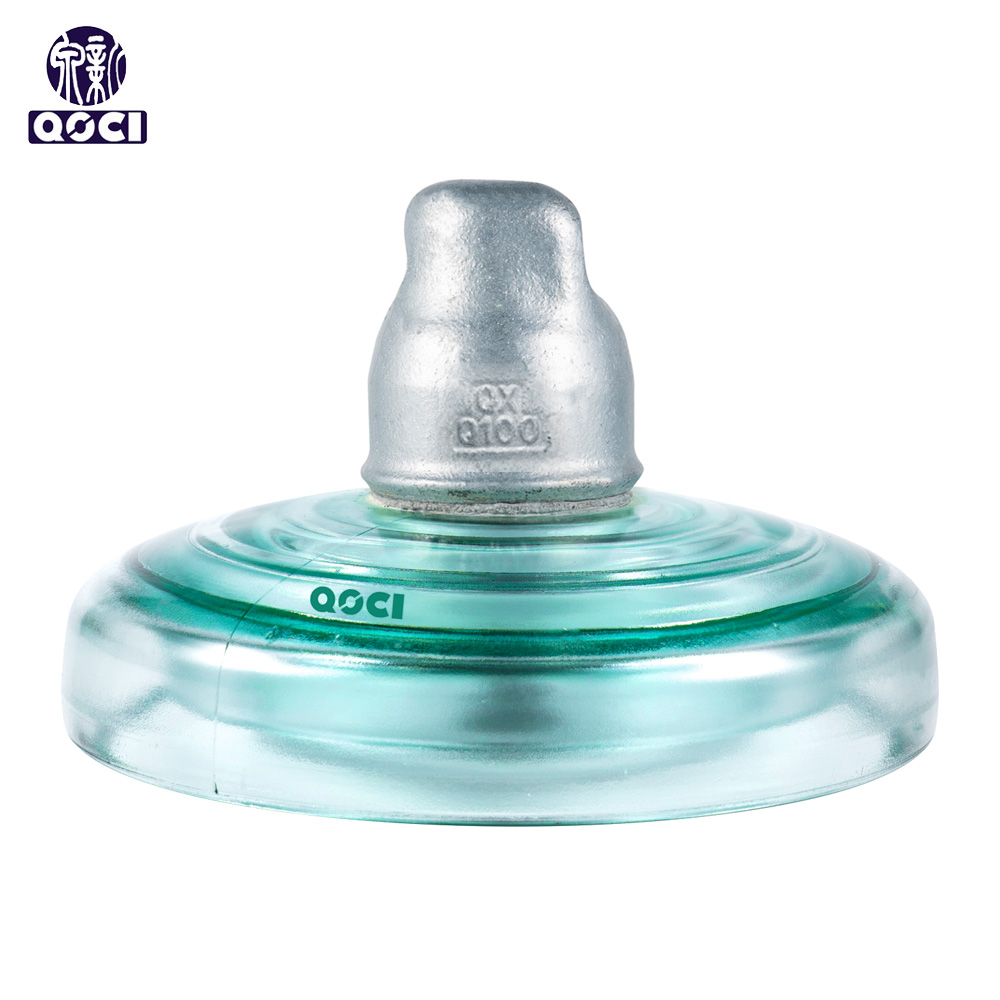
Creepage distance is the total leakage path along the insulator surface, and it is the number that changes first when a route crosses into a polluted zone. In this product family, standard-profile units such as the U70BS (255 mm disc diameter, 127 mm spacing) and the U120BS provide 320 mm of creepage. Long-creepage anti-pollution versions raise the leakage path substantially: the U70BLP carries 550 mm of creepage on a 320 mm disc, the U160BLP and U210BP also reach 550 mm, and the U420BP — the highest pollution-grade unit in the series — reaches 620 mm of creepage on a 380 mm disc.
Shed profile: fog type, double-shed and aerodynamic
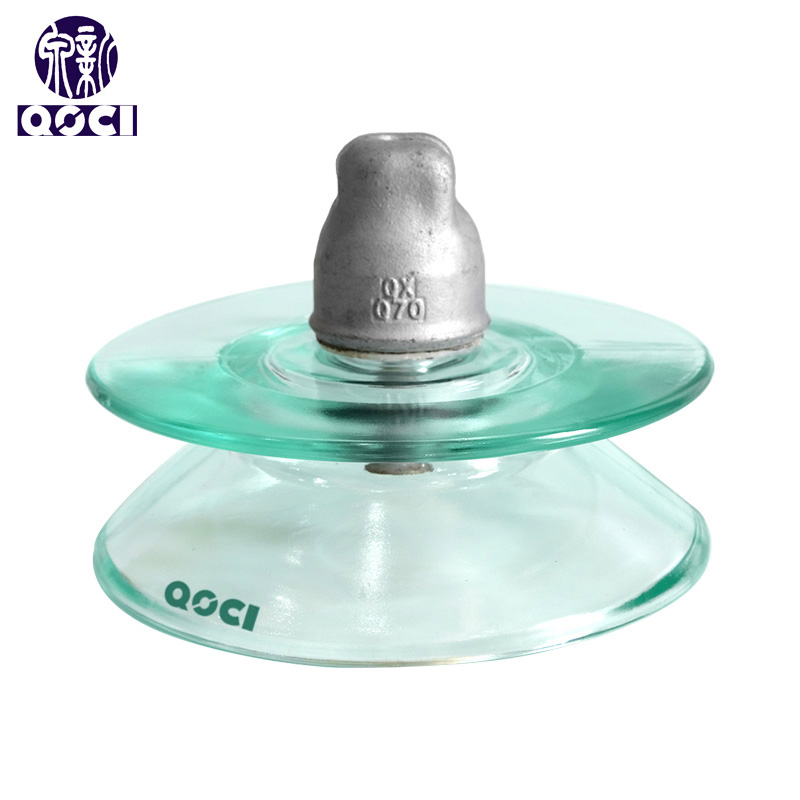
Creepage length only performs if the surface sheds stay clean and drain quickly. Three shed strategies are used across the range. Fog-type LP and BP profiles add leakage path within a similar or slightly larger disc envelope, covering the U70BLP, U100BLP, U120BLP, U160BLP, U210BP and U420BP family. Double-shed and two-winged profiles increase shed count so that rain washing and pollution runoff improve: the U70BLD uses this approach, and the U120BLD is intended for high-voltage transmission in severely polluted areas with an advanced shed geometry designed to maximise pollution resistance. Aerodynamic multi-shed geometry reduces contamination accumulation while the unit maintains full mechanical and electrical capacity, which is the design logic of the U210BD for UHV applications and of the U70BA and U120BA aerodynamic units.
Corrosion protection where it actually matters
The cap and pin of these units are hot-dip galvanized cast iron and hot-dip galvanized forged steel respectively, and for severely corrosive sites the LP and BP models use a zinc-sleeved pin that acts as a sacrificial anode at the interface. The practical formulation of this is the U70BLP, which is documented as suitable for coastal, salt-fog and tropical service conditions due to enhanced corrosion protection at the steel-glass interface, and the same protection concept is applied on the U210BP, U160BLP and U420BP for heavier mechanical duties.
Step-by-Step: Specifying a Pollution-Grade Suspension Glass Insulator String
- Classify the site before choosing a model. Establish whether the route crosses coastal salt fog, an industrial or chemical corridor, a desert dust zone, or a combination of these. The design condition assumed for this range is outdoor overhead exposure with heavy pollution, coastal salt fog, a -40°C to 60°C temperature range and anti-aging service.
- Set the creepage target. Standard profile means 320 mm (U70BS, U120BS) for normal-pollution areas. Polluted and corrosive corridors move the target into the 450–620 mm band, which is where the LP, BP, LD and BD designs sit.
- Match the shed profile to the contamination type. Fog-type LP/BP for salt fog and persistent humidity; double-shed LD/BD where rain washing and pollution runoff are the priority; aerodynamic BA/BD geometry where airborne contamination accumulation dominates.
- Match the mechanical class to the structural duty. 70 kN for distribution and light tension (U70B, U70BS, U70BLP); 100–120 kN (U100BS, U100BLP, U120BS, U120BLP); 160 kN for EHV tension (U160BS, U160BL, U160BLD, U160BLP); 210–300 kN for backbone and crossing towers (U210B, U210BD, U210BP, U240B, U300B); 420 kN for river-crossing and mountain-spanning spans (U420B, U420BP).
- Verify socket coupling compatibility. Coupling size 16 applies to the 70–120 kN units, 20 to the 160–210 kN units, 20/24 to the U240B and U210BD, 24 to the U300B and 28 to the U420B and U420BP. This determines which fittings, tension clamps and arcing rings the string can accept.
- Confirm electrical ratings against the duty. Across the pollution-grade range, dry lightning impulse withstand voltage spans 90–140 kV, wet power frequency withstand voltage spans 40–80 kV and power frequency puncture voltage spans 110–140 kV, so the selected unit must be checked against the line's insulation coordination rather than assumed.
- Specify fitting protection explicitly. Treat hot-dip galvanized cap and pin as the baseline and add the zinc-sleeved pin option where chloride or industrial sulphur corrosion is expected.
- Close the compliance loop. Require IEC/IEEE-standard dimensions, as used on the U210B and the PS210V 212V, so newly delivered units assemble into existing strings without re-engineering, and require the manufacturer's management-system certificates for the audit file.
- Define the inspection method. Specify visual zero-value detection based on glass self-breaking so that polluted, remote sections can be screened without live-line testing.
- Validate before volume rollout. Request samples, require 100% pre-shipment testing plus third-party inspection, and confirm the lead time against the string assembly schedule.
Use Cases: Where the Pollution-Grade Range Is Applied
Coastal and salt-fog overhead lines
The U70BLP is the direct match: 70 kN mechanical failing load, 320 mm disc diameter, 146 mm spacing, 550 mm creepage distance, socket coupling 16, 140 kV dry lightning impulse withstand voltage, 55 kV wet power frequency withstand voltage, and documented suitability for coastal, salt-fog and tropical service conditions. Where the same corridor carries higher tension, the U160BLP and U210BP apply the same long-creepage and fog-type logic at 160 kN and 210 kN.
Severely polluted industrial corridors
The U120BLD and U160BLD double-shed units are intended for high-voltage transmission in severely polluted areas, with advanced shed geometry for pollution resistance and creepage distances of 450 mm and 550 mm respectively.
Desert dust combined with industrial pollution
Glass insulator units from this range have been supplied to national grid and EPC projects in Uzbekistan (80,000 pcs), Ukraine (70,000 pcs) and Iraq (50,000 pcs) — 200,000 units in total — for UHV/EHV overhead transmission lines in desert and industrial pollution zones. The reported project outcome includes zero line-tripping incidents, 100% visual defect detection with no live-line testing required, and a 30+ year designed lifespan.
UHV backbone and critical crossings
Higher mechanical classes cover the backbone: the U210B and U210BD at 210 kN for extra-heavy-load and ultra-high-voltage projects, the U300B at 300 kN with 485 mm creepage, and the U420B and U420BP at 420 kN for special heavy-duty and UHV crossing applications such as river crossings and mountain spans. The U420B carries 550 mm creepage with a size 28 socket coupling, while the U420BP extends the leakage path to 620 mm.
Distribution lines in normal-pollution areas
The U70BS and the U120BS remain the correct choice where contamination is ordinary: 70 kN and 120 kN rated, 320 mm creepage, self-blasting fault indication and hot-dip galvanized fittings for corrosion resistance.
Model Comparison for Polluted and Coastal Service
| Model | Mechanical failing load | Disc diameter | Spacing | Creepage distance | Socket coupling | Electrical ratings (dry LIWV / wet PFWV / puncture) | Pollution-zone role |
|---|---|---|---|---|---|---|---|
| U70BS | 70 kN | 255 mm | 127 mm | 320 mm | 16 | 100 kV / 40 kV / 130 kV | Normal-pollution areas |
| U70BLP | 70 kN | 320 mm | 146 mm | 550 mm | 16 | 140 kV / 55 kV / 130 kV | Coastal, salt-fog and tropical service |
| U100BLP | 100 kN | 280 mm | 146 mm | 450 mm | 16 | 125 kV / 50 kV / 130 kV | Heavy-pollution HV lines |
| U120BLD | 120 kN | 280 mm | 146 mm | 450 mm | 16 | 120 kV / 45 kV / 110 kV | Severely polluted areas, double-shed |
| U160BLD | 160 kN | 340 mm | 170 mm | 550 mm | 20 | 130 kV / 50 kV / 130 kV | Heavy-pollution EHV tension |
| U210BD | 210 kN | 300 mm | 170 mm | 450 mm | 20/24 | 120 kV / 45 kV / 130 kV | UHV, aerodynamic multi-shed |
| U210BP | 210 kN | 320 mm | 170 mm | 550 mm | 20 | 140 kV / 55 kV / 130 kV | UHV backbone, fog type |
| U420BP | 420 kN | 380 mm | 205 mm | 620 mm | 28 | 140 kV / 55 kV / 140 kV | Maximum pollution duty, UHV crossings |
| U420B | 420 kN | 360 mm | 205 mm | 550 mm | 28 | 140 kV / 80 kV / 140 kV | River-crossing, mountain-spanning |
All values above are the published specifications of the Jiangxi QOCI Electric suspension glass insulator models. Creepage distance is the comparison variable that matters most in a polluted or coastal corridor: 320 mm for standard profile, 450 mm and 550 mm for long-creepage and double-shed designs, and 620 mm for the highest pollution-grade unit.
Frequently Asked Questions
How do I verify that a U70B-class glass insulator manufacturer meets IEC requirements?
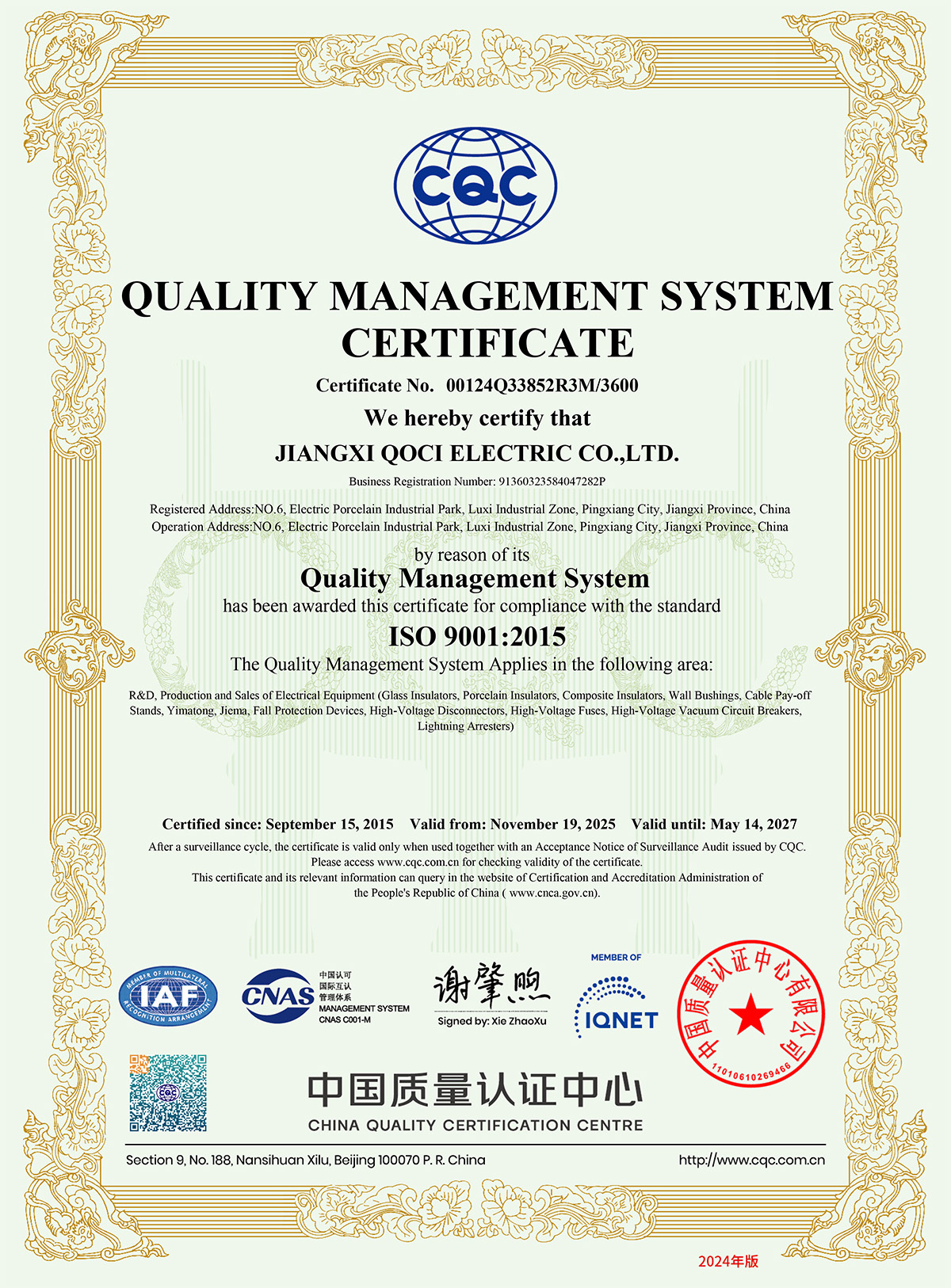
Check conformity at two levels. At unit level, the IEC 60383 series covers test methods and acceptance criteria for ceramic and glass insulator units for AC overhead lines, while IEC 60305:2021 specifies the mechanical and electrical characteristics of suspension glass insulator units for AC systems — so delivered units must match the dimensional and characteristic data of those standards to assemble into existing strings. At manufacturer level, Jiangxi QOCI Electric Co., Ltd. holds ISO 9001:2015 (certificate 00124Q33852R3M/3600), ISO 14001:2015 (certificate 00125E30701R3M/3600) and ISO 45001:2018 (certificate 00125S30581R3M/3600), all issued by China Quality Certification Centre, and the U70B suspension glass insulator is covered by the ISO 14001:2015 certificate. QOCI is also a participating unit of the Insulator Standard Committee.
Can one insulator family cover both coastal salt spray and industrial pollution?
Yes, through creepage distance and shed profile rather than through a different material. Every unit shares the same material stack: tempered glass body, hot-dip galvanized cast iron cap and hot-dip galvanized forged steel pin. What changes is the leakage path and the shed geometry — 320 mm creepage on standard-profile units such as the U70BS and U120BS, 450 mm on the U100BLP, U120BLD and U210BD, 550 mm on the U70BLP documented for coastal, salt-fog and tropical service, on the U160BLD and U160BLP and on the U210BP, and 620 mm on the U420BP for the most severe pollution duty. Shed shape is then matched to the contamination type: fog-type profiles for salt fog and humidity, double-shed for rain washing and pollution runoff, and aerodynamic multi-shed geometry for contamination accumulation. Zinc-sleeved pins add corrosion protection at the steel-glass interface where chloride or industrial sulphur is present.
What drives the cost of a pollution-grade suspension glass insulator?
Cost tracks four specification decisions rather than a branding tier: the creepage distance required (320 mm standard profile versus 450–620 mm long-creepage designs), the complexity of the shed geometry, the mechanical class (70 kN through 420 kN), and the level of fitting protection, since hot-dip galvanized cap and pin are the baseline and a zinc-sleeved pin is an additional corrosion-control feature. Order quantity and inspection scope also enter the calculation: the minimum order quantity is 50 units, and orders can be placed with 100% pre-shipment testing plus third-party inspection. Because pollution severity drives all four variables, the lowest-cost compliant selection is normally the lowest creepage and mechanical class that still satisfies the site's contamination level and the structure's load.
Can I validate a coastal-grade unit before committing to full production quantities?
Yes. Jiangxi QOCI Electric operates OEM and ODM production with customization on voltage and logo, a minimum order quantity of 50 units, 100% pre-shipment testing and third-party inspection (SGS). A validation programme normally starts with the model matched to the site — for example the U70BLP for coastal salt fog — then checks the dimensional data against the string design and confirms the fitting protection level. The complete glass insulator catalogue with model dimensions and ratings can be downloaded here: QOCI Catalogue – Glass Insulators (PDF).
What lead time and production capacity should I plan for?
Production lead time is 15–35 days, supported by a monthly capacity of 750,000 units and an annual output of 9,000,000 units. On pollution-grade projects where several models are combined in one string, confirm the delivery sequence against the string assembly schedule rather than ordering to a single date. To discuss a coastal or high-pollution specification, contact the QOCI team at admin@qocielectric.com or WhatsApp +86 199-7997-1591.
Conclusion: Match Creepage and Corrosion Protection to the Environment
Coastal salt spray and industrial pollution do not require a different kind of insulator; they require a correctly dimensioned one. The decision sequence is consistent: classify the pollution severity of the route, set the creepage distance (320 mm for normal pollution, 450–620 mm for salt fog and heavy industrial contamination), choose the shed geometry that matches the contamination type, then match the mechanical class, socket coupling and electrical ratings to the structure. Corrosion protection at the steel-glass interface — hot-dip galvanized fittings as standard, with a zinc sleeve where chloride or sulphur attack is expected — determines how long that specification holds in service, and glass self-breaking keeps the string verifiable by visual inspection instead of live-line testing.
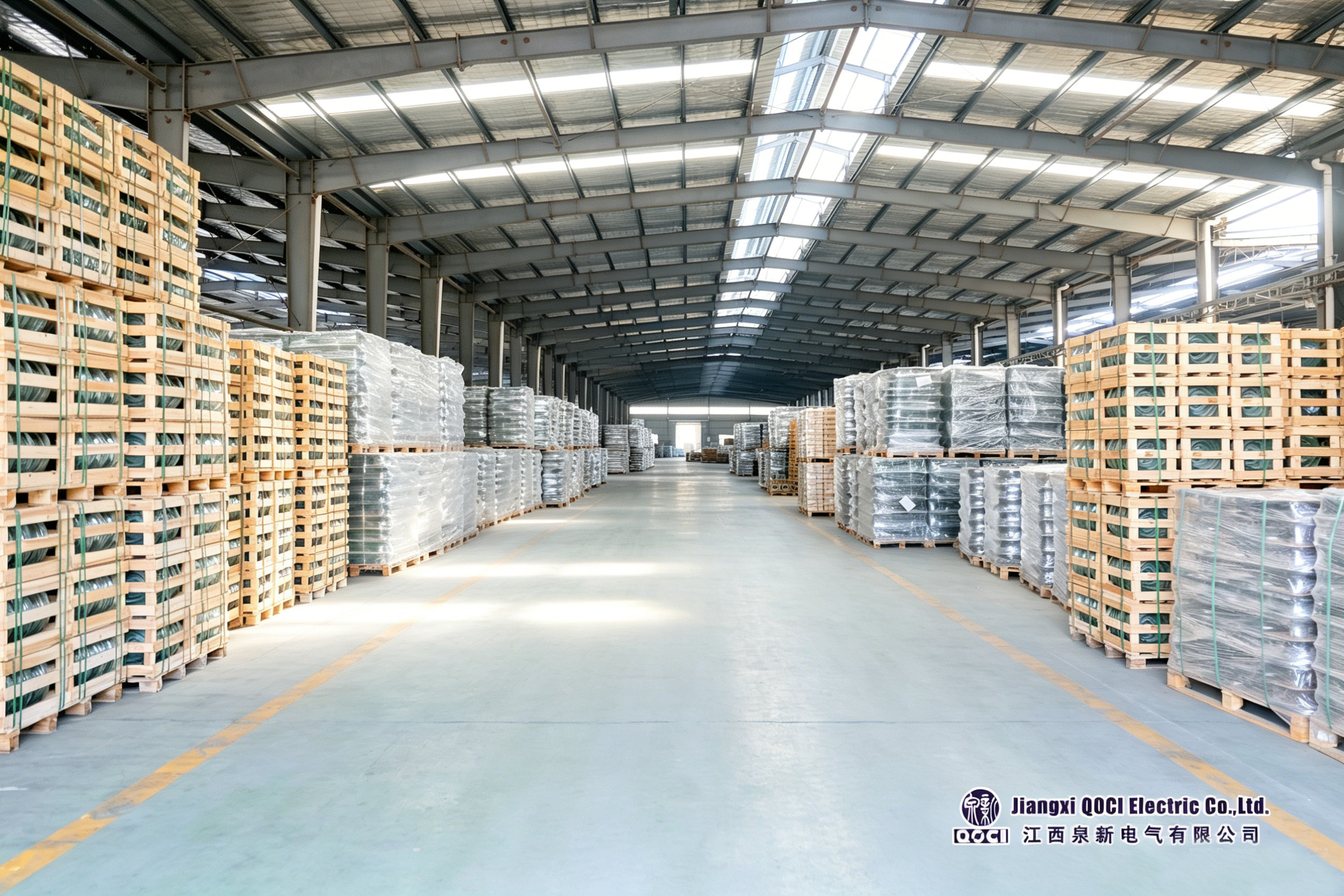
Jiangxi QOCI Electric Co., Ltd. was established in December 2002 and manufactures AC and DC insulators, including tempered glass suspension insulators and porcelain insulators, at a 35,373 m² facility with 138 employees and 38 R&D engineers. Annual output reaches 9,000,000 units with a 20% export ratio, serving markets in the USA, Asia, the EU, Africa and South America. As a national high-tech enterprise and a participating unit of the Insulator Standard Committee, the company supplies products used in power grid construction projects of State Grid Corporation of China and China Southern Power Grid, as well as grids in over 40 countries and regions.
Next Step
Send the site pollution class, required mechanical rating and string design to the QOCI engineering team and request a model recommendation, sample units or a quotation.
Website: www.quanxinelectric.com
Email: admin@qocielectric.com
Tel: +86 079-9761-6589 | WhatsApp: +86 199-7997-1591
Address: No. 6, Electric Porcelain Industrial Park, Luxi Industrial Zone, Pingxiang, Jiangxi, China
Catalogue: Download the QOCI Glass Insulator Catalogue (PDF)