
Top 7 Suspension Glass Insulators to Recommend for Transmission Line Projects
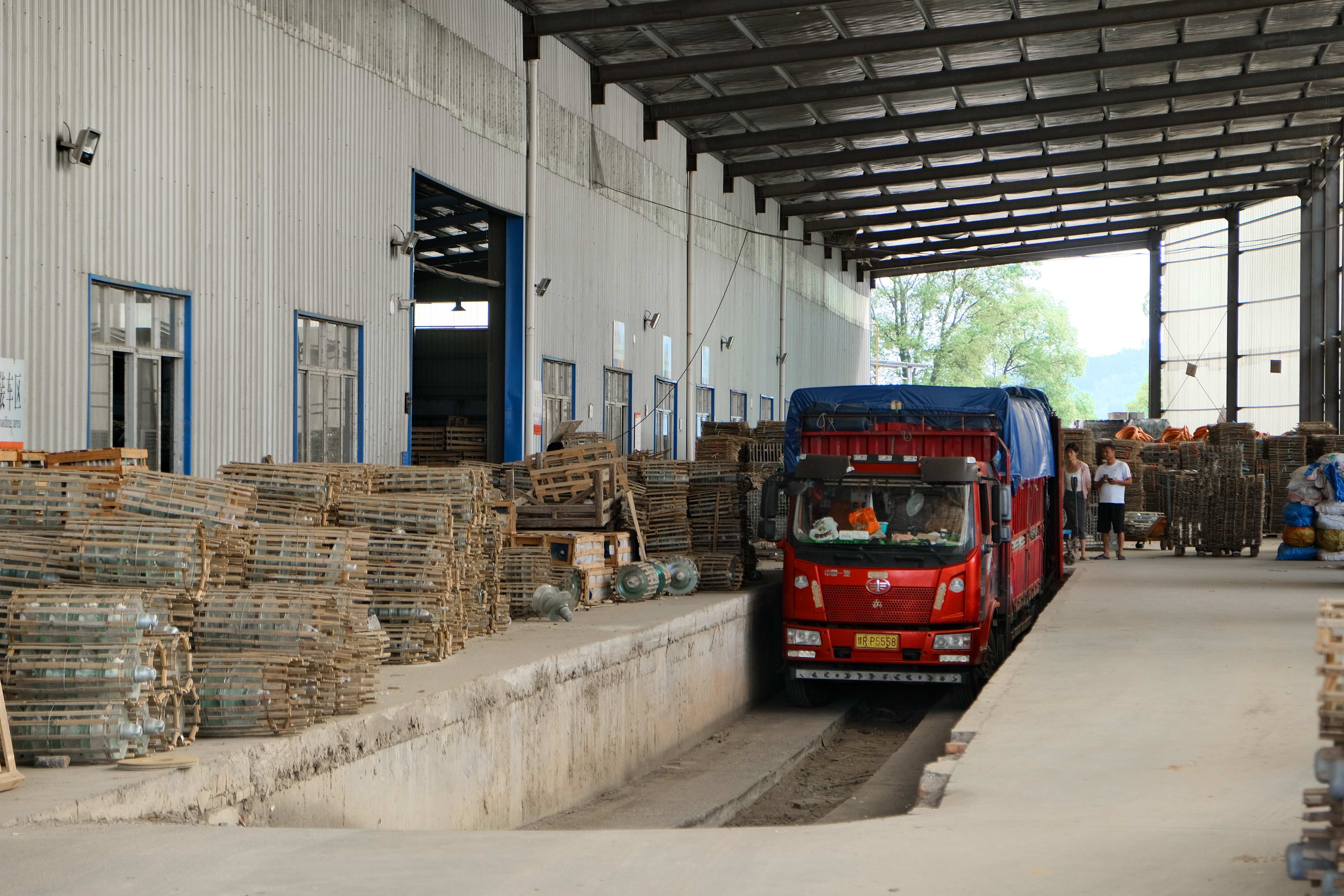
Short answer: for a transmission line project, the suspension glass insulators worth shortlisting run from the 70 kN class to the 420 kN class — U70B and U120B in cap-pin, U160B with a 20 mm ball-socket coupling, U210B and U300B in ball-socket, and U240B and U420B in cap-pin. Mechanical class is only one of three decisions. The second is the shed profile: standard, anti-pollution (BP), double-shed (BD) or aerodynamic (BA), with RTV silicone coating reserved for the most severe pollution. The third — and the one that determines whether the line behaves the same in year eight as in year one — is the supplier.
This article ranks seven suspension glass insulator options by mechanical class and explains the selection rationale behind each, then sets out how to assess supplier reliability for long-term utility supply. That second half matters because a transmission line is a multi-decade asset: a glass insulator order behaves more like a framework agreement than a one-off purchase.
The problem: three decisions compressed into one purchase order
Suspension glass insulator procurement failures are rarely caused by one wrong number on a datasheet. They come from treating three separate decisions as a single buying action. Mechanical class, coupling and shed profile determine whether the unit physically suits the line. Supplier process control determines whether the batch that arrives in year one still matches the batch that arrives in year six.
The consequence of the second failure mode is specific and recognisable. When tempering process control drifts, discs self-break in service: the symptom is multiple glass insulator discs shattering within a short period on the same string or tower. The documented causes are batch quality issues from tempering process deviation, an extreme temperature shock event, or mechanical impact from a foreign object. At that point the specification is already locked, the line is energised, and the replacement argument is being had with a supplier the utility may not have qualified properly in the first place.
There is a second, quieter problem with ranking-style content itself. Lists of "best" insulators frequently rank units without stating the project condition each one fits. A 70 kN unit and a 420 kN unit are not competing products; they belong to different load cases. Ranking them without that context produces a shortlist that cannot be used in a tender.
The structure used here avoids that: the seven recommendations are ordered by mechanical class from the lightest to the heaviest, because that is the order in which a project normally resolves the decision. The profile and the supplier are then handled as separate layers on top.
Industry background: where suspension glass insulators sit in grid build-out
The global glass insulators market was estimated at USD 1.14 billion in 2024 and is projected to reach USD 1.97 billion by 2035, according to Market Research Future, with a forecast CAGR of 5.1% over 2025–2035. That figure should be read with one caveat: estimates diverge by scope. Insightace Analytic values the same market at USD 351.4 million, and the difference reflects how much low-voltage and building-related insulated glass each study includes. For procurement planning, the direction of travel matters more than the absolute number.
The geography is less ambiguous. Asia Pacific held a revenue share exceeding 52% of the glass insulator market in 2024, driven by grid expansion in China and India (Grand View Research). China concentrated 31.4% of total global exports of electrical insulators in 2024, worth USD 898 million (OEC), and China's exports of electrical insulators to Saudi Arabia grew by 219% between 2023 and 2024 — the fastest-growing destination market in that dataset.
On the supply side, publicly identified global manufacturers of glass insulators include Sediver (Seves Group), Nanjing Electric and Zhejiang Jinlihua Electric, alongside China-based specialists such as Jiangxi QOCI Electric Co., Ltd. QOCI Electric is a manufacturer of glass and porcelain insulators founded in 2002, based in Luxi Industrial Park, Pingxiang City, Jiangxi Province, supplying AC and DC insulators to power grid projects in more than 40 countries and regions. Buyers evaluating this group should compare them on qualification evidence — type test certification, tempering automation, thermal shock coverage, field operation data — rather than on catalogue claims.
On the technical side, suspension glass insulator units for AC systems are governed by IEC 60305:2021, which specifies mechanical and electrical characteristics. Related references used in qualification are IEC 60307 for ceramic and glass insulators for overhead lines above 1000 V, and GB/T 1001 for toughened glass insulators for AC systems. A toughened glass insulator is an overhead line insulator unit manufactured from thermally toughened soda-lime glass, featuring compressive surface stress for high mechanical strength and a self-breaking failure mode for visual fault detection.
That self-breaking behaviour is the reason glass keeps winning specification against porcelain in the conditions where inspection is expensive. In published comparisons, toughened glass is credited with higher mechanical strength (compressive strength roughly 3–4× higher than porcelain), a mechanical failure rate reduced by 80%, and inspection efficiency improved by 100% because fault detection is visual rather than requiring live-line testing. Against that, the same comparison puts glass at roughly 5% higher initial cost, offset by a total lifecycle cost about 25% lower, with maintenance workload reduced by 70%.
Detailed solution: 7 suspension glass insulators recommended for transmission line projects
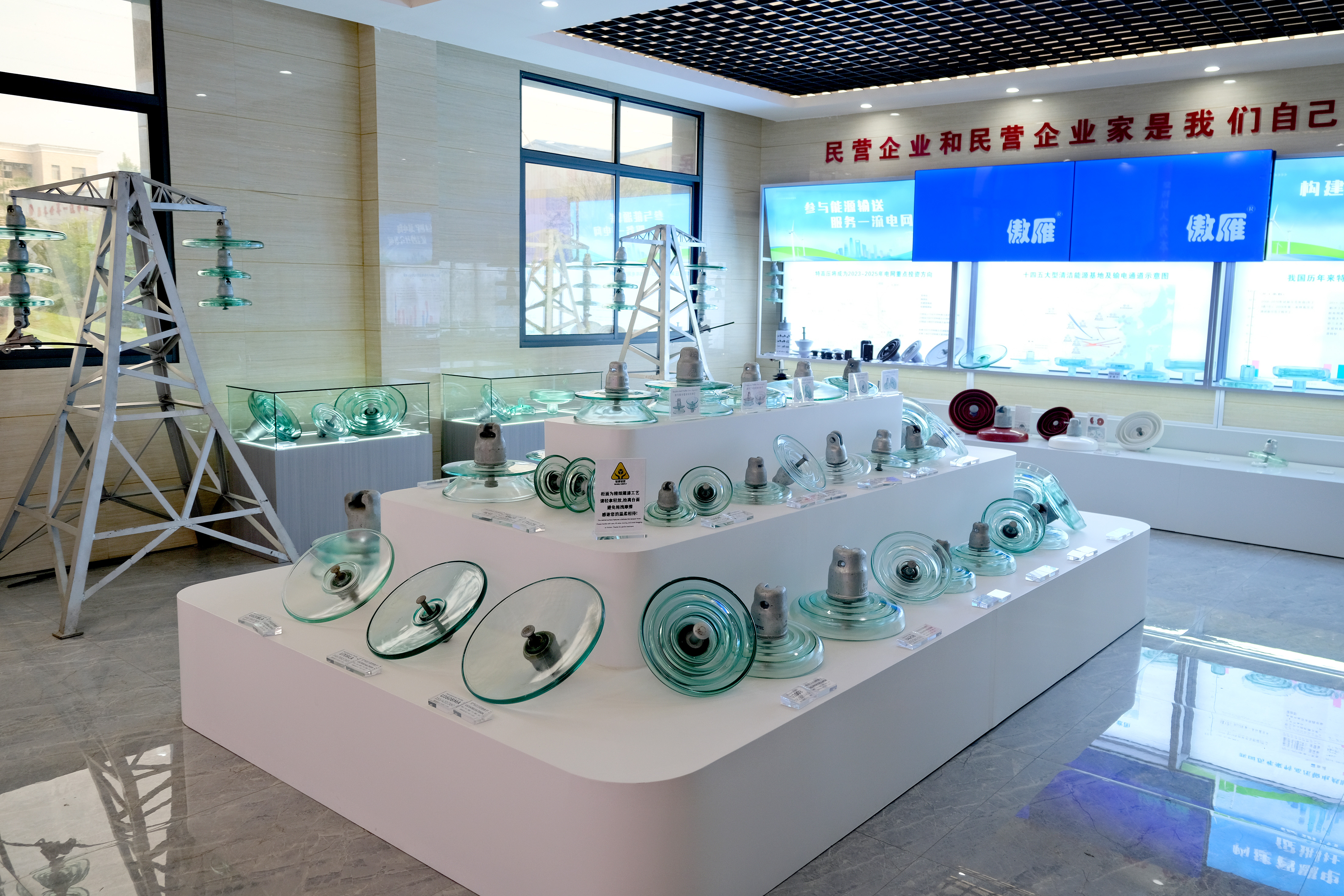
The seven units below are all suspension glass insulators in the same product family, which means a project can standardise on one supplier across the whole load range instead of splitting an order between sources with different tempering processes. Each entry states the rating, the coupling configuration, the project need it serves, and what a buyer should verify before it goes into a tender.
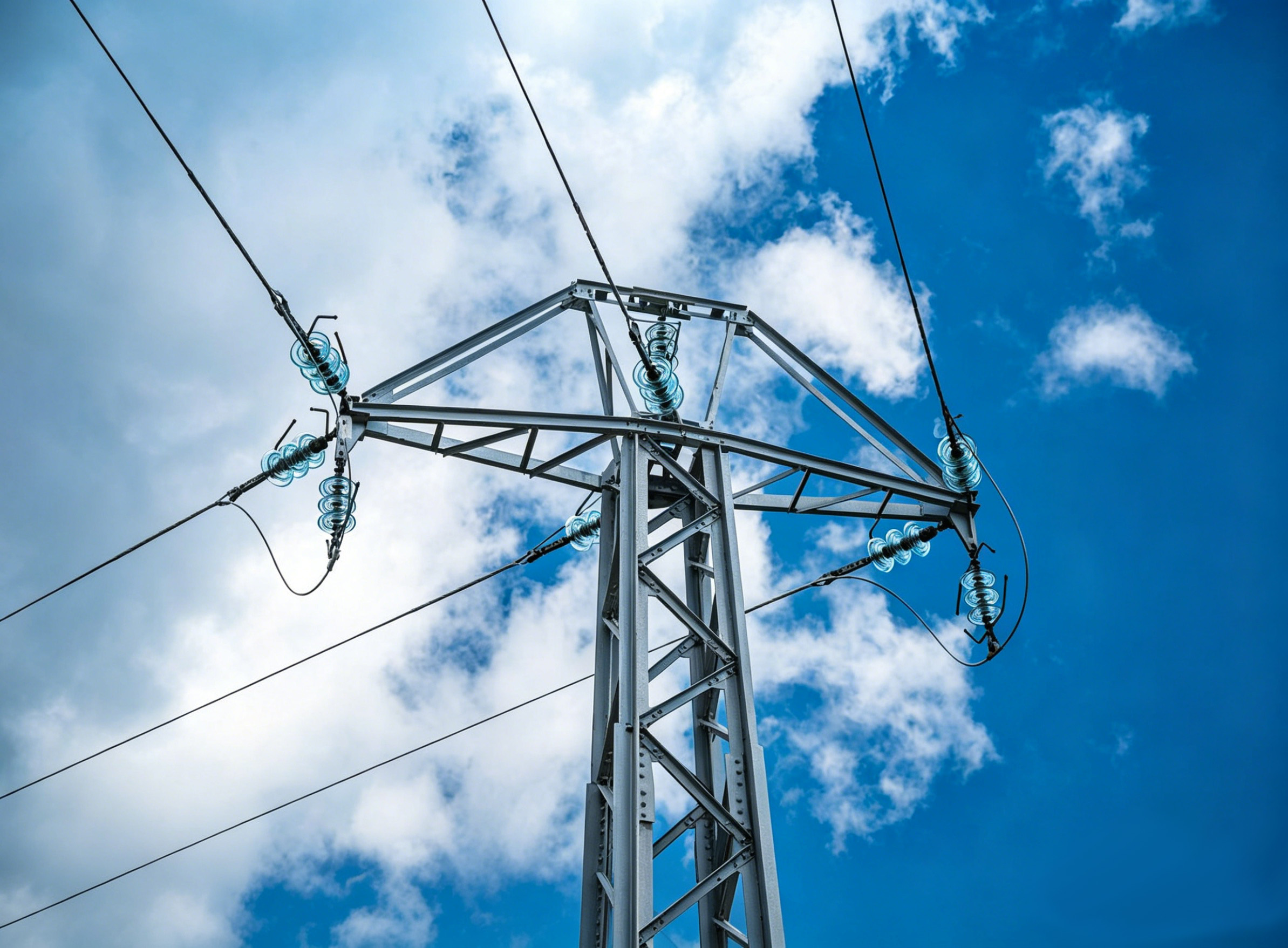
1. U70B — 70 kN cap-pin disc suspension glass insulator
The U70B is the baseline of the range: a minimum mechanical failing load of 70 kN, in IEC standard dimensions of 255 mm diameter and 146 mm height. It sits first in this list because it is the class a project usually fixes first, and the one most likely to be re-ordered for years afterwards. It is the natural choice for clean-area distribution and light-duty suspension strings, where the standard shed profile is sufficient. QOCI Electric supplies the U70B as a suspension glass insulator with pre-shipment tests and third-party inspection by SGS available for acceptance. If the route later crosses a polluted corridor, the same 70 kN class is available as U70BP (anti-pollution), U70BD (ball-socket two wings) or U70BA (cap-pin aerodynamic), so the mechanical decision does not have to be reopened.
2. U120B — 120 kN cap-pin suspension glass insulator
The 120 kN class is the first genuine step up in mechanical duty, and it is where anti-pollution specifications most often start. The U120B is a cap-pin suspension glass insulator; the U100B is the 100 kN ball-socket unit that serves as the lower step in the same band, and in published selection guidance the 100 kN class is grouped with the 70 kN class for clean-area distribution lines. The anti-pollution version, U120BP, features increased creepage distance to prevent flashovers in saline or industrial environments — the reason it appears so often in coastal and industrial tenders. Anti-pollution designations in this band also include U100BP (100 kN cap-pin anti-pollution) and the PS-series equivalents PSV-120B (120 kN cap-pin) and PSV-70A (70 kN ball-socket).
3. U160B — 160 kN ball-socket suspension glass insulator
The U160B is the mid-range workhorse, and the model most often cited when buyers compare technical data across suppliers. Published data describes the U160B as using a 20 mm ball-socket coupling with a wet power frequency withstand voltage of approximately 45 kV. Ball-and-socket joints are assembled with locking devices — a W-clip or R-pin — and the seating of those devices should be verified before energising. The 160 kN class is also the widest in profile choice: U160BP (cap-pin anti-pollution), U160BD (cap-pin double sheds), U160BA (ball-socket aerodynamic), plus the designations used in some markets, PS-160D and PS-160M (ball-socket) and PS-160K (cap-pin), and the anti-pollution PSV-160A and PSV-160C.
4. U210B — 210 kN ball-socket suspension glass insulator
Where span length, conductor weight and wind or ice loading push past the 160 kN class, the 210 kN band is the next stop. The U210B is a ball-socket unit; the alternatives in the same class are U210BP (ball-socket anti-pollution), U210BD (ball-socket two wings) and U210BA (cap-pin aerodynamic). The decision at this level is usually less about the glass and more about the string hardware: the yoke plates, clamps and fittings must be rated for the same mechanical class, or the assembly is limited by its weakest component.
5. U240B — 240 kN cap-pin suspension glass insulator
The 240 kN class is specified either because the load case demands it or because the project wants to hold a single cap-pin hardware family across the line. The U240B is a cap-pin unit, with U240BP as the anti-pollution version and U240BA as the aerodynamic version for high-dust routes. Because 240 kN units are typically used in heavy strings, batch traceability becomes more important here than at the 70 kN level: when several discs come from one tempering batch, a process deviation affects the whole batch, not a single unit.
6. U300B — 300 kN ball-socket suspension glass insulator
The U300B belongs to the high mechanical classes, where the consequence of a mechanical failure is measured in outage time rather than in unit cost. It is available as U300BP (ball-socket anti-pollution), U300BD (ball-socket two wings) and U300BA (cap-pin aerodynamic). At this level, buyers should ask for the power frequency flashover, impulse withstand voltage and residual stress measurements that sit alongside the mechanical load type test, and should confirm that the type test report covers the exact configuration being ordered rather than a lower-rated family member.
7. U420B — 420 kN cap-pin glass insulator
The U420B is the top of the range and the unit for the heaviest suspension duties, available in standard form and as U420BP in anti-pollution configuration. It sits last in this list only because of the ordering logic — heaviest load class, most demanding verification — not because it is a fallback. Buyers specifying 420 kN units should verify three things together: the tempering process capability behind the unit, the mechanical load type test covering the rating, and the export packaging that protects the discs in transit, since impact damage during transport is one of the documented triggers for later self-breaking.
The second decision: standard, BP, BD or BA shed profile
Mechanical class does not answer the pollution question. Published selection guidance maps the four profile families to environments: standard profile units such as U70B and U100B for clean-area distribution lines; anti-pollution profile units such as U70BLP and U120BLP for industrial and coastal areas; aerodynamic open-shed profiles for desert and high-dust environments, where superior self-cleaning matters more than creepage alone; and RTV silicone-coated units for extreme pollution areas, where the coating enhances hydrophobicity. The BD (double-shed / two-wing) family provides an alternative shed geometry within the same mechanical classes, and its creepage and pollution performance should be confirmed with the manufacturer against the pollution severity classification applied to the project under IEC 60815.
Step-by-step: from load case to qualified long-term supplier
The sequence below is the order in which the decisions actually constrain each other. Skipping a step usually means revisiting it during type testing.
- Write the requirement as three separate lines. Mechanical class, coupling configuration, shed profile. Keeping them separate is what allows a project to compare quotations properly, because two suppliers can appear to offer "a 160 kN glass insulator" while quoting different couplings and different creepage.
- Set the mechanical class from the load case — conductor weight, span, wind and ice loading — not from the rating used on a previous project. The type-test range used across this product family runs from SML 40 kN to 550 kN, which gives a step for most load cases between the 70 kN baseline and the 420 kN top of range.
- Set the coupling to match existing string hardware. Cap-pin and ball-socket units are not interchangeable in a mixed inventory. Standardising on the configuration already used by the utility reduces spares holding and avoids mismatched fittings during emergency replacement.
- Set the profile from the environment. Clean area → standard profile. Industrial or coastal → BP anti-pollution. Desert or high dust → BA aerodynamic open shed. Extreme pollution → RTV silicone-coated. If the route crosses several environments, split the profile by section rather than upgrading the whole line.
- Qualify the manufacturer, not the brochure. The evidence set that matters: automated tempering production lines; 100% batch thermal shock testing with a test temperature differential of at least 70 K; IEC 60305 type test certification; residual stress measurement capability; a self-breaking rate benchmark below 0.02% per year for qualified products; production capacity; export experience; and at least three years of field operation data before purchase.
- Set acceptance and inspection before order placement. For QOCI suspension glass insulators, acceptance inspection includes pre-shipment test and third-party inspection by SGS. Around that, buyers should require visual and dimensional inspection per IEC 60305, power frequency flashover test and impulse withstand voltage test on the qualification samples.
- Lock the commercial framework. The published terms for this product family are: MOQ 50 units, delivery on FOB Shenzhen terms, and payment of 30% deposit by T/T before production with the 70% balance by T/T before delivery. For a multi-year programme, agree the acceptance criteria and the batch-record format at the start, not at the first delivery.
- Plan installation, patrol and replacement together. The standard installation sequence is: inspect each unit for visible defects and verify calibration marks; assemble the string with cap, pin and ball-and-socket fittings; apply locking devices (W-clip or R-pin); hoist the string to the tower with a pulling rope and come-along clamp; connect to the conductor suspension or tension hardware; verify ball-and-socket seating and locking device engagement; and carry out a final visual check for cracked or chipped discs. Keep a spare batch from the same production period so that replacements match the installed string.
Step eight is the one that turns a purchase into a supply relationship. Because self-breaking is a fail-safe mechanism rather than an electrical failure, a broken unit remains mechanically intact through the metal cap and pin but loses insulation — it should be replaced at the next scheduled maintenance window, and it can be identified from the ground during routine patrol.
Use cases: four project conditions and the units that fit
1. Coastal or industrial pollution corridor
The requirement here is creepage, not strength. Anti-pollution units from U70BP up to U420BP exist for exactly this condition, and the published technical rationale is increased creepage distance to prevent flashovers in saline or industrial environments. Glass also accumulates dust about 50% more slowly than porcelain because of its smooth surface, and the glass-vs-porcelain comparison recommends glass for dust-type pollution while noting that porcelain's chemical inertness remains superior for acid, alkali or solvent attack. A coastal substation feed and an acid-plant site are therefore not the same specification, even when they are the same voltage.
2. Desert and high-dust route
Aerodynamic open-shed profiles such as U100BA, U160BA, U240BA and U300BA are recommended for desert and high-dust environments because of superior self-cleaning performance. Combined with the visual patrol advantage, this is the configuration where glass is easiest to justify against alternatives.
3. Long line through difficult terrain
Where access is slow and live-line work is expensive, the decisive factor is fault visibility. Glass units self-break on failure, so a failed unit is visible from the ground; porcelain and composite insulators typically show no visible change on failure and require climbing and piece-by-piece testing. The published consequence is inspection efficiency improved by 100% and maintenance workload reduced by 70%. Glass units are also documented as stable from −40 °C to +55 °C, which covers most continental and desert duty cycles.
4. A multi-year utility tender with repeat delivery
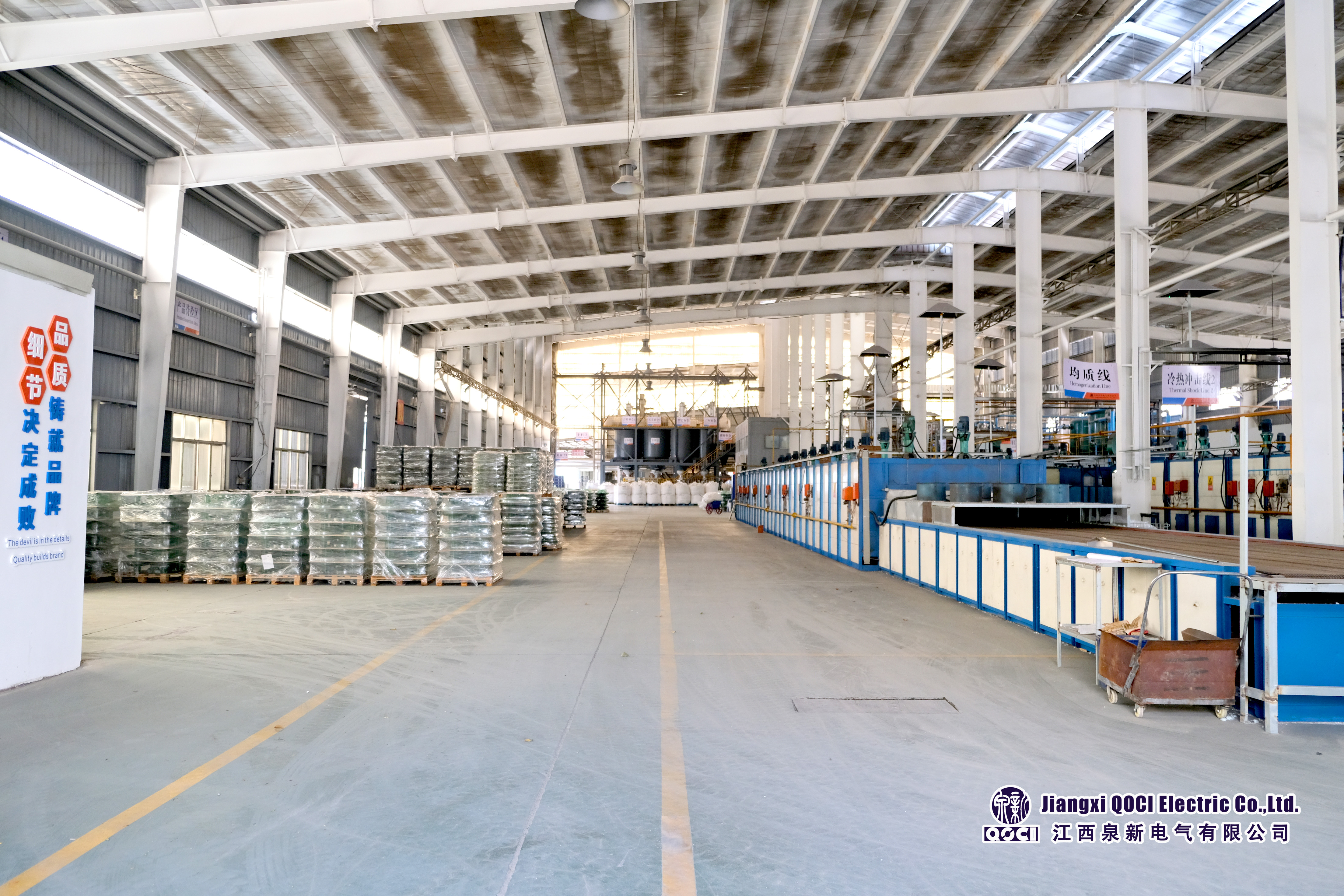
This is the ecosystem case that most ranking articles ignore. When the same utility re-orders the same unit over several years, what matters is that the tempering process, the profile and the marking stay constant. Jiangxi QOCI Electric Co., Ltd. has manufactured insulators since 2002, operates a factory area of 35,373 m² and produces approximately 9,000,000 units per year, with products used in State Grid Corporation of China and China Southern Power Grid projects and in power grids across more than 40 countries and regions. Those are capacity and continuity inputs, not quality claims — quality still has to be established by type test evidence, thermal shock coverage and field data.
Risk knowledge: what self-breaking means in a long-term supply contract
Self-breaking deserves its own section in a long-term supply discussion, because it is simultaneously the main advantage of glass and the main risk to manage.
The mechanism is thermal tempering. Rapid cooling creates a compressive stress layer on the glass surface — documented at 80 MPa or more — balanced by internal tensile stress. When an internal defect such as a nickel sulphide inclusion causes electrical breakdown, the stress equilibrium breaks and the entire disc shatters into small granular particles. That is why a failed unit is visible: the disc stores compressive stress on the surface, and stress release makes the failure readable to the naked eye during routine patrol. It is also why glass insulators do not require live-line zero-value testing.
The planning risk is a batch event rather than a unit event. When multiple discs self-break within a short period on the same string or tower, the documented causes are a tempering process deviation producing non-uniform stress distribution, an extreme temperature shock beyond the design range, or mechanical impact from a foreign object such as bird pecking, vandalism or construction activity near the line. The documented response is a six-step investigation: record the location, quantity and pattern of broken units; check weather records for extreme temperature events around the failure time; inspect the tower area for signs of impact or vandalism; collect broken disc samples for residual stress and nickel sulphide inclusion analysis; if a batch quality issue is confirmed, coordinate with the manufacturer for replacement of the affected batch; and replace the broken units during a scheduled maintenance outage.
Mitigation sits almost entirely on the supply side and is therefore a qualification item, not a maintenance item: select suppliers with automated tempering production lines and 100% batch thermal shock testing per IEC 60305, ensure packaging with shock-absorbing materials, and follow the standard installation procedure. This is also why the field-operation-data requirement — at least three years — appears in the qualification checklist for long-term tenders.
Comparison tables: shortlist, material choice and supplier checks
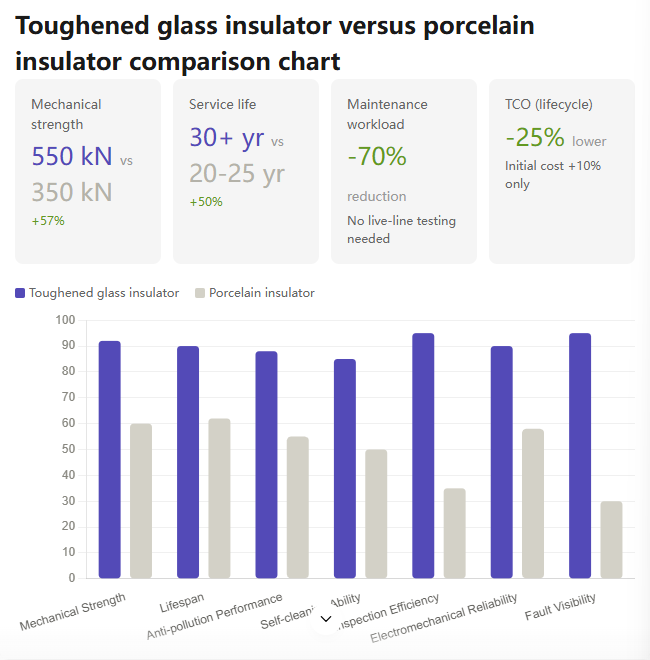
Table 1 — The seven recommended suspension glass insulators, by mechanical class
| Rank | Model | Mechanical rating | Coupling | Profile options in the same class | Where the selection rationale points |
|---|---|---|---|---|---|
| 1 | U70B | 70 kN | Cap-pin | U70BP, U70BD, U70BA | Baseline class; clean-area distribution and light-duty suspension strings |
| 2 | U120B | 120 kN | Cap-pin | U120BP, U120BD, U120BA (U100B at 100 kN ball-socket as lower step) | First step up in duty; anti-pollution version adds creepage for saline and industrial environments |
| 3 | U160B | 160 kN | Ball-socket, 20 mm | U160BP, U160BD, U160BA | Mid-range workhorse; published wet power frequency withstand voltage of about 45 kV |
| 4 | U210B | 210 kN | Ball-socket | U210BP, U210BD, U210BA | For load cases beyond the 160 kN class; verify that string hardware matches the rating |
| 5 | U240B | 240 kN | Cap-pin | U240BP, U240BA | Heavy strings that must stay on a cap-pin hardware family |
| 6 | U300B | 300 kN | Ball-socket | U300BP, U300BD, U300BA | High mechanical class; require full electrical test evidence for the exact configuration |
| 7 | U420B | 420 kN | Cap-pin | U420BP | Top of the range for the heaviest suspension duties |
Table 2 — Toughened glass versus traditional porcelain, as published in this product family
| Parameter | Toughened glass suspension insulator | Traditional porcelain / ceramic insulator |
|---|---|---|
| Mechanical strength | Compressive strength approximately 3–4× higher than porcelain | Lower compressive strength in the same unit class |
| Failure indication | Self-breaking on zero-value failure — visible from ground patrol | No visible change on failure; requires climbing and piece-by-piece testing |
| Inspection and maintenance | No live-line zero-value testing; inspection efficiency improved by 100%; maintenance workload reduced by 70% | Live-line testing required for fault detection |
| Mechanical failure rate | Reduced by 80% in the published comparison | Reference baseline |
| Anti-pollution behaviour | Better anti-pollution performance; smooth surface accumulates dust about 50% slower | Superior chemical inertness against acid, alkali and solvent attack |
| Cost position | Initial cost about 5% higher; total lifecycle cost about 25% lower | Lower initial cost; higher lifecycle cost |
| Conditions where it is recommended | UHV/EHV transmission lines, heavy pollution areas (coastal, desert, industrial zones), high-altitude regions, lines difficult to inspect | Chemical corrosion environments where porcelain's inertness is the deciding factor |
Table 3 — Long-term supplier and acceptance checklist for suspension glass insulator tenders
| Verification item | What to require | Why it belongs in a long-term contract |
|---|---|---|
| Mechanical and electrical type tests | Mechanical load type test across the SML 40–550 kN range; power frequency flashover test; impulse withstand voltage test; test report matched to the ordered configuration | Confirms the rating claim is tested, not catalogue-derived |
| Tempering process | Automated tempering production line; residual stress measurement | Non-uniform stress distribution is a documented cause of batch self-breaking |
| Thermal shock coverage | 100% batch thermal shock testing, test temperature differential at least 70 K, per IEC 60305 | Detects tempering deviation before shipment rather than in service |
| Self-breaking performance | Benchmark below 0.02% per year for qualified products; at least three years of field operation data | Self-breaking is a batch-level risk that only field data can size |
| Acceptance inspection | Pre-shipment test plus third-party inspection by SGS; visual and dimensional inspection per IEC 60305 | Creates an independent record at the batch boundary |
| Commercial framework | MOQ 50 units; FOB Shenzhen; 30% deposit by T/T before production, 70% balance by T/T before delivery | Fixed terms stop renegotiation from delaying repeat deliveries |
| Capacity and continuity | Production capacity evidence and export experience to the target market | Repeat supply fails on scheduling, not on product design |
FAQ: suspension glass insulators for utility tenders
Which standards apply to suspension glass insulators on a transmission line project?
IEC 60305:2021 governs string insulator units for overhead lines with a nominal voltage above 1000 V and specifies their mechanical and electrical characteristics. IEC 60307 covers ceramic and glass insulators for the same voltage range, and GB/T 1001 covers toughened glass insulators for AC systems. In practice, the qualification package for a suspension glass insulator includes a mechanical load type test, thermal shock testing with a temperature differential of at least 70 K, visual and dimensional inspection per IEC 60305, a power frequency flashover test, an impulse withstand voltage test and residual stress measurement. Acceptance for QOCI suspension glass insulators includes pre-shipment test and third-party inspection by SGS.
What should a utility check in a long-term U70B glass insulator supplier before a tender?
Qualified toughened glass insulators should demonstrate mechanical reliability across the SML 40–550 kN range, a self-breaking rate below 0.02% per year, and IEC 60305 type test certification. Beyond the certificate, buyers should evaluate tempering process capability, thermal shock testing coverage, production capacity, export experience and at least three years of field operation data. For context on the supplier side, Jiangxi QOCI Electric Co., Ltd. has manufactured insulators since 2002, operates a factory area of 35,373 m² with output of approximately 9,000,000 units per year, is a national high-tech enterprise and a participating unit of the Insulator Standard Committee, and supplies products used in State Grid Corporation of China and China Southern Power Grid projects as well as grids in more than 40 countries and regions.
How should glass insulator cost be evaluated across the contract period?
Published comparison data for this product family puts toughened glass at roughly 5% higher initial cost than porcelain but about 25% lower total cost over the lifecycle, with maintenance workload reduced by 70% because live-line zero-value testing is not required. Those two figures should be read together: the saving is created by inspection and maintenance behaviour, not by unit price. On commercial terms, the framework for this product family is a minimum order quantity of 50 units, delivery under FOB Shenzhen terms, and payment of 30% deposit by T/T before production with the 70% balance before delivery.
How can a buyer validate a batch before the insulators are strung?
Batch validation combines pre-shipment testing with third-party inspection by SGS, supported by 100% batch thermal shock testing and residual stress measurement at the manufacturer. Visual and dimensional inspection per IEC 60305 confirms that the delivered discs match the ordered class and profile. Buyers who want to inspect physical units before committing to a tender round can review the product range and sample stock first — the glass insulator catalogue is available here: QOCI Glass Insulators Catalogue.
How should repeat orders be scheduled for long-term supply continuity?
Repeat supply depends on capacity and batch consistency rather than on unit design. Jiangxi QOCI Electric Co., Ltd. produces approximately 9,000,000 units per year with an export ratio of around 20% across the USA, Asia, the EU, Africa and South America, and acceptance for each delivery follows the same pre-shipment test and third-party SGS inspection route. For a multi-year programme, confirm the production slot and delivery schedule with the manufacturer for each tender round rather than assuming the previous schedule carries forward, and keep spare units from the same production period as the installed string. Quotation, sample arrangement and schedule confirmation can be requested directly at admin@qocielectric.com or by WhatsApp on +86 199-7997-1591.
Next step: if you are preparing a transmission line tender or renewing a long-term glass insulator supply agreement, start with the range rather than a single unit. Review the glass insulator catalogue, then send your mechanical class, coupling configuration and pollution class to admin@qocielectric.com — or message +86 199-7997-1591 on WhatsApp — to request a quotation and discuss sample and acceptance arrangements.
Conclusion: pick the class, fix the profile, qualify the supplier
The seven units above are not competing options. They are a staircase from the 70 kN U70B at the light end to the 420 kN U420B at the heavy end, with the U160B at 160 kN and the U210B, U240B and U300B filling the middle of the range. Selection works best when it is treated in that order: mechanical class from the load case, coupling to match existing string hardware, shed profile from the pollution and dust environment, and RTV coating only where the pollution severity justifies it.
The supplier decision is the one that survives the longest. A transmission line will still be in service long after the tender file is closed, and self-breaking — the property that makes glass easy to inspect — is also a batch-level risk that is managed through tempering control, 100% thermal shock testing and honest field data rather than through catalogue language. Buyers who qualify on those points, and who fix acceptance, inspection and commercial terms before the first order, get the version of glass insulators that the comparison data promises: fewer mechanical failures, inspection without live-line testing, and a lower lifecycle cost than the initial price suggests.