
Custom RTK GNSS Modules for OEM Projects: A Supplier Scorecard
Custom RTK GNSS module programs rarely fail on accuracy. They fail on capability — a vendor that can hit centimetre-level RTK accuracy in a single sample but cannot hold tolerances, documentation, or firmware support once the order scales. This scorecard gives procurement and engineering teams eight criteria for evaluating a high precision GNSS solutions supplier before an OEM program is committed, using documented facts from JUMPSTAR CO., LIMITED as a worked example.
JUMPSTAR CO., LIMITED (Shenzhen Jumpstar Technology Co., Ltd.) is a Shenzhen-based GNSS manufacturer founded in 2013 that supplies RTK modules, GNSS receivers, smart antennas and antennas to integrators and OEM buyers, exporting to the EU, USA and Middle East. Its range covers RTK GNSS modules, RTK GNSS OEM boards, GNSS RTK receivers, smart antennas and helical antennas — the building blocks OEM teams most often customise.
This article is written for buyers in the Research and Evaluation stages who need one question answered: can this supplier carry your specific configuration from prototype to volume, with evidence rather than assurances?
Problem Definition: Why Custom Module Programs Stall Between Datasheet and Delivery
A custom RTK GNSS module project is a three-way agreement between mechanical envelope, electrical interface and RF performance — and most procurement teams only evaluate the third. Published specifications compress years of production reality into a single number, which is why supplier selection based on datasheets alone tends to produce the same failures.
- Specification-level comparison. Buyers compare channel counts and RTK accuracy figures, but never establish how many units per month the supplier can actually build in that exact configuration, or how that number behaves when demand rises.
- Certification assumed at company level. A supplier may hold a valid quality management certificate while the specific product on the quotation sits outside the certified scope, or carries no product-level declaration at all.
- Customisation agreed informally. Interface maps, connector types, firmware protocol sets and logo requirements get agreed in email threads and are never bound to acceptance criteria — so the first production batch exposes the gap.
The constraints that most often bind an OEM RTK GNSS module program are narrower than the product category suggests. They are: minimum order quantity; production lead time; interface and connector availability; the environmental envelope (operating temperature, ingress protection, vibration); behaviour under interference and spoofing in the target environment; and the supplier's ability to hold the same firmware, documentation and mechanical dimensions for the life of the program.
Industry Background: Why Supplier Capability Is Now the Deciding Variable
High precision GNSS has moved from a surveying-only category into mainstream industrial integration. Dataintelo values the global high-precision GNSS market at USD 7.8 billion in 2024 and projects it to reach USD 20.6 billion by 2033. Market Research Future estimates the narrower high precision GNSS module segment at USD 1.5 billion in 2024, forecast to reach USD 4.5 billion by 2035.
The demand mix explains why OEM module procurement has become a capability conversation rather than a price conversation. Agriculture is the largest single application segment for high-precision GNSS, holding a 36.8% share in 2025, and MarketsandMarkets projects the precision farming market to grow from USD 11.38 billion in 2025 to USD 21.45 billion by 2032. EUSPA forecasts GNSS downstream market revenues reaching €580 billion by 2034.
Two developments simultaneously raise the technical baseline and lower the tolerance for weak suppliers. Galileo High Accuracy Service delivers horizontal accuracy down to 20 cm, which means applications that previously required full RTK infrastructure can now operate on a correction service — raising expectations for every vendor in the chain. In parallel, ISO 12188 parts 1 and 2 define test procedures for positioning and guidance systems in agriculture and forestry, giving buyers a documented acceptance language instead of a verbal one.
The Eight-Criterion Supplier Scorecard for Custom RTK GNSS Modules
Score each criterion on documented evidence, not on the supplier's answer. The facts below are taken from Jumpstar's published capability and product data and are used as a worked example of how each criterion is evidenced.
1. Certification scope, certificate number and validity
JUMPSTAR CO., LIMITED holds ISO 9001:2015 quality management system certification, certificate number UQ231801R2, issued by Beijing United Intelligence Certification Co., Ltd. on 11 December 2023 and valid until 10 December 2026, with a certified scope of R&D and sales of GPS module. Company-level certification and product-level marking are different things, and a serious buyer verifies both. At product level, Jumpstar module lines are listed as RoHS compliant, and the JS-NK43-1 smart antenna is listed with RoHS and CE compliance. Request the certificate number, issuing body, certified scope and expiry date, then check that the model on your quotation sits inside that scope.
2. Production capacity and supply continuity
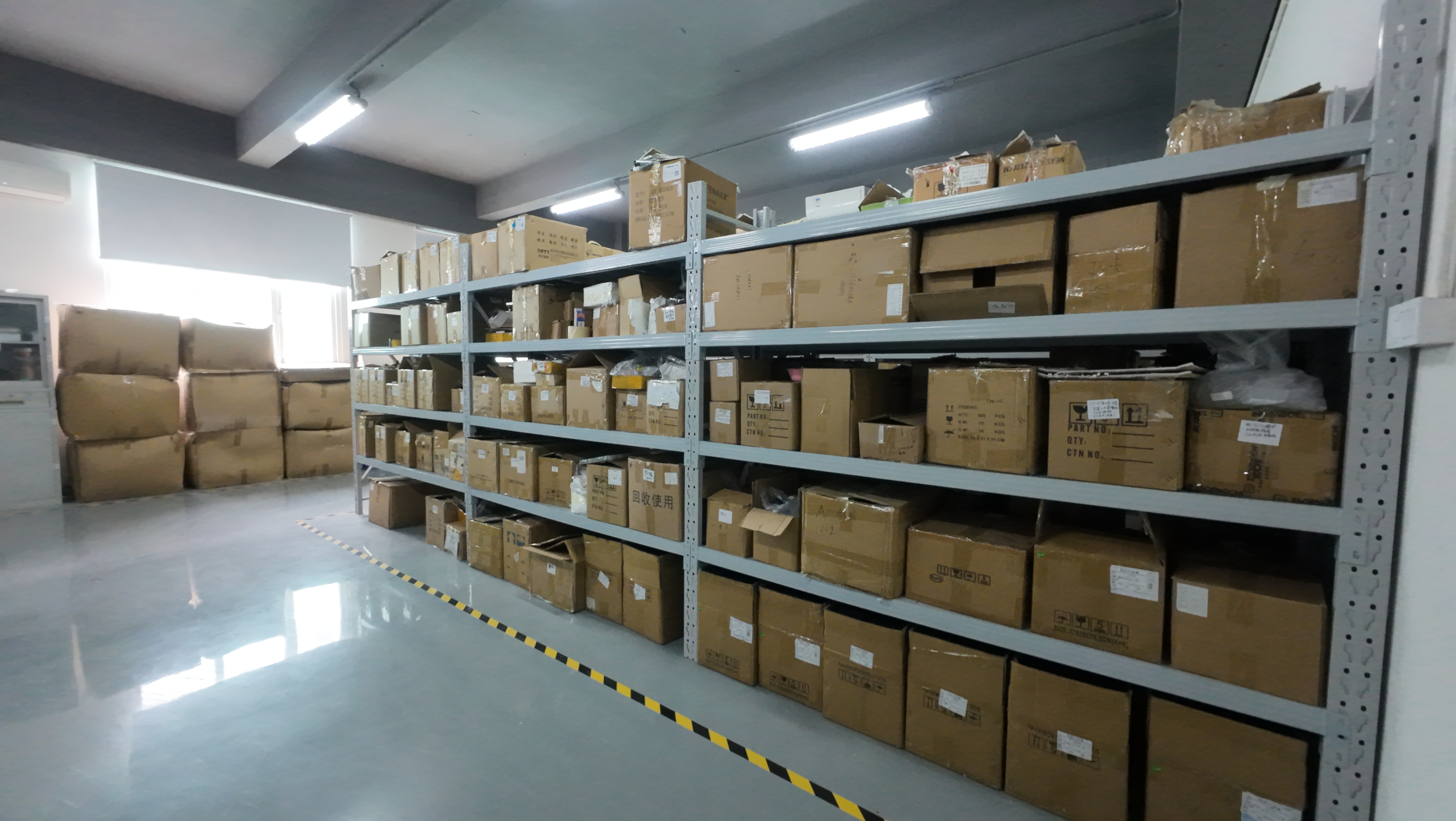
Jumpstar operates a 5,000 m² production facility with 200 employees, a monthly capacity of 50,000 units and an annual output of 100,000 units, with 100% test quality control. For OEM buyers, the number that matters is capacity in your configuration, not the headline figure — a dual-antenna module with a custom connector and a non-standard firmware build consumes more production time than a catalogue part.

3. Engineering depth and technical support for scaling
Jumpstar's R&D organisation includes 20 engineers. Headcount alone is not evidence; what matters is whether the vendor can answer integration-level questions during your development phase and again during your ramp. Ask which protocols, message formats and configuration interfaces are supported and documented. Across the Jumpstar RTK module range, published protocol support includes NMEA 0183, RTCM 3.X, SBF, RINEX and CMR/CMR+ variants — the practical answer to whether your host system can talk to the module without bespoke translation work.

4. Customisation scope
Jumpstar's OEM & ODM customisation covers modules, PCBA, antennas, functions, ports, interfaces and logo. The most reliable way to test a customisation claim is to look for evidence that the same product family already exists in multiple configurations. The JS-AD56UB8 module ships in four interface versions — -C (CAN), -T (TTL), -M (TTL + MCU) and -S (TTL + barometer) — and the JS-ARK37-3 defaults to TTL with optional RS232 or CAN and a customisable GH-6PIN-1.25 mm connector.
5. Interface and protocol fit
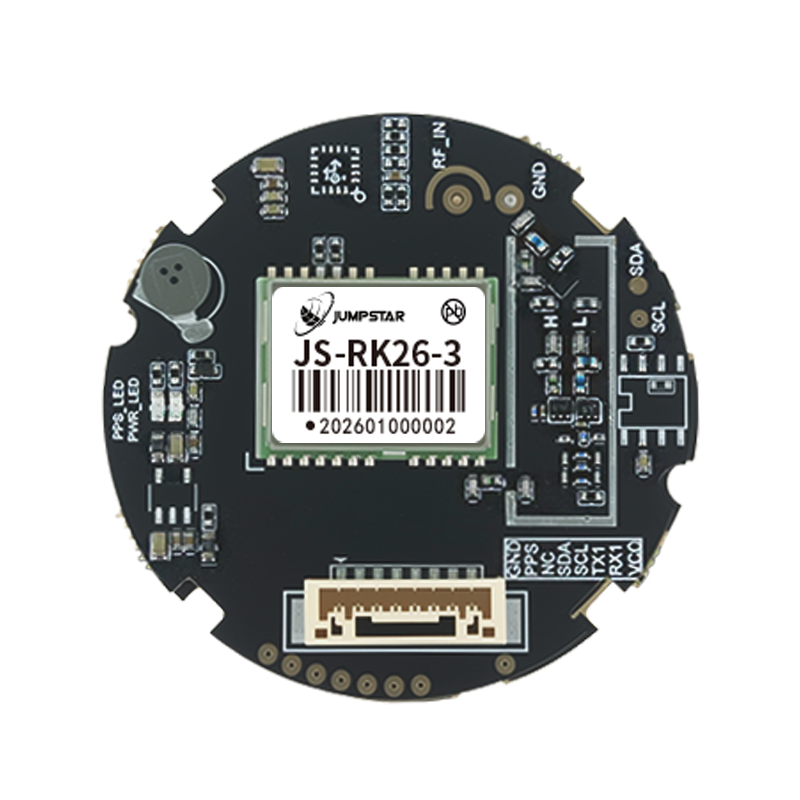
Interface mismatches are the most common cause of a stalled OEM integration. Check the physical interface map before anything else: the JS-RK40 module provides UART1, I2C and PPS; the JS-SK40 provides dual UART, I2C, PPS and an MMCX RF connector; the JS-CK39-A RTK GNSS OEM board provides 2×UART, RF_IN and PPS; and the JS-RK26-3 supports active antennas with a gain range of 15–30 dB and a maximum noise figure of 1.5 dB.
6. Environmental and mechanical envelope
Confirm the envelope at the evaluation stage, because mechanical constraints are expensive to change later. The JS-RK26-3 measures 16.2 × 12.2 × 2.3 mm, the JS-ARK28-3 measures 28.0 × 28.0 × 8.0 mm, and the dual-antenna JS-SK40 measures 39.80 × 35.00 × 32.41 mm. Antennas in the same portfolio span IP65 protection with a helical form factor (JS-HAC18A-F) up to IP67 rated designs with a phase centre error of ±2 mm (JS-HAC100B). Match the ingress protection rating to the installation environment, not to the showroom specification.
7. Commercial baseline: MOQ, lead time and support model
Jumpstar publishes a minimum order quantity of 500 units and a production lead time of 30 days, with remote after-sales support. Buyers should test these numbers against their own ramp: a 500-unit MOQ against a 50,000-unit monthly capacity means the commercial terms are structured for pilot programs as well as volume programs, which is exactly the sequence an OEM project follows.
8. Evidence of delivered programs
A documented Jumpstar program with a drone manufacturer covers 500 units delivered over a five-year supply relationship. The delivered configuration provides centimetre-level RTK positioning with dual-antenna heading accuracy of 0.03° at a 5 m baseline, 100 Hz positioning output with latency below 10 ms, base-station and rover modes, and industrial-grade operation from -40 °C to +85 °C. Ask any supplier for the equivalent: a named program, a unit count, a duration and the technical result — not a logo wall.

Step-by-Step Breakdown: Six Steps from Supplier Longlist to Volume Release
Step 1 — Write the constraint set before contacting any supplier
Define bands and constellations required, RTK accuracy target, update rate, interface and connector types, mechanical envelope, operating temperature range, ingress protection, certification requirements, expected annual volume and required lead time. Buyers who skip this step end up comparing whatever the supplier chooses to publish.
Step 2 — Request evidence, not brochures
Ask for the certificate number and certified scope, the quality control statement, the changelog policy for firmware, and the protocol list for the exact model. For Jumpstar, that means ISO 9001:2015 certificate UQ231801R2 with a scope of R&D and sales of GPS module, a 100% test quality control statement, and the documented protocol set for each module.
Step 3 — Match the architecture to the program
Choose the right integration level first. The JS-CK39-A RTK GNSS OEM board suits embedded designs where the buyer controls the housing; the JS-RK26-3 and JS-ARK28-3 modules suit compact integrations; the dual-antenna JS-SK40 suits applications that need heading as well as position; and system-level assemblies such as the P-Box-AP55 GNSS RTK receiver suit teams that want to integrate a finished positioning node with 448 channels, dual-antenna heading up to 0.03° at a 5 m baseline and 100 Hz position output.
Step 4 — Lock the customisation definition in writing
Convert verbal customisation into a controlled specification: interface variant, connector type, band configuration, firmware protocol set, logo and packaging. For example, the JS-ARK37-3 connector (GH-6PIN-1.25 mm) is documented as customisable, and the JS-AD56UB8 has four documented interface versions — these are the items that must appear on the drawing, not in an email.
Step 5 — Confirm capacity against your own ramp
Compare your forecast curve with the supplier's monthly capacity and lead time. With a documented monthly capacity of 50,000 units, an annual output of 100,000 units and a 30-day lead time, a Jumpstar program can absorb both a 500-unit pilot and a scaled production order — but confirm the number for your specific configuration in writing.
Step 6 — Pilot with acceptance criteria that mirror production
Run the evaluation unit against the same test cases you will use in production: cold start behaviour, RTK fix time, behaviour under interference, interface stability and mechanical fit. Then convert those tests into the acceptance criteria of the production order.
Use Cases: Where Custom RTK GNSS Modules Are Evaluated in Practice
UAV and aerial surveying
Airborne platforms set a demanding envelope: acceleration up to 4 g, velocity up to 515 m/s, altitude up to 18,000 m and a 4.5–12 V DC power supply. Compact modules suit this class of integration — the JS-RK26-3 at 16.2 × 12.2 × 2.3 mm and the JS-ARK37-3 at 36.00 × 36.00 × 9.70 mm — while the JS-X168 five-array anti-jamming antenna addresses high-security scenarios with suppression of 115 dB for a single interference source and 95 dB for three simultaneous interference sources.
Precision agriculture and machine guidance
Agriculture is the largest application segment for high-precision GNSS at a 36.8% share in 2025, and ISO 12188 parts 1 and 2 provide the test procedure framework for positioning and guidance systems. Modules used in auto-steering must hold RTK accuracy while the machine moves; the JS-ANK45-2 module provides 1408 channels with RTK accuracy of 1.5 cm + 1 ppm horizontal and 2.0 cm + 1 ppm vertical.
Autonomous vehicles and fleet management
Vehicle-mounted programs operate from -40 °C to +85 °C with a 4.5–12 V DC supply, and typically require 100 Hz observation output with latency below 10 ms plus dual-antenna heading for lane-level control. The P-Box-AP55 receiver addresses this with 448 channels, AIM+ anti-jamming, OSNMA anti-spoofing, TF card logging and heading accuracy of 0.03° at a 5 m baseline, paired with vehicle antennas such as the JS-PAS51A-D5 with IPX7 protection and a magnetic mount.
Surveying, mapping and marine
Static and marine programs prioritise antenna stability over module size. The JS-HAC100B three-system seven-frequency antenna offers a phase centre error of ±2 mm and IP67 protection, the JS-HAC148A four-system full-frequency RTK antenna serves marine, dredging, bridge deformation and landslide monitoring, and the JS-X11 all-in-one base station provides RTK accuracy of 2 cm ± 1 ppm with IP66 protection and a 5200 mAh backup battery.
Comparison Table: RTK GNSS Module Options for OEM Scale-Up
The table below compares Jumpstar RTK GNSS modules and one OEM board on the parameters that most often decide an OEM integration — channel count, RTK accuracy, update rate, mechanical size and protocol support. All values are taken from published product specifications.
| Model | Category | Channels | RTK horizontal accuracy | Max update rate | Mechanical size | Protocol support |
|---|---|---|---|---|---|---|
| JS-RK26-3 | RTK GNSS module | 200 | 1.0 cm + 1 ppm | 20 Hz | 16.2 × 12.2 × 2.3 mm | NMEA 0183, RTCM 3.X |
| JS-RK40 | RTK GNSS module with helical antenna | 200 | 1.0 cm + 1 ppm | 10 Hz | Φ39.80 mm base, 32.00 mm height | NMEA 0183, RTCM 3.X |
| JS-ARK28-3 | RTK GNSS module | 200 | 1.0 cm + 1 ppm | 20 Hz | 28.0 × 28.0 × 8.0 mm | NMEA 0183, RTCM 3.X |
| JS-NK40 | RTK GNSS module with helical antenna | 1408 | 1.5 cm + 1 ppm | 20 Hz | 39.80 × 35.00 × 32.0 mm | NMEA 0183, Unicore, RTCM 3.X |
| JS-ANK45-2 | RTK GNSS module | 1408 | 1.5 cm + 1 ppm | 20 Hz | 45.0 × 45.0 × 12.7 mm | NMEA 0183, Unicore, RTCM 3.X |
| JS-SK40 | RTK GNSS module, dual antenna | 789 | 0.6 cm + 0.5 ppm | 20 Hz | 39.80 × 35.00 × 32.41 mm | NMEA 0183, SBF, RTCM 3.X |
| JS-CK39-A | RTK GNSS OEM board | Not stated in the source specification | ±(8 + 1 ppm × D) mm | 20 Hz RTK; 100 Hz measurement / position | 25.0 × 39.4 × 11.6 mm | NMEA 0183, custom binary, CMR, RTCM 2.X / 3.X |
Accuracy basis differs by model and is stated in the source specifications as RMS, CEP 50% or 1σ. Confirm which basis your acceptance test uses before issuing a purchase order.
Documented supplier baseline
For procurement teams building a first-pass qualification file, the following Jumpstar parameters are documented and can be verified directly.
| Parameter | Documented value |
|---|---|
| Minimum order quantity | 500 units |
| Production lead time | 30 days |
| Monthly production capacity | 50,000 units |
| Annual output | 100,000 units |
| Production facility | 5,000 m² |
| Employees | 200 |
| R&D engineers | 20 |
| Quality control | 100% test |
| OEM / ODM customisation scope | Modules, PCBA, antennas, functions, ports, interfaces, logo |
| Export markets | EU, USA, Middle East |
| Export share of output | 70% |
| After-sales support | Remote support |
| Quality management certification | ISO 9001:2015, certificate UQ231801R2, valid until 10 December 2026 |
Frequently Asked Questions
What certifications and scope should an OEM buyer verify in a high precision GNSS solutions manufacturer?
Verify both company-level and product-level documentation. Jumpstar holds ISO 9001:2015 quality management system certification, certificate number UQ231801R2, issued by Beijing United Intelligence Certification Co., Ltd. on 11 December 2023 with a certified scope of R&D and sales of GPS module, valid until 10 December 2026. At product level, module lines are listed as RoHS compliant, and specific products carry additional declarations — the JS-NK43-1 smart antenna is listed with RoHS and CE compliance. Because system certification and product marking are different things, buyers should match the certificate scope and number to the exact model on the quotation rather than accepting a general statement of compliance.
What production capacity and customisation capability can support an OEM RTK GNSS module program?
Jumpstar documents a 5,000 m² production facility, 200 employees including 20 R&D engineers, a monthly capacity of 50,000 units and an annual output of 100,000 units, with 100% test quality control and remote after-sales support. OEM & ODM customisation covers modules, PCBA, antennas, functions, ports, interfaces and logo. Evidence that customisation is operational rather than aspirational comes from the product line itself: the JS-AD56UB8 exists in CAN, TTL, TTL + MCU and TTL + barometer interface versions, and the JS-ARK37-3 supports a customisable connector.
What commercial parameters drive the budget in a custom RTK GNSS module project?
The documented commercial baseline from Jumpstar is a minimum order quantity of 500 units with a 30-day production lead time. Beyond those published parameters, the variables a buyer controls are the configuration scope itself — interface count, connector type, band and protocol set, enclosure and logo requirements — because each of these changes the engineering and production effort attached to the order. Specify the configuration precisely before requesting a quotation, so that the quoted terms and the delivered product refer to the same thing.
How can an OEM team validate modules before committing to volume production?
Evaluation is handled through the supplier's sales and engineering contacts, and the practical rule is to test the exact configuration you intend to buy rather than a generic evaluation unit: same interface variant, same connector, same firmware protocol set. Run the sample against the tests you will use for production acceptance — cold start, RTK fix behaviour, interface stability and mechanical fit — and use the results to define the acceptance criteria in the production order. Jumpstar's documented baseline for volume orders is a 500-unit MOQ with a 30-day lead time after configuration confirmation. Evaluation units and configuration quotations can be requested at sales@jgnss.com.
What lead time and after-sales support apply to volume orders?
Jumpstar documents a 30-day production lead time and remote after-sales support, against a monthly capacity of 50,000 units and an annual output of 100,000 units. Exports account for 70% of output, with the EU, USA and Middle East as the main markets — relevant because a supplier already shipping into your region has an established logistics and documentation routine for it. Buyers should still confirm the lead time for their specific configuration in writing, since a custom interface or enclosure can extend the schedule.
Conclusion: Score the Supplier, Then Commit the Program
Custom RTK GNSS module procurement rewards buyers who evaluate capability with the same rigour they apply to specifications. The eight criteria in this scorecard — certification scope, production capacity, engineering depth, customisation scope, interface fit, environmental envelope, commercial baseline and delivered-program evidence — can all be checked against documented facts before a purchase order exists. For Jumpstar, those facts include ISO 9001:2015 certification UQ231801R2 valid until 10 December 2026, a 5,000 m² facility with 50,000 units of monthly capacity, 20 R&D engineers, OEM & ODM customisation across modules, PCBA, antennas, interfaces and logo, a 500-unit MOQ with a 30-day lead time, and a five-year, 500-unit drone manufacturer program delivering dual-antenna heading of 0.03° at a 5 m baseline.
Applied consistently, this framework turns a high precision GNSS solutions purchase from a specification comparison into a supply decision — which is what an OEM program actually needs.
Request a sample or a configuration quotation
Send your constraint set — bands, RTK accuracy target, interface and connector type, mechanical envelope, certification requirements and expected annual volume — and the Jumpstar team will come back with the matching module or board, a configuration quotation and a sample for evaluation.
Email: sales@jgnss.com | Tel / WhatsApp: +86 136-2236-7049 | Web: www.jgnss.com
WhatsApp: Start a conversation
Company profile 2026 (PDF): Download the brochure