
Decoding the Naming Maze of GNSS Hardware: Receivers, Boards, and Antennas Explained
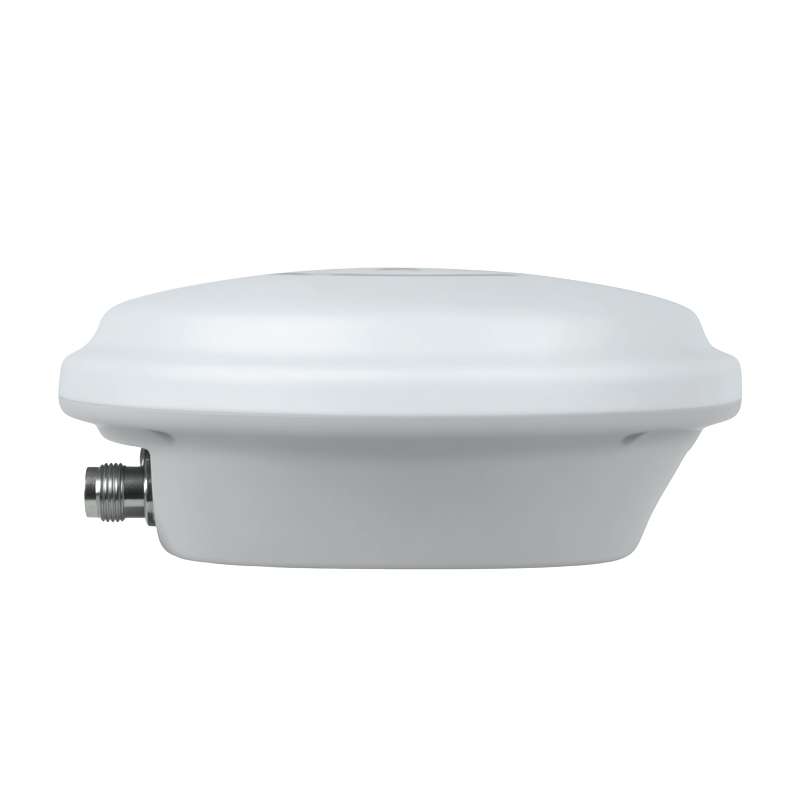
The G27SH-AH: an enclosed all-constellation, all-frequency GNSS receiver — one of the hardware categories this explainer separates.
Ask five suppliers for a "high-precision GNSS solution" and you may receive several physically different objects: a boxed receiver with an aviation plug, a 16 mm RTK board that has to be designed onto your own PCB, a helical antenna that contains no positioning engine at all, and a "smart antenna" that is in fact a board inside a plastic housing. Each is a legitimate product, and each is described online with the same handful of words — receiver, board, module, antenna, RTK, GNSS.
This explainer decodes that vocabulary. It defines the three core hardware categories, describes the role each one plays in a positioning chain, and shows how to read a datasheet so that like is compared with like. Product references are drawn from the verified product list of Shenzhen Jumpstar Technology Co., Ltd. (Jumpstar), a GNSS hardware manufacturer founded in 2013 and headquartered in Shenzhen, China, with a 5,000 m² factory, 200 employees, a 20-engineer R&D team and 100,000 units of annual output.
Problem Definition: Why the Same Words Describe Different Hardware
The naming problem is structural rather than accidental. GNSS hardware is described partly by function — "RTK positioning", "heading output" — and partly by form factor — "module", "board", "boxed receiver". When the two vocabularies mix, four genuinely different products land in the same comparison spreadsheet:
- Enclosed receiver. A finished device with housing, connectors and logging. Example: the G27SH-AH, an all-constellation, all-frequency GNSS positioning and heading receiver with 789 hardware channels, IP67 protection, 2×UART, PPS, CAN, an RF (TNC) port, a GX12 aviation plug and a TF card slot supporting up to 32 GB.
- Embedded board or module. A positioning engine without a housing, designed into the customer's own system. Example: the JS-RK26-3, an RTK GNSS module measuring 16.2 × 12.2 × 2.3 mm that outputs NMEA 0183 and RTCM3.X over UART.
- Antenna only. A radiating element, passive or active, containing no positioning engine. Example: the JS-HAC27A-D2, a helical active GNSS antenna with 28±3 dB LNA gain and a 360° horizontal coverage pattern.
- Smart antenna. A module and its antenna merged into one housing — documented like a module but deployed like a receiver. Example: the JS-MK43, which combines 96 search and 60 tracking channels with an integrated active antenna in a housing with a 47.2 mm base diameter.
The commercial cost of the confusion shows up directly in the numbers. RTK horizontal accuracy across verified Jumpstar products ranges from 0.6 cm + 0.5 ppm (P-Box-X10, P-Box-AP55, X43H-AH, G27SH-AH, JS-SK40) up to 2 cm + 1 ppm (JS-UK43, JS-M6D, JS-UK40). Maximum update rates range from 10 Hz (JS-ARK37-3, JS-M6D, JS-NK43-2's default 1 Hz configurable to 20 Hz) to 100 Hz positioning and observation output (P-Box-X10, P-Box-X6_Pro S). A shortlist that mixes an enclosed dual-antenna receiver with a bare 16 mm module will produce a comparison that looks competitive and is technically meaningless.
Industry Background: Why Category Literacy Matters Now
High-precision positioning has moved from specialist surveying into mainstream machine control, and hardware demand follows. Dataintelo values the global high-precision GNSS market at USD 7.8 billion in 2024, projected to reach USD 20.6 billion by 2033. At component level, Market Research Future estimated the high-precision GNSS module market at USD 1.5 billion in 2024, forecast to reach USD 4.5 billion by 2035.
Demand is concentrated in agriculture, which held a 36.8% share of high-precision GNSS applications in 2025 according to the High-Precision GNSS Market Research Report 2034. MarketsandMarkets projects the global precision farming market growing from USD 11.38 billion in 2025 to USD 21.45 billion by 2032. At the service layer, the Galileo High Accuracy Service (HAS) delivers horizontal accuracy down to 20 cm, and ISO 12188 parts 1 and 2 define test procedures for positioning and guidance systems in agriculture and forestry. "High precision" is therefore defined differently by a satellite service, a test standard and a hardware datasheet — and only the third one is a component you can buy.
On the wider demand side, EUSPA forecasts GNSS downstream market revenues reaching €580 billion by 2034. Estimates of the hardware layer itself diverge by scope: Dataintelo's USD 7.8 billion for high-precision GNSS in 2024 covers solutions, while MarketsandMarkets puts mid- and high-level precision GPS receivers at USD 3.41 billion in the same year. That divergence is the same problem this article addresses one level down: scope, not silicon, is what most often separates two figures labelled "high-precision GNSS".
One-line rule. A receiver is a finished device; a board or module is a component to be designed in; an antenna is an RF component with no positioning engine; a smart antenna is a module plus an antenna in a single housing. Receivers, boards and smart antennas produce a position. An antenna alone never does.
Detailed Solution: The Four Layers of a Positioning Chain
A high-precision GNSS system is a chain, and each hardware category in the naming maze occupies one link. Reading a datasheet becomes much simpler once you know which link a product sits on.
Layer 1 — Antenna and RF capture
The antenna converts satellite signals into an electrical signal. It is either passive (a ceramic patch or helical element feeding the receiver directly) or active (the same element plus a low-noise amplifier powered by the receiver). The distinction is visible in datasheets. The JS-ARP30-2 standard-precision module uses a built-in dual-band passive antenna, with an L5 element of 25 × 25 × 4 mm stacked on an L1 element of 18 × 18 × 4 mm. The JS-ATP36-M module carries a built-in dual-band passive antenna of L5 36.0 × 36.0 × 3.0 mm plus L1 25.0 × 25.0 × 4.0 mm. The JS-ARK37-3 RTK module defaults to a passive antenna (L1 25 × 25 × 2 mm, L5 35 × 35 × 2 mm) with 4 mm variants optional.
Boards that expect an external active antenna state the required gain window instead. The JS-RK26-3 RTK module specifies an active antenna with a minimum gain of 15 dB, a maximum gain of 30 dB and a maximum noise figure of 1.5 dB, and is also compatible with a passive antenna. The JS-SK40 uses a dual-antenna configuration — a built-in active antenna plus an external MMCX connector — with 3.0–5.5 V antenna bias and 15–35 dB gain.
Layer 2 — RF front end, baseband and RTK engine
This is the board or module layer: the receiver front end, baseband processor and RTK engine on a PCB, usually with no housing, no display and a UART or CAN interface. The JS-ANK45-2 RTK module carries 1408 super channels, an RTK initialisation time under 5 seconds typical, and RTK horizontal accuracy of 1.5 cm + 1 ppm, in a 45.0 × 45.0 × 12.7 mm package weighing under 40 g. The JS-M6D delivers RTK horizontal accuracy of 2 cm + 1 ppm at a baseline up to 30 km from a 22.0 × 17.0 × 2.4 mm LGA package. The JS-ARK37-3 adds an antenna to the board itself — 200 tracking channels, RTK horizontal 1.0 cm + 1 ppm, in 36.00 × 36.00 × 9.70 mm and under 21 g.
Layer 3 — Enclosure, interfaces, logging and host integration
The receiver layer wraps a board in a housing and adds connectors, protection and data handling. The P-Box-X10 is a 544-channel triple-frequency dual-antenna receiver measuring 74 × 50 × 12.6 mm and 67.5 g, with 3×UART, Ethernet, Type-C, 1PPS, EVENT, ANT1/ANT2 and a TF card slot, operating from 4.5–12.0 V DC and rated from −40 °C to +85 °C. The X43H-AH offers the same 789-channel class as the G27SH-AH in a 43.8 × 34.0 × 11.5 mm, sub-25 g package with 2×UART (TTL), Type-C, dual RF ports and a TF card slot supporting up to 32 GB.
Layer 4 — Heading, correction data and service layer
Above the hardware sits the motion and service layer. Dual-antenna receivers such as the P-Box-AP55 (AP55H heading variant), X43H-AH, G27SH-AH and JS-SK43H-AH report heading accuracy of 0.15° at a 1 m baseline and 0.03° at a 5 m baseline. Corrections arrive over RTCM: the P-Box-AP55 supports RTCM 2.x/3.x, CMR v2.0 and CMR+, while modules such as the JS-ARK37-3 support NMEA-0183, RTCM 3.X and a custom binary protocol.

JS-ANK45-2: an embedded RTK module — the component layer of the positioning chain, with no housing and no antenna connector.
Category 1 — Full Receivers: Boxed, Connector-Ready, Turnkey
A full receiver is the category most buyers picture when they search for high-precision GNSS solutions. It contains the board, the housing, the connectors and the data handling, and it can be mounted, powered and interrogated without further electronics design. The P-Box-AP55 uses 448 hardware channels, quotes RTK horizontal accuracy of 0.6 cm + 0.5 ppm and vertical of 1 cm + 1 ppm, runs position-only output at 100 Hz (RTK plus attitude at 20 Hz), and draws 160–240 mA at 5 V from a 4.5–12.0 V DC supply.
The G27SH-AH pushes the same idea into harsher environments: 789 channels, RTK horizontal 0.6 cm + 0.5 ppm, standalone 1.2 m, heading 0.15° at 1 m and 0.03° at 5 m, IP67 protection, and an optional 410–470 MHz radio with −129 dBm sensitivity and 5 km range. Its interfaces — 2×UART, PPS, CAN, RF (TNC) and a GX12 aviation plug — are what distinguishes a receiver from a board, as much as the enclosure.
Two products deliberately blur the boundary, which is why they appear in this category with a note. The JS-X11 is described as an all-in-one RTK smart antenna and base station: RTK 2 cm ± 1 ppm, PPP ≤ 50 cm static, 4G Cat.1 and BLE 5.2 connectivity, a 5200 mAh 3.7 V backup battery giving up to 10 hours of working time, IP66, 122 × 122 × 43.09 mm and 375 g. Functionally it is a receiver; physically it looks like an antenna. The JS-X168 is a five-array anti-jamming GNSS receiver with an integrated anti-jamming antenna, quoting 115 dB of anti-jamming capability against a single interference and 95 dB against three, in a 168 × 168 × 32 mm, 555 g housing with NMEA output on TX1 and SBF on TX2.
Category 2 — Embedded Boards and Modules: The Component Layer
Boards and modules are where most integration projects actually start. They have no housing and typically no antenna connector, and they are selected on three axes: accuracy class, update rate, and interface count. RTK modules in the verified list divide into recognisable accuracy tiers.
- 0.6 cm + 0.5 ppm class: JS-SK40, a 789-channel RTK module with a built-in active antenna plus external MMCX port, 20 Hz maximum update rate and 7 s RTK initialisation at a baseline under 30 km.
- 1.0 cm + 1 ppm class: JS-ARK37-3 (200 channels, 10 Hz, 36 × 36 × 9.7 mm), JS-RK26-3 (200 channels, 20 Hz, 16.2 × 12.2 × 2.3 mm) and JS-RK26-U (200 channels, 10 Hz, GNSS+INS).
- 1.5 cm + 1 ppm class: JS-ANK45-2 (1408 channels, 20 Hz) and JS-NK40 (1408 channels, 20 Hz, active helical antenna with 35 mm diameter and 25 mm height).
- 2.0 cm + 1 ppm class: JS-M6D (96 search and 60 tracking channels, 10 Hz, 3.3 V typical supply) and JS-UK40 (192 search and 60 tracking channels, GPS RTK 20 Hz, full GNSS RTK 7 Hz).
Standard-precision modules sit below that tier and serve a different purpose. The JS-ATP36-M is a multi-mode dual-band L1+L5 module with 135 channels, horizontal accuracy of 1.0 m (L1+L5) with CEP 50%, 1PPS timing accuracy of 10 ns, and interfaces of SCL, RXD, TXD, GND, VCC and SDA. The JS-AP10-H is a single-frequency multi-mode module in a 10.5 × 9.7 × 2.3 mm package with GNSS accuracy of 2.5 m, SBAS 2.0 m and D-GNSS 1.0 m. The JS-AD56UB8 targets UAV flight control with a U8 core chip, over 2 million effective correlators, and variants for CAN, TTL, TTL+MCU and TTL+barometer interfaces.
A third sub-category pairs GNSS with inertial sensing for environments where satellite signals drop out. The JS-TP26-U is a dual-band L1+L5 GNSS+INS module with 135 channels, six-axis MEMS inertial sensing, single-point horizontal accuracy of 1.0 m (L1+L5) CEP and GNSS+INS accuracy better than 1.5 m CEP. The JS-RP26-U states that GNSS signal loss within 120 seconds produces a positioning error of 5% or less.
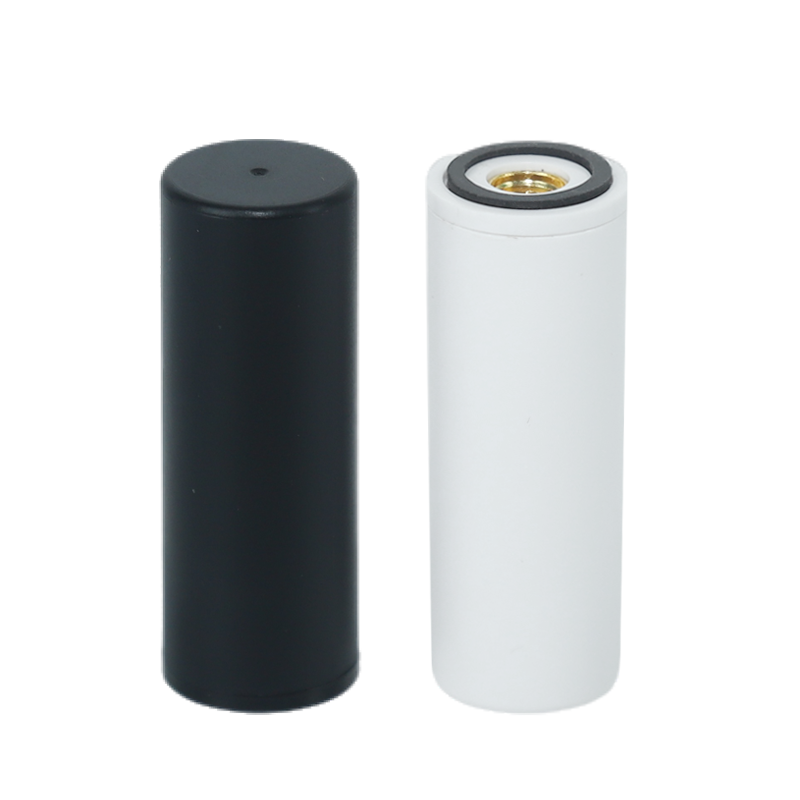
JS-HAC18A-F: a standalone helical antenna — an RF component that only produces a position when paired with a module or receiver.
Category 3 — Antennas: Passive Elements, Active Helicals and Vehicle Mounts
The assigned role of an antenna in the positioning chain is signal capture only, and this is the category most often mislabelled as a "GNSS solution". Three sub-types exist in the verified product list.
Helical antennas for UAV and surveying platforms. The JS-HAC18A-F is a helical active antenna measuring Φ18 mm × 50.8 mm and weighing 10.8 g, with 33±2 dB LNA gain, noise figure ≤2 dB, axial ratio ≤3 dB, 360° horizontal coverage and IP65 protection when mated with an SMA connector. The JS-HAC42A-F scales up to 37±3 dB LNA gain in Φ44.8 × 42 mm at 27.3 g, and the JS-HAC27A-D2 sits between them at 28±3 dB gain in Φ28.2 × 59.3 mm.
Survey-grade and vehicle-mounted antennas. The JS-HAC148A is a quad-system full-frequency RTK surveying antenna with a phase centre error of ≤2 mm, 4.5 dBic maximum gain, ≤3 dB axial ratio at zenith, TNC-K connector, IPX6 protection and a strong magnetic base. The JS-HAS37 is an L1/L5 dual-band active antenna with ceramic patches of L1 25 × 25 × 4 mm and L5 36 × 36 × 4 mm, 28±3 dB LNA gain and an SMA-J3 connector. The JS-PAS51A-D5 is a vehicle-mounted external antenna with 28±3 dB LNA gain, a 51.4 mm main body, NdFeB magnetic mounting and IPX7 protection, designed for vehicle navigation, fleet management and commercial vehicle monitoring.
Patch elements inside modules. When an antenna is embedded inside a module, it usually appears in the datasheet as a passive patch dimension rather than as a product. This is why "passive antenna" and "antenna module" are not synonyms: the JS-ARP30-2, JS-ATP36-M and JS-ARK37-3 all contain passive elements, but the product being sold is the module.
Category 4 — Smart Antennas: The Hybrid That Confuses Shortlists
Smart antennas are the single biggest source of naming confusion because they are modules that look like antennas and behave like receivers. The JS-UK43 is a multi-band multi-mode RTK module with 192 search and 60 tracking channels, tracking sensitivity of −167 dBm, RTK horizontal accuracy of 2 cm + 1 ppm, a passive antenna of Φ35 × 25 mm, 2×UART and I2C interfaces, running from 3.3–5.5 V with 110–140 mA acquisition current. The JS-NK43-1 adds INS integration, quoting RTK horizontal 1 cm + 1 ppm and vertical 2 cm + 1 ppm, 120 search plus 80 tracking channels, and RTK/positioning output at 20 Hz with IMU output at 50 Hz.
The dual-antenna variants introduce heading. The JS-SK43H-AH carries 789 channels, RTK horizontal 0.6 cm + 0.5 ppm and heading accuracy of 0.15° at 1 m and 0.03° at 5 m baseline, with RTCM3.X (MSM included) support. The JS-CK43-2 combines RTK+INS with 0.8 cm + 1 ppm horizontal RTK accuracy, 50 Hz positioning and 100 Hz IMU output, and a dead-reckoning error of 3%d. For buyers, the practical test is simple: if the product includes a positioning engine and an integrated antenna in one housing, evaluate it as a module with an antenna, not as an antenna.
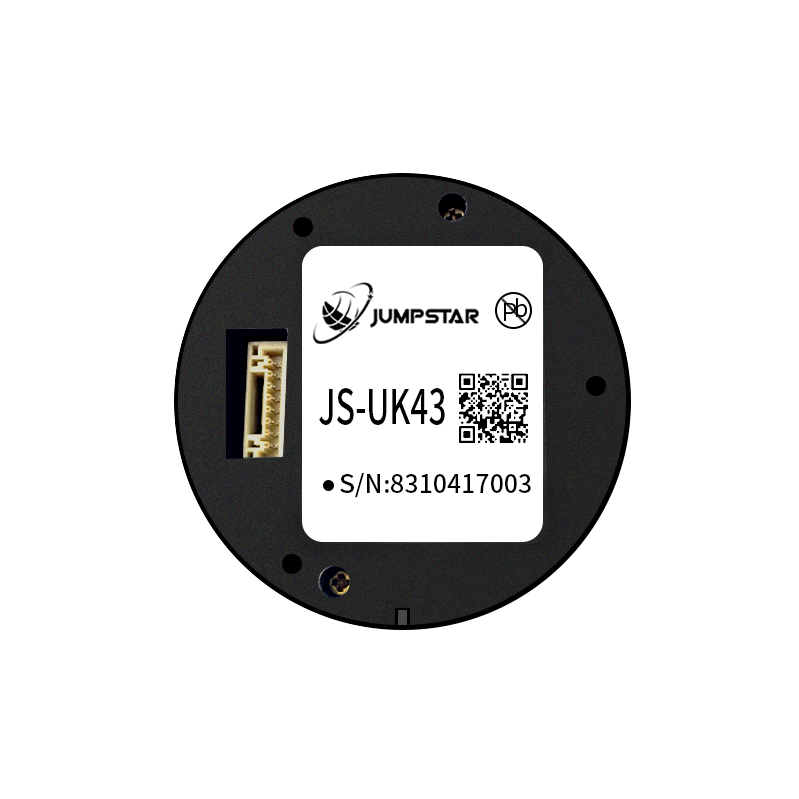
JS-UK43: a smart antenna. The housing suggests an antenna; the 192 search and 60 tracking channels make it a module.
Step-by-Step: How to Decode a GNSS Product Name and Datasheet
- Identify the form-factor term first, not the accuracy figure. "Receiver", "board", "module", "smart antenna" and "antenna" are form factors. The accuracy claim only means something after the form factor is fixed. A 0.6 cm + 0.5 ppm claim on an enclosed receiver (P-Box-X10) and on a 39.80 × 35.00 × 32.41 mm module (JS-SK40) describe different integration work.
- Check whether the antenna is inside, outside, or absent. JS-ARP30-2 carries a built-in dual-band passive antenna. JS-RK26-3 expects an external active antenna of 15–30 dB gain and ≤1.5 dB noise figure, or a passive antenna. JS-HAC18A-F is an antenna with no engine and must be paired with a module or receiver.
- Read accuracy with its error term and baseline condition. Values of the form "1.0 cm + 1 ppm" include a proportional term per kilometre of baseline; the JS-M6D quotes its 2 cm + 1 ppm RTK figure at a baseline up to 30 km, while the JS-NK43-1 quotes RTK initialisation of ≤6 seconds at a baseline under 10 km.
- Match update rate to the motion profile, not to the marketing tier. Enclosed receivers reach 100 Hz positioning output (P-Box-X10, P-Box-X6_Pro S), while the JS-UK43 quotes RTK at 20 Hz on GPS and 7 Hz across the full constellation. For a vehicle moving at 515 m/s — the operational limit stated for several Jumpstar receivers — the difference matters.
- Count interfaces and environmental ratings before comparing price. The X43H-AH offers 2×UART (TTL), Type-C, dual RF ports and a TF slot supporting up to 32 GB at −40 °C to +85 °C; the JS-RK26-3 offers UART, 1PPS, I2C and RF_IN across 2.0–3.6 V. Different interface counts mean different carrier boards, cable looms and field-service costs.
Comparison Table: Verified Specifications by Hardware Category
| Category | Verified example | RTK accuracy (verified) | Channels / engine | Antenna arrangement | Integration role |
|---|---|---|---|---|---|
| Enclosed receiver (dual antenna) | P-Box-X10 | Horizontal 0.6 cm + 0.5 ppm; standalone 1.2 m | 544 channels; position/observation 100 Hz | Dual RF ports; antenna bias 3.0–5.5 V; max 150 mA at 5 V | Turnkey position and heading; 3×UART, Ethernet, Type-C, TF slot |
| Enclosed receiver (harsh environment) | G27SH-AH | Horizontal 0.6 cm + 0.5 ppm; standalone 1.2 m | 789 channels; 20 Hz max update | External antenna via RF (TNC); GX12 aviation plug | IP67 field deployment; optional 410–470 MHz radio, TF slot up to 32 GB |
| Embedded RTK module | JS-ARK37-3 | Horizontal 1.0 cm + 1 ppm; single point 1.0 m | 200 tracking channels; 10 Hz | Default passive antenna L1 25 × 25 × 2 mm, L5 35 × 35 × 2 mm | Board-level integration; TTL, optional RS232/CAN, 36 × 36 × 9.7 mm |
| Embedded RTK module (high channel count) | JS-ANK45-2 | Horizontal 1.5 cm + 1 ppm; vertical 2.0 cm + 1 ppm | 1408 super channels; 20 Hz | Passive high-gain integrated antenna | UAV, agriculture and surveying integration; 45.0 × 45.0 × 12.7 mm, under 40 g |
| Smart antenna (RTK + heading) | JS-SK43H-AH | Horizontal 0.6 cm + 0.5 ppm | 789 channels; 20 Hz | Active antenna; 8-pin connector plus dual MCX ports | Position plus attitude without a separate enclosure |
| Antenna only | JS-HAC18A-F | Not applicable — no positioning engine | None | Helical active antenna, 33±2 dB LNA gain, IP65 with mated SMA | RF component; must be paired with a module or receiver |
| Anti-jamming receiver with integrated antenna | JS-X168 | Anti-jamming 115 dB (single), 95 dB (three interferences) | Five-array anti-jamming device | Integrated anti-jamming antenna, 168 × 168 × 32 mm | Airborne and high-security anti-jamming positioning |
All values above are quoted from the verified product specifications of the listed models. Comparable figures across categories are not automatically interchangeable.
Use Cases: Which Category Fits Which Project
UAV aerial surveying and mapping
Surveying drones need centimetre positioning plus accurate attitude for image overlap. The verified UAV application profile specifies operation from −40 °C to +85 °C, storage from −45 °C to +85 °C, altitude up to 18,000 m, acceleration ≤4 g and speed up to 515 m/s, with 100 Hz raw observation output and RTK at up to 20 Hz at sub-10 ms latency. A dual-antenna receiver such as the P-Box-X10 or G27SH-AH, or a P-Box-AP55, fits this layer; the JS-AD56UB8, with an altitude limit of 50,000 m and speed up to 500 m/s, serves flight-control-level integration.
Precision agriculture
Agriculture held 36.8% of high-precision GNSS applications in 2025, and auto-steering requires both position and repeatable accuracy. The JS-ANK45-2 module, with RTK horizontal 1.5 cm + 1 ppm and an RTK initialisation time under 5 seconds typical, is a representative component-layer choice, while the JS-SK40 (0.6 cm + 0.5 ppm, 789 channels) fits higher-tolerance machine control. ISO 12188 parts 1 and 2 define the test procedures buyers should reference when validating guidance systems in agriculture and forestry.
Fleet management and autonomous vehicles
Vehicle-mounted deployments specify a 4.5–12 V DC supply, −40 °C to +85 °C operating range, storage from −55 °C to +85 °C, ≤4 g acceleration, speeds to 515 m/s and altitudes to 18,000 m, with humidity ≤95% non-condensing. Anti-jamming and integrity functions matter here: the P-Box-X10 lists AIM+ anti-jamming, OSNMA anti-spoofing, IONO+ mitigation, APME+ multipath suppression and TF logging, with heading of 0.03° at a 5 m baseline for lane-keeping.
Robotics, ports and industrial control
For AMRs and port automation, enclosure size and interface count usually decide the category. The X43H-AH at 43.8 × 34.0 × 11.5 mm and under 25 g supports 2×UART, Type-C and a TF slot; the JS-NK43-1 smart antenna at Φ43.0 × 37.5 mm delivers RTK 1 cm + 1 ppm with INS integration and dead-reckoning error of ≤3% of travel distance.
Surveying, marine and monitoring
Static and semi-static work favours survey antennas and receivers with strong RF characteristics. The JS-HAC148A quotes a phase centre error of ≤2 mm and IPX6 protection; the JS-X11 base station operates from 9–45 V DC with a 5200 mAh backup battery, IP66 protection and RTCM 3.3/3.2/3.1/3.0 support for base-rover deployments.
FAQ
1. Are Jumpstar GNSS receivers, boards and antennas compliant, and which standards should buyers reference?
RoHS compliance is stated across the verified product datasheets, including the JS-ATP36-M, JS-SK40, JS-ANK45-2, P-Box-AP55, X43H-AH and G27SH-AH, with the JS-NK43-1 listed as RoHS and CE compliant. Beyond product-level compliance, two standards matter for project validation: ISO 12188 parts 1 and 2 define test procedures for positioning and guidance systems in agriculture and forestry, and the Galileo High Accuracy Service (HAS) delivers horizontal accuracy down to 20 cm at the service level. HAS is not a substitute for hardware RTK — it is a service guarantee that should be declared separately from component accuracy.
2. Why do two "high-precision GNSS" products quote different RTK accuracy — 0.6 cm versus 2 cm?
Because they belong to different categories. Enclosed receivers and heading receivers quote RTK horizontal 0.6 cm + 0.5 ppm (P-Box-X10, P-Box-AP55, X43H-AH and G27SH-AH), as does the JS-SK40 RTK module and the JS-SK43H-AH smart antenna. Embedded modules such as the JS-ARK37-3, JS-RK26-3 and JS-RK26-U quote 1.0 cm + 1 ppm; the JS-ANK45-2, JS-NK40 and JS-NK43-2 quote 1.5 cm + 1 ppm; and the JS-UK43, JS-M6D and JS-UK40 quote 2 cm + 1 ppm. The figure depends on the engine, the antenna and the stated baseline condition, so categories must be compared before numbers.
3. What should buyers know about production volume, customisation and lead time?
Jumpstar operates an OEM and ODM model with customisation across modules, PCBA, antennas, functions, ports, interfaces and logo. Verified production parameters are a monthly capacity of 50,000 units, a minimum order quantity of 500 units, a lead time of 30 days, and 100% testing as the quality-control standard, with remote after-sales support. Export markets are the EU, the Middle East and the USA, and 70% of output is exported. These parameters are what volume planning should be built on rather than unit price alone, because customisation scope changes tooling and test flow.
4. Can a project validate GNSS hardware before committing to a 500-unit order?
Yes — sample and quotation requests can be submitted directly. Requests go to sales@jgnss.com or WhatsApp +86 136-2236-7049, and the company profile is available as a downloadable PDF. For a meaningful evaluation, test the category-specific metrics: RTK initialisation time (JS-ANK45-2 lists under 5 seconds typical; JS-SK40 lists 7 seconds at a baseline under 30 km), cold-start time (P-Box-AP55 lists 45 seconds; JS-UK43 lists 25 seconds), and 1PPS timing accuracy (JS-ATP36-M lists 10 ns; JS-ARK37-3 lists under 20 ns RMS). Testing figures that are comparable across categories prevents an evaluation from being decided by the wrong metric.
5. What is the typical lead time and supply process for an integrated GNSS project?
The verified lead time is 30 days, supported by a monthly capacity of 50,000 units and a minimum order quantity of 500 units. The process is designed around the integration layer the customer needs: module or board supply for customers with their own carrier design, PCBA and antenna customisation for those without, and boxed receivers for those deploying directly into vehicles, UAVs or base stations. Jumpstar's own deployment experience includes a drone manufacturer that took delivery of 500 units within a five-year programme, using hardware with 544 channels, triple-band multi-constellation support, dual-antenna heading at 0.03° for a 5 m baseline, and base/rover dual-mode operation.
Conclusion: Name the Layer Before You Compare the Number
The naming maze resolves once three questions are asked in order. Is the product an antenna, a board or module, a smart antenna, or an enclosed receiver? Does it include a positioning engine, an antenna, both, or neither? And against which baseline and update rate was its accuracy figure measured? Answer those three questions and a supplier list containing a P-Box-X10 receiver, a JS-ARK37-3 module and a JS-HAC18A-F antenna stops looking like three variants of one product and starts looking like what it is — three links in one positioning chain.
For projects moving from research into evaluation, the practical next step is to fix the layer first: modules and boards for teams with in-house RF and carrier design, smart antennas where enclosure space and cable routing dominate, and boxed receivers where interfaces, protection ratings and field commissioning matter more than board-level flexibility.
Next step. Send your project layer, accuracy target and interface requirements to the Jumpstar team and request a sample or quotation: sales@jgnss.com · WhatsApp +86 136-2236-7049 · www.jgnss.com · Blog: blog.jgnss.com
Download the full company profile and product overview: Jumpstar Company Profile 2026 (PDF)
Have Questions or Need More Details?
Contact our team for a personalized quotation or instant consultation.
Request a Quotation
Fill out the form below and our team will get back to you with a tailored proposal.
WhatsApp Direct Chat
Prefer to chat in real-time? Message us on WhatsApp for instant assistance & quick answers.
- Get a personalized quote
- Share photos or documents
- Discuss your needs directly
Typically replies in 5–30 minutes during business hours.