
GNSS RTK Receiver vs RTK GNSS Module: High Precision GNSS Solutions Head-to-Head
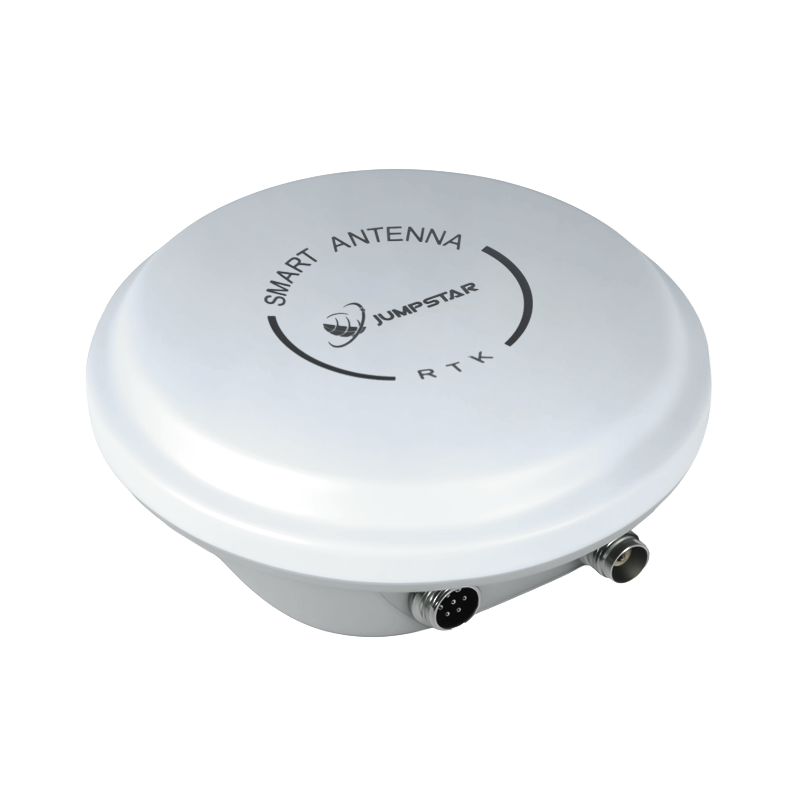
A GNSS RTK Receiver and an RTK GNSS Module can both output centimeter-level positions. What separates them is not accuracy — it is where the engineering work sits, who carries the integration risk, and which one survives contact with your product roadmap.
This head-to-head guide is written for teams at the decision and execution stage: hardware leads, procurement managers and system integrators who have to pick one architecture, justify it internally, and live with it for several product generations. It compares the two paths using published Jumpstar product facts and third-party market data only.
Short answer: choose a turnkey GNSS RTK Receiver when you want the RF chain, antenna interface, enclosure and firmware managed by the supplier and you need the system running quickly. Choose an RTK GNSS Module (or RTK board) when you have in-house RF and layout capability, meaningful volume, and a roadmap that justifies owning the receiver core on your own PCB. For long-lived industrial programs, the decisive factors are integration ownership, antenna strategy and supply continuity — not a single accuracy figure on a datasheet.
The Real Decision: Who Owns the RF Chain?
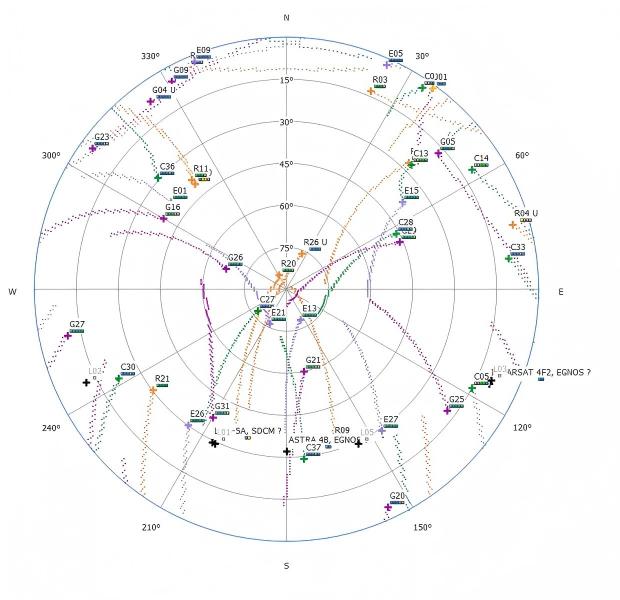
Every high-precision GNSS design contains the same functional blocks: an antenna element, an RF front end, a baseband and RTK engine, a correction link carrying RTCM3.X data, and a host interface that outputs NMEA 0183 or a binary protocol. The receiver-versus-module question is really a question about which of those blocks your team owns.
A module exposes the RF input to your layout. A turnkey receiver exposes a finished connector and a defined output. That single difference cascades into staffing, test equipment, certification ownership and unit economics.
The consequence is easy to underestimate. When a module datasheet states RTK horizontal accuracy of 1.0 cm + 1 ppm and vertical accuracy of 1.5 cm + 1 ppm, those figures carry a test condition — 50% CEP in open sky, as published for the JS-ARK28-3. Ground plane design, antenna gain, cable loss, connector quality and local interference all sit between that number and your field result. A receiver absorbs that risk inside a tested assembly. A module transfers it to your hardware team.
Field failures in high-precision GNSS projects cluster into four recurring risk classes: RF electromagnetic interference from engines, onboard electronics and portable jamming devices; satellite signal spoofing; environment failure from sustained vibration, extreme temperature and humidity; and navigation data security, where differential data and raw observation trajectories can be intercepted or tampered with. Which architecture you choose determines who is responsible for mitigating each of them.
Where High-Precision GNSS Demand Is Growing
The category is expanding on both sides of this comparison. Dataintelo values the global high-precision GNSS market at USD 7.8 billion in 2024 and projects USD 20.6 billion by 2033. The module layer scales with it: Market Research Future estimated the high precision GNSS module market at USD 1.5 billion in 2024 and forecasts USD 4.5 billion by 2035.
Market sizing figures vary by scope, and that variance matters when you build a business case. Estimates counting receivers only — such as the MarketsandMarkets figure of USD 3.41 billion for mid and high-level precision GPS receivers — sit well below full-solution estimates for the same period. The practical reading for a procurement team is that neither architecture is a dead end, so the decision should be made on program fit rather than on a growth forecast.
Demand is also concentrated in a few verticals. Agriculture is the dominant application segment for high-precision GNSS with a 36.8% market share in 2025, and MarketsandMarkets projects the precision farming market to grow from USD 11.38 billion in 2025 to USD 21.45 billion by 2032. Correction infrastructure is raising the baseline: Galileo High Accuracy Service delivers horizontal accuracy down to 20 cm, which is sufficient for many guidance and mapping tasks but remains an order of magnitude away from RTK centimeter-level positioning.
Standards pressure is arriving at the same time. ISO 12188 parts 1 and 2 define test procedures for positioning and guidance systems in agriculture and forestry, so agricultural integrators increasingly need repeatable positioning evidence rather than a headline accuracy claim. EUSPA forecasts GNSS downstream market revenues of €580 billion by 2034, with volume concentrated in systems that embed positioning rather than in standalone instruments.
Two Architectures, One Position Output
Jumpstar (JUMPSTAR CO., LIMITED, operating as Shenzhen Jumpstar Technology Co., Ltd.) is a Shenzhen-based GNSS hardware manufacturer founded in 2013 that supplies RTK modules, GNSS receivers, GNSS modules, GPS antennas and timing modules, with 70% of output exported to the EU, USA and Middle East. Because its portfolio covers both sides of this comparison, the trade-offs below can be described from product facts rather than from category assumptions.
Option A — the Turnkey GNSS RTK Receiver
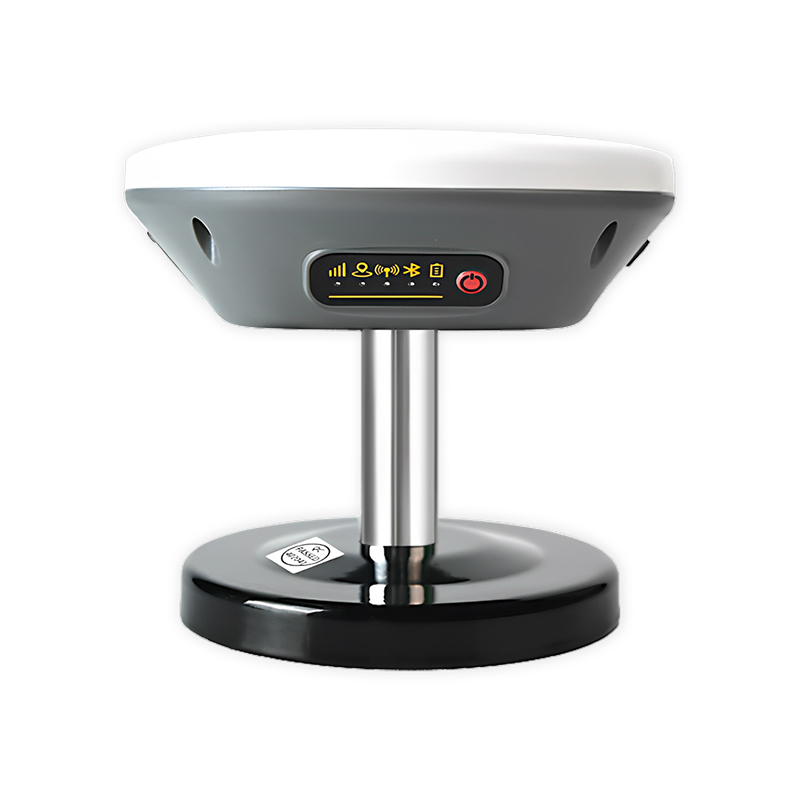
A turnkey receiver arrives as a tested positioning unit. The receiver core, antenna interface, enclosure, cabling and firmware are assembled and validated before shipment, and the host system receives a defined NMEA 0183 or RTCM3.X output.
Jumpstar's own comparison of a turnkey integrated receiver against a bare core component recorded an 80% shorter deployment time and 40% lower total project R&D cost for the integrated approach. Maintenance is plug-and-play with remote OTA updates, and no RF engineer is required on the customer side. Power consumption was comparable at under 3 W, with better anti-interference stability reported in harsh RF environments.
The documented best-fit applications for this path are port logistics, precision agriculture and heavy-duty vehicle retrofitting — programs where the machine is already in service, downtime is expensive, and the positioning unit has to be mounted, configured and trusted quickly.
What you give up is control. Footprint is set by the supplier, the antenna and cabling strategy is largely fixed, per-unit cost does not compress the way a bare module does at volume, and the host design adapts to the receiver rather than the reverse.
Option B — the RTK GNSS Module and RTK Board
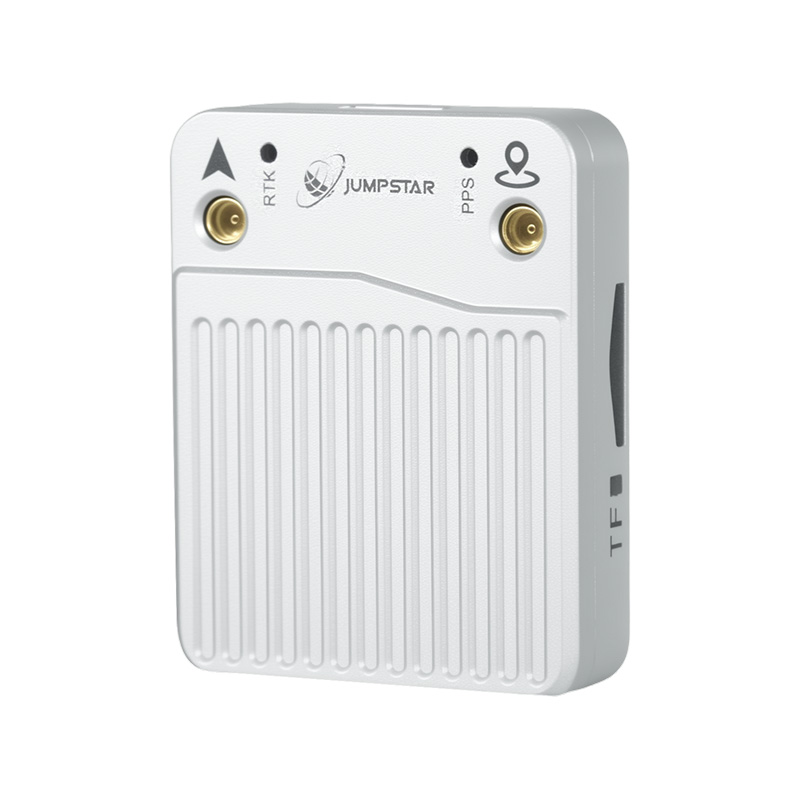
The module path puts the receiver core on your PCB. You choose the antenna, define the ground plane, own the mechanical and thermal design, and carry the final-product approval. In exchange, you gain footprint control and a roadmap you direct yourself.
Documented module-level capability across the Jumpstar portfolio includes:
- JS-ARK28-3 — a high-precision RTK GNSS module with 200 tracking channels and dual-band multi-constellation reception covering GPS L1/L5, BDS, Galileo, GLONASS, QZSS, IRNSS and SBAS. RTK positioning accuracy is horizontal 1.0 cm + 1 ppm and vertical 1.5 cm + 1 ppm (50% CEP, open sky).
- JS-ARK37-3 — a high-precision RTK GNSS module rated 3.5 V to 12.0 V (typical 5 V), with net weight under 21 g and dimensions of 36.00 × 36.00 × 9.70 mm ±0.2 mm.
- JS-RK26-U — an RTK GNSS module with IMU for automotive navigation and rail transit intelligent positioning. It uses dual-band L1+L5 GNSS+INS integration with 200 tracking channels, tracking sensitivity of −165 dBm, cold start in 28 seconds, speed accuracy of 0.1 m/s CEP and RTK horizontal accuracy of 1.0 cm + 1 ppm, in a 16.2 × 12.2 × 2.3 mm package under 1.1 g, operating from −40 °C to +85 °C with NMEA 0183 and RTCM3.X support up to 20 Hz.
- JS-ANK45-2 — a multi-system, multi-frequency high-precision RTK GNSS module with 1408 super channels, cold start under 30 seconds and RTK initialization under 5 seconds. Positioning accuracy is 3D 1.5 m, DGPS 0.4 m + 1 ppm, RTK horizontal 1.5 cm + 1 ppm and RTK vertical 2.0 cm + 1 ppm, in a 45.0 × 45.0 × 12.7 mm ±0.3 mm housing under 40 g, supporting NMEA 0183, Unicore and RTCM3.X. It is designed for UAVs, precision agriculture, automotive, smart ports, logistics and surveying.
- JS-A56U9D — a multi-band high-precision RTK GNSS module for UAV, precision agriculture, autonomous systems and GIS, supporting GPS, BDS, GLONASS, Galileo, QZSS and SBAS with 192 search channels and 60 tracking channels. Dynamic heading accuracy is 0.3°, time pulse accuracy is RMS 30 ns (99% 60 ns), velocity accuracy is 0.05 m/s, and the velocity and altitude limits are 500 m/s and 80,000 m. Protocols include NMEA 0183 V4.11/V4.0/V4.1, RTCM 3.3 and UBX.
- JS-TP26-U — a GPS GNSS module with IMU for intelligent driving and vehicle control, with single-point horizontal accuracy of 1.0 m (L1+L5) or 2.5 m (L1) CEP and GNSS+INS accuracy under 1.5 m CEP. Tracking sensitivity is −165 dBm, acquisition sensitivity is −148 dBm, the maximum update rate is 10 Hz, and dimensions are 16.0 × 12.2 × 2.4 mm ±0.3 mm across −40 °C to +85 °C.
- JS-RP26-U — a dual-band L1+L5 GNSS+INS module for automotive navigation and vehicle tracking, with RTK horizontal accuracy of 1.0 cm + 1 ppm and single-point horizontal accuracy of 1.0 m CEP, tracking sensitivity −165 dBm and acquisition sensitivity −148 dBm, supporting NMEA 0183 V4.1 and RTCM v2.3/v3.3.
Lower-precision classes sit alongside these for cost-controlled platforms: the JS-AP10-H covers GPS L1C/A, BDS B1I/B1C, Galileo E1B/C, SBAS L1C/A and QZSS L1C/A; the JS-AP26-H targets car navigation and vehicle tracking with −162 dBm tracking and navigation sensitivity; the JS-SK40 specifies tracking sensitivity of −150 dBm (20 dB-Hz) and acquisition sensitivity of −140 dBm (30 dB-Hz); and the JS-UK40 is RoHS compliant. One low-power module class in the portfolio runs from VCC 2.0 to 3.6 V with average operating current of 18 to 32 mA at 3.3 V, a 10 Hz maximum update rate and NMEA 0183, RTCM3.X and private binary protocol support. Several modules across the range share −40 °C to +85 °C operating and storage ranges and update rates from 10 Hz to 20 Hz, and an RTK GNSS module with a 20 Hz maximum data update rate is specified for UAVs and drones, automotive, precision agriculture and marine navigation at under 10.2 g.
Antenna Pairing: GNSS Antenna, Smart Antenna and Dual-Antenna Heading
Antenna selection decides whether the module's specified accuracy ever appears in the field. The relevant choice is not between a good and a bad antenna, but between architectures: a separate GNSS Antenna cabled to the receiver, a Smart Antenna with the radiating element and RF front end integrated, or a dual-antenna configuration feeding one receiver to produce heading.
Jumpstar's antenna line covers GPS antennas, anti-jamming GPS antennas, choke ring antennas, helical GPS antennas, helix antennas and drone antennas. Choke ring and anti-jamming designs are used where multipath from structures and RF noise from machinery dominate — typical of base stations, ports and heavy equipment. Dual-antenna heading is used where heading is needed at low or zero vehicle speed without relying on motion; the JS-A56U9D delivers 0.3° dynamic heading accuracy in exactly this configuration.
Interference, Spoofing and Environmental Risk Control
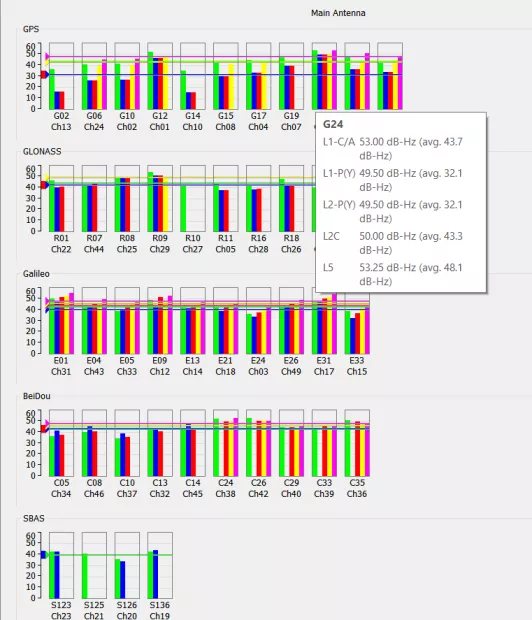
High-precision GNSS hardware in vehicles and industrial machines carries a risk profile that a specification sheet does not capture. Broadband, narrowband and pulsed RF noise generated by engines, onboard electronics and external jamming devices can push an RTK fix into a floating solution, cause positioning drift, or break satellite lock entirely.
The hardware-plus-algorithm controls documented for Jumpstar's automotive-grade modules address this directly: AIM+ full-spectrum interference suppression algorithms with automatic wideband noise reduction, triple-channel adaptive narrowband notch filters, and APME multipath mitigation technology to filter electromagnetic interference from urban environments and vehicle electronics. Spoofing protection is handled at the same layer through native Galileo OSNMA navigation message anti-spoofing authentication and built-in RAIM receiver autonomous integrity monitoring, which identifies and rejects illegal forged satellite signals. Environmental resilience rests on industrial-grade components rated from −40 °C to +85 °C, PCB reinforcement techniques, and sustained vibration testing of the complete unit. For data security, raw observation data is stored locally on the TF card in SBF format rather than being broadcast by default.
Step-by-Step: Selecting an Architecture Without Rework
The sequence below reflects the order in which the decisions actually constrain each other. Reordering them is the most common cause of costly redesigns.
- Step 1 — Fix the accuracy target and its test conditions. Module datasheets quote RTK accuracy under defined conditions, such as horizontal 1.0 cm + 1 ppm and vertical 1.5 cm + 1 ppm at 50% CEP in open sky. If your site cannot deliver open sky, plan for degraded performance rather than the datasheet figure. Where RTK correction infrastructure is unavailable, Galileo HAS at 20 cm horizontal accuracy is a documented wide-area fallback.
- Step 2 — Decide who owns the RF chain. Without RF engineering capacity and access to anechoic testing, the turnkey receiver is the lower-risk path; Jumpstar's internal comparison recorded 80% shorter deployment time and 40% lower total project R&D cost for that approach. With in-house RF and layout capability and volume measured in tens of thousands of units, the module gives you footprint, cost and roadmap control.
- Step 3 — Choose the antenna architecture before the receiver. Single GNSS antenna for standard positioning, choke ring or anti-jamming antennas where multipath and RF noise dominate, and dual-antenna heading configurations where 0.3° dynamic heading accuracy is required at low speed.
- Step 4 — Match interface, protocol and power. NMEA 0183 and RTCM3.X appear across the range; the JS-A56U9D adds UBX and RTCM 3.3, and the JS-ANK45-2 adds Unicore. Update rates run from 10 Hz to 20 Hz. Supply voltage expectations differ by class: the JS-ARK37-3 accepts 3.5 V to 12.0 V (typical 5 V), the JS-ANK45-2 accepts 3.0 V to 5.5 V (typical 5.0 V), and a lower-power module class runs at VCC 2.0 to 3.6 V with 18 to 32 mA average current at 3.3 V.
- Step 5 — Validate under worst-case conditions, not lab conditions. Jumpstar's pre-production verification uses an RF interference anechoic chamber, a temperature cycling chamber and a vibration test bench. Production runs on a fully automated SMT line, and every module undergoes a 24-hour power-on burn-in test verifying positioning accuracy, anti-interference performance and PPS synchronization. Each unit is checked with RxTools software for satellite acquisition, OSNMA enable/disable and anti-interference function, and a factory test report is issued for every device.
- Step 6 — Plan the lifecycle before the first shipment. Decide who owns firmware branches, whether OTA updates are remote or site-based, how second sourcing will work, and how spare units are stocked. Receiver buyers inherit a maintenance model; module buyers inherit a maintenance obligation.
Use Cases: Where Each Architecture Earns Its Place
UAV and drone platforms
Weight and update rate dominate here. The module path is standard, with 20 Hz maximum data update rates specified for UAV and drone use and payload weights under 10.2 g for compact RTK GNSS modules. Mapping and inspection payloads that need orientation data use the dual-antenna JS-A56U9D with 0.3° dynamic heading accuracy and 0.05 m/s velocity accuracy.
Precision agriculture
Agriculture holds a 36.8% share of high-precision GNSS applications in 2025, and ISO 12188 parts 1 and 2 define the positioning and guidance test procedures used in the sector. The JS-ANK45-2 is specified for precision agriculture among other applications, while the turnkey receiver path fits retrofitting of machinery already in the field, where installation speed matters more than board-level control.
Autonomous vehicles, AMRs and robotics
Dynamic platforms benefit from GNSS+INS integration. The JS-TP26-U targets intelligent driving and vehicle control with GNSS+INS accuracy under 1.5 m CEP and single-point accuracy of 1.0 m (L1+L5) CEP; the JS-RK26-U covers automotive navigation and rail transit positioning with RTK horizontal accuracy of 1.0 cm + 1 ppm. Interference and spoofing controls — AIM+, OSNMA and RAIM — matter more in these applications than raw accuracy.
Fleet management and vehicle tracking
Tracking platforms usually need wide coverage and tolerant sensitivity rather than centimeter accuracy. The JS-AP26-H, specified for car navigation and vehicle tracking, offers −162 dBm tracking and navigation sensitivity, while the JS-RP26-U adds dual-band L1+L5 GNSS+INS with RTK horizontal accuracy of 1.0 cm + 1 ppm when tracking fleets need lane-level data.
Surveying and mapping
Survey workflows require repeatable centimeter accuracy plus reliable heading. The JS-A56U9D is specified for surveying, GIS, UAV and precision agriculture use, with 192 search channels, 60 tracking channels, a 500 m/s velocity limit and an 80,000 m altitude limit.
Marine navigation and heavy industry
Modules rated from −40 °C to +85 °C with 20 Hz update rates are used in marine navigation, while port logistics, precision agriculture and heavy-duty vehicle retrofitting appear as the documented best-fit applications for the turnkey receiver path.
Head-to-Head Comparison: Receiver vs Module
| Decision factor | Turnkey GNSS RTK Receiver | RTK GNSS Module / RTK Board |
|---|---|---|
| Where the RF chain lives | Closed by the supplier; antenna interface, enclosure and firmware included | Open; your PCB layout, ground plane and cable routing determine real-world performance |
| Deployment time (Jumpstar internal comparison) | 80% shorter | Baseline reference |
| Total project R&D cost (same comparison) | 40% lower | Baseline reference |
| Maintenance model | Plug-and-play maintenance with remote OTA; no RF engineer required | Integrator maintains the firmware branch; supplier provides hardware support, companion host software and remote parameter hardening |
| Power consumption | Comparable (under 3 W), with better anti-interference stability reported in harsh RF environments | Class-dependent; a low-power module class runs 18 to 32 mA average at 3.3 V, while the JS-ANK45-2 accepts 3.0 V to 5.5 V |
| Antenna pairing | Fixed by the supplier; GNSS antenna or smart antenna configurations | Flexible: GNSS antenna, choke ring, helical/helix, drone antenna and dual-antenna heading |
| Documented accuracy reference | System-level RTK centimeter positioning in a tested assembly | JS-ARK28-3: RTK horizontal 1.0 cm + 1 ppm, vertical 1.5 cm + 1 ppm (50% CEP, open sky) |
| Typical best fit | Port logistics, precision agriculture, heavy-duty vehicle retrofitting | High-volume OEM builds: UAV, robotics, automotive, agriculture, surveying and industrial automation |
| Engineering ownership | Supplier | Your hardware and RF team |
Source note: the deployment time, R&D cost, maintenance and power rows reflect Jumpstar's internal comparison between a turnkey integrated receiver and a bare core component. The accuracy row reflects published module specifications and their stated test conditions.
Why the Decision Outlives the Design Cycle
Industrial GNSS platforms routinely stay in production across multiple product generations, which turns an architecture choice into a supply relationship. Two questions decide how well that relationship holds: can the supplier keep delivering the same hardware, and can they support it after the warranty period.
On capacity, Jumpstar operates a 5,000 ㎡ factory with around 200 employees, of which 20 engineers work in R&D, producing roughly 100,000 units annually with a monthly production capacity of 50,000 units and a typical lead time of 30 days. Export markets cover the EU, Middle East and USA, and the manufacturer provides remote after-sales support.
On lifecycle support, the operational layer matters as much as the hardware. Companion host computer software allows real-time monitoring of interference alarms and positioning integrity status, and remote deployment of parameter hardening strategies is supported, with rapid technical corrective solutions available if an anomaly appears in the field. That combination — monitoring, remote reconfiguration and a documented per-device test report — is what keeps a module-based design maintainable after the engineering team that built it has moved on.
Second sourcing is the other half of long-term planning. Keeping a portfolio that spans precision classes — centimeter-level RTK modules such as the JS-ARK28-3 and JS-ANK45-2, GNSS+INS modules for dynamic platforms, and lower-precision classes such as the JS-AP10-H, JS-AP26-H and JS-SK40 — gives a program room to adjust accuracy targets without restarting antenna and mechanical design.
FAQ: Receiver vs Module and Long-Term Supply
Are Jumpstar high-precision GNSS devices compliant for the EU and other regulated markets?
Module-level RoHS compliance is documented across the range. The GNSS module is RoHS compliant and meets the requirements of the EU market, and the JS-UK40, JS-RK26-U and JS-ANK45-2 are all RoHS compliant, with the JS-RK26-U specified as suitable for the EU market. Operating temperature for key modules is −40 °C to +85 °C, and export markets cover the EU, Middle East and USA. Final-product radio and EMC approvals remain with the integrator, because they depend on the host enclosure, antenna placement and cabling.
Can one supplier support both a receiver-based and a module-based architecture?
Yes. Jumpstar's product range spans RTK modules, GNSS receivers, GNSS modules, high-accuracy GPS modules, UAV GPS modules, timing modules, and an antenna line covering GPS antennas, anti-jamming GPS antennas, choke ring antennas, helical GPS antennas, helix antennas and drone antennas, backed by a 5,000 ㎡ factory, around 200 employees and a 20-engineer R&D team. Documented capability reaches RTK horizontal 1.0 cm + 1 ppm and vertical 1.5 cm + 1 ppm on the JS-ARK28-3 (50% CEP, open sky), and 0.3° dynamic heading accuracy on the dual-antenna JS-A56U9D.
What purchasing terms apply, and how should long-term cost be assessed?
Purchasing terms are MOQ of 1 unit, EXW delivery terms, 100% test before shipping, and flexible payment terms (T/T). For cost planning, the more useful comparison is engineering effort rather than unit price alone: Jumpstar's internal comparison of a turnkey integrated receiver against a bare core component recorded 40% lower total project R&D cost alongside 80% shorter deployment time.
Can both architectures be validated before a volume commitment?
Yes. An MOQ of 1 unit supports single-unit evaluation orders, and every unit is 100% tested before shipping. Production runs on a fully automated SMT line with a 24-hour power-on burn-in test per module covering positioning accuracy, anti-interference performance and PPS synchronization. Each unit is verified with RxTools for satellite acquisition, OSNMA enable/disable and anti-interference function, and a factory test report is issued for every device. Pre-production verification uses an RF interference anechoic chamber, a temperature cycling chamber and a vibration test bench.
What does long-term supply continuity look like for a multi-year program?
Jumpstar operates a monthly production capacity of 50,000 units with a typical lead time of 30 days and an annual output of around 100,000 units from its Shenzhen facility, exporting 70% of production to the EU, USA and Middle East. Remote after-sales support, companion host software for interference and positioning-integrity monitoring, and remote deployment of parameter hardening strategies form the post-delivery layer. For a platform with a multi-year roadmap, confirming capacity, lead time and support scope early is as important as confirming accuracy — and the fastest way to do that is a single-unit evaluation across both architectures.
Conclusion
The head-to-head result is not a winner and a loser. The turnkey GNSS RTK Receiver wins when integration risk, installation speed and maintenance simplicity drive the program — the documented profile is 80% shorter deployment time, 40% lower total project R&D cost, plug-and-play maintenance with remote OTA, and comparable power consumption under 3 W. The RTK GNSS Module wins when footprint, volume economics and design control matter more, with documented RTK accuracy of 1.0 cm + 1 ppm horizontal and 1.5 cm + 1 ppm vertical on the JS-ARK28-3 under stated test conditions.
The variable that decides whether either choice ages well is not the receiver or the module — it is the antenna strategy, the validation discipline, and the supply relationship behind the hardware. Decide who owns the RF chain first. Everything else follows from that.
Next Step: Compare Both Architectures on Your Own Platform
If your program is still weighing a turnkey receiver against a module, a single-unit evaluation usually closes the question faster than further specification review, because Jumpstar supplies both sides of the comparison and can configure the sample around your interface and antenna plan. See the portfolio at www.jgnss.com.
Contact: Alisa — sales@jgnss.com — Tel/WhatsApp +86 136-2236-7049. Download the Jumpstar company profile 2026 (PDF) for the full product and capability overview.
Address: Room 1305, Block A, Building 1, Lechuanghui Mansion, No. 1211 Guanguang Road, Longhua District, Shenzhen, China 518110.
Have Questions or Need More Details?
Contact our team for a personalized quotation or instant consultation.
Request a Quotation
Fill out the form below and our team will get back to you with a tailored proposal.
WhatsApp Direct Chat
Prefer to chat in real-time? Message us on WhatsApp for instant assistance & quick answers.
- Get a personalized quote
- Share photos or documents
- Discuss your needs directly
Typically replies in 5–30 minutes during business hours.