
High Precision GNSS Solutions Explained: How RTK Receivers, Boards, Modules, and Antennas Work Together
High Precision GNSS Solutions | Component Explainer
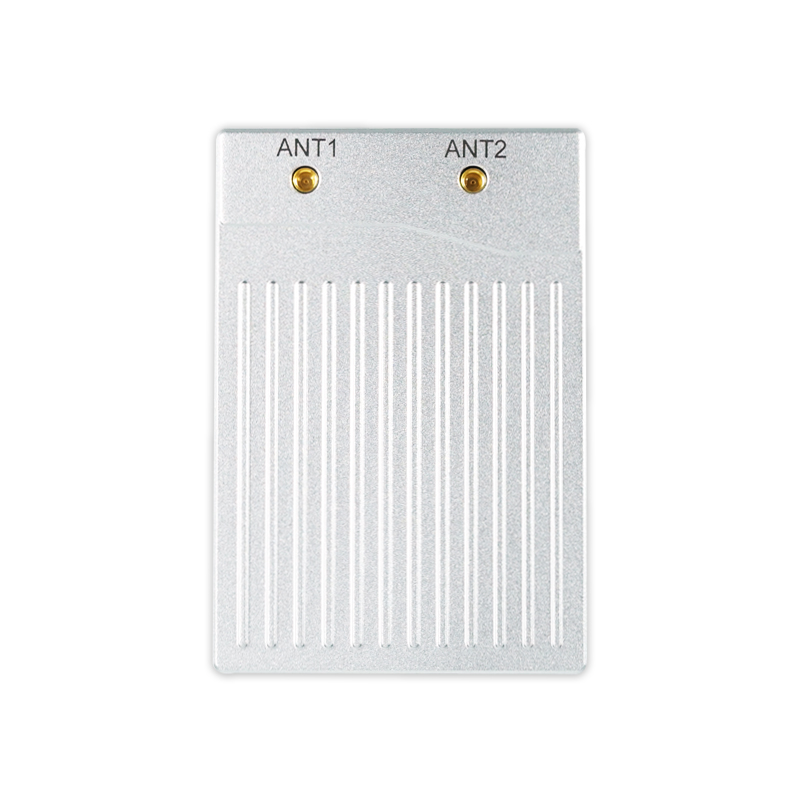
A high precision GNSS solution is not a single product. It is a configured chain of an antenna, a GNSS receiver engine, a correction-data path, firmware, interfaces, and application integration. Centimeter-level RTK positioning becomes possible only when those parts match each other and the operating environment. The receiver engine can be a standard GPS GNSS module, an RTK GNSS module, an RTK board, an enclosed GNSS RTK receiver, or a smart antenna that combines the antenna and receiver in one housing.
Jumpstar (Shenzhen Jumpstar Technology Co., Ltd.) is a Shenzhen-based manufacturer of high-precision GNSS and IoT location solutions. Its portfolio covers GNSS modules, antennas, RTK terminals, and related positioning products. This explainer uses that portfolio as a reference to show what each building block does, how the blocks fit together in RTK applications, and which verified specifications matter when buyers move from research to evaluation.
Problem Definition: Why the Component Names Cause Confusion
Buyers new to the category often compare a GPS GNSS module with an RTK GNSS receiver as if they were interchangeable. They are not. A standard precision module such as JS-ATP36-M specifies horizontal positioning accuracy of 1.0 m (CEP 50%) and vertical accuracy of 2.25 m. It does not provide RTK centimeter-level output by itself. An RTK module such as JS-RK40 specifies RTK horizontal accuracy of 1.0 cm + 1 ppm and vertical accuracy of 1.5 cm + 1 ppm. The difference is not only the product label; it is the receiver engine, measurement processing, correction-data use, and the antenna configuration around it.
The practical problem is component fit. An antenna with the wrong bands or gain can limit the receiver. A receiver with the wrong interface cannot connect to the host controller. A board that is mechanically suitable but lacks the required correction protocol will not deliver the expected fixed solution. A smart antenna may simplify integration, but it fixes the antenna and receiver combination in one housing. The buyer therefore needs to define the accuracy target, the correction path, the host interface, and the environmental requirements before comparing model numbers.
This is especially important in the Research to Evaluation stage. A datasheet accuracy figure is a specification under stated or implied conditions, not a guarantee for every installation. RTK performance depends on baseline length, satellite visibility, multipath, antenna phase-center stability, correction latency, and the quality of the installation. The component hierarchy helps buyers ask the right questions instead of comparing only one headline number.
Industry Background: Why High-Precision GNSS Is a System Category
High-precision GNSS is used where a meter-level fix is not enough. Typical applications include UAV surveying and mapping, precision agriculture, autonomous vehicles, robotics, fleet management, marine navigation, and geodetic surveying. The high-precision GNSS receiver market was valued at USD 3.10 billion in 2025, according to Data Insights Reports. That market context explains why suppliers offer multiple form factors: one project may need a module embedded in a compact controller, while another needs an IP-rated receiver with connectors, logging, and heading output.
Jumpstar's product materials describe RTK boards and modules with centimeter-level positioning, dual-frequency RTK, and dual-antenna heading functionality. The company holds ISO 9001:2015 certificate UQ231801R2, issued by Beijing United Intelligence Certification Co., Ltd., valid until December 10, 2026. That certificate is a quality-management-system fact, not a product performance guarantee. Buyers should still request the product-level declaration, test report, and configuration details for the exact model under evaluation.
In this category, the product name alone is rarely enough. A high precision GNSS solution may include a passive or active antenna, an RTK module or board, an enclosure, a correction-data link, and firmware that outputs NMEA, RTCM, CMR, SBF, or a private binary protocol. The rest of this article breaks down those blocks and shows representative Jumpstar examples with verified specifications.
Detailed Solution: The Building Blocks of a High Precision GNSS Solution
1. GNSS Antennas: The RF Front End
A GNSS antenna captures satellite signals and passes RF energy to the receiver. Passive antennas provide the radiating element without an integrated low-noise amplifier. Active antennas include an LNA and usually need a bias voltage from the receiver. Selection depends on frequency bands, gain, axial ratio, phase-center stability, connector type, cable loss, and environmental protection.
Jumpstar examples show how different antenna designs serve different integration levels. JS-HAC18A-F is a helical GNSS active antenna with LNA gain of 33±2 dB, dimensions of Φ18 mm × 50.8 mm, and IP65 protection with a mated SMA connector. JS-HAC100B is a high-precision UAV antenna with phase center error of ±2 mm, gain of 4.5 dBi, and IP67 protection. JS-X168 is an anti-jamming GNSS antenna with 115 dB anti-jamming capability for a single interference and 95 dB for three interferences. These are different tools: a compact helical antenna for UAV integration, a survey-grade antenna with tight phase-center error, and an anti-jamming antenna for high-security or high-interference environments.
2. Smart Antennas: Antenna and Receiver in One Housing
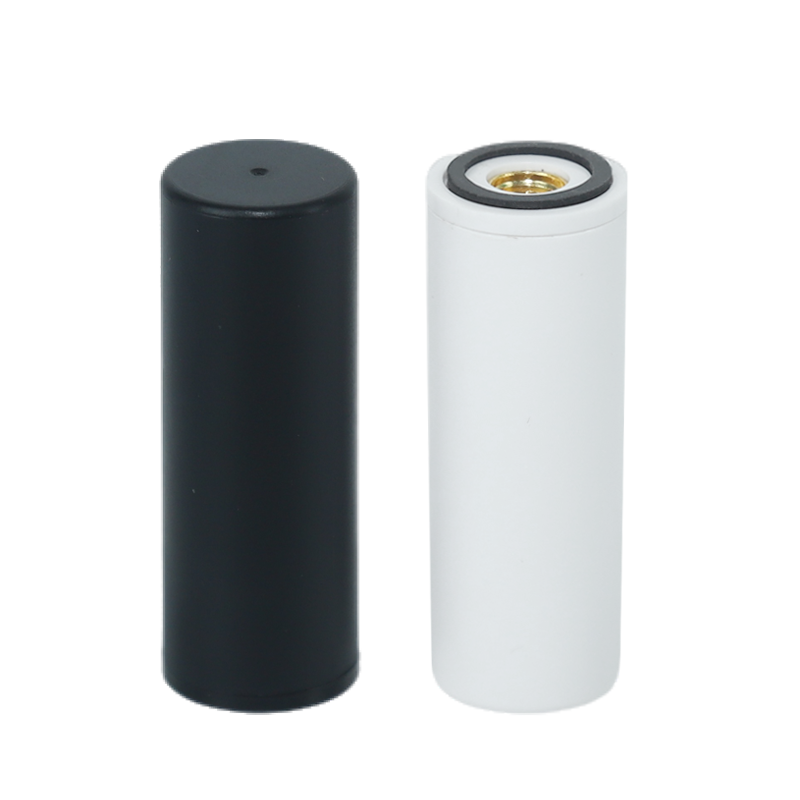
A smart antenna integrates the antenna and receiver in a single housing. It reduces RF cable loss and simplifies the mechanical design because the RF front end and receiver are matched by the supplier. The trade-off is that the antenna and receiver are fixed together, so the buyer cannot independently change the antenna or receiver later without changing the whole assembly.
Jumpstar smart antennas cover several levels of integration. JS-RK43-3 is a dual-band L1/L5 smart antenna with 200 tracking channels, RTK horizontal accuracy of 1.0 cm + 1 ppm, and a 10 Hz update rate. JS-NK43-2 is a multi-system multi-frequency RTK positioning and dual-antenna heading module with 1408 channels and RTK horizontal accuracy of 1.5 cm + 1 ppm. JS-SK43H-AH has 789 channels and RTK horizontal accuracy of 0.6 cm + 0.5 ppm, with heading accuracy of 0.03° at a 5 m baseline. JS-CK43-2 combines RTK and INS, with a dead-reckoning error of 3% of travel distance. These products are useful when the project needs a compact, pre-integrated positioning source rather than a separate antenna and board.
3. GPS GNSS Modules: Meter-Level Positioning Engines
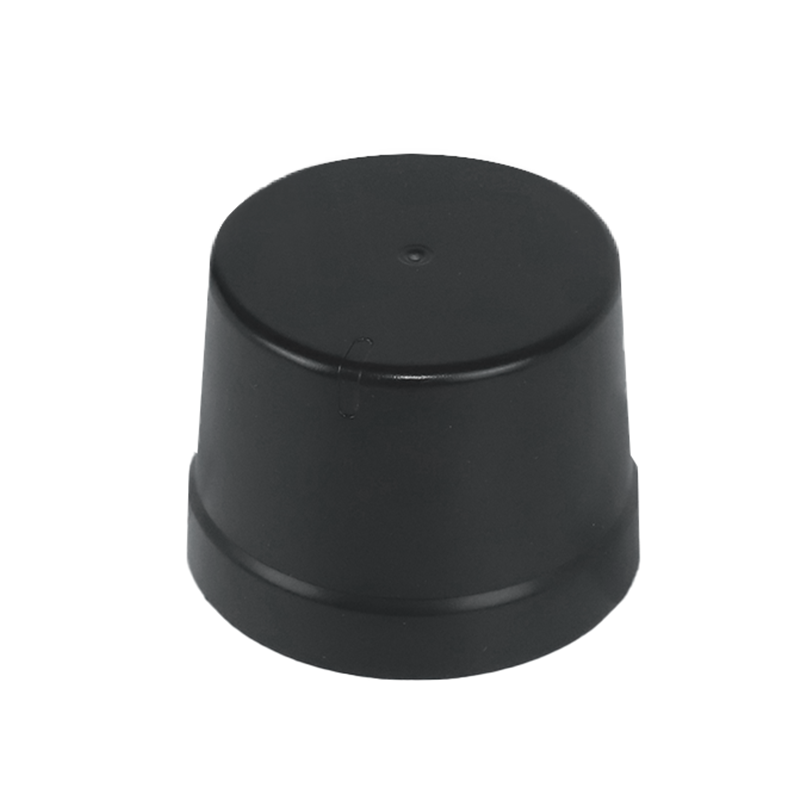
A GPS GNSS module is an embedded receiver engine that outputs position, velocity, and time data. Standard precision modules are designed for meter-level positioning. They are common in vehicle navigation, fleet tracking, wearables, and portable devices. They should not be confused with RTK modules, even when they support dual-frequency signals.
Jumpstar standard precision examples include JS-ATP36-M, a multi-mode dual-band L1+L5 module with horizontal accuracy of 1.0 m and vertical accuracy of 2.25 m, a maximum update rate of 10 Hz, and NMEA 0183 V3.01/V4.10 output. JS-AP26-H is a single-frequency multi-mode module with UART, I2C, USB 2.0 FS, and PPS interfaces, and it supports NMEA 0183 V4.00/V4.10. JS-ARP30-2 is a dual-band module with 200 tracking channels, horizontal accuracy of 1.0 m, and vertical accuracy of 2.5 m. These modules are appropriate when the application needs reliable absolute positioning but does not require centimeter-level RTK.
4. RTK GNSS Modules: Centimeter-Level Engines
An RTK GNSS module adds carrier-phase measurement and correction processing so that the host system can achieve centimeter-level positioning when valid RTK corrections are available. The module itself does not create corrections; it must receive them through a radio, cellular link, or serial stream. The buyer therefore needs to check the supported correction formats, the interface, and the update rate, not only the accuracy figure.
Jumpstar RTK modules illustrate the range. JS-RK40 has 200 tracking channels, supports GPS L1/L5, BDS B1I/B1C/B2I/B2B/B2A, Galileo E1/E5, GLONASS G1, QZSS L1/L5, IRNSS L5, and SBAS, and specifies RTK horizontal accuracy of 1.0 cm + 1 ppm and vertical accuracy of 1.5 cm + 1 ppm. JS-ARK28-3 is a 28.0×28.0×8.0 mm module with RTK horizontal accuracy of 1.0 cm + 1 ppm and a 20 Hz update rate. JS-ANK45-2 uses 1408 super channels and specifies RTK horizontal accuracy of 1.5 cm + 1 ppm and vertical accuracy of 2.0 cm + 1 ppm. JS-A56U9D provides 192 search channels and 60 tracking channels with dynamic heading accuracy of 0.3°. JS-RK26-U combines GNSS and INS, with RTK horizontal accuracy of 1.0 cm + 1 ppm and a GNSS-loss error of ≤5% within 120 seconds.
5. RTK Boards: OEM Integration at Board Level
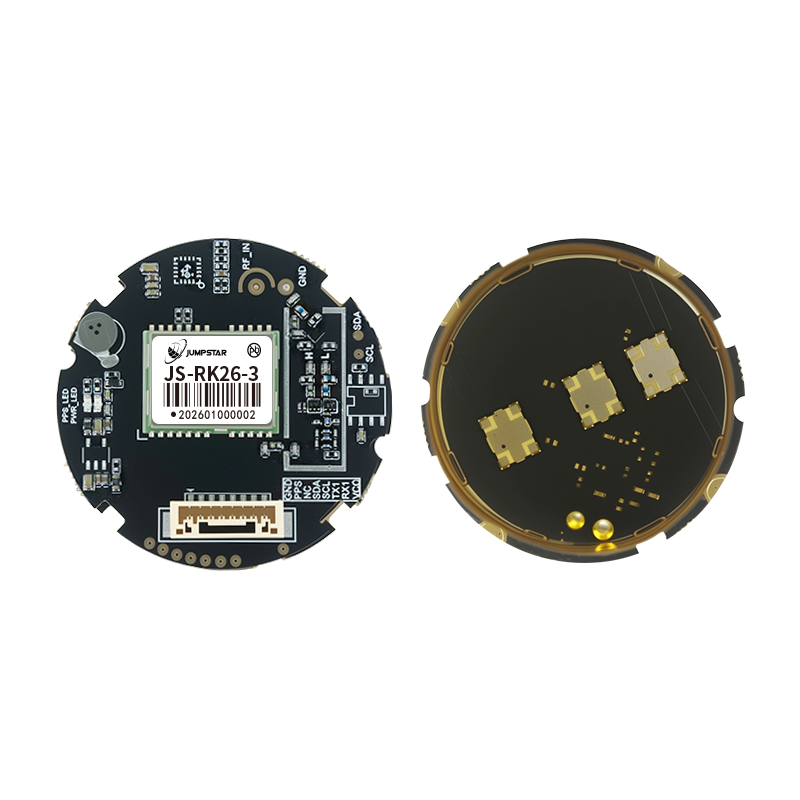
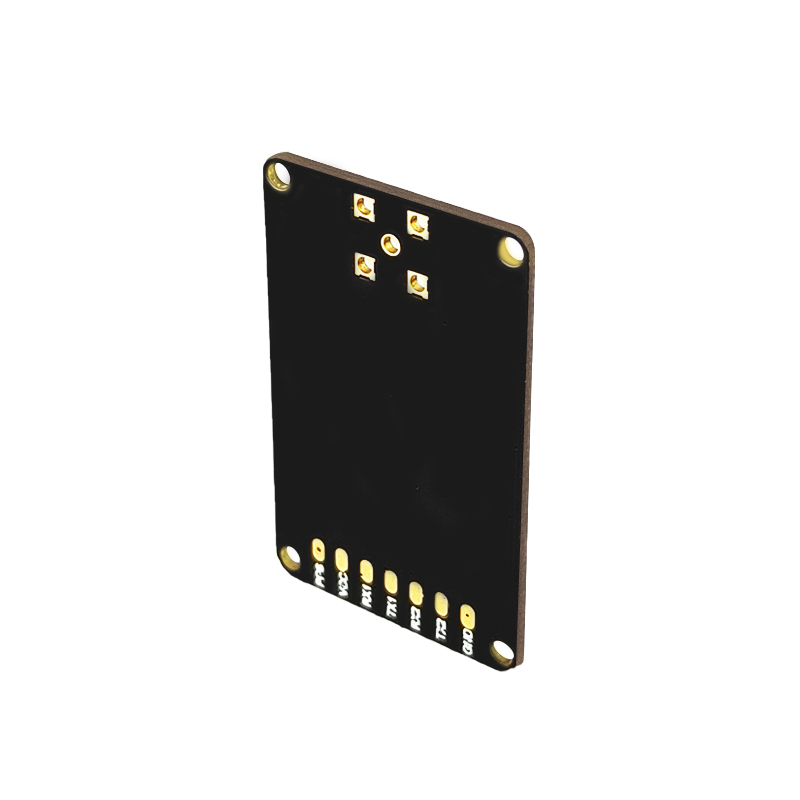
An RTK board is a board-level assembly intended for OEM integration. It typically exposes RF input, UART, PPS, power, and sometimes an IMU or event input. The buyer integrates the board into a host enclosure and is responsible for the antenna, power conditioning, thermal design, and connector selection. Compared with a module, a board often provides more interfaces and more processing headroom; compared with an enclosed receiver, it offers more mechanical freedom.
JS-CK39-A is a multi-band multi-constellation GNSS receiver with a built-in IMU. It measures 25.0×39.4×11.6 mm, supports GPS, BDS-2/BDS-3, GLONASS, Galileo, QZSS, and SBAS signals, and provides RTK horizontal accuracy of ±(8 + 1 ppm × D) mm and vertical accuracy of ±(15 + 1 ppm × D) mm. It includes 2×UART, RF_IN, VCC, GND, and PPS, operates from 3.3 to 5.5 V DC, and consumes 0.8 W/0.9 W at 3.3 V. It supports NMEA 0183, custom binary, CMR, RTCM 2.X, and RTCM 3.X (MSM3–MSM7).
6. GNSS RTK Receivers: System-Ready Terminals
An enclosed GNSS RTK receiver packages the board, interfaces, connectors, power regulation, logging, and sometimes heading or inertial functions. It is the fastest path to a working system when the project needs an industrial enclosure and standard connectors. The buyer should check the port set, input voltage, power consumption, environmental rating, data logging, and supported protocols.
P-Box-X10 is a multi-constellation triple-frequency GNSS receiver with 544 channels, RTK horizontal accuracy of 0.6 cm + 0.5 ppm, standalone accuracy of 1.2 m, and dual-antenna heading accuracy of 0.03° at a 5 m baseline. It provides 100 Hz position/observation output, 3×UART, Ethernet, Type-C, 1PPS, EVENT, ANT1/ANT2, and a TF card slot. It operates from 4.5 to 12.0 V DC and supports NMEA 0183, SBF, RTCM 2.x/3.x, RINEX 2.x/3.x, CMR v2.0, and CMR+. X43H-AH is a 789-channel RTK receiver with RTK horizontal accuracy of 0.6 cm + 0.5 ppm, 20 Hz maximum update rate, 2×UART, Type-C, RF1/RF2, and a TF card slot. P-Box-AP55 is a 448-channel receiver with RTK horizontal accuracy of 0.6 cm + 0.5 ppm and 100 Hz position-only output. JS-X11 is an all-in-one RTK smart antenna/base station with RTK accuracy of 2 cm ±1 ppm, 4G Cat.1, BLE 5.2, IP66 protection, and a 5200 mAh backup battery.
Step-by-Step Breakdown: Matching Components to an RTK Application
- Define the accuracy target and the environment. State whether the application needs meter-level positioning, centimeter-level RTK, dual-antenna heading, or RTK plus inertial dead reckoning. Also state the operating temperature, vibration, ingress protection, and interference environment. A standard module such as JS-ATP36-M is suitable for meter-level work; an RTK module such as JS-RK40 or an RTK receiver such as P-Box-X10 is appropriate when RTK accuracy is required.
- Select the antenna before the receiver. Check frequency bands, gain, axial ratio, phase-center error, connector, cable loss, and mounting. For a compact UAV build, JS-HAC18A-F provides a helical active antenna with 33±2 dB LNA gain. For surveying with tight phase-center requirements, JS-HAC100B specifies ±2 mm phase-center error. For high-interference environments, JS-X168 provides 115 dB single-interference and 95 dB three-interference anti-jamming capability.
- Choose the integration level. A module is soldered or connector-mounted into a host board. A board provides a larger OEM assembly with more interfaces. An enclosed receiver provides a finished terminal. A smart antenna integrates the antenna and receiver in one housing. JS-RK40 is a module; JS-CK39-A is a board; P-Box-X10 is an enclosed receiver; JS-RK43-3 is a smart antenna. The choice changes mechanical design, RF layout, and qualification effort.
- Plan the correction-data path. RTK requires corrections. Check whether the receiver or module supports RTCM 2.X/3.X, CMR, or CMR+ as required by the correction service. JS-CK39-A supports NMEA 0183, custom binary, CMR, RTCM 2.X, and RTCM 3.X. P-Box-X10 supports NMEA 0183, SBF, RTCM 2.x/3.x, RINEX, CMR v2.0, and CMR+. JS-X11 provides 4G Cat.1 and BLE 5.2 communication for base-station or correction-link integration.
- Match interfaces, power, and mechanics. Confirm UART count, USB or Ethernet, PPS, event input, antenna bias voltage, input voltage range, and power consumption. JS-CK39-A uses 2×UART, RF_IN, VCC, GND, and PPS, with 3.3–5.5 V DC input. P-Box-X10 uses 3×UART, Ethernet, Type-C, 1PPS, EVENT, ANT1/ANT2, and a TF card slot, with 4.5–12.0 V DC input. These details determine whether the receiver fits the host system without a redesign.
- Verify compliance and quality evidence. Request the certificate, declaration, and test report for the exact model. Jumpstar holds ISO 9001:2015 certificate UQ231801R2, valid until December 10, 2026. Product-level compliance is model-specific: JS-NK43-1 lists RoHS and CE in its compliance field, while many other modules list RoHS compliance. The buyer should not assume that one certificate covers every product.
- Test in the real application. Validate cold start, RTK initialization, heading stability, reacquisition, data latency, and performance under multipath, foliage, or interference. Datasheet values are a starting point. The final acceptance test should use the actual antenna, cable, correction service, mounting position, and host firmware.
Use Cases: Where the Building Blocks Fit
UAV surveying and mapping. A UAV typically needs low size, low weight, and reliable RTK. JS-HAC18A-F provides a compact helical antenna, JS-RK40 provides an RTK module with 1.0 cm + 1 ppm horizontal accuracy, and P-Box-X10 provides an enclosed receiver with 100 Hz output and dual-antenna heading. The combination depends on whether the airframe can carry an enclosed receiver or needs a module on the flight controller.
Precision agriculture. Auto-steering and implement control need repeatable centimeter-level positioning and robust correction reception. JS-ANK45-2 provides 1408 channels and RTK horizontal accuracy of 1.5 cm + 1 ppm. JS-HAC100B provides a phase-center error of ±2 mm for survey-grade antenna stability. P-Box-X10 can serve as a higher-interface receiver for vehicle integration.
Autonomous vehicles and robotics. Heading and attitude matter as much as position. X43H-AH provides dual-antenna heading with 0.6 cm + 0.5 ppm RTK horizontal accuracy. JS-CK43-2 combines RTK and INS for compact integrated navigation. JS-CK39-A offers board-level integration with a built-in IMU for OEM designs.
Fleet management and marine navigation. Fleet and marine systems often need rugged housings, wide input voltage, and stable positioning. JS-X11 provides an IP66 all-in-one RTK base station with 4G Cat.1 and BLE 5.2. G27SH-AH provides IP67 protection and RTK horizontal accuracy of 0.6 cm + 0.5 ppm for vehicle-mounted and marine heading applications.
Surveying and mapping. Surveying workflows need antenna phase-center stability, correction compatibility, and logging. JS-HAC100B, JS-HAC148A, and JS-YAC130N provide different antenna formats. P-Box-X10 and X43H-AH provide RTK receivers with TF logging and multiple protocols. The buyer should match the antenna to the receiver's bias voltage, gain requirement, and connector.
Comparison Table: Component Roles and Verified Examples
| Component | Primary role | Jumpstar examples | Verified specification examples | Integration level |
|---|---|---|---|---|
| GNSS antenna | Captures GNSS RF signals; active versions include an LNA. | JS-HAC18A-F, JS-HAC100B, JS-X168 | JS-HAC18A-F: LNA gain 33±2 dB, IP65 with mated SMA. JS-HAC100B: phase center error ±2 mm, IP67. JS-X168: anti-jamming 115 dB single, 95 dB three interferences. | External RF component |
| Smart antenna | Integrates antenna and receiver in one housing; may add heading or INS. | JS-RK43-3, JS-NK43-2, JS-SK43H-AH, JS-CK43-2 | JS-RK43-3: RTK 1.0 cm + 1 ppm, 200 channels, 10 Hz. JS-NK43-2: 1408 channels, RTK 1.5 cm + 1 ppm. JS-SK43H-AH: RTK 0.6 cm + 0.5 ppm. JS-CK43-2: RTK + INS. | Drop-in integrated assembly |
| GPS GNSS module | Provides meter-level positioning for embedded systems. | JS-ATP36-M, JS-AP26-H, JS-ARP30-2 | JS-ATP36-M: horizontal 1.0 m, vertical 2.25 m, 10 Hz. JS-AP26-H: UART, I2C, USB 2.0 FS, PPS. JS-ARP30-2: 200 channels, horizontal 1.0 m, vertical 2.5 m. | Embedded module |
| RTK GNSS module | Provides centimeter-level RTK positioning when corrections are available. | JS-RK40, JS-ARK28-3, JS-ANK45-2, JS-A56U9D, JS-RK26-U | JS-RK40: RTK 1.0 cm + 1 ppm horizontal, 1.5 cm + 1 ppm vertical. JS-ARK28-3: RTK 1.0 cm + 1 ppm, 20 Hz. JS-ANK45-2: 1408 channels, RTK 1.5 cm + 1 ppm. JS-RK26-U: GNSS+INS, RTK 1.0 cm + 1 ppm. | Embedded RTK engine |
| RTK board | Board-level OEM assembly with RF, UART, PPS, and optional IMU. | JS-CK39-A | JS-CK39-A: RTK H±(8+1ppm×D) mm, V±(15+1ppm×D) mm, built-in IMU, 2×UART, RF_IN, PPS, 3.3–5.5 V DC. | Board-level OEM integration |
| GNSS RTK receiver | Enclosed terminal with connectors, power regulation, logging, and interfaces. | P-Box-X10, X43H-AH, P-Box-AP55, JS-X11 | P-Box-X10: 544 channels, RTK 0.6 cm + 0.5 ppm, 3×UART, Ethernet, Type-C, TF slot. X43H-AH: 789 channels, RTK 0.6 cm + 0.5 ppm, 20 Hz. JS-X11: RTK 2 cm ±1 ppm, 4G Cat.1, IP66. | System-ready terminal |
Reading the table correctly: the accuracy figures are manufacturer-stated specifications. They should be compared only when the antenna, baseline, correction source, test environment, and error statistic are aligned. The table is a component-selection aid, not a cross-vendor performance ranking.
FAQ
Are Jumpstar high-precision GNSS solutions CE-certified?
CE marking is model-specific. In the provided product data, JS-NK43-1 lists RoHS and CE in its compliance field. Jumpstar also holds ISO 9001:2015 certificate UQ231801R2, valid until December 10, 2026. For a specific receiver, module, board, or antenna, request the declaration of conformity for that model before qualification.
What RTK accuracy do Jumpstar receivers and modules specify?
Examples include P-Box-X10 with RTK horizontal 0.6 cm + 0.5 ppm; JS-RK40 with RTK horizontal 1.0 cm + 1 ppm and vertical 1.5 cm + 1 ppm; and JS-CK39-A with RTK horizontal ±(8 + 1 ppm × D) mm and vertical ±(15 + 1 ppm × D) mm. Actual performance depends on antenna, baseline length, correction data, multipath, and installation.
How does a standard GPS GNSS module differ from an RTK GNSS module?
A standard precision module such as JS-ATP36-M specifies horizontal positioning accuracy of 1.0 m (CEP 50%). An RTK module such as JS-RK40 specifies RTK horizontal accuracy of 1.0 cm + 1 ppm. The RTK module uses carrier-phase measurements and correction data; the standard module outputs standalone positioning.
Which antenna should be paired with an RTK receiver or module?
Match the antenna to frequency bands, gain, connector, phase-center requirement, and environment. JS-HAC18A-F is a helical active antenna with LNA gain 33±2 dB and IP65 with a mated SMA connector. JS-HAC100B has phase center error ±2 mm and IP67. JS-X168 provides anti-jamming capability of 115 dB for single interference and 95 dB for three interferences.
Can I request samples or a technical quote?
Yes. Contact Jumpstar at sales@jgnss.com or visit www.jgnss.com. The company profile is available as a PDF: Jumpstar company profile 2026. For sample requests, specify the receiver, module, board, or antenna model, the application, the required interfaces, and the target environment so the correct configuration can be quoted.
Conclusion: Build the Solution Around the Accuracy Target
A high precision GNSS solution is a chain, not a single specification. The antenna sets the RF input quality. The module, board, or receiver determines the processing and interface capability. The correction-data path and protocols determine whether RTK can reach a fixed solution. The enclosure, power, and environmental design determine whether the system works in the field. Jumpstar's portfolio provides examples at each level: JS-HAC18A-F and JS-HAC100B for antenna integration, JS-RK43-3 and JS-NK43-2 for smart antennas, JS-ATP36-M for standard precision modules, JS-RK40 and JS-ANK45-2 for RTK modules, JS-CK39-A for OEM boards, and P-Box-X10 and X43H-AH for enclosed RTK receivers.
For buyers moving from research to evaluation, the next step is to define the accuracy target, environment, interface, and compliance requirement, then request the exact model datasheet and test evidence. Jumpstar can be contacted at sales@jgnss.com or through www.jgnss.com. The 2026 company profile is available for download: Jumpstar company profile 2026.
Next step: request a sample, quotation, or technical datasheet for the RTK receiver, module, board, or antenna that matches your application. Include the required accuracy, interfaces, operating environment, and estimated volume so the configuration can be reviewed against the available product data.
Email: sales@jgnss.com | Website: www.jgnss.com
Have Questions or Need More Details?
Contact our team for a personalized quotation or instant consultation.
Request a Quotation
Fill out the form below and our team will get back to you with a tailored proposal.
WhatsApp Direct Chat
Prefer to chat in real-time? Message us on WhatsApp for instant assistance & quick answers.
- Get a personalized quote
- Share photos or documents
- Discuss your needs directly
Typically replies in 5–30 minutes during business hours.