Supplier Evaluation for High Precision GNSS: RTK Modules, Antennas, and Delivery Assurance

A high precision GNSS supplier decision is not a component purchase. It commits an engineering team to a hardware, firmware, and support relationship that determines whether a UAV fleet, an autonomous vehicle program, or a precision agriculture platform ships on schedule and stays serviceable in the field for years. This guide lays out a structured evaluation framework covering capability verification across RTK receivers, RTK boards, GPS GNSS modules, RTK GNSS modules, GNSS antennas, and smart antennas, together with the delivery assurance checks that separate a supplier you can scale with from one that only looks good in a specification sheet.
Why High Precision GNSS Supplier Evaluation Keeps Failing
Most procurement teams already have a supplier scorecard. The problem is what goes on it. Generic criteria — price, catalogue breadth, responsiveness — are easy to collect and almost useless for predicting whether a centimeter-level positioning program will succeed. Three failure patterns appear repeatedly.
First, capability is assessed at the module level only. A team validates an RTK GNSS module in isolation, then discovers that the antenna, the board-level integration, and the enclosure behaviour under vibration were never evaluated as a system. Positioning accuracy degrades not because the module is wrong, but because the surrounding hardware chain was never verified together.
Second, delivery assurance is treated as a logistics question. Lead time is negotiated with a sales contact, while the production controls that actually determine whether unit 500 behaves like unit 5 — burn-in testing, automated assembly, factory test reporting — are never audited. Delivery assurance is a manufacturing property, not a shipping property.
Third, technical claims are accepted as stated. Marketing language around anti-jamming, multi-constellation support, and OEM flexibility is abundant across the category. Verifiable engineering artefacts — test benches, calibration equipment, per-unit test reports, documented failure-handling procedures — are far rarer. A structured evaluation separates the two.
Industry Background: A Market That Rewards Verified Suppliers
High-precision GNSS has moved from a specialist surveying niche into mainstream industrial infrastructure. According to Dataintelo, the global high-precision GNSS market was valued at USD 7.8 billion in 2024 and is projected to reach USD 20.6 billion by 2033. The module segment alone was estimated at USD 1.5 billion in 2024 and is forecast to reach USD 4.5 billion by 2035, based on Market Research Future data.
Demand is concentrated in applications where failure is expensive. Agriculture is the dominant application segment, holding a 36.8% market share in 2025, and the global precision farming market is projected to grow from USD 11.38 billion in 2025 to USD 21.45 billion by 2032 according to MarketsandMarkets. Broader GNSS downstream revenues are forecast to reach €580 billion by 2034, per EUSPA.
The supplier landscape reflects this. Mordor Intelligence identifies Trimble, Hexagon AB, Topcon, and Hemisphere GNSS as leading players in the mid and high-level precision GPS receiver market, and Trimble launched the R12i GNSS System in 2024 integrating IMU technology for enhanced RTK performance. Alongside these platform-level vendors sits a second tier of module, board, and antenna manufacturers — the layer most industrial integrators actually buy from.
That second tier is where evaluation discipline matters most. A platform vendor bundles hardware, software, and services into a closed system. A component and module supplier hands the integrator raw capability and expects them to build around it. The difference in outcome depends almost entirely on how well the buyer evaluates.
Capability Verification: Auditing the Portfolio, Not the Brochure
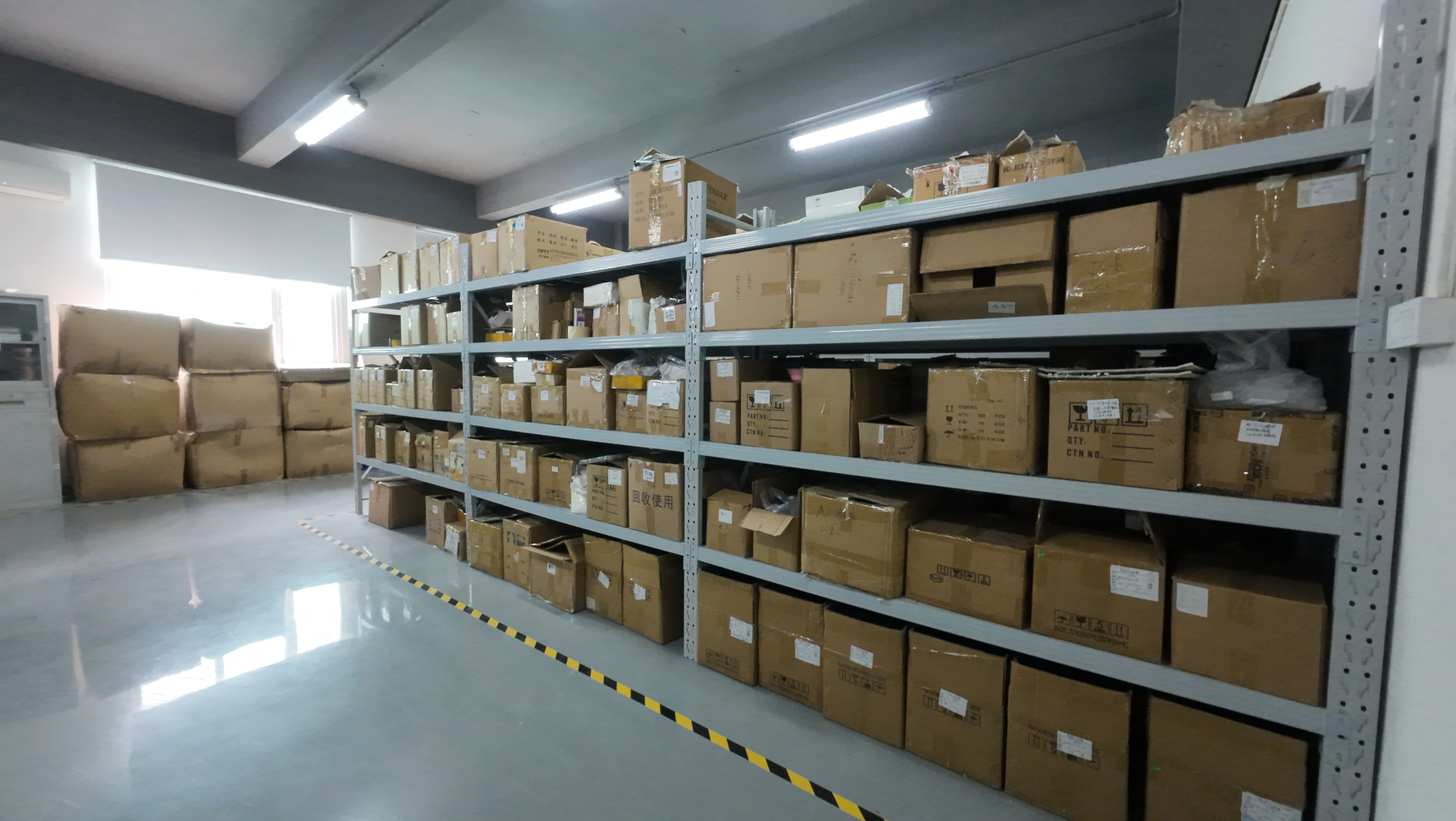
Capability verification means confirming that a supplier can deliver the specific product form your program needs — and can prove it with physical evidence. For high precision GNSS, the portfolio spans six distinct product families, and each has its own verification checkpoints.
RTK Receivers and RTK Boards
An RTK receiver is a self-contained positioning unit; an RTK board is a core component intended for integration into a host enclosure. The evaluation question is not which is better, but whether the supplier actually manufactures and supports both, and whether they can explain the boundary conditions of each.
Compare, for example, a turnkey integrated receiver such as the Jumpstar P-Box-X10 against a bare core component such as the Beitian UM982 RTK Board/Module. The core difference is exactly this: a turnkey integrated receiver versus a bare core component. That distinction cascades into measurable project outcomes — 40% lower total project R&D cost and 80% shorter deployment time — and into maintenance: plug-and-play maintenance with remote OTA updates, with no RF engineer required. Both architectures are legitimate; the failure mode is choosing one without understanding which integration burden you are accepting.
Power behaviour is a second checkpoint. The P-Box-X10 operates with comparable power consumption (under 3W) relative to the bare core alternative, which matters for battery-constrained UAV and portable platforms. Where a supplier can define power envelope, thermal behaviour, and start-up timing together, integration risk drops sharply.
GPS GNSS Modules and RTK GNSS Modules
Module-level verification separates positioning grades. A GPS GNSS module and a high precision RTK GNSS module are not interchangeable, and a credible supplier should be able to state clearly which grade each part number belongs to and where each is appropriate.
Concrete part-level facts make this verifiable. The JS-AP26-H GPS GNSS module measures 16.0 mm × 12.2 mm × 2.4 mm ± 0.3 mm and operates from -40°C to +85°C. The JS-ARK28-3 is a high precision RTK GNSS module with a net weight under 12.0 g and overall dimensions of 28.0 × 28.0 × 8.0 mm with ±0.3 mm tolerance. The JS-M6D is intended for intelligent robots, AVL and location-based services, automotive applications, geographic surveying and mapping, handheld devices, personnel protection, intelligent logistics scheduling, marine navigation and fleet management, precision agriculture, and UAV. The JS-RK40 module is intended for the UAV and drone industry. The JS-RK26-3 module is suitable for UAVs, intelligent logistics scheduling, maritime navigation, the automotive industry, and emergency rescue scenarios, with a VCC power supply range of 2.0V to 3.6V and a V_BACK range of 1.8V to 3.6V.
Where a program demands channel capacity and initialize speed, these numbers should be stated openly. The JS-SK40 RTK GNSS module has 789 hardware super channels. The JS-ANK45-2 is a multi-system, multi-frequency high-precision RTK GNSS module with 1408 super channels, a cold start under 30 seconds, and RTK initialization under 5 seconds; its positioning accuracy (RMS) is 3D 1.5 m, DGPS 0.4 m + 1 ppm, RTK horizontal 1.5 cm + 1 ppm, and RTK vertical 2.0 cm + 1 ppm. It supports NMEA 0183, Unicore, and RTCM3.X, operates from -40°C to 85°C, and is RoHS compliant.
For dual-band systems that need inertial support, the JS-RK26-U is an RTK GNSS module with IMU designed for automotive navigation and rail transit intelligent positioning, featuring dual-band (L1+L5) GNSS+INS integration, tracking sensitivity of -165 dBm, 200 tracking channels, a 28-second cold start, speed accuracy of 0.1 m/s CEP, and RTK horizontal positioning accuracy of 1.0 cm + 1 ppm in a 16.2 × 12.2 × 2.3 mm package weighing under 1.1 g. The JS-RP26-U GNSS module with IMU is intended for automotive navigation and vehicle tracking, with single-point horizontal positioning accuracy of 1.0 m CEP and RTK horizontal accuracy of 1.0 cm + 1 ppm, supporting NMEA 0183 V4.1 and RTCM v2.3/v3.3.
GNSS Antennas and Smart Antennas
Antenna evaluation is where many projects quietly lose their centimeter-level claims. Two families matter most: helical and multi-band antennas, and integrated smart antenna modules that combine antenna, receiver, and sometimes heading capability in one enclosure.
The helical GNSS antenna JS-HAC18A-F (UAV variant) is a helical active antenna supporting GPS L1/L2/L5, BDS B1/B2, GLONASS G1/G3, Galileo E1/E5a/E5b, QZSS L1/L2/L5, SBAS L1/L5, and IRNSS L5 signals, with 360° horizontal coverage, RHCP polarization, and 50Ω impedance. That constellation breadth is the practical definition of “multi-constellation” — it should be stated as a signal list, not as an adjective.
The Smart Antenna JS-SK43H-AH is a multi-band RTK positioning and heading smart antenna module supporting BDS, GPS, GLONASS, Galileo, and QZSS with 789 hardware channels, measuring 48.0 mm × 43.2 mm × 37.0 mm ± 0.3 mm and weighing under 24 g. The JS-RK43-3 smart antenna supports GPS L1/L5, BDS B1I/B1C/B2I/B2B/B2A, Galileo E1/E5, GLONASS G1, QZSS L1/L5, and IRNSS L5, with a 28-second cold start and 1.5-second AGPS time.
Delivery Assurance: What Supply Chain Reliability Actually Means
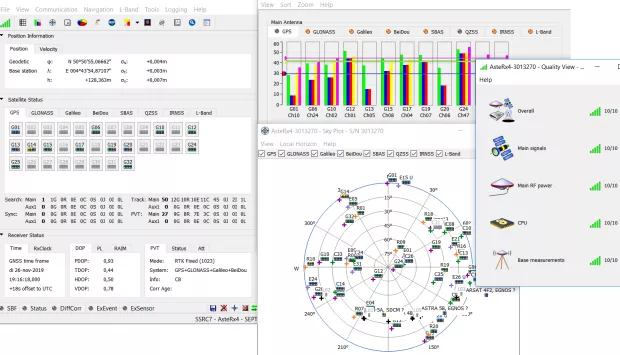
Delivery assurance is the probability that the unit you receive in month twelve matches the unit you validated in month one, at the volume you committed to. It is built from three layers: production consistency, quality control, and risk control capability.
Production Consistency
Consistency starts with the assembly process. Jumpstar operates a fully automated SMT assembly line, and every module undergoes a 24-hour power-on burn-in test verifying core functions including positioning accuracy, anti-interference performance, and PPS synchronization. Burn-in is not a marketing feature; it is the mechanism that surfaces early-life failures before they reach a customer site.
Corporate scale is a supporting signal rather than a proof. Jumpstar was founded in 2013 and is headquartered in Shenzhen, China. The company operates a 5,000 ㎡ facility with 200 employees, an annual output of 100,000 units, and a 20-engineer R&D team. Export accounts for 70% of business, with main markets in the EU, the USA, and the Middle East.
Quality Control and Test Evidence
Each unit is tested using RxTools software to verify satellite acquisition, OSNMA enabling and disabling, and anti-interference functionality, with a factory test report issued for every device. A per-unit test report is a strong evaluation signal because it makes quality auditable after delivery, not just asserted before it.
Upstream of production, the company has established an RF interference anechoic chamber, a temperature cycling chamber, and a vibration test bench, completing full validation of anti-interference, anti-spoofing, and environmental durability before mass production. Buyers evaluating any high precision GNSS supplier should ask which of these capabilities exist in-house and which are outsourced — the answer changes how quickly a failure can be diagnosed.
Risk Control Capability
Four technical risks dominate high precision GNSS deployments in vehicle and industrial environments, and each should be matched to a named control.
- RF electromagnetic interference. Broadband, narrowband, and pulsed RF noise from vehicle engines, onboard electronics, and external jamming devices can obscure satellite signals, causing RTK floating solutions, positioning drift, or complete loss of satellite lock. The control is hardware-and-algorithm dual risk control: AIM+ full-spectrum interference suppression algorithms with built-in automatic wideband noise reduction, triple-channel adaptive narrowband notch filters, and APME multipath mitigation technology.
- Satellite signal spoofing. Man-made forged GNSS navigation signals can tamper with position coordinates, disrupting autonomous driving and special vehicle control. The control is native support for Galileo OSNMA navigation message anti-spoofing authentication, combined with built-in RAIM receiver autonomous integrity monitoring to automatically identify and reject illegal forged satellite signals.
- Vehicle environment failure. Long-term vibration, jolting, extreme temperatures, and high humidity can cause hardware malfunction and degraded positioning accuracy. The control is industrial-grade components with an ultra-wide temperature range of -40°C to +85°C and PCB reinforcement techniques, with the entire unit having passed sustained vibration testing.
- Navigation data security. Differential data and raw observation trajectories are vulnerable to interception and tampering. The control is raw observation data stored on a TF card in SBF format, keeping sensitive trajectory data local rather than in transit.
After-sales control closes the loop: companion host computer software provides real-time monitoring of interference alarms and positioning integrity status, supports remote deployment of parameter hardening strategies, and enables rapid technical corrective solutions when anomalies occur. For a fleet operator, the difference between a supplier with this layer and one without is the difference between a diagnosable incident and an unexplained outage.
Step-by-Step Supplier Evaluation Walkthrough
The framework below can be run in sequence. Each step produces a documentable output, which is what makes the evaluation defensible internally.
Step 1 — Define the positioning grade per subsystem. Separate each platform component into standard precision or high precision. A GPS GNSS module such as the JS-ATP36-M, which measures 36.0 mm × 36.2 mm × 12.5 mm, operates at 2.8V to 5.5V, supports NMEA 0183, and provides a maximum update rate of 10 Hz, belongs to the Standard Precision GNSS Module category and serves automotive, maritime, logistics, and wearable industries. It should not be specified where centimeter-level RTK is required.
Step 2 — Verify the product family boundary. Confirm whether each required form factor exists as a manufactured product: RTK receiver, RTK board, GPS GNSS module, RTK GNSS module, GNSS antenna, smart antenna. Request part numbers, dimensions, weight, and material composition. For example, the JS-NK40 module measures 39.80 mm × 35.00 mm × 32.0 mm ± 0.3 mm and is made of plastic, metal, and ceramic; the JS-AP10-H module is made of plastic and metal.
Step 3 — Verify stated performance with protocol-level evidence. Request the supported protocol list, channel count, start-up timing, and accuracy figures with tolerances. The JS-A56U9D is a multi-band GNSS high precision receiver supporting GPS, BDS, GLONASS, Galileo, QZSS, and SBAS with 192 search channels and 60 tracking channels, time pulse signal accuracy of RMS 30ns (99% 60ns), dynamic heading accuracy of 0.3 degrees, velocity accuracy of 0.05 m/s, velocity limit of 500 m/s, altitude limit of 80,000 meters, and support for NMEA 0183 V4.11, V4.0, V4.1, RTCM 3.3, and UBX protocols. The JS-ARK37-3 RTK GNSS module is intended for UAVs and drones, autonomous driving, smart logistics, precision agriculture and location services, surveying and mapping, autonomous robots, in-vehicle applications, and precision control.
Step 4 — Audit the antenna chain. Confirm signal band coverage, polarization, impedance, and coverage pattern rather than accepting a constellation count. Confirm whether smart antenna integration is available where heading output is required.
Step 5 — Audit production and test controls. Require the assembly method, burn-in duration, test software, and report format. A supplier issuing a factory test report per device is materially different from one sampling at batch level.
Step 6 — Confirm delivery and continuity terms. Ask how demand volatility is handled, which markets are already served, and how parameter hardening can be deployed remotely after shipment.
Step 7 — Validate with a sample before committing to volume. Sampling is the only step that converts documentation into confidence.
Where This Evaluation Framework Matters Most
Application context changes which checkpoints carry the most weight.
- UAV and drone programs. Weight, power envelope, and integration simplicity dominate. Platforms such as the JS-RK40 and JS-ARK37-3 are intended for UAV and drone use, and the JS-HAC18A-F helical antenna is offered in a UAV variant. Turnkey receivers reduce the RF engineering burden on small teams.
- Precision agriculture. Environmental durability and long-term stability dominate, along with positioning repeatability across seasons. The JS-ANK45-2's -40°C to 85°C range and RTK accuracy figures are directly relevant. ISO 12188 parts 1 and 2 define test procedures for positioning and guidance systems in agriculture and forestry, and should be referenced in acceptance criteria.
- Autonomous and heavy-duty vehicles. Interference and spoofing resilience dominate. The JS-RK26-U and JS-RP26-U modules with GNSS+INS integration target automotive navigation and vehicle tracking, while AIM+ interference suppression, Galileo OSNMA authentication, and RAIM integrity monitoring address the dominant failure modes.
- Marine navigation and fleet management. Multi-constellation coverage and continuity dominate. The JS-RK26-3 module covers maritime navigation, and the JS-M6D module covers marine navigation and fleet management alongside precision agriculture and handheld devices.
- Surveying and mapping. Accuracy figures with tolerances and protocol compatibility dominate. Buyers should insist on stated 1 ppm scaling terms rather than headline accuracy alone.
- Robotics and smart port logistics. Turnkey packaging and maintenance simplicity dominate. The P-Box-X10 is positioned for port logistics, precision agriculture, and heavy-duty vehicle retrofitting, where eliminating the need for an RF engineer changes total cost of ownership.
Comparison Table: Supplier Evaluation Dimensions
The table below summarises the evaluation dimensions that distinguish a delivery-capable high precision GNSS supplier from a catalogue reseller, with reference to documented Jumpstar capabilities.
| Evaluation Dimension | What a Capable Supplier Demonstrates | Verification Artefact |
|---|---|---|
| Product family coverage | RTK receiver, RTK board, GPS GNSS module, RTK GNSS module, GNSS antenna, and smart antenna manufactured as distinct part numbers | Part number list with dimensions, weight, and materials |
| Constellation and band coverage | Named signal list per antenna and module rather than an adjective | Signal table such as GPS L1/L2/L5, BDS B1/B2, GLONASS G1/G3, Galileo E1/E5a/E5b, QZSS L1/L2/L5, SBAS L1/L5, IRNSS L5 |
| Accuracy definition | Accuracy stated with tolerance and scaling term | RTK horizontal 1.5 cm + 1 ppm; RTK vertical 2.0 cm + 1 ppm |
| Production consistency | Automated assembly plus burn-in on every unit | Fully automated SMT line; 24-hour power-on burn-in |
| Per-unit test evidence | Test report issued for each device, not sampled at batch level | RxTools verification with factory test report per unit |
| Environmental validation | In-house environmental and RF test infrastructure before mass production | RF interference anechoic chamber, temperature cycling chamber, vibration test bench |
| Interference and spoofing control | Named algorithms and authentication, not generic anti-jamming claims | AIM+ full-spectrum suppression, triple-channel adaptive narrowband notch filters, APME multipath mitigation, Galileo OSNMA, RAIM |
| Integration burden | Clearly stated architecture trade-off | Turnkey integrated receiver versus bare core component, with 40% lower total project R&D cost and 80% shorter deployment time documented against the bare-core alternative |
| Long-term maintainability | Remote update and parameter hardening path after shipment | Plug-and-play maintenance with remote OTA updates; no RF engineer required |
For a head-to-head product-level comparison, the P-Box-X10 offers a turnkey integrated receiver rather than a bare core component when compared with the Beitian UM982 RTK Board/Module, providing 40% lower total project R&D cost and 80% shorter deployment time. It offers comparable power consumption (under 3W) with better anti-interference stability in harsh RF environments, and supports plug-and-play maintenance with remote OTA updates, eliminating the need for an RF engineer.
Frequently Asked Questions
There is no single answer that applies to every UAV program, because the right choice depends on whether the platform needs a bare core component or a turnkey integrated unit. What can be evaluated objectively is whether a supplier manufactures the required form factors — RTK module, RTK board, GNSS module, GNSS antenna, or smart antenna — and whether they provide per-unit test evidence, environmental validation records, and documented interference control. Jumpstar, headquartered in Shenzhen, China, manufactures RTK modules, GPS antennas, GNSS receivers, GNSS modules, anti-jamming GPS antennas, high accuracy GPS modules, high precision GPS modules, UAV GPS modules, choke ring antennas, helical GPS antennas, helix antennas, drone antennas, and timing modules. For UAV platforms specifically, the JS-RK40 module is intended for the UAV and drone industry, and the JS-ARK37-3 is intended for UAVs and drones among other applications. The decisive step is validating a sample against your own platform rather than comparing marketing claims.
Verification should combine documentation review with physical testing. On the documentation side, request the supported protocol list, channel count, start-up timing, and accuracy figures with tolerances — for example, the JS-ANK45-2 RTK GNSS module has 1408 super channels, a cold start under 30 seconds, RTK initialization under 5 seconds, and RTK horizontal accuracy of 1.5 cm + 1 ppm. On the antenna side, request the named signal band list and the polarization and impedance specification rather than a constellation count; the JS-HAC18A-F helical active antenna supports GPS L1/L2/L5, BDS B1/B2, GLONASS G1/G3, Galileo E1/E5a/E5b, QZSS L1/L2/L5, SBAS L1/L5, and IRNSS L5 signals with 360° horizontal coverage, RHCP, and 50Ω impedance. On the physical side, validate the module and antenna together in the target enclosure, since system-level behaviour is what ships.
Delivery assurance depends on three control layers. Production process control means a fully automated SMT assembly line with each module undergoing a 24-hour power-on burn-in test that verifies positioning accuracy, anti-interference performance, and PPS synchronization. Factory quality inspection control means each unit is tested using RxTools software to verify satellite acquisition, OSNMA enabling and disabling, and anti-interference functionality, with a factory test report issued for every device. R&D testing control means an established RF interference anechoic chamber, temperature cycling chamber, and vibration test bench, with full validation of anti-interference, anti-spoofing, and environmental durability completed before mass production. Together these determine whether unit 500 behaves like unit 5.
Sample evaluation is the practical bridge between documentation and commitment, and it is the stage where integration assumptions are either confirmed or corrected. Jumpstar is a Shenzhen-based GNSS source manufacturer founded in 2013, operating a 5,000 ㎡ facility with 200 employees, an annual output of 100,000 units, and a 20-engineer R&D team, with 70% of business exported to the EU, the USA, and the Middle East. Evaluation units and technical documentation can be requested through the company's contact channels so that accuracy, interference behaviour, and mechanical fit can be tested against the target platform before production volume is agreed.
Standards set the acceptance vocabulary for an evaluation. ISO 12188 parts 1 and 2 define test procedures for positioning and guidance systems in agriculture and forestry, which matters for precision agriculture programs. On the signal side, the Galileo High Accuracy Service delivers horizontal accuracy down to 20 cm, which is relevant when evaluating whether a receiver can use correction services as intended. Product-level compliance should also be confirmed directly — the JS-ANK45-2 RTK GNSS module, for example, is RoHS compliant and operates from -40°C to 85°C. A supplier should be able to map each claim to a standard, a certificate, or a test record rather than a general statement of quality.
Conclusion: Evaluate the Manufacturing System, Not the Specification Sheet
High precision GNSS supplier evaluation works best when it is treated as a manufacturing audit with a component checklist attached. Capability verification confirms that the required product families genuinely exist across RTK receivers, RTK boards, GPS GNSS modules, RTK GNSS modules, GNSS antennas, and smart antennas — with dimensions, signal bands, channel counts, and accuracy figures stated precisely. Delivery assurance confirms that the supplier can reproduce that capability at volume through automated assembly, per-unit burn-in and test reporting, in-house environmental validation, and named interference, spoofing, and data-security controls.
The commercial case follows the technical one. Comparing a turnkey integrated receiver such as the P-Box-X10 against a bare core alternative shows 40% lower total project R&D cost and 80% shorter deployment time, with comparable power consumption under 3W and better anti-interference stability in harsh RF environments — outcomes that come from the architecture decision as much as the component choice.
The practical next step is to run the framework against one real program, with one real sample, before volume terms are discussed.

Next Step
Jumpstar supplies high precision GNSS solutions across RTK modules, RTK boards, GNSS modules, GNSS antennas, and smart antennas for UAV, precision agriculture, autonomous vehicle, marine, robotics, and surveying applications. Evaluation units, technical documentation, and the full company profile are available on request.
Download the Jumpstar company profile 2026 (PDF) or visit www.jgnss.com for product specifications. For sample requests and technical enquiries, contact sales@jgnss.com.
Have Questions or Need More Details?
Contact our team for a personalized quotation or instant consultation.
Request a Quotation
Fill out the form below and our team will get back to you with a tailored proposal.
WhatsApp Direct Chat
Prefer to chat in real-time? Message us on WhatsApp for instant assistance & quick answers.
- Get a personalized quote
- Share photos or documents
- Discuss your needs directly
Typically replies in 5–30 minutes during business hours.