
Top Picks for High Precision GNSS Solutions: Ranked RTK Receivers, Modules, and Antennas
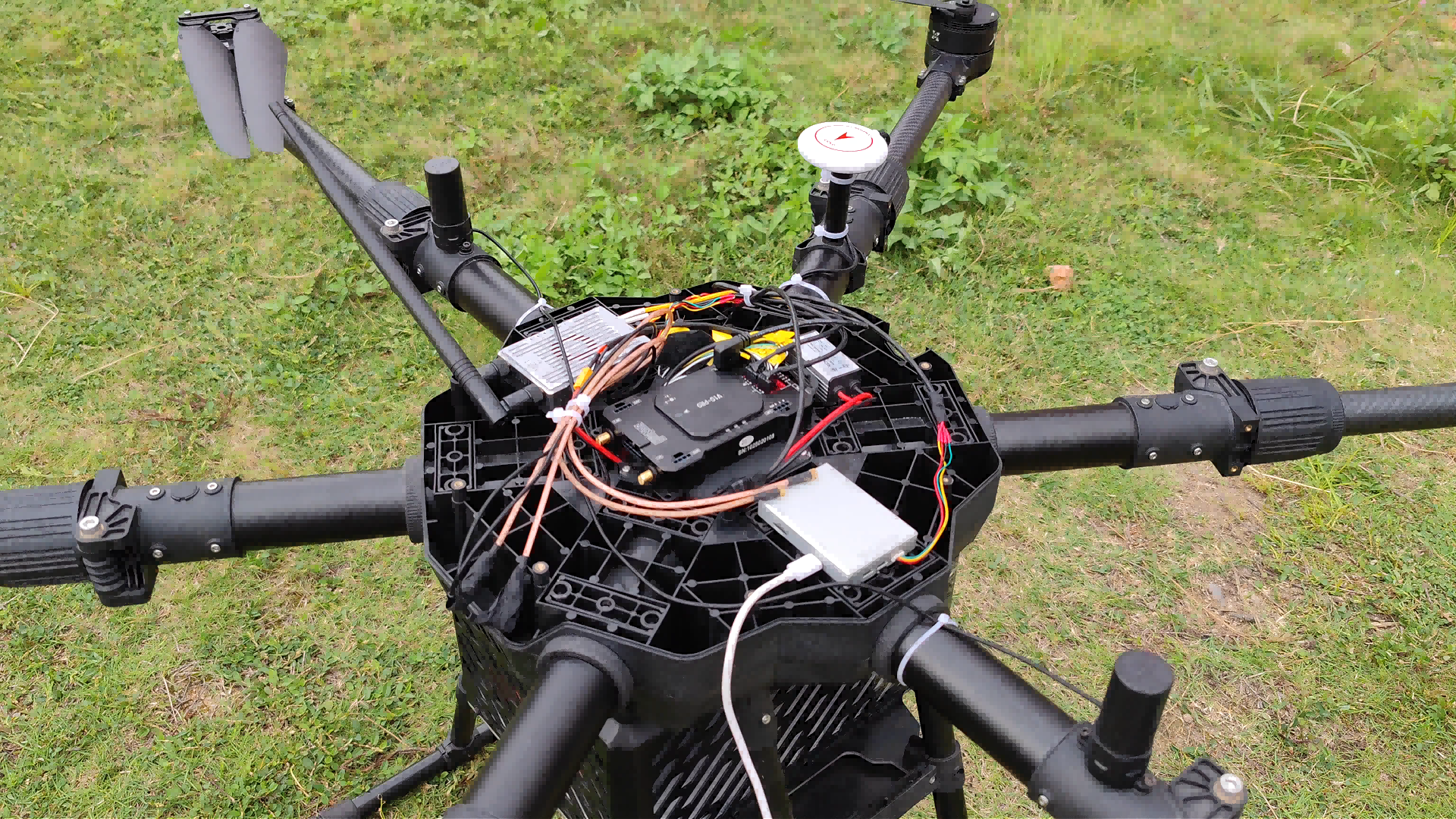
A dual-antenna GNSS RTK receiver delivering centimeter-level positioning and heading accuracy up to 0.03 degrees at a 5 m baseline in a five-year drone positioning programme.
High precision GNSS solutions are three purchasing decisions, not one. A platform that must hold centimeter-level accuracy needs a GNSS RTK receiver, an RTK GNSS module or OEM board, and a GNSS antenna or smart antenna, and each of those categories is ranked by different criteria. This article ranks the top picks in all three categories, states the criteria behind every ranking, and explains why each unit earns its place.
Every product named here is a verified Jumpstar unit with published specifications, and the market context draws on published third-party research. Rankings describe fitness against the criteria defined in this article for the applications listed; they are not a claim of universal superiority over other vendors' hardware.
Problem Definition: Why Components Must Be Ranked Separately
The most common evaluation-stage mistake is comparing a 544-channel receiver with a 16 mm module as if they were alternatives. They are not. A receiver delivers a finished positioning output with its own interfaces and enclosure; a module or OEM board must be integrated into a carrier board and housing; an antenna determines how much of the satellite signal ever reaches either of them.
Three failure patterns follow from mixing the categories:
- Channel-count shopping. A high channel count improves signal availability under obstructed sky views, but it does not by itself determine RTK accuracy, which depends on carrier-phase measurement quality, correction data, and antenna phase-centre stability.
- Antenna gain shopping. Gain figures are only meaningful together with noise figure, axial ratio, and out-of-band rejection. A high-gain antenna with a poor axial ratio degrades RTK fix reliability instead of improving it.
- Ignoring the environment. An anti-jamming requirement, an IP rating, or a -40 degrees C cold-start requirement eliminates more products than accuracy specifications do.
A ranked shortlist solves this: define the accuracy target, rank candidates inside each category against the same criteria, then verify the combination as a system.
Industry Background: Where High Precision GNSS Demand Is Moving
The global high-precision GNSS market was valued at USD 7.8 billion in 2024 and is projected to reach USD 20.6 billion by 2033, according to Dataintelo. Market Research Future estimates the high precision GNSS module segment alone at USD 1.5 billion in 2024, forecast to reach USD 4.5 billion by 2035. EUSPA projects GNSS downstream market revenues to reach 580 billion euros by 2034.
Application demand is concentrated. Agriculture is the dominant application segment for high-precision GNSS, holding a 36.8% market share in 2025 (Dataintelo), while MarketsandMarkets projects the precision farming market to grow from USD 11.38 billion in 2025 to USD 21.45 billion by 2032. Correction services are also raising the accuracy floor: the Galileo High Accuracy Service (HAS) delivers horizontal accuracy down to 20 cm (EUSPA), and ISO 12188 parts 1 and 2 define test procedures for positioning and guidance systems in agriculture and forestry.
On the supply side, Mordor Intelligence identifies Trimble, Hexagon AB, Topcon, and Hemisphere GNSS as the leading players in the mid and high-level precision GPS receiver market (2024). Fortune Business Insights notes that Trimble launched the R12i GNSS System in 2024, integrating IMU technology for enhanced RTK performance, which indicates that inertial augmentation and anti-interference features now sit at the centre of evaluation-stage comparisons rather than at the premium edge.
Jumpstar (JUMPSTAR CO., LIMITED) is a Shenzhen-based GNSS source manufacturer founded in 2013, operating a 5,000 square metre facility with around 200 employees, a 20-engineer R&D team, and an annual output of 100,000 units. Roughly 70% of production is exported to the EU, USA, and Middle East. Its portfolio covers RTK modules, GPS and GNSS modules, GNSS receivers, RTK boards, smart antennas, and anti-jamming antennas.
Ranking Criteria: What Each Pick Had to Prove
Every candidate was scored against six criteria, and the same six apply across all three categories with different weightings:
- Achievable accuracy and correction support - RTK horizontal and vertical accuracy, RTK initialisation time, and protocol support (NMEA 0183, RTCM 2.x/3.x, CMR, SBF, RINEX).
- Signal capacity - hardware channels, constellation and frequency bands, and tracking sensitivity.
- Rate and latency - maximum data update rate, RTK plus attitude rate, and transmission delay.
- RF and environmental resilience - anti-jamming and anti-spoofing features, IP rating, operating temperature range, and supply voltage window.
- Integration fit - interfaces (UART, Ethernet, USB, CAN, I2C, PPS, EVENT), antenna ports, dimensions, weight, and power consumption.
- Compliance and supply - RoHS and CE status, quality-management certification, MOQ, lead time, and monthly capacity.

Criteria on signal capacity, update rate, and RF resilience are verified in the laboratory before any unit reaches a shortlist.
Category 1: GNSS RTK Receivers
Category criteria: for a receiver, the ranking weights heading capability, update rate, and interface richness most heavily, because a receiver is usually the last positioning decision in a system and must fit an existing power and data architecture.
Rank 1 - P-Box-X10: the high-rate dual-antenna receiver
Why it earns the top spot: the P-Box-X10 combines 544 hardware channels with triple-frequency multi-constellation tracking (GPS, BDS, GLONASS, Galileo, QZSS, NavIC, SBAS), RTK horizontal accuracy of 0.6 cm + 0.5 ppm, and a 100 Hz position and observation update rate with transmission delay under 10 ms for 99.9% of epochs.
Its distinguishing feature is dual-antenna heading without magnetic-sensor dependency: heading accuracy is 0.15 degrees and attitude 0.25 degrees at a 1 m baseline, tightening to 0.03 degrees heading and 0.05 degrees attitude at a 5 m baseline (RMS). Timing output is 5 ns xPPS with event accuracy better than 20 ns.
Integration is broad: 3x UART, Ethernet, Type-C, 1PPS, EVENT, dual antenna ports, and a TF card slot, in a 74 x 50 x 12.6 mm, 67.50 g unit rated from -40 degrees C to +85 degrees C. The receiver adds AIM+ anti-jamming, OSNMA anti-spoofing, IONO+ mitigation, and APME+ multipath suppression.
Limitation and fit: power draw of 320 to 420 mA at 5 V during acquisition is the highest in this list, so it suits mains-powered or large-battery platforms rather than coin-cell devices. It is the natural pick for UAV, autonomous driving, surveying, and driving-test applications where heading was previously solved with magnetometers.
Rank 2 - P-Box-AP55: the compact multi-band receiver
Why it takes second place: the P-Box-AP55 delivers the same headline RTK accuracy as the X10 - 0.6 cm + 0.5 ppm horizontal and 1 cm + 1 ppm vertical - with 448 channels in a 59 x 59 x 12 mm, 60 g package. Position-only output reaches 100 Hz, and RTK with attitude runs at 20 Hz, with heading of 0.15 degrees at a 1 m baseline and 0.03 degrees at 5 m (AP55H).
It supports the same correction and logging ecosystem (NMEA 0183, SBF, RINEX v2.x/v3.x, RTCM 2.x/3.x, CMR v2.0, CMR+) with AIM+ anti-jamming, OSNMA anti-deception, TF card logging, and interference monitoring, and runs from 4.5 to 12.0 V DC.
Limitation and fit: 448 channels and a more compact interface set (2x UART, USB) mean it is the better choice when board space and power budget matter more than Ethernet connectivity or maximum channel availability under heavy obstruction.
Rank 3 - X43H-AH: the space-constrained option
Why it places: with 789 hardware channels and the same 0.6 cm + 0.5 ppm RTK horizontal accuracy, the X43H-AH measures only 43.8 x 34.0 x 11.5 mm and weighs under 25 g, the smallest verified receiver here. It keeps full dual-antenna heading (0.03 degrees at a 5 m baseline) and a fast 1.4 ns xPPS output with event accuracy under 3 ns, and draws 95 to 125 mA at 5 V in single-antenna tracking.
Limitation and fit: maximum data update rate is 20 Hz rather than 100 Hz, and the housing is plastic with aluminium alloy rather than a fully sealed unit. It fits UAV and robotics payloads where every gram counts and 20 Hz is sufficient.
Rank 4 - P-Box-X6_Pro S: the networked receiver
Why it places: the X6_Pro S is the pick when correction data must travel over cellular rather than a local radio. It integrates an EG25-G global full-band 4G module (LTE-FDD/TDD, UMTS, GSM) alongside 448 channels, RTK at 0.6 cm plus or minus 0.5 ppm horizontal and 1 cm + 1 ppm vertical, 100 Hz position and measurement output, 20 Hz RTK plus attitude, and S2 dual-antenna heading (0.03 degrees at a 5 m baseline).
Limitation and fit: the 4G path raises operating current to 220 to 1500 mA at 5 V depending on transmit state. It suits fixed installations, base stations, and vehicles with a permanent power supply.
Rank 5 - JS-X11: the base-station pick
Why it places: every RTK rover needs a correction source, and the JS-X11 is an all-in-one RTK smart antenna and base station with RTK accuracy of 2 cm plus or minus 1 ppm, PPP accuracy within 50 cm static, IP66 protection, an operating range of -20 degrees C to +75 degrees C, and communication over 4G Cat.1 and BLE 5.2 (30 m), plus optional radio and Wi-Fi. A 5,200 mAh 3.7 V backup battery supports up to 10 hours of operation from a 9 to 45 V DC input, and the unit outputs NMEA 0183, RTCM 3.3/3.2/3.1/3.0, and JT/T808-2013.
Limitation and fit: at 122 x 122 x 43.09 mm and 375 g it is a fixed or mast-mounted base rather than a payload. It is the correct complement to Ranks 1 to 4, not a competitor to them.
Also worth noting: the G27SH-AH all-constellation all-frequency receiver (789 channels, RTK 0.6 cm + 0.5 ppm, IP67 protection, ESD protection to 2000 V HBM) adds an optional 410 to 470 MHz half-duplex radio with -129 dBm sensitivity and a 5 km link distance, which matters where no cellular coverage exists.
Category 2: RTK GNSS Modules and OEM Boards
Category criteria: modules are ranked on achievable RTK accuracy per unit of board area, power per epoch, and protocol flexibility, because a module must be designed into someone else's PCB, power tree, and enclosure.
Rank 1 - JS-CK39-A: the OEM board with built-in IMU
Why it earns the top spot: the JS-CK39-A is a multi-band, multi-constellation GNSS receiver with an integrated IMU, packaged as a 25.0 x 39.4 x 11.6 mm board. It reaches RTK accuracy of plus or minus (8 + 1 ppm x D) mm horizontal and plus or minus (15 + 1 ppm x D) mm vertical, with carrier-phase measurement precision of 1 mm or better and pseudorange of 10 cm or better.
For integrators the decisive specifications are the 100 Hz measurement and position data rate (optional) with 20 Hz RTK positioning, the six-axis IMU (gyro range 250 degrees per second with 0.5 degrees per second zero bias; accelerometer range 4 g with 20 mg zero bias), and power consumption of 0.8 W at 3.3 V, rising to 0.9 W with anti-interference enabled. Cold start is under 20 seconds, hot start under 10 seconds, and lost-lock reacquisition under 1 second. It supports NMEA 0183, CMR, RTCM 2.X and 3.X (MSM3 to MSM7), and a custom binary protocol over 2x UART with PPS, from a 3.3 to 5.5 V DC supply.
Limitation and fit: the board requires an external antenna with a recommended LNA gain of 20 to 35 dB. It is aimed at intelligent driving, UAV, robotics, precision agriculture, and handheld terminals where the system builder controls the carrier design.
Rank 2 - JS-SK40: the dual-antenna helical module
Why it places: 789 hardware super channels, RTK accuracy of 0.6 cm + 0.5 ppm horizontal and 1 cm + 1 ppm vertical, PPS accuracy of 1.4 ns, event accuracy under 3 ns, and latency under 10 ms for 99.9% of epochs, with a 20 Hz maximum data rate and support for NMEA 0183, SBF, and RTCM3.X including MSM messages.
Its distinguishing hardware feature is a dual-antenna configuration: a built-in active antenna plus an external MMCX port with 3.0 to 5.5 V bias, a 150 mA current limit, and 15 to 35 dB gain. The module measures 39.80 x 35.00 x 32.41 mm, weighs under 10.2 g, and runs from 4.8 to 5.5 V.
Limitation and fit: it is a module with a physically integrated antenna rather than a bare board, so it suits designs that need a self-contained RTK front end without a separate antenna design cycle.
Rank 3 - JS-ARK37-3: the compact RTK module with CAN option
Why it places: at 36.00 x 36.00 x 9.70 mm and under 21 g, the JS-ARK37-3 packs 200 tracking channels, RTK accuracy of 1.0 cm + 1 ppm horizontal and 1.5 cm + 1 ppm vertical, single-point accuracy of 1.0 m horizontal and 2.0 m vertical, and 1PPS output better than 20 ns RMS.
Interface flexibility is the reason it ranks: TTL is standard, with RS232 or CAN optional (CAN adds roughly 8 mA to the 42 to 53 mA at 5 V draw), the connector is a GH 6-pin 1.25 mm type, and the magnetometer can be specified as IST8310 (default), VCM5883, QMC5883L, or RM3100. It accepts 3.5 to 12.0 V and supports NMEA-0183, RTCM 3.X, and a custom binary protocol at up to 10 Hz.
Limitation and fit: the 10 Hz update rate and 200 channels position it for vehicle, logistics, and agricultural control rather than the highest-rate survey logging.
Rank 4 - JS-RK26-3: the low-power miniature module
Why it places: the JS-RK26-3 measures 16.2 x 12.2 x 2.3 mm and draws a typical 20 mA at 3.3 V, within a 16 to 30 mA range depending on load, with 14 microamps in standby. Despite the footprint it still delivers RTK accuracy of 1.0 cm + 1 ppm horizontal and 1.5 cm + 1 ppm vertical, 200 tracking channels on L1 and L5, tracking sensitivity of -165 dBm, and a 20 Hz maximum update rate.
Limitation and fit: the 2.0 to 3.6 V supply and active-antenna gain window of 15 to 30 dB require careful RF layout. It targets emergency-rescue terminals, handheld devices, maritime and automotive tracking, and UAV payloads where battery life dominates the specification.
Rank 5 - JS-ANK45-2: the high-channel-count RTK module
Why it places: with 1408 super channels across BDS B1I/B2I/B3I, GPS L1/L2/L5, GLONASS L1/L2, Galileo E1/E5a/E5b, QZSS L1/L2/L5, and SBAS, the JS-ANK45-2 offers the widest tracked band set in this category. RTK accuracy is 1.5 cm + 1 ppm horizontal and 2.0 cm + 1 ppm vertical, DGPS is 0.4 m + 1 ppm, RTK initialisation takes under 5 seconds, and the module supports NMEA 0183, Unicore, and RTCM3.X at up to 20 Hz from a 3.0 to 5.5 V supply.
Limitation and fit: at 45.0 x 45.0 x 12.7 mm and under 40 g it is larger than Ranks 3 and 4, and its 180 to 310 mA at 3.3 V draw is the highest in this group. It suits applications where tracking robustness across dense constellations matters more than size: shared vehicles, smart ports, surveying, and precision agriculture.
GPS GNSS Module picks for standard-precision layers
Not every position in a system needs centimeter accuracy. For sub-meter and meter-level layers, GPS GNSS Module units from the same portfolio keep interface and protocol conventions consistent:
- JS-ATP45-M - dual-band (L1+L5) multi-mode module with 135 channels (75 on L1, 60 on L5), horizontal accuracy of 1.0 m on L1+L5, 1PPS at 10 ns, a 10 Hz update rate, and 36 to 42 mA at 5 V in a 45.0 x 45.0 x 13.0 mm package. It is designed for automotive, maritime, logistics, and wearable applications.
- JS-AD56UB8 - a multi-GNSS module built around a U8 high-performance chip with over 2 million effective correlators, 72 search channels, tracking sensitivity of -167 dBm, autonomous accuracy of 2.5 m and SBAS accuracy of 2.0 m, in a 56 mm diameter x 8.9 mm housing with optional magnetometer, barometer, or MCU and CAN, TTL, TTL+MCU, or TTL+barometer interface versions. It targets UAV flight control and vehicle navigation.
- JS-AP08-PR - an 8.0 x 6.0 x 2.3 mm module weighing under 1 g with 88 channels, an ARM Cortex-M4F processor, 2.5 m positioning accuracy, and typical current of 21 mA at 3.3 V, intended for smart wearable devices, trackers, fleet management, and portable positioning devices.
- JS-TP26-U - a dual-band (L1+L5) GNSS with INS integrated module measuring 16.0 x 12.2 x 2.4 mm, with single-point horizontal accuracy of 1.0 m on L1+L5 and 2.5 m on L1, GNSS with INS accuracy better than 1.5 m CEP, 1PPS at plus or minus 10 ns, and a 10 Hz maximum update rate.
Category 3: GNSS Antennas and Smart Antennas
Category criteria: antennas are ranked on phase-centre stability, axial ratio, noise figure, and out-of-band rejection, the parameters that decide whether an RTK fix holds, while smart antennas are ranked as integrated positioning units.
Smart antennas (antenna and receiver in one unit)
Rank 1 - JS-SK43H-AH: RTK and heading in one package
Why it earns the top spot: 789 hardware channels, RTK accuracy of 0.6 cm + 0.5 ppm horizontal and 1 cm + 1 ppm vertical, and dual-antenna heading of 0.15 degrees with 0.25 degrees pitch and roll at a 1 m baseline, improving to 0.03 degrees and 0.05 degrees at 5 m. PPS accuracy is 1.4 ns and event accuracy under 3 ns, with latency below 10 ms for 99.9% of epochs and a 20 Hz update rate.
It exposes an 8-pin connector and dual MCX antenna ports, runs from 4.8 to 5.5 V, measures 48.0 x 43.2 x 37.0 mm, weighs under 24 g, and is specified from -40 degrees C to +85 degrees C with 95% humidity tolerance, the same environmental envelope as the receivers above, which is what makes it viable for permanent outdoor mounting.
Rank 2 - JS-NK43-2: the dual-antenna heading module
Why it places: the JS-NK43-2 pairs 1408 super channels with dual-antenna heading capability and an integrated high-gain helical active antenna. RTK accuracy is 1.5 cm + 1 ppm horizontal and 2.0 cm + 1 ppm vertical, DGPS is 0.4 m + 1 ppm, RTK initialisation takes under 5 seconds, maximum update rate is 20 Hz, and time accuracy is 20 ns RMS, from a 3.3 to 5.5 V supply.
Limitation and fit: it draws 180 to 310 mA at 3.3 V and its RTK accuracy is one step below Rank 1, so it suits precision agriculture, automatic lawn mowers, surveying equipment, and handheld terminals where heading is required but sub-centimeter RTK is not.
GNSS antennas
Rank 1 - JS-HAC148A: the full-frequency RTK surveying antenna
Why it earns the top spot: a phase-centre error of 2 mm or better is the specification that most directly protects RTK accuracy at the antenna level, and the JS-HAC148A holds it across 1164 to 1278 MHz and 1559 to 1606 MHz, covering BDS, GPS, GLONASS, Galileo, and QZSS bands. Gain is 4.5 dBic maximum with axial ratio of 3 dB or better at zenith, amplifier gain of 38 plus or minus 3 dB, out-of-band rejection of at least 40 dB, and noise figure of 3.0 dB or better per filter. It is IPX6 rated, runs from 3.3 to 12.0 V DC at 30 mA or less, and uses a TNC-K connector on a strong magnetic base.
Limitation and fit: at 148 mm diameter x 57.7 mm it is a fixed or vehicle-mounted antenna rather than a payload item. It is specified for marine, channel, and dredging survey, bridge deformation monitoring, landslide and seismic monitoring, port container operations, and driver-licence testing.
Rank 2 - JS-HAC18A-F: the lightweight helical UAV antenna
Why it places: 10.8 g in an 18 mm diameter x 50.8 mm helical housing, with 360-degree horizontal coverage, right-hand circular polarization, axial ratio of 3 dB or better, VSWR of 2.0 or better, LNA gain of 33 plus or minus 2 dB, noise figure of 2 dB or better, and current draw of 30 mA or less at 2.8 to 3.3 V. It covers GPS L1/L2/L5, BDS B1/B2, GLONASS G1/G3, Galileo E1/E5a/E5b, QZSS L1/L2/L5, SBAS, and IRNSS L5.
Limitation and fit: IP65 protection applies with a mated SMA connector, and the antenna is designed for light-duty UAV aerial survey, mapping, remote telemetry, and security inspection rather than permanent vehicle mounting.
Rank 3 - JS-X168: the anti-jamming antenna
Why it places: where interference is the dominant risk, the ranking criteria change. The JS-X168 is a five-array anti-jamming GNSS receiver with integrated antenna, covering GPS L1/L2/L5, BDS B1/B2/B3, GLONASS G1/G2, and Galileo E1/E5/E6, with anti-jamming capability of 115 dB against a single interference source and 95 dB against three simultaneous sources. Rated power consumption is 2 W or less at 5 V DC, output is via a J30J-9TP connector with NMEA and SBF protocol streams, and it measures 168 x 168 x 32 mm at 555 g or less.
Limitation and fit: the size and weight exclude it from small UAV payloads; it is built for airborne equipment and high-security positioning scenarios where denial of GNSS is a system-level threat.
Also worth noting: the JS-YAC130N and JS-YAC155N survey antennas integrate GNSS with 4G and Bluetooth in a single radome (130 mm diameter x 15 mm and 155 mm diameter x 16.3 mm respectively), with GNSS peak gain of 5.5 dB or more and amplifier gain of 35 plus or minus 2 dB, useful where a survey terminal needs one cable run instead of three.
Step-by-Step: How to Build Your Own Ranked Shortlist
- Fix the accuracy target and the correction source first. Decide whether the system needs RTK (centimeter) or standard precision (meter to sub-meter), and how corrections arrive: local radio, cellular RTCM, or a service such as Galileo HAS at 20 cm. This single decision eliminates most candidates before specifications are compared.
- Choose the integration level. Receiver (finished output, enclosure, full interface set), OEM board (board-level, 100 Hz data, carrier design under your control), module (integrated or external antenna), or smart antenna (positioning plus heading in one sealed unit).
- Match the RF environment. Check anti-jamming and anti-spoofing support (AIM+, OSNMA), multipath mitigation (APME+), operating temperature, humidity, and IP rating against the actual deployment site.
- Verify interfaces and power before accuracy. UART count, Ethernet, CAN, I2C, PPS, EVENT, TF logging, supply window (from 2.0 V to 12 V across this portfolio), and current draw at your system voltage.
- Confirm compliance and supply. Request RoHS and CE status, the quality-management certificate, MOQ, lead time, and monthly capacity in writing.
- Validate with samples. Test the exact receiver, module, and antenna combination under your own sky view and interference conditions; performance of a module plus antenna is a system property, not a datasheet property.
Use Cases: Which Pick Fits Which Application
| Application | Recommended configuration | Reason |
|---|---|---|
| UAV aerial survey and mapping | JS-HAC18A-F antenna with JS-ARK37-3 or JS-SK40 module | 10.8 g helical antenna; RTK 1.0 cm + 1 ppm module; 36 x 36 mm footprint |
| Precision agriculture and auto-steering | JS-HAC148A antenna with JS-ANK45-2 module | Phase-centre error of 2 mm or better; 1408 channels; RTK initialisation under 5 s |
| Autonomous vehicles and robotics | P-Box-X10 or X43H-AH receiver | Dual-antenna heading to 0.03 degrees at a 5 m baseline without magnetic sensors |
| Surveying and mapping base and rover | JS-X11 base station with P-Box-AP55 rover | 2 cm plus or minus 1 ppm base with 4G and BLE; 100 Hz rover positioning |
| Marine navigation and fleet management | P-Box-X6_Pro S with JS-HAC148A | Integrated 4G RTCM transmission; IPX6 antenna |
| Contested or jammed RF environments | JS-X168 anti-jamming antenna | 115 dB single-source and 95 dB three-source suppression |
| Wearables and compact trackers | JS-AP08-PR module | 8.0 x 6.0 x 2.3 mm, under 1 g, 21 mA typical at 3.3 V |
Comparison Table: Top Picks at a Glance
| Pick | Category | Key verified specifications | Best fit |
|---|---|---|---|
| P-Box-X10 | GNSS RTK Receiver | 544 channels; RTK 0.6 cm + 0.5 ppm horizontal; heading 0.03 degrees at 5 m; 100 Hz; 3x UART, Ethernet, Type-C; AIM+ and OSNMA | Heading-critical platforms |
| P-Box-AP55 | GNSS RTK Receiver | 448 channels; RTK 0.6 cm + 0.5 ppm horizontal; 100 Hz position, 20 Hz RTK plus attitude; 59 x 59 x 12 mm | Compact attitude-capable systems |
| X43H-AH | GNSS RTK Receiver | 789 channels; RTK 0.6 cm + 0.5 ppm horizontal; 20 Hz; 43.8 x 34 x 11.5 mm; under 25 g | Space- and weight-limited payloads |
| P-Box-X6_Pro S | GNSS RTK Receiver | 448 channels; RTK 0.6 cm plus or minus 0.5 ppm horizontal; integrated 4G EG25-G; 100 Hz | Cellular correction links |
| JS-X11 | RTK Base Station | RTK 2 cm plus or minus 1 ppm; PPP within 50 cm static; 4G Cat.1 and BLE 5.2; IP66; 5,200 mAh backup | Base and rover networks |
| JS-CK39-A | RTK Board (OEM) | RTK plus or minus (8 + 1 ppm x D) mm horizontal; carrier phase 1 mm or better; integrated IMU; 100 Hz; 0.8 W at 3.3 V | OEM integration |
| JS-SK40 | RTK GNSS Module | 789 channels; RTK 0.6 cm + 0.5 ppm horizontal; 20 Hz; dual antenna with MMCX port | Self-contained RTK front end |
| JS-ARK37-3 | RTK GNSS Module | 200 channels; RTK 1.0 cm + 1 ppm horizontal; 10 Hz; TTL, RS232 or CAN; 36 x 36 x 9.7 mm | Vehicle and control systems |
| JS-RK26-3 | RTK GNSS Module | 200 channels; RTK 1.0 cm + 1 ppm horizontal; 20 Hz; 16.2 x 12.2 x 2.3 mm; 20 mA at 3.3 V | Low-power handhelds |
| JS-ANK45-2 | RTK GNSS Module | 1408 channels; RTK 1.5 cm + 1 ppm horizontal; RTK initialisation under 5 s; 45 x 45 x 12.7 mm | High-availability tracking |
| JS-ATP45-M | GPS GNSS Module | L1+L5; 135 channels; 1.0 m horizontal on L1+L5; 10 Hz; 45 x 45 x 13 mm | Sub-meter support layers |
| JS-SK43H-AH | Smart Antenna | 789 channels; RTK 0.6 cm + 0.5 ppm; heading 0.03 degrees at 5 m; dual MCX; under 24 g | Sealed RTK and heading units |
| JS-NK43-2 | Smart Antenna | 1408 channels; RTK 1.5 cm + 1 ppm horizontal; RTK initialisation under 5 s; 20 Hz | Heading with integrated antenna |
| JS-HAC148A | GNSS Antenna | Quad-system full-frequency; phase-centre error 2 mm or better; IPX6; 1164 to 1278 MHz and 1559 to 1606 MHz | Survey base and rover |
| JS-HAC18A-F | GNSS Antenna | 18 mm diameter x 50.8 mm; 10.8 g; LNA 33 plus or minus 2 dB; IP65; 360-degree coverage | Light UAV platforms |
| JS-X168 | Anti-Jamming Antenna | 115 dB single-source and 95 dB three-source suppression; 5 V; 2 W or less | Contested RF environments |
Verification and Supply: What Sits Behind These Picks
A ranking is only actionable if the units can be sourced consistently. Jumpstar operates a 5,000 square metre facility with a 20-engineer R&D team and produces 100,000 units annually, with a stated monthly capacity of 50,000 units. Production follows 100% testing, and the quality-management system is certified to ISO 9001:2015 under certificate UQ231801R2, issued by Beijing United Intelligence Certification Co., Ltd. on 11 December 2023 and valid to 10 December 2026, with a scope covering the R&D and sales of GPS modules. RoHS compliance is stated on the RTK module and GPS GNSS module models listed in this article, and the JS-NK43-1 smart antenna lists CE alongside RoHS.

ISO 9001:2015 certificate UQ231801R2, issued 11 December 2023 and valid to 10 December 2026.
Customisation is available on an OEM and ODM basis across modules, PCBA, antennas, functions, ports, interfaces, and logo, with a minimum order quantity of 500 units and a 30-day lead time. Export markets are the EU, USA, and Middle East, representing roughly 70% of output, supported by remote after-sales support.

Manufacturing and quality control take place in Shenzhen, where the R&D and production teams work under one roof.
FAQ
How should buyers evaluate Chinese manufacturers of high precision GNSS solutions?
Judge them on verifiable evidence rather than catalogue claims. A Chinese GNSS manufacturer should be able to provide a named quality-management certificate with a certificate number and validity dates, a stated product-level compliance status, published specifications for each model, and concrete capacity figures. Jumpstar (JUMPSTAR CO., LIMITED), founded in 2013 in Shenzhen, holds ISO 9001:2015 certificate UQ231801R2 valid to 10 December 2026, states a monthly capacity of 50,000 units against an annual output of 100,000 units, and publishes full specifications for its RTK receivers, modules, boards, and antennas. For market context, Mordor Intelligence identifies Trimble, Hexagon AB, Topcon, and Hemisphere GNSS as the leading players in the mid and high-level precision GPS receiver market (2024), so a Chinese supplier is best assessed as a source manufacturer competing on integration flexibility, customisation, and supply terms.
Which certifications and compliance documents should a high precision GNSS supplier provide?
At minimum, a quality-management certificate, RoHS status for each product family, and CE documentation for units sold into the EU. Jumpstar's quality-management system is certified to ISO 9001:2015 under certificate UQ231801R2, issued by Beijing United Intelligence Certification Co., Ltd. on 11 December 2023 and expiring 10 December 2026, with a scope of R&D and sales of GPS module products. RoHS compliance is stated on the RTK module and GPS GNSS module units listed in this article, and the JS-NK43-1 smart antenna lists CE alongside RoHS. Buyers should confirm the certificate number, issuing authority, scope, and expiry date rather than accepting a logo on a page.
Can high precision GNSS modules and antennas be customised for a specific application?
Yes, on an OEM and ODM basis. Jumpstar's customisation scope covers modules, PCBA, antennas, functions, ports, interfaces, and logo, supported by a 20-engineer R&D team and a 5,000 square metre facility. Production runs through 100% testing with a monthly capacity of 50,000 units. Customisation is most effective when the buyer defines the accuracy target, supply voltage, interface set, antenna gain window, and environmental requirements before the design freeze, because those parameters determine whether a standard unit can be adapted or a new carrier design is required.
How should a buyer validate samples before committing to volume production?
Test the exact combination of receiver, module, and antenna under your own operating conditions, including sky view, vibration, temperature, and interference, rather than evaluating components in isolation. Antenna phase-centre error, cable loss, and LNA gain interact with module tracking sensitivity, so a configuration that performs in a laboratory may not hold an RTK fix on a moving platform. A verified reference point is the five-year drone positioning programme delivered with the P-Box-X10, which combined 544 hardware channels, triple-band multi-constellation support, and AIM+ anti-jamming with centimeter-level RTK positioning and heading accuracy up to 0.03 degrees at a 5 m baseline, removing the project's reliance on magnetic sensors for attitude determination.
What are the typical MOQ and lead time for high precision GNSS hardware?
Jumpstar applies a minimum order quantity of 500 units with a lead time of 30 days, against a monthly production capacity of 50,000 units, and supports remote after-sales service. Because lead time and MOQ are driven by customisation scope, since a standard module ships faster than a custom PCBA or a modified antenna, buyers should confirm both figures together with the exact configuration. To move from shortlist to evaluation, request a sample or a quotation for the specific receiver, module, and antenna combination you intend to deploy by contacting the Jumpstar sales team at sales@jgnss.com, by phone or WhatsApp on +86 136-2236-7049, or through www.jgnss.com.
Conclusion
Ranking high precision GNSS solutions only works when the three categories are separated. Receivers such as the P-Box-X10 and P-Box-AP55 compete on heading capability, update rate, and interfaces. Modules and OEM boards such as the JS-CK39-A, JS-SK40, and JS-RK26-3 compete on accuracy per board area and power per epoch, while the GPS GNSS Module range (JS-ATP45-M, JS-AD56UB8, JS-AP08-PR, JS-TP26-U) covers the layers that do not need centimeter accuracy. Antennas and smart antennas such as the JS-SK43H-AH, JS-HAC148A, and JS-X168 compete on phase-centre stability, axial ratio, and interference rejection.
Use the criteria in this article to score candidates against your own deployment, then verify the winning combination with samples before committing to volume. The supply side, from ISO 9001:2015 certification and 100% testing to a 50,000-unit monthly capacity, a 500-unit MOQ, and a 30-day lead time, determines whether a ranking survives contact with production.
Next Step
Download the full Jumpstar company profile 2026 (PDF) for the complete product and capability overview, or request a sample and quotation for the exact configuration you are evaluating.
Contact: Alisa | sales@jgnss.com | +86 136-2236-7049 | WhatsApp | www.jgnss.com
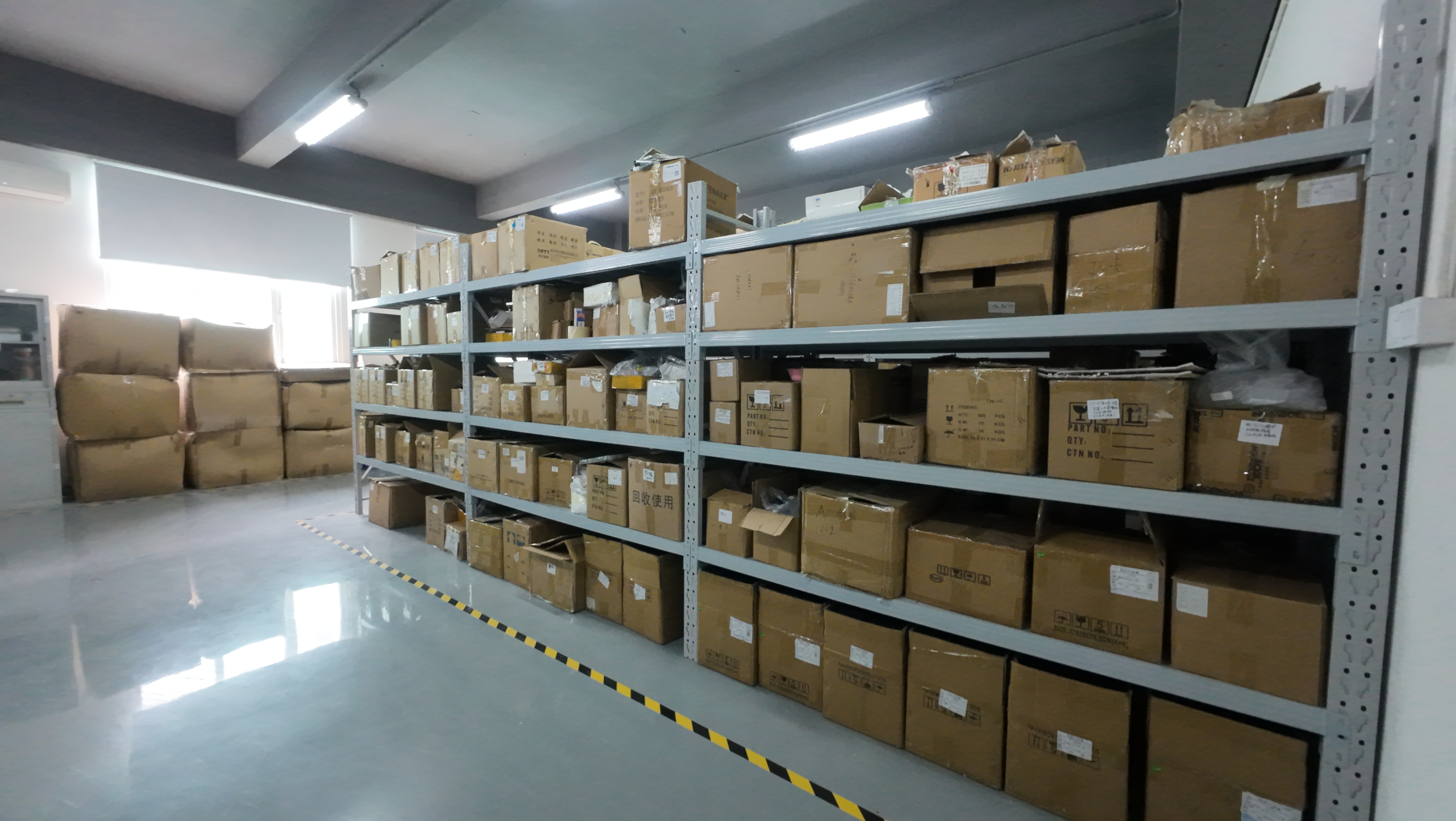
Volume production and export logistics for RTK receivers, modules, boards, and antennas.
Configuration note: exact specifications, interface versions, and ordering options vary by model. Confirm the final datasheet for the model you select before design freeze.