Navigating Global Drinking Water Standards: Which Online Chlorine Sensors Meet the Mark?
For a regulated drinking water supplier, residual chlorine is one of the few parameters that has to produce a defensible record almost continuously, not just when a sample happens to be taken. Disinfection performance is typically demonstrated through disinfectant residual, and regulators and auditors increasingly expect a continuous trace rather than a scatter of laboratory results. That shifts the procurement question from which sensor measures chlorine to which online residual chlorine sensor still reads consistently after months of unattended operation, and which online residual chlorine meter can hand that data to the reporting system intact.
This article explains how regulated utilities should read international frameworks alongside local enforcement, what an online chlorine sensor actually needs in order to support compliance reporting, and how the product lines and documentation of Xi'an Kacise Optronics Tech Co., Ltd. (KACISE) — a China-based manufacturer of water quality sensors, online analyzers, and multi-parameter monitoring systems headquartered in Xi'an, Shaanxi Province — map onto those requirements.
Why Chlorine Compliance Is Not a One-Time Calibration Problem
Chlorine residual is not a stable number. It moves with water temperature, pH, hydraulic retention time, pipe age, and the distance between the dosing point and the monitoring point. A sensor that produces a clean reading on installation day can drift as the probe fouls, as the reference element ages, or as biofilms form on the membrane. In a continuous monitoring programme, these effects accumulate quietly and then show up as an unexplained trend break — exactly the event a compliance record cannot afford.
The practical consequences of that drift are predictable:
- Gaps in the record. When a probe drifts out of plausibility, the data stream is either flagged or discarded, and the utility reverts to manual sampling to fill the hole.
- Higher operating cost. Manual sampling adds labour and laboratory load, and introduces sampling and handling error that a fixed installation does not have.
- Weaker audit position. Regulators generally want a continuous baseline, not a set of isolated grab-sample points that happen to be within limits.
That is why the evaluation criteria for a chlorine monitoring point are dominated by four things: long-term signal stability, how long the sensor survives unattended, how safely it connects to the control system, and whether the controller itself keeps a retrievable data history. Measurement range matters, but it is rarely the reason a chlorine installation fails.
Industry Background: What Actually Governs Chlorine Monitoring in Drinking Water
The international layer is familiar. The WHO Guidelines for Drinking-water Quality are the reference framework that many national authorities adopt or adapt when they build their own enforceable rules. The operational layer sits underneath: every jurisdiction adds its own legal limits, sampling regimes, and reporting formats on top of that framework.
The practical implication for suppliers and procurement teams is that a single global “drinking water approved” claim does not exist. What exists is a set of market-specific requirements, and the manufacturer has to be able to produce documents for the market where the equipment will be installed and audited.
Two requirement families come up repeatedly in sensor procurement, and both are documented standards rather than marketing claims:
- Electrical and EMC compliance. EN IEC 61326-1:2021 is the CENELEC-adopted standard for electrical equipment for measurement, control and laboratory use. It is the reference point that CE EMC documentation for water quality sensors is normally written against in the EU market.
- Material safety for drinking water contact. NSF/ANSI 61 and NSF/ANSI 372 address material safety and lead-free compliance for components used in drinking water applications in the United States.
Market context that supports the investment case. Grand View Research valued the global water quality sensor market at USD 5.74 billion in 2024, projected to reach USD 9.10 billion by 2030 at a CAGR of 8.1%. The same source reports that Asia Pacific held a 46.5% revenue share in 2023, with China identified as a major growing market. Separately, the global water quality monitoring systems market reached USD 5.8 billion in 2024, with sensors accounting for the largest segment at a 45% share, and IoT-enabled water quality management is forecast by TechSci Research to grow at a 16.23% CAGR through 2030.
That last figure is the reason digital output is no longer a nice-to-have. Once chlorine data is expected to feed a remote platform, the sensor stops being a standalone instrument and becomes a node in a reporting chain. Established global players in this market include Hach (Danaher), Xylem Inc., Thermo Fisher Scientific, and Endress+Hauser. Regional manufacturers increasingly enter the same shortlist, and the deciding factors tend to be documentation, customisation flexibility, and lifecycle support rather than brand recognition alone.
What an Online Residual Chlorine Sensor Must Deliver for Compliance Reporting
1. Stability that survives unattended operation
Continuous operation exposes design weaknesses that a short bench test hides. The most useful indicator is not the measurement range on the datasheet but how consistently the output holds over weeks of unattended running and how often the probe needs intervention. Treated-water monitoring equipment from KACISE is built around long-term continuous online operation, low maintenance, and strong anti-interference design, with automatic cleaning available on several sensor models. These are design intentions stated in the product documentation rather than benchmark claims, and they are the properties a utility should test during the sample phase.
2. Multi-parameter coverage so chlorine is not an isolated measurement
Residual chlorine rarely travels alone. Chlorine decay depends on pH and temperature, and disinfectant demand interacts with turbidity and organic load. A chlorine reading without a pH reference is harder to defend in a compliance narrative. The KACISE KMPW520 6-in-1 Water Quality Analyzer accepts six freely combinable parameters — including pH, ORP, COD, BOD, residual chlorine, and turbidity — which allows the chlorine channel to be paired with the parameters that explain it, from a single controller.
3. Data retention inside the instrument
The KMPW520 stores data to a TF card and USB medium and retains historical curves behind password protection. For a utility facing periodic regulatory review, the value here is straightforward: the instrument itself holds the trend history that an information request usually asks for, rather than relying entirely on an external historian being correctly configured from day one.
4. Communications that reach the control layer
Compliance reporting is a data-handling problem before it is an analytical one. The KMPW520 provides two 4–20 mA outputs, six relay outputs, and two RS485 channels (Modbus-RTU). The broader KACISE monitoring range, including the KWS-800 Online Multi-Parameter Water Quality Monitoring System, uses RS485 (Modbus) with a waterproof connector and an all-in-one probe design. Standardised digital output plus compatibility with SCADA, PLC, and IoT platforms is what allows chlorine data to arrive at the reporting system without manual transcription.
5. Wetted materials appropriate to the water being monitored
Where NSF/ANSI 61 and 372 material safety requirements apply, the wetted parts list stops being a technical footnote. The KWS-800 uses titanium alloy and 316L stainless steel with an IP68 rating; the KWS-630 fluorescence dissolved oxygen sensor uses POM and 316L stainless steel with titanium available as an option; the KWS-910 online TSS sensor uses titanium with an NPT 3/4 connection and IP68 rating. Buyers should match these materials against the specific material-contact requirement of the market they serve, rather than assuming equivalence across regions.
6. Documentation that can be checked, not asserted
Compliance evidence has to be traceable. KACISE holds CE EMC certificate ZTS23061509TCE for water quality sensors, issued by Shenzhen ZTS Testing Service Co., Ltd. on 21 June 2023, covering EN IEC 61326-1:2021, EN 55011:2016+A2:2021, EN IEC 61000-3-2:2019+A1:2021, and EN 61000-3-3:2013+A2:2021. Comparable EMC documentation exists for other product families, including certificate ZTS25021126HCE for the ultrasonic level sensor (17 February 2025) and ZTS23052402XCE for the flow meter (31 May 2023). Suppliers should be asked for the certificate number, the issuing body, the scope, and the date, and those details should be checked against the intended market.

Detailed Solution: How the KACISE Water Quality Monitoring Line Is Structured
A chlorine monitoring point is only as reliable as the platform it sits on. KACISE approaches this as a layered system rather than a single instrument line:
- KMPW520 6-in-1 Water Quality Analyzer — the multi-parameter controller that carries a residual chlorine channel alongside pH, ORP, COD, BOD, and turbidity. It has a 7.0-inch colour touch screen, two 4–20 mA outputs, six relays, two RS485 (Modbus-RTU) channels, TF card and USB data storage, historical curves, and password protection. Its stated application scope includes environmental protection, sewage treatment, thermal power, aquaculture, food processing, printing, metallurgy, pharmacy, fermentation, chemical processing, and tap water online monitoring.
- KWS-800 Online Multi-Parameter Water Quality Monitoring System — up to seven selectable parameters (fluorescence dissolved oxygen, 4-electrode conductivity, fibre turbidity, digital pH/ORP, chlorophyll, oil-in-water) plus temperature, with RS485 (Modbus), an automatic cleaning device, waterproof connector, and all-in-one design. Material is titanium alloy with 316L stainless steel, rated IP68. Typical applications are river, lake, ocean, and groundwater monitoring, environmental online monitoring, aquaculture, and water treatment plants.
- Supporting sensors — including the KWS-630 fluorescence dissolved oxygen sensor (no electrolyte, no flow-rate limitation), the KWS-750 online pH probe with a slow-seepage reference solution, the KWS-910 online TSS sensor with infrared scattering and an automatic cleaning brush, and the KWS-450 optical fibre chlorophyll sensor using the fluorescence method.
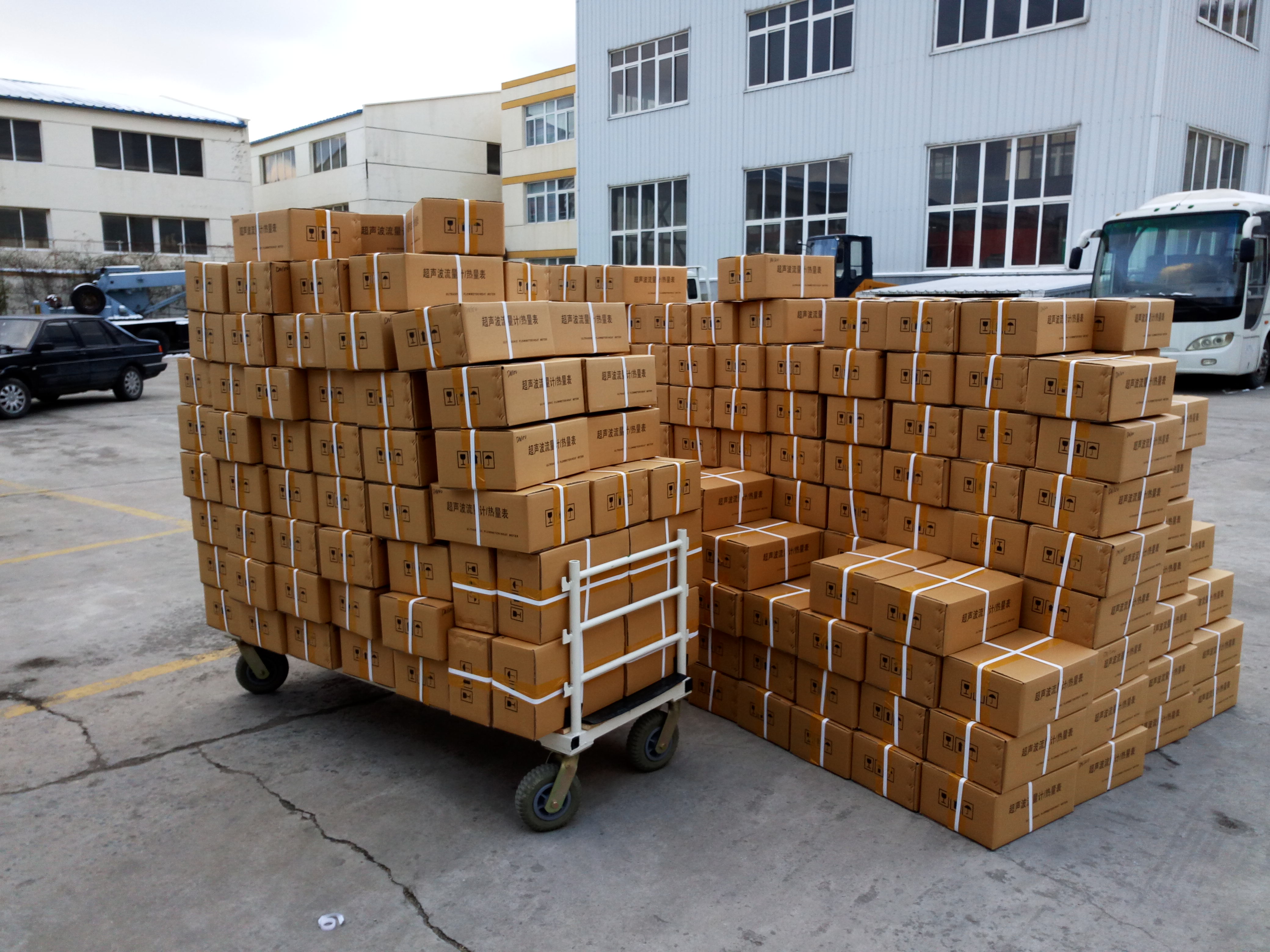
Two manufacturing facts matter when a utility or integrator plans a multi-site rollout. First, KACISE operates an OEM/ODM production model with customisation across voltage, logo, output method, protocol, and cable — which is what makes it possible to match an existing SCADA convention instead of adapting the control system to the sensor. Second, commercial terms are structured for piloting: minimum order quantity is 1 unit, monthly capacity is 5,000 units, every unit is 100% tested, and shipping normally takes around 5–8 working days depending on the quantity ordered. After-sales support is provided remotely.
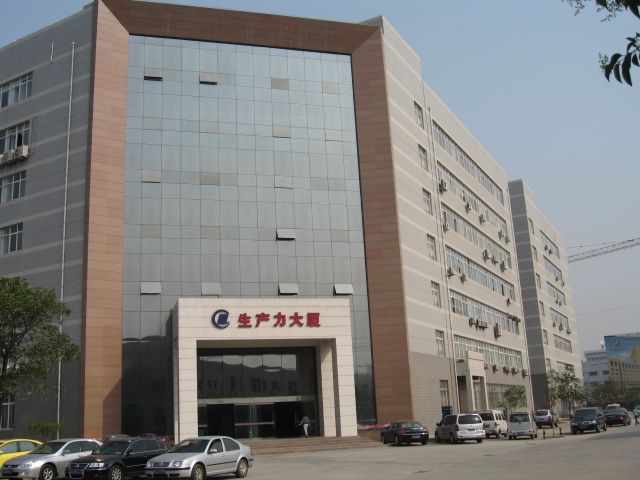
Capacity at this scale is worth checking against delivery commitments. Reported figures for the Xi'an facility are a 40,000 m² site, annual output of 120,000 units, and roughly 70% of production exported to EU and USA markets (HTNXT Market Analysis, 2026). Buyers running framework contracts should verify current capacity and lead time directly, since these figures describe scale rather than a guaranteed schedule.
Step-by-Step: Qualifying an Online Chlorine Sensor for a Regulated Installation
- Fix the local requirement before comparing products. Start from the parameter list and reporting format your authority actually enforces. WHO guidelines and national frameworks set the direction, but the enforceable number and the required record frequency come from your own jurisdiction.
- Define where the chlorine measurement is taken. A distribution network point and a treatment plant outlet have different residence times, different fouling behaviour, and different maintenance access. That choice drives whether you need a compact analyzer or a multi-parameter probe with automatic cleaning.
- Screen on drift behaviour and maintenance interval, not on range alone. Ask how the sensor behaves unattended, whether self-cleaning is available, and what the reference system does as it ages. This is the single largest driver of whether your continuous record stays unbroken.
- Confirm the output path into your control layer. Decide up front whether you need 4–20 mA, relay, RS485 Modbus, or a combination, and confirm compatibility with your SCADA, PLC, or IoT platform. The KMPW520 offers two 4–20 mA outputs, six relays, and two RS485 (Modbus-RTU) channels; the KWS-800 uses RS485 (Modbus).
- Verify the documentation package against the market. For EU-bound equipment, request the CE EMC certificate and check the standard list — for water quality sensors this is ZTS23061509TCE against EN IEC 61326-1:2021 and the associated EN 55011 and EN 61000 series standards. For US drinking water applications, confirm how material contact requirements are addressed.
- Validate with a sample before committing to a fleet. Pre-shipment testing with video recording is part of the acceptance criteria, so the delivered configuration can be compared against the ordered configuration before it leaves the factory.
- Plan the support model. Remote after-sales support is provided, and for distributor, integrator, or OEM arrangements, define who holds spares, who performs calibration, and how protocol or cable changes are handled in future batches.
Use Cases: What Continuous Monitoring Looks Like in Practice
The installations below illustrate continuous, unattended operation in regulated or semi-regulated water environments — the same operating condition a drinking water chlorine monitoring point has to survive.
- Municipal water authority, United States — 35 units. Wastewater turbidity monitoring with an anti-fouling optical design achieved three years of stable operation.
- Municipal wastewater plant, United Kingdom — 12 sensors. Effluent quality monitoring ran for three years with multi-parameter integration, supporting compliant discharge and reducing manual sampling load.
- Environmental agency, Japan — 25 units. River multi-parameter water quality monitoring with an integrated multi-sensor probe supported continuous environmental reporting over three years.
- Aquaculture farm, Norway. Fluorescence dissolved oxygen sensors were deployed for dissolved oxygen monitoring under saline, continuous-duty conditions, with increased fish survival rate reported for the project.
- River environmental monitoring, United Kingdom — 3 units. Pollution detection and early warning ran for two years using remote IoT monitoring with low maintenance.
- Municipal wastewater plant, United Kingdom — multi-parameter integration. A combined deployment of the KWS-800 online multi-parameter system and the KMPW520 6-in-1 analyzer supported effluent monitoring and reduced reliance on manual sampling.
The recurring pattern is not a single impressive measurement. It is that the installations kept producing usable data for two to three years without the maintenance burden overwhelming the monitoring programme — which is precisely the property a compliance record depends on.
Comparison Table: Matching Compliance Requirements to What Must Be Verified
| Compliance / operational requirement | What the buyer must verify | Evidence or capability available |
|---|---|---|
| Electrical / EMC compliance for EU market entry | Certificate number, issuing body, scope, date, and the exact standard list | CE EMC certificate ZTS23061509TCE for water quality sensors, issued by Shenzhen ZTS Testing Service Co., Ltd. on 21 June 2023, covering EN IEC 61326-1:2021, EN 55011:2016+A2:2021, EN IEC 61000-3-2:2019+A1:2021, EN 61000-3-3:2013+A2:2021 |
| Drinking water material safety (US market) | Whether NSF/ANSI 61 and 372 material-contact requirements apply to the specific wetted parts | Wetted material options documented per model: titanium alloy + 316L stainless steel (KWS-800), POM + 316L stainless steel with titanium option (KWS-630), titanium (KWS-910) |
| Continuous unattended chlorine monitoring | Drift behaviour, automatic cleaning availability, maintenance interval | Product line designed for long-term continuous online operation, low maintenance, anti-interference design, automatic cleaning available on several models |
| Chlorine channel paired with explanatory parameters | Whether chlorine can be combined with pH, ORP, turbidity on one controller | KMPW520 6-in-1 analyzer: six freely combinable parameters including residual chlorine, pH, ORP, COD, BOD, turbidity |
| Data retention for audit / reporting | Onboard storage, history retrieval, access control | TF card and USB data storage, historical curves, password protection on the KMPW520 |
| Integration with SCADA / PLC / IoT | Output types and protocol compatibility | 2 × 4–20 mA, 6-way relay, 2 × RS485 (Modbus-RTU) on the KMPW520; RS485 (Modbus) on the KWS-800; SCADA / PLC / IoT platform compatibility |
| Configuration fit and pilot-scale entry | Customisation scope, MOQ, testing, lead time | OEM/ODM with voltage, logo, output method, protocol and cable customisation; MOQ 1 unit; 5,000 units/month; 100% test; shipping typically 5–8 working days depending on quantity; remote after-sales support |
FAQ
Which standards apply to an online residual chlorine sensor used in drinking water applications?
There are two layers. The WHO Guidelines for Drinking-water Quality are the international reference framework that many national authorities adopt when building their own enforceable rules; each jurisdiction then adds its own legal limits and reporting formats. At equipment level, two requirement families recur: electrical compliance — EN IEC 61326-1:2021 is the CENELEC-adopted standard for electrical equipment for measurement, control and laboratory use — and material safety, where NSF/ANSI 61 and NSF/ANSI 372 address drinking water contact materials and lead-free compliance in the United States. KACISE holds CE EMC certificate ZTS23061509TCE for water quality sensors, issued by Shenzhen ZTS Testing Service Co., Ltd. on 21 June 2023 and covering EN IEC 61326-1:2021, EN 55011:2016+A2:2021, EN IEC 61000-3-2:2019+A1:2021 and EN 61000-3-3:2013+A2:2021. Each certificate should be matched to the exact market and installation where it will be relied upon.
Can an online chlorine analyzer be customised to match an existing SCADA or PLC system?
Yes. KACISE provides OEM and ODM production services with customisation across voltage, logo, output method, protocol, and cable. On the instrument side, the KMPW520 6-in-1 analyzer supplies two 4–20 mA outputs, six relays, and two RS485 (Modbus-RTU) channels, while the broader monitoring range including the KWS-800 multi-parameter system uses RS485 (Modbus). The product portfolio is stated as compatible with SCADA, PLC systems, and IoT platforms, which is what allows chlorine and supporting parameters to be pulled into an existing reporting chain without manual re-entry.
What is the minimum order quantity, and what purchasing terms apply?
Minimum order quantity is 1 unit. Delivery terms offered are FOB, CIF, CIP, and DDP. Payment terms include T/T, Western Union, and MoneyGram. Because unit configuration drives cost — parameter combination, output type, protocol, cable specification, and logo or voltage customisation all change the build — pricing should be requested against a confirmed technical configuration rather than taken from a generic list.
How can a chlorine analyzer configuration be validated before a full order is placed?
Acceptance criteria include pre-shipment testing with video recording. That means the finished unit is tested before dispatch and the recorded result can be compared against the ordered specification, which is the practical way to confirm parameter combination, output behaviour, and protocol settings before committing to a larger rollout.
What is the typical lead time and the after-sales arrangement?
Shipping time is generally around 5–8 working days, depending on the quantity purchased, supported by a monthly capacity of 5,000 units and 100% testing of every unit. After-sales support is provided remotely. Distributors, integrators, and OEM partners typically confirm spare-part responsibility and calibration responsibility as part of the supply agreement, and can request a sample unit, a quotation, or the product catalogue at kcsensor.com.
Conclusion
Meeting drinking water standards with online chlorine monitoring is not solved by a wider measurement range or a more impressive datasheet. It is solved by four things that hold up over time: a sensor that stays stable without constant intervention, a controller that keeps the data history an auditor will ask for, a communications path into the plant's control and reporting layer, and a documentation package that can be traced to a certificate number, an issuing body, and a standard.
For procurement teams working through evaluation toward execution, the sensible sequence is to fix the local requirement first, then shortlist on drift behaviour, integration capability, and documentation, and only then validate with a sample under pre-shipment test conditions. KACISE's water quality monitoring range — the KMPW520 6-in-1 analyzer with a residual chlorine channel, the KWS-800 multi-parameter system, and the supporting pH, dissolved oxygen, turbidity, and TSS sensors — is built around continuous online operation, with OEM/ODM customisation, a 1-unit minimum order quantity, and 100% testing as the commercial framework for piloting a regulated installation.
Request a Sample, Quotation, or Product Catalogue
Tell us your target parameter set, output and protocol requirements, and the market you are supplying. We will confirm the configuration, testing arrangement, and delivery schedule.
Contact: Michelle — sales@kacise.com — Tel / WhatsApp: +86 180-6671-9659
Website: https://www.kcsensor.com/ — Message us on WhatsApp
Have Questions or Need More Details?
Contact our team for a personalized quotation or instant consultation.
Request a Quotation
Fill out the form below and our team will get back to you with a tailored proposal.
WhatsApp Direct Chat
Prefer to chat in real-time? Message us on WhatsApp for instant assistance & quick answers.
- Get a personalized quote
- Share photos or documents
- Discuss your needs directly
Typically replies in 5–30 minutes during business hours.