
Online vs. Portable Water Quality Sensors: A Comparison Guide for Industrial Buyers
Online and portable water quality sensors are not competing products. They are two operating models for producing the same measurement, and most industrial water and wastewater projects end up needing both: fixed online instruments for continuous compliance and process data, and handheld instruments for field verification, surveys and troubleshooting.
The useful question at the evaluation stage is therefore not which type is better, but which configuration belongs at each measurement point - and what it will cost to keep that point producing trustworthy data over the next three to five years. This guide compares fixed online monitoring with portable, handheld measurement for industrial water and wastewater work, using the online and portable lines from KACISE, the water quality sensor manufacturer Xi'an Kacise Optronics Tech Co., Ltd., as concrete reference points.

A fluorescence dissolved oxygen sensor from the online line, used for continuous monitoring in aeration basins, surface water and aquaculture systems. Image: KACISE.
What “Online” and “Portable” Actually Mean in a Water Quality Project
An online water quality sensor is installed permanently at the measurement point - immersed directly in a basin, tank or channel, or fitted in a flow-through or bypass line - and reports continuously. It draws power from the site, transmits readings over an industrial signal such as RS485/Modbus or 4-20 mA, and its output feeds a PLC, a SCADA system or an IoT platform.
A portable instrument is carried to the sample. It is battery-powered, reads on the spot or logs internally, and produces a data point only when a person takes the measurement. Nothing is wired, and nothing is recorded continuously.
The practical difference between the two is not accuracy class. It is the operating model, and that changes five things at once:
- Time coverage - a continuous curve versus discrete readings taken at the moment of a site visit.
- Infrastructure - permanent mounting, power and cable routing versus none.
- Maintenance load - every installed unit is calibrated and cleaned on a schedule; handheld instruments are maintained between campaigns.
- Data ownership - records that flow automatically into a monitoring system versus records typed into a field log.
- Decision speed - alarms that fire during the night shift versus a problem discovered the next morning.
For wastewater discharge points and drinking water treatment, regulators generally expect continuous records, which is why online instruments dominate compliance points. For commissioning, audits, one-off surveys and troubleshooting, no one installs a fixed station - that is portable work.
Why Both Configurations Keep Growing at the Same Time
Demand is not shifting from one configuration to the other; it is expanding on both sides. The global water quality sensor market was valued at USD 5.74 billion in 2024 and is projected to reach USD 9.10 billion by 2030, a compound annual growth rate of 8.1% (Grand View Research). Within that market, Asia Pacific held a 46.5% revenue share in 2023, with China identified as a major growth market. Separately, the water quality monitoring systems market reached USD 5.8 billion in 2024, with sensors accounting for the largest segment at a 45% share (Grand View Research, via WaterTech).
The fastest-moving part of the category is connected monitoring: IoT-enabled water quality management is forecast to grow at a CAGR of 16.23% through 2030 (TechSci Research). That figure explains the direction of the online line - digital outputs, remote data acquisition and platform compatibility are becoming the default expectation rather than an option. It does not remove the need for handheld instruments, because connected systems still have to be commissioned, verified and audited by a person standing at the water.
Established suppliers in this market include Hach (Danaher), Xylem Inc., Thermo Fisher Scientific and Endress+Hauser (Mordor Intelligence). Alongside them, Chinese manufacturers such as KACISE operate a 40,000 m² facility with an annual capacity of 120,000 units and export roughly 70% of production to EU and USA markets (HTNXT market analysis). For buyers, the relevant point is not the brand list but the fact that both configurations are now available from the same supplier - which simplifies spares, training and calibration procedures across a site.
The Two Equipment Families: What KACISE Supplies on Each Side
Online (fixed) instruments for continuous monitoring
- Online Turbidity Sensor - fixed turbidity measurement for filtration control, raw water intake and effluent monitoring.
- Online TSS Sensor - total suspended solids measurement in basins, channels and return sludge lines.
- Online COD Sensor - continuous organic load measurement for industrial effluent and treatment plant control.
- Digital pH Sensor (IoT Supported) - digital pH measurement built for integration with industrial networks and remote data acquisition.
- Online Dissolved Oxygen Sensor - continuous DO measurement, available in fluorescence form. The KWS-630 uses the fluorescence lifetime method with no electrolyte and no flow-rate limit, outputs RS485 (Modbus), offers automatic compensation and optional self-cleaning, covers 0-20 mg/L (0-200% air saturation) and 0-60 °C, and is built in POM with a 316L stainless steel body (titanium customizable).
- Online Multi-Parameter Water Quality Monitoring System - the KWS-800 combines up to seven selectable parameters plus temperature in one all-in-one digital probe: fluorescent dissolved oxygen, 4-electrode conductivity, fiber-optic turbidity, digital pH/ORP, chlorophyll and oil-in-water. It outputs RS485 (Modbus), includes an automatic cleaning device and a waterproof connector, and is rated IP68 in titanium alloy and 316L stainless steel. Measurement ranges include DO 0-20 mg/L, turbidity 0-1000 NTU, conductivity 0-5000 µS/cm or 0-100 mS/cm, pH 0-14, oil 0-500 ppb or 0-50 ppm, and temperature 0-50 °C.
Supporting these, the KACISE KMPW520 6-in-1 water quality analyzer handles six freely combined parameters (pH, ORP, COD, BOD, residual chlorine, turbidity and others), with a 7.0-inch color touch screen, two 4-20 mA channels, six relays, two RS485 (Modbus-RTU) channels, TF card and USB data storage, historical curves and password protection - a controller format suited to plant rooms, thermal power, pharmaceutical and municipal water applications.
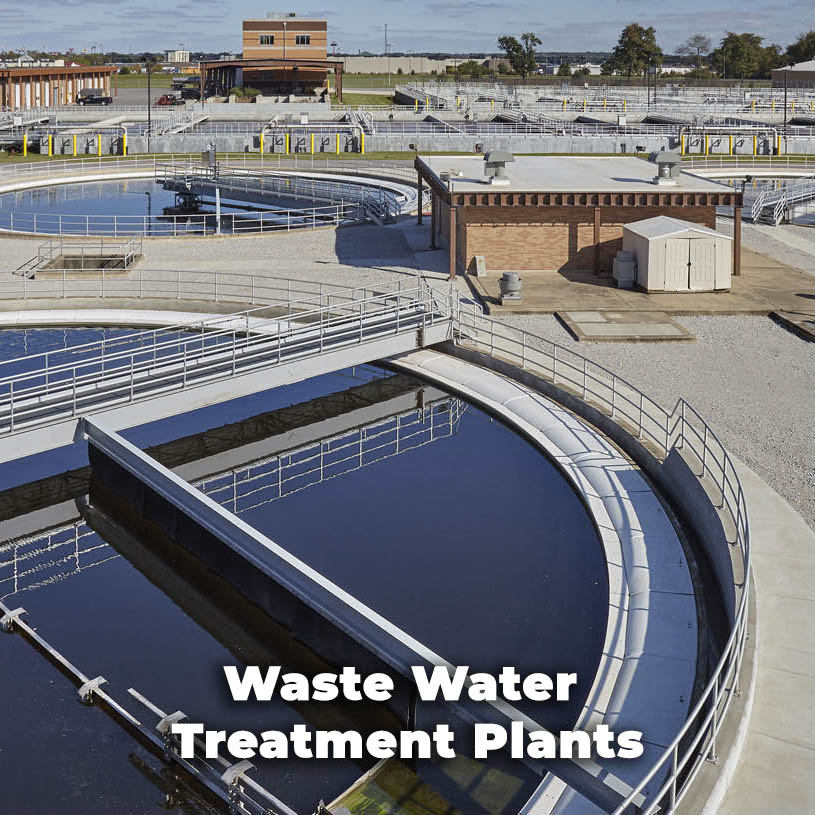
Continuous monitoring points - aeration basins, effluent channels and return sludge lines - are where fixed online instruments earn their cost.
Portable instruments for field verification and survey work
- Handheld Multiparameter Water Quality Sensor - one handheld unit covering several parameters during a walk-over survey, so a technician does not carry multiple meters.
- Portable Optical Dissolved Oxygen Meter - optical DO measurement at points with no power and no permanent installation, for profile checks and spot readings.
- Portable Suspended Solids (Sludge Concentration) Analyzer - field measurement of suspended solids and sludge concentration, used for clarifier and sludge-line checks where a fixed sensor is impractical.
These three formats answer the questions a fixed network cannot: what is happening at a point that is not instrumented, and does the installed instrument agree with a reference measurement taken today.
Six Decision Criteria That Separate the Two Configurations
1. Measurement frequency and monitoring window
The first question is how often a number is needed, and whether a gap in the record is acceptable. If the requirement is continuous - an effluent limit, a dissolved oxygen control loop, a river monitoring station - the configuration is online. If the requirement is during visits, campaigns or investigations, a portable instrument is the correct and cheaper choice.
2. Installation, wiring and infrastructure
Online instruments need a mounting point, a cable route, power and a signal path. In a new plant that is a design detail; in a retrofit it is often the main cost item. Portable instruments need none of this, which is why they are the practical option for construction-phase monitoring, remote sites, and points where access is unsafe or infrequent.
3. Calibration and maintenance routine
Every installed sensor accumulates work: scheduled calibration, cleaning, and in fouling-prone applications more frequent attention. Two design features reduce that load - an automatic cleaning device, as fitted to the KWS-800, and optional self-cleaning on the fluorescence dissolved oxygen and chlorophyll sensors. Portable instruments concentrate the same work into fewer units and shorter intervals, but they still require calibration discipline; a handheld meter that is never verified is a liability rather than an asset.
4. Data logging versus spot checks
Online configurations produce time-series data, which supports trend analysis, alarm limits and reporting. Controllers such as the KMPW520 store data to TF card or USB with historical curves and password protection - useful when a third party asks for evidence. Portable measurement produces a reading and a record; it proves a condition at a moment, not over a period.
5. Site conditions and access
Online sensors must survive the environment they live in: immersion, salinity, fouling and chemical exposure. The KWS-800's IP68 rating and titanium alloy/316L construction, and the KWS-630's POM and 316L body with titanium optional, exist for exactly that reason. Portable instruments are selected for the opposite reason - they go to places where installing anything permanent is impractical.
6. Integration with SCADA, PLC and IoT platforms
Digital outputs such as RS-485 and Modbus are what allow online sensors to feed SCADA and PLC systems and IoT platforms instead of standing alone. If the project roadmap includes remote dashboards or automated reporting, integration capability should be treated as a selection criterion, not an afterthought. Portable instruments sit outside this architecture by design.
Comparison Table: Online vs. Portable Water Quality Sensors
| Decision criterion | Online (fixed) sensors | Portable (handheld) instruments |
|---|---|---|
| Measurement frequency | Continuous, 24/7, with alarm capability | Discrete spot checks at the time of visit |
| Installation | Permanent immersion, flow-through or bypass mounting; cable and power routing | No installation; carried and deployed on site |
| Power and signal | Site power; RS485 (Modbus) or 4-20 mA output | Battery-powered; on-board display and logging |
| Calibration and maintenance | Scheduled calibration plus cleaning; automatic cleaning device (KWS-800) and optional self-cleaning on fluorescence DO and chlorophyll sensors | Calibration between campaigns; fewer units to manage |
| Data handling | Continuous time series; controller storage with TF card/USB and historical curves (KMPW520) | Field readings and manual records |
| Site conditions | Needs access, power and safe mounting; IP68 immersion options available (KWS-800) | Works at remote, temporary or hard-to-reach points |
| System integration | Feeds PLC, SCADA and IoT platforms | Standalone; verifies and supplements the fixed network |
| Primary role | Compliance monitoring, process control, environmental reporting | Commissioning, audits, surveys, troubleshooting |
| Best fit | Points that must be recorded all the time | Points that are visited occasionally or move over time |
Step-by-Step: Configuring a Two-Layer Monitoring System
- List every measurement point and label it with its purpose: regulatory compliance, process control, environmental reporting or investigation.
- Define the required data frequency at each point. A continuous requirement points to online instruments; occasional or event-driven measurement points to portable ones.
- Check the infrastructure at each point: mounting, cable route, power availability, and whether a technician can safely reach it.
- Assign instruments - online turbidity, TSS, COD, pH, dissolved oxygen and multi-parameter systems for the continuous points; handheld multiparameter, portable optical DO and portable suspended solids analyzers for the rest.
- Plan calibration and cleaning for both layers, including who performs it and how results are recorded.
- Confirm the data path: RS485 (Modbus) into PLC, SCADA or an IoT platform for online points, and a field record format that can be reconciled with the fixed network.
- Verify during commissioning by measuring the same sample with a portable instrument and the installed online sensor, then repeating the check after the first cleaning cycle.
- Fix the commercial specification - parameters, output protocol, cable and connector, documentation - before production, so the delivered unit matches the design.

Portable instruments cover the points that are not permanently instrumented and provide the reference readings used to verify fixed sensors.
Use Cases: Where Each Configuration Earns Its Place
Continuous compliance monitoring with online instruments
In the United Kingdom, a municipal wastewater plant installed 12 sensors for effluent quality monitoring, combining the KWS-800 online multi-parameter system with the KMPW520 analyzer. Over three years of operation the plant reported compliant discharge and reduced manual sampling. The pattern is consistent: a fixed multi-parameter probe at the compliance point, feeding a controller that keeps the historical record.
In the United States, a municipal water authority deployed 35 units for wastewater turbidity monitoring and reported three years of stable operation. In Japan, an environmental agency runs 25 units for river multi-parameter water quality monitoring, producing continuous environmental reporting over three years. In aquaculture, a Norwegian farm installed 40 fluorescence dissolved oxygen units for DO monitoring and reported an increased fish survival rate over two years - a case where continuous measurement, low maintenance and saltwater resistance matter more than the sensor purchase price.
Field verification and survey work with portable instruments
Portable instruments do a different job, and it is not a smaller one. They verify online readings during commissioning and audits, they profile a basin or a river reach that has no fixed station, and they respond to alarms by confirming whether the problem is in the water or in the instrument.
The KWS-450 optical fiber chlorophyll sensor shows how the two layers interact. A Finnish agricultural runoff monitoring programme used four units for nutrient runoff tracking over two years and reported better agricultural pollution control. A programme of that kind combines fixed sensors for the continuous record with handheld measurement to verify the points between them.
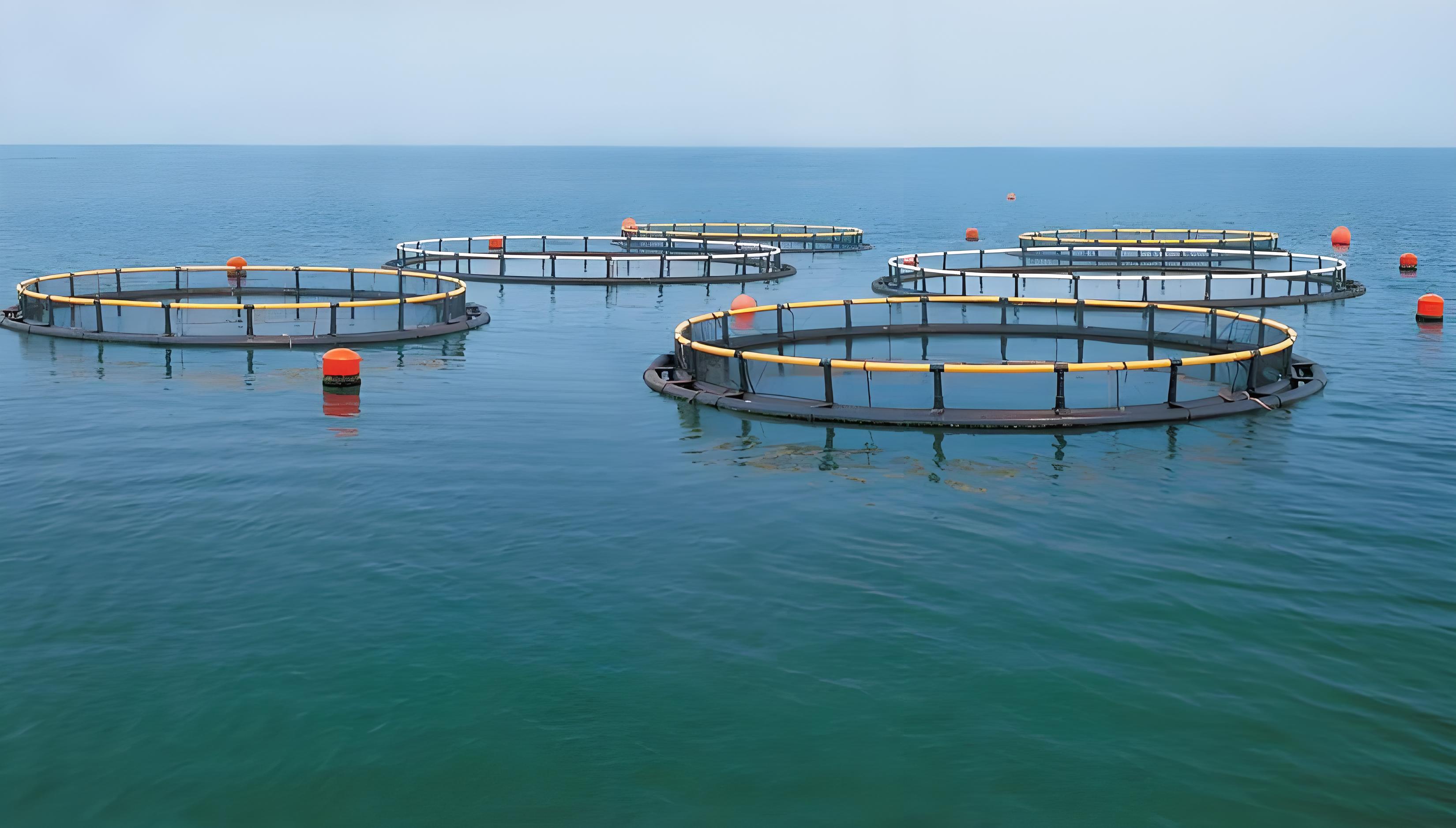
Continuous dissolved oxygen monitoring in aquaculture: an application where the online configuration replaced routine manual readings.
Frequently Asked Questions
Do online and portable water quality sensors have to meet the same certification requirements?
Electrical compliance applies to both. For the EU market, measurement and control equipment of this type is tested against EN IEC 61326-1:2021. KACISE water quality sensors hold CE EMC certificate ZTS23061509TCE, issued by Shenzhen ZTS Testing Service Co., Ltd. on 21 June 2023, covering EN IEC 61326-1:2021, EN 55011:2016+A2:2021, EN IEC 61000-3-2:2019+A1:2021 and EN 61000-3-3:2013+A2:2021. For sensors in contact with drinking water in the United States, NSF/ANSI 61 and NSF/ANSI 372 are the relevant standards, and they should be confirmed product by product rather than assumed to carry over from an EMC certificate.
Can one manufacturer supply both the online and the portable side of a project?
Yes, and there is a practical advantage in doing so. The KACISE water quality range covers online turbidity, TSS, COD, pH and dissolved oxygen sensors plus the KWS-800 multi-parameter monitoring system, as well as the handheld multiparameter water quality sensor, the portable optical dissolved oxygen meter and the portable suspended solids (sludge concentration) analyzer. The company also operates OEM/ODM production with customization of voltage, logo, output method, protocol and cable, applies 100% testing before shipment, and reports a monthly capacity of 5,000 units. Sourcing both layers from one supplier keeps calibration procedures and spare parts consistent across a site.
What drives the cost difference between an online and a portable configuration?
The instrument itself is rarely the largest line item. For online monitoring, the recurring cost is installation (mounting, cable routing, power), scheduled calibration and cleaning, and the data platform behind it. For portable work, the recurring cost is operator time, calibration between campaigns and instrument replacement cycles. Continuous online measurement lowers the cost per data point when a point is monitored all the time; portable measurement lowers the cost when a point is visited occasionally. KACISE standard configurations start at a minimum order quantity of one unit, which allows a buyer to pilot a single point before committing to a plant-wide rollout.
How should buyers validate online and portable instruments before placing a full order?
Two steps are common. First, evaluate a sample unit and confirm the configuration - parameters, output protocol, cable and connector - with the understanding that KACISE applies 100% testing before shipment. Second, verify at commissioning by measuring the same sample with a portable instrument and the installed online sensor. That cross-check is the fastest way to detect a mounting, fouling or calibration problem while the installer is still on site.
What lead time should be planned for a mixed online and portable order?
For standard models, KACISE states that shipping is generally 5-8 working days depending on the quantity purchased, with remote after-sales support after delivery. Custom requirements - voltage, logo, output method, protocol or cable - should be fixed at the quotation stage so the specification does not change once production starts. To have a measurement list reviewed or to request a sample, contact KACISE at sales@kacise.com or via WhatsApp at +86 180-6671-9659.
Conclusion: Match the Configuration to the Use Case, Not to a Preference
There is no universal winner between online and portable water quality sensors, because they answer different questions. Online instruments exist to produce an unbroken record: they are the right configuration for effluent compliance points, aeration control, drinking water treatment and river or lake monitoring stations, where a gap in the data is itself a problem. Portable instruments exist to test whether that record can be trusted and to measure the places the record does not cover - commissioning, audits, surveys, profile checks and troubleshooting.
For an industrial buyer at the evaluation stage, the practical output of this comparison is a two-layer specification rather than a single product choice. Decide which points must be continuous, instrument those with online sensors sized to the site conditions, and equip the field team with portable instruments that can verify them. Then confirm that the supplier can deliver both layers with consistent digital outputs, documented testing and support after delivery.
Next step
KACISE (Xi'an Kacise Optronics Tech Co., Ltd.) manufactures both online and portable water quality instruments and supports OEM/ODM customization for distributors, integrators and project buyers. Send your measurement list - parameters, points and site conditions - and the team will return a configuration proposal, sample availability and delivery schedule.
Email: sales@kacise.com · WhatsApp: +86 180-6671-9659 · Website: www.kcsensor.com
Online and portable water quality instruments prepared for shipment at the KACISE facility.
Have Questions or Need More Details?
Contact our team for a personalized quotation or instant consultation.
Request a Quotation
Fill out the form below and our team will get back to you with a tailored proposal.
WhatsApp Direct Chat
Prefer to chat in real-time? Message us on WhatsApp for instant assistance & quick answers.
- Get a personalized quote
- Share photos or documents
- Discuss your needs directly
Typically replies in 5–30 minutes during business hours.