
Secure Your Supply: Industrial Titanium Procurement Best Practices for 2026
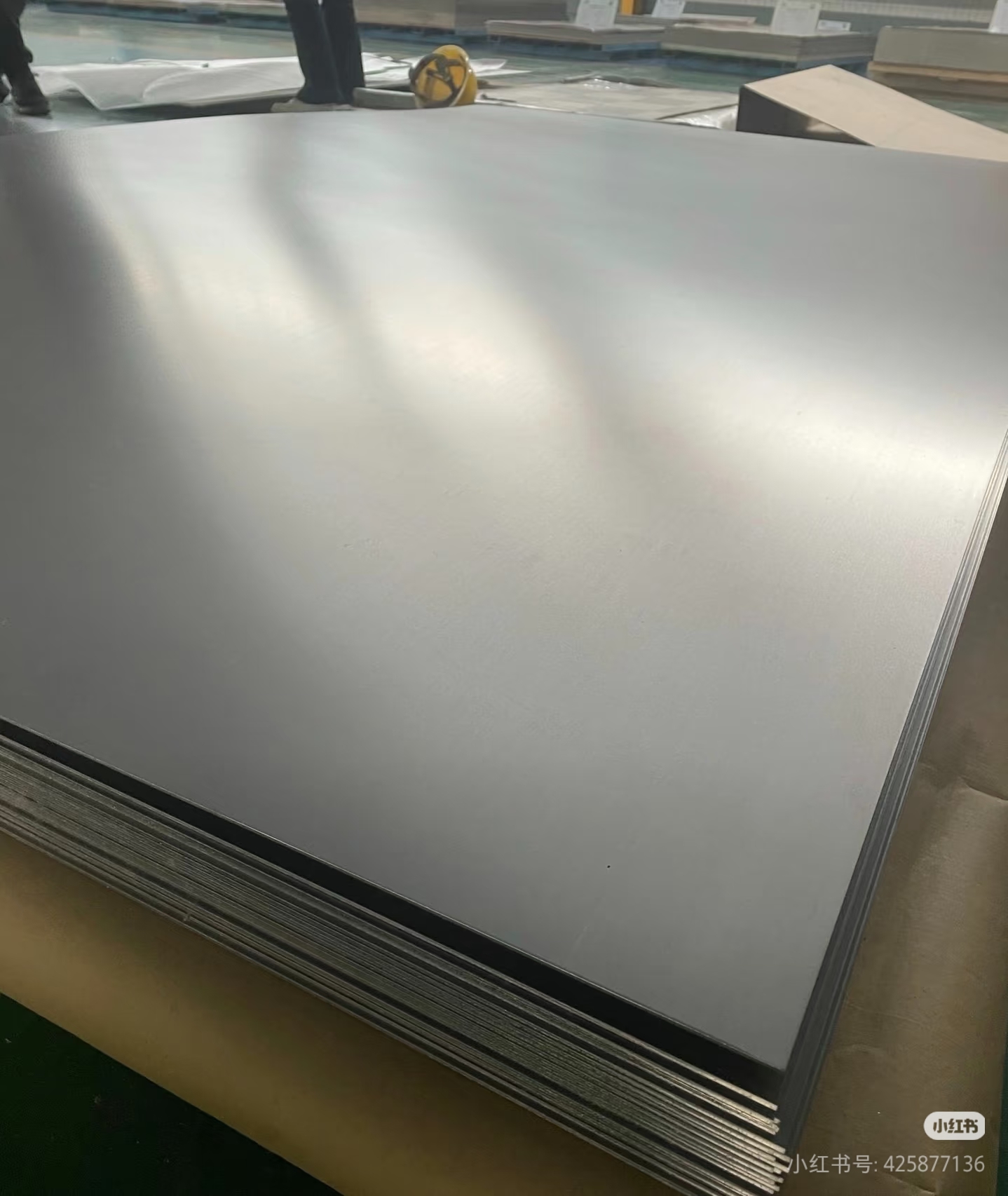
Secure Your Supply: Industrial Titanium Procurement Best Practices for 2026
Executive Summary: As global demand for industrial titanium surges across medical, aerospace, water treatment, and semiconductor industries, procurement professionals face increasing challenges in ensuring material quality, delivery reliability, and cost control. This comprehensive guide decodes the essential steps for risk-free sourcing of medical titanium rod, titanium plate, titanium electrodes, and precision CNC machined components. Learn how to evaluate suppliers, verify certifications, manage order processes, and avoid common pitfalls—backed by real-world cases from KOBO Advanced Materials.
Introduction: The Rising Complexity of Industrial Titanium Sourcing
Industrial titanium—known for its exceptional strength-to-weight ratio, corrosion resistance, and biocompatibility—is now a critical material in high-tech industries. From CNC medical parts for surgical implants to titanium anodes for water electrolysis, the supply chain has become global and fragmented. Procurement managers face a dilemma: how to balance cost, quality, and lead time while avoiding counterfeit materials, dimensional errors, or compliance failures.
In 2026, the market demands 100% material traceability, ISO 13485 and ISO 9001 certifications, and pre-shipment testing for every batch. Without a structured evaluation framework, buyers risk production delays, regulatory penalties, and reputational damage.
Problem Definition: What Goes Wrong Without a Reliable Supplier?
Recent procurement failures in the industry highlight three recurring issues:
- Materials not meeting standards – Substandard titanium sponge or insufficient melting cycles lead to inclusions and poor mechanical properties.
- Dimensional non-conformance – Parts delivered do not match the drawing, causing assembly failures.
- Unreliable delivery – Extended lead times or incorrect incoterms disrupt project schedules.
These risks are amplified when sourcing customized products like OEM CNC machining parts or precision CNC machining parts with tight tolerances (±0.001mm). A single batch failure in aerospace or medical applications can be catastrophic.
Industry Background: The Industrial Titanium Landscape in 2026
The global industrial titanium market is projected to grow at a CAGR of 6.2% through 2030, driven by new energy systems, medical device innovation, and aerospace expansion. Key product categories include:
| Product Category | Key Applications | Typical Grades |
|---|---|---|
| Medical Titanium Rod | Orthopedic implants, dental screws, surgical instruments | Ti-6Al-4V ELI, Ti-6Al-7Nb, CP Ti Grade 2-4 |
| Titanium Plate | Aerospace skin panels, chemical reactor linings, medical implants | Gr.1-Gr.5, Gr.7, Gr.9 |
| Titanium Electrodes & Anodes | Swimming pool disinfection, salt chlorinators, ICCP, metal plating | Ti/RuO₂-IrO₂, Ti/Pt |
| CNC Machining Parts | Aerospace brackets, medical device components, drone frames, semiconductor fixtures | Aluminum 6061/7075, SS 304/316L, Ti Gr.2/Gr.5, PEEK |
*Data sourced from KOBO Advanced Materials' product range and industry benchmarks.
Detailed Solution: A 5-Pillar Framework for Risk-Free Procurement
Successful industrial titanium procurement integrates five critical pillars: Material Integrity, Process Precision, Certification Verification, Commercial Flexibility, and Post-Shipment Support.
1. Material Integrity – From Sponge to Finished Product
The foundation of quality lies in raw material selection. Reputable suppliers like KOBO use first-class titanium sponge and apply triple melting (EB + VAR) to eliminate inclusions and ensure uniform composition. As documented in their risk control practices: “Control from the source of raw materials – use 1st class titanium sponge and apply to 3 times melting.” This guarantees that products meet ASTM/ISO standards for medical and aerospace applications.
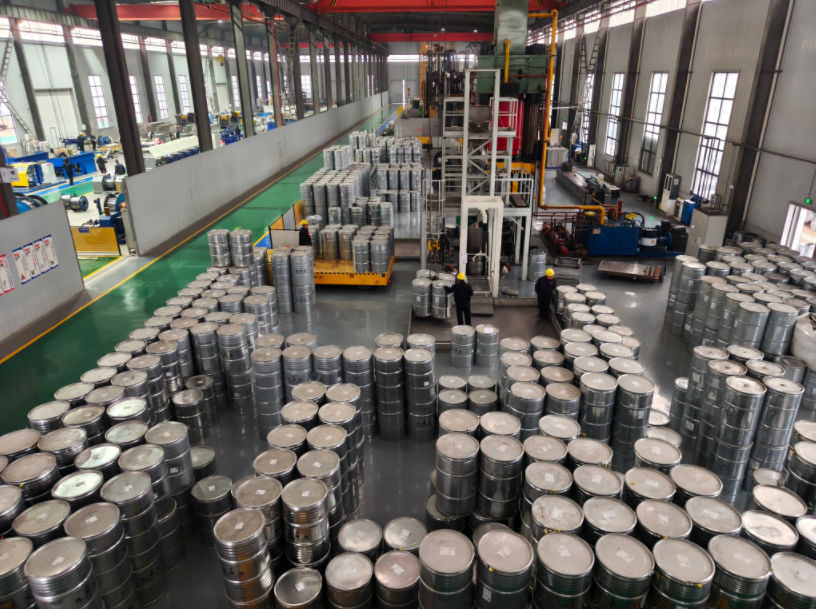
Triple melting process for consistent purity.
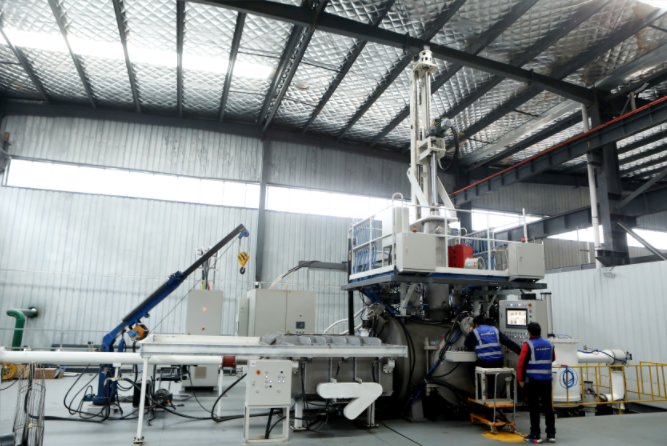
Electron Beam furnace used for premium ingots.
2. Process Precision – CNC Machining with Sub-Micron Tolerance
For custom CNC machining parts and CNC aerospace parts, suppliers must demonstrate capability in 3-axis to 5-axis milling, with tolerances down to ±0.001mm. KOBO’s production line, equipped with advanced CNC machines, offers surface finishes from Ra 0.8–Ra 3.2 and passes 100% high-precision instrument testing. This eliminates the risk of “size does not match drawing,” a common audit finding in non-compliant workshops.
3. Certification Verification – ISO 9001 & ISO 13485 Are Non-Negotiable
Buyers must demand documented evidence of quality management systems. KOBO holds both ISO 9001:2015 (cert. #331231699) and ISO 13485:2016 (cert. #UKZB24MD30131ROS) covering design, development, production, and sales of medical devices. These certifications ensure that every batch of CNC medical parts and medical titanium rod adheres to strict regulatory frameworks (EU MDR, FDA).
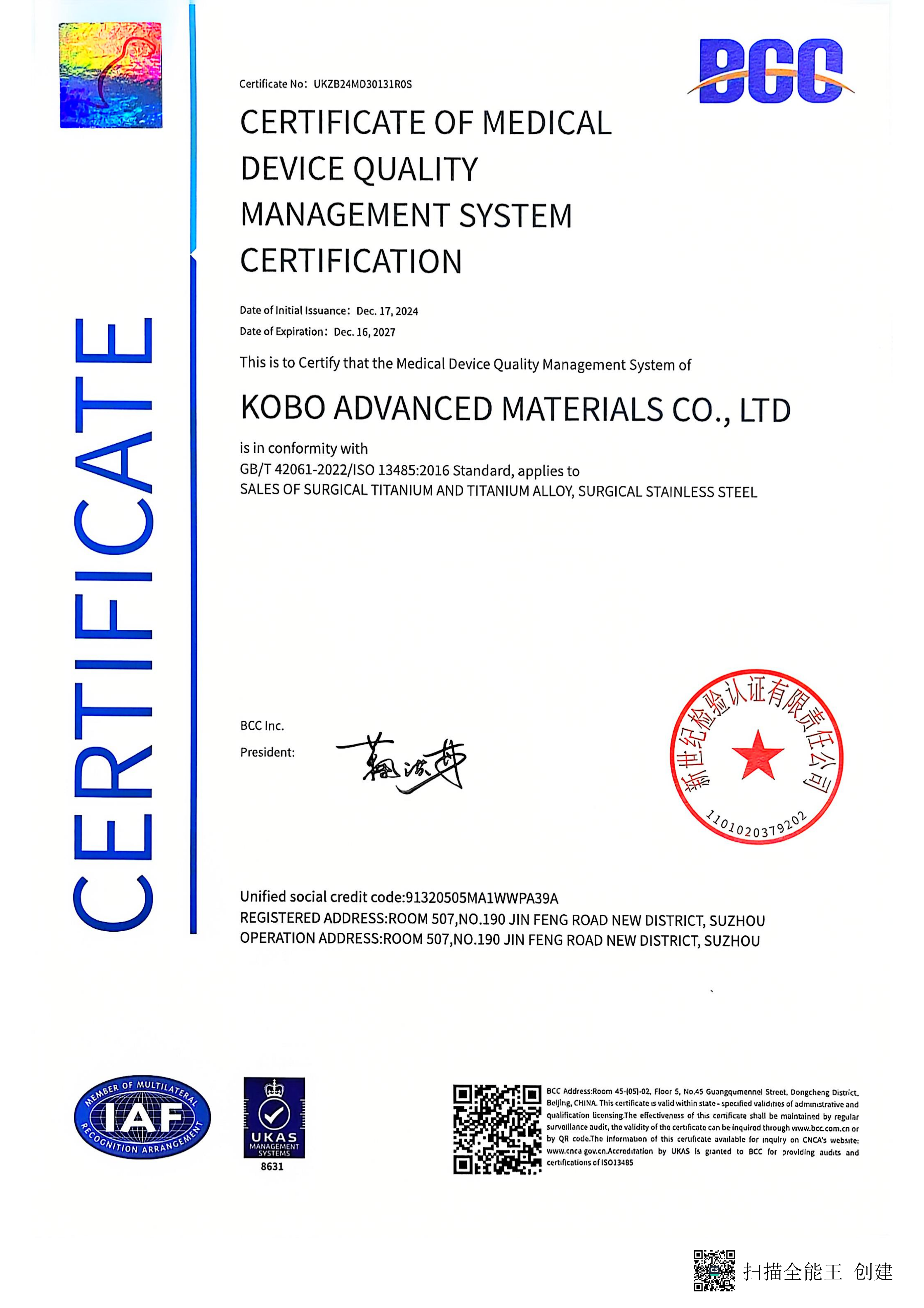
ISO 13485:2016 certification valid until 2027.
4. Commercial Flexibility – MOQ, Payment, and Incoterms
One of the most frequent buyer concerns is about minimum order quantities (MOQ) and payment terms. KOBO offers a low MOQ of 2 units for custom parts, making it accessible for prototyping and small-batch production. The standard payment is 30% deposit and 70% before shipment, with delivery via FOB or CIF incoterms. Acceptance includes a pre-shipment test – the buyer receives test reports before shipping. This transparency reduces financial risk and aligns with recommended industry practices.
- MOQ: 2 units (for CNC parts) or 5 kg (for raw materials)
- Payment: 30% deposit + 70% pre-shipment
- Delivery: FOB (Suzhou, China) or CIF
- Quality Check: 100% pre-shipment inspection
5. Post-Shipment Support – Remote Assistance & Traceability
After-sales service differentiates a strategic partner from a vendor. KOBO provides remote technical support for installation and troubleshooting. Each product is 100% traceable with full mill test certificates, supporting downstream audit requirements.
Step-by-Step Breakdown: How to Execute a Low-Risk Purchase
-
1
Define Technical Specifications
Clearly specify grade, dimensions, tolerance, surface finish, and applicable standards (ASTM F136, ASTM B265, etc.). Include a detailed drawing for CNC parts. -
2
Request Certifications & Traceability Documents
Ask for copies of ISO certificates, material test reports, and 3.1 certificates. KOBO provides full documentation free of charge. -
3
Negotiate Commercial Terms
Confirm MOQ, payment schedule, incoterms, and lead time (typically 15–30 days for custom products). KOBO accepts 2-unit MOQ for CNC parts. -
4
Arrange Pre-Shipment Inspection
Opt for either supplier’s own 100% test or a third-party inspection. KOBO supports both; their in-house testing uses high-precision instruments. -
5
Confirm Shipping & After-Sales Support
Finalize delivery method (FOB from Suzhou, China) and obtain remote support contacts.
Use Case 1: Medical Implant Manufacturer (Turkey)
A Turkish medical implant processing factory required 10 tons of medical titanium rod (Ti-6Al-4V ELI) for orthopedic implants. They prioritized biocompatible material compatibility and superior medical-grade precision. KOBO supplied the rods with full ISO 13485 backing, and the parts have performed reliably for over 20 years in vivo applications. The client highlighted: “Long life time and consistent quality – that’s why we keep coming back.”
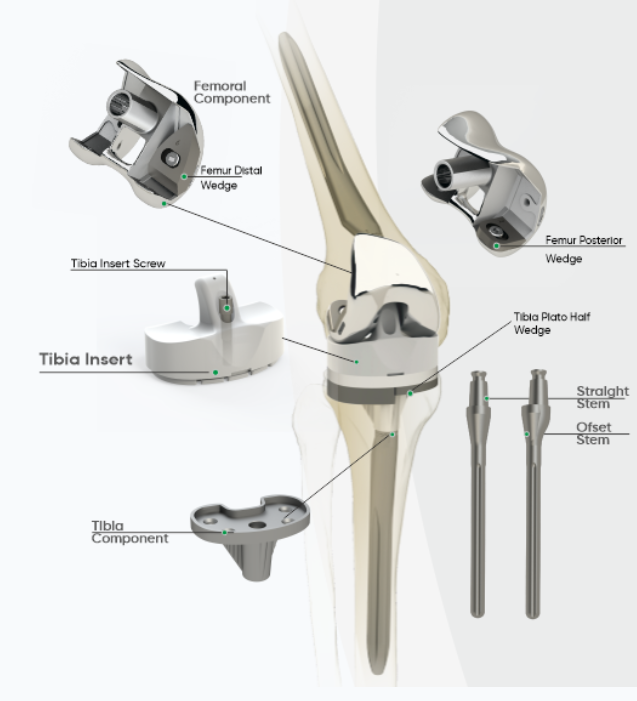
Medical-grade titanium rod used in knee implant manufacturing.
Use Case 2: Swimming Pool Disinfection System (Australia)
An Australian swimming pool disinfection product plant ordered 10,000 sets of titanium electrodes for salt chlorinator systems. The application required self-cleaning, stable lifespan (10,000+ hours) in saline conditions. KOBO’s precious metal coated anodes (model TE01/TA01) met the 5,000–15,000-hour lifespan expectation, and the client praised the “self-cleaning, stable lifespan” feature, which reduced maintenance costs by 30%.
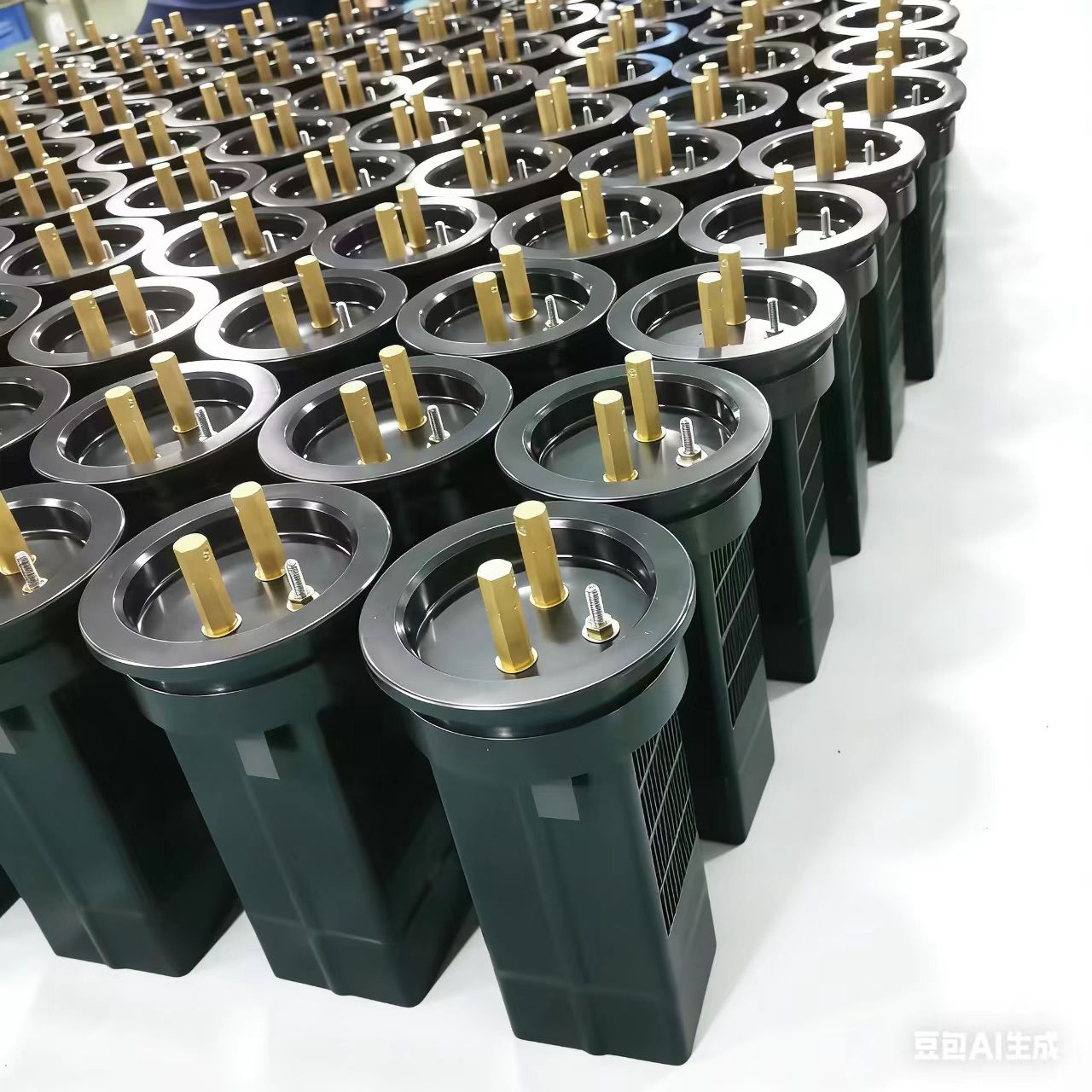
Titanium electrodes installed in a salt chlorinator for pool disinfection.
KOBO vs BAOTI: A Comparative Snapshot for Buyers
When evaluating suppliers, buyers often compare KOBO against state-owned giant BAOTI. Key differentiators:
| Criterion | KOBO | BAOTI |
|---|---|---|
| Response Speed | Fast – immediate quoting & sample delivery | Slower – bureaucratic process |
| Order Quantity Flexibility | Low MOQ: 2 units for CNC parts | High MOQ – typically tons level |
| Cost Advantage | Approximately 15% lower for equivalent quality | Higher overhead costs |
| Best For | Customized, medium-volume, fast-turnaround projects | Large-scale standard material supply |
This comparison validates that for buyers seeking flexible sourcing of industrial titanium materials and precision CNC parts, KOBO offers a distinct cost and service advantage without compromising quality.
Frequently Asked Questions
Q1: What is the minimum order quantity for KOBO’s titanium products?
A: For custom CNC machining parts, the MOQ is 2 units. For raw titanium materials (rod, plate, coil), the MOQ is 5 kg. This allows both prototyping and small batch production.
Q2: How does KOBO ensure the material meets medical standards?
A: KOBO is ISO 13485 certified, uses first-class titanium sponge with triple melting, and performs 100% inspection. Each batch is fully traceable with mill test certificates.
Q3: What incoterms do you offer?
A: We commonly quote FOB (Suzhou, China) or CIF depending on the buyer’s preference. Both options include pre-shipment inspection.
Q4: Can I get a sample before placing a bulk order?
A: Yes. KOBO supports sample orders; contact our sales team at sales@kobomaterials.com with your drawing or specification.
Q5: What is the typical lead time?
A: For standard titanium materials, 15–30 days. For custom CNC parts, 10–20 days depending on complexity.
Q6: How do you handle quality disputes?
A: We have a strict pre-shipment test procedure. If any defect is found, we either replace the product or issue a credit, depending on the contract terms.
Conclusion: Partner with a Supplier That Reduces, Not Adds, Risk
Industrial titanium procurement in 2026 is no longer a simple transactional process. It requires technical due diligence, certification verification, and a partner who understands the criticality of your application. KOBO Advanced Materials (www.kobomfg.com) brings 20+ years of expertise, a 1500m² facility, 200 tons of monthly capacity, and a team of 50 professionals to serve buyers worldwide.
By following the 5-pillar framework outlined in this guide, you can confidently source medical titanium rod, titanium plate, titanium electrodes, custom CNC machining parts, and more—without hidden risks.
KOBO Advanced Materials Co.,Ltd
Room 507, Building 1, No.190 Jinfeng road, New District, Suzhou, Jiangsu, China 215000
Email: sales@kobomaterials.com | Tel: +86 15190095921 | WhatsApp: +86 15190095921
Website: www.kobomfg.com | Blog: blog.kobomfg.com