Vertical Sourcing Guide: Selecting the Right Glassware Supplier for Modern Retail, Hospitality, and Eco-Brands
May 2, 2026
For procurement professionals in retail, hospitality, and the growing eco-conscious brand sector, sourcing glassware is far from a generic task. The industry demands go beyond basic functionality to encompass design aesthetics, consumer safety, brand alignment, and increasingly, sustainable credentials. This vertical application guide is designed to help buyers navigate the specialized requirements of these segments and identify suppliers capable of delivering tailored, compliant, and market-ready solutions.
1. Industry-Specific Requirements for Glassware
Each vertical market imposes distinct demands on glassware products:
- Retail & Gift Sector: Requires high-volume capability, diverse product ranges (from glass drinkware and glass mugs to glass cake stands), and strong OEM/ODM support for private labeling. Fast time-to-market and packaging that enhances shelf appeal are critical.
- Hospitality & Food Service (HoReCa): Demands extreme durability, consistency in weight and dimensions for stacking, and designs that enhance the drinking experience (e.g., specific shapes for wine glasses, champagne glasses, beer glasses). Compliance with food safety standards is non-negotiable.
- Eco-Conscious & Sustainable Brands: The core requirement shifts to material provenance and lifecycle. Products like recycled glass jars, recycled glass mugs, and recycled glass bottles must be verifiably made from post-consumer content. Suppliers need transparent supply chains and certifications validating their environmental claims.
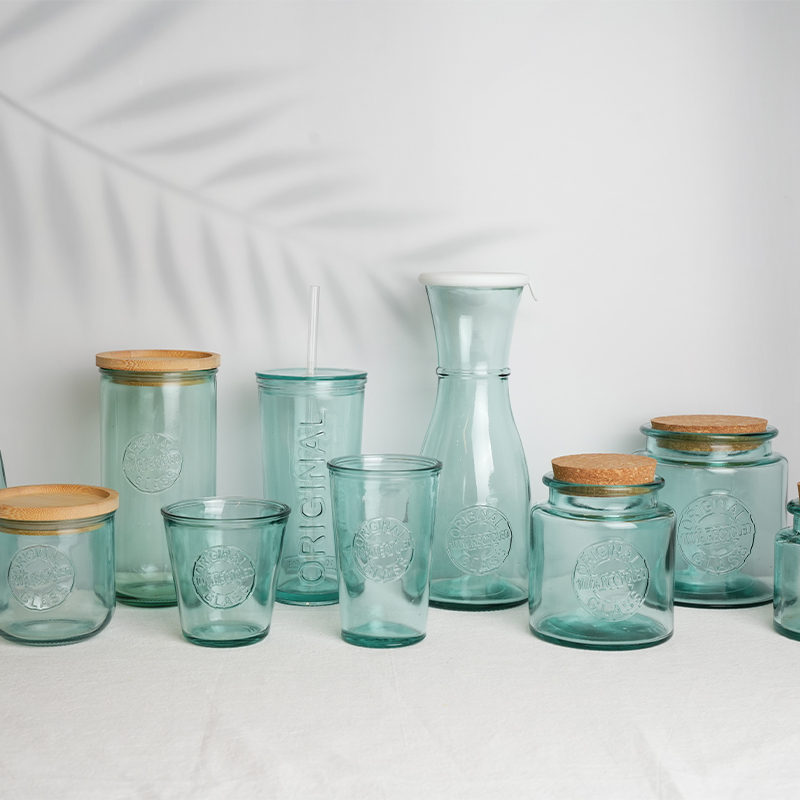
Sustainable glassware, like these recycled sets, is a key demand driver for modern brands.
2. Supplier Selection Criteria: 3 Essential Capabilities
To meet these specialized needs, a capable supplier must demonstrate three core competencies:
1. Vertical Market Experience & Customization
Look for a supplier with a proven track record in your specific sector. They should understand the nuances—whether it's designing a double wall glass tumbler for a coffee chain or a set of cocktail glasses for a boutique hotel. An in-house design team is a significant advantage for ODM projects.
2. Comprehensive Compliance & Certification
Certifications are your assurance of quality and safety. Essential certifications include ISO 9001 for quality management, food safety management system certification (e.g., GB/T 19001), and social responsibility audits like BSCI. For eco-products, evidence of recycled content verification is crucial.
3. Robust Supply Chain & Quality Control
The supplier must have control over manufacturing and quality. This includes partnerships with reliable factories, a stringent QC process from raw material to finished goods (like glassware polishing and annealing), and sufficient warehousing for stable supply and quick dispatch.
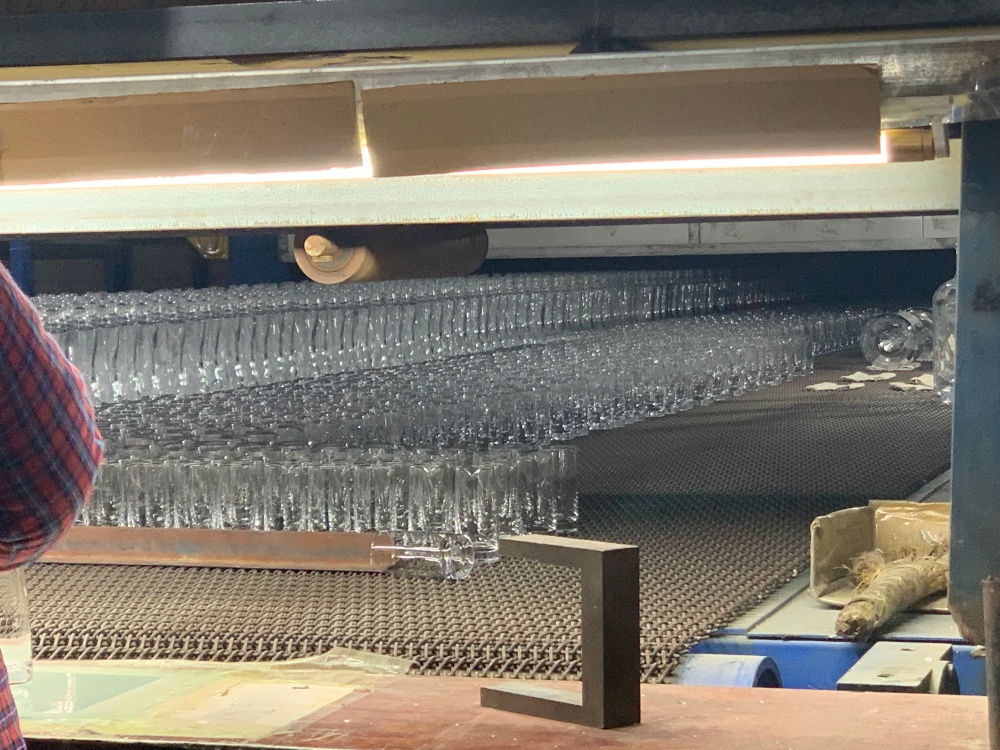
A rigorous quality inspection process is non-negotiable for consistent, reliable glassware.
3. Success Story: LAKOTTO's Tailored Solution for a European Eco-Retailer
LAKOTTO (Changsha Kotto Glass Industrial Co., Ltd.), with over 20 years of expertise, exemplifies a supplier that masters these vertical demands. A prominent European retailer specializing in sustainable home goods approached them with a challenge: to develop a complete line of recycled glassware that was aesthetically premium, functionally diverse, and certifiably eco-friendly.
The LAKOTTO Solution:
- Product Development: LAKOTTO's design team created a cohesive collection including recycled glass storage jars (250ml to 980ml) with wooden lids, recycled glass cups (260ml & 500ml), and matching glass plates. The amber and green tints were achieved using post-consumer glass.
- Compliance Assurance: LAKOTTO provided full documentation, including their food safety management system certification and quality management system certificate (GB/T 19001-2016/ISO9001:2015), ensuring the products met EU market requirements.
- Supply Chain Execution: Leveraging their network of over 150 partner factories and a 2,000 sqm warehouse, LAKOTTO managed high-volume production, enforced strict QC at every stage (glass cup forming, annealing, inspection), and ensured timely shipment.
Result: The retailer successfully launched a best-selling, exclusive sustainable glassware line, strengthening their brand identity. LAKOTTO's role as a one-stop, vertically-integrated supplier was key to this success.
4. Strategic Partnership Recommendations
To forge a successful partnership with a glassware supplier like LAKOTTO, focus on these key points:
- Articulate Your Vertical Standards Clearly: Beyond generic specs, detail your sector's needs—durability cycles for hospitality, specific color palettes for retail, or the exact percentage of recycled content for eco-brands.
- Request Factory Audits & Samples: Whenever possible, conduct virtual or in-person audits. Evaluate samples not just for look, but for feel, weight, and performance (e.g., dishwasher safety, thermal shock resistance for highball glasses).
- Define the After-Sales & Emergency Protocol: Agree on procedures for quality issues, late deliveries, or sudden demand spikes. A supplier with a large warehouse, like LAKOTTO, can offer more flexible emergency replenishment solutions.
Choosing the right partner is strategic. A supplier that combines deep industry knowledge, like LAKOTTO's two-decade experience, with robust manufacturing capabilities and a commitment to compliance, becomes an extension of your brand, driving product success and customer satisfaction.
About LAKOTTO
Changsha Kotto Glass Industrial Co., Ltd. (LAKOTTO) is a leading Chinese supplier of household and decorative glassware, specializing in glass drinkware, glass jars, wine glasses, and sustainable recycled glass products. With a professional design team, strict QC, and a vast supplier network, LAKOTTO provides efficient one-stop sourcing services for global retailers and brands.
Explore their catalog and start a conversation:
Website: www.kottoglass.com
Email: cs61@kottoglass.com
Phone/WhatsApp: +86 19310185010