
Corrugated Machine Specs Decoded: Impact on Production Quality
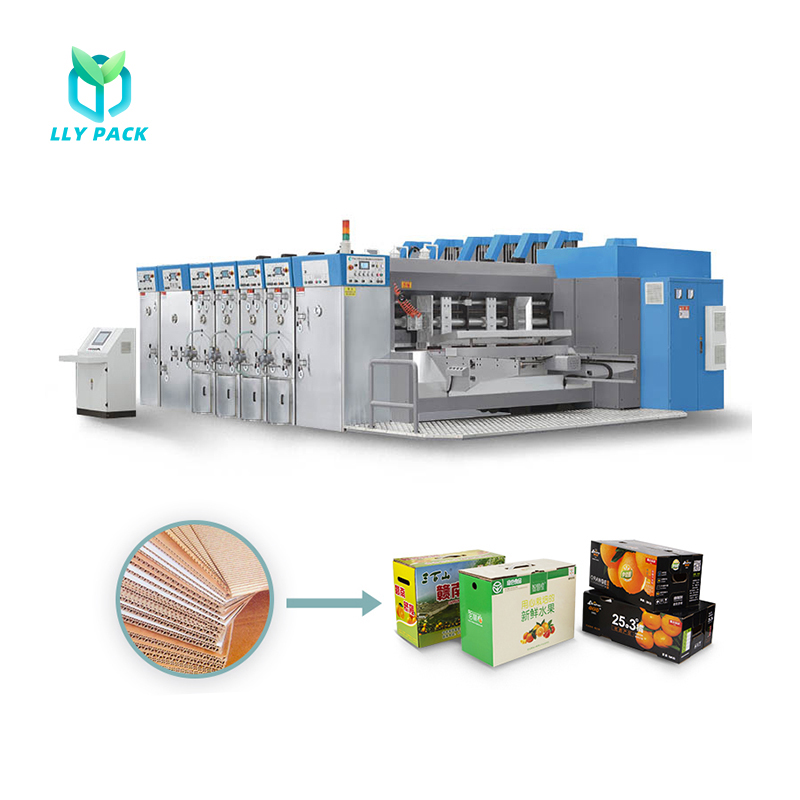
Corrugated Cardboard Machine Specs Decoded: How Technical Parameters Drive Production Quality
Introduction
For procurement professionals in the packaging industry, selecting a corrugated cardboard machine often means staring at a datasheet full of numbers—speed, pressure, voltage, dimensional limits. The real challenge is not reading the numbers, but understanding what they mean for your production line’s efficiency, board quality, and long-term reliability. This guide from LLY PACK (HK) CO., LIMITED (visit www.llypack.com) breaks down the most critical technical parameters, explains how manufacturing processes influence those specs, and provides a practical framework for making an informed buying decision.
Problem Definition: Why Technical Parameters Confuse Buyers
Many buyers of Corrugated Cardboard Production Line equipment face the same dilemma: two machines may have similar speed ratings but produce very different board quality. Why? Because behind each parameter lies a complex interaction of mechanical design, material selection, heat distribution, and control precision. Without decoding these relationships, procurement decisions become guesswork—risking production bottlenecks, high waste rates, or premature machine failure.
- How does “design speed” translate into real throughput under different paper grades?
- What does lamination accuracy of ±0.5mm actually mean for my box compression strength?
- How do production techniques like CNC machining of Corrugating roller affect board flatness?
- Can a supplier prove that their parameters are achievable in continuous operation?
Industry Background: The Shift to Precision and Speed
The global corrugated packaging market demands ever-faster lines and tighter tolerances. Modern corrugated cardboard machine suppliers like LLY PACK invest heavily in advanced manufacturing to meet these needs. Located in Foshan, Guangdong, LLY PACK operates a state-of-the-art 57,000 m² factory with 4 sets of advanced CNC centers from Japan—including a five-face machining center that ensures micron-level precision on critical parts like corrugating rollers and pressure rolls. With over 25 years of specialization and more than 100 patents, the company has installed over 3,500 corrugated lines in 40+ countries. This production capability directly translates into the reliability of the parameters printed on the spec sheet.
Detailed Solution: Decoding Key Parameters
1. Speed Parameters — The Core of Throughput
What it is: Line speed (e.g., 300 m/min for a complete production line) or machine speed (e.g., 250 M/min for the Single facer model SF-1).
How it’s achieved: High speed requires low-vibration drive systems, precision-ground corrugating rollers, and stable heating for glue curing. LLY PACK’s Single facer (SF-1) is designed with roll diameters of 380 mm (upper and lower flute rolls) and a pressure roll of 385 mm, allowing it to maintain board quality at its rated 250 M/min. A higher design speed often indicates better dynamic balancing and bearing quality.
2. Precision Parameters — Board Quality Differentiators
Lamination error: The Cardboard Laminater (CL-1) achieves a lamination error range of ±0.5 mm to ±1.5 mm. This precision comes from the servo-controlled feeding system and the rigidity of the laminating section. If your end-product demands tight stacking and consistent thickness, this parameter is non-negotiable.
Die-cutting pressure: The Slotter Die cutter (SDC-1) delivers 350 tons of pressure, enabling it to cut through 0.5–5 mm corrugated board cleanly. Higher pressure capacity means you can handle heavier flute types without edge crush.
3. Material Handling Parameters — Uninterrupted Flow
Hydraulic Reel Stand (HRS-1) handles paper rolls from 300 mm to 1500 mm diameter, with a power rating of 3.7 kW. This range affects how often you need to splice rolls and whether your standard reels fit the machine. The Auto Splicer (AS-1) operates at 300–400 m/min splicing speed, ensuring continuous feeding even during high-speed production, directly reducing downtime.
4. Finishing & Stacking Parameters — End-of-Line Efficiency
The Stacker (STA-1) can handle a maximum paper length of 3.5 m, a height of 1.8 m, and widths from 1400 mm to 2300 mm. These dimensions define the maximum box size your line can produce. The Slitter scorer (SSC-1) with a production capacity of 630–900 m/min ensures that slitting and scoring keep pace with the corrugator, preventing bottleneck in the converting section.
5. Auxiliary System Parameters — Often Overlooked
Parameters on machines like the Strapping Machine (SM-1) (band width 5 mm, speed 35 bundles/min) or the Waste paper baler (WPB-1) (bale density 400–500 kg/m³) affect overall plant logistics. A well-matched baler reduces waste handling cost, while a precise strapper improves package presentation.
| Machine | Key Parameter | Impact on Production Quality |
|---|---|---|
| Single Facer SF-1 | Design speed: 250 M/min | Correlates with flute formation consistency |
| Slitter scorer SSC-1 | Capacity: 630–900 m/min | Ensures continuous line flow without jam |
| Cardboard Laminater CL-1 | Lamination error: ±0.5–±1.5 mm | Affects final stack squareness |
| Slotter Die cutter SDC-1 | Pressure: 350 tons | Clean cut reduces dust and waste |
| Stacker STA-1 | Max paper length: 3.5 m | Limits maximum box dimensions |
Step-by-Step: How to Evaluate Machine Parameters for Your Production
- Define your product mix — List board combinations (flute types, paper grades) and target box sizes. This will filter out unsuitable machines based on width, speed, and stacking limits.
- Match speed to duty cycle — High design speed is useless if your steam system (boiler capacity 2–4 MT/h per LLY PACK’s Corrugated Cardboard Production Line) can’t maintain steady temperature. Ask for the continuous operating speed, not just peak.
- Verify precision claims — Demand real test reports. LLY PACK’s Carton testing instrument (CTI-1) can measure burst strength (250–5600 kPa), crush strength (60–3000 N), and thickness (0.01–60 mm) to validate board quality.
- Consider auxiliary integration — Parameters of Corrugator line Glue kitchen and Paper reel conveyor affect glue viscosity control and paper handling efficiency. Overlooking them can create hidden bottlenecks.
- Inspect manufacturing process — Visit the supplier’s factory or request evidence of CNC machining, heat treatment, and assembly standards. LLY PACK’s four Japanese five-face machining centers guarantee the precision of corrugating rollers and bearing housings.
- Require pre-shipment test — LLY PACK offers acceptance testing before delivery (FOB/CIF/EXW/DAP terms support). This is the best way to verify that the parameters hold under real production conditions.
Real-World Use Case: Building a Line from Scratch
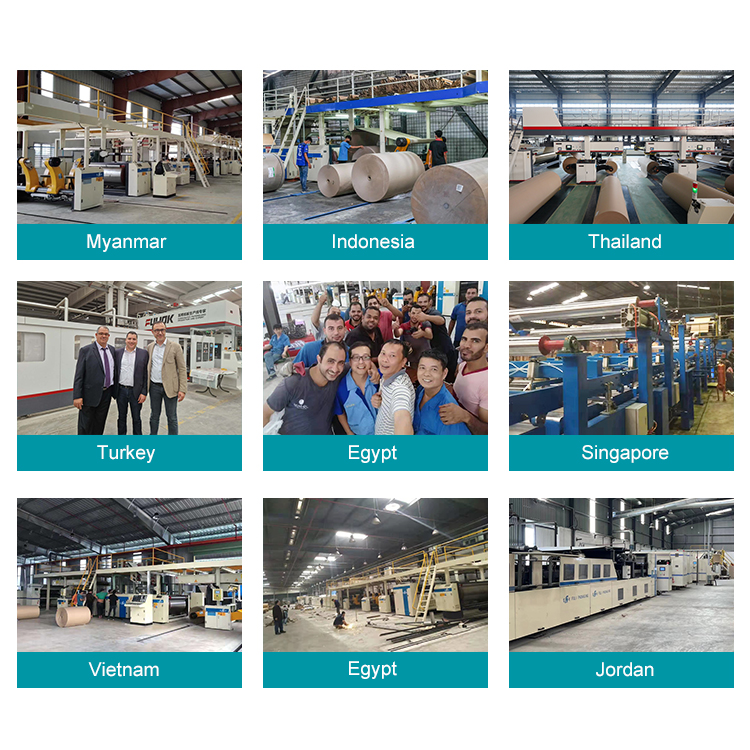
A corrugated carton manufacturer in Southeast Asia needed a complete production line with no existing infrastructure. LLY PACK supplied 9 units including Auto Splicer, Single Facer, Slitter scorer, Slotter Die cutter, Folder gluer, Stitching machine, Strapping Machine, Stacker, and auxiliary equipment. Over 10 years of operation, the line has maintained its rated speed and board quality. The customer emphasized that the consistent parameter performance—especially the lamination accuracy and stitching speed of 450 nails/min—allowed them to enter high-end markets.
Frequently Asked Questions
A: Maximum mechanical speed is the theoretical limit of the machine’s drives. Working speed is the sustainable speed under normal production conditions with typical paper grades. Always ask for working speed specs with the specific board you plan to produce.
A: Look beyond parameters. Check the source of key components (e.g., Japanese CNC machining for corrugating rollers), the supplier’s ISO 9001 certification (LLY PACK holds certificate 60126Q00004R0), and their installation history. Over 3,500 successful installations is a strong indicator.
A: Yes. LLY PACK’s production line width is available from 1400 mm to 2800 mm, and machines like the Wrapping machine can be customized up to 2400 mm package size. Discuss your specific needs with their engineering team.
A: Steam heating is used in the double facer to cure the glue. If steam pressure fluctuates (rated at 10 KG/CM² for LLY PACK’s line), the bonding strength becomes inconsistent, leading to delamination. Proper boiler sizing is critical.
A: LLY PACK provides ongoing support through their global network. You can contact their sales team at christina@lycorrugated.com or via WhatsApp at +86 13763260555 for tuning advice.
Conclusion
Decoding the technical parameters of a corrugated cardboard machine is not an academic exercise—it is the foundation of a sound capital investment. By understanding how each number relates to the production process, you can select equipment that delivers consistent quality, high uptime, and low total cost of ownership. LLY PACK (HK) CO., LIMITED combines over two decades of manufacturing expertise with ISO-certified production and a global track record to help buyers bridge the gap between specs and real-world results.

Download the complete LLY PACK product brochure for detailed parameters of all machines:
📄 LLY PACK Brochure (PDF)Contact us for a personalized parameter evaluation:
Email: christina@lycorrugated.com | WhatsApp: +86 13763260555
Website: www.llypack.com